Designing in the depths of winter captivates me. I almost prefer the sparsity and lack of choice to the huge overwhelm of summer. Here are three seasonal projects that capture the spirit of the season, using foraged, natural materials such as fallen branches and dried summer flowers.
Season's greetings: How to create a welcoming entrance
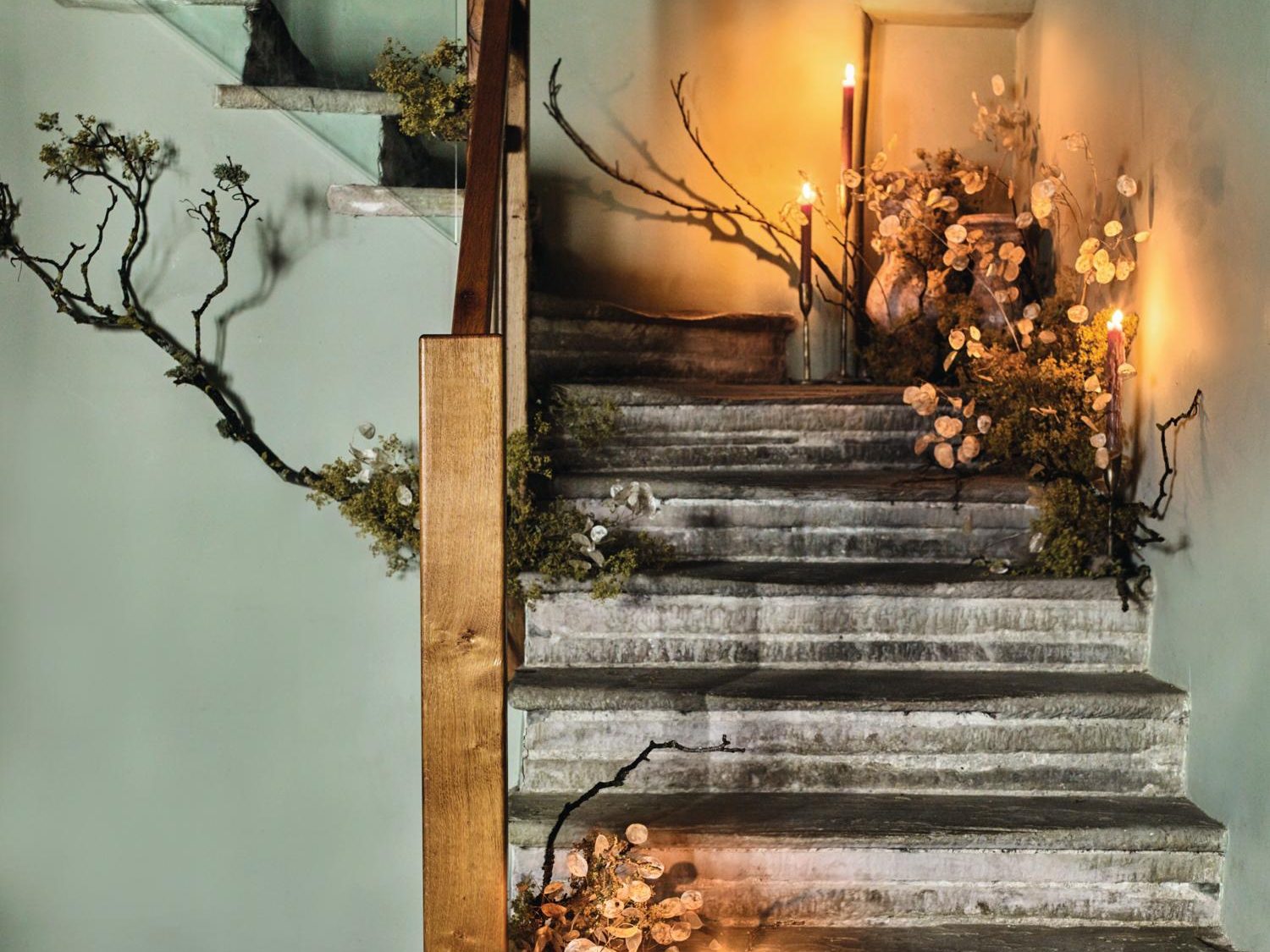
For this striking yet surprisingly simple natural staircase design, you can light the candles to welcome guests as they arrive, then for safety extinguish them and allow the honesty to illuminate the design naturally.
You will need
- 3-5 bunches of dried Alchemilla mollis (lady’s mantle) flowers
- 10-20 stems of dried Lunaria annua (honesty) stems with outer casing removed
- Fallen branches covered in lichen
- Small sections of chicken wire
- Strong wire
- Nails (or self adhesive hooks)
- Hammer
- Candles (optional)
How to achieve the look
- Lay a couple of interestingly shaped branches at intervals down the stairs to give the initial bones of the design – the space left empty between the branches gives a considered feel to the design.
- Consider how to extend the design up onto the walls for added impact, or to lead your eye to other features elsewhere in the room. Once you have decided on where you want all the branches, affix them by tying around the staircase spindles or adding nails/adhesive hooks into the wall/woodwork.
- Attach small pieces of chicken wire, scrunched up (as described in point 10 on page 62) and wired onto a branch to create a stable, subtle pocket into which you can incorporate flowers.
- Add occasional Alchemilla mollis flowers at different lengths to give depth and movement.
- Incorporate occasional stems of Lunaria annua, keeping some nicely shaped stems as long as possible to give the impression they are floating.
- You could opt to add a few candles for extra impact to welcome your guests. But take great care to keep them away from any dried material and extinguish them once your guests have arrived.
Top tip
Before deciding on the overall design, consider first what access is required on the stairs and ensure you work around that – keep to one side if preferred.
You may also like:
- The best natural Christmas decorations to shop this year
- 12 ideas for decorations made from materials from your garden
- How to make a Christmas wreath
- Best wreath making kits for Christmas
- Wreaths for your front door
Winter warmer: How to create a cosy statement piece
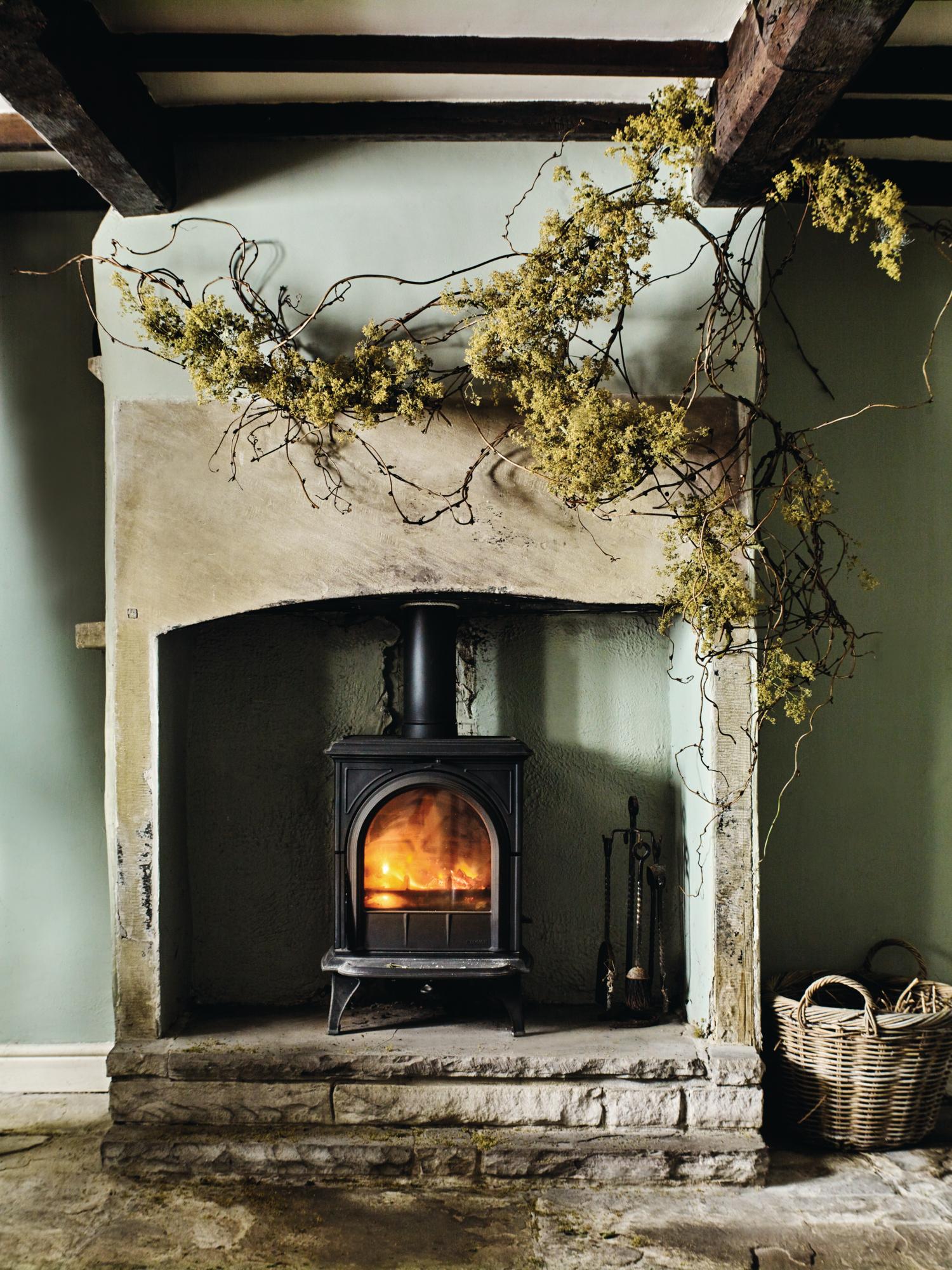
This dramatic statement piece was created from materials destined for the tip. The Alchemilla mollis flowers, rescued from a neighbour discarding their plants, were cut in July and hung upside down in a shed to dry and my unruly Akebia quinata vine, having romped away a little too energetically, was well overdue a hard prune.
You will need
- Freshly cut Akebia quinata (any vine would work)
- 12-15 bunches of dried Alchemilla mollis flowers
- Strong wire
- Chicken wire
- Nails (or self adhesive hooks)
- Hammer
- Dust sheet
- Step ladder
How to achieve the look
- Hammer a nail in at the highest point.
- Lay a dust sheet on the floor and, without untangling it too much, spread the vine out on the dust sheet – you can be quite rough with the vine to coax it into shape.
- Select a large section as your starting point to affix to the top nail. Twist a short length of wire round it and tie on. Don’t worry about making it perfect at this stage; get it in situ and tweak later.
- Once you see how this section falls, hammer in the next two nails at the furthest extremities of your planned space, and tie the vine in.
- Add in other sections as required. Where possible, suspend from existing nails with long pieces of wire, or tie onto the vine itself.
- Repeat until you have a shape you like.
- Remove ugly or blunt stem ends, either by tying in to disguise them, or cutting them off. Don’t do this as you go – ugly areas could prove useful to tie into later on.
- Add additional flourishes of vine if required.
- Stand back regularly to assess the overall shape and where flowers would accentuate the design. You can insert these at the intersections of the vine itself for a minimal effect, or if you feel you need more flowers, wire in subtle pieces of chicken wire.
- To create the garland, shown right, scrunch two pieces of chicken wire, approximately 30cm x 10cm, into an irregular shape (be careful as the cut ends can be sharp). Ensure multiple layers where possible so you can effectively weave through stems. Don’t be tempted to make these shapes too big – you need to leave some room for the extra length of the flower stems, and a larger structure requires more flowers.
- Thread varying lengths of flower stems through multiple holes, taking extra care at the bottom to avoid pieces falling out later (using different lengths enables you to preserve quieter areas and emphasise any shapes created by kinked stems).
- Repeat until chicken wire is no longer visible. 13 Once you are happy with the overall look, trim any protruding flower stems at the back of the chicken wire.
Top tips
- Use freshly cut vines to ensure flexibility.
- Don’t fix the nails in advance. You’ll achieve a better shape if you allow it to develop and affix as you work.
- You can add additional strength by threading wire between the nails to tie into, but the more
- mechanics, the more ‘trussed up’ it will look.
- Be open-minded about the final shape. It will develop as you make it. Forcing a pre-determined shape is almost impossible.
Balancing act: how to create a freestanding arrangement
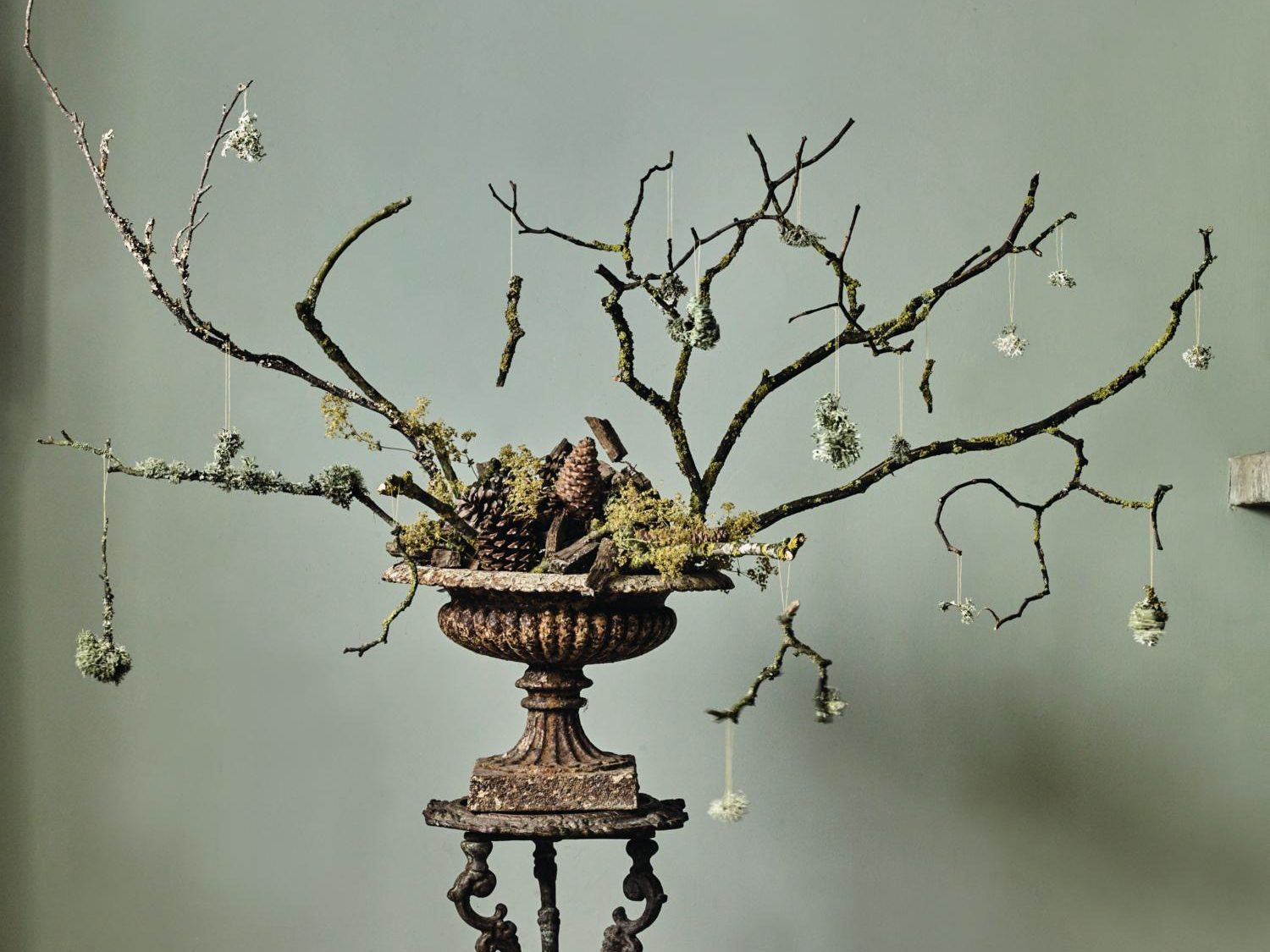
This freestanding arrangement creates impact with easily sourced and found twigs, cones and fallen lichen. The hanging lichen baubles can be replicated on your Christmas tree to co-ordinate, or this could replace the Christmas tree entirely. It’s important to use only fallen branches and lichen rather than harvesting directly from trees in the wild.
You will need
- A sturdy vase, urn or container
- Stand (optional)
- Strong tape or florist’s pot tape
- A selection of materials collected from walks, including lichen-covered branches with interesting shapes, fallen lichen, pine cones and small pieces of wood or driftwood
- Sturdy chicken wire, with holes of a sufficient size that the branches can be threaded through.
- Twine or thread (in my case dyed yellow naturally with buddleja flowers)
- A few heads of dried Alchemilla mollis (lady’s mantle) flowers
How to achieve the look
- Crumple up some chicken wire into a dome shape that sits slightly proud of your vase or container (be careful as the cut ends can be sharp). Consider how high you want this dome to appear at the end, taking into account the additional height of the materials. Ensure multiple layers where possible, so you can effectively weave through the stems.
- Firmly tape the chicken wire in place, ensuring a firm fit. The branches need good support, so it’s important that this stage is prepared well.
- Select some beautifully contorted and interestingly shaped branches that are well covered in lichen and start to place them by inserting the base into the chicken wire.
- Continue placing to give a decorative and dramatic effect.
- Step back from the display regularly so you can check the shapes – consider all the angles it will be viewed from.
- Once you are happy with the framework of the branches, lay cones, twigs and dried Alchemilla mollis flowerheads onto the chicken wire.
- Select some delicate pieces of twig and lichen to create natural ‘baubles’. Tie with thread and hang from the branches.
Top tip
Select a dramatic vase or container that is both sturdy and stable as the branches can have considerable weight.
Useful information
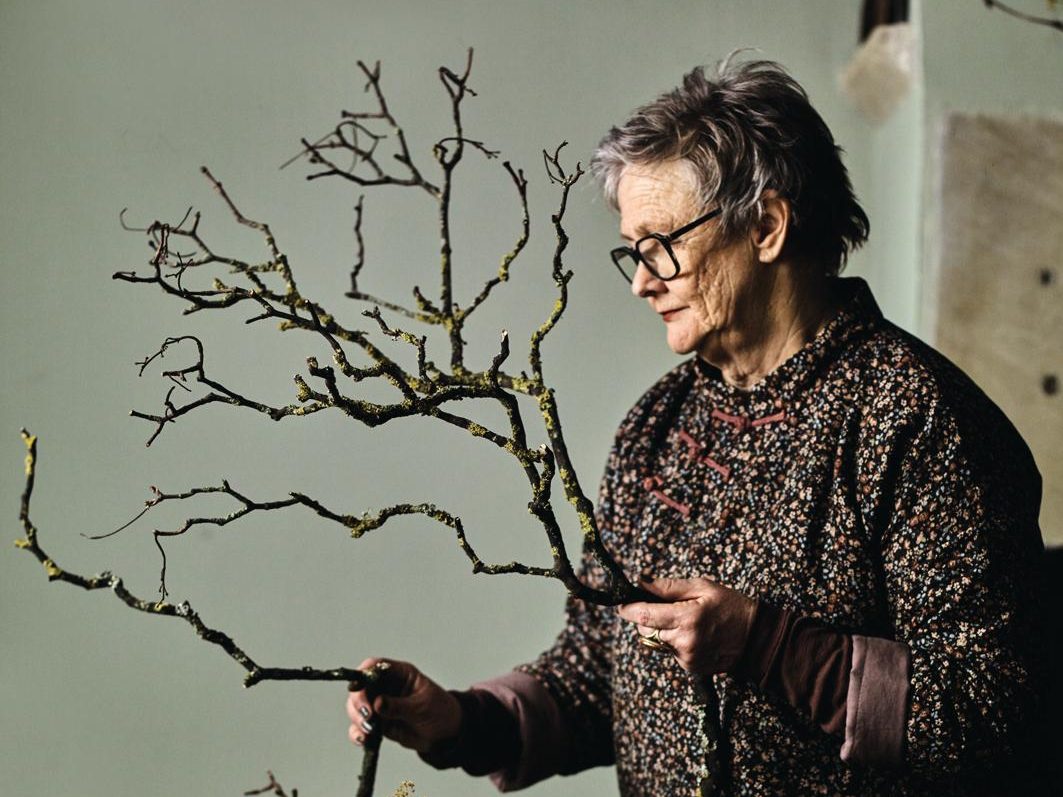
Fiona Pickles is an artist based in West Yorkshire who works with seasonal plants, flowers and botanicals.
Find out more about her work at fionapickles.com


