Providing shade in the summer, privacy from neighbours and an intimate place to gather for sunny afternoons and al fresco meals, pergolas are a popular choice for the garden. They come in all shapes and sizes, materials and styles – and some of the more high-tech options even have integrated smart features to control roof louvres, lighting and heating.
The huge amount of choice can be overwhelming, so we’ve created this bumper guide to buying or building one, with advice from pergola makers, garden designers and even planning consultants, to answer all your burning questions.
Do I need permission to put up a pergola?
Many people don’t realise they may need planning permission to install a pergola in their garden. “Most freestanding pergolas within the grounds of a house are likely to fall under permitted development — provided they meet certain conditions,” says Aaron Basi, head of planning at consultancy Planning By Design.
“In general, they should not exceed 2.5m if they are within 2m of a boundary. If positioned more than 2m away, they can be up to 3m high. They should also not be at the front of the house, or located within the grounds of a listed building.”
You’ll usually need planning permission if your house is listed, in a conservation area, or where permitted development rights have been removed. For peace of mind, Aaron advises getting a Lawful Development Certificate before starting any work, as this will provide formal confirmation that your pergola complies with planning regulations. “It’s also a useful safeguard when selling or remortgaging a property,” he adds.
Should I buy or build a pergola?
Wondering whether to buy an off-the-peg pergola, or design and build your own structure? Here are the pros and cons of each approach.
Reasons to buy include the fact that buying a ready-to-build pergola could save you time planning and designing. Also there are several ‘smart’ pergolas available to buy, which allow you to control roof louvres for shade or shelter, electric lighting and heating with the touch of a button.
Reasons to build include being able to design your own pergola, giving you more flexibility so you can tailor the shape, design and materials to your garden, adding extra elements like seating. You’ll also have more opportunity to make sure you buy your materials from a trusted, sustainable supplier or metalworker. And you could end up saving money if you’re savvy sourcing the raw materials and building the pergola yourself.
As Max from nature-focused landscape design studio Wild By Design says, “constructing a beautiful, sustainable garden pergola is really simple. As with all good design, it’s important not to overcomplicate and remember what you are trying to achieve. Focus on quality, local, renewable materials, then bring plants into the mix to elevate the space.”
What’s the best shape of pergola?
Picture a pergola and you’ll probably imagine a square wooden structure with four corner supports – but it’s worth thinking outside the box if you want a design that works well within your space.
For her garden at this year’s Harrogate Spring Show, designer Melissa Morton created an unusual triangular pergola, avoiding a fourth post blocking the outlook and allowing for open views from the covered seating area. To create a focal point from the L-shaped garden sofa, Melissa added an elegant Urbis water bowl diagonally across from the pergola’s longest side.
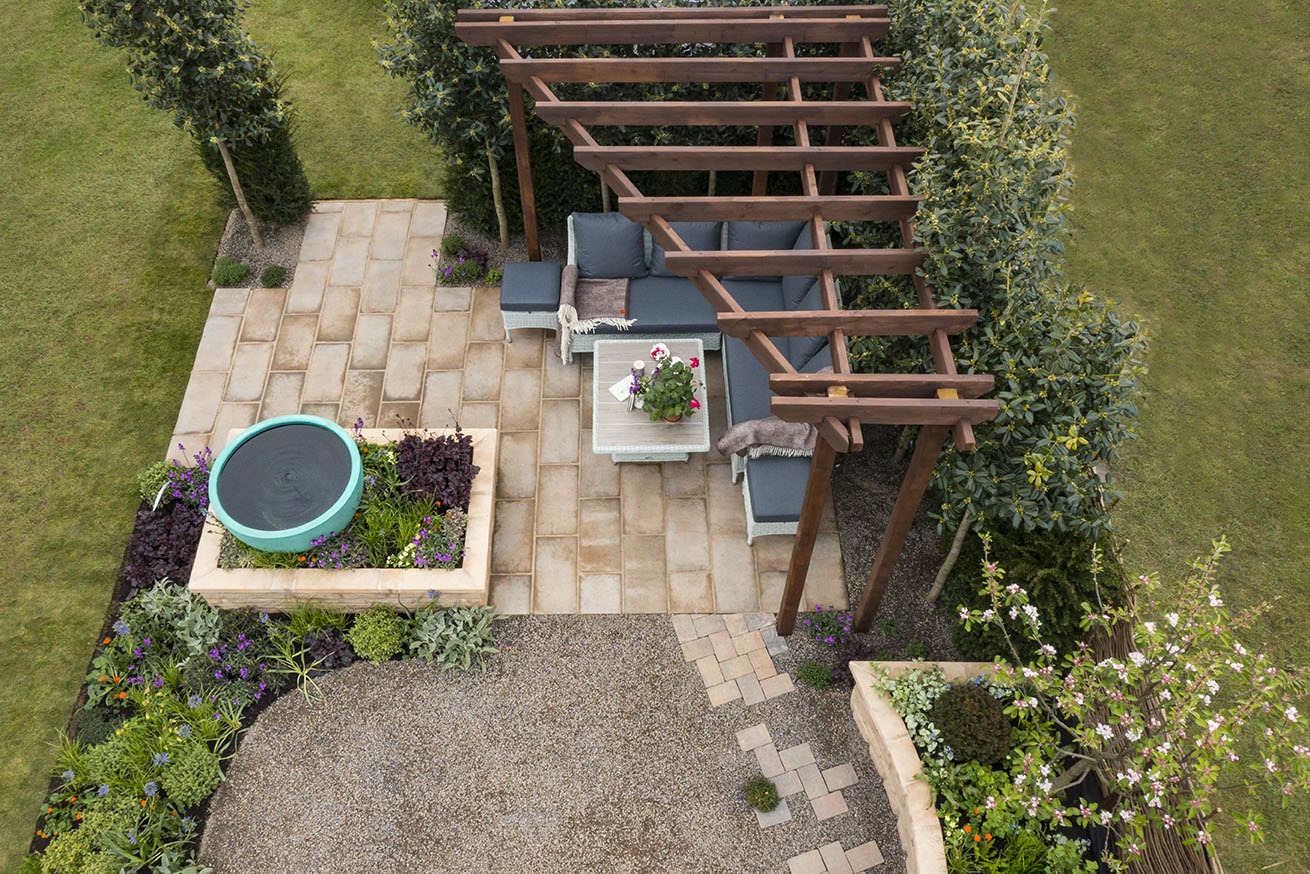
To work out the ideal dimensions for the pergola, Melissa considered the size of the patio, garden furniture and screen planting. “The garden was designed to inspire visitors as to what can be achieved in a small space – a comprehensive layout including a raised bed, water feature, spaces to sit and relax, and planting,” she explains.
Consider a multifunctional design
You might have an idea of the type of pergola that would fit in your garden, but luxury pergola brand Pergolux says we should think more about garden layout than size. Ammar Nova, the brand’s country manager explains: “Rather than just following rigid formulas for size, think about creating distinct zones for dining or relaxing. A well-positioned pergola can actually make a smaller garden feel more spacious and functional. The key is making sure the pergola sits well in the space and works with other garden features – “integration, not isolation,” says Ammar.
Choosing a larger pergola than you might have originally considered could have the added benefit of being multifunctional. A classic oak pergola Melissa designed in a farmhouse garden last winter “provides plenty of space to relax and can be easily converted to entertain larger groups of family and friends”. Gabion walling around the edge works well as extra seating, wildlife habitat and shelter from the wind.
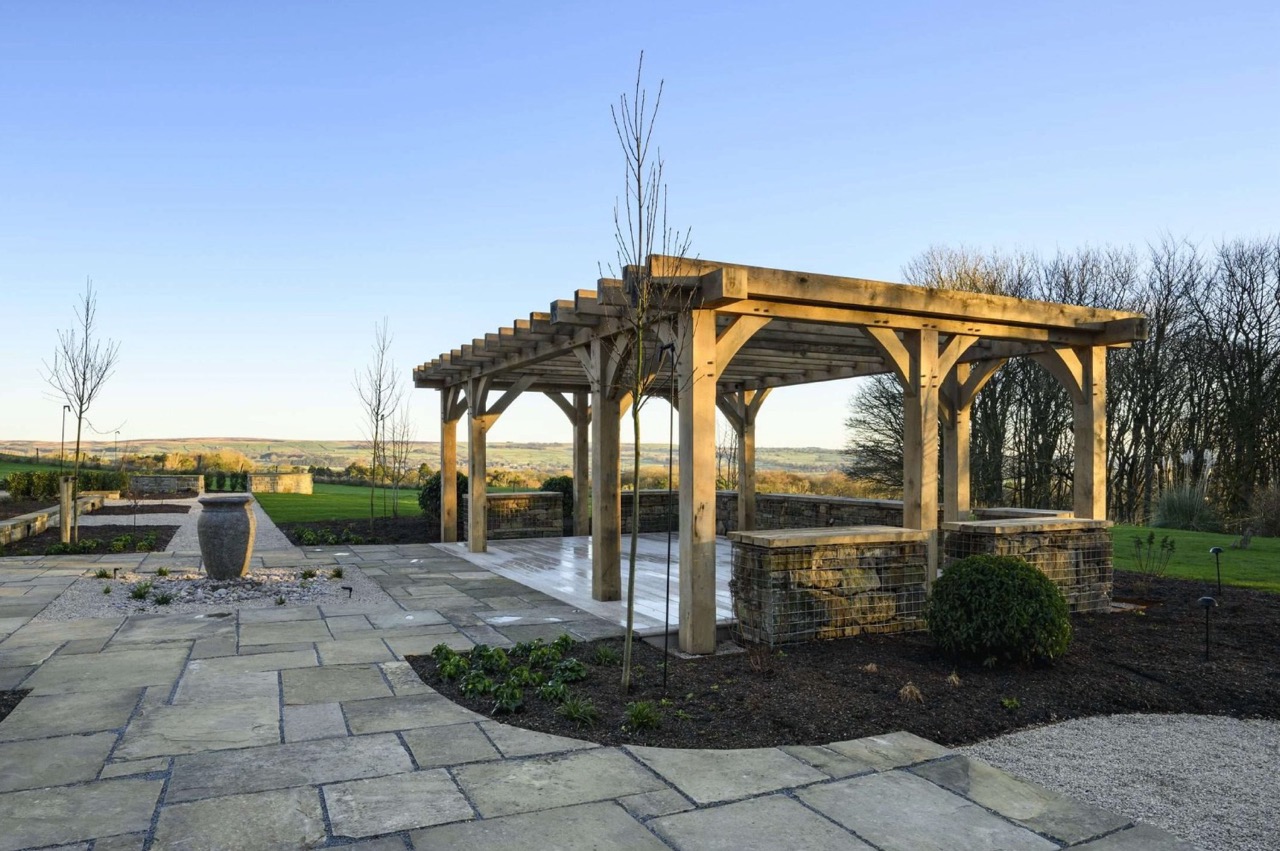
To make sure the pergola serves its purpose throughout the year, “consider how sunlight moves through your garden during the day,” recommends Ammar. “Then you can ensure the space works for you through all seasons, not just on a sunny afternoon.”
What’s the best material to use?
From aluminium and steel to oak, un-milled chestnut logs and even driftwood, there are plenty of material options when it comes to crafting pergolas. Max Denton, co-founder of Wild By Design, suggests considering the purpose of the pergola. “Is it to create shade? Define a space within the garden? Or just for pure aesthetic appeal?”
Wild By Design has crafted pergolas from a huge range of materials, and Max says oak is the best they’ve found — “both stylistically and ecologically”.
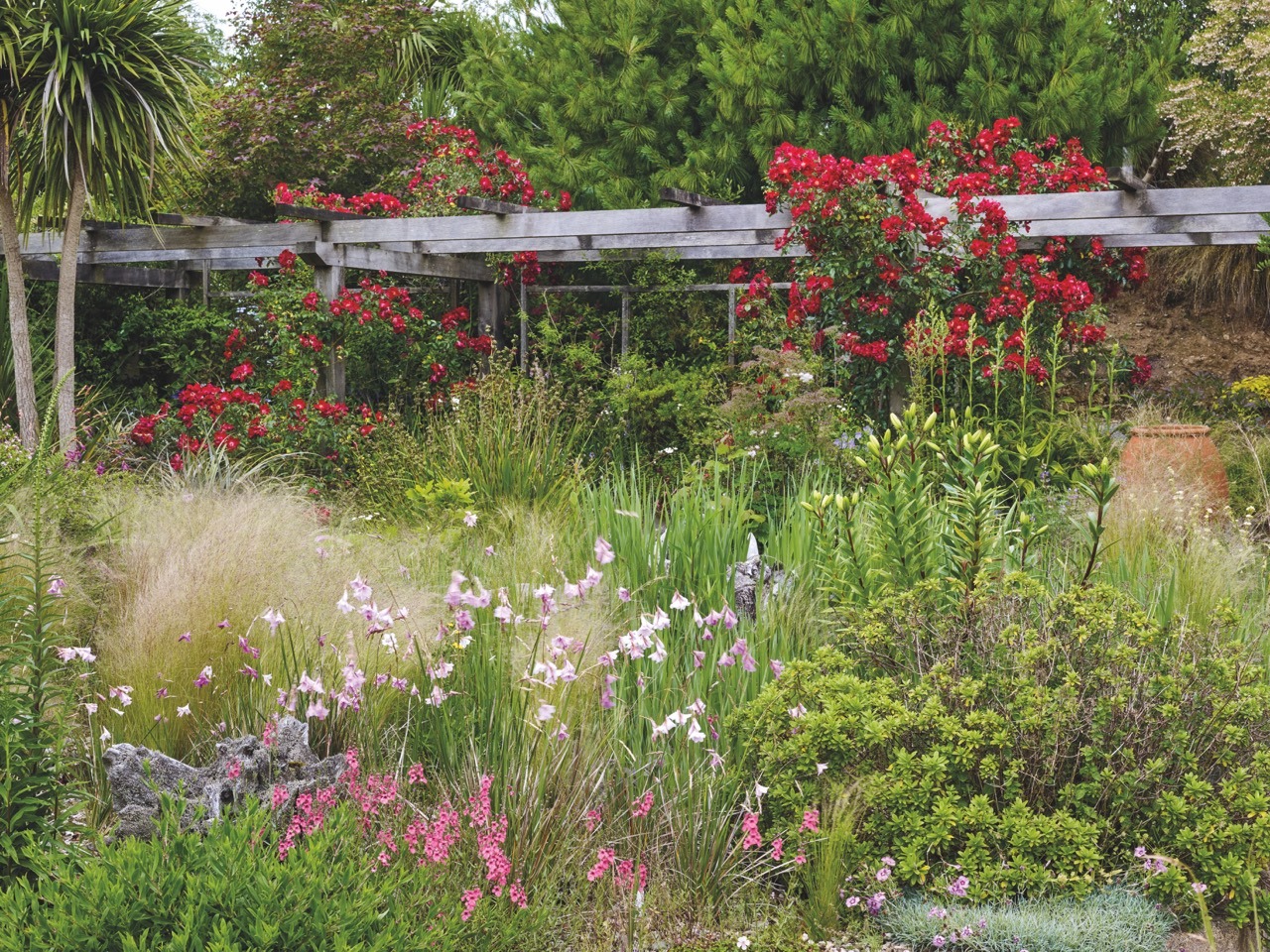
When Melissa crafted her triangular pergola for the Harrogate Spring Show, she chose to use timber, as “it’s easy to cut to bespoke size and shape, and it can be stained to any desired colour.
“It’s also a material that is readily available for any landscaper or DIY enthusiast, with a variety of different size posts and rafters depending on what scale the structure will be. Plus, it could be dismantled and reinstalled elsewhere and adapted if necessary,” Melissa explains.
Wooden pergolas also allow for built-in seating and other additions, like this structure by Wild By Design.
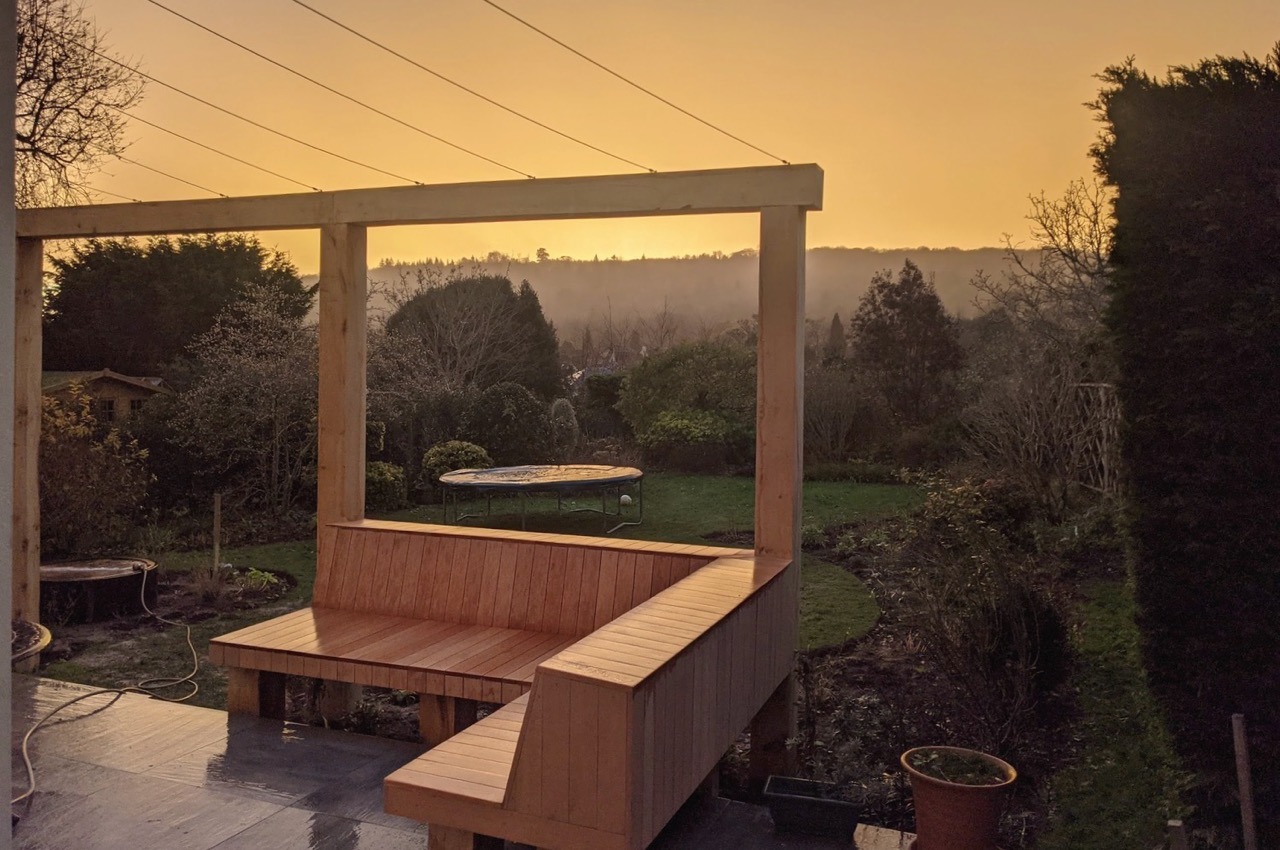
Finding the right wood
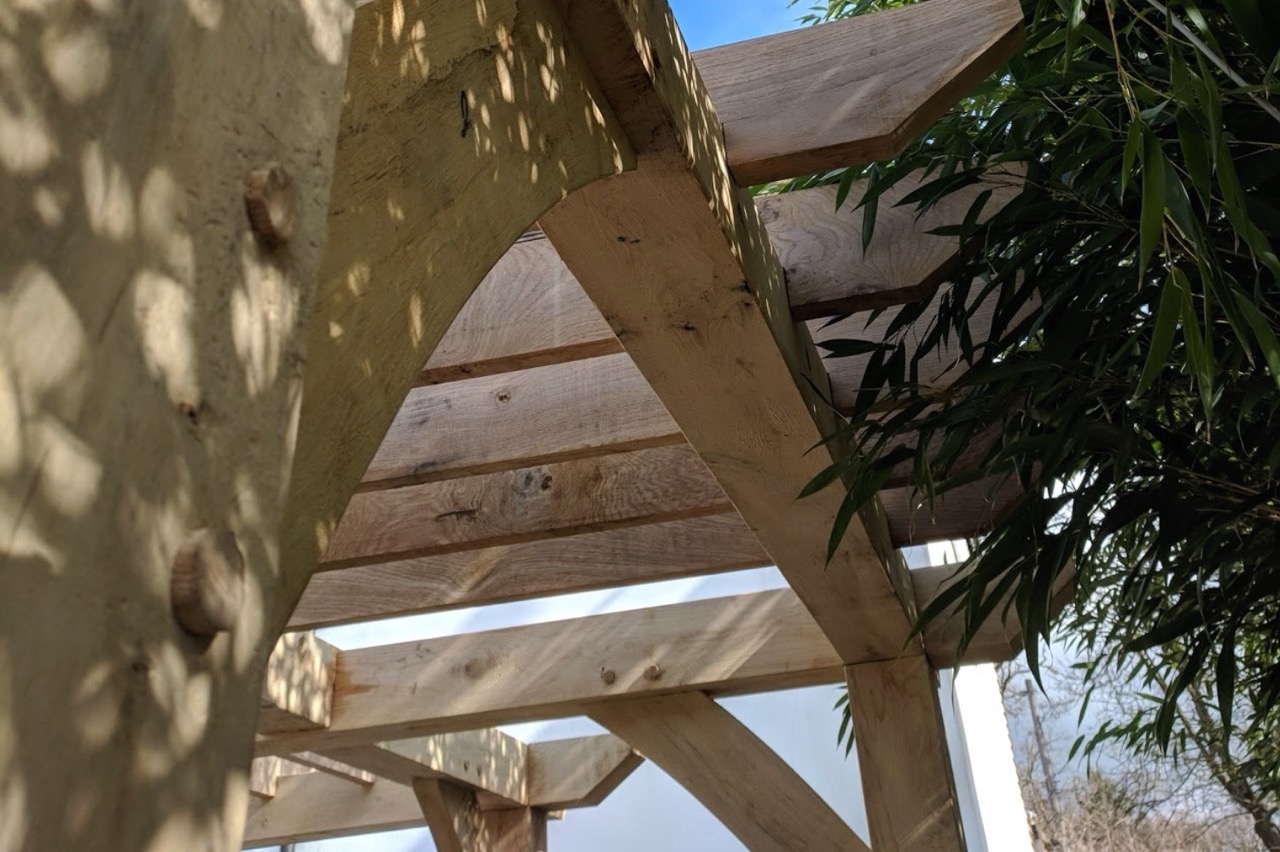
Stylistically timeless, long lasting, easy to care for and renewable, oak is Wild By Design’s top choice when it comes to building pergolas. It also works well for both large and small projects, and is easy to find in local sawmills, which can offer the raw materials or building kits, according to co-founder Max.
“If oak is out of budget, softwood or un-milled timber is your next best option,” he says. “For more contemporary designs we suggest painted softwood – a nice, planed-all-round softwood post pergola, painted black can be very effective.”
But there are a few drawbacks to painted pergolas; they have a shorter lifespan than natural oak designs and need regular repainting. Also, bird droppings can ruin the aesthetic, Max warns.
For rustic designs, Max works with locally coppiced, un-milled chestnut: “the ultimate sustainable construction material, as coppicing helps to promote sustainable woodland health, biodiversity and supports the rural economy”. The one drawback? You’ll need to find skilled craftspeople who can build your pergola from the ungraded, un-processed logs.
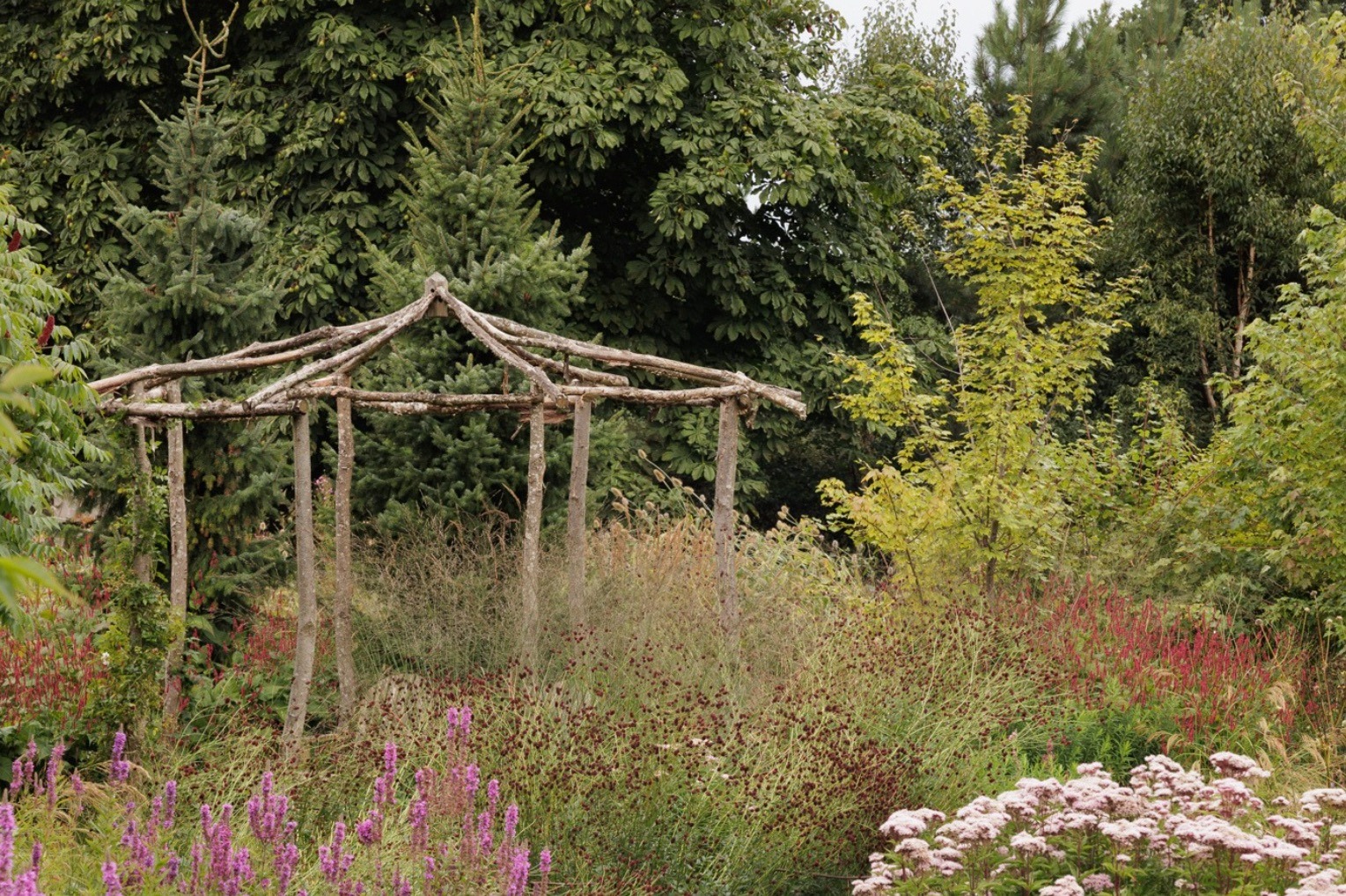
Whichever wood you choose, it’s always worth seeking out renewable, responsibly sourced materials from a local supplier.
Which is better, aluminum or wood?
Metal pergolas are the most popular alternative to wooden designs, particularly for anyone after a more modern or industrial look. But depending on the location of your pergola, it might not be the best choice. According to Max, louvred roofs and internal gutters on metal pergolas often become clogged with fallen leaves and other items blown on the wind, which means extra maintenance.
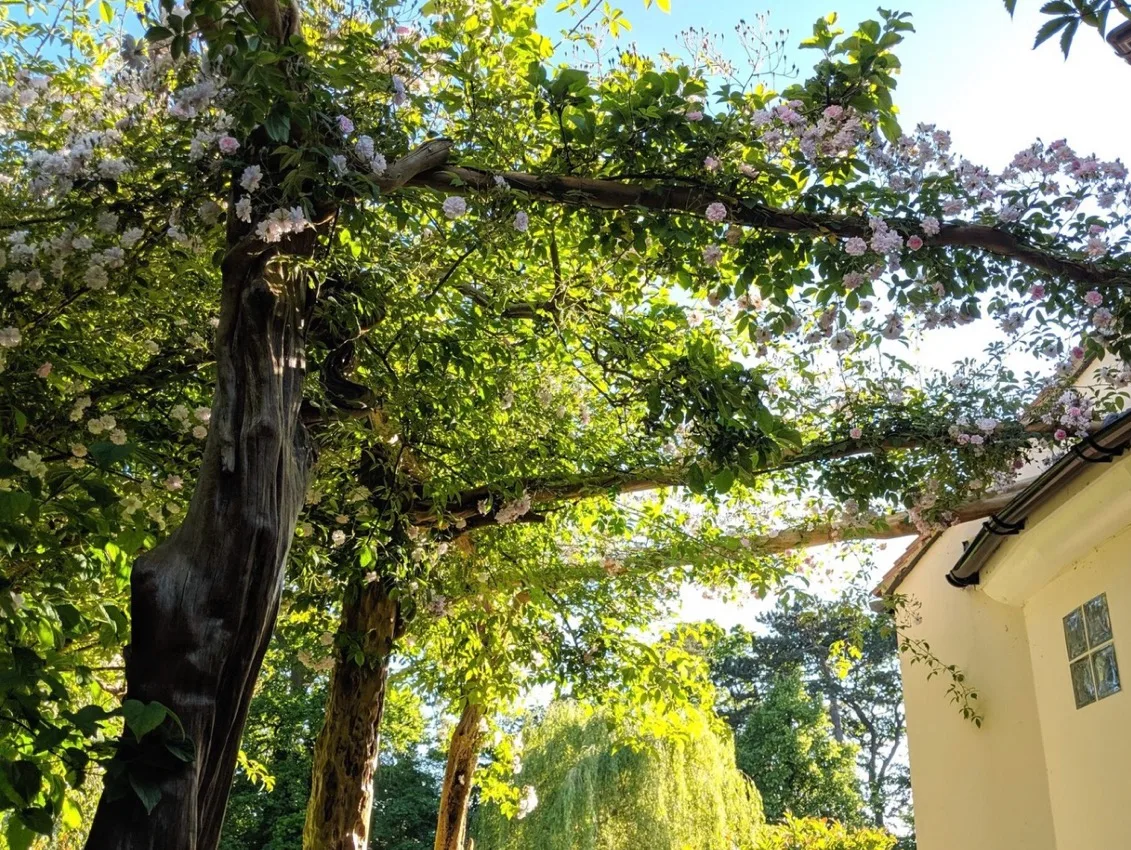
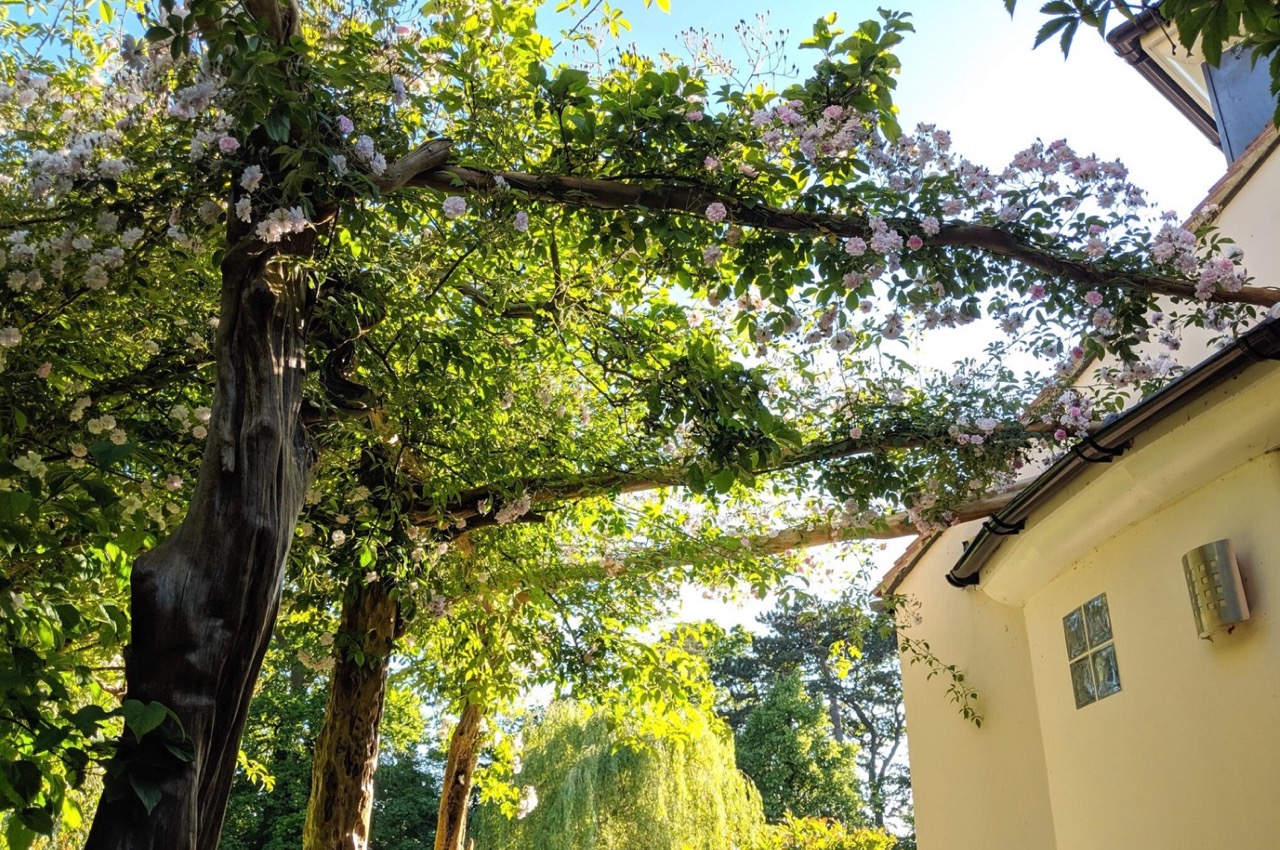
If you’re planning to build your pergola near trees, it might be worth opting for a simpler metal design, like the one in Sissinghurst Castle Garden’s famous White Garden. Head gardener Troy Scott Smith has trained a rarely grown rambling Rosa ‘Mulliganii’ up the metal supports, creating a full canopy of fragrant roses overhead come summer.

“If you want to go for metal, there are loads of talented welders and metalworkers around who can construct a beautiful pergola,” says Max. “It has never been easier to find skilled local craftspeople to create sustainable, long-lasting garden features.”
Read more:
- Visit our rose hub
- Visit our climbing plants hub
- 30 of the best climbing plants
- Roses: Our ultimate jargon and myth-busting guide and 49 of the best ones to grow
Do I need all the tech extras?
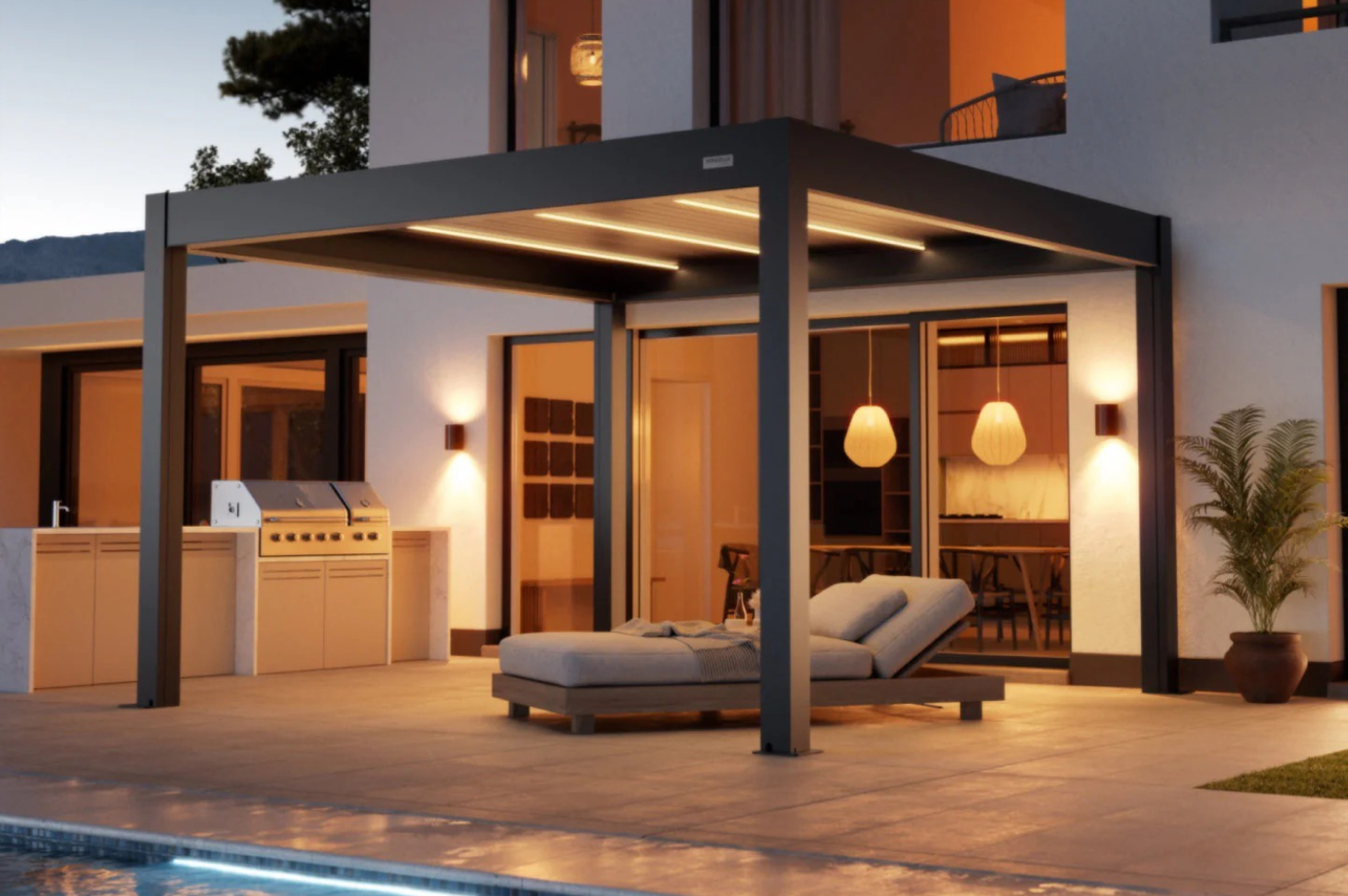
One benefit of choosing a metal pergola is the option to have smart features, such as app- or voice-controlled motorised roof louvres and integrated LED lighting and heating systems.
“A smart pergola turns your patio into a responsive, all-season outdoor room, transforming the space into a true, year-round extension of your home,” explains Ammar, of luxury pergola brand Pergolux. “You aren’t just buying shelter; you’re investing in the ability to be comfortable outdoors, whatever the weather decides to do, with the same ease as dimming the lights in your lounge.”
Smart pergolas are available to buy online in a range of colours, shapes and sizes.
Creating all-important privacy
For those of us with small urban or suburban gardens, a pergola can offer that all-important screening from neighbouring houses, as well as shade in the summer. Max of Wild By Design recommends using plants to create a canopy, rather than installing louvred designs or retractable sails, which often need replacing.
It’s important to decide how much shading and privacy is required, says designer Melissa Morton, as pergolas can include more rafters spaced closely together or fewer spaced further apart. Pergola posts can also vary in diameter from 95mm to 150mm, according to the size of the structure, changing the overall look.
If the pergola’s purpose is as a focal point or zone, rather than privacy and shade, there’s the option to leave it plant-free for “a low maintenance, uncluttered feel,” says Melissa.
What are the best plants to grow up a pergola?
Choose your climbers based on how you want your pergola to look and perform throughout the year. Max recommends a vigorous deciduous climber like Clematis montana or hops, which provide good shade through the summer, before dropping foliage to let in light in the winter. “These can be grown on intermediate timbers, or for larger spans use tensioned steel wires to give a subtle roof space.”
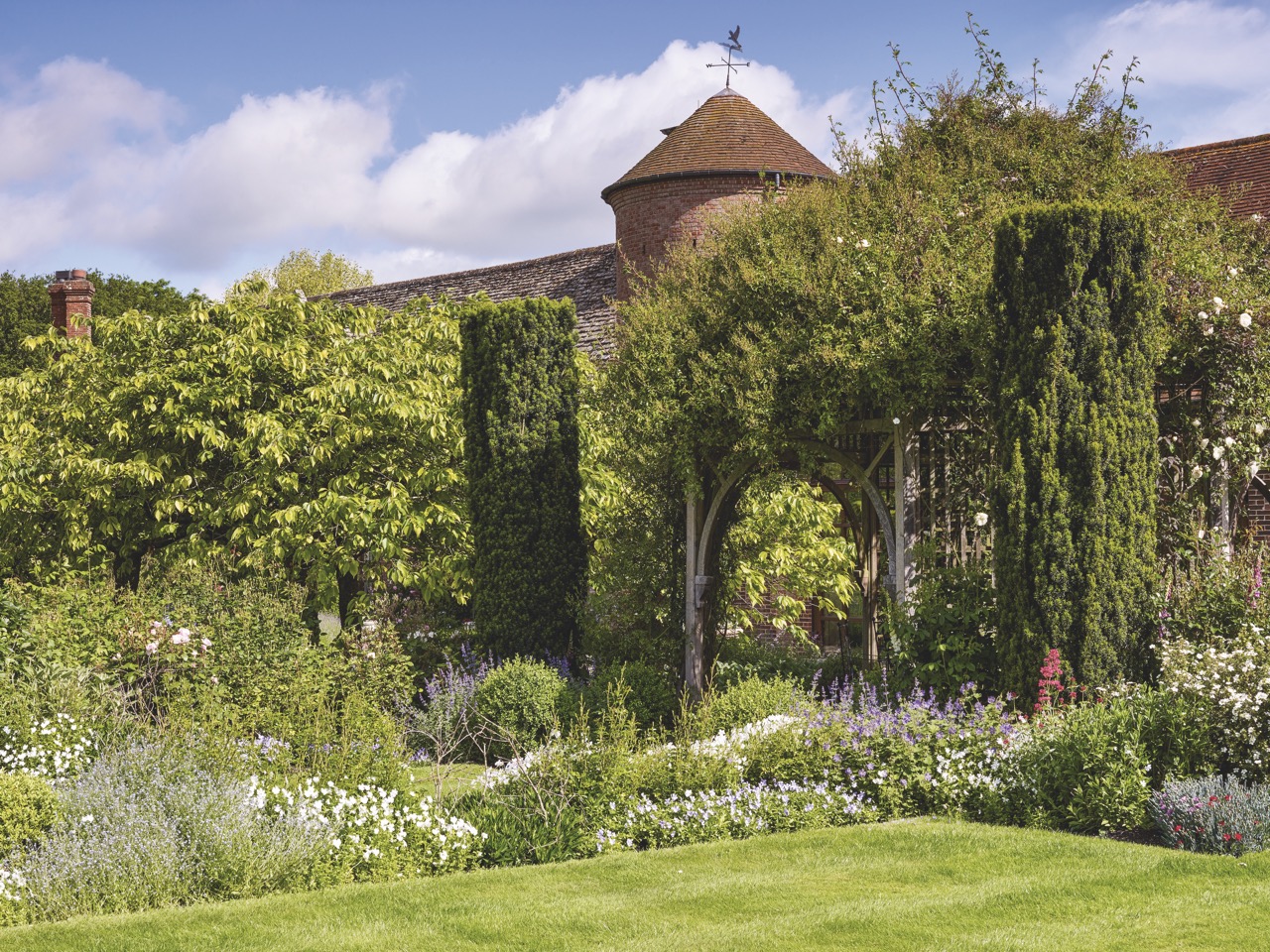
At a Tudor estate in Berkshire, designer Arabella Lennox-Boyd clad the garden’s intricate pergola with a mix of Clematis montana and roses, flanking it with four columnal yews for extra impact.
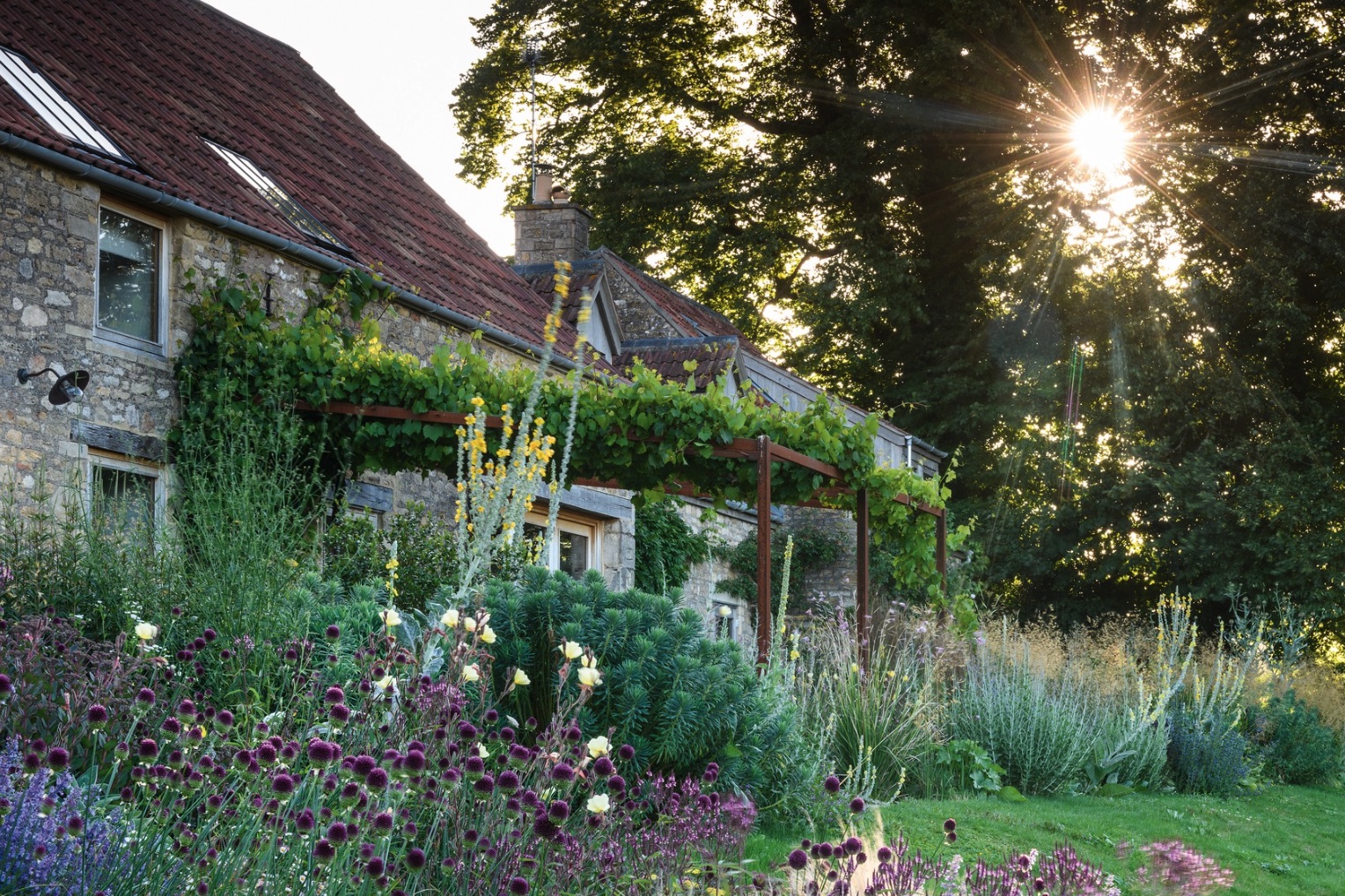
You may want to consider more unusual options too, such as climbing fruit and vegetable plants. In her own naturalistic garden in Somerset, designer Jo McKerr trained grapes up and over her arbour, which sits against the outer wall of her home and looks out towards a wildflower meadow.
Star jasmine (Trachelospermum jasminoides) is another fantastic choice, providing shade, autumn colour, and strong fragrance when it flowers in mid- to late summer. For the quintessential cottage garden look, consider wisteria too, which will provide colour and shade in late spring and early summer.
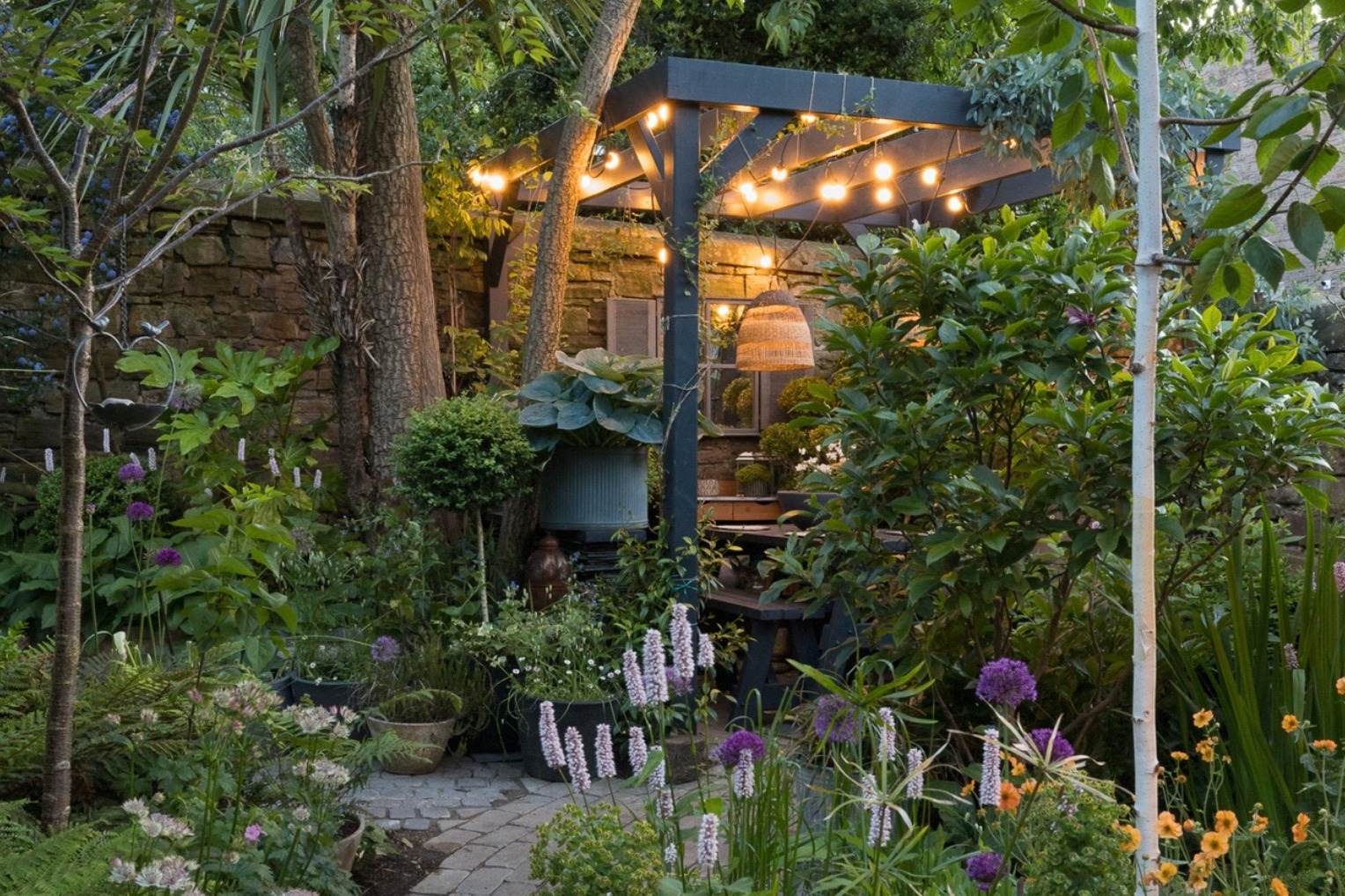
There’s also the option to combine plants to create a mixed canopy with several different flowers. Libby Webb’s pergola-covered dining area in her Edinburgh garden uses Clematis montana, C. armandi, a purple wisteria and star jasmine. She complemented the pergola at the bottom of her garden with trees and shrubs, including Himalayan birch, a mature cabbage palm (Cordyline australis), Fatsia japonica and Magnolia ‘Susan’.
To help tie in the pergola with the outdoor dining table underneath, and the nearby planter and mirror frame, Libby painted them all in the same anthracite grey colour – a neat visual trick.
Another option is to create a living pergola using trees, such as plane trees (Platanus x hispanica), training their branches into a ‘roof’ overhead with a bamboo frame. Using this method, remove lower branches and carefully bend and secure the upper ones to create the roof. Prune in the winter when leaves have dropped.