Pavement dwellers such as Danish scurvy-grass (Cochlearia danica) and chickweed (Stellaria media) barely warrant a passing glance as we move through our busy lives, but these are exactly the plants
Yorkshire-based painter Helen Thomas urges us to linger over and admire.
You may also like
- Artist Toril Brancher's stunning floral artworks
- From pastels to punchy: how colour in the garden is changing
When Helen began what she calls ‘small acts of kindness’ in the streets around her studio in Wakefield, she started to notice the plants that most of us treat as a green blur, or, worse still, blame for an ‘untidy’
streetscape. “I picked up some litter, and I was just about to grab hold of a plant and I thought, hang on, what am I doing? That doesn’t make the space look messy. What makes the space look messy is the rubbish that’s blowing around. The plants are getting a bit of a bad press because they just happened
to be the litter catchers in those spaces.”
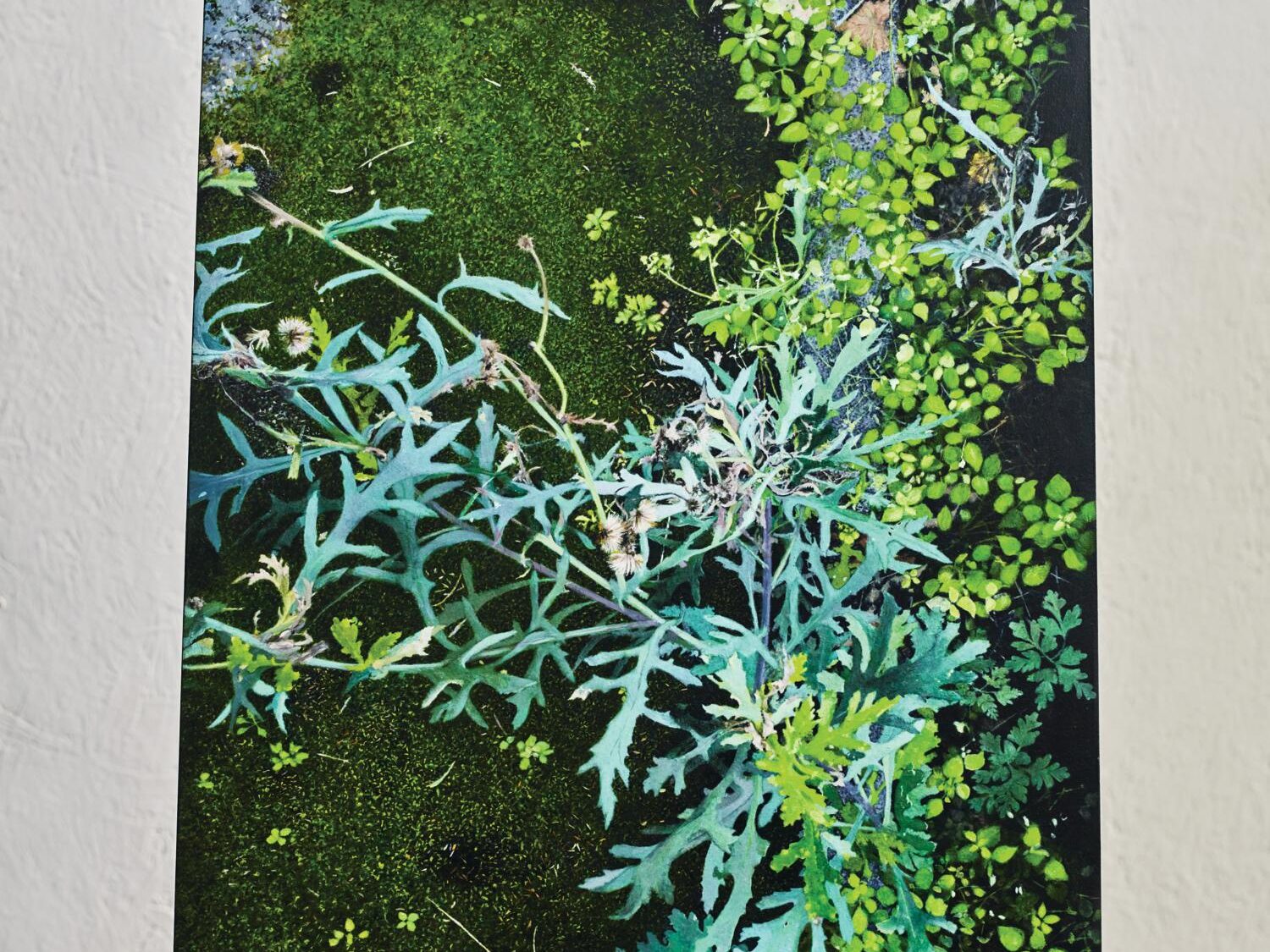
So the route between Helen’s home and her studio became fertile ground for her art, offering the chance to record the plants most of us – even keen gardeners – disregard.
You may also like
- A flower display using yellow rattle, clovers and daisies
- Can we cope with allowing our gardens to go wilder?
Helen carries out extensive fieldwork before beginning a painting – a process she calls “active noticing”. This involves spending time in each locale, taking a long, slow look – seeking out plants growing in cracks in the pavement, colonising walls and thriving without any intervention from human hands in the urban environment. “It’s about 15 minutes’ walk from my home to the studio, but that could take all day if I was left to my own devices,” says Helen. “Can noticing lead to a sense of connection and caring?”
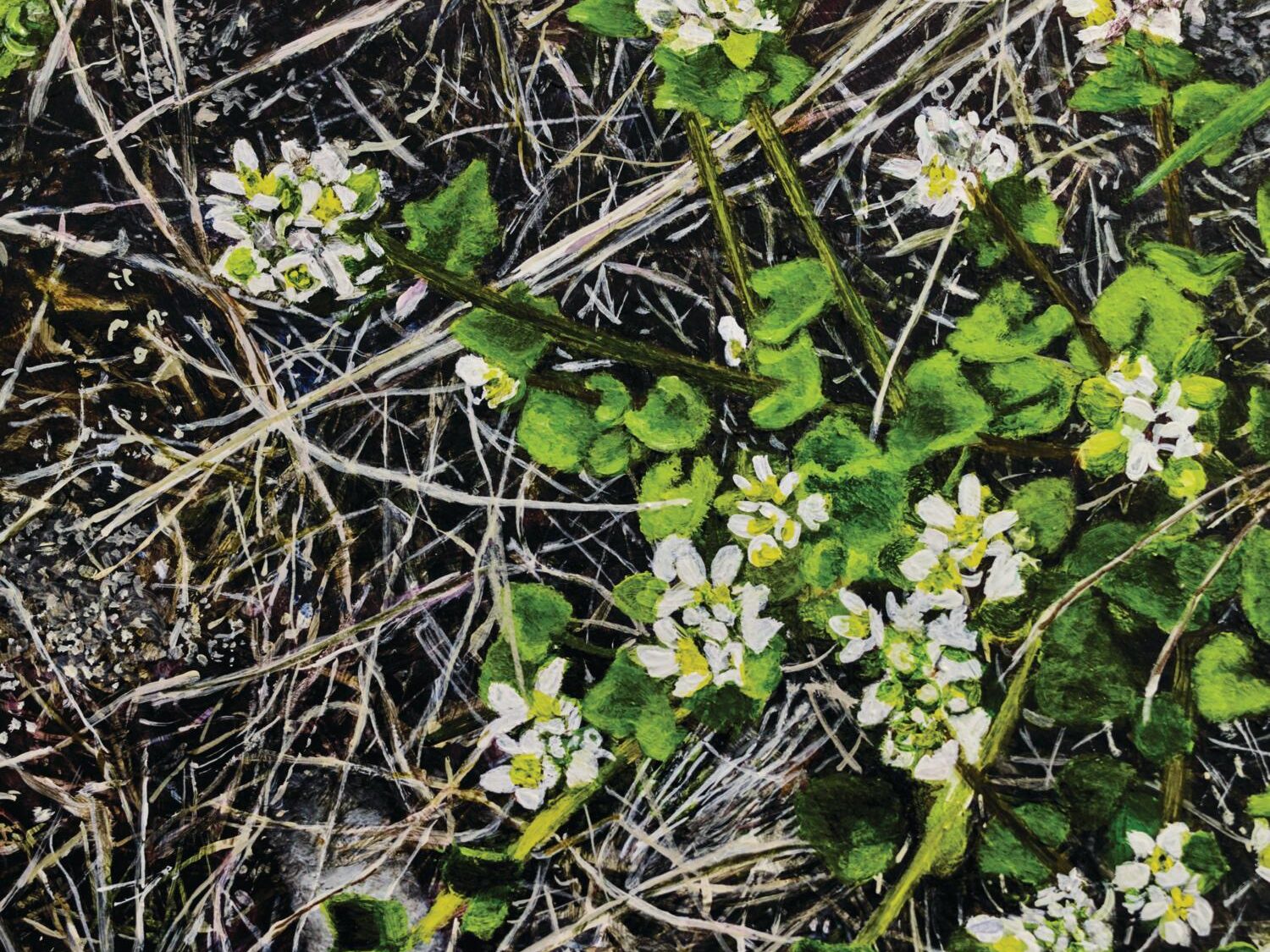
painting Danish Scurvygrass,
Charlesworth Way. Helen
became fascinated by the story
of how this salt-tolerant coastal
plant spread around the country,
following the line of the gritters
and the backdraft of cars. © Andrew Montgomery
Helen makes notes, sketches, and paints in the field, as well as photographing her finds, usually from above. “I’m finding the compositions that excite me,” she says. “I’ll take lots of photographs on my phone as I’m walking about. Sometimes I know straight away that I want to spend time with that image to make a painting.”
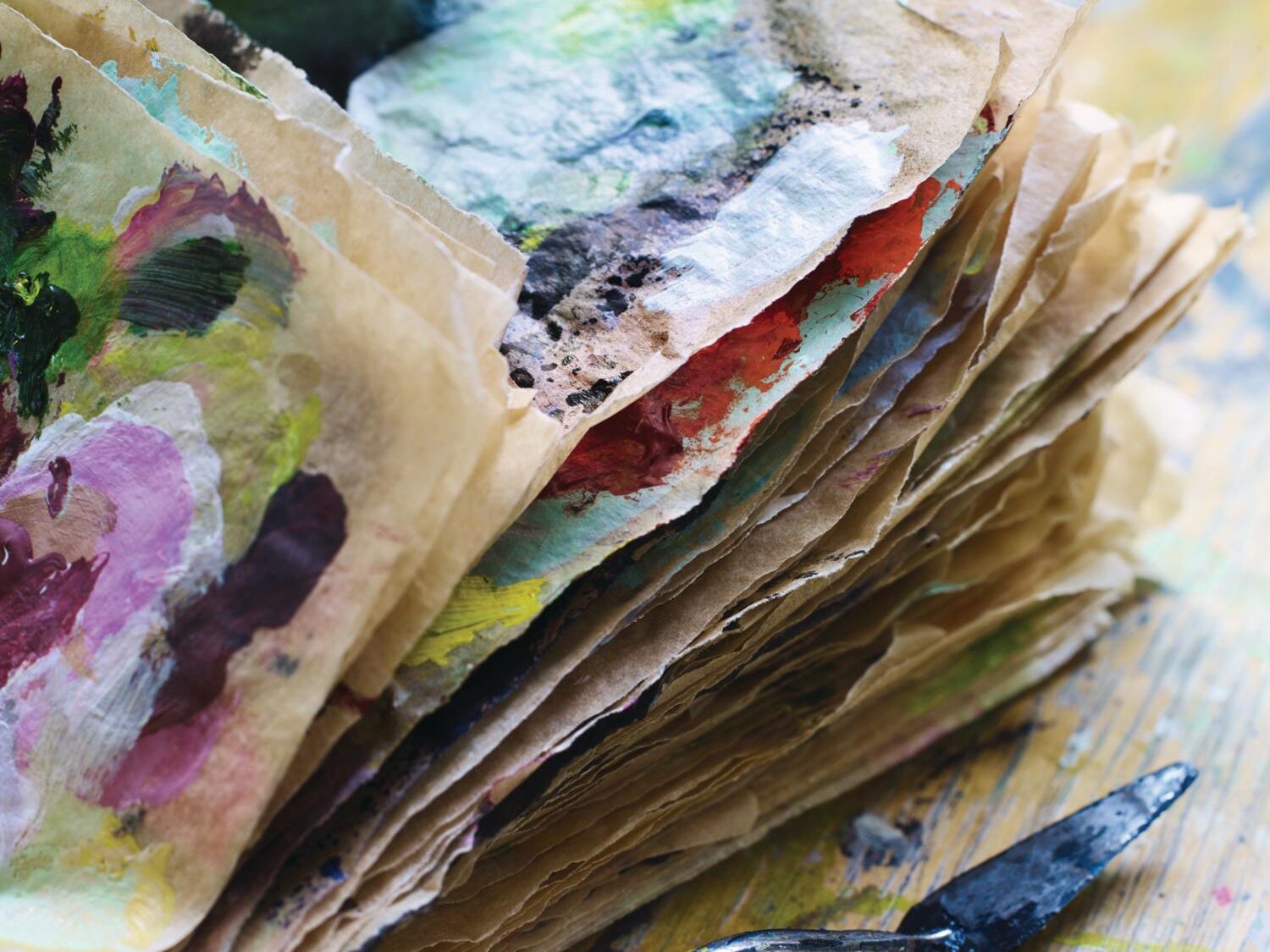
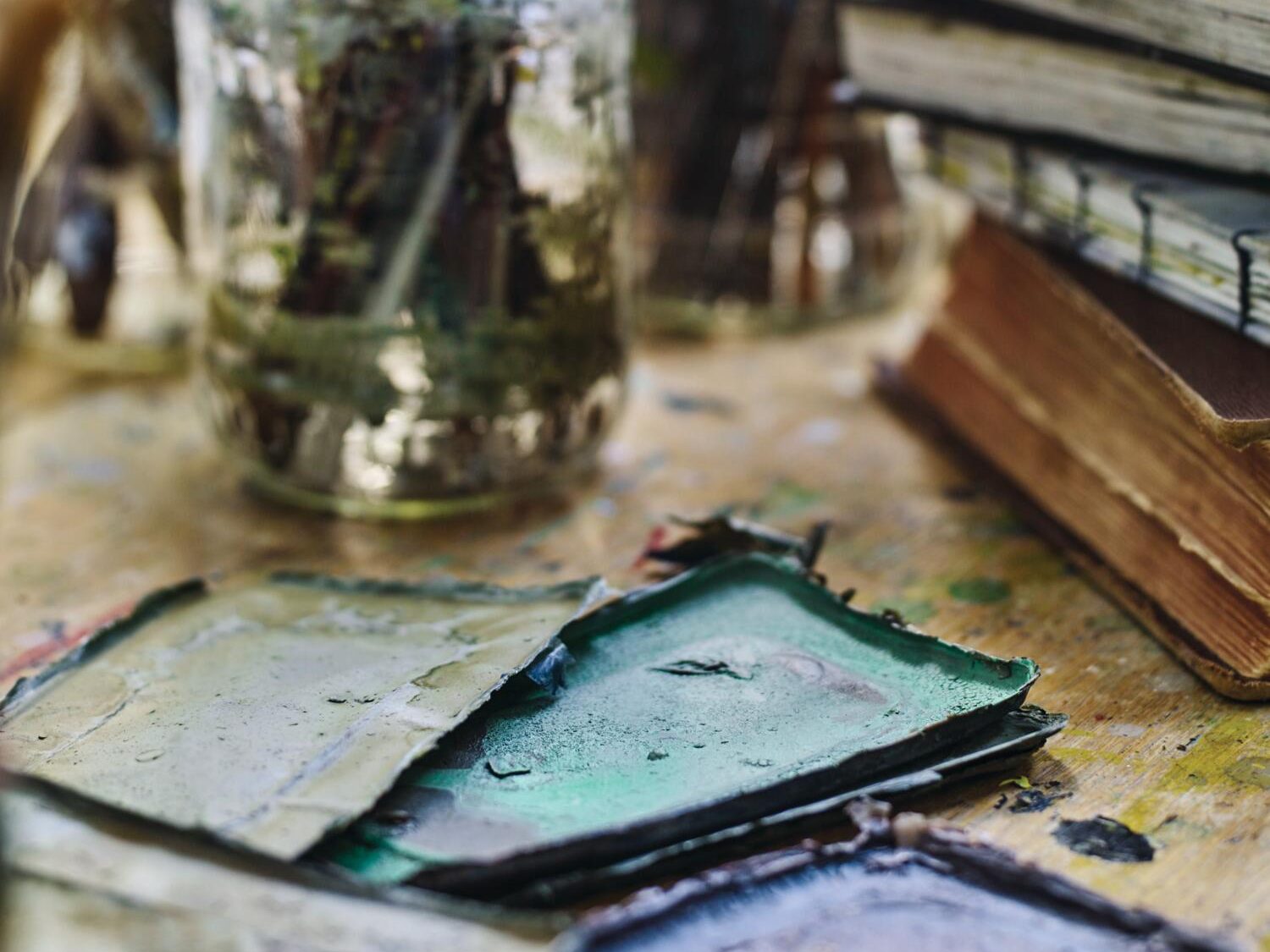
fate of the by-products of her
work: this stack of palette sheets
may become the materials for
new artworks in the future. © Andrew Montgomery
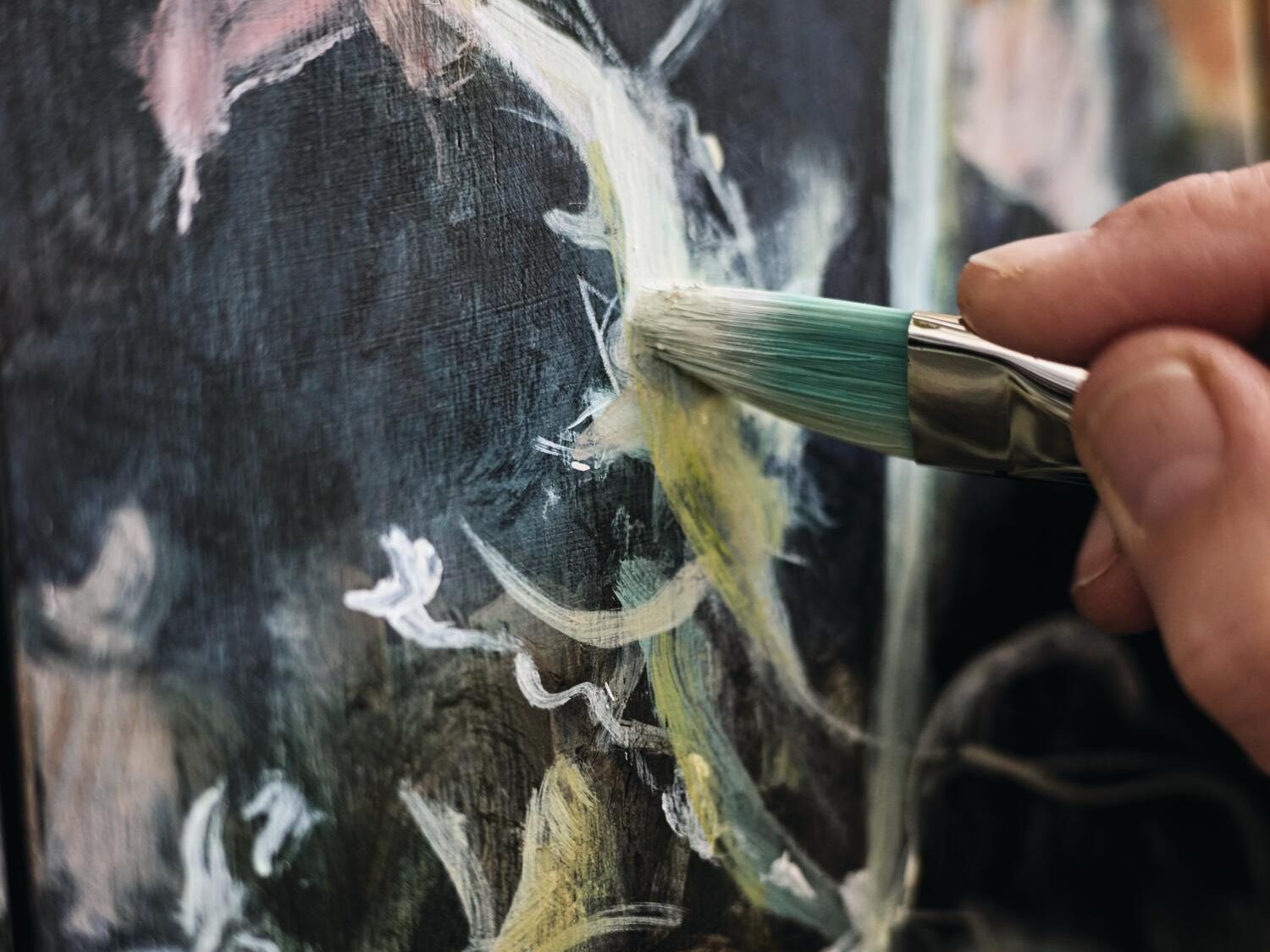
That work continues back at her studio. Helen uses the source material she has gathered as inspiration for paintings on board, paper and even wooden slats. Her works range from roughly A4 size to wall-filling large-scale creations. “There’s no zoom function, no magnification in a painting. Apparent fine detail gives way to paint. There’s so much life in even a square centimetre of the patch of ground that the painting references.”
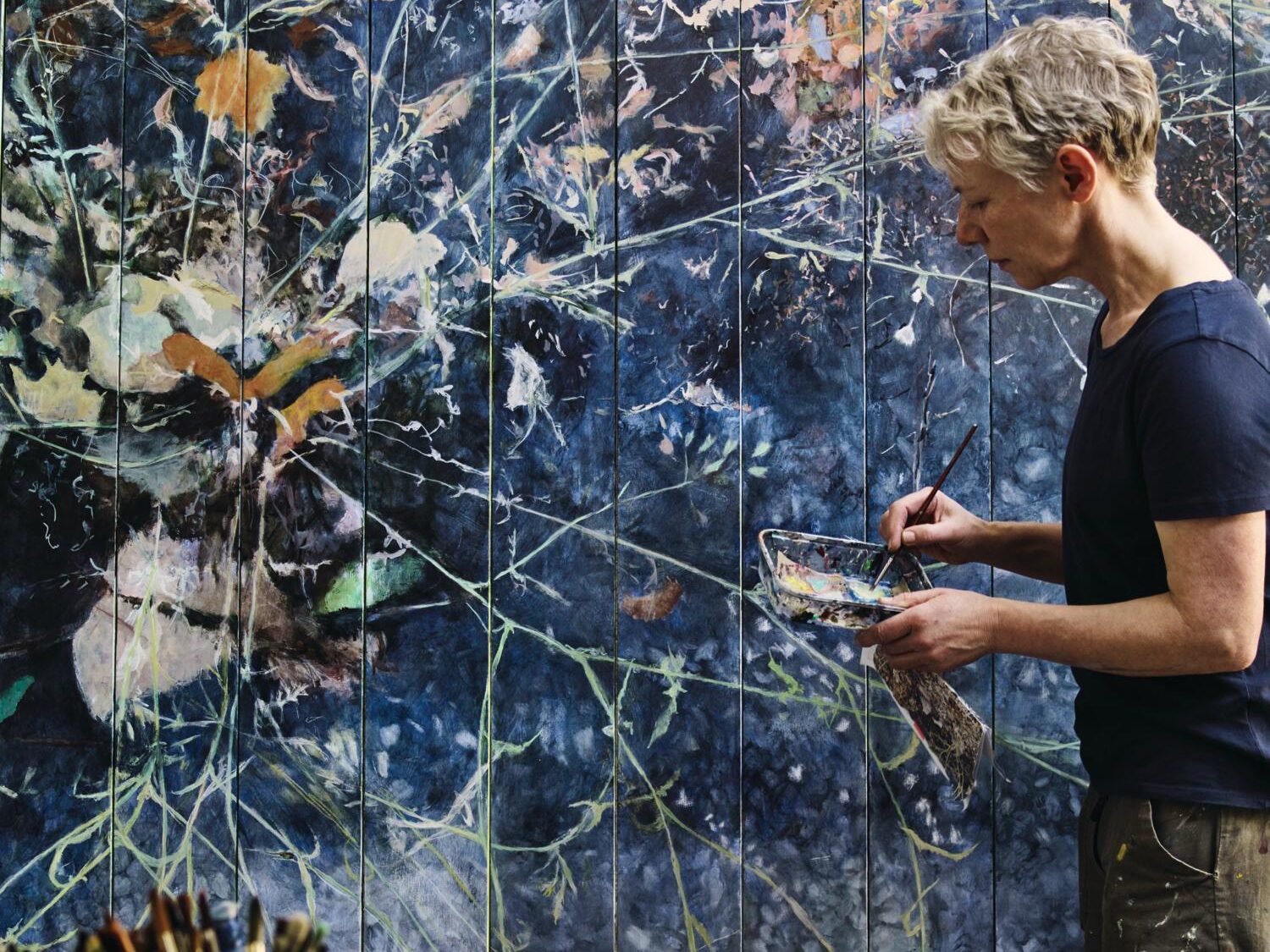
Her paintings are often made on
paper or board, but this image
is constructed from 15 wooden
slats, and will be exhibited in a
louvre format so that viewers
piece the image together as
they move around it. © Andrew Montgomery
The scenes Helen paints are mostly ephemeral: these ‘unplanned plants’, as she calls them, are in constant flux. “By the time I’ve finished a painting, even by the time I’ve got back to the studio, that
site has probably changed,” Helen says. “Landscape maintenance teams trim and strim, feet scuff, flowers turn to seed. Plants are always changing.”
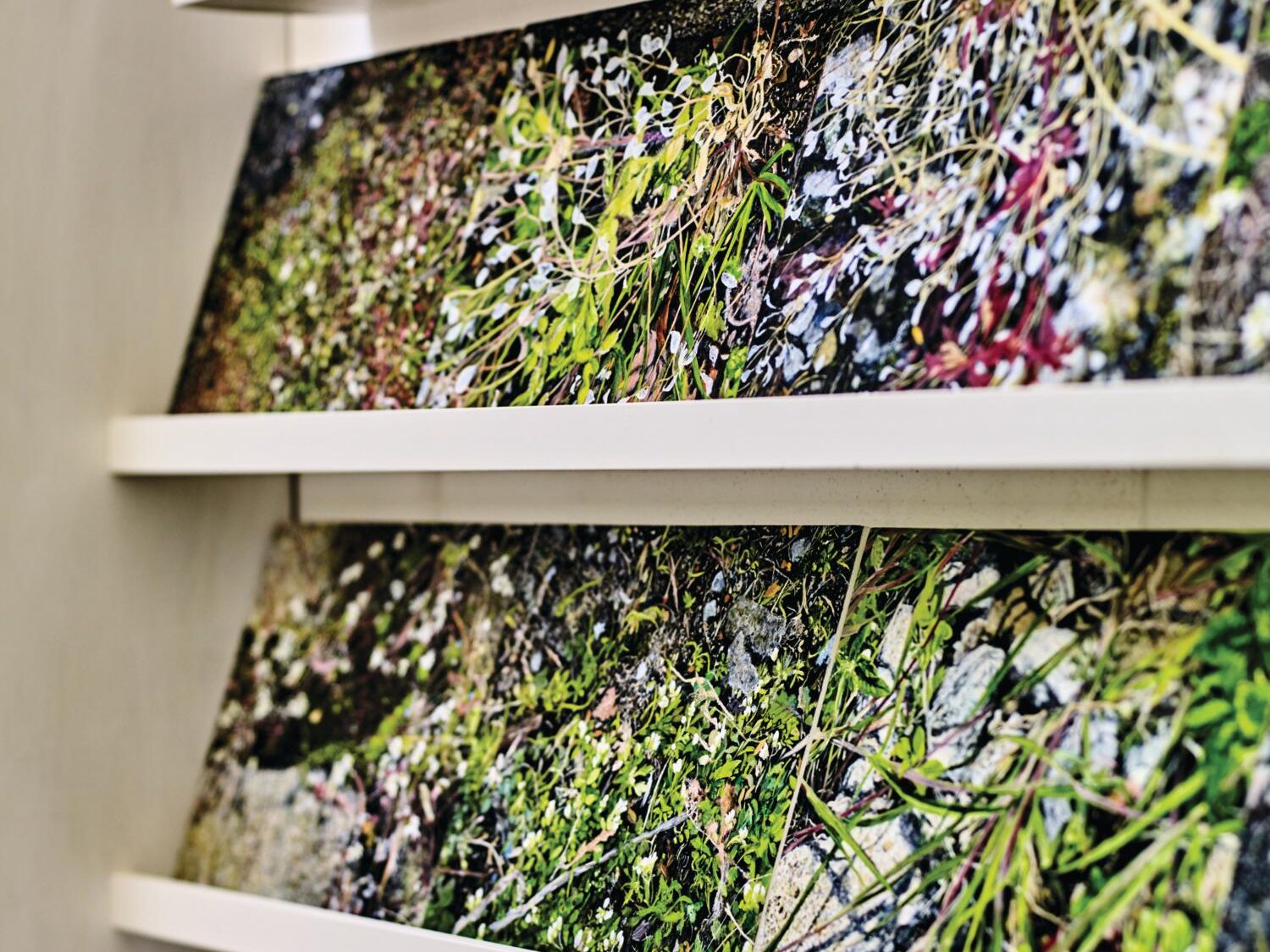
painted on board sit above
Helen’s “thinking space”, where
she places and organises notes
about ongoing projects. © Andrew Montgomery
Helen has always loved being outside, and toyed with a career in horticulture before settling on a BA in fine art at the Falmouth School of Art in Cornwall. Not surprising, then, that her work has always been connected to plants, although the focus has shifted over the years from gardens to post-industrial
landscapes such as canal banks to city streets. Helen believes the public’s perception of urban plants is changing, too: “Now I am finding if I say ‘I paint weeds’, quite often people then say ‘Oh, but they are only
plants in the wrong place’.”
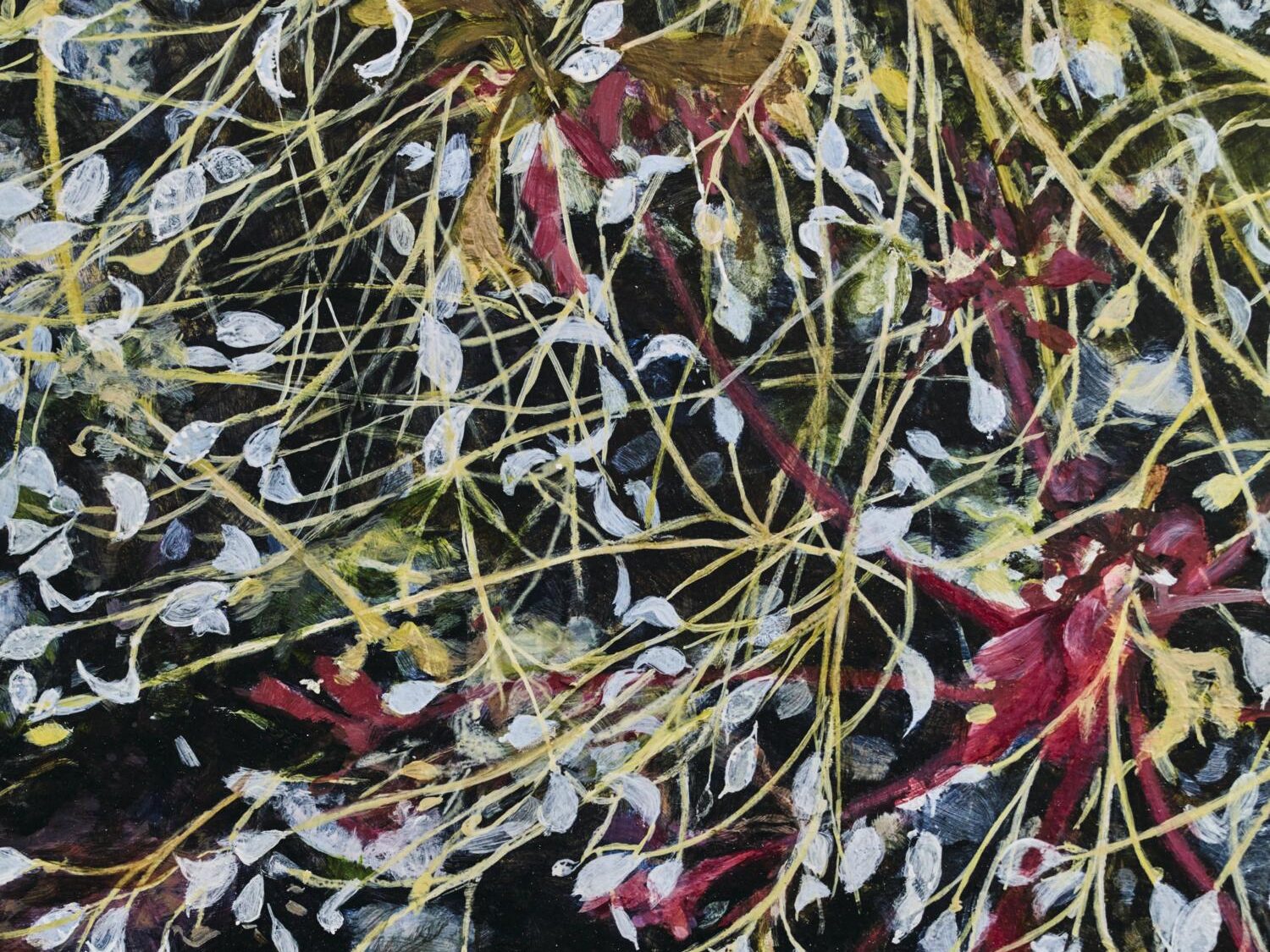
George Street III. This piece
is a sibling to much larger
paintings of the same scene,
a street in the centre of
Wakefield, West Yorkshire. © Andrew Montgomery
During the Covid pandemic, Helen launched a project called Dandelions and Double Yellows, inviting the people of Wakefield to reconsider plants usually dismissed as weeds. More than 50 people contributed their own images to a digital gallery of artworks that included ragwort and groundsel. “People still bump into me and say ‘I think of you every time I see one of these little plants’ or ‘I was just going to pull
something up the other day but actually maybe I could keep that’,” she says.
In 2025, Huddersfield Art Gallery curated an exhibition of Helen’s work titled No Patch of Green Too Small at the University of Huddersfield. She describes the exhibition as “an invitation to be attentive to the often overlooked patches of green in our villages, towns and cities that are vital for much more
than human beings”. In November, Helen is looking forward to displaying more of her work as part of the Open Studios at The Art House, in Wakefield, where her studio is based.
At a time of overwhelming climate emergency and environmental crisis, Helen believes that by noticing and taking care of these plants at our feet, we empower ourselves to connect more deeply with the world around us. “I’d been feeling a little bit bereft: where’s my landscape? Where’s my connection? And it’s right here under my feet. I just needed to look more closely.”
Find out more about Helen Thomas’s work at helenthomasartist.com. Find Helen’s Dandelions and Double Yellows project online at creativewakefield.net/creativechallenge/dandelions


