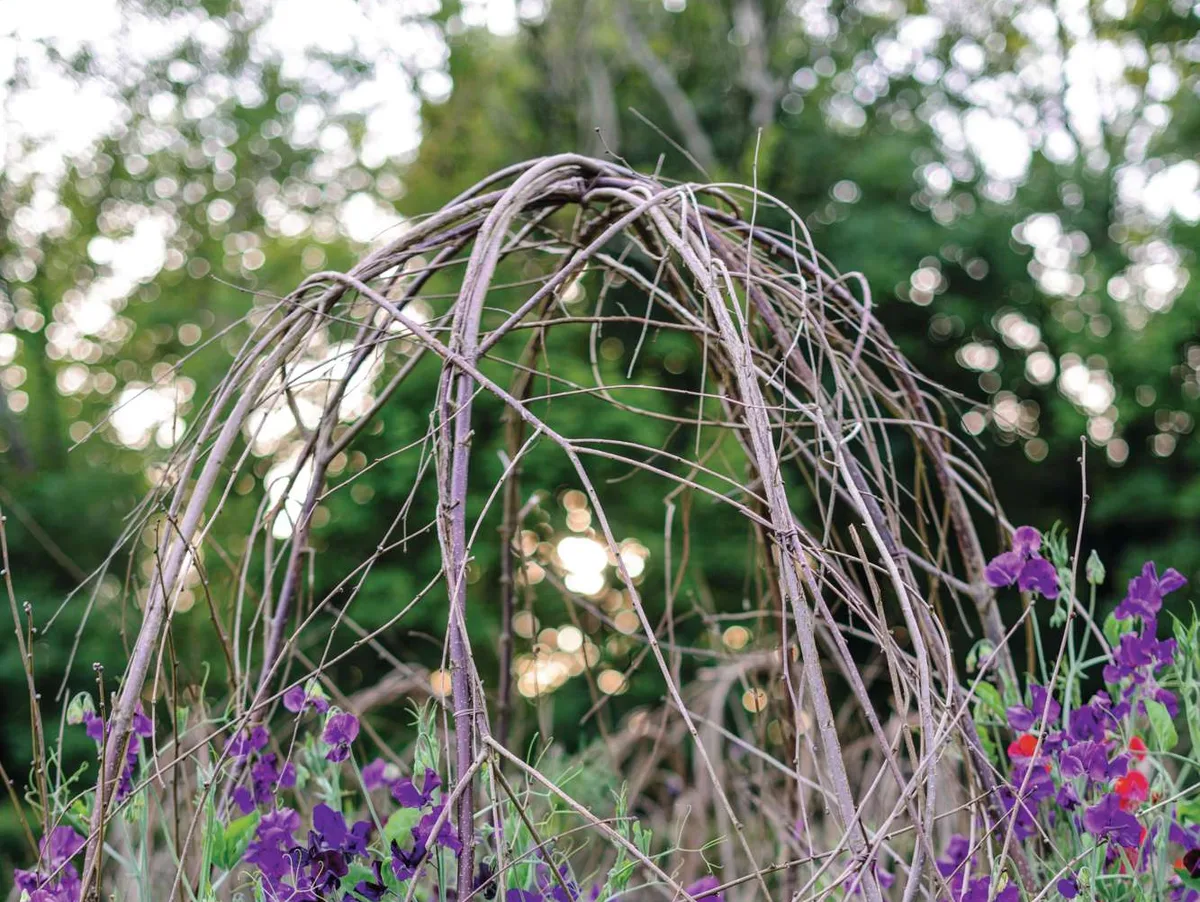
Plant supports are essential for climbers and tall plants that have a tendency to flop. But they will also help save space in your borders and encourage good air circulation, which prevents some pests and diseases, and makes for healthier, stronger plants – and now is the perfect time to make your own.
Here are five plant support creations that would make perfect garden projects this spring.
Five plant support projects to try at home this spring
Twisted hazel
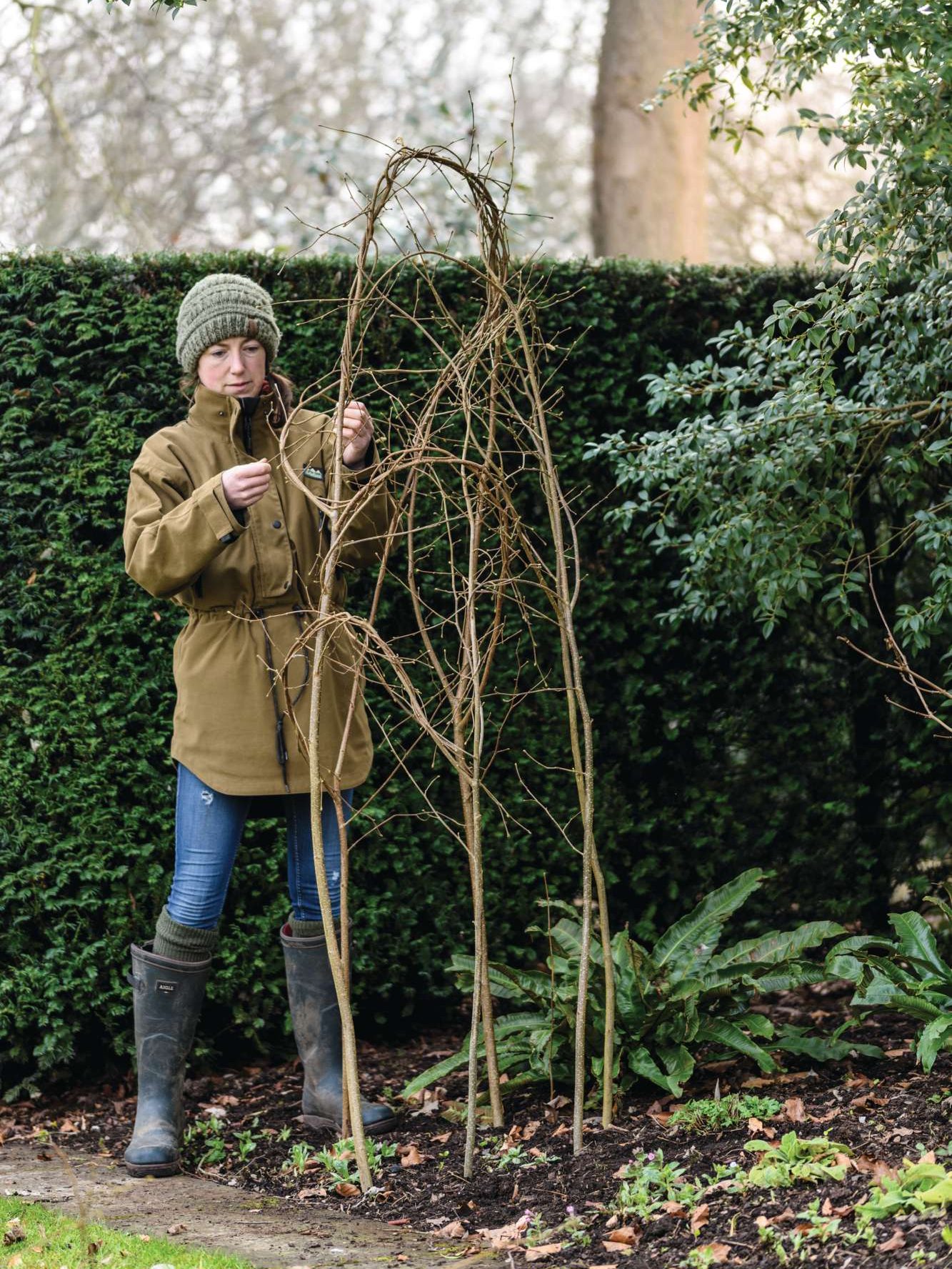
Traditionally, coppiced hazel has been widely used in both ornamental and vegetable gardens. It is especially useful for staking a wide range of herbaceous plants. Twisted basket structures are easy and quick to construct and can be built to any size to meet an individual plant’s requirements.
Hazel is naturally twiggy and the multi-branched stems provide plenty of support for new growth to grow through. The posts can be pushed directly into the ground as hazel is unlikely to root. Although beautiful in their own right, the structures rapidly become engulfed in leaf and blend seamlessly into a border.
How to make
Staking herbaceous plants is easier in the spring when you can see the new growth appearing, but it’s imperative that you provide support before the plant actually needs it; it’s virtually impossible to build a structure discreetly over an established plant without damaging it.
It is helpful to know the eventual height of the plant you are staking as this will dictate the size of your structure, which should be roughly the height of the plant when fully grown. Using an iron bar and hammer, make between four and six holes in the ground in a circle around the plant. Gather a large armful of hazel stakes, then take the hazel stems and push into these the holes.
Bend the tops of the poles toward the centre of the plant and twist them together. Work around the circle, interlinking all of the twiggy branches. Keep twisting the stems together until you have a secure dome over your plant. Woven hazel structures can provide discreet support in any mixed border, smothered in annual climbers such as sweet peas, cobaea or ipomoea. They are also an attractive addition to the kitchen garden for the less weighty vegetables such as peas or French beans.
You may also like
Tubular
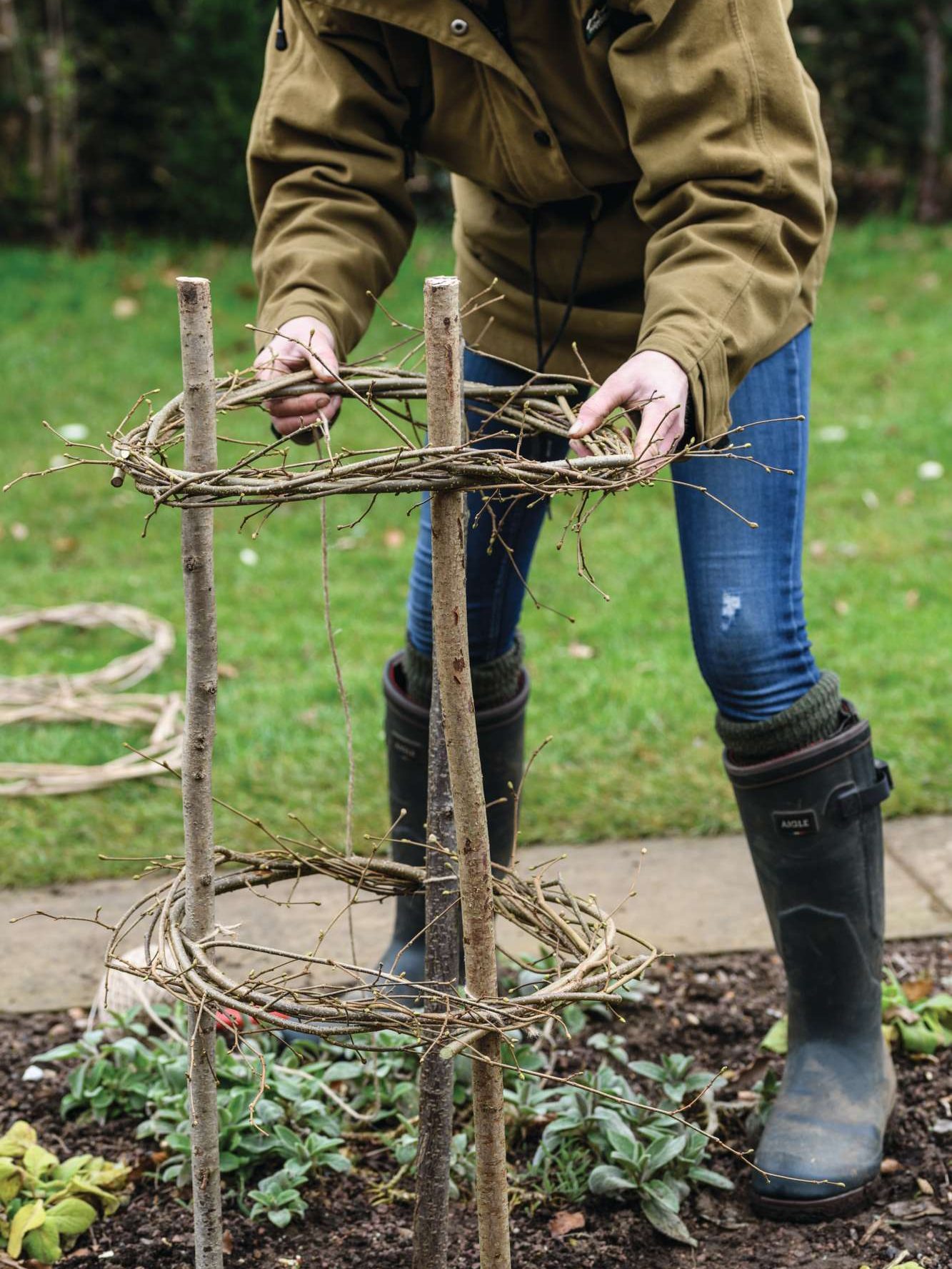
Some plants require more support than others. Larger, taller plants and often those with vertical flower spikes, such as delphiniums and aconitums, are prone to damage from the wind and so a strong stake or two is often required.
This style of structure is also useful in the kitchen garden and I’ve used it successfully to support both tomatoes and cut flowers. There is no limit to the size of these tubular structures, and I make sure to construct them to at least three quarters the height of the plant.
The example given here is made from hazel, but there are many other options. Willow, cornus, wisteria or lengths of old man’s beard clematis can be twisted into hoops. I use whatever I have to hand and it’s a great way to recycle otherwise wasted pruning material.
How to make
Based on the eventual height of the plant you are supporting, cut three hazel poles to length. Aim for between half and three quarters the height of the plant plus 20cm to push into the ground. With an iron bar and hammer make three holes in a circle around the plant ensuring they are far enough away to avoid damaging any roots.
Push your hazel posts into the holes and firm.
Take your flexible plant material and form a wreath that will fit snugly over all three hazel poles. Start with one stem and coil it around, wrapping the end over and through the centre to hold it tight. Add further stems until you have a strong, sturdy hoop.
Slide the ring over the poles and secure to the hazel with jute twine. Depending on the height of the structure, more than one ring will be necessary. I space them at around 30cm intervals, finishing with a final hoop just a few centimetres from the top of the post.
You may also like
- Meet the gardener who trains roses into remarkable sculptures
- Peonies coming through? Here's how to make your own plant supports for a rustic cottage garden look
Continuous rope
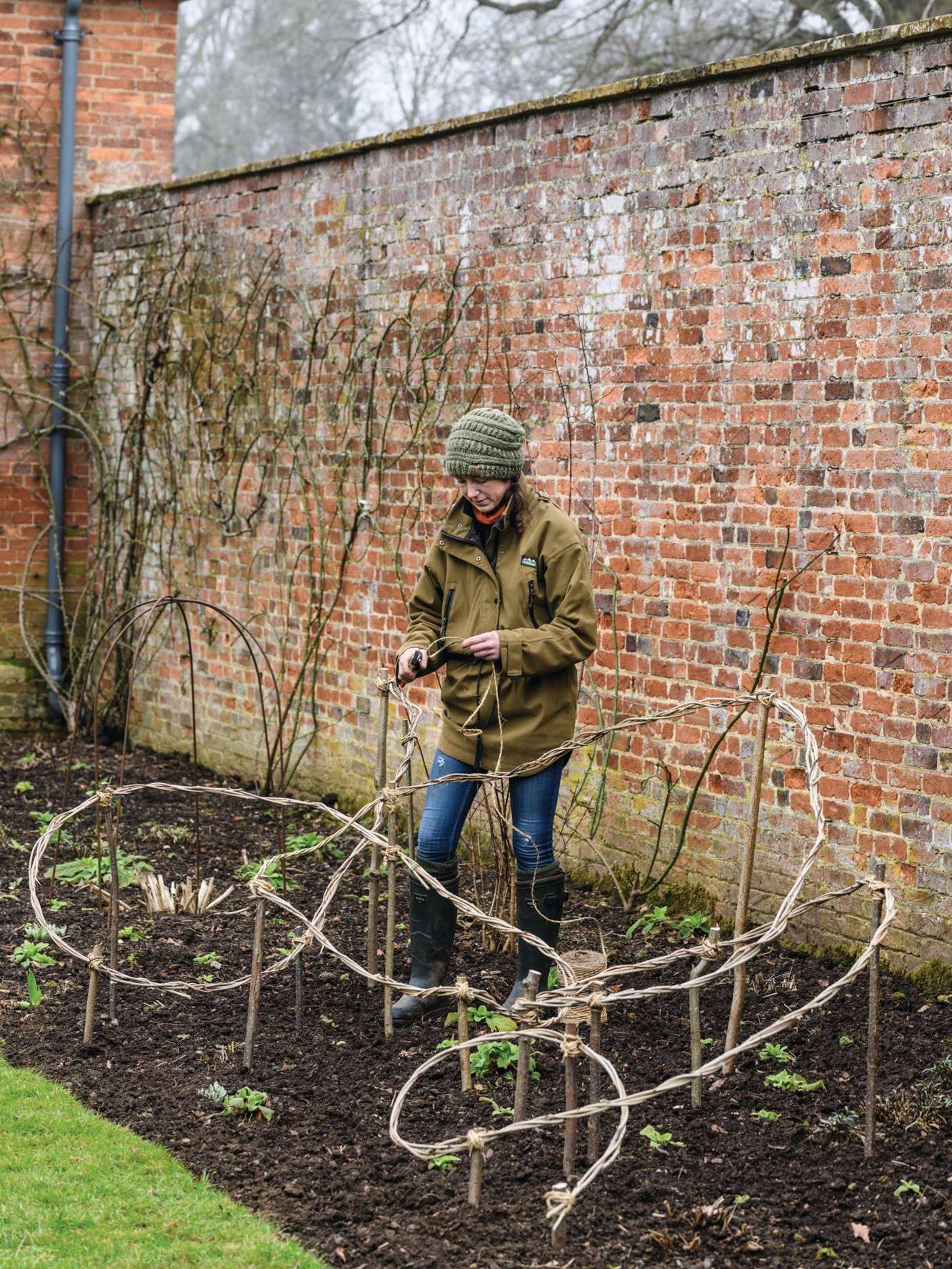
Staking individual plants is time consuming and can leave the border looking too busy. Instead, by threading a continuous ‘rope’ made from wisteria whips through the border you can create planting pockets to support a number of herbaceous plants, annuals and dahlias – some will be supported by the rope others can be tied to the stakes.
I’ve varied the height of the posts to allow for the natural graduation in size towards the back of the border, but it’s important to introduce some height at the front as well to prevent the design looking flat; it should have ‘energy’ as it swoops through the border.
How to make
Gather together a selection of hazel posts in varying lengths and a good armful of wisteria whips. Pruned wisteria tends to go brittle quickly, so aim to construct this as soon after winter pruning as possible.
For the ‘rope’, take two or three long wisteria whips and twist together. As you reach half way, incorporate another whip, continue twisting as you move along and keep adding whips as you twist until you’ve made a length of about 5m. Longer lengths are more difficult to handle.
Lay the rope on to the border, manipulating it into shapes around the plants and mark out positions for posts at regular intervals. Use an iron bar and sledge hammer to pre-form holes for the hazel uprights. It’s important the posts are secure as the weight of the rope and the plants will hang from these. Tie the wisteria to the hazel uprights using thick jute twine. The rope may be attached to each post more than once.
Willow hurdle
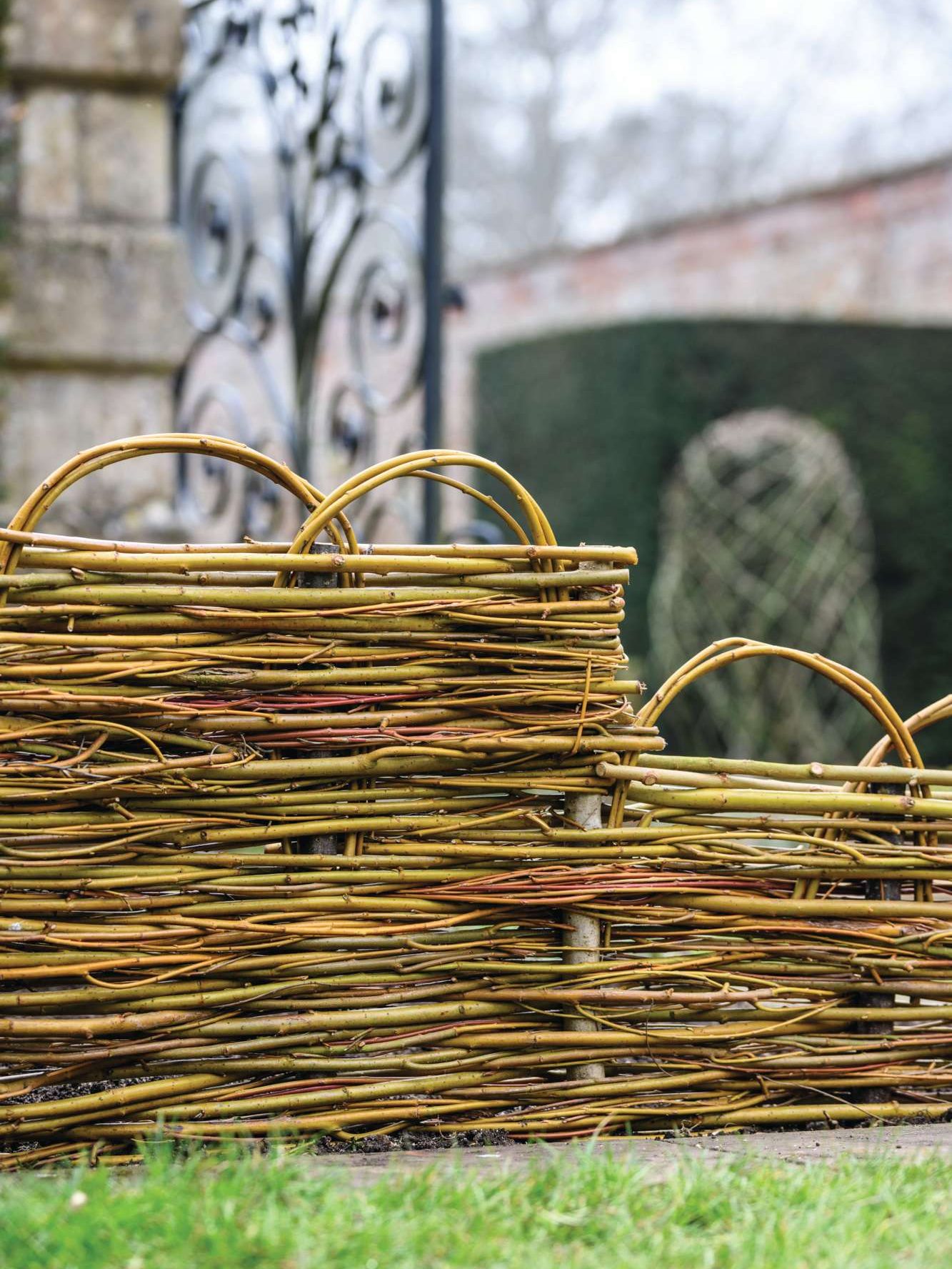
Traditionally used in medieval gardens, wattle fences were commonly used to define boundaries to property and land. I often create woven panels from a combination of willow and hazel.
Incredibly versatile, these panels can be made as large or as small as is necessary and can be embellished with hoops and rolled tops or left simply unadorned. Different varieties of willow also offer an impressive range of colours from green, through yellow, orange and red to black.
I weave ankle-high panels as edging to borders to retain wayward plants where they must be kept off lawns or away from paths. They also work brilliantly in the vegetable garden to divide crops, retain mulch or act as unobtrusive fences to keep pests away from precious harvests.
How to make
Willow is quick to root if placed directly into the ground when fresh, so allow the cut rods to sit outside in a frost first. I favour hazel for the upright posts, selecting poles that are stronger and thicker than the willow I’ll be weaving with.
I create these structures in situ, pushing the posts into the ground at regular 20cm intervals, ensuring they are well anchored. Select pliable willow rods that are at least as long as the panel you’re creating. Starting at one end of the hurdle, weave the willow rod backwards and forwards through the hazel uprights.
If you reach the last post, wrap the willow around 180 degrees and continue weaving in the opposite direction. Alternate the direction of the weave as you add more rods. When you are happy with the height of the panel, finish by weaving two strong, slightly thicker willow rods along the top, one in each direction.
Depending on its setting, I may soften the edges of the hurdle by adding a row of small hoops to the top edge. Twist together two or three slim willow weavers and insert the ends into the holes either side of the hazel uprights interlinking them as you move along the length of the panel.
You may also like
Wigwam
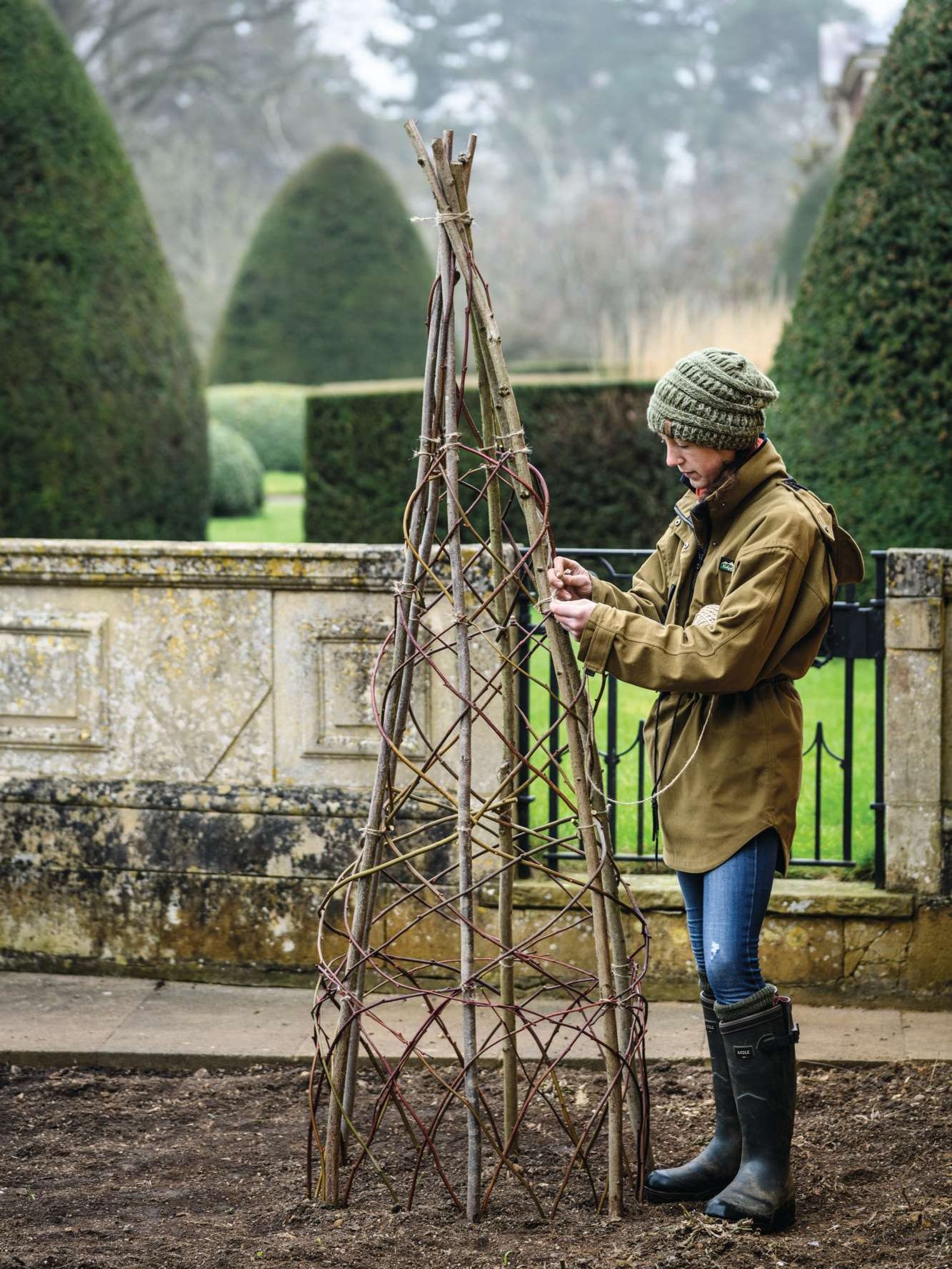
Undulations in height give an extra dimension to borders and add interest to planting schemes. An easy, way to achieve this is by using climbers. Hazel wigwams have traditionally been used to support both vegetable and ornamental climbing plants. They’re easy to construct and can be as rustic or decorative as desired.
The base of my wigwams are always sturdy hazel poles, but I use a wide range of plant material to decorate with. Any pliable offcuts from trees and shrubs such as apple, willow and lime can be gathered while pruning and used to create patterns and shapes within the hazel structure. These decorative embellishments also provide extra support for plants to scramble through, reducing the need for so much tying in.
How to make
Established climbers in full leaf can be exceptionally heavy and it’s important that the structure can support the weight throughout the summer months. Select five or six strong, straight hazel poles and cut to the desired height allowing an extra 20cm to push into the ground. Trim off any side shoots.
To ensure the wigwam is well anchored, I prepare the holes for the hazel to slot into beforehand, using an iron bar and a sledge hammer. Working in a circle, I then push the hazel firmly into the pre-prepared holes. Gather together the tops and tie securely, I like to use a chunky, rustic jute twine.
Starting at the bottom of the wigwam, weave your chosen plant material around the hazel poles to create pattern and interest. You could opt for multiple different stems, such as a red cornus and a yellow willow to add additional colour to the structure. Tie the stems to the hazel poles where necessary using jute twine. It is important to ensure the pattern is dense toward the base of the wigwam to provide lots of support for new growth as it begins to climb.
Subscribe to Gardens Illustrated for inspiration dropped on your doorstep every month.