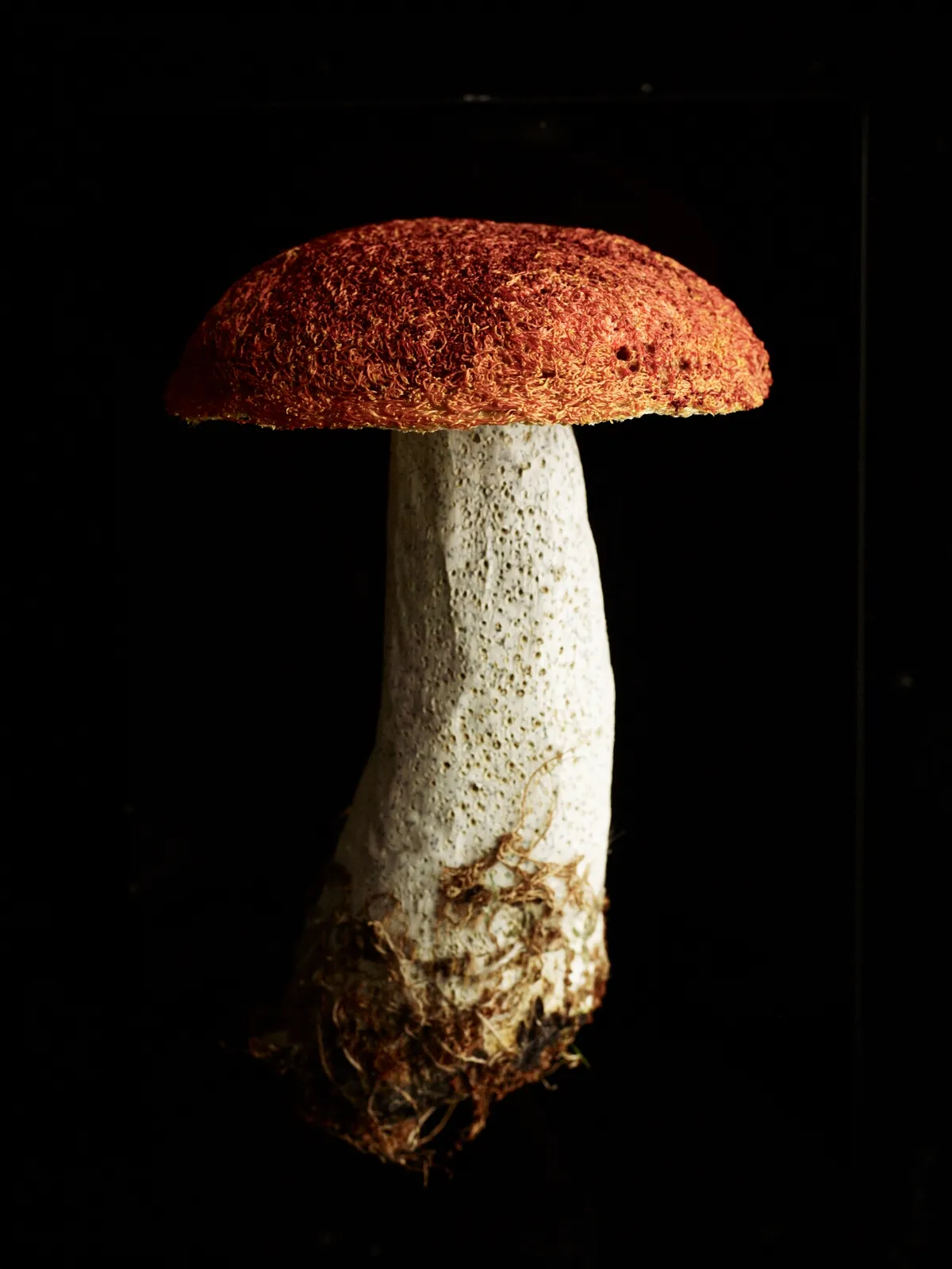
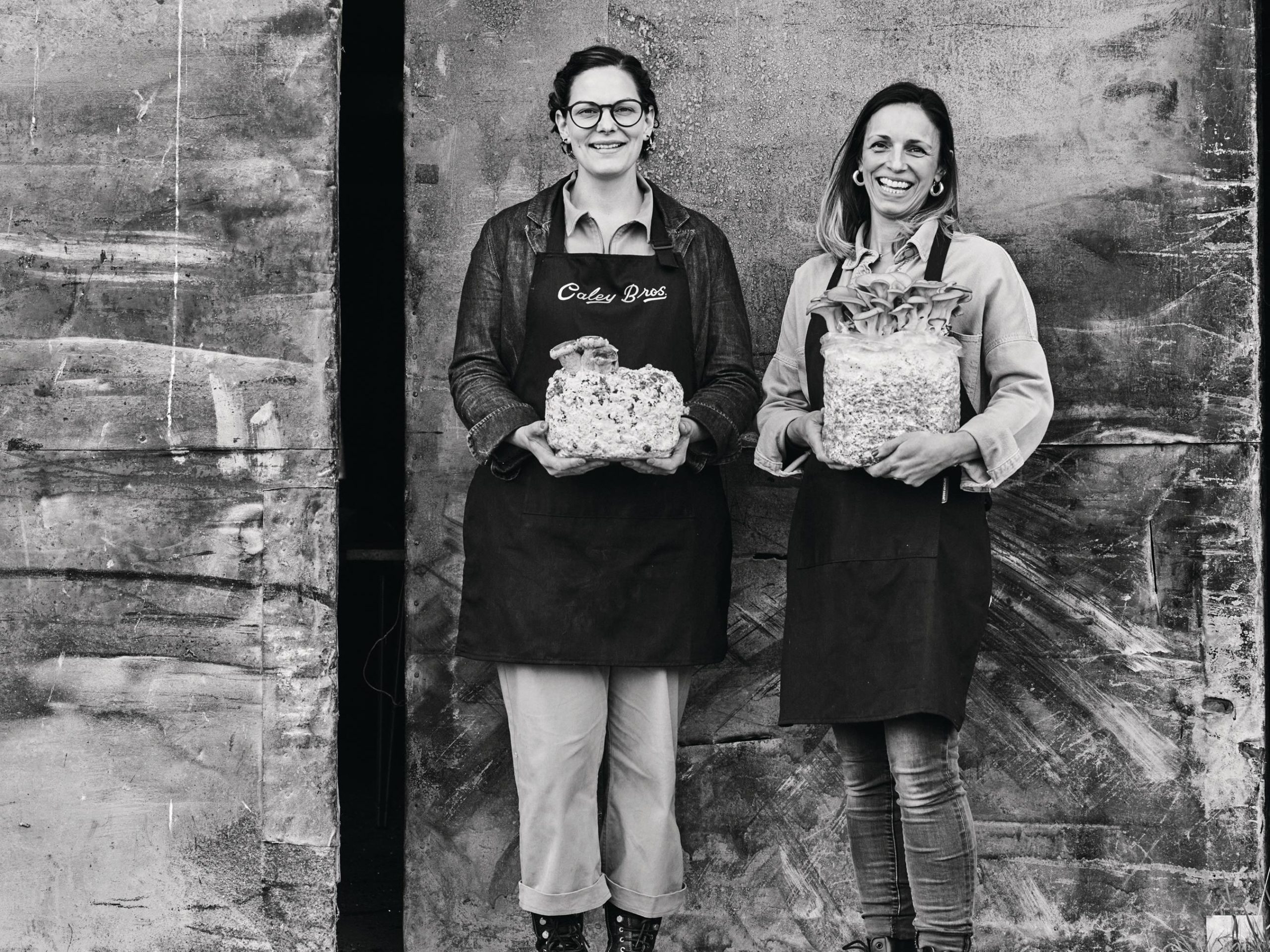
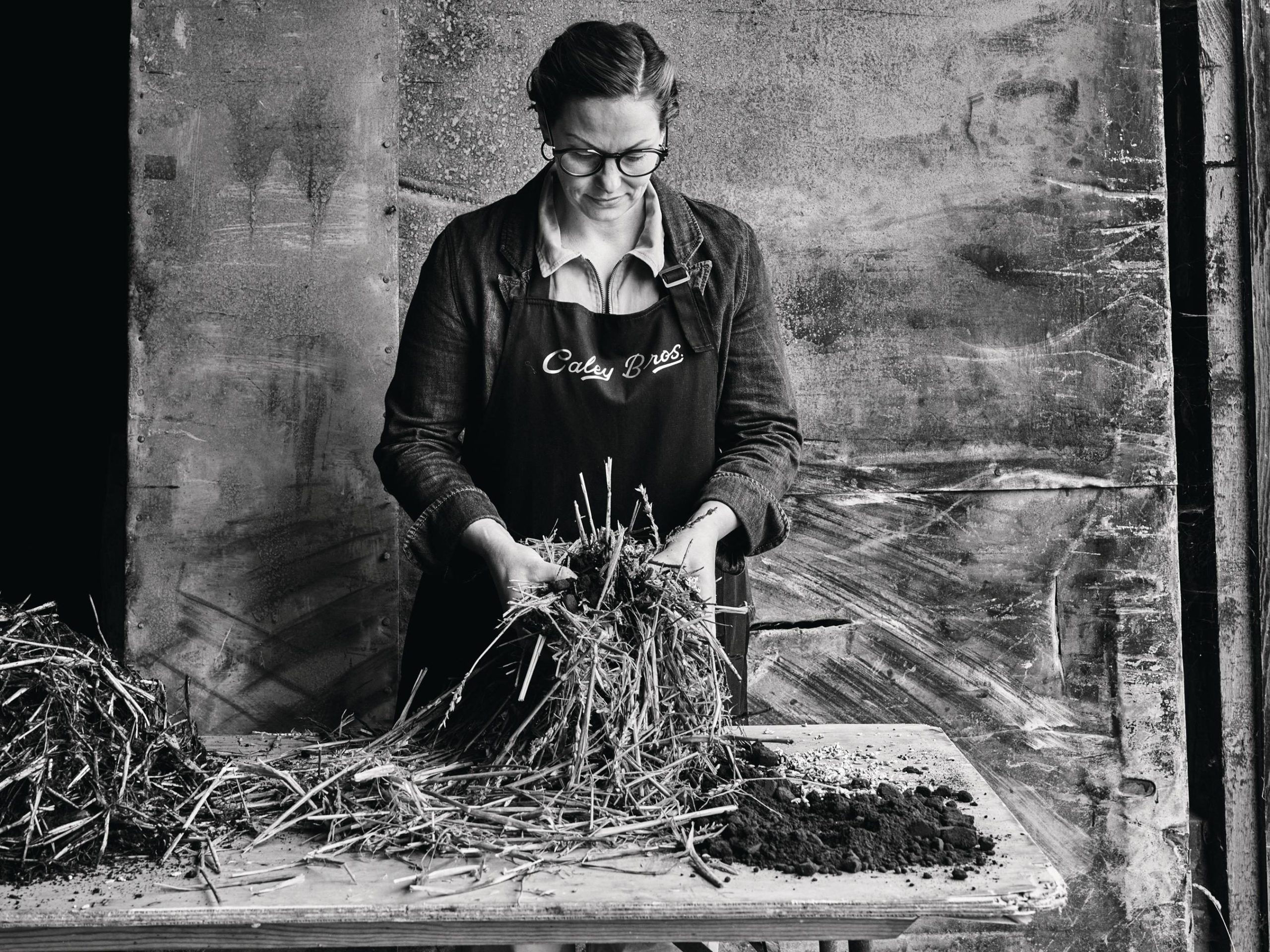
It’s early autumn at the 300-year-old flint barn, overlooking the River Adur in West Sussex. This is HQ of the award-winning mushroom business Caley Brothers – run not by brothers, but by sisters Jodie Bryan and Lorraine Caley.
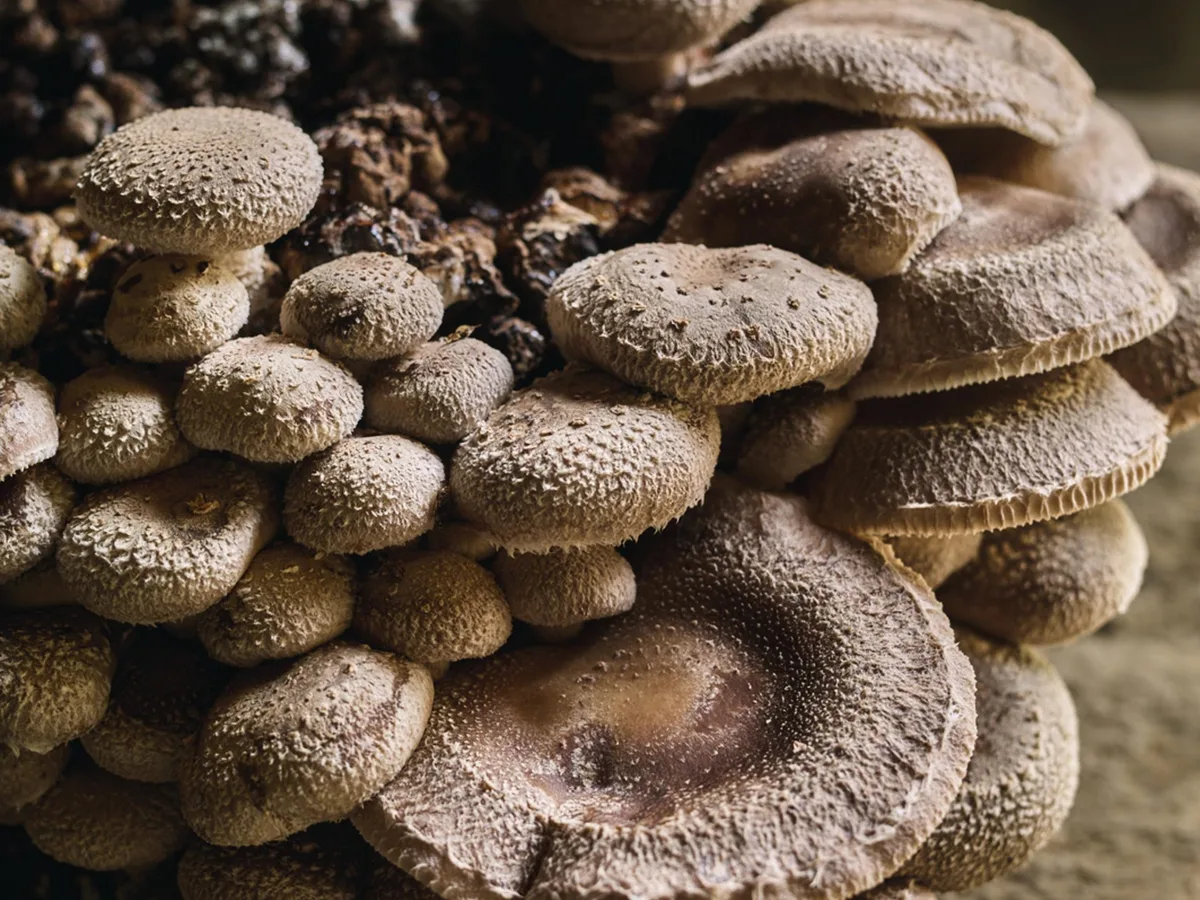
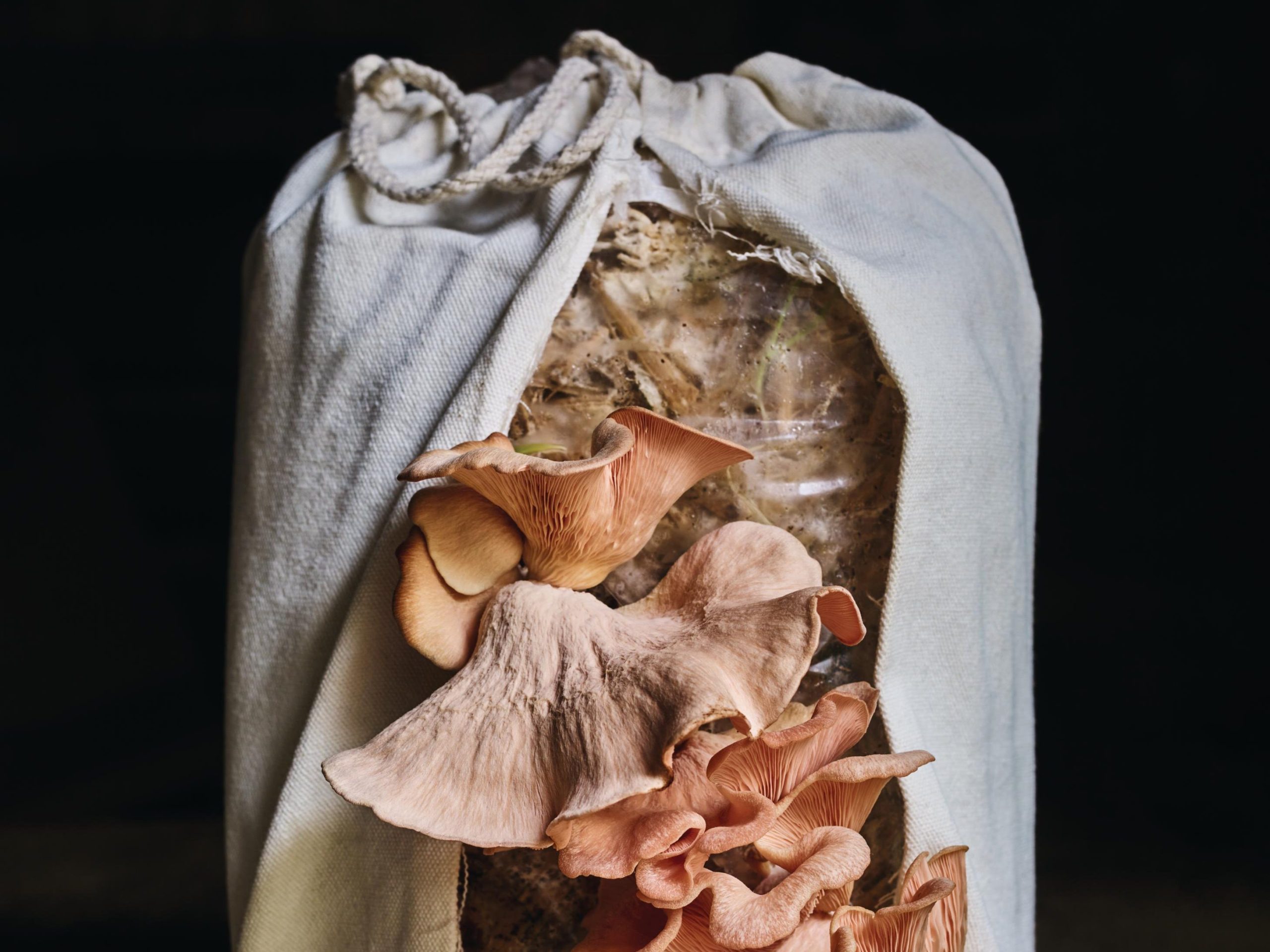
A table is loaded with out-of-this-world gourmet mushrooms – king oyster, yellow oyster, pink oyster, lion’s mane – all being cut and prepped for local restaurants’ seasonal menus. One of the king oyster mushrooms weighs in at a whopping 680g. “By growing them at home, you get monumental oysters,” says Lorraine.
What the sisters call their ‘mush love’ began in 2018, when they started considering plant-orientated diets. Their father was sadly ill with cancer, and with six young children between them, the sisters were trying to move away from meat-based meals .“We’re big foodies,” says Jodie. “There were exciting recipes using shiitake, oyster and lion’s mane, but we couldn’t buy them easily in supermarkets.” The portobello and button mushrooms they could find weren’t really hitting the spot. “We wanted to find an alternative that would hold the plate like meat tends to,” says Lorraine.
You may also like:
- Grow your own mushrooms: mushrooms perfect for garden growing
- Best mushroom growing kit
- Mushroom artworks
Inspired by an innovative social enterprise, GroCycle, which offers guides on how to cultivate mushrooms, the sisters decided to give growing their own a try. Jodie worked in hospitality and had contact with café owners. Before they knew it, they were collecting coffee grounds and buying spores (the microscopic reproductive cell of fungi, essentially the seed) to grow their first indoor harvest. “It felt like we were meant to do it,” says Jodie. “What people don’t realise is that mushrooms grow quickly. So when you start growing, you grow a lot.”
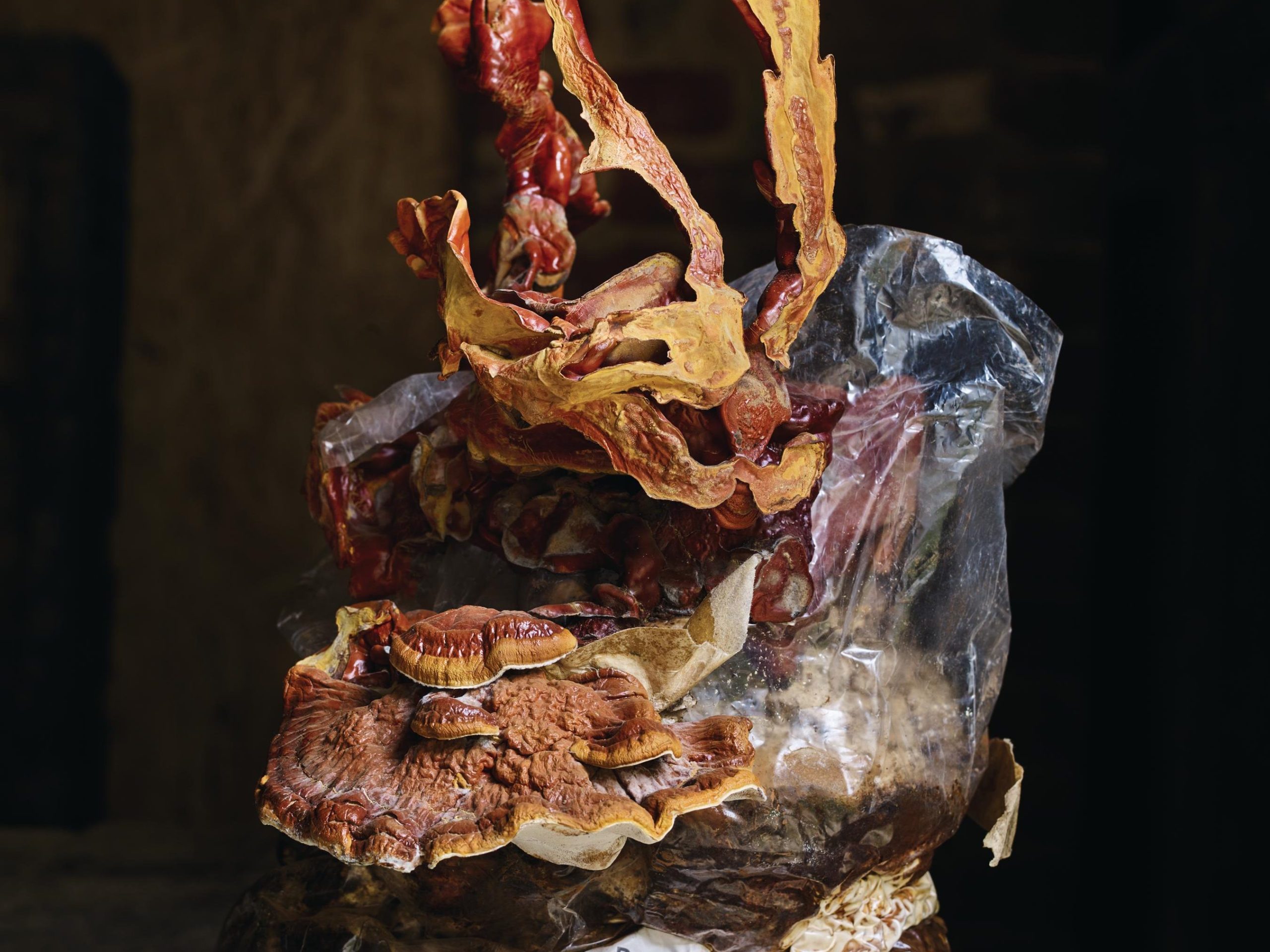
A local farm shop expressed an interest in selling them and the germ of a business began. “There is something curious about watching mushrooms growing,” says Lorraine. “Unlike a human or a plant that grows through cell division, mushrooms use the humidity in the environment to dilate and expand – doubling in size every 12 to 24 hours.”
In 2019, having both taken a career break to care for their children and their father, the sisters decided to transition from home growers to commercial business owners. As a homage to their father, they named their new company after his family’s 1950s green grocer business: CaleyBrothers. “Adopting the name felt like the right thing to do,” says Jodie.
The following year, as the Covid lockdown got underway, they quickly pivoted from fresh mushrooms to grow-at-home kits, enabling consumers to produce gourmet varieties simply and easily, and benefit from the inherent protein, fibre, B vitamins and minerals. “We created small batch kits inoculated with the chosen spore and started posting them out,” says Lorraine. “Clients sharing pictures of their resulting harvests on social media was key to our success.”
When the UK returned to its new normal, they engaged with farmers’ markets, starting with Chiswick thanks to a nudge from RHS photographer Helen Fickling. It was there that they met garden designer and TV presenter Arit Anderson, who, in 2021, asked them to install a display of mushrooms as part of her RHS Chelsea Flower Show Garden of Hope.
The sisters now exhibit regularly at RHS and BBC Gardeners’ World Live shows throughout the UK , as they believe passionately that face-to-face communication is the key to teaching people how to grow mushrooms, and spread the word about their nutritional and health advantages. It also gives them exposure to a network of people in the horticultural industry that often leads to other work. For instance, when publishers at the Royal Botanic Gardens, Kew, asked them to write a guide to growing fungi, they knew they had hit a new high for the business.
Today, Caley Brothers is a thriving enterprise that supplies fresh mushrooms to farmers’ markets and wholesalers as well as grow-at-home kits, and offers workshops and events that aim to educate, along with one-off consultancy projects.
The sisters think of themselves primarily as food producers. “We approach the business like gardeners,” says Jodie. “Lorraine and I grew up helping on the family allotment and holidaying on farms so we understand food growing.”
They are convinced that regardless of space or time, anyone can grow their own. “From opening the kit to harvesting can take as little as two weeks,” says Lorraine. One of the greatest advantages of growing indoors is that it allows you to harvest delicious, safe and insect-free mushrooms full of flavour.
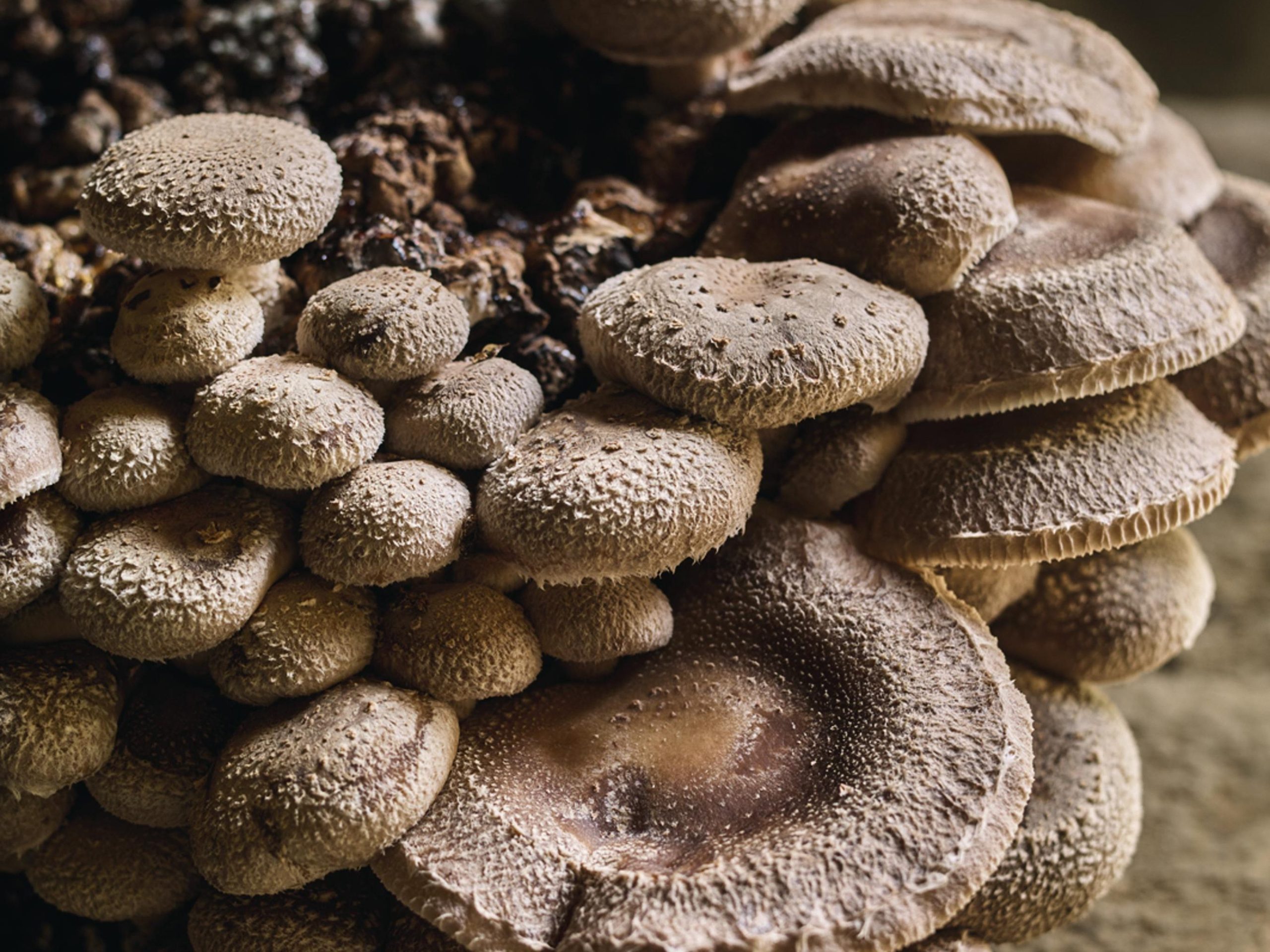
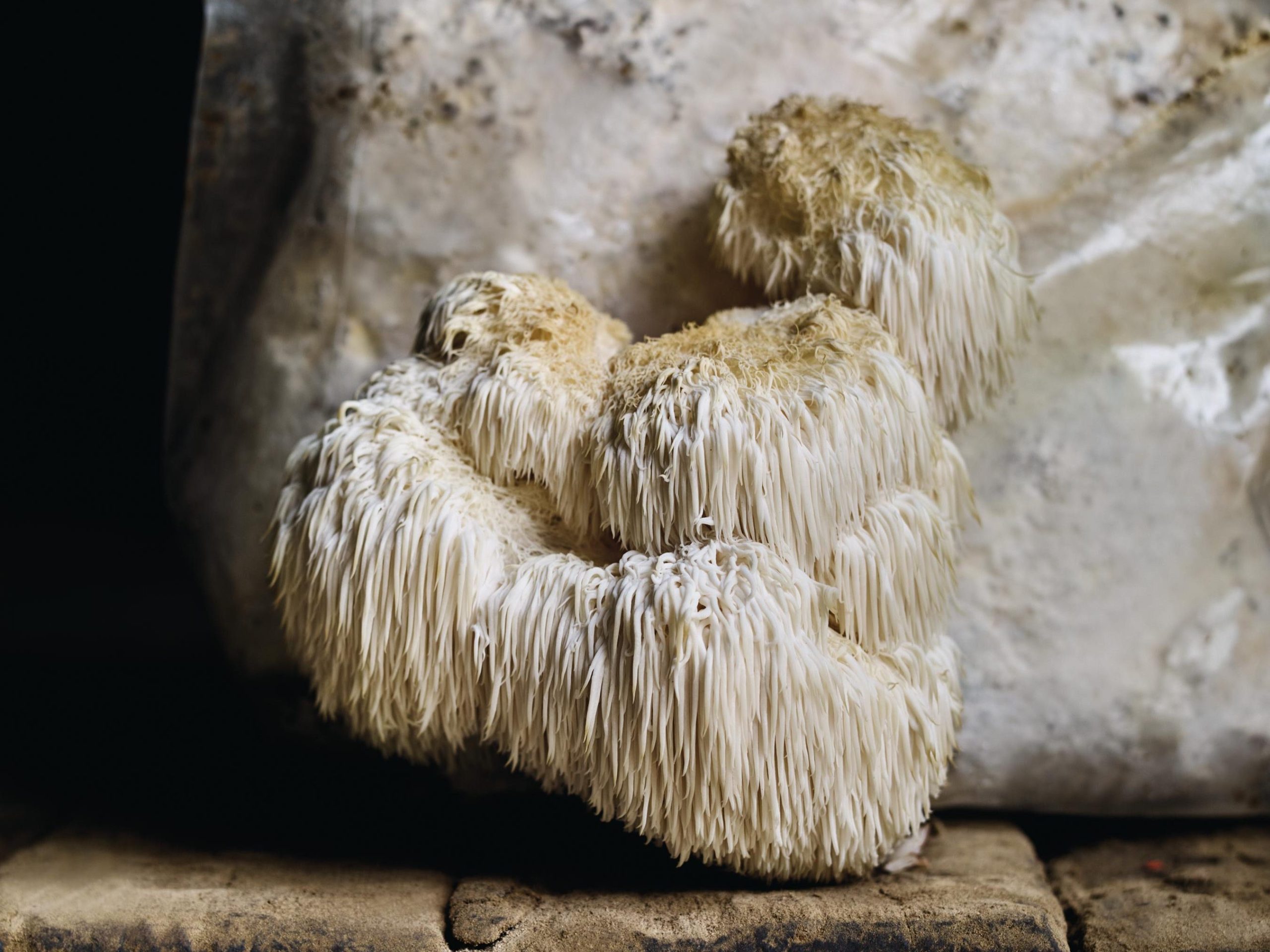
The sisters call it ‘kitchen foraging’ and enthusiastically describe their recipe repertoire; replacing chicken with a lion’s mane and beef mince with a finely chopped oyster mushroom. “There are many different flavours,” says Lorraine. “Pink and yellow oysters are slightly sweeter. Grey takes marinades easily. Shiitake is intense in flavour – meaty in texture and strong.”
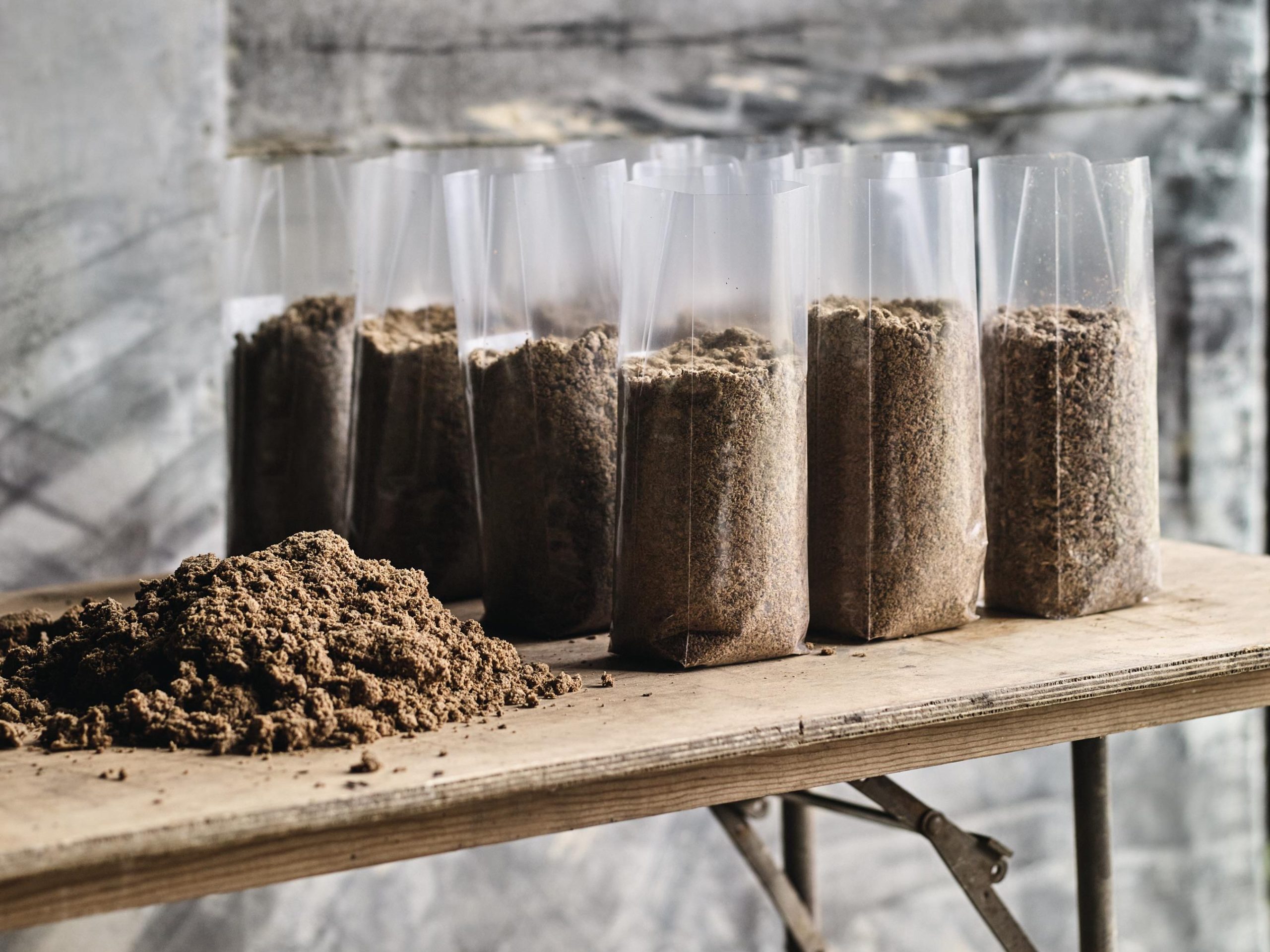
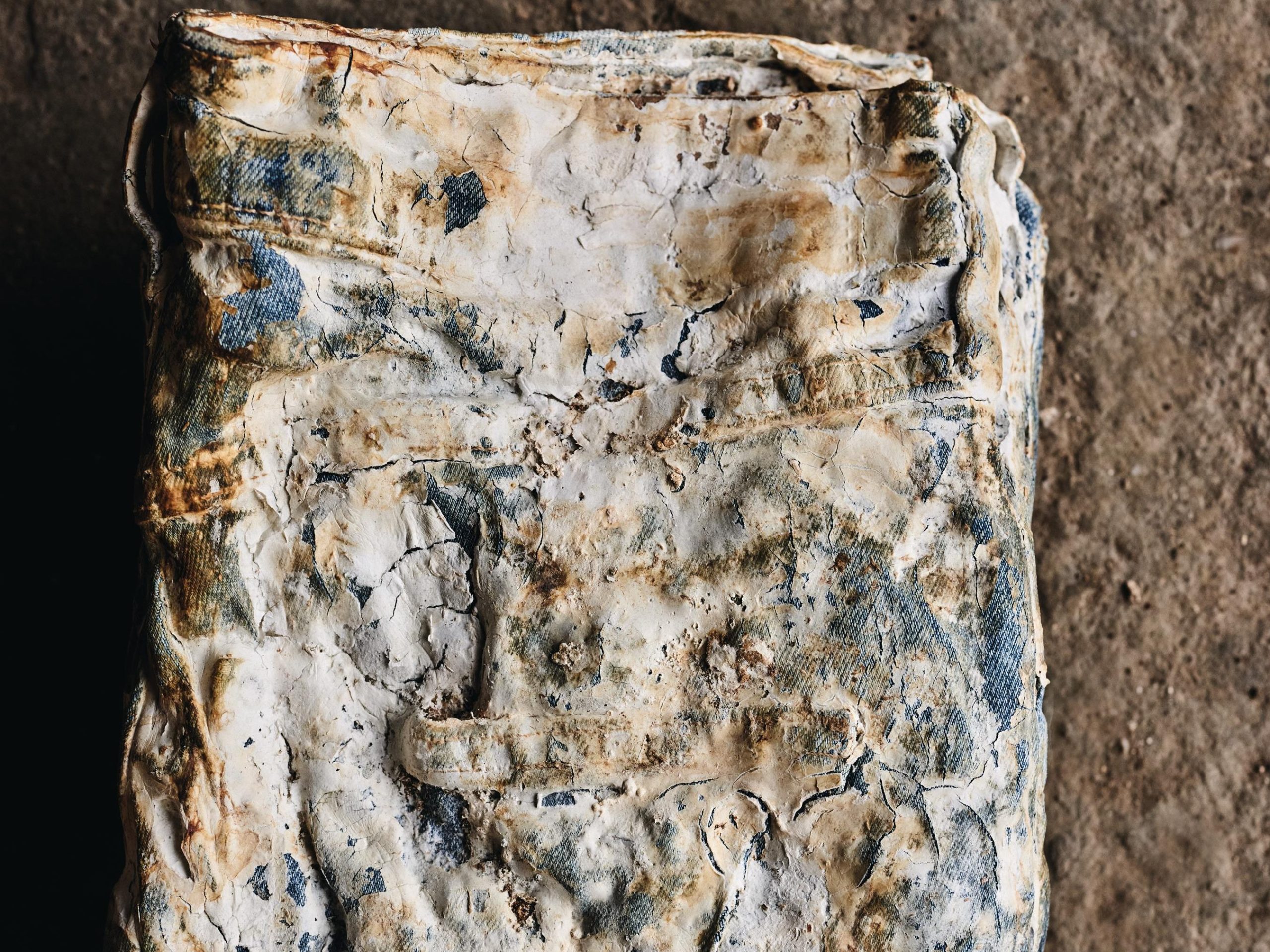
With strong beliefs in a low-tech footprint and the need for a circular economy, the sisters have looked to alternative substrates including sawdust (now sourced from an East Sussex joiner), straw, grain, paper and, perhaps most unusually, old pairs of jeans. The barn from which they operate is neither heated nor cooled, and they grow only species that thrive in the UK’s seasonal climatic conditions, adding Asian favourites, such as maitake (hen of the woods), enoki and nameko in the winter.
More fresh varieties are on the agenda for the future as well as education programmes with community projects, schools and colleges. “We bring different energies to the enterprise, but we balance really well,” says Jodie.
Lorraine, whose background is in retail design, leads on branding, marketing, social media and graphic design, while Jodie’s superpower is her affinity for growing and product standards. Lorraine sums it up: “There’s a mutual respect for each other’s skills, but it wasn’t our backgrounds that led us here, it was our passion for mushrooms.”
How to grow your own gourmet mushrooms
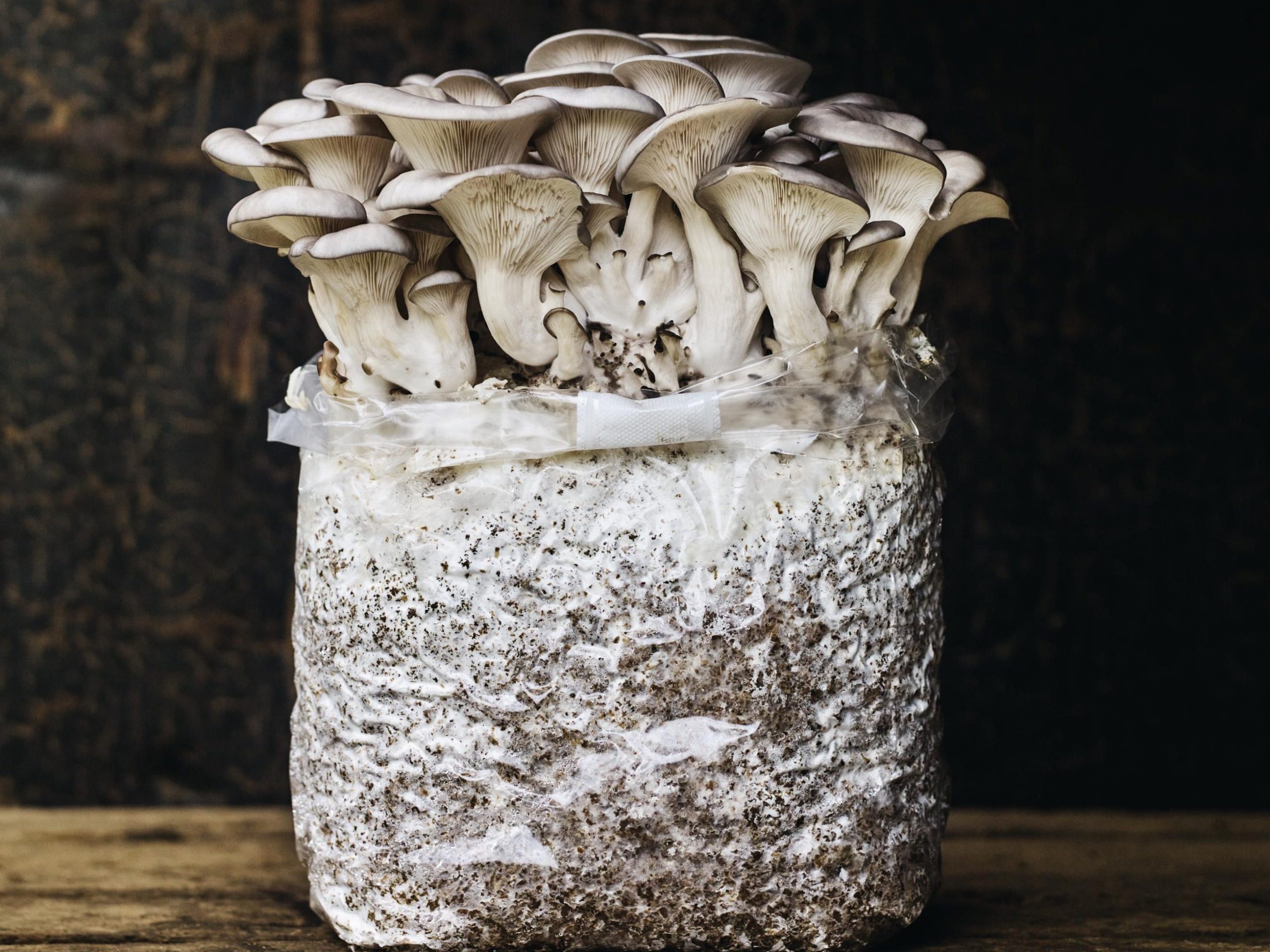
By growing indoors, you can cultivate a crop of mushrooms to harvest at any time of year. Follow these simple steps:
- A steady temperature and the right amount of light are enough for mushrooms to thrive over the course of a few months. Always follow the instructions for each variety on your mushroom-growing kit.
- Make sure your hands, work surfaces and equipment are clean. Mould is potentially the biggest threat to your mushroom- growing projects, so wash and sterilise work surfaces and equipment before you begin.
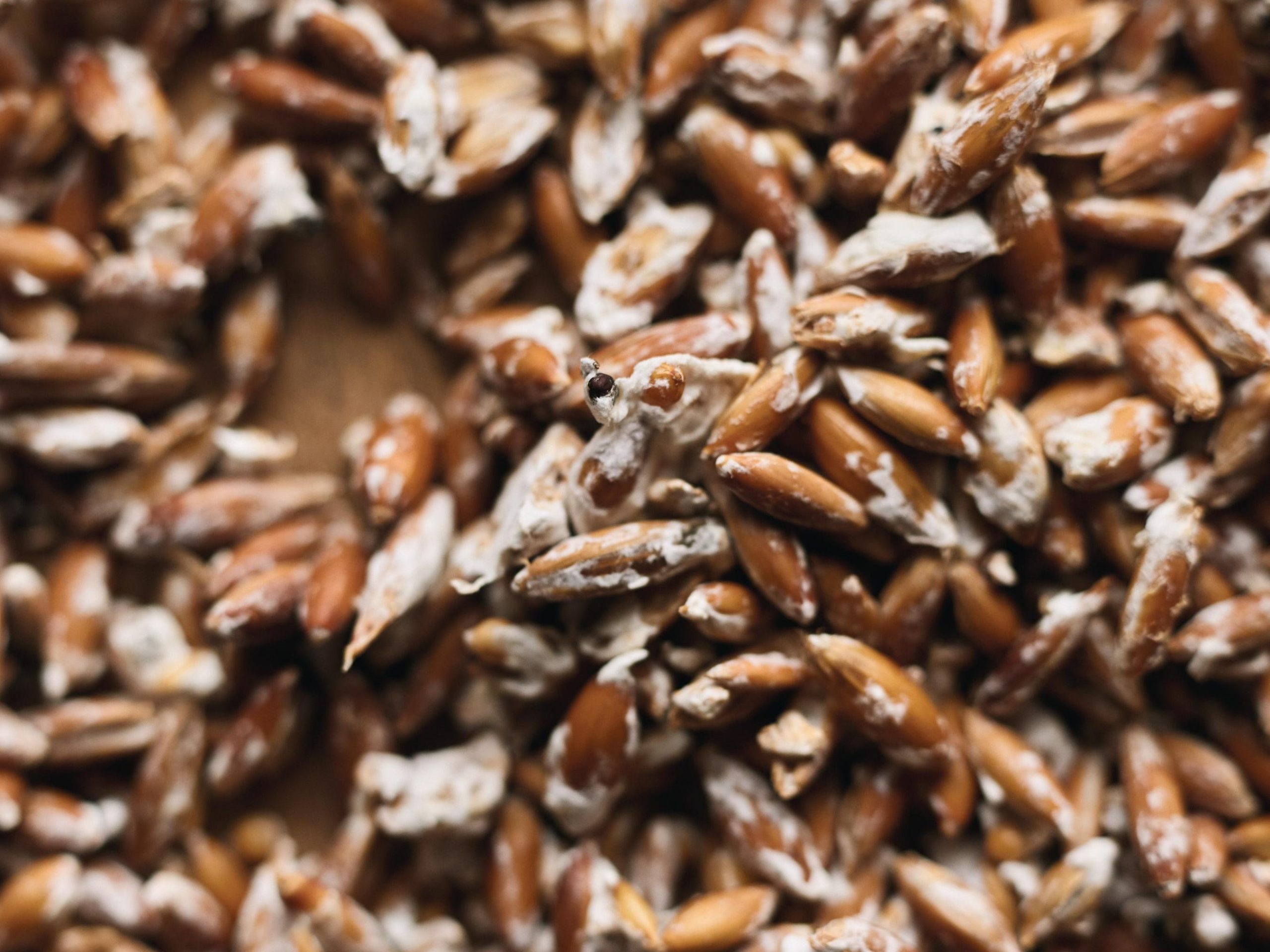
- Fresh spawn is key to successful growing. Spawn is the simple pre-culture that is inoculated with the fungi. It comes in many forms, but Caley Brothers focuses on grain and sawdust spawn for indoor growing. Keep it in the fridge until you are ready to use it.
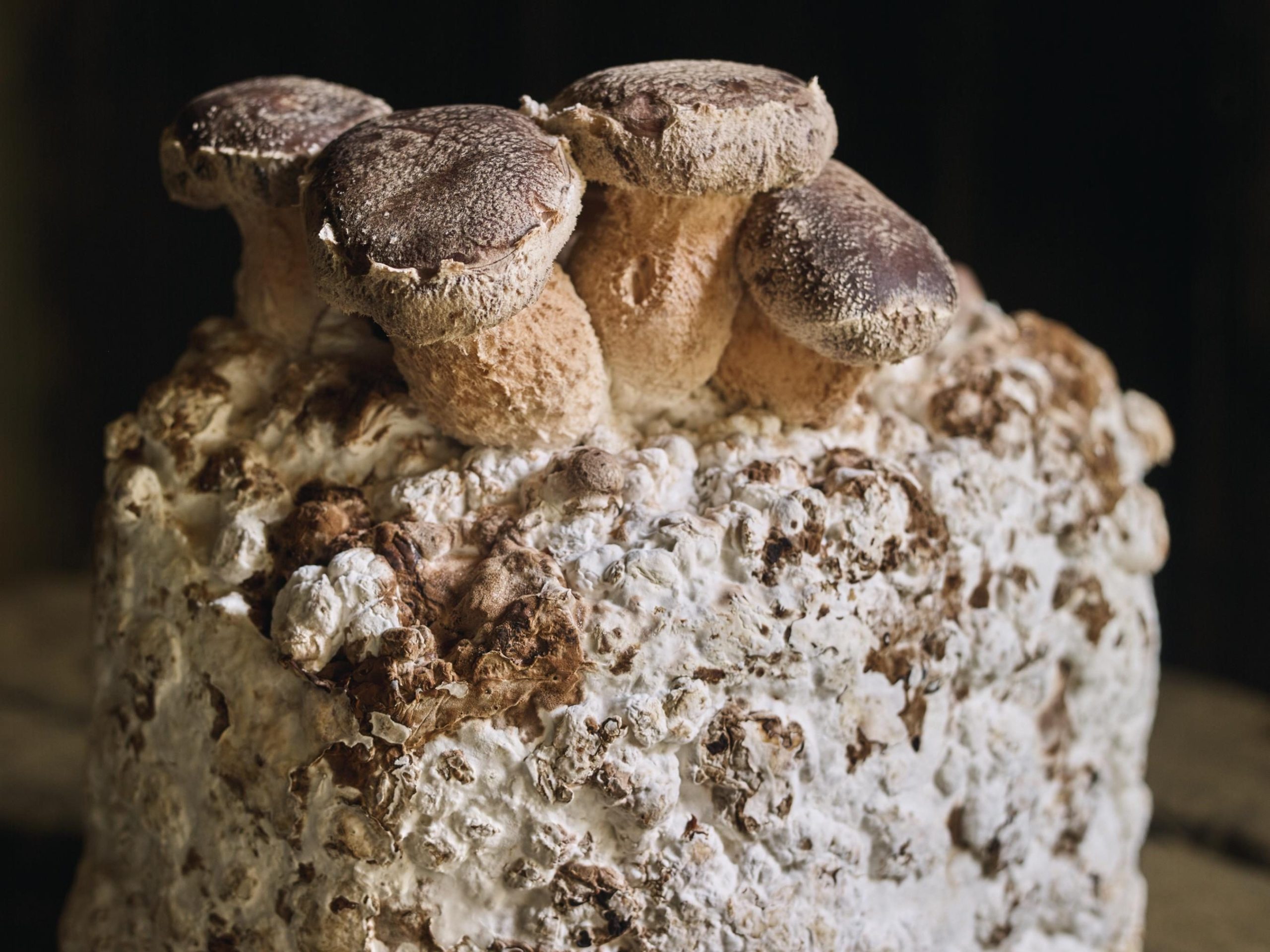
- The most common reason mushrooms fail to grow is dehydration. Don’t forget to spritz, according to the instructions. If your substrate feels dry, it probably is. Regularly inspecting your kit is key to gauging moisture levels, making sure your mycelium is establishing itself nicely. A good sign is when you see the mycelium beginning to coat the substrate: a clean, white waxy layer will grow over and through the material, binding it together. Your substrate should always be damp to the touch and smell fresh.
- Maintaining a good circulation of fresh air is vital. Mushrooms absorb oxygen and expire carbon dioxide, even during the incubation stage. During the growing process, oxygen levels can alter the form of your mushrooms. If the air is stagnant a build up of carbon dioxide can cause the caps of oyster mushrooms to be smaller and the stems longer. Too much air can also make a difference; when lion’s mane mushrooms grow in a draught, they change colour, turning brown and drying out.
- As a general rule, you should harvest all the fruiting bodies at once. It is not often that you are able to pick some of the larger mushrooms and allow the rest to continue growing. After harvesting, leave the substrate to rest for a while (see instructions on kit). This will allow the mycelium to recover and prepare for a second harvest.
Useful information
Find out more about Caley Brothers’ mushroom kits, events and collaborations at caleybrothers.co.uk