
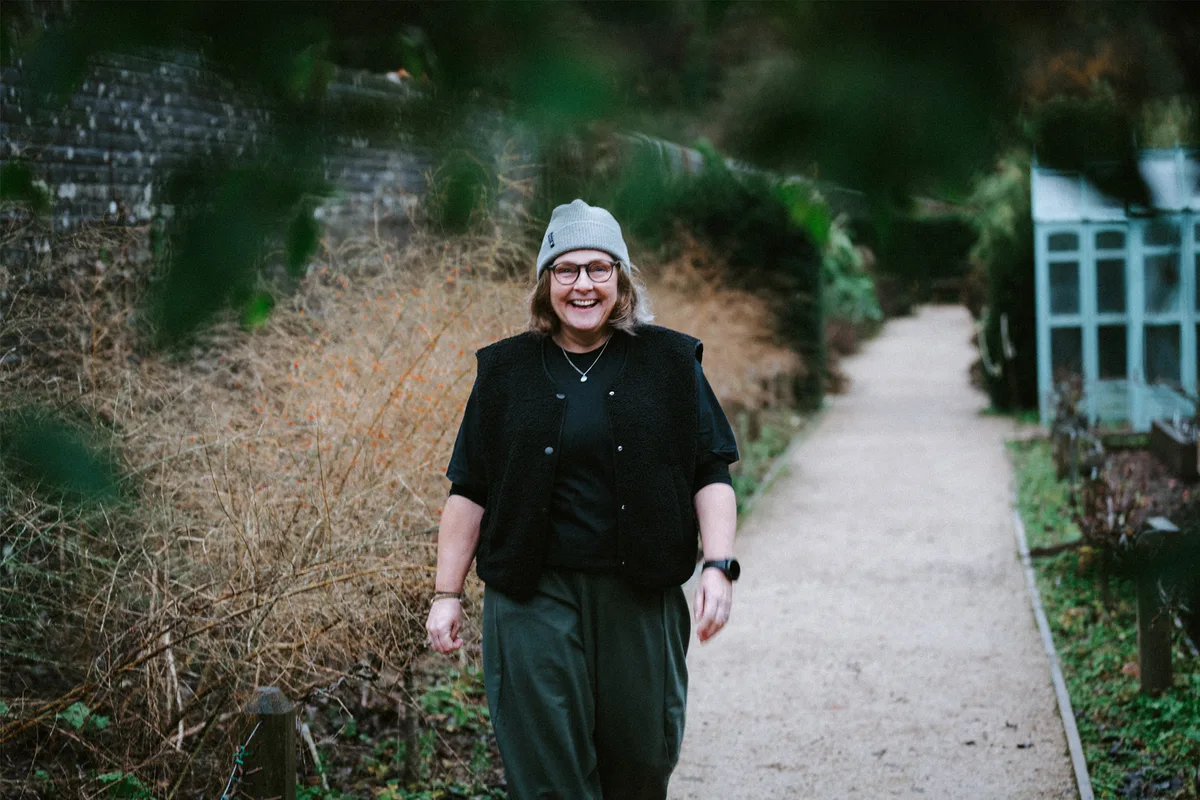
When Kate was diagnosed with breast cancer, she was living with her wife, and their young son, in Shoreham-on-Sea, and working as a social worker for Brighton & Hove City Council. “Life was good,” says Kate. “We had done an entire rebuild of our house and we were enjoying normal family life, then a cancer diagnosis suddenly brought uncertainty.”
Here, Kate shares her experience of the shock of diagnosis. She reveals how spending time in the landscapes she loves helped her to heal, and how Macmillan Cancer Support provided the space and kindness she needed to make life-shaping changes during a time of uncertainty.
Kate’s story: the diagnosis
Kate had been having regular mammograms through a genetic screening programme. It was after one of these mammograms she received a letter saying further investigation was needed.
“At the beginning of a cancer journey, there isn’t a lot of information,” Kate says of the chaos that ensued. “It could go one way or the other.” The uncertainty was, she adds, like being “in a tumble dryer every single day... It’s like the life you thought you had has been thrown up in the air and you aren’t sure where the pieces will land.”
While waiting for a hospital appointment, Kate and her wife were told about a cafe over the road. “We’re not going to turn down cake!” she says. It turned out to be much more than a cafe – it was the Macmillan Horizon Centre, a dedicated support centre for those affected by cancer offering a range of services, from acupuncture to advice. “We walked in and it was a different world,” says Kate. “That was our introduction to Macmillan.”
Support when it was needed most
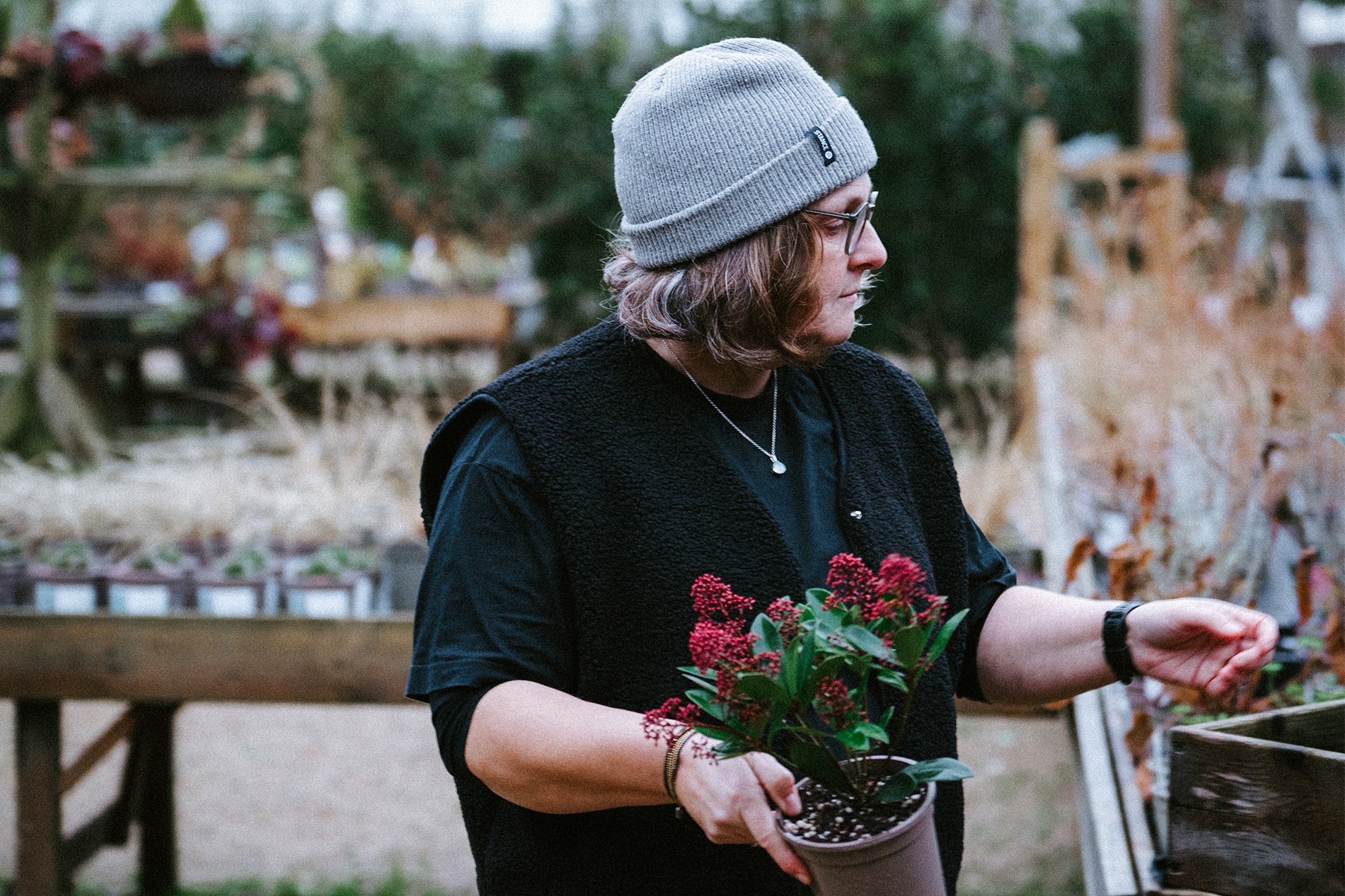
Over one third of Macmillan services, such as those offered at the Horizon Centre, are funded by gifts in wills. As well as practical advice, therapeutic support and a safe place to exercise, the Horizon Centre offered Kate respite with a beautiful rooftop garden.
Kate found that taking space to heal physically and psychologically was important during her cancer journey. “The Horizon Centre was a place that gave me that space. I have friends who design gardens and the idea began to percolate that this was something that I could do too. Cancer gave me a new focus and desire to create gardens that make a difference.”
The Horizon Centre had given her opportunity amid the uncertainty to “percolate new ideas… it provided something that wasn't medical,” says Kate. “It was human. Human and healing.”
From diagnosis into design
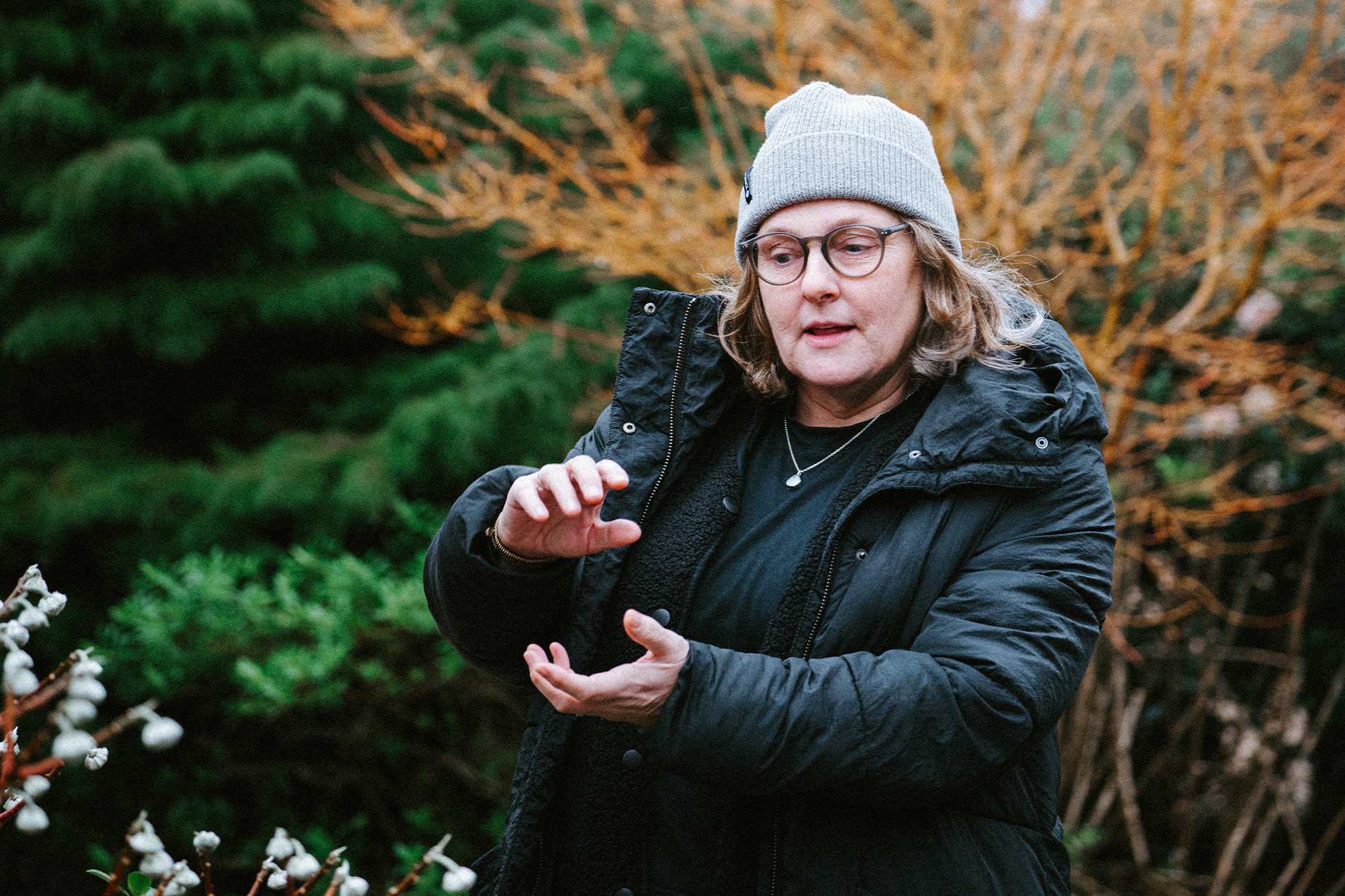
Inspired, Kate studied for a diploma in garden design at One Garden Brighton, and launched her own design business, KM Garden Design. You can find her gardens dotted around Sussex. It’s a career she loves, and she brings her wisdom and experience as a social worker to every project. “My work as a designer is all about connecting people, places and nature,” she says. “My 25 years as a social worker solidified my awareness of the importance of green spaces for our mental health and connections in our communities.”
Inspired by the designs of Charlotte Harris and Hugo Bugg of Harris Bugg Studio, Kate creates gardens “with a deep sense of place and that heal and restore”. Her local landscape in West Sussex is another source of inspiration: the red valerian, silver ragwort and sea kale that brighten Shoreham Beach in May; the orchids, horseshoe vetch and milkwort that adorn Mill Hill in the summer.
“I think you see nature in a different way after a diagnosis of cancer,” she says. “Whether it’s the vastness of a range of mountains or the minutiae of a bee in the garden. Seeing backlit fresh green leaves and watching the sunset feels richer than ever. I feel so privileged to be wherever I am and to be experiencing what is in front of me.”
New beginnings and a fresh start
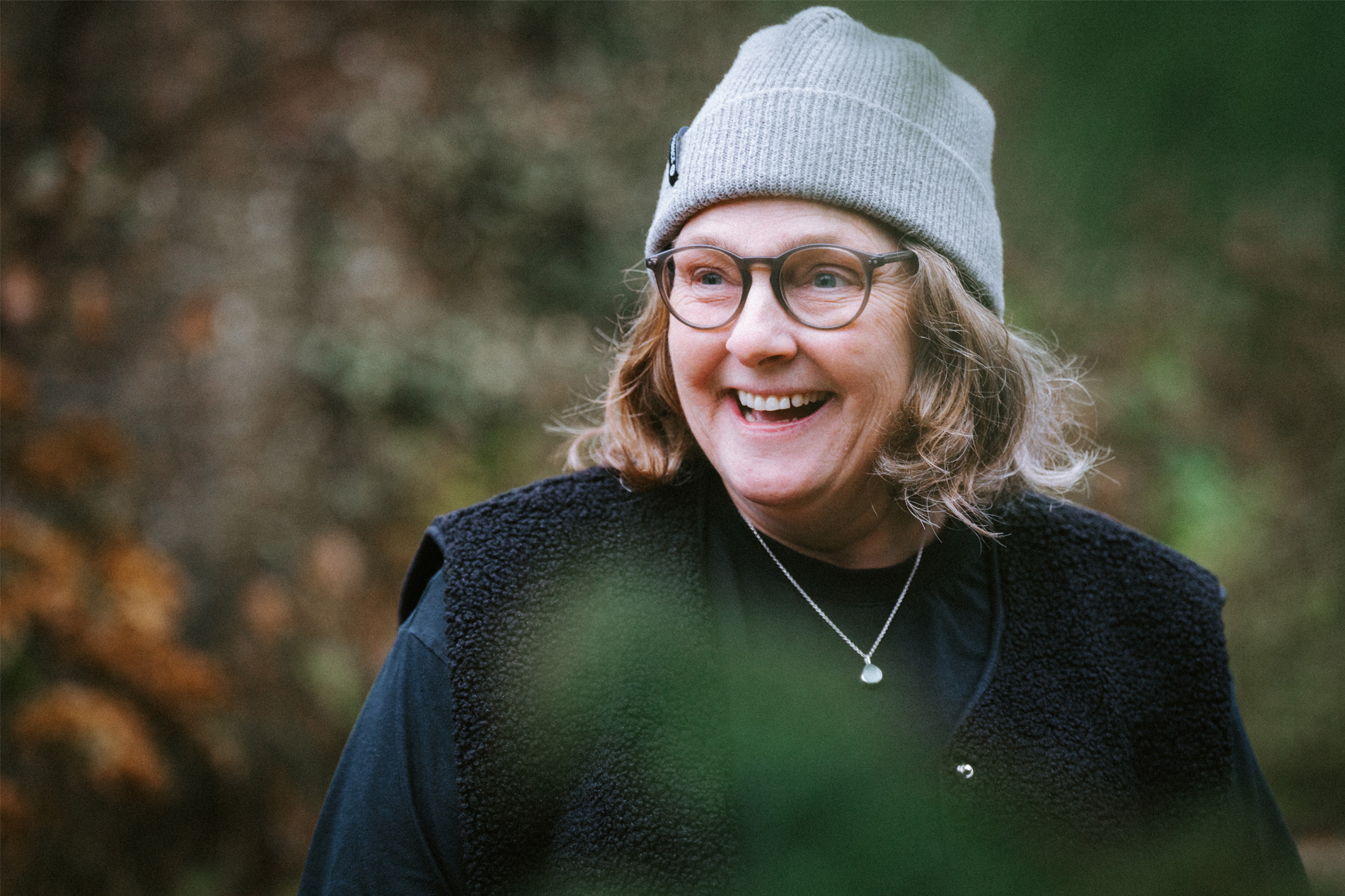
Happily, Kate completed her cancer treatment. She has been cancer-free for many years and is enjoying the many rewards of a new life in garden design.
She says her cancer diagnosis proved to be the “punctuation mark” she needed to take the leap into garden design. The services offered by Macmillan Cancer Support at the Horizon Centre gave her the safety and kindness required to make those choices. “I just needed to sit with the uncertainty,” she says, “by giving myself space… that's how garden design came to me and Macmillan was part of that”.
Over one third of Macmillan’s income comes from legacy giving, helping to fund services like the Horizon Centre. Kate has a special message for those who have already left a gift in their will:
“There is a saying that true generosity is planting a tree under whose shade you know you will never sit. And you did that for me and my family. Your gift allowed us to find peace and humanity during some of the darkest days of our lives. Thank you.”
And for those considering leaving a gift in their will to Macmillan? “Macmillan offered me sanctuary in my storm, and they want to be there for all of us… leaving a gift to Macmillan in your will means that you will bring light into someone's darkest days, even long after you have gone.”
Macmillan’s support helped Kate find the space and calm she needed when it mattered the most. A gift in your will makes it possible for Macmillan to do whatever it takes to help more people with cancer get the best care the UK has to offer, whoever and wherever they are. To find out more about how to leave a gift in your will to Macmillan Cancer Support, order your free Gifts in Wills guide.

© Macmillan Cancer Support, registered charity in England and Wales (261017), Scotland (SC039907) and the Isle of Man (604). Also operating in Northern Ireland. A company limited by guarantee, registered in England and Wales company number 2400969. Isle of Man company number 4694F. Registered office: 3rd Floor, Bronze Building, The Forge, 105 Sumner Street, London, SE1 9HZ. VAT no: 668265007


