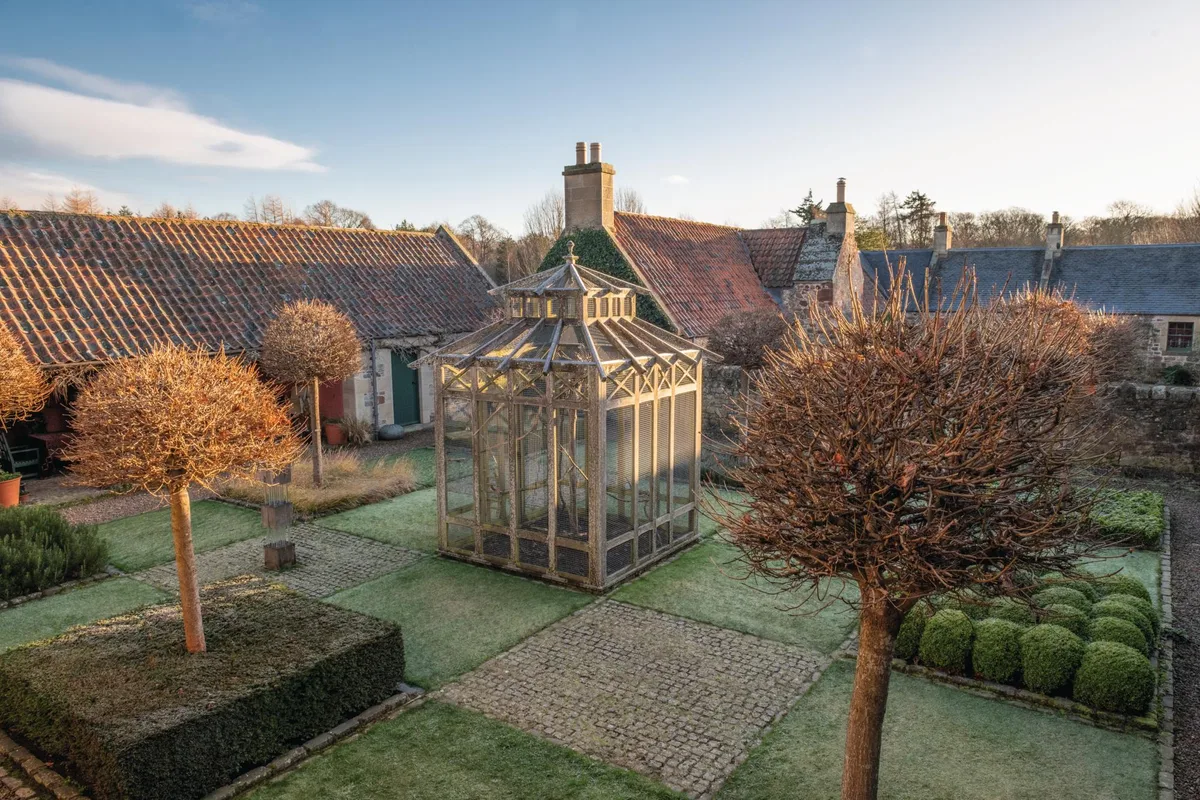
To walk around a midwinter garden on a fine day when everything has shrunk down to its essential elements is like walking around a gallery. You can take your time, see things with fresh eyes and be changed by the experience. For many gardeners, it is a valued season where time spent seeing is both an appreciative nod towards what has gone before and anticipation of what is to come.
Broadwoodside in East Lothian, Scotland, is such a garden. To visit at any time of the year is sheer pleasure. To go on a day of low winter sun, with long shadows and a bright frost, is transformative.
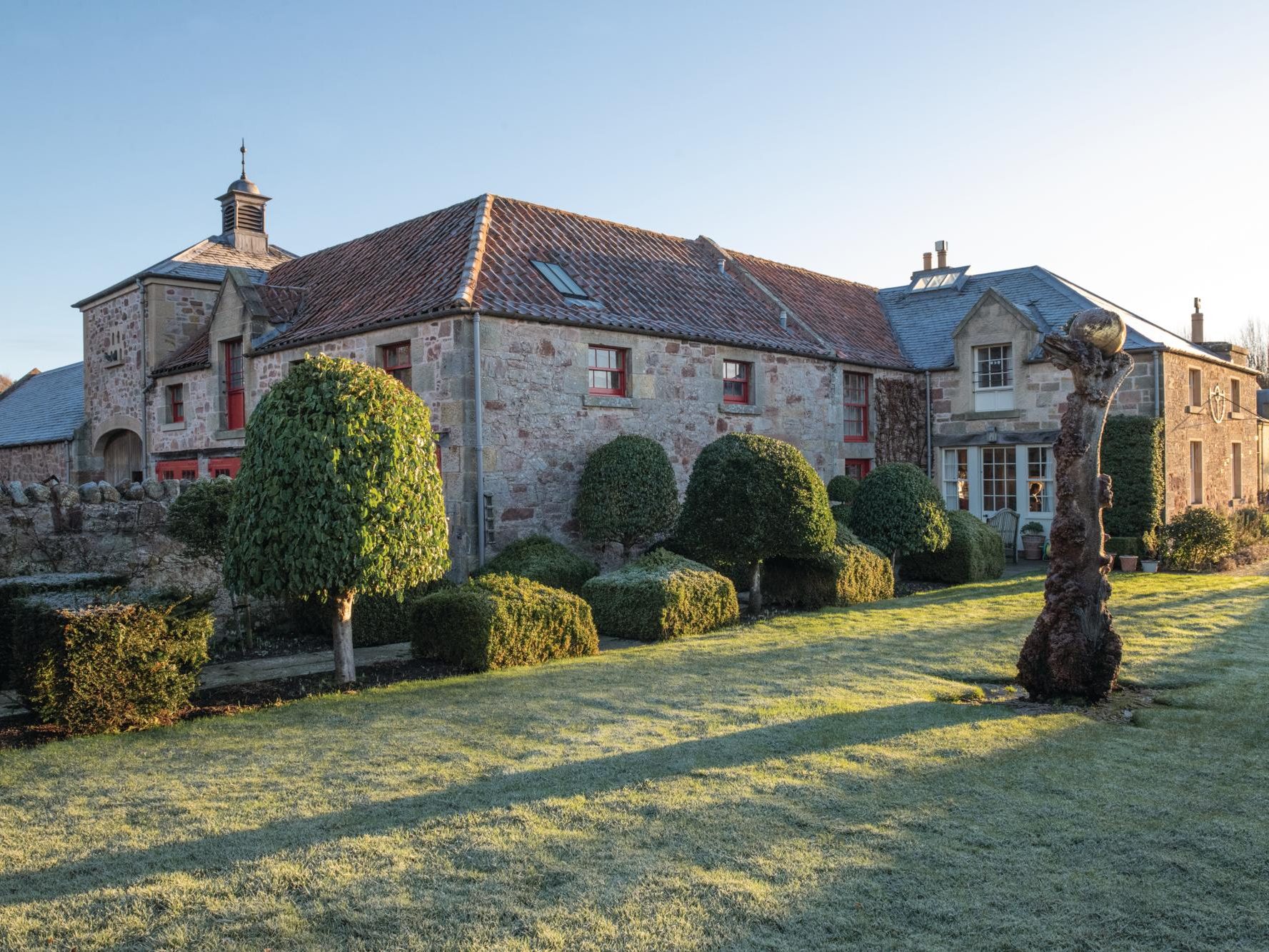
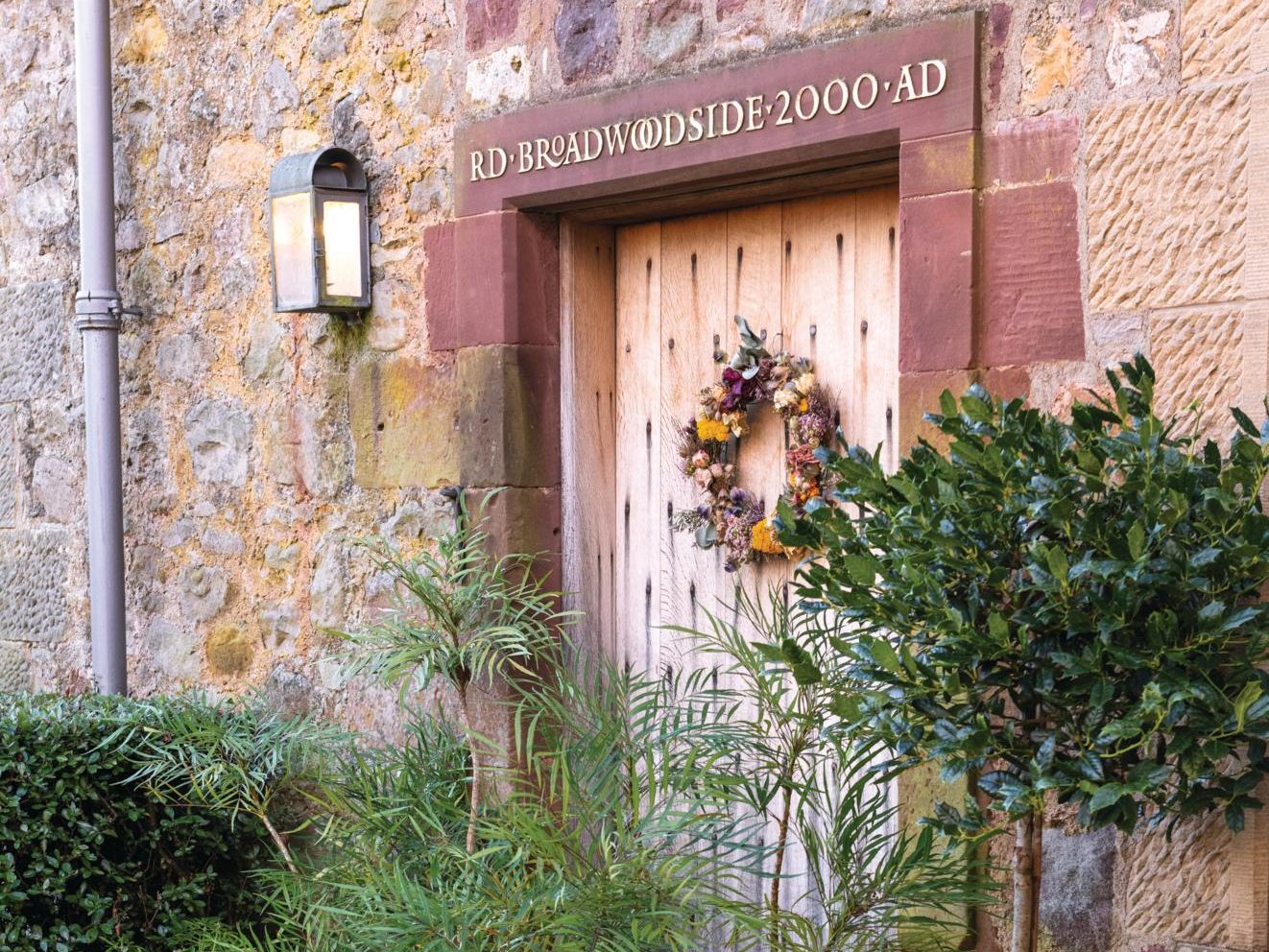
When Robert and Anna Dalrymple bought Broadwoodside in 1997, it was a project only for the brave. Parts of the ruined building dated back to 1680, and for several years all of the couple’s energy went into restoring the house. The garden emerged a couple of years later.
You may also like:
- The best gardens to visit in Scotland
- Glendoick Gardens in Scotland: a rhododendron paradise
- Why all plant lovers should visit Scotland
Scottish farmhouses, or steadings, are traditionally long, low buildings constructed around a courtyard. The most immediate spaces to be brought under control were the two enclosed yards bounded by the house. Robert, a book designer based in Edinburgh, has had a long career creating exhibition catalogues for some of the world’s leading artists, such as Lucian Freud and Tracey Emin.
He understands colour, structure and composition, and spent many weeks juggling with the geometry of this internal space. Now called the Upper Courtyard, it has a chequerboard of granite setts, grass and Norwegian maple (Acer platanoides ‘Globosum’) underplanted with clipped mounds of box – a calm and considered hortus conclusus.
Robert describes his process of incorporating plants and trees into the bones of the courtyard as “colouring in”. It is a lot more than that. A design for a book remains stable throughout time; a garden is always on the move, often in ways you can’t dictate or anticipate, and even when you think you have it right, nature has a way of throwing all your plans aside. And this is at its most apparent in winter, when your mistakes can no longer be hidden.
A garden is always on the move, and even when you think you have it right, nature has a way of throwing all your plans aside
By admission, Robert was not a gardener when he began, and the task of populating the garden with plants that would hold their own in the often damp climate of the Scottish Lowlands left him feeling “inadequate”.
He wanted to plant the Lower Courtyard in a prairie style, all tall grasses and sun-loving perennials, until Anna pointed out that in winter it got little light, and because the two inner courtyards can be seen from the house, his idea might be fighting against reality. In learning what is realistic he has had some help.
The couple have always had a full-time gardener, and just over a year ago were joined by Nanette Wraith, who trained at Nymans in West Sussex and spent a year working at the prestigious Longwood Gardens near Philadelphia.
The formality of planting around the building gives way gradually to an increasingly naturalistic style, trees providing a vertical axis to the wide agricultural fields that surround the farmhouse. Trees are the backbone of Broadwoodside, not only to frame the views of the house, but anchoring it visually to the surrounding landscape.
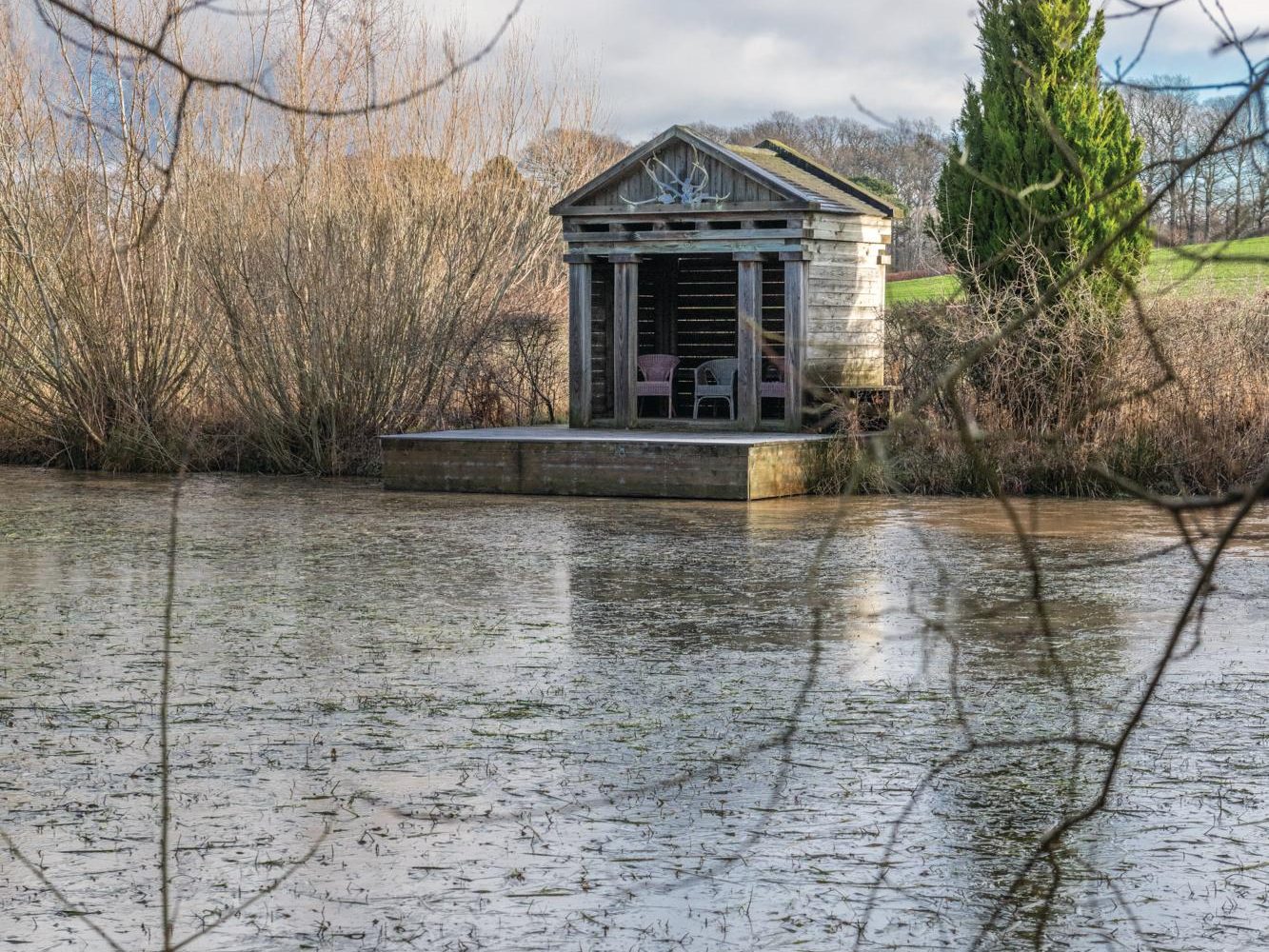
A long avenue of magnificent ancient lime trees leads away from the house, inviting you to walk its length. Your reward is the sudden sight of a ruined mid-19th-century portico on the edge of the woods, brought here in bits from Strathleven House near Glasgow, and assembled like a vast jigsaw puzzle by local builders.
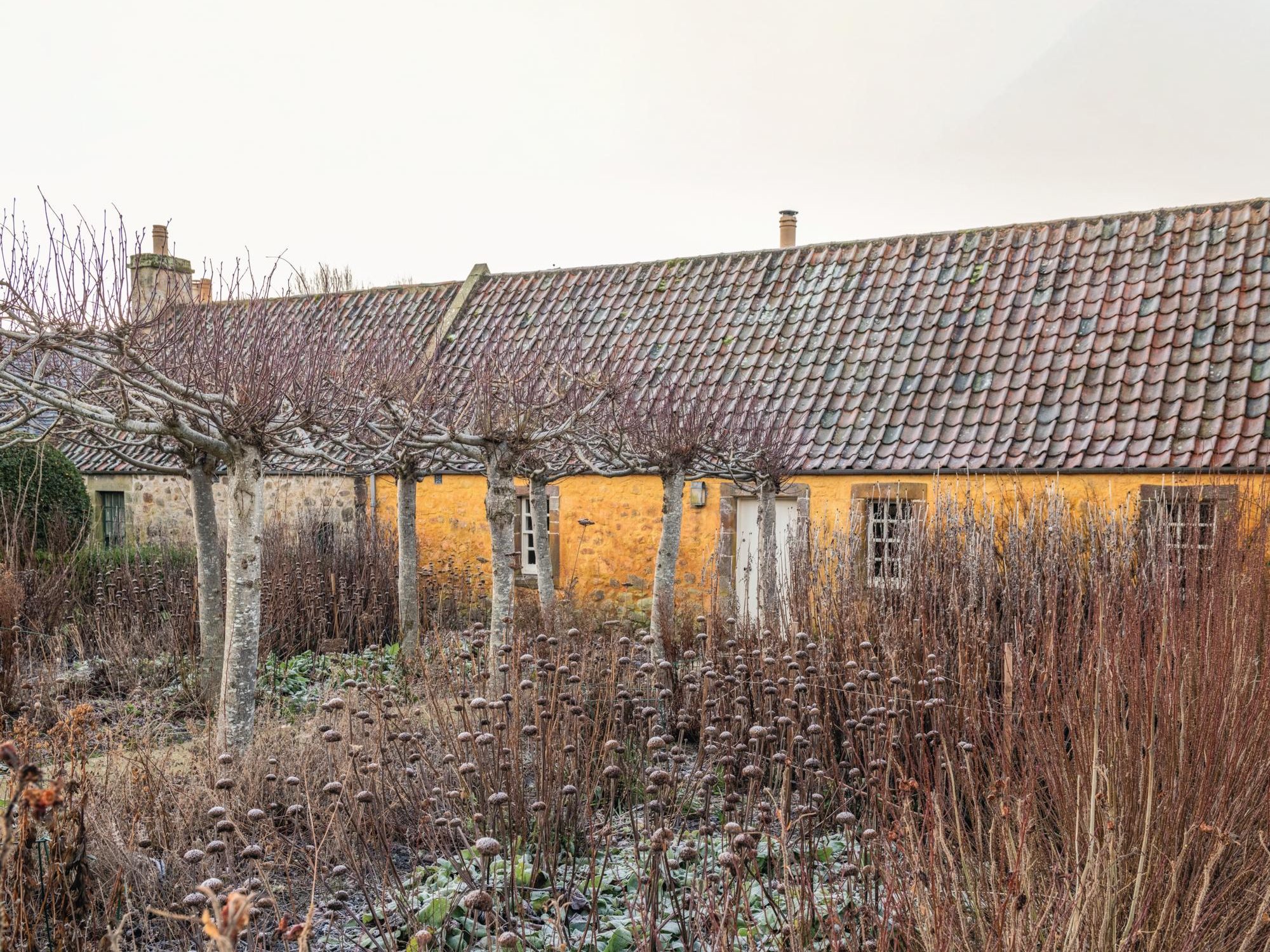
The couple have been influenced by the late poet and artist Ian Hamilton Finlay’s nearby garden, Little Sparta, where more than 270 works of art are placed within the wider landscape. The carefully chosen pieces at Broadwoodside range from commissioned works to a home-made one in the House Field entitled ‘A Load of Balls’.
Winters are long in the Lowlands, so colour is important. The old farmhouse is lime-washed with pale ochre, casting the seedheads in the Hall Garden into bronze and pewter. Similarly, a flash of a crimson gate sets the golden brown of the clipped beech avenue alight – red is a traditional colour of agricultural buildings locally, the colour derived from iron oxide. It is well judged. Too much colour would look unnatural, but touches of it prevent the short, dark days dominating.
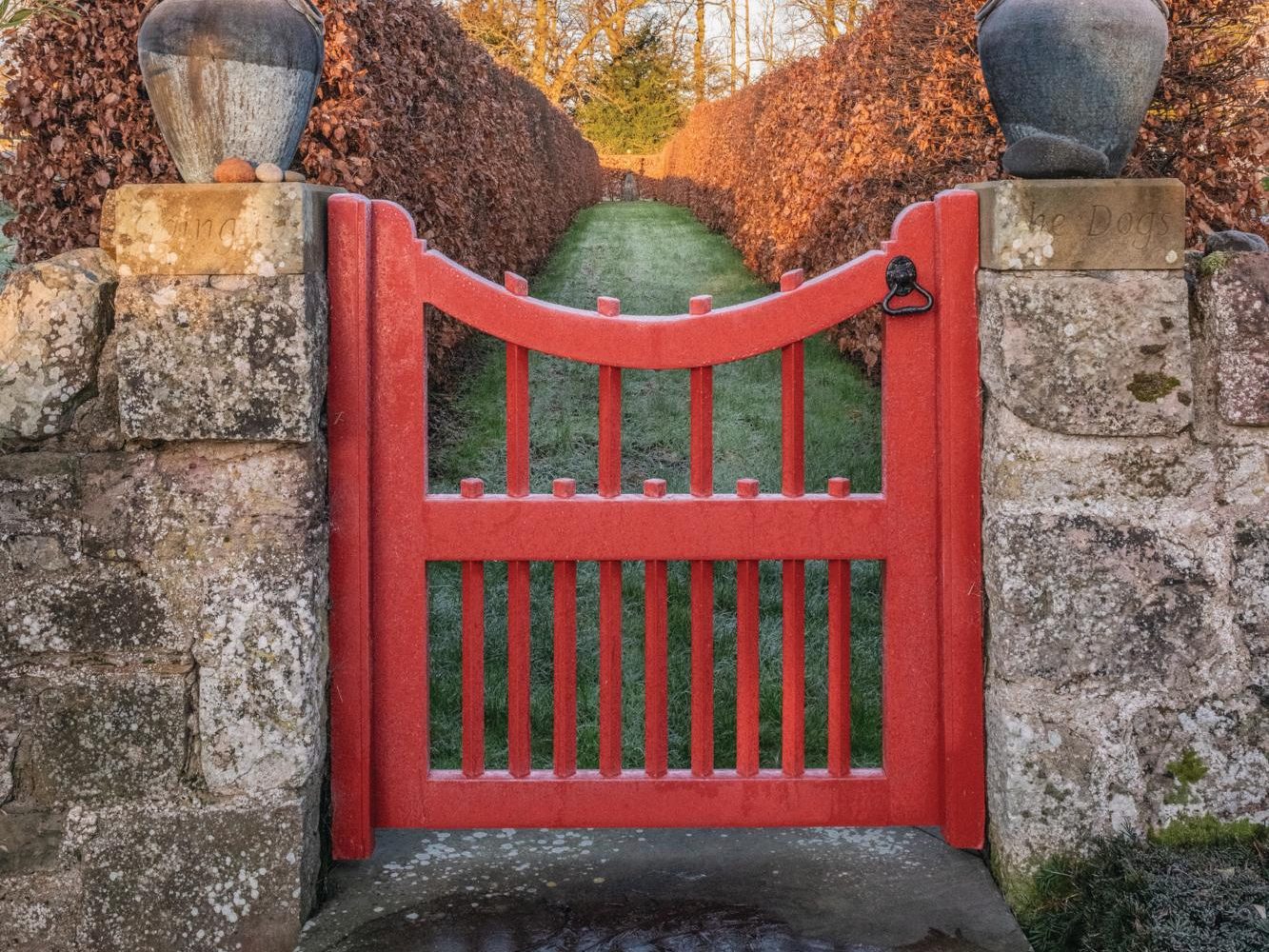
Perhaps it is this delicate balance that gives Broadwoodside’s winter garden a timelessness. The hard work has been done; the formal trees, hornbeam and beech hedges are clipped and shaped, the seedheads of the tough Turkish sage (Phlomis russeliana) and Tangut old man’s beard (Clematis tangutica) in the borders are being sculpted by the weather.
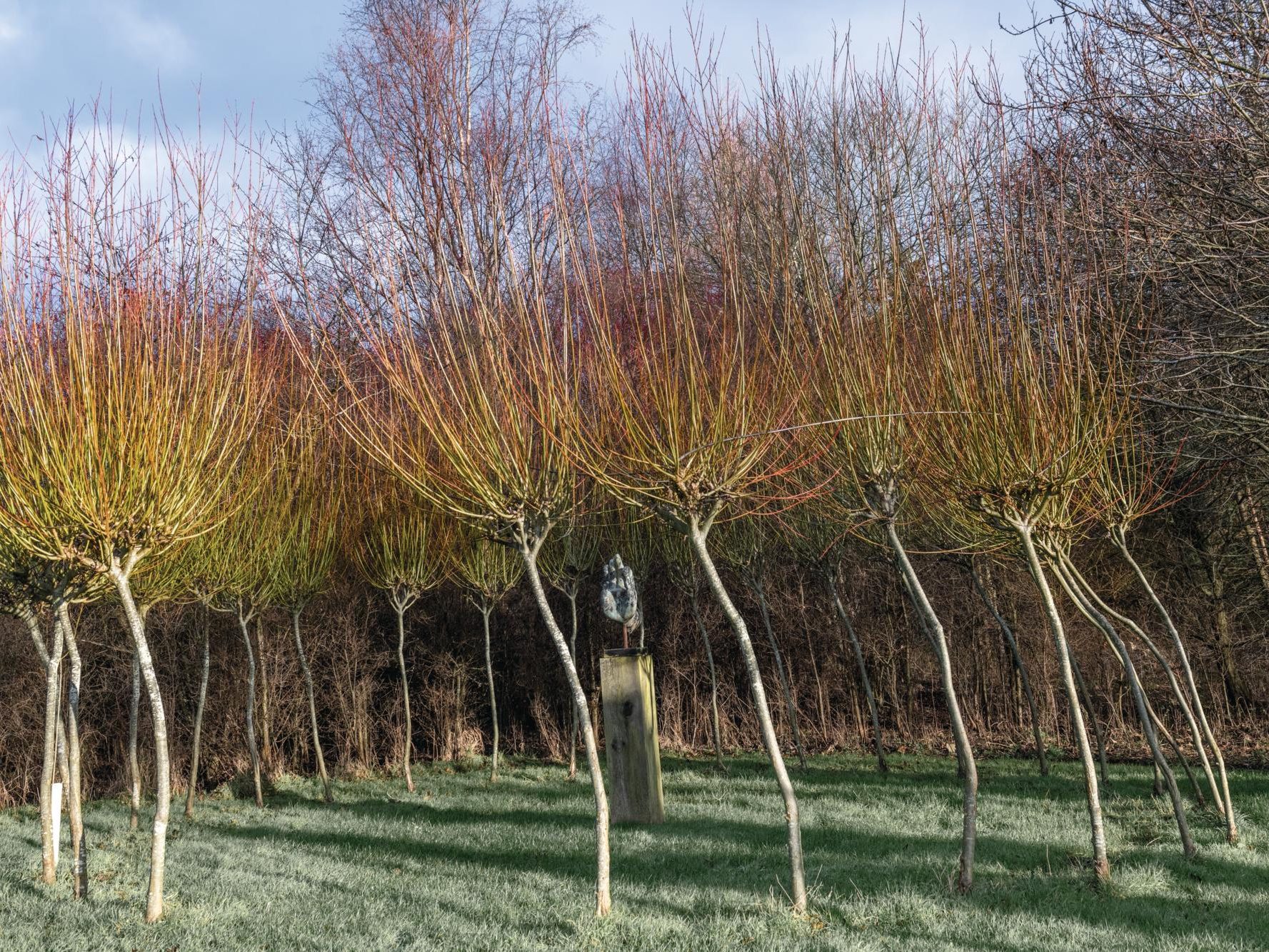
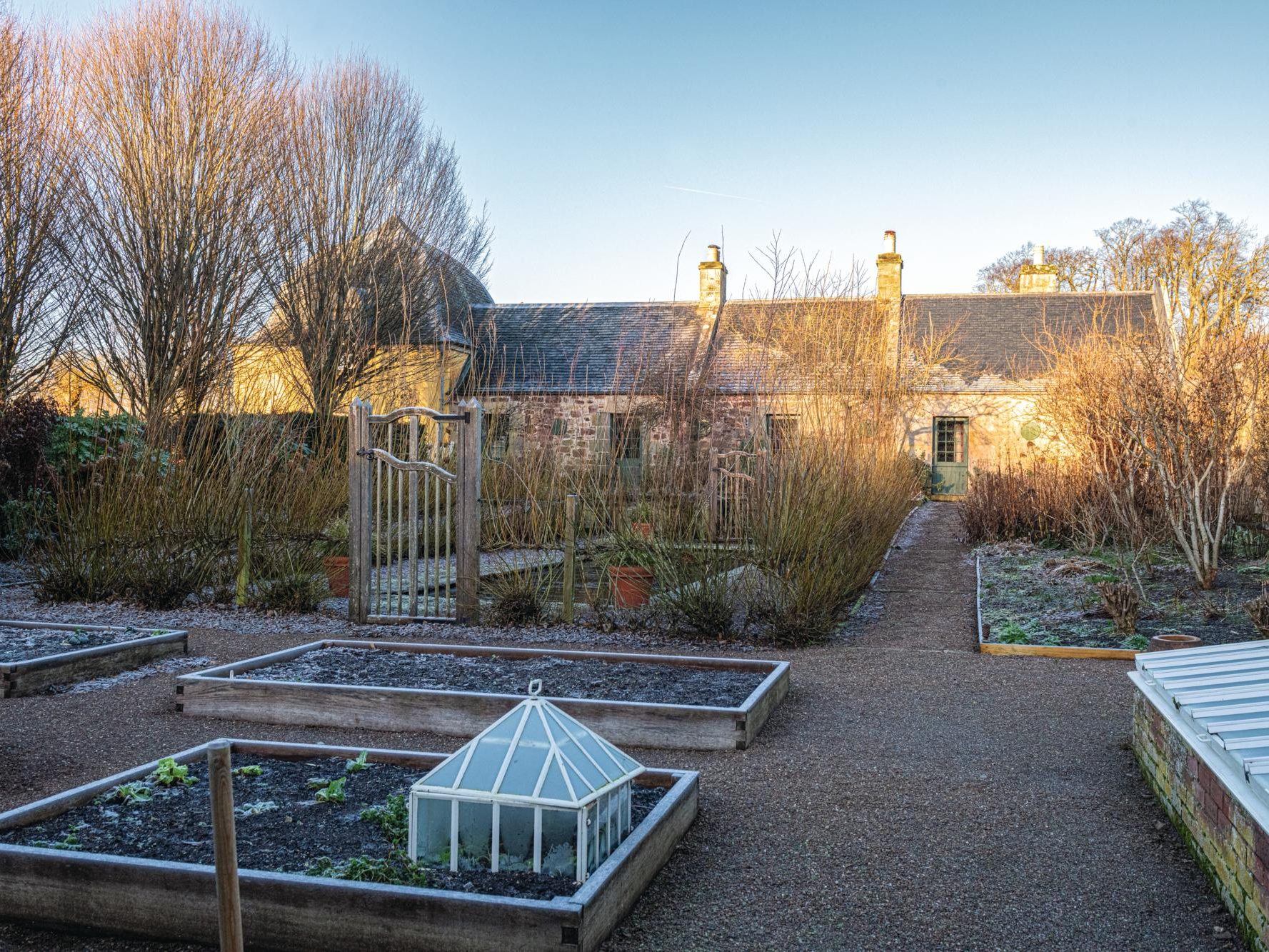
Even in the vegetable garden, there are stippled dark leaves of cavolo nero and artichoke heads looking as if they have been cast in bronze. It is a moment of reflection. But on those short days when the weather is generous, the wide Scottish sky grounds the garden in pale light, and although the spring is still months away, you can feel the whole cycle beginning to start again.
Useful information
- Web broadwoodside.com
- Open 3-4 May 2026 for Scotland’s Garden Scheme and by appointment through the year.
- Admission £15.
Words: Caroline Beck