When garden designers Julie Toll and Ian Kitson moved to Biggerside, a 17th-century farmhouse in Cumbria, they brought with them not just a shared vision, but the combined expertise needed to meld this heritage location with a highly distinctive contemporary design.
For many years, the couple ran their successful landscape architecture and garden design practices from London, but both loved the idea of living and working in a rural landscape. Ian is originally from Yorkshire, so the couple centred their search on the Yorkshire Dales, but struggled to find a suitable space. “If it wasn’t facing south, we didn’t bother,” says Ian. “Because having four months of no sun in the winter is not good in Yorkshire.”
You may also like:
- Gardens to visit in Yorkshire
- Expert tips on designing a meadow
- How to attract wildlife into the garden
- Meadow plants: best plants for a meadow
Eventually, they found the perfect Yorkshire Dales location, not in Yorkshire itself, but over the border in a remote Cumbrian valley between rain-soaked mountains. That the Grade II*-listed farmhouse was surrounded by ancient hay meadows was a big draw – “Julie was besotted by the meadows,” says Ian – but so was the chance to make a new one-acre garden.
And what a garden they have made. Striking for its distinctive contemporary shapes, this is modern art perfectly at one in its jaw-dropping rural setting thanks to a mix of smart material choices and wildlife-supporting plant design. Ian’s designs are famous for their strong curving forms. “There’s a language I’ve been working on for about 25 or 30 years,” he says. “Biggerside very much belongs to that. I’m interested in all my gardens having strong personality.”
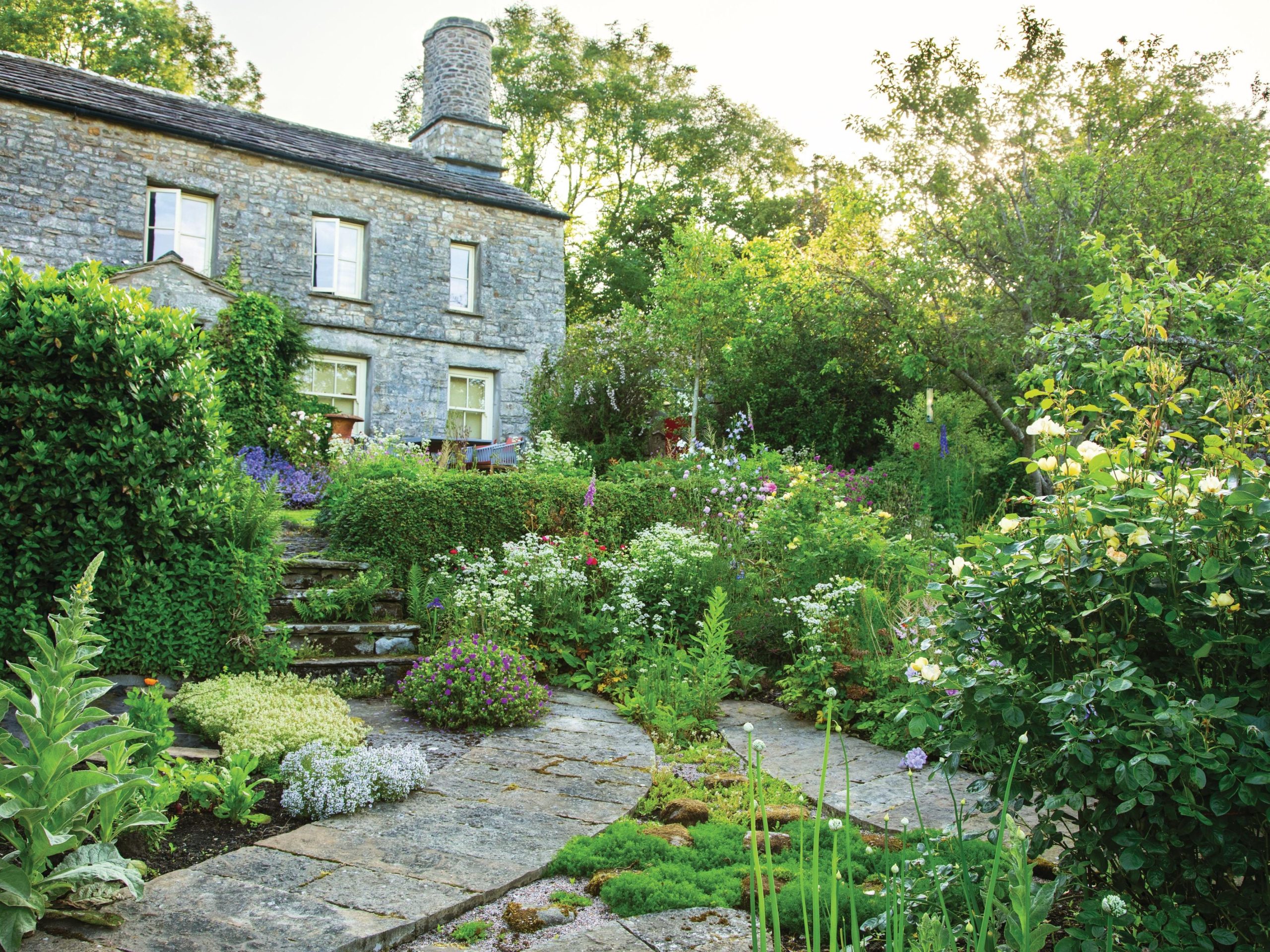
Much of the personality in this garden comes from the feature walls and paths, mainly constructed of local stone and largely laid by Ian and Julie themselves, as contractors are a rare breed in this remote location. This stone, which, as Ian points out, is used in every wall within a 30-mile radius, firmly blends the garden into the setting.“ A garden has to belong to the place,” says Ian. “It’s very rare in the garden that you don’t have a view of the landscape, or, if you turn the other way, of the stone house and barn.”
Cobbles from the river at the foot of the meadows butt up against curved paving that lead around the stone barn to a studio. Elsewhere contemporary Corten steel is used for steps and to give a sharp edge to the curved lawns. Installed by Ian as a pandemic lockdown project, the edging was, says Julie, “hand measured to the exact millimetre”.
There’s a language I’ve been working on for about 25 or 30 years. Biggerside very much belongs to that. I’m interested in all my gardens having strong personality.
The lawns themselves are gloriously full of clover and other low wildflowers, but the edging, which lifts them 10cm above planting areas, protects the purity of line. For Ian, this is vital. “The shape and energy of the lawn is as important as the shape and energy of anything else,” he says.
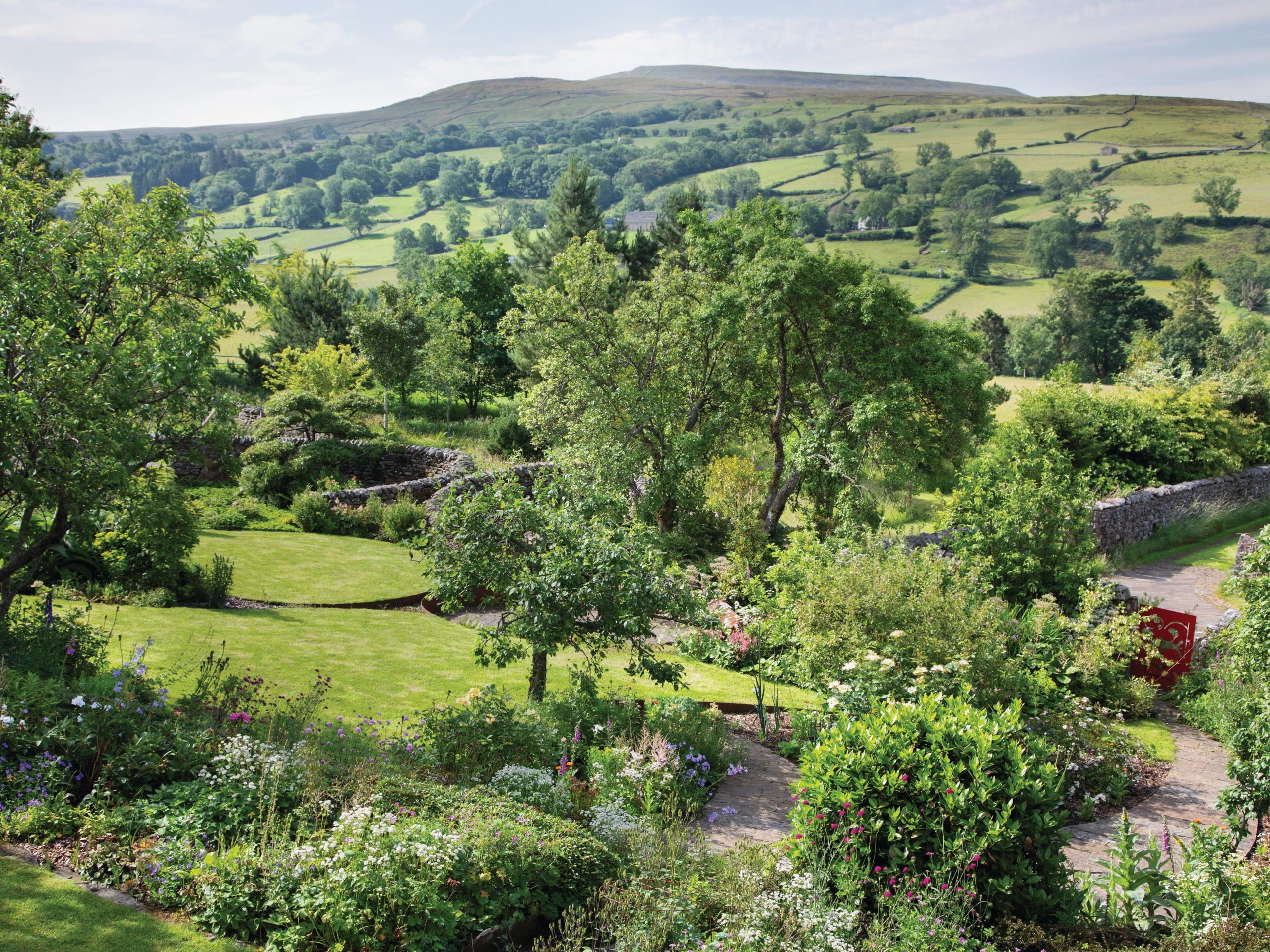
With two designers in the house, you might expect a few clashes when it came to designing their own garden, but although there were plenty of discussions on the layout, Julie was content to take a step back and let Ian’s imagination fly. “I know Ian is passionate about his curves and shapes, which are always amazing,” she says. “There has to be one person leading an aspect of design and the layout, and I was very happy for that to be Ian. Then for planting, it was ‘over to you, but don’t you dare let a leaf come over my steel edge’.”
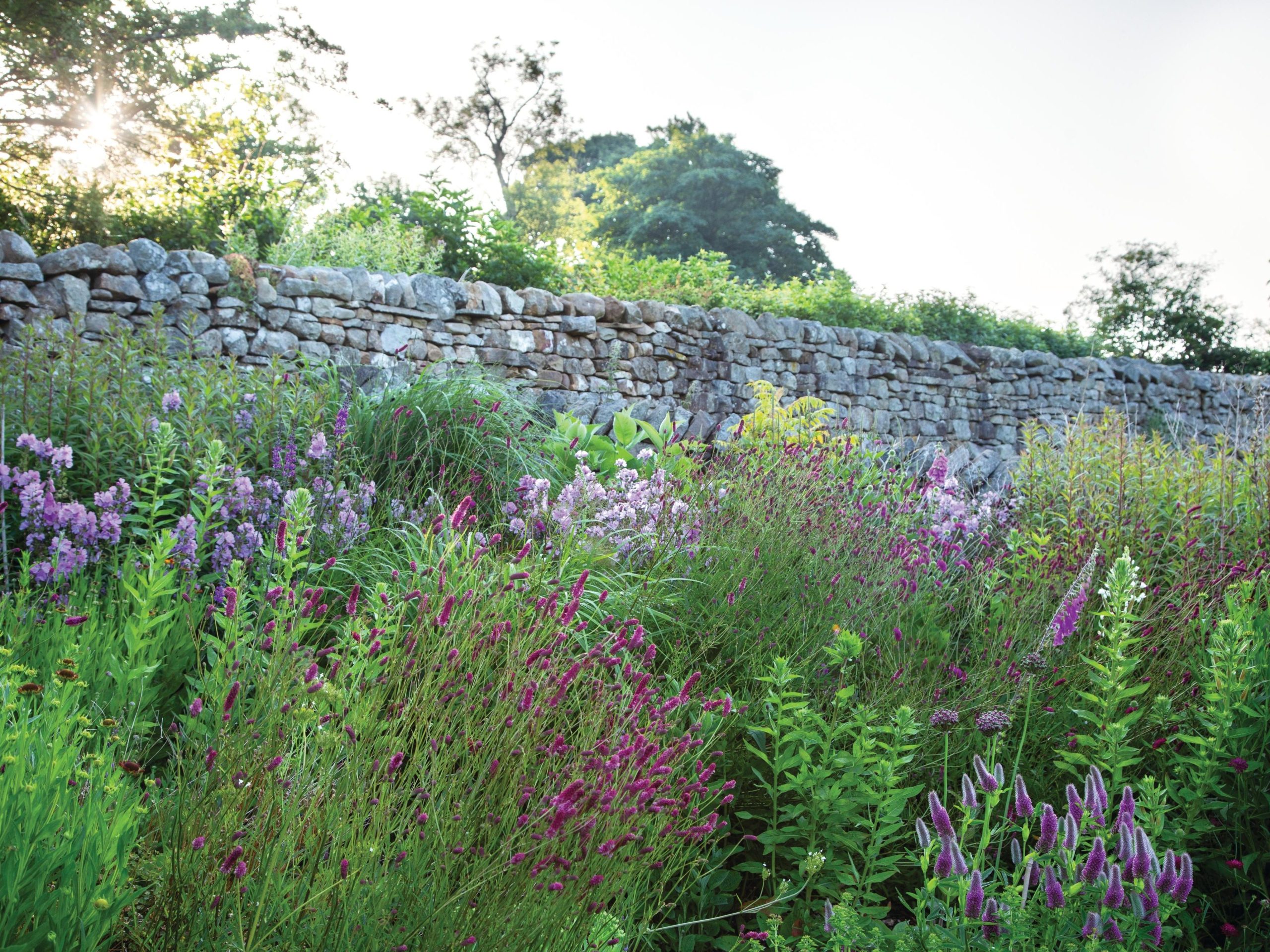
Taking the planting lead gave Julie the opportunity to grow an eclectic mix of different plants in a garden that is drier and sunnier at the top of the slope by the house, and shadier and damper at the bottom around a pond. “I want different types of planting for habitat and aesthetics, predominantly geared around wildlife,” she says. “With the meadows cut at the end of July, suddenly all that nectar’s gone, so I wanted a lot of later flowers for bees and butterflies through to October. The colour palette was less important.”
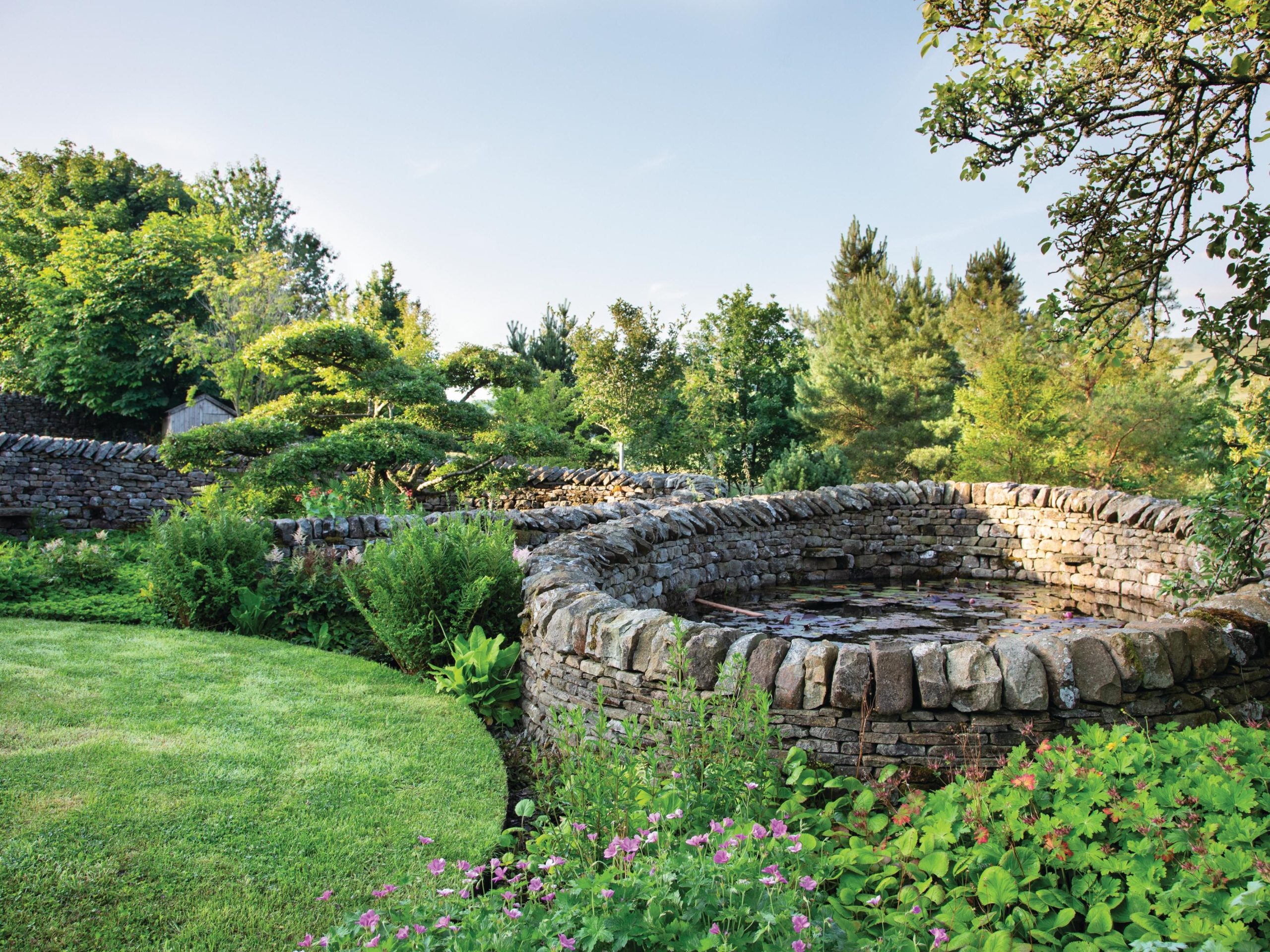
Julie’s planting is purposeful and fun, blending wildlife-friendly ornamentals with copious wildflowers and featuring several existing fruit trees that make the garden feel established. “Under one apple tree, I absolutely love the rose Tottering-by-Gently, because it’s open and the insects like it,” she says.
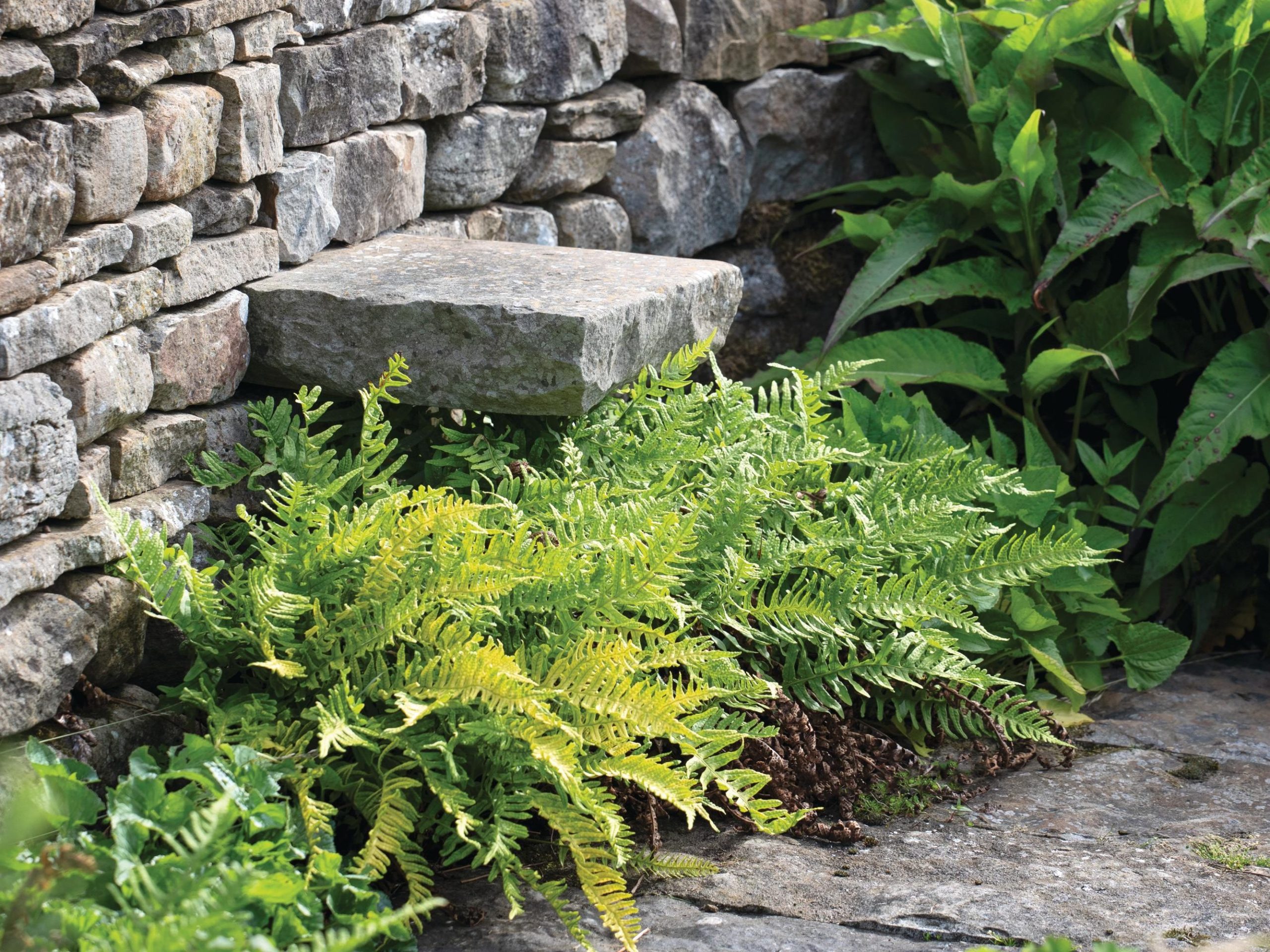
Ian too has made his planting mark with a unique cloud-pruned hawthorn, Crataegus monogyna, which was the first item added, planted before the walls were built. Beneath this Julie has used the groundcover Gunnera magellanica from Beth Chatto’s Plants, alongside Bistorta amplexicaulis ‘White Easfield’ and various quirky ferns and spreading geraniums.
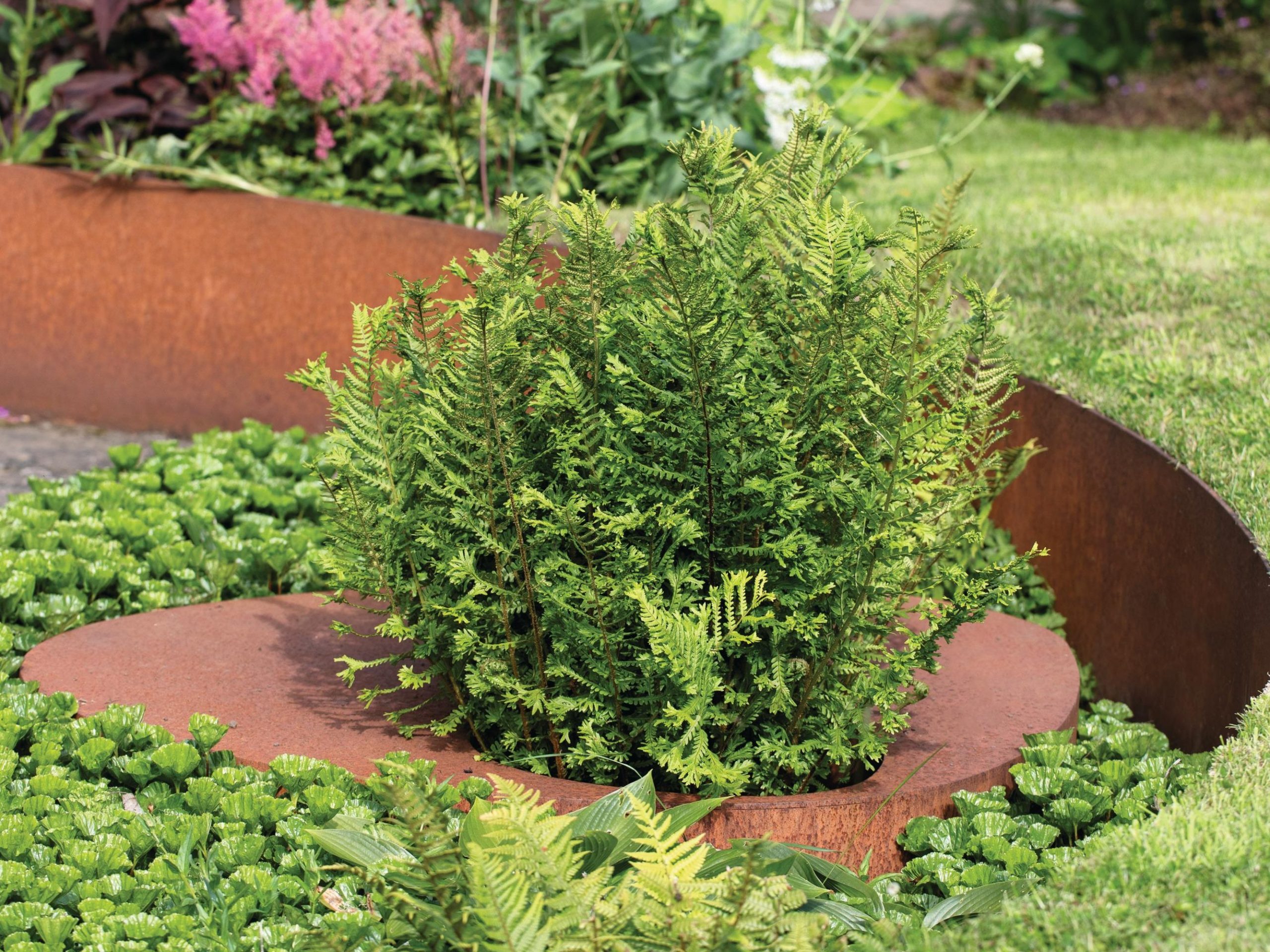
“I’m always changing and developing things,” says Julie, “and trying new plants. Though, because it’s our own garden, plant purchases aren’t quite as extravagant as for clients’ gardens.” Not that you can tell from the exciting and beautiful combinations of ornamentals alongside many species of wildflower.
“I let self-seeders come in and manage the quantities of them,” she says. “Verbascums, foxgloves, evening primrose, linaria. With climate change, I’m struggling in the old vegetable patch. It’s very dry in summer, so I’m starting to let annuals self-seed, with honesty and jack-by-the-hedge for orange tip butterflies, and viper’s bugloss and other wild things.”
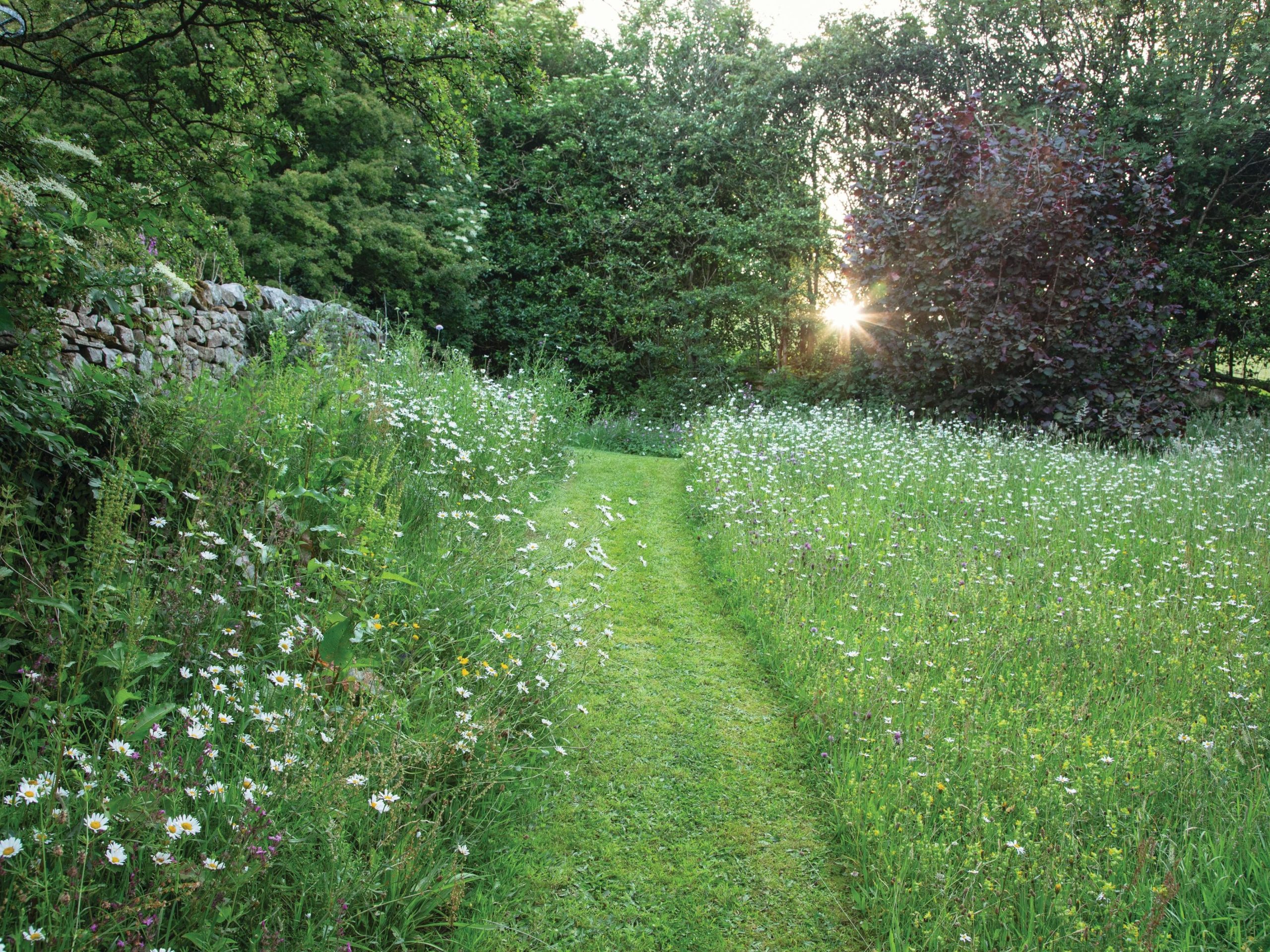
Ian and Julie are both extremely conscientious with their stewardship of the land, managing meadows and working with volunteers to regularly survey plants and wildlife numbers. “They’re ancient northern hay meadows, rare enough to be in the higher level stewardship scheme,” says Ian. Julie agrees that it’s an ongoing project, “I want to take the little paddock next to the garden and let it develop with me. It won’t be so designed; instead it will be a case of responding to what regrows and extending habitats for invertebrates.”
At Biggerside, Julie and Ian have created a garden that is impressive in its execution, and inspiring for both the strength of artistic vision and love for the future of its wildlife.
Useful information
Find out more about Ian Kitson’s work at iankitson.com and more about Julie Toll’s work at julietoll.co.uk


