You may think winter is a time for hibernation, but far from it; winter is a time for doing. This is the only time of the year when you have a chance of keeping pace with the garden, and every task done now will mean a better garden in summer. It is a season of activity, yes, but also one of deep immersion with the moment and with your surroundings. One feels a real connection with the landscape and the environment; the sounds, smells and light all have a distinctive winter flavour.
You may also like:
- Appreciating Sissinghurst Castle Garden in autumn
- Roses from Sissinghurst: 15 of the best
- Sissinghurst's head gardener reflects on Vita Sackville-West's colourful summer planting
Here are some of the key jobs that we work on during the winter.
Pruning roses
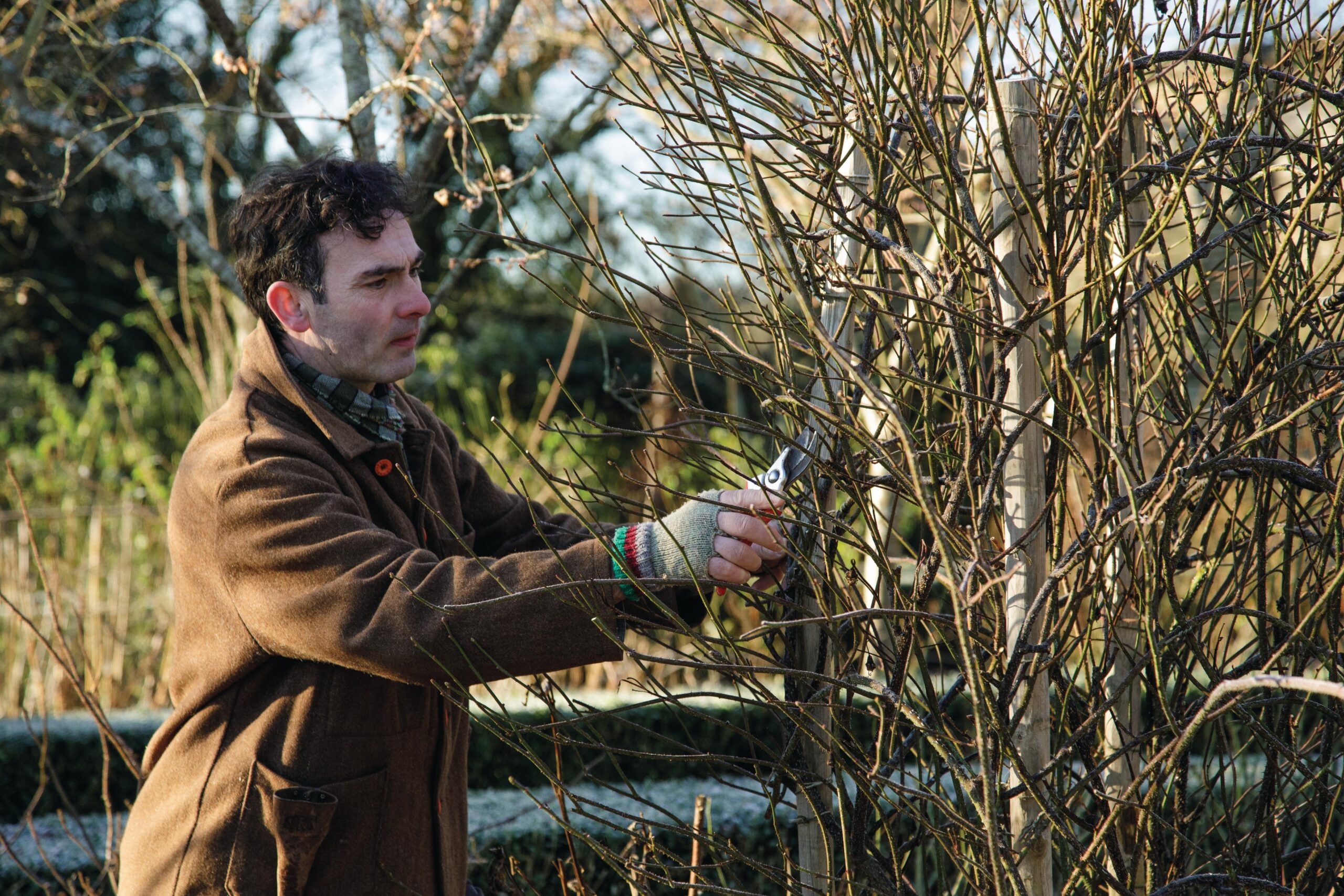
Winter at Sissinghurst is all about rose pruning. We start in early November with the climbers and ramblers (although this is becoming more difficult with the roses hanging on to their foliage for longer with the milder autumn weather). Next, we move on to Vita Sackville-West’s collection of more than 300 ‘old’ shrub roses. We remove old wood to encourage new, prune back flowered stems and tie down the new long shoots.
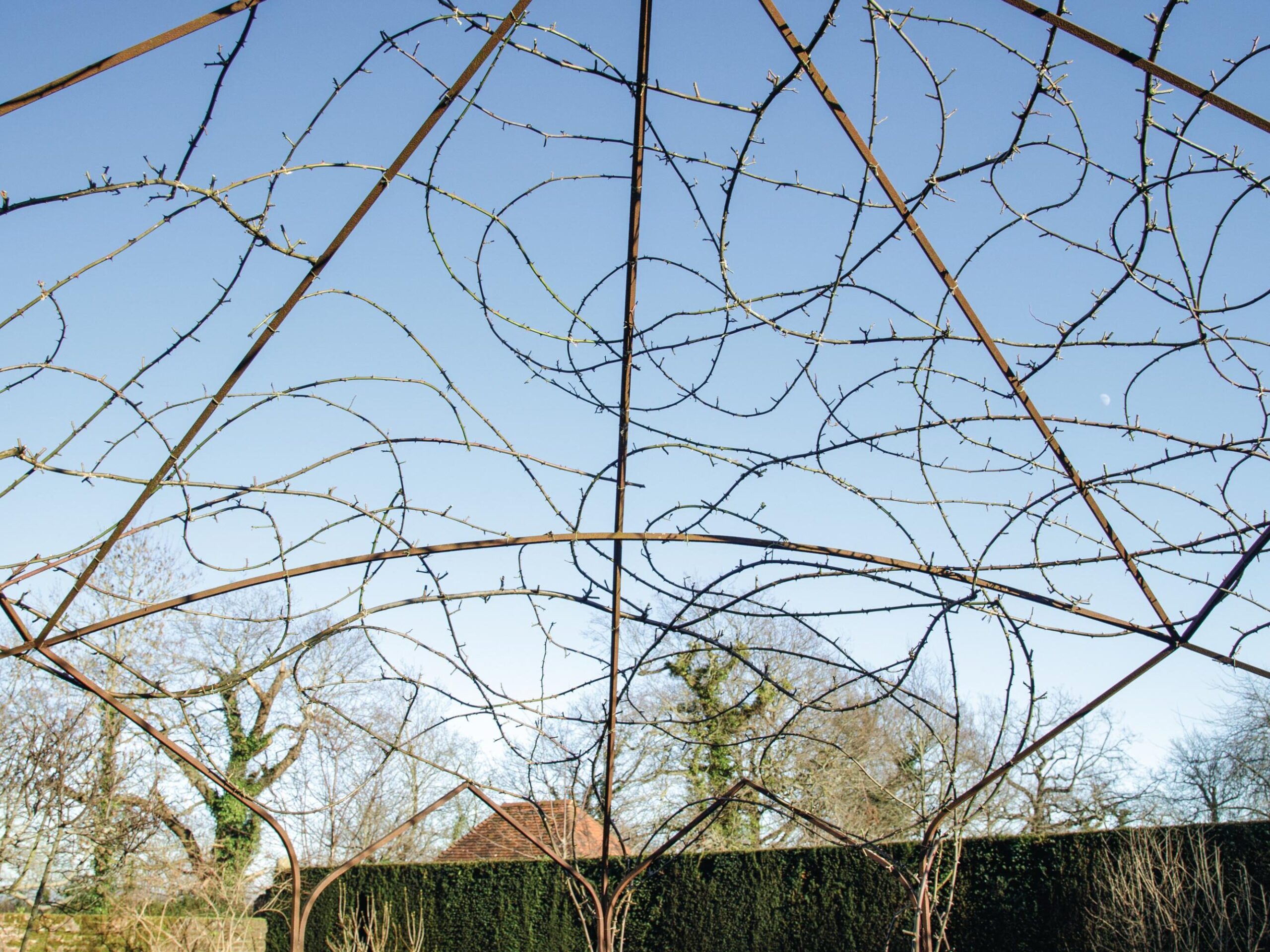
The current method of pruning and training roses was introduced by Jack Vass, who was head gardener at Sissinghurst from 1939 to 1957. The technique involves pulling the long supple wands of growth down in an arc and anchoring into position. This bending of shoots near to horizontal prevents sap rising to the top of each stem, instead it encourages flowers to break from every bud along the entire length of the bent stem.
You may think winter is a time for hibernation, but far from it. Winter is a time for doing. This is the only time of the year when you have a chance of keeping pace with the garden.
A rose that needs very little pruning is the Burnet rose (Rosa spinosissima) and in recent years I have become excited at the potential of this little Scots rose. Vita once wrote of them: ‘The myriads of small flowers look as though swarms of butterflies had settled on the ferny foliage’. For me it is their resilience to our drier summers, their happy disposition, their attractive and healthy foliage, their early flowering and their good-looking hips that make them a group of roses worthy of consideration.
Planting bulbs
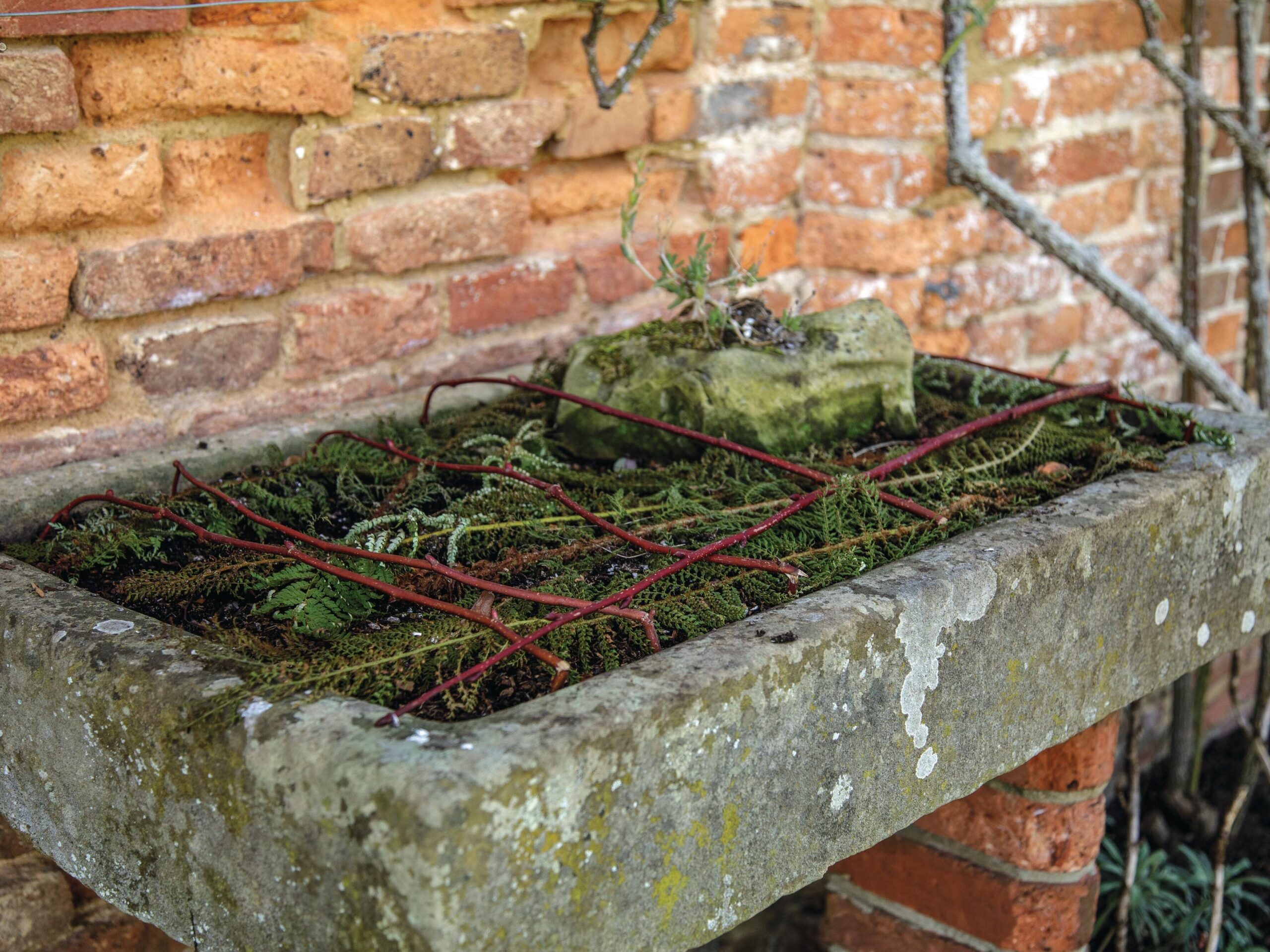
We aim to get all our spring-flowering bulbs planted by Christmas. Sooner would be better, but our schedule rarely allows this. In the beds and borders we plant bulbs that we expect to be long-lived, such as Narcissus ‘Snipe’, a cyclamineus type raised in Wales in the 1940s. In the raised stone troughs we take the opportunity to experiment with new bulbs. A nice combination is Fritillaria pontica and Cyclamen coum, their new growth protected from birds and mice with a ‘cage’ of fern fronds and Cornus twigs.
Tidying perennials
We selectively cut and clear herbaceous perennials, only leaving those that either provide habitat for over-wintering insects, such as the hollow stems of Cirsium, or those that offer good winter structure, such as fennel.
Emerging from the parchment colours of these skeletal perennials are dabs of colour from the early flowering, but often overlooked, wood anemone, A. nemorosa. In our old nut coppice we have it growing alongside a beautiful pale-yellow form called A. x lipsiensis, where it acts as a duvet upon which other small flowering bulbs rest.
Training figs
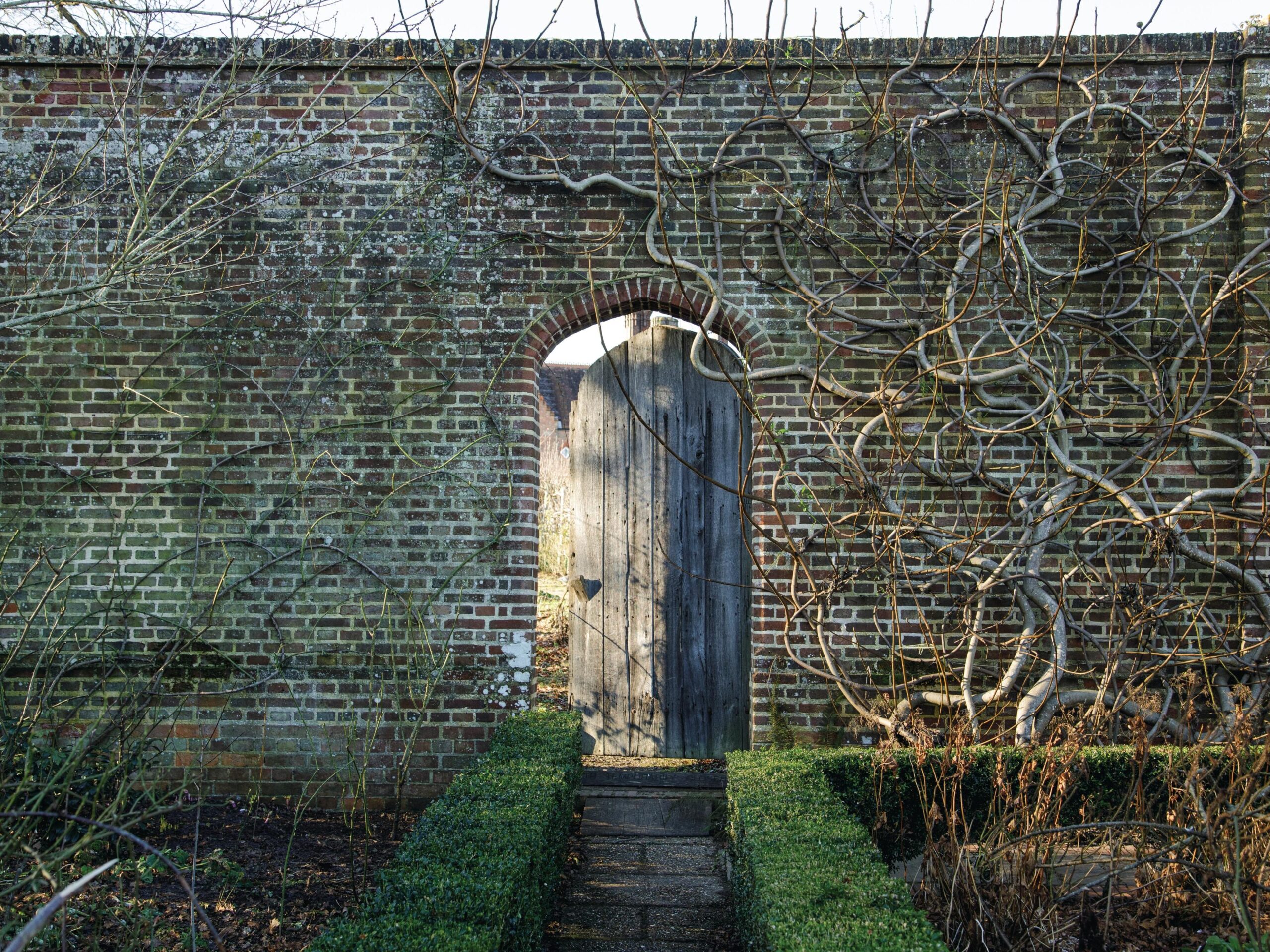
In the Rose Garden, wall-trained figs, including Ficus carica ‘Brown Turkey’ and F. carica ‘White Marseilles’, are grown for foliage effect rather than fruit. They are pruned and new shoots tied in in late March.
Coppicing hazel
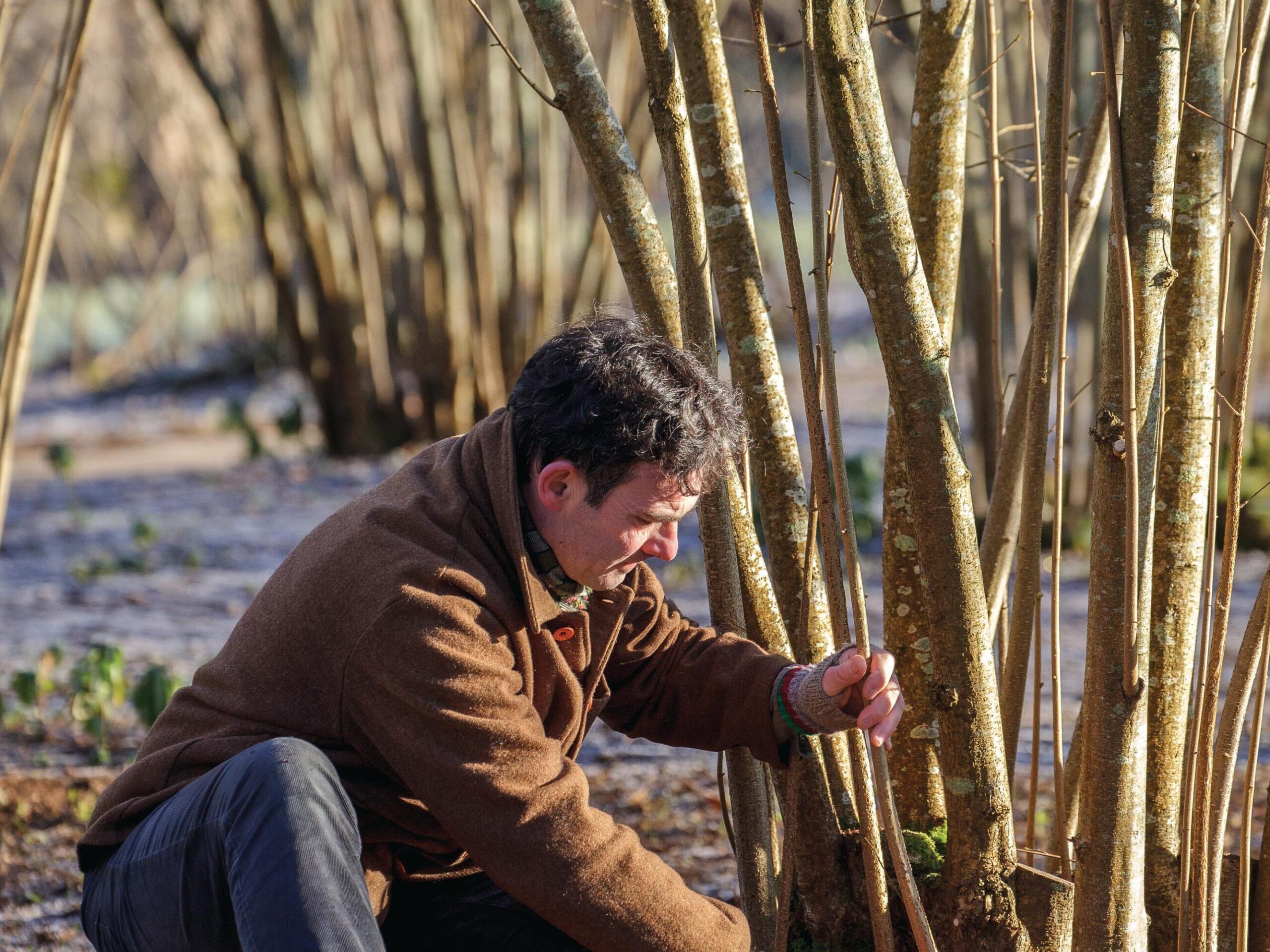
Each year in winter we selectively cut a few of the hazel stems in the Nuttery to the ground to maintain the balance of new and old stems. The Nuttery or nut platt is made up of Kentish cobnuts, a variety of hazel thought to be planted at the turn of the 19th century. Harold records in his diary the moment he and Vita decided to buy Sissinghurst: ‘We suddenly came upon a nut walk, and that settles it.’ Traditionally coppiced and used for timber, as well as nut production, Vita and Harold instead underplanted the nut grove with a carpet of polyanthus. Today, the polyanthus have gone and in their place a palette of woodland plants seductively colonises the pools of dappled half-light.
Bareroot planting
Winter is the time for bareroot planting. By this we mean plants, such as roses, hedging, trees and shrubs that have been grown in the field and lifted once they’ve become dormant, around early November. So long as the ground is not waterlogged or frozen, these bareroot plants can be planted between November and February without any check to their growth.
Marking dormant plants
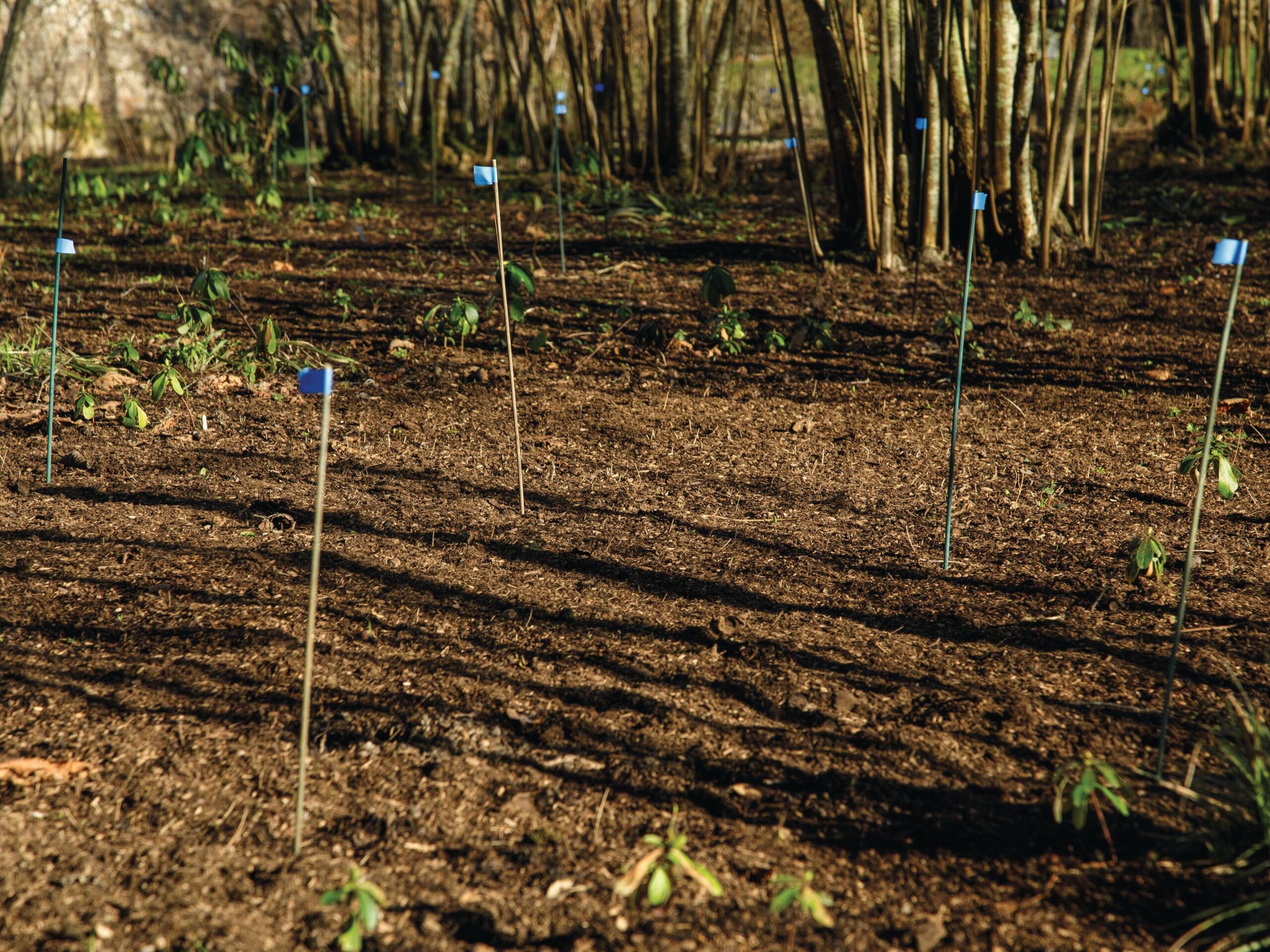
Before the first frosts of the winter and the cutting down of herbaceous material we place bamboo sticks horizontally, pinned in place with bent wire, and short sticks pushed into the ground, with different-coloured tape on top. Although we usually try to hide the ‘mechanics’ of a garden, this visual reference is invaluable when the plants have retreated underground and you need to know where the crowns of plants are for lifting and dividing and the extent of their maximum spread.
Taking cuttings
Winter is the ideal time to take hardwood cuttings of many shrubs, including lilacs. Although slower to produce independent plants, this method of propagation is straightforward and usually successful. Cut 30cm long stems approximately pencil thickness, with a flat cut at the base and a sloping cut at the top. Push these two thirds of their length into the soil in nursery rows or into a pot and simply wait, for about 18 months, by when they should have rooted and be ready for moving and replanting into their flowering position.
Appreciating the wider landscape
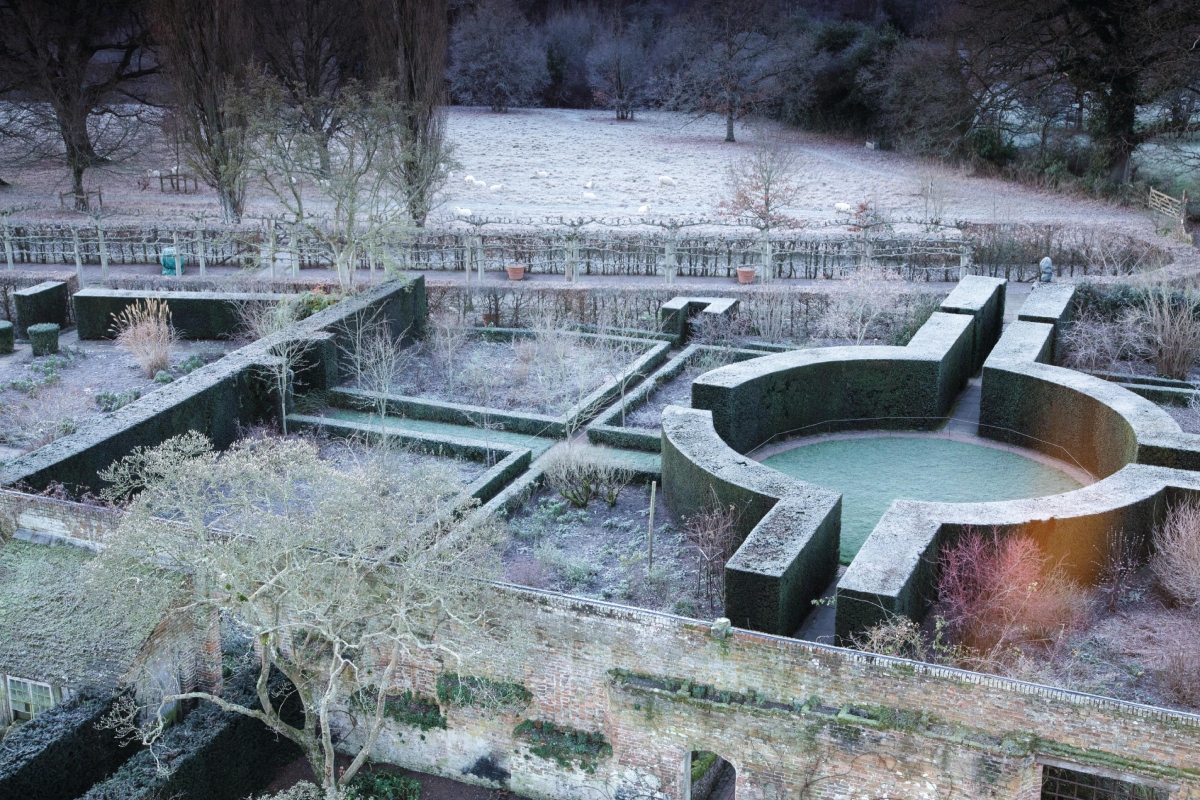
Vita Sackville-West had a very real and immediate relationship with the land. She loved the idea of the timelessness of the Weald, of the old buildings and garden growing out of the land where they sat, and the materials from which they were fashioned being of the land.
Vita shared this vision of Sissinghurst with her husband Harold Nicolson and together they reinvested life in the ruin with both flowers and farm. We benefit from the moves that Vita and Harold made, and from the legacy they left behind; a more reflective, romantic, slower, deeper place than might have been.
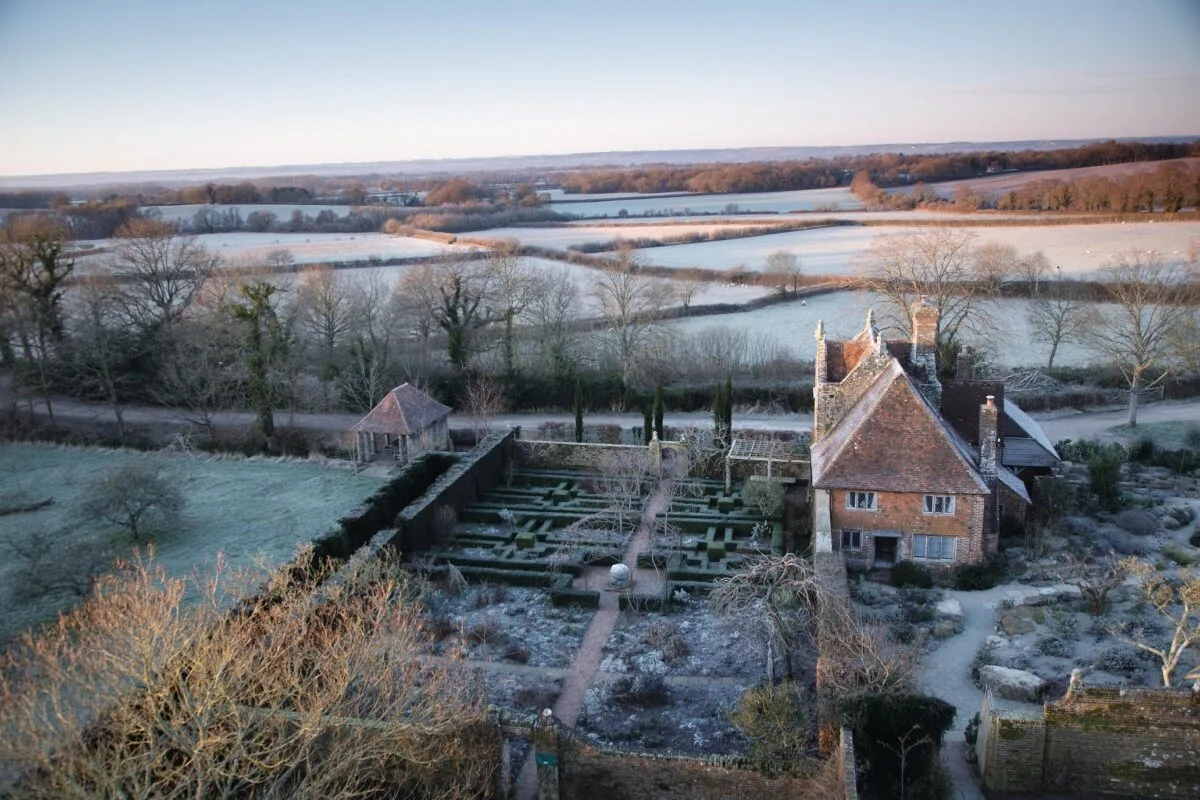
Today the garden sits within 470 acres of mixed Wealden landscape, including on its southern flank, 200 acres of woodland, with permanent pasture and arable to the north and east. Here and there fingers of Orchard reach to meet the garden and everywhere there is a sense of harmony and balance, of health and of nature thriving.
Useful information
- Address Sissinghurst Castle, Biddenden Road, nr Cranbrook, Kent TN17 2AB. Tel 01580 710700.
- Web nationaltrust.org.uk/sissinghurst
- Open Gardens open daily 11am-5.30pm. Admission £17.
- Follow Troy on Instagram @troyscottsmith1