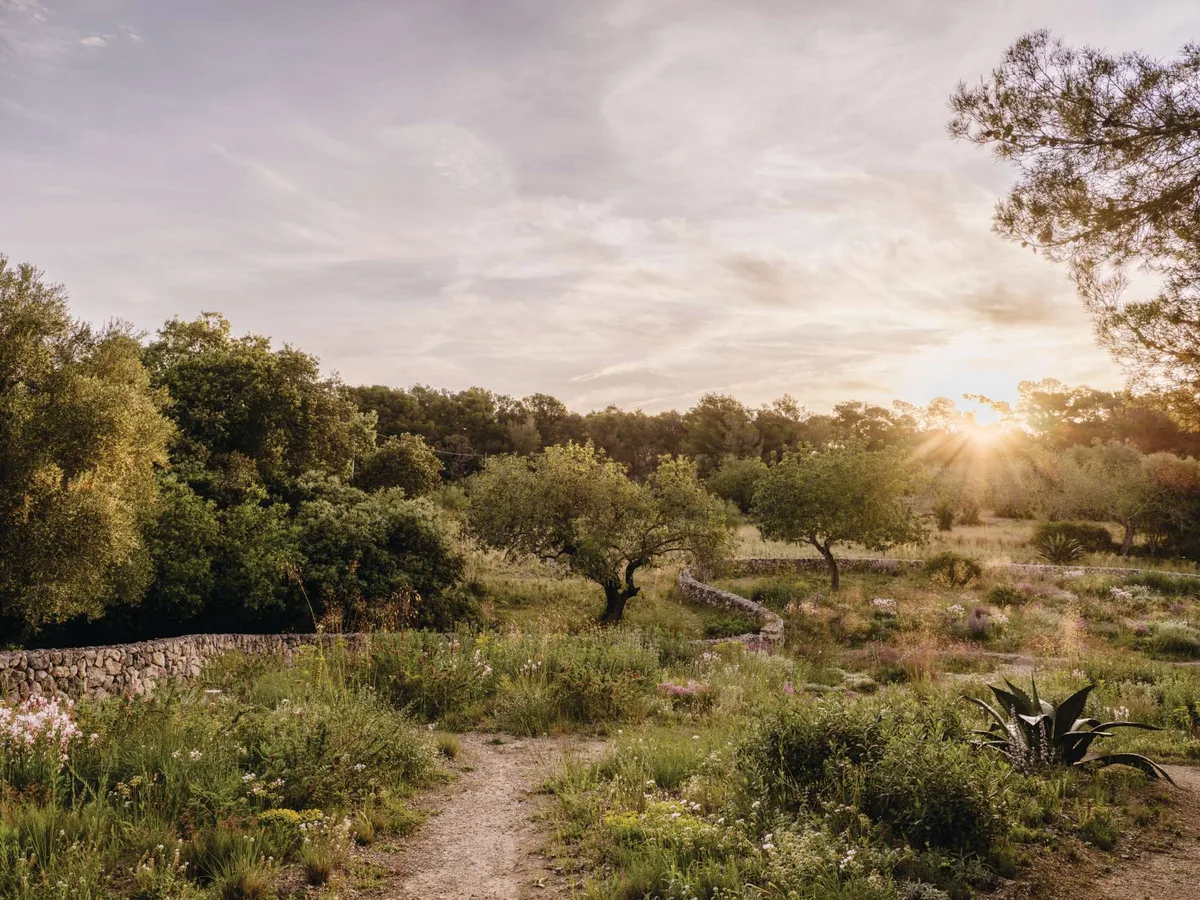
For Luciano Giubbilei, The Field is a wild and romantic dream that continues to unfold and to surprise. In a stretch of rocky grazing land in northeast Mallorca, within the sinuous embrace of a beautiful dry-stone wall, the eminent landscape designer has developed a magical, shimmering three acres of garden. The Field is a poetic bid to understand this tough landscape, to see how plants behave with or without human intervention, and to create beauty. “It is difficult to make beautiful things,” says Luciano, “but striving for beauty is a healthy task to set yourself.”
Luciano knew Mallorca well before this particular adventure began but, in the summer of 2016, he was introduced to the ceramicist Maria Antonia Carrió at her home and studio in the small town of Son Servera. He connected immediately with the artist, admiring her strength of character and the timeless simplicity of her way of life. When she died the following January, he learned that she had wanted him to buy the building and keep its spirit alive. By February 2017, The Potter’s House was his.
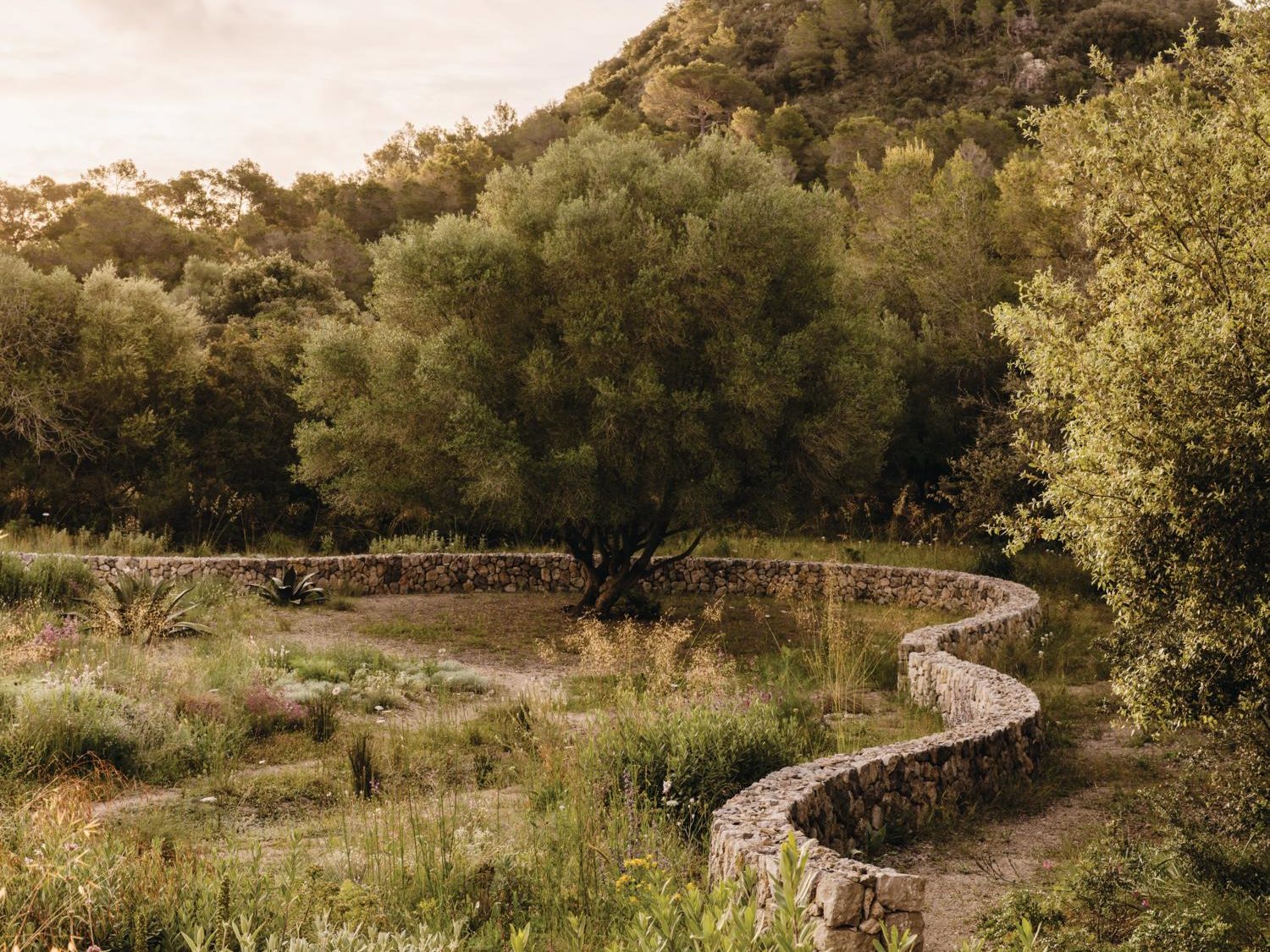
The Potter’s House is now series of serene interior and outside spaces, an atmospheric combination of gesso walls and cool green planting, both a home and an enriching place for artists to work. “In time, I realised I wanted to spend more time here, to find a place to garden, to give something back,” he says. A local family invited him to walk their land to see if there was anywhere that would fit the brief. “When I saw the wild olive at the end of the space, the carob trees and holm oaks that surround it, the way the land falls away towards the hill and the way the moon always rises on the back of the hill – I thought ‘This is a beautiful place’.”
The wall contains the garden and invites connection with the land beyond. I didn’t know what it was going to look like. It was a question of trust
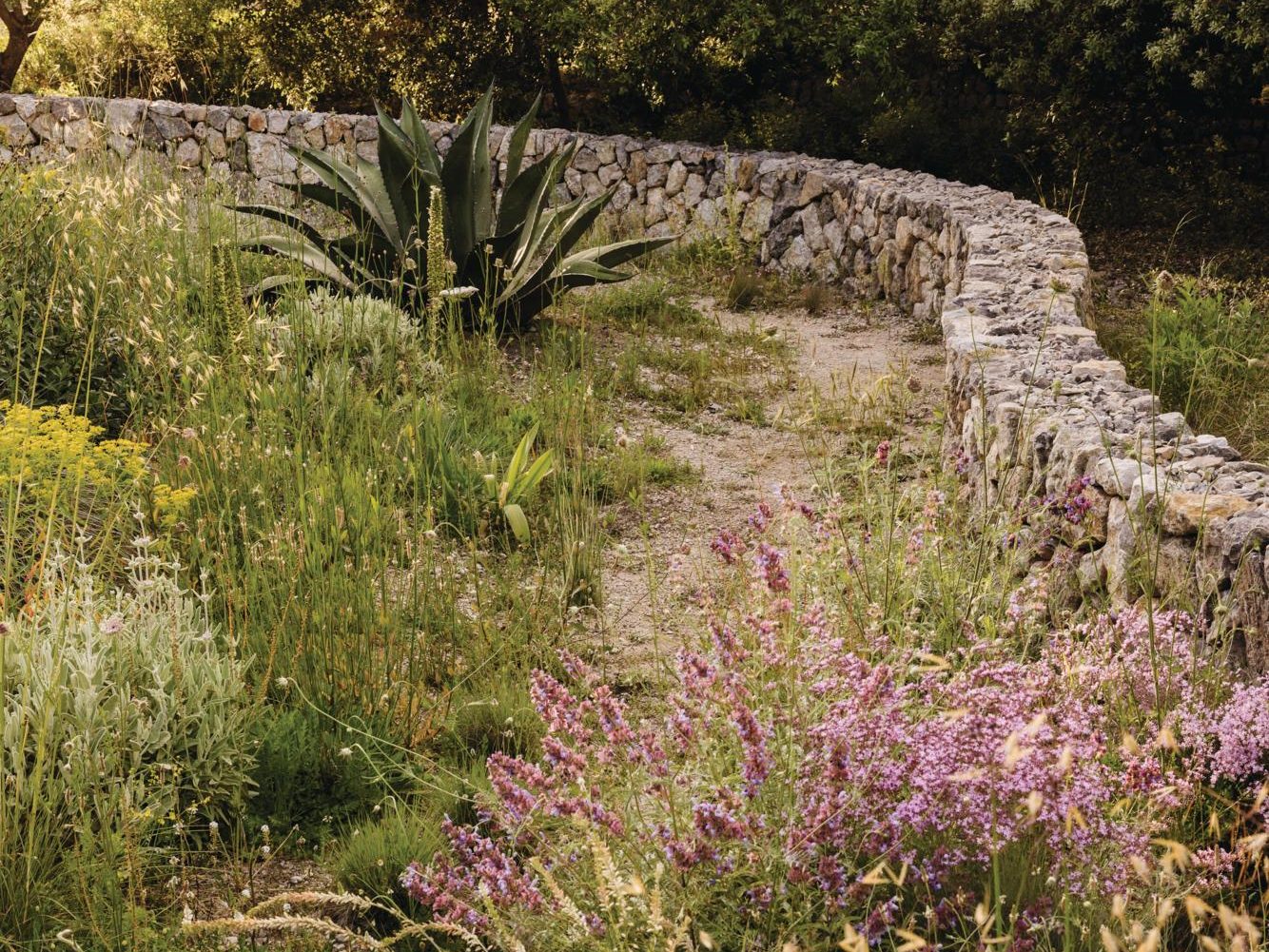
In 2020, when everything stopped for Covid-19, Luciano remained in Mallorca and set to work. He commissioned a local stonemason to build a dry-stone wall, marking out the alluring story book curves with chalk. “The wall was a commitment. It contains the garden and invites connection with the land beyond. I didn’t know what the wall was going to look like, I did not know how long it would take or how much it would cost. It was a question of trust.”
Finding a sympathetic gardener was the crucial next step. Luciano had met Artur Serra Costa while he was developing his scheme for the Walled Garden at Raby Castle in County Durham. Artur made his mark as soon as he arrived, cleaning up the carob trees that weave in and out of the boundary and opening up the views. “Artur is strong and independent and has an amazing attitude to plants,” says Luciano. “Over time, our work together has become a conversation as we observe and react to what is happening in the garden.”
The plants are important but really it’s about a respectful dialogue and about bringing people together to learn and be inspired
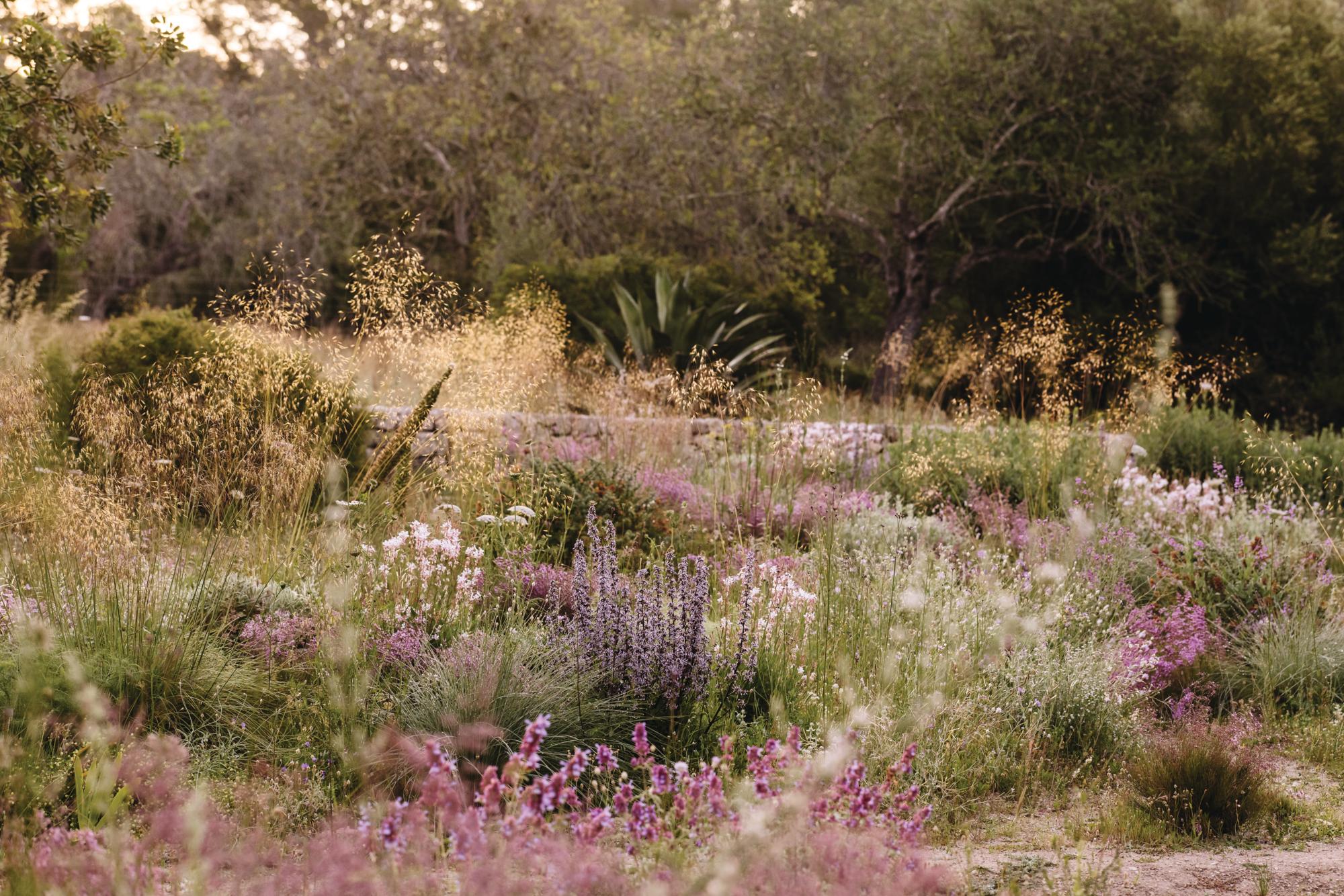
The pair began with a restricted palette of about 15 plants to see what would survive in the dry, chalky soil. They ran a fleet of muscly Agave salmiana var. ferox through the landscape to anchor the space and added local plants such as the starry-white Asphodelus fistulosus, which lights up the island’s olive groves in spring. Later they returned from a trip to Olivier and Clara Filippi’s nursery in the South of France with new treasures such as the perennial Petromarula pinnata, which Luciano loves “for its candelabras of blue flower and for the beauty of its dry structure when it goes over” – and also a plan to mound the space to vary the habitat, an idea implemented by wheelbarrowing in topsoil from the surrounding land.
Grasses are key to adding movement to the space, but an entire swathe of delicate Melica uniflora f. albida disappeared within hours, eaten by an army of ants. The graceful Muhlenbergia lindheimeri has, however, thrived, as has Stipa gigantea, which animates The Field like fireworks, as one of the few plants to last all summer. Another triumph has been the native Spanish sea lavender, Limonium insigne. It is a dazzling cloud of pink around the terrace at the top of the garden, its feathery stems emerging from a network of velvety, yellow-speckled Trifolium campestre. “When plants make themselves at home, we plant a lot of them,” says Luciano.
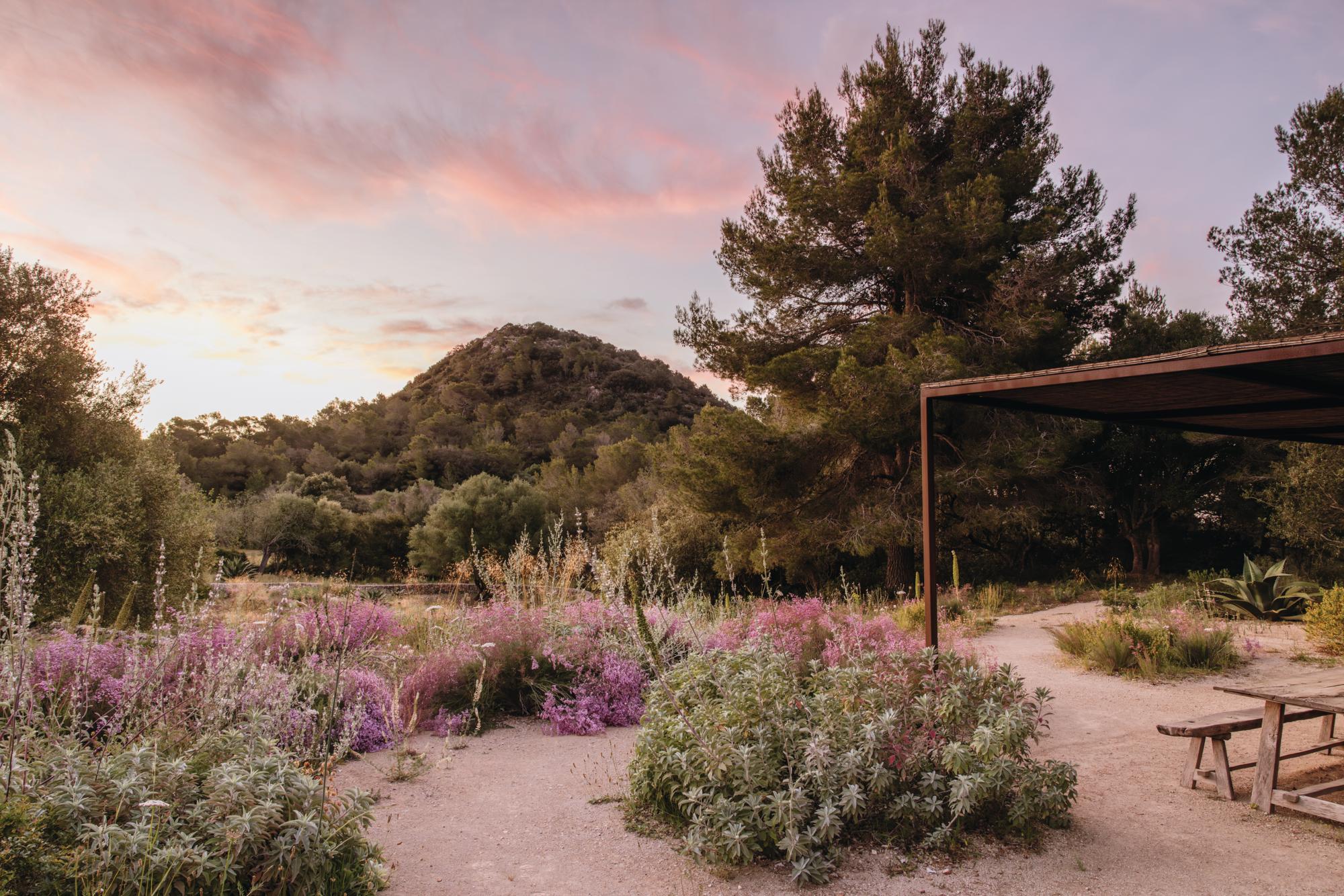
The Field is a place of constant experimentation. Artur is arguably keener for the garden to become self-sufficient, “perhaps just to spread a little seed outside the wall to see what happens”, says Luciano, but they are both excited to try new plants. Their autumn list includes Euphorbia rigida for the way it turns red and echoes the ruddy landscape, the electric-blue Salvia ‘Allen Chickering’ and the elegant Gladiolus tristis with orange seedheads that remind Luciano of the native cistus. Nonetheless it is Artur who has trained the crinkled, bridesmaid-yellow Rosa banksiae ‘Lutea’ into the dead carob trees – “to maintain their presence even when they have gone,” says Luciano.
When I saw the wild olive at the end of the space, the holm oaks that surround it, the way the land falls away towards the hill – I thought ‘This is a beautiful place’
The Field is a dynamic garden full of wonder and possibility – and the rich song of turtle doves and nightingales, which lace the air as the pale moon rises over the hill on a May evening. “The plants are important,” explains Luciano, “but really it’s about a respectful dialogue and about bringing people together to learn and be inspired.”
8 of Luciano's key plants
Stipa gigantea
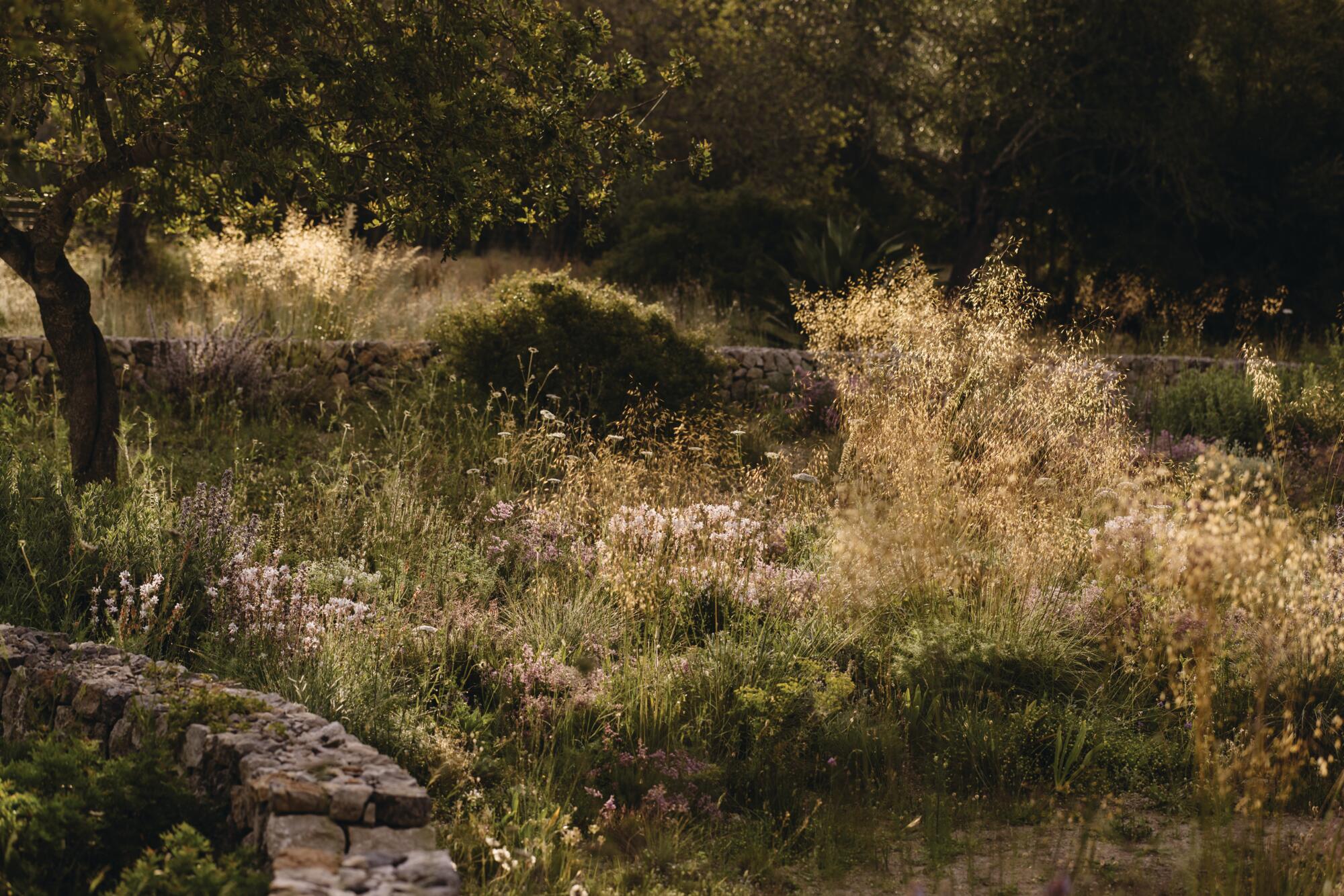
Known as giant oat grass, this Spanish native thrives in The Field’s well-drained sunny conditions. Its arching stems produce airy panicles of golden oat-like flowers that shimmer over a long season. Height and spread: 2.5m x 1m. AGM*. RHS H4, USDA 6a-10b†
Agave salmiana var. ferox
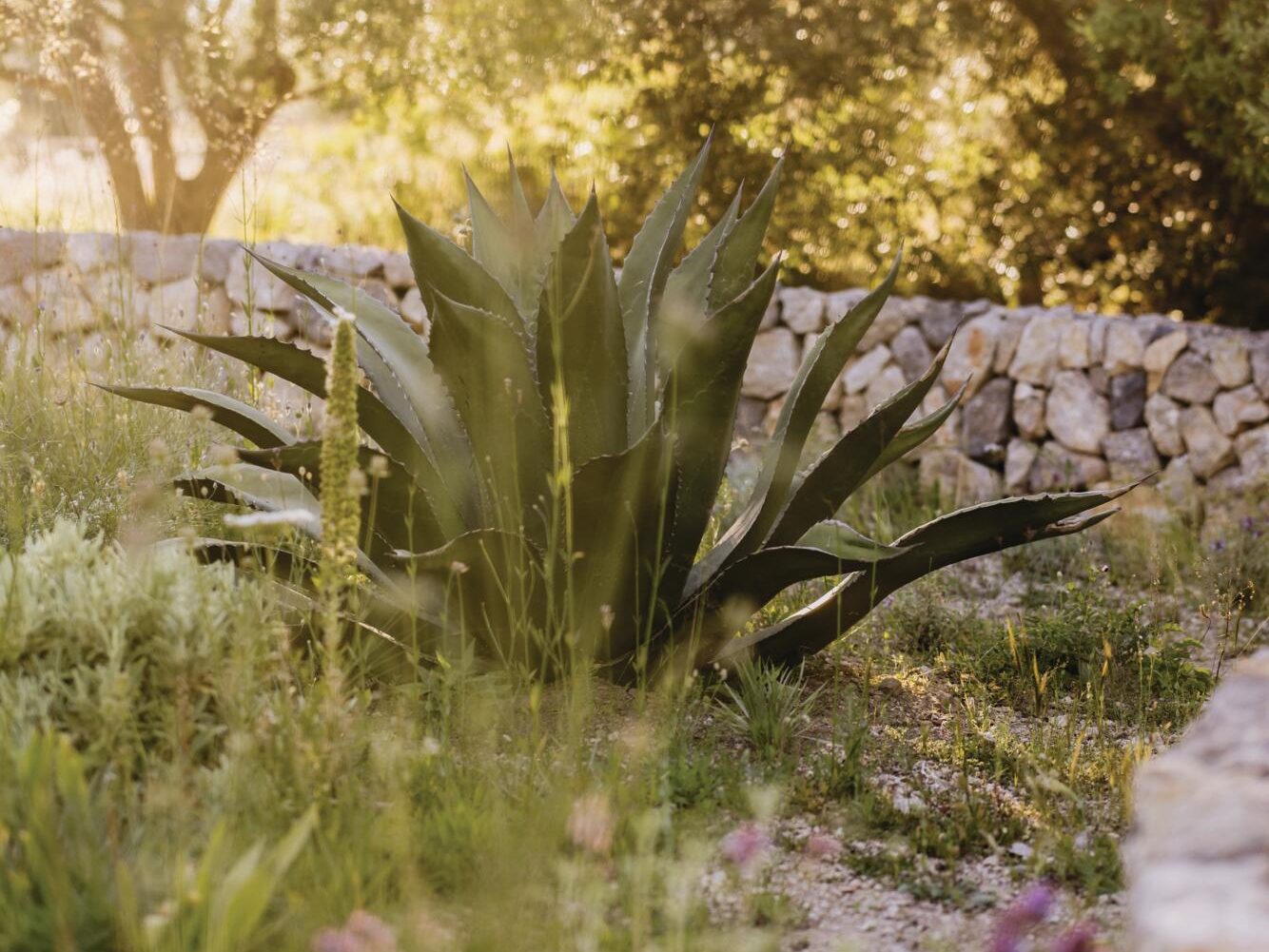
A strongly architectural, drought-tolerant, evergreen succulent with large basal rosettes of handsome, fleshy, grey- green leaves edged with hooked spines. 4m x 4m. RHS H2, USDA 9a-11.
Limonium insigne
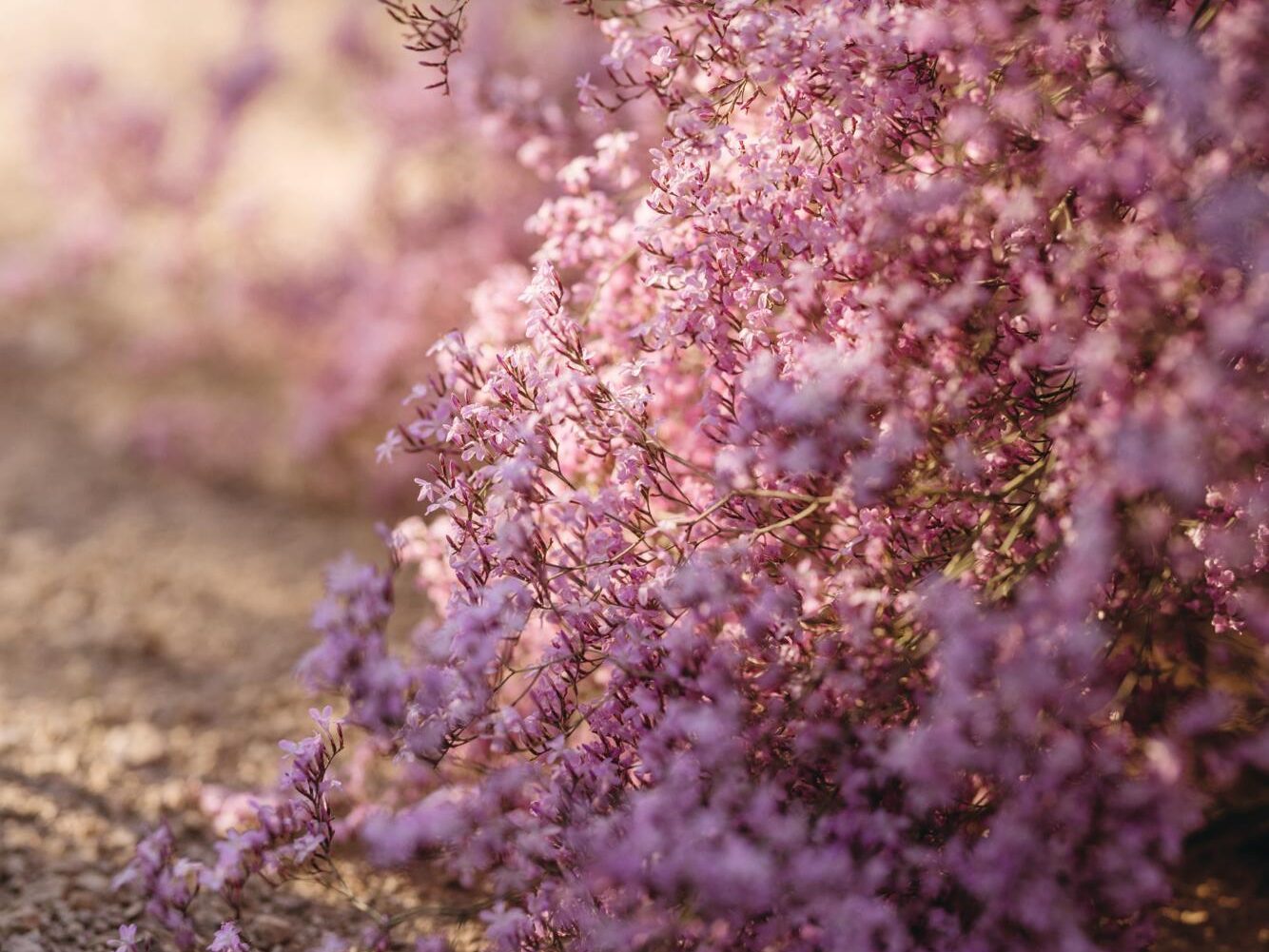
Native to southeast Spain, this perennial subshrub has fleshy, cylindrical, grey-green leaves and stiff branched stems covered in small purple-pink flowers in spring. 90cm x 90cm.
Rosa banksiae ‘Lutea’
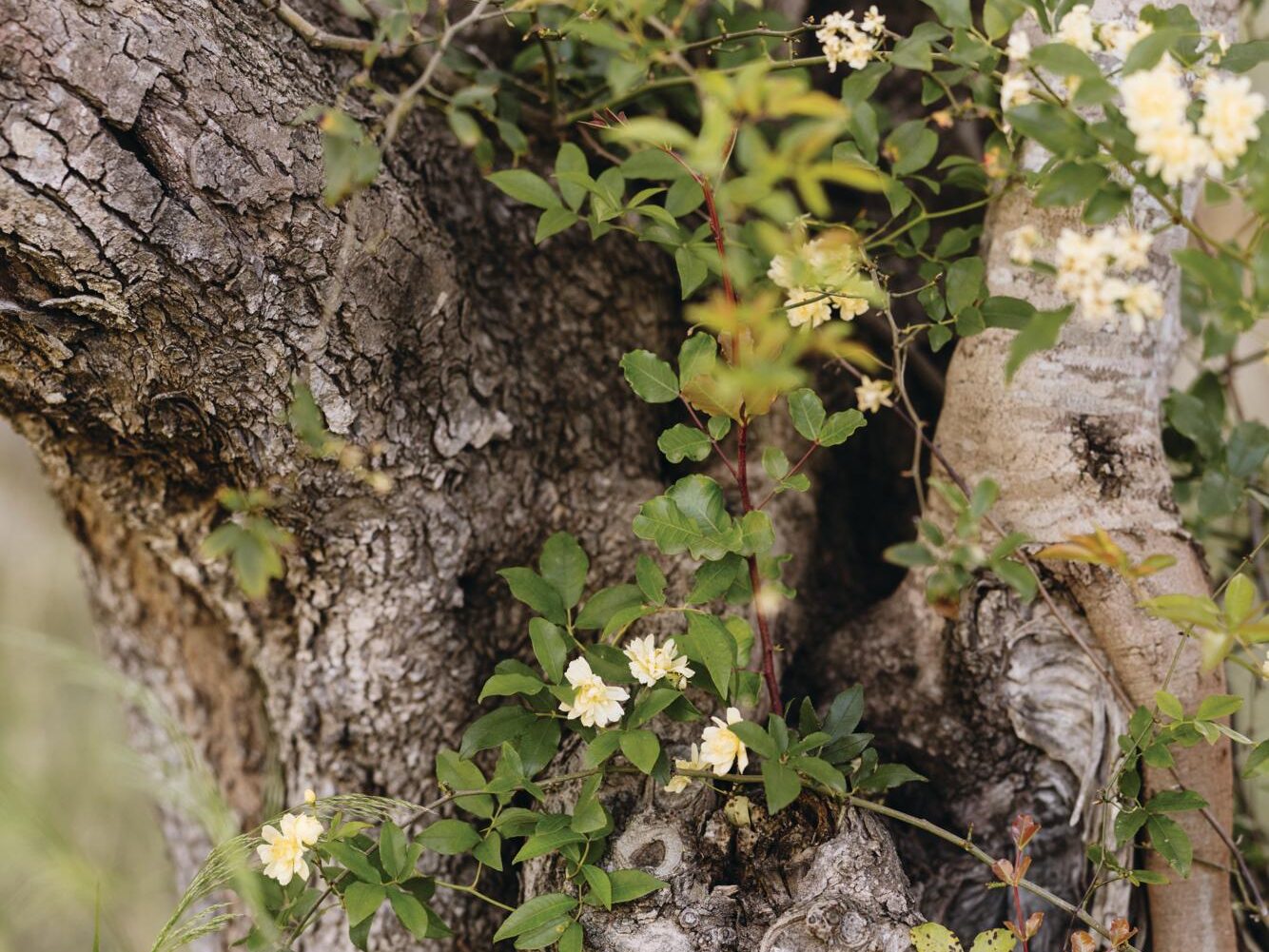
A vigorous, early flowering, thornless, semi-evergreen rambler with clusters of scented, pale-yellow, rosette-like flowers in spring. 12m x 4m. AGM. RHS H5, USDA 6a-10b.
Catananche caerulea
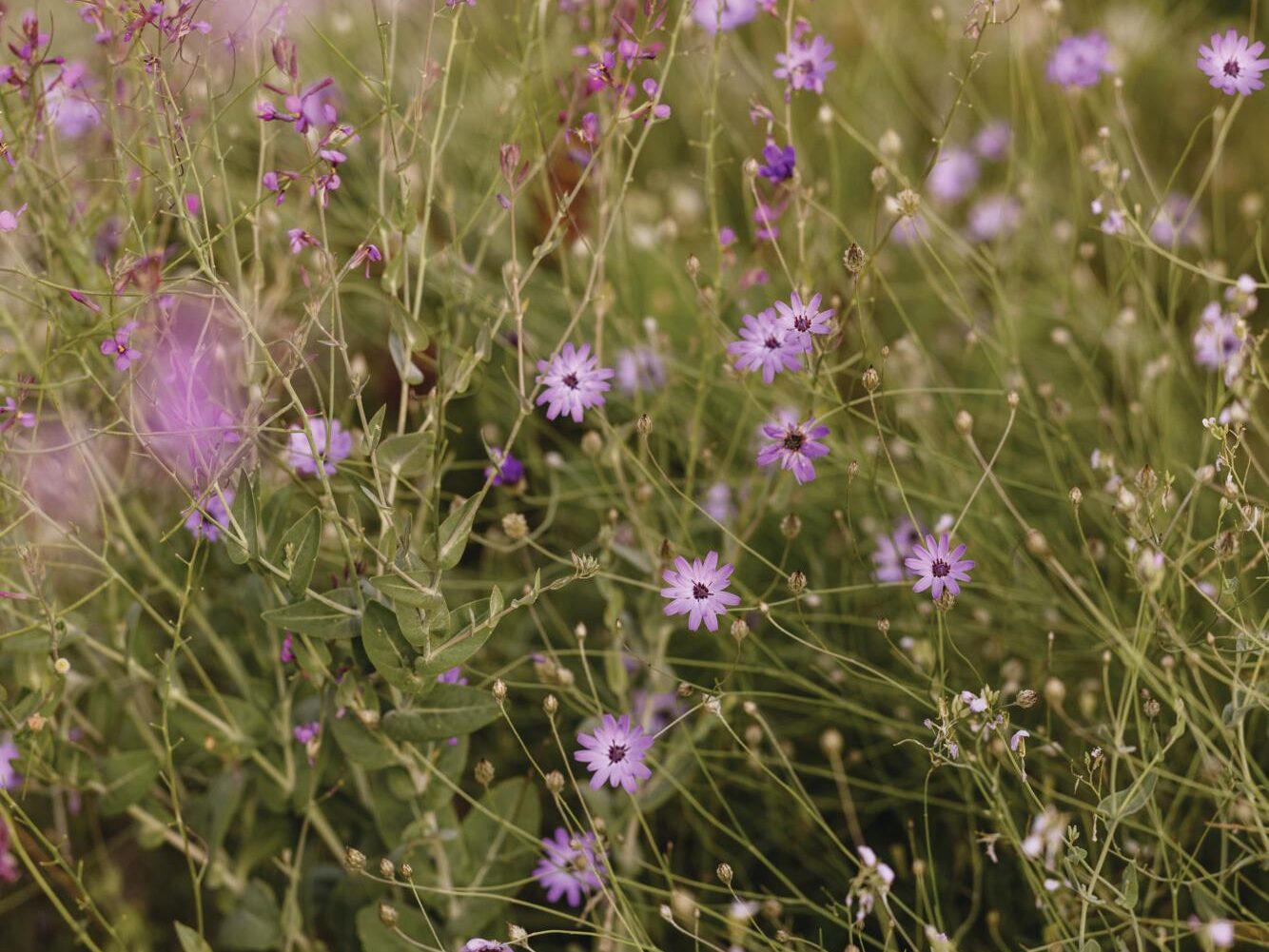
A short-lived perennial from the dry meadows of the Mediterranean with papery, blue, daisy-like flowerheads above fine foliage and light-catching, silvery seedheads. An excellent pollinator. 1m x 50cm. RHS H5, USDA 4a-7b.
Salvia pomifera
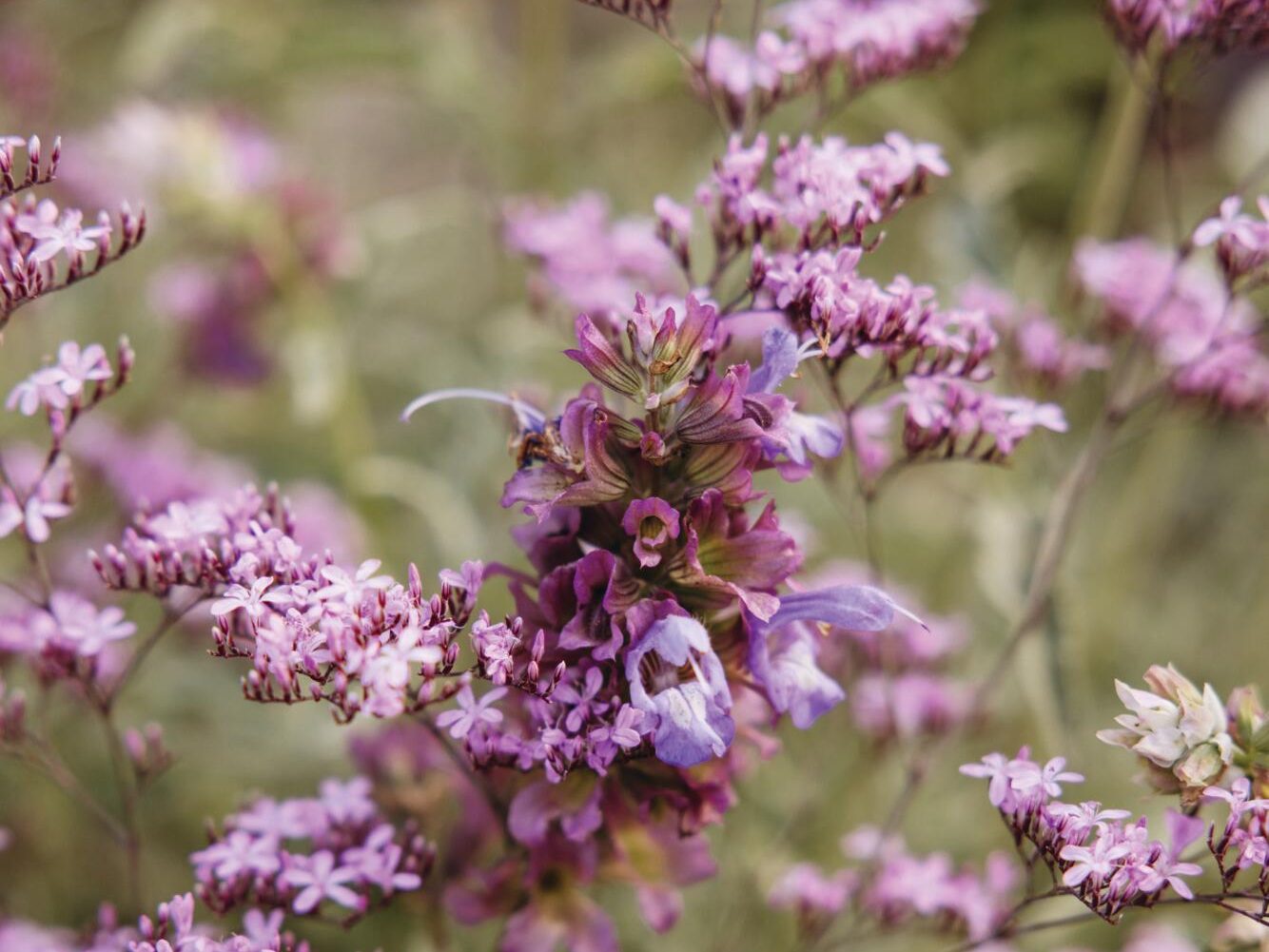
An upright bushy evergreen subshrub from rocky Mediterranean habitats with aromatic, wavy-margined, grey-green leaves and whorled, tubular, milky-mauve flowers. 1m x 1m. RHS H4, USDA 8a-10b.
Petromarula pinnata
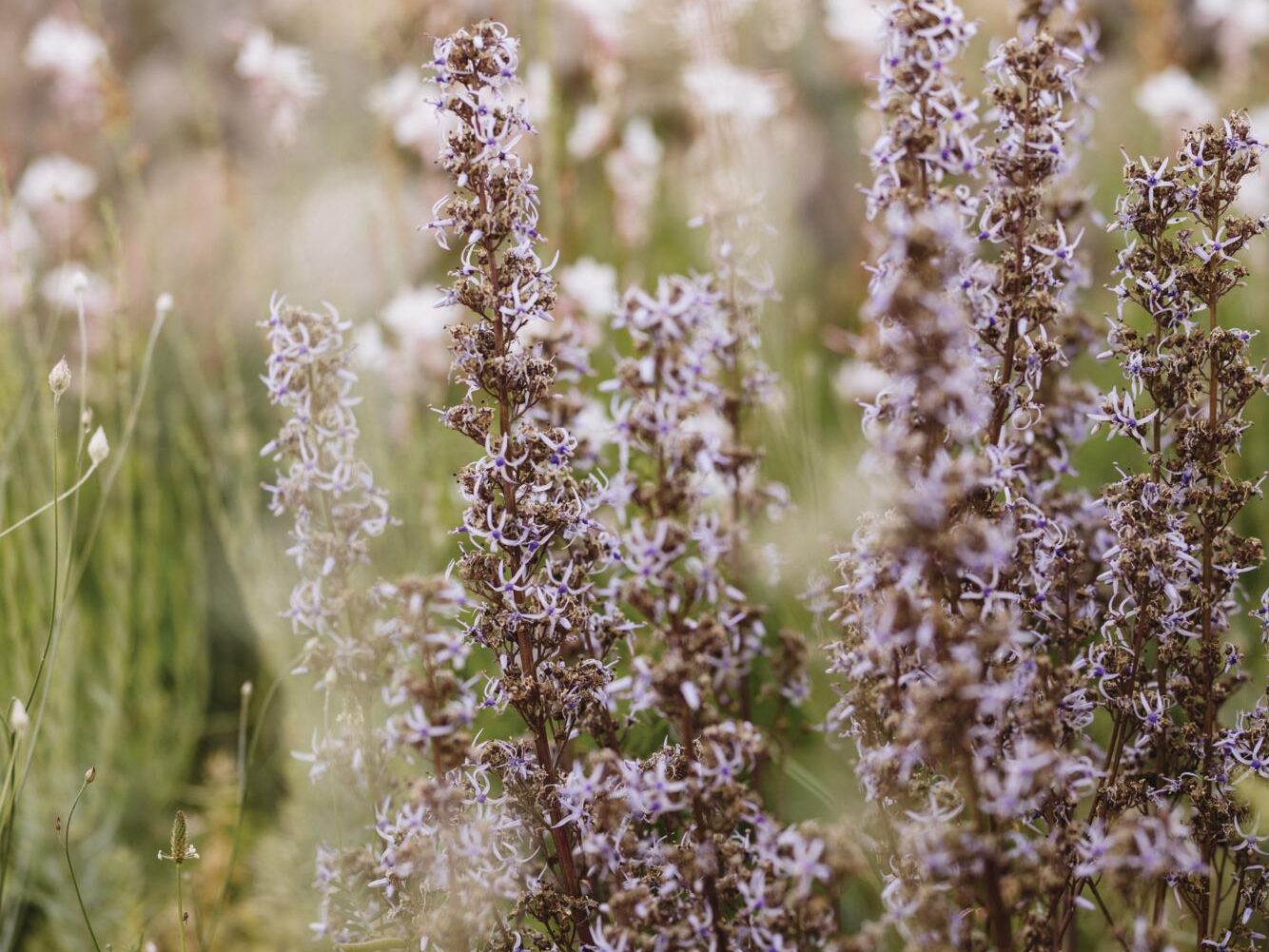
A robust Cretan endemic, a short-flowering perennial, which grows in rock crevices or out of old walls. Finely cut green basal leaves, spikes of close-packed starry, pale-blue flowers, and excellent structure when flowering is over. 80cm x 50cm. RHS H4, USDA 8a-10b.
Salvia apiana
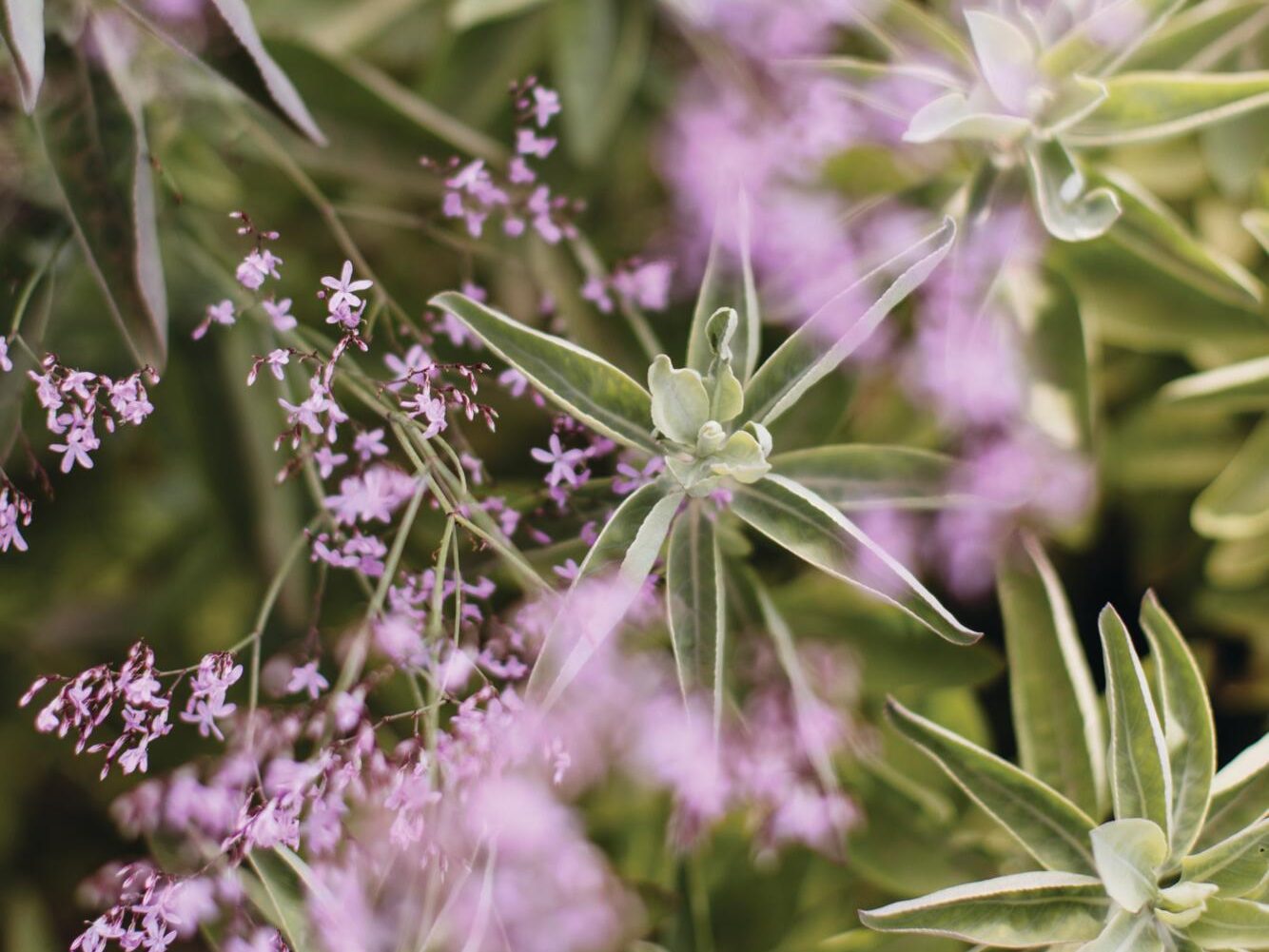
A compact and bushy perennial with aromatic, pale, silvery foliage and slender racemes of small white to pale-purple lipped flowers in late spring. 50cm x 50cm. RHS H3, USDA 7a-10b.
*Holds an Award of Garden Merit from the Royal Horticultural Society.
†Hardiness ratings given where available.
USEFUL INFORMATION
Listen to Luciano talk about The Field and garden design on the Talking Gardens podcast