Nearly 20 years ago, we bought a house in north London, not just for the building itself, but because hidden behind the terraced row was a secluded garden – a delightful surprise in this central London location, just a stone’s throw from King’s Cross. The garden was extremely long and narrow, and sloped gently upwards towards the back, with a central concrete-paver pathway one municipal tile wide, running the length of the garden.
At its culmination was a hand-made shed spanning the width of the garden, propped up by (or to a certain extent, propping up) the beautiful double-height blackened Georgian wall behind. The garden had long been neglected, and the wildness of self-seeded trees and weeds was particularly alluring, and enabled me to think of it as a blank canvas.
You may also like:
- The best gardens to visit in London
- A small garden woodland in London
- 31 small garden design ideas
- Modern small garden ideas
- A deceptively simple small garden from Sheila Jack
- A small London courtyard garden
Despite its dishevelled condition, there was a grapevine that had matured against the south-facing aspect of the shed, which in turn was full of dusty old bottles of home-made wine, tracing fingerprints of its previous owner. That first summer was hot, and we spent many memorable days digging and tugging at brambles to clear the decks and begin again. In the evenings we would light a small fire to burn the day's arisings and cook supper on the embers.
In brief: Small urban garden in London
- What A small urban garden with a series of rooms on different levels.
- Where London.
- Size 26m x 5.5m.
- Soil London clay.
- Climate Temperate. The high walls and central London location create a microclimate that allows borderline hardy plants to thrive.
- Hardiness zone USDA 9a.
Back then, I worked in television and had no formal training in garden design. I certainly didn’t have a clear vision of what the garden should look like. We found a local landscape contractor to re-instate the garden walls. For practical reasons, we terraced the space into four levels, beginning at the lower ground floor and rising toward the back wall, with each retained by a reclaimed London stock brick wall. This maximised our access to the sun as it passed over the houses, and created a layered view from inside the house.
It was in this space that I first began to see and think in plants, and over the years
I have crafted my vision
The terraces turned out to be the defining characteristic of the garden, creating small rooms linked by a narrow pathway, and the opportunity to create a slightly different character in each. It was in this space that I first began to see and think in plants, and over the years I have crafted my vision by introducing new specimens and shaping existing ones.
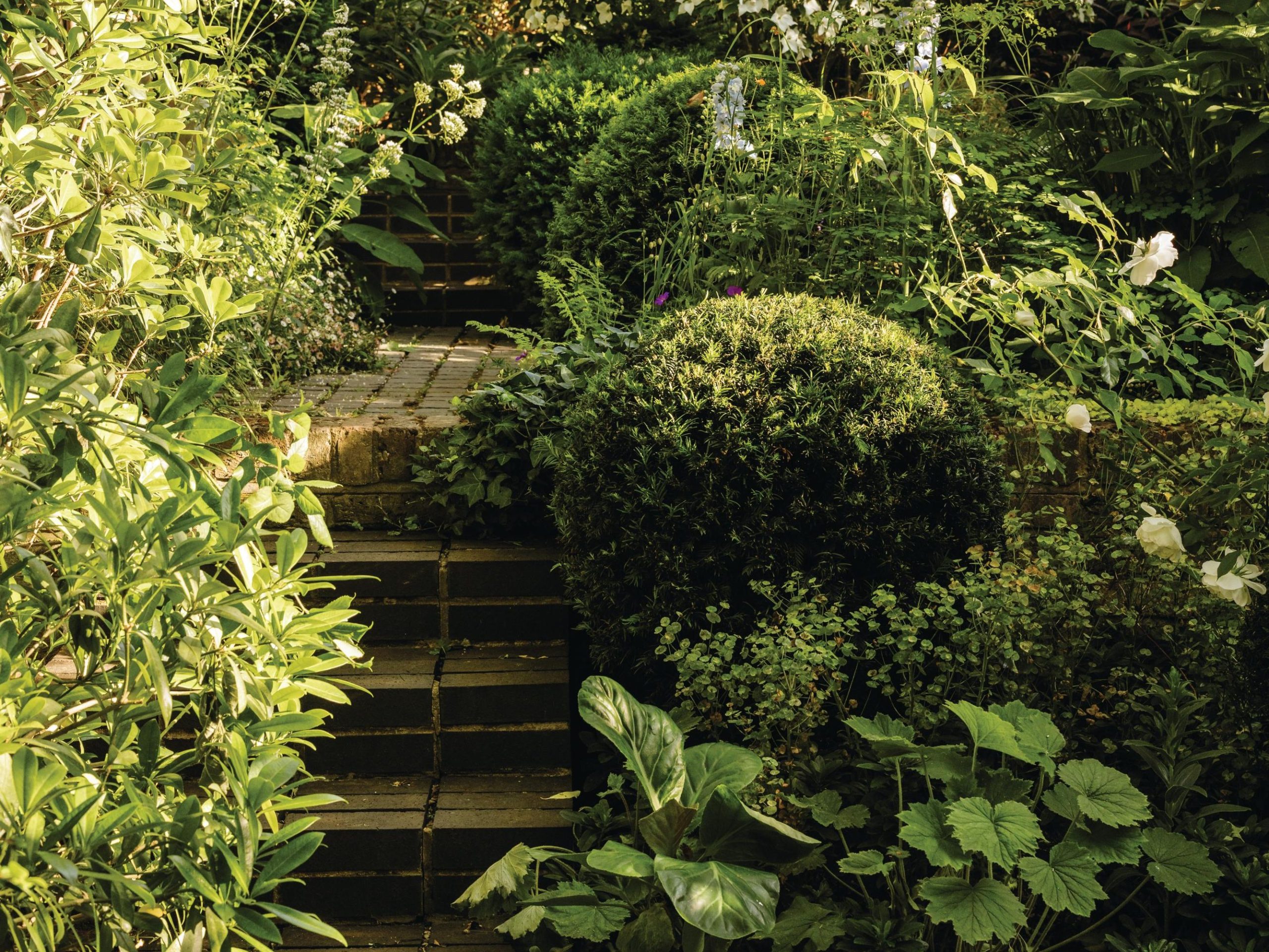
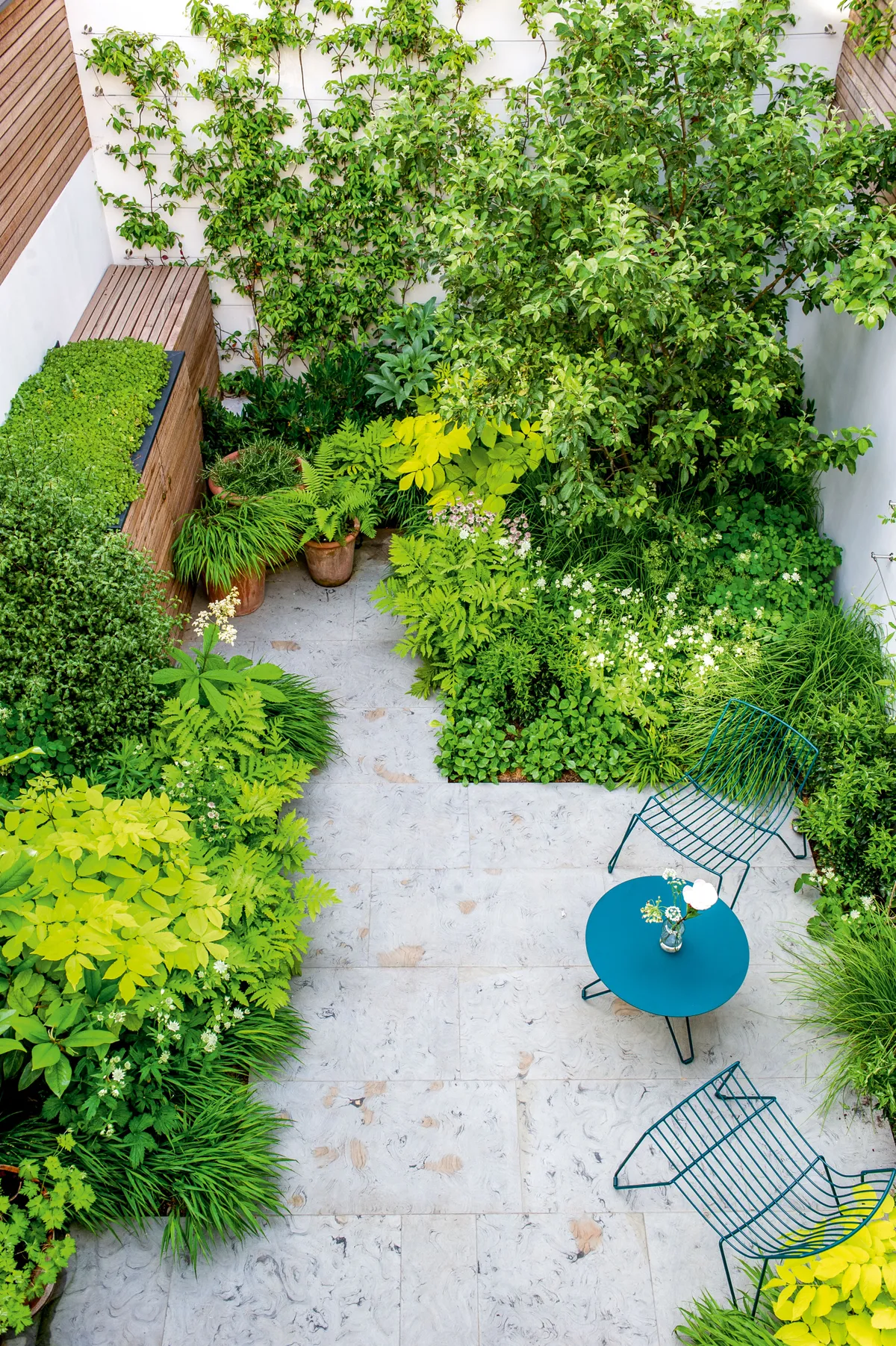
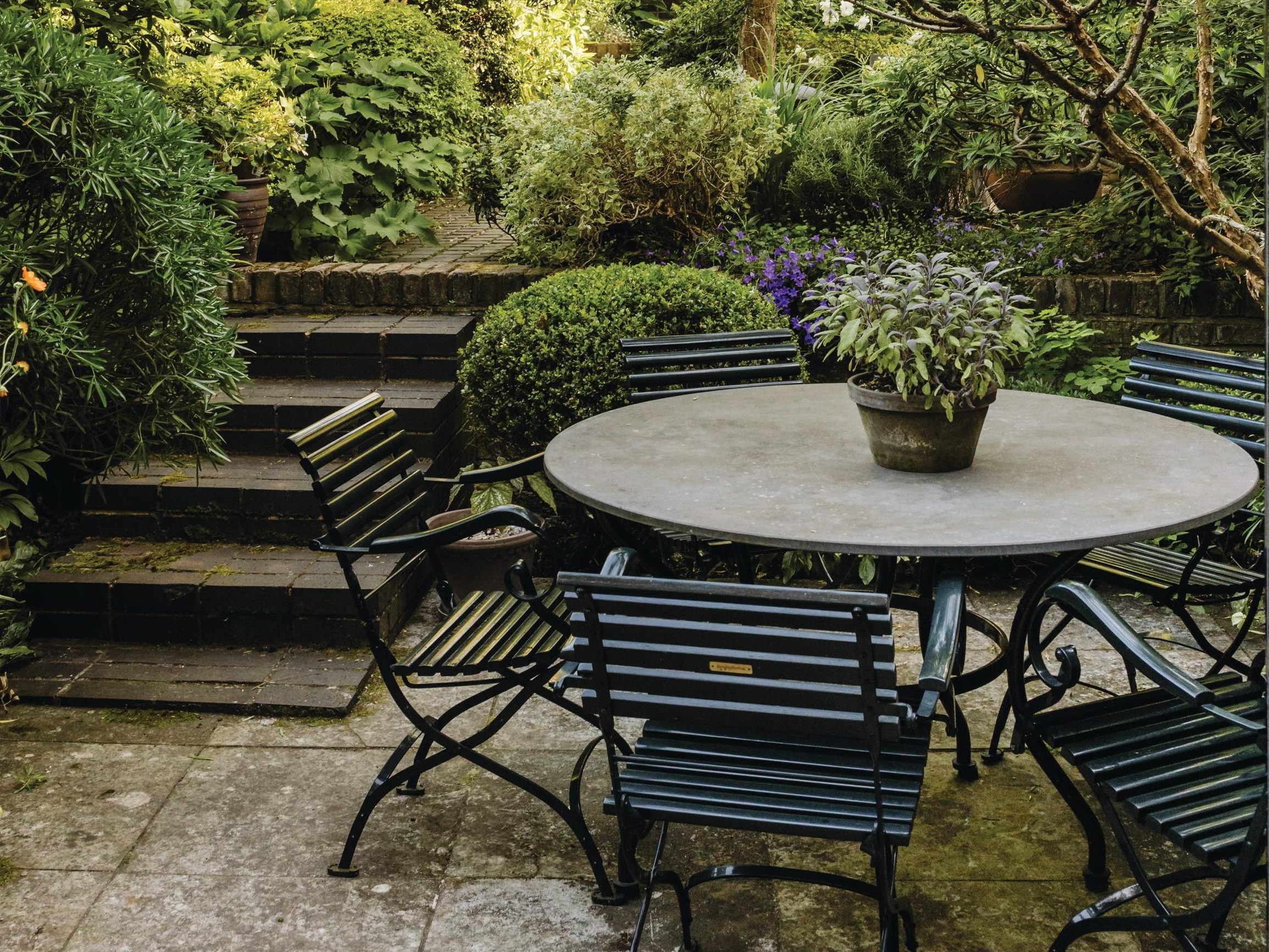
Today, the house leads out onto a level patio with a round table and chairs for sitting under the canopy of a Fuchsia ‘Hawkshead’, which produces dainty white flowers throughout the summer. Evergreens dominate in this area, for a feeling of lushness all year round when viewed from the house. In early spring a wall-trained Stachyurus praecox shows yellow-green catkins at the same time as a dwarfed Euphorbia stygiana, which produces acid-green bracts. Fatsia japonica, stripped of its lower leaves, stretches theatrically towards the light, lending a tropical silhouette.
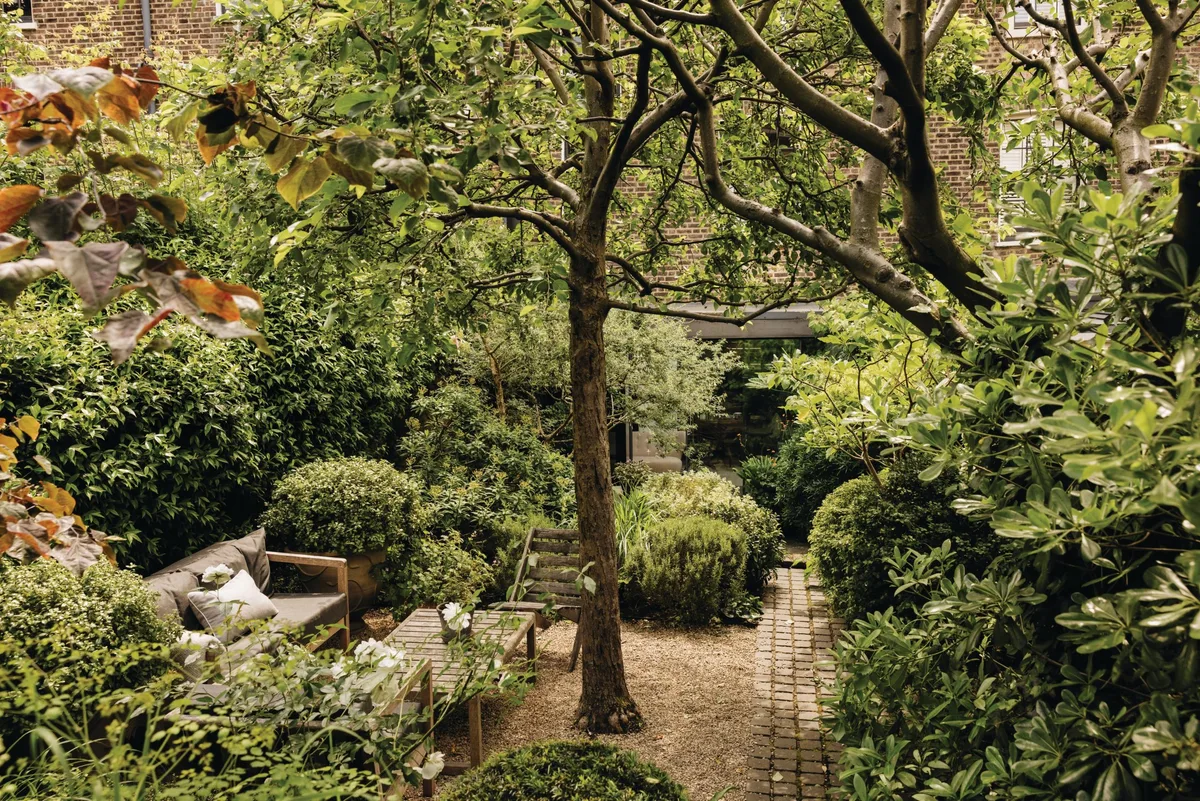
The second level leads to a shady seating area beneath a Malus ‘Evereste’, a place for quiet. Climbing again, the third level is more intimate, bathed in light and surrounded by colour. In autumn, Persicaria and Japanese anemones are abundant here, catching the low sun.
Over time, I’ve learned not to rely on the ephemeral stars, but on the quietly effective supporting cast
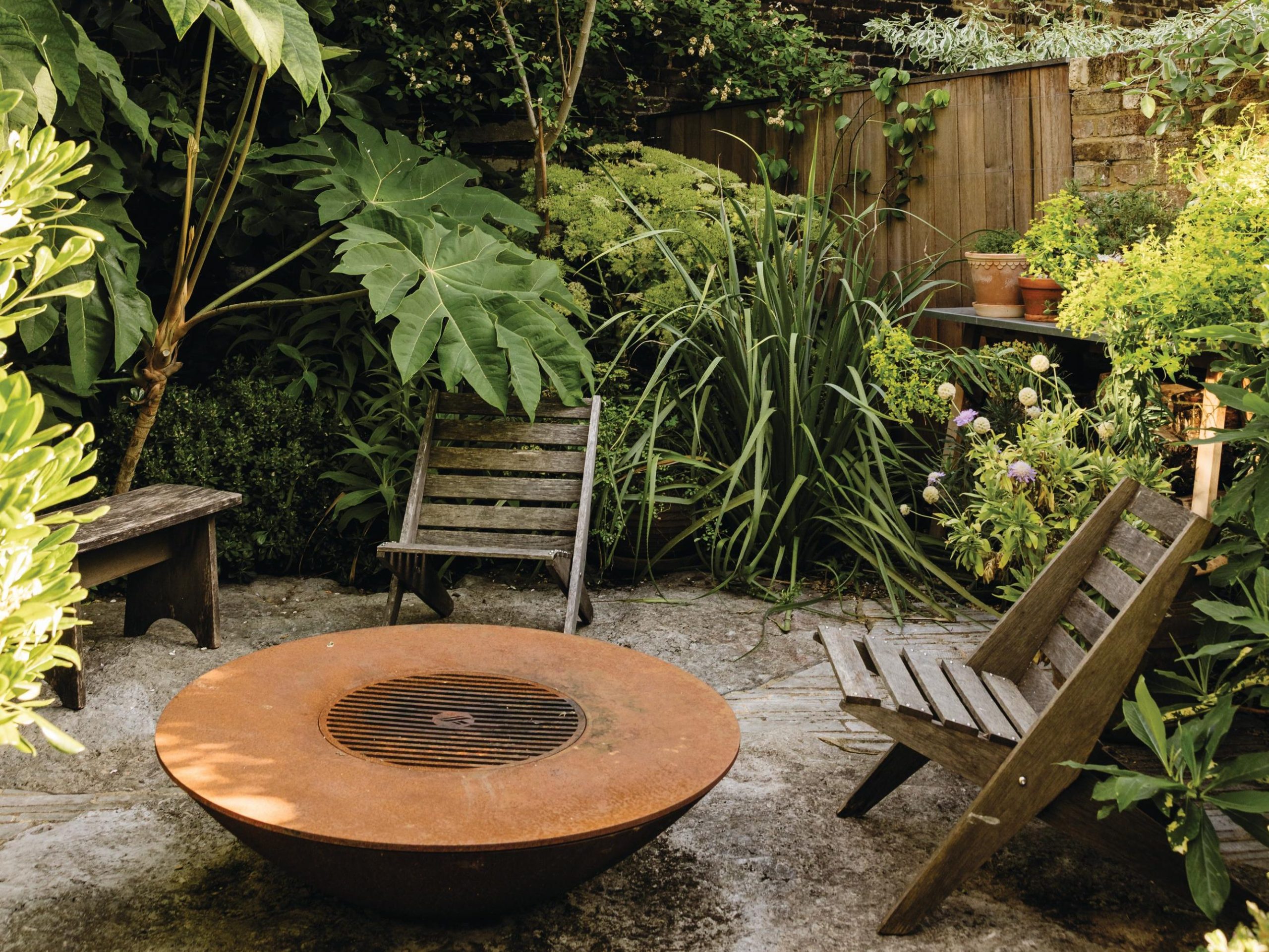
The final level feels tucked away, surrounded by tall walls and screened by a large branching fig tree, which filters the sun. Here large and borderline-hardy plants dominate, with Argyrocytisus battandieri, Tetrapanax papyrifer ‘Rex’ and Melanoselinum decipiens against a backdrop of Solanum laxum ‘Crèche du Pape’, brought home from a trip to France. Melianthus major branches over the pathway and makes a tunnel to walk through.
The basic structure of the garden remained unchanged even after I retrained in garden design, but I began to edit the plants and trees towards a new vision that was more immersive. I introduced bolder, larger plants and incorporated evergreens to create a composition that was striking and remains attractive year round.
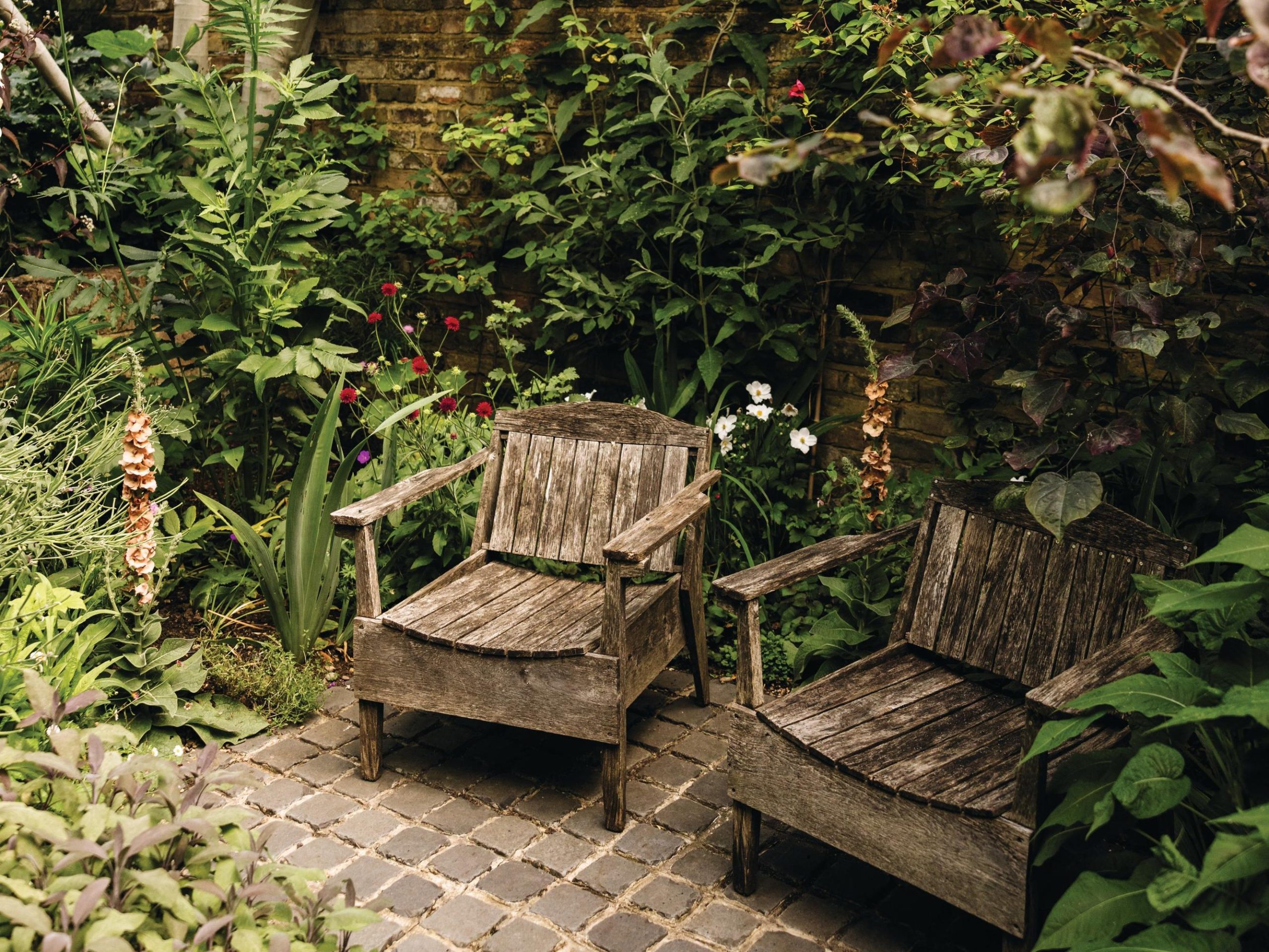
The north-facing aspect has always been a personal challenge. But as the garden matured and the canopy filled out, I learned to embrace shade and the beautiful, tender, shade-loving plants that thrive here. As your eyes adjust tothe greens, you can pick out different leaf forms and sizes: the glossy Asarum europaeum, the delicious vibrancy of Sesleria autumnalis and the soft froth of Heuchera villosa ‘Autumn Bride’.
These reliable green foils provide a textural backdrop for more dramatic plants such as Digitalis lutea, which seasonally rise through the patchwork to create soft yellow spires. A smattering of Tulipa sprengeri sit comfortably below the shapely Cercis canadensis ‘Forest Pansy’, with the candy colours of Rosa x odorata ‘Mutabilis’ tangled into the branches. This very early summer shift brings a rash of colour, which is the time I yearn for most.
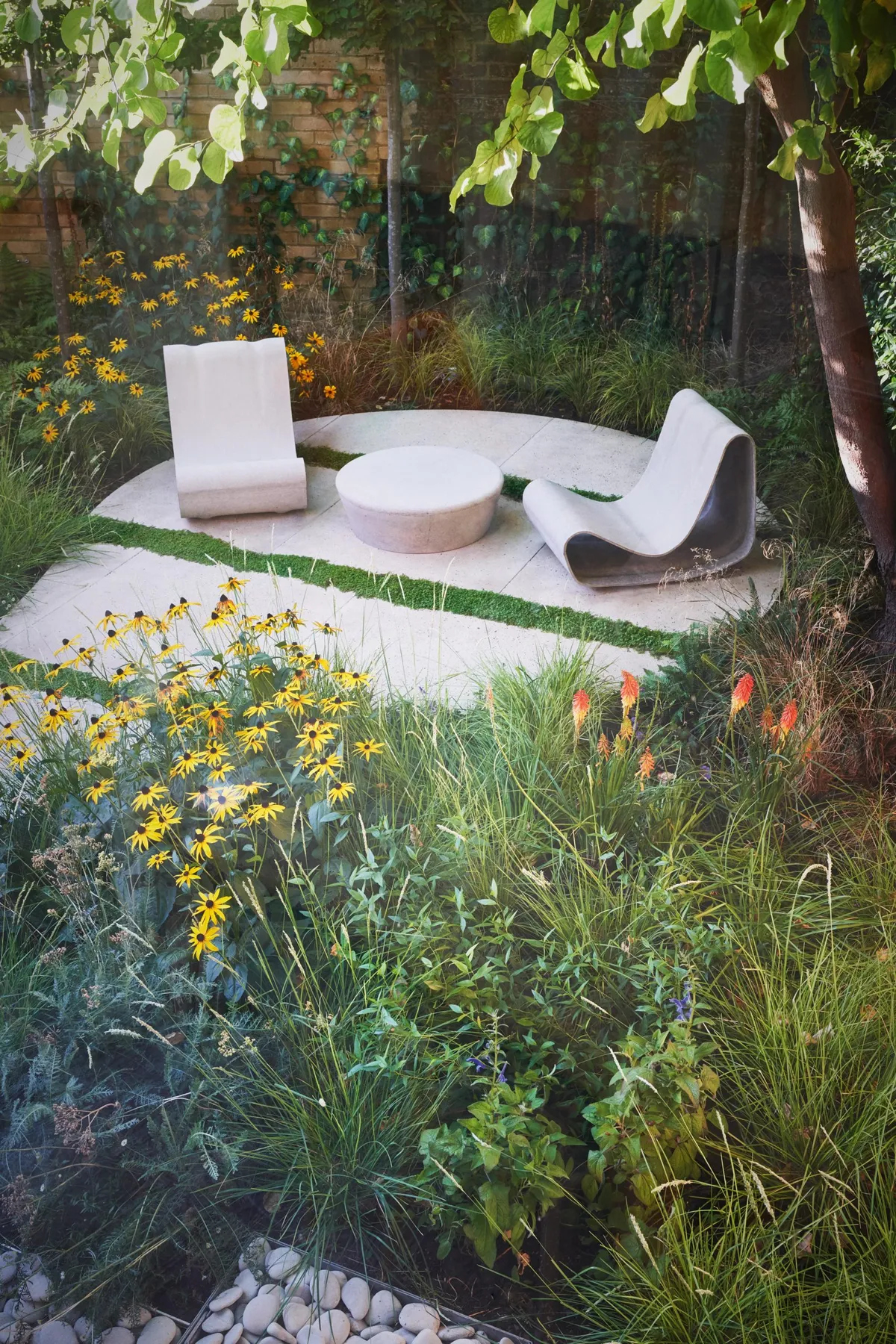
In the sunniest spots, the garden comes alive with Pulsatilla vulgaris, Verbascum phoeniceum ‘Violetta’, Clematis ‘Rouge Cardinal’, a perfect Paeonia daurica subsp. mlokosewitschii and a Darmera peltata, which pushes up a spire or two. At its peak, there is a soft-pink backdrop of Rosa ‘Albertine’, which generously adorns two of the rear garden walls for three glorious weeks every year.
The garden suits us as a family, offering intimate areas that are as comfortable for solo contemplation as they are for small groups
Over time, I’ve learned not to rely on the flirty, ephemeral stars of the garden, but on the quietly effective supporting cast. Particularly important are the edging plants that soften the lines between hard landscaping and planting. I grow Pulmonaria ‘Sissinghurst White’ for the spotted leaves, often cutting the flowers off in favour of preserving the plant’s energy for a perfect rosette, and I’m always searching for the best architectural evergreen bergenias to frame the gravel edge.
Ferns and geraniums do well on my London clay and are wonderful to break the linearity of the borders, and my favourite discovery is Origanum vulgare ‘Compactum’, which forms perfect mounds that bloom reliably with purple-pink flowers, even in near full shade.
The evolution of my garden has been a personal experience – very different to the approach my team and I take at our Bloomsbury-based design practice, where we have a rigorous design process and each stage is drawn out in plan, section and elevation for a precisely conceived result. The garden has often taken a back seat during busy times and I have trialled new ideas that I would like to use in other gardens. But I couldn’t be happier with the garden it has become. It is straight forward to look after and suits us as a family, offering intimate areas, which are as comfortable for solo contemplation as they are for small groups.
Perhaps the most intimate space is at the far end of the garden, in the courtyard dominated by borderline-hardy exotics. Tucked into this hidden space, there is a firepit for cooking and stretching summer evenings into night. It is a gentle homage to the past; a circle quietly closing, as this is the spot where two decades ago we made our first little garden fires.
Useful information
Find out more about Emily Erlam’s work at erlamstudio.com