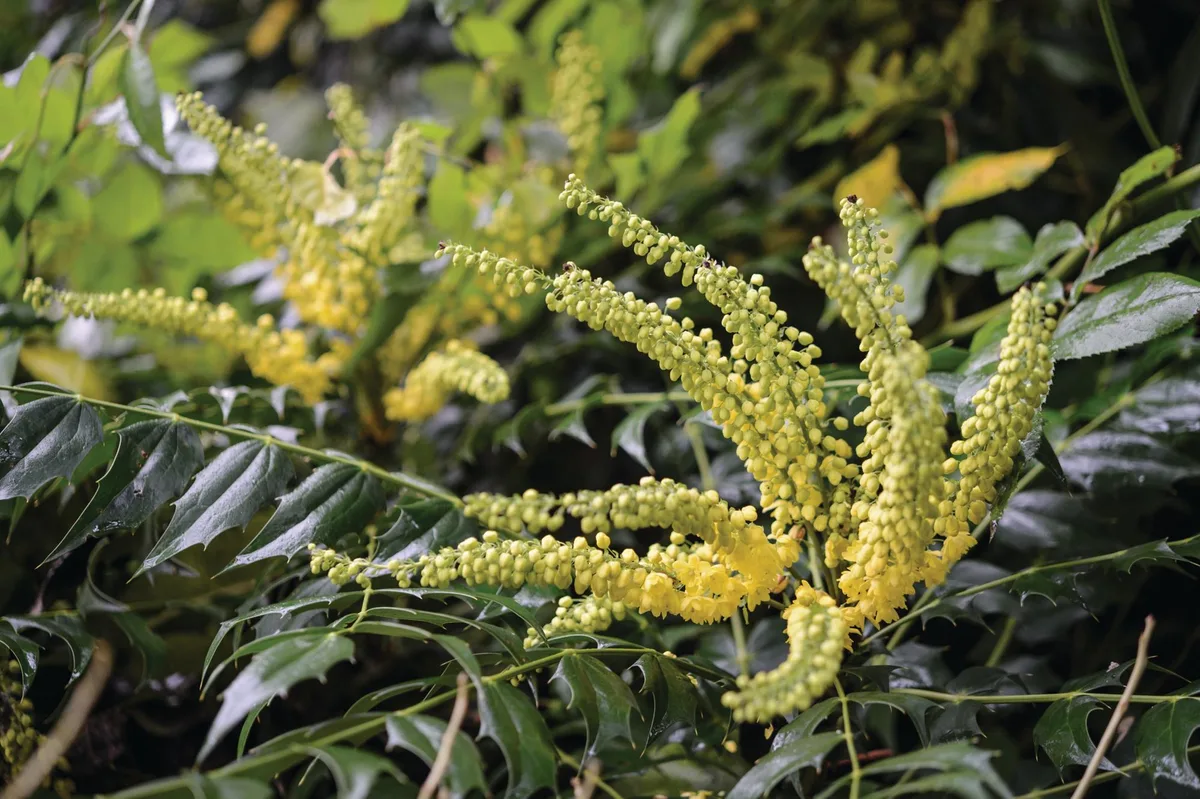
They're often dismissed as 'car park plants', but any gardener contending with the constraints of dim shade and poor soil, unfussy evergreen mahonias are ideal. Not only are they resilient in low light, bearing colour-shifting foliage and spring flowers bright as candles, but they also demand little attention across the gardening year.
Their branching habit lends an appealingly architectural physique that looks as good in isolation as in company. Their luminous yellow flowers, which bloom between autumn and early spring – when few other flowers are out – are not only eye-catching but intoxicatingly fragrant and long-lasting. Not all mahonias bear yellow flowers - 'Volcano' has gold-tinged flowers and 'Cabaret' has blood-orange buds.
As forage for wildlife, mahonias are a dependable source of nectar for early rising pollinators and provide fruit for common garden birds such as thrushes, robins and blackbirds. All this plus a hardiness that can tolerate temperatures down to -15°C, and the seasonal flux of both drought and flood. Their only kryptonite? Overexposure to bright sun and drying winds.
You may also like:
- 30 plants and flowers for year-round colour and interest
- 21 brilliant bulbs that will give you colour in every season
- The best perennial plants for your garden
- Quick perennials to grow from seed
- Sow a border from scratch
Mahonias are tailor-made for the semi-shade of the middle-back of a border, or for the dappled light of a woodland garden ‘where it looks singularly at home’, noted Christopher Lloyd, who considered Mahonia an ‘essential’ evergreen foil.
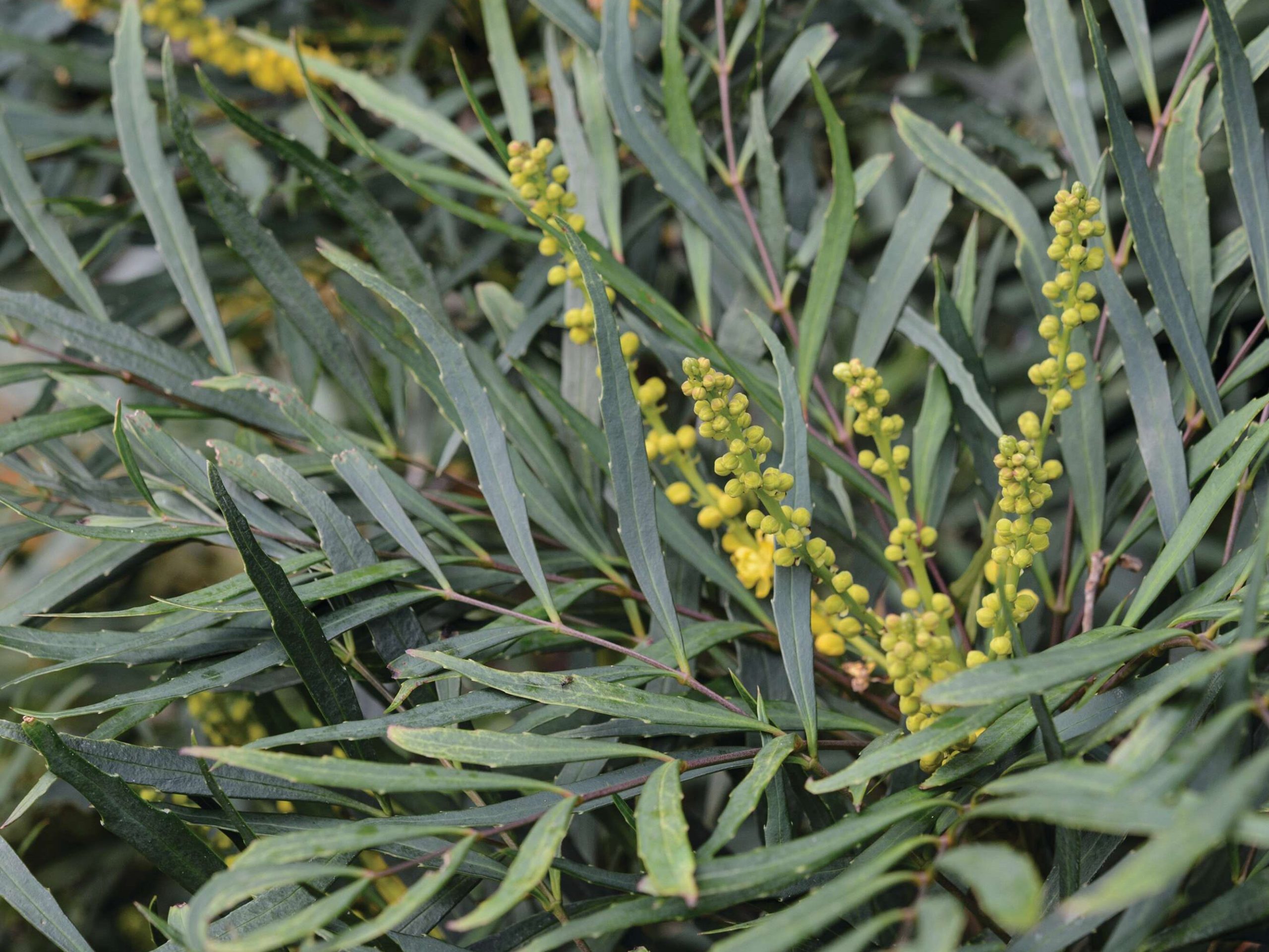
The compact Mahonia eurybracteata subsp. ganpinensis ‘Soft Caress’ shot to acclaim after being crowned Plant of the Year at the 2013 RHS Chelsea Flower Show: the first of its kind to sport soft, rather than spiky foliage, almost fern-like in the feathered arrangement of its fine leaflets. So soft and soothing – and its application so versatile – the popularity of ‘Soft Caress’ rocketed for a decade.
How to grow Mahonia
When to plant mahonia
Mahonias are best planted in spring and autumn, when sufficient moisture and warmth in the soil encourages good root establishment. They prefer a moist yet free-draining soil, but are generally unfussy, reliably robust plants that will tolerate a significant range of conditions, from acidic to alkaline, clay to chalk – but avoid permanently dry, damp, or frequently waterlogged soils.
Prepare an adequately sized hole with a little organic matter mixed in, and dampen with a watering can. The roots can then be submerged into a bucket or trug of water, still in the pot, so that it is well-irrigated before planting, ensuring a good start to life in the ground. Backfill, tamp and top with a light mulch to aid water retention in the soil while the plant is establishing.
When to water mahonia
In the first two years, additional watering – particularly during dry periods – will help the plant to thrive; thereafter, this should prove unnecessary, as mahonias become largely self-sufficient as they mature.
Where to plant mahonia
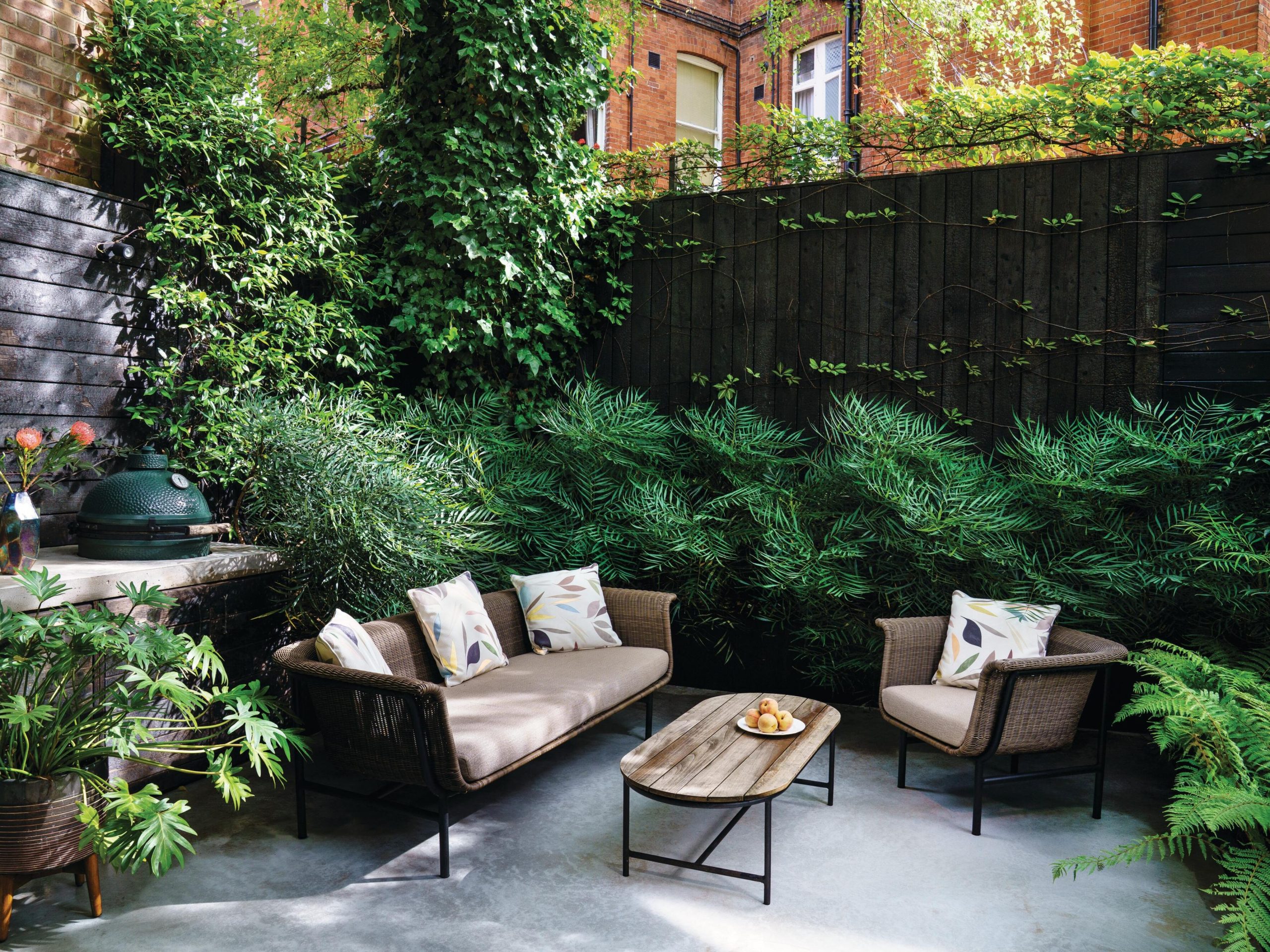
Place in a site with a level of shade. Full sun is only really an issue if it causes the soil to dry out, which can lead to leaf scorch and blackened spots, but a mahonia is wasted in the light and employed to best effect in areas that are too tricky for other shrubs. A sheltered position will also limit the drying and browning damage caused by cold winter winds, but bear in mind that some mahonia varieties can reach upwards of four metres, which can obscure views if grown next to a building (although it will remove the need for an anchoring stake).
Mahonia will grow well in a sheltered pot or container provided it is adequately deep and well-drained,
however it is worth considering that potted plants, when mature, will require a good deal of supplementary water.
What to plant with mahonias
Good planting companions for mahonias include shady ground cover perennials such as Epimedium x versicolor ‘Sulphureum’, Bergenia ciliata and Rubus tricolor (whose softness of leaf will offer contrast to the stiffness and spikes); and similarly woody, glade-preferring shrubs such as Kalmia latifolia, Sarcococca confusa and Nandina domestica.
How to prune mahonia
Mahonias often develop a clustered colony of spreading stems, which though attractive can lead to overcrowding. Selective pruning in spring, after the flowers have wound down, of the dense growth can help reduce congestion, aiding airflow through the plant and, ornamentally, enhance its architectural appeal.
It will also stimulate fresh new growth. Use loppers or a sharp, compact pruning saw to remove a few of the mature, ageing stems, cutting them a foot or so from the ground. This is also the best way of reducing a mahonia’s height, taking out entire stems that have grown too tall for one’s liking – cutting higher up the stem will likely only lead to branching and top-heavy growth.
When pruning or otherwise handling mahonia, it is always advisable to wear gloves and long-sleeved clothing, given the significant prickliness of the foliage.
Mahonia problems
All mahonias are generally considered pest and disease-free. However rust and mildew can result from too much moisture and not enough air circulation – another reason to prune for airflow.
When to propagate mahonia
Propagate by taking semi-ripe cuttings in summer.
The best varieties of Mahonia to grow
Mahonia x media ‘Winter Sun’
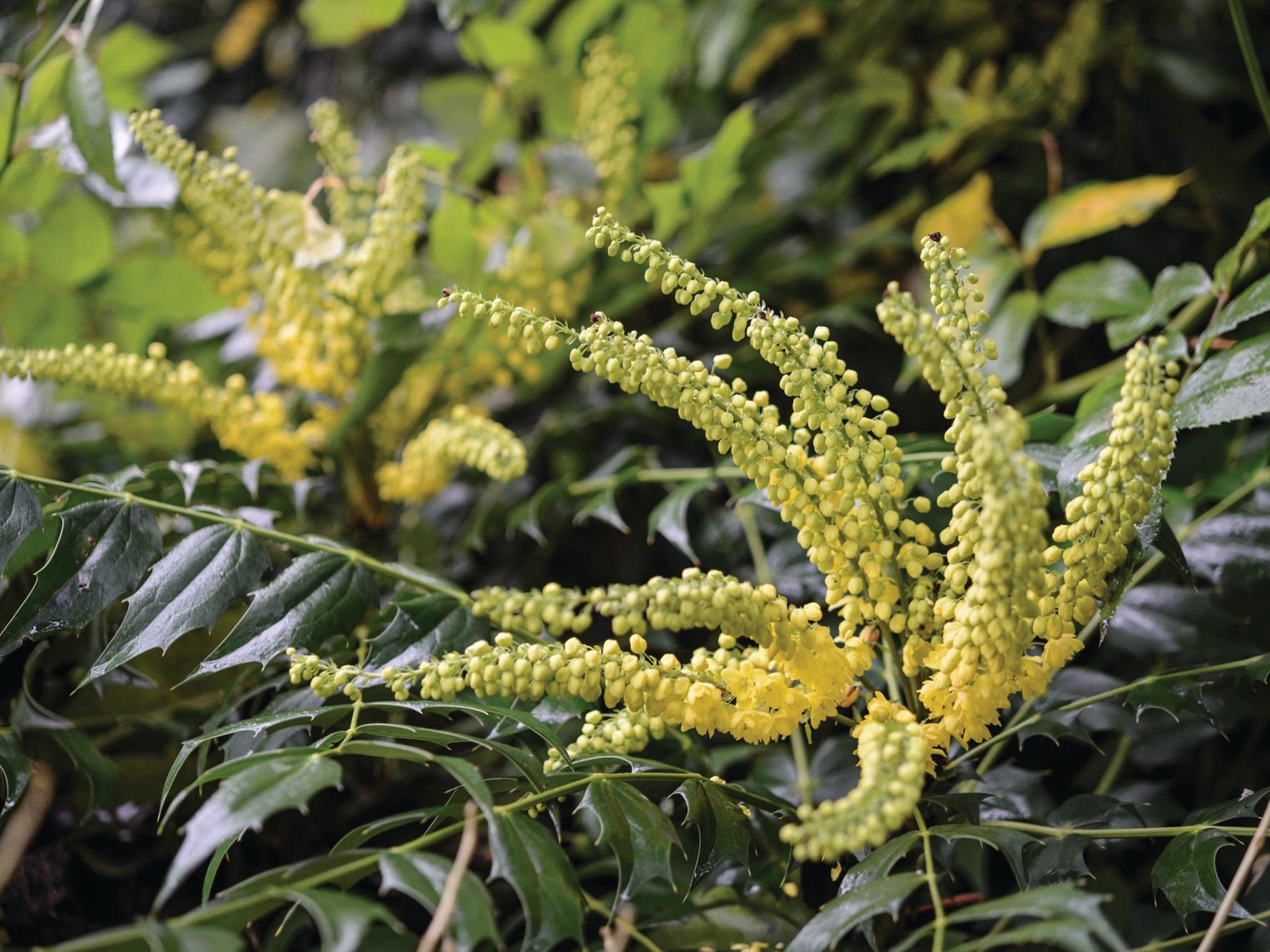
Notably shorter than the popular cultivar Mahonia x media ‘Charity’, this also blooms a little earlier, with long racemes of bright buds appearing around November. Height and spread: 3m x 2.5m. AGM*. RHS H5, USDA 6a-9b†.
Mahonia eurybracteata subsp. ganpinensis ‘Soft Caress’
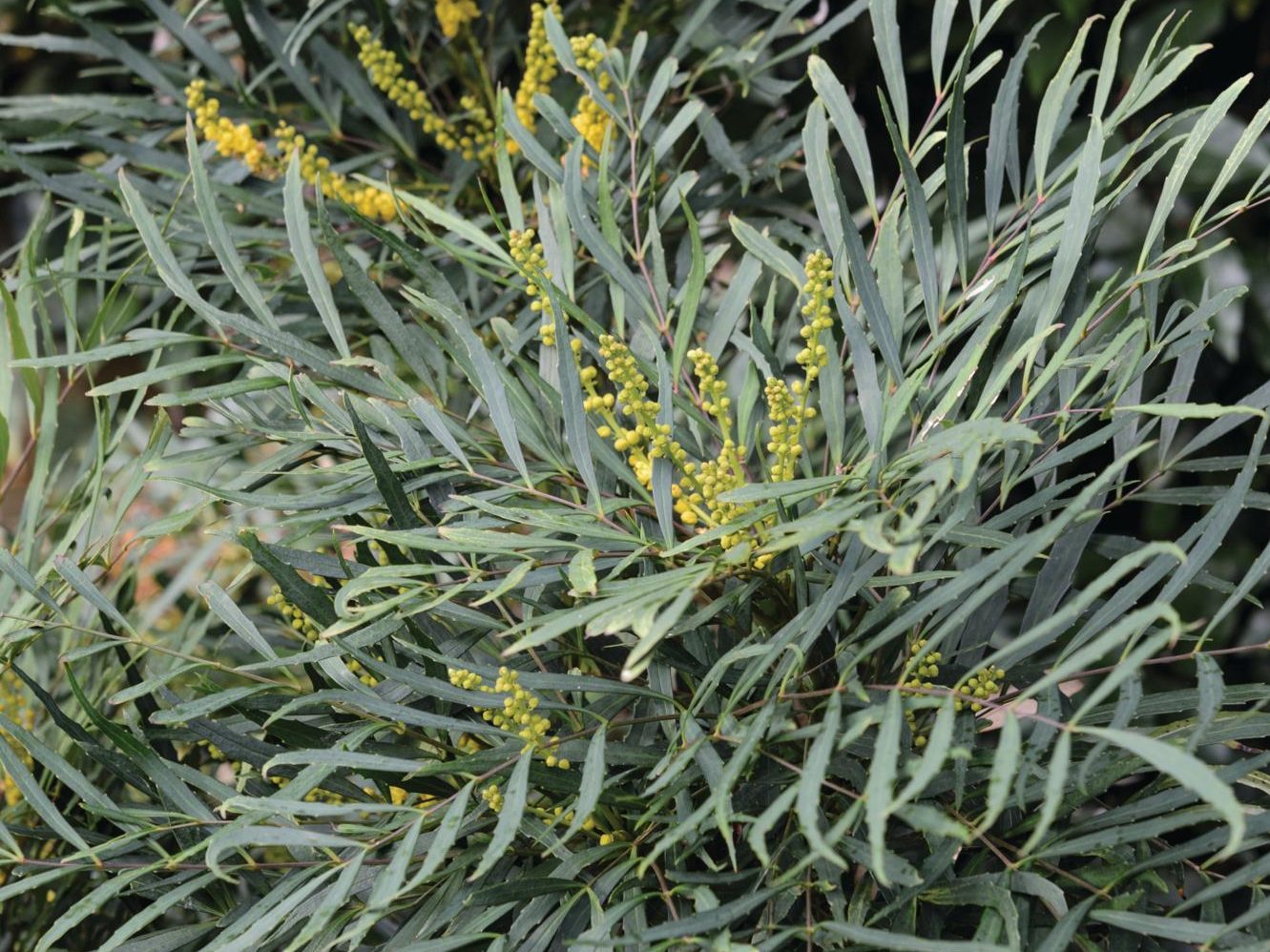
An unusual compact evergreen with narrow spineless leaves that are appealingly airy. Scented yellow blooms appear in late summer. Good for pots. 1.5m x 1.5m. RHS H4, USDA 7a-9b.
Mahonia aquifolium ‘Apollo’
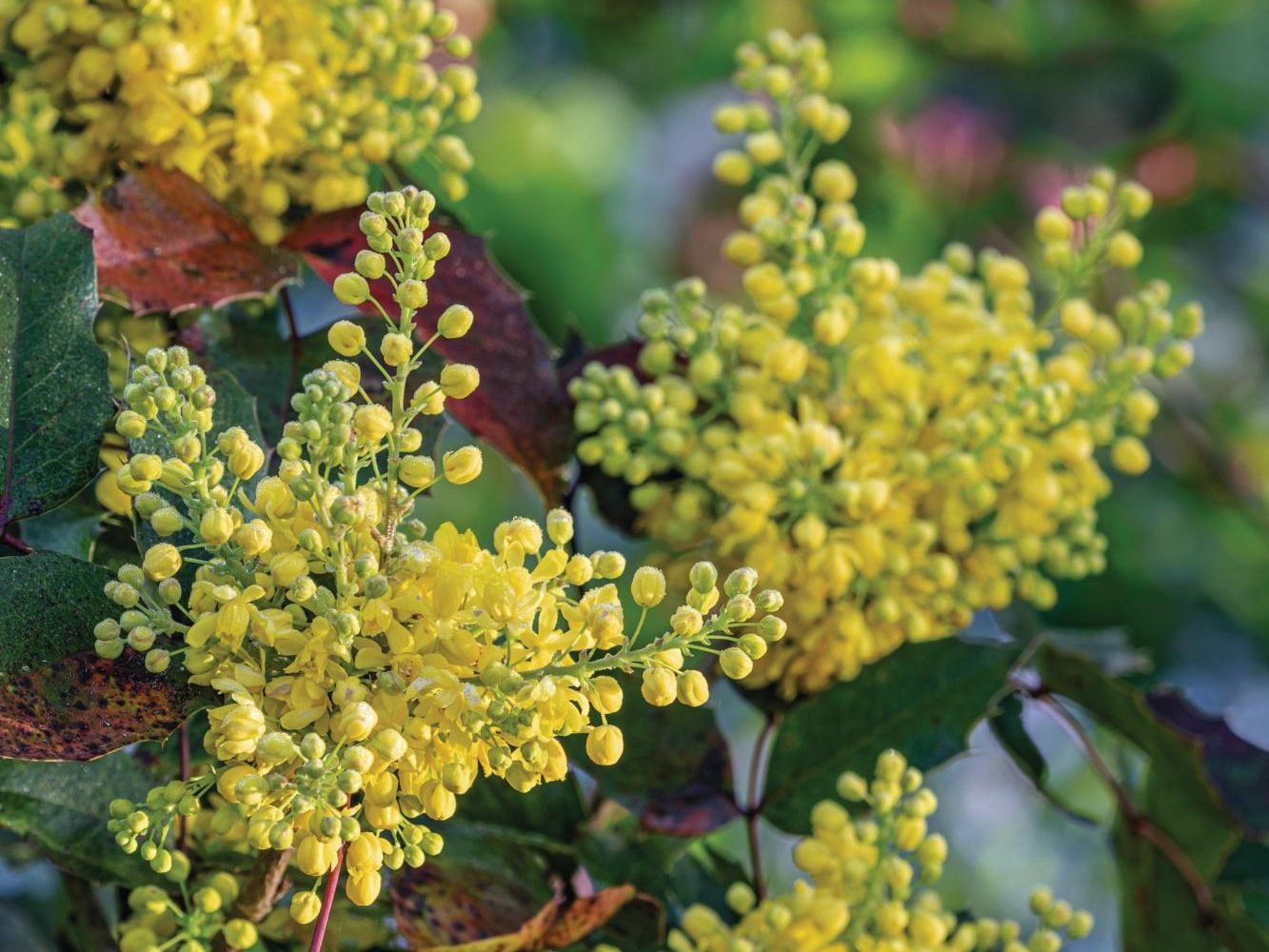
A wonderfully spreading cultivar with leaves that darken and bronze in cooler months, this hugely popular Western cultivar provides clusters of yellow flowers that are excellent for cutting. 1m x 1.5m. AGM. RHS H5, USDA 5a-10b.
Mahonia x wagneri ‘Fireflame’
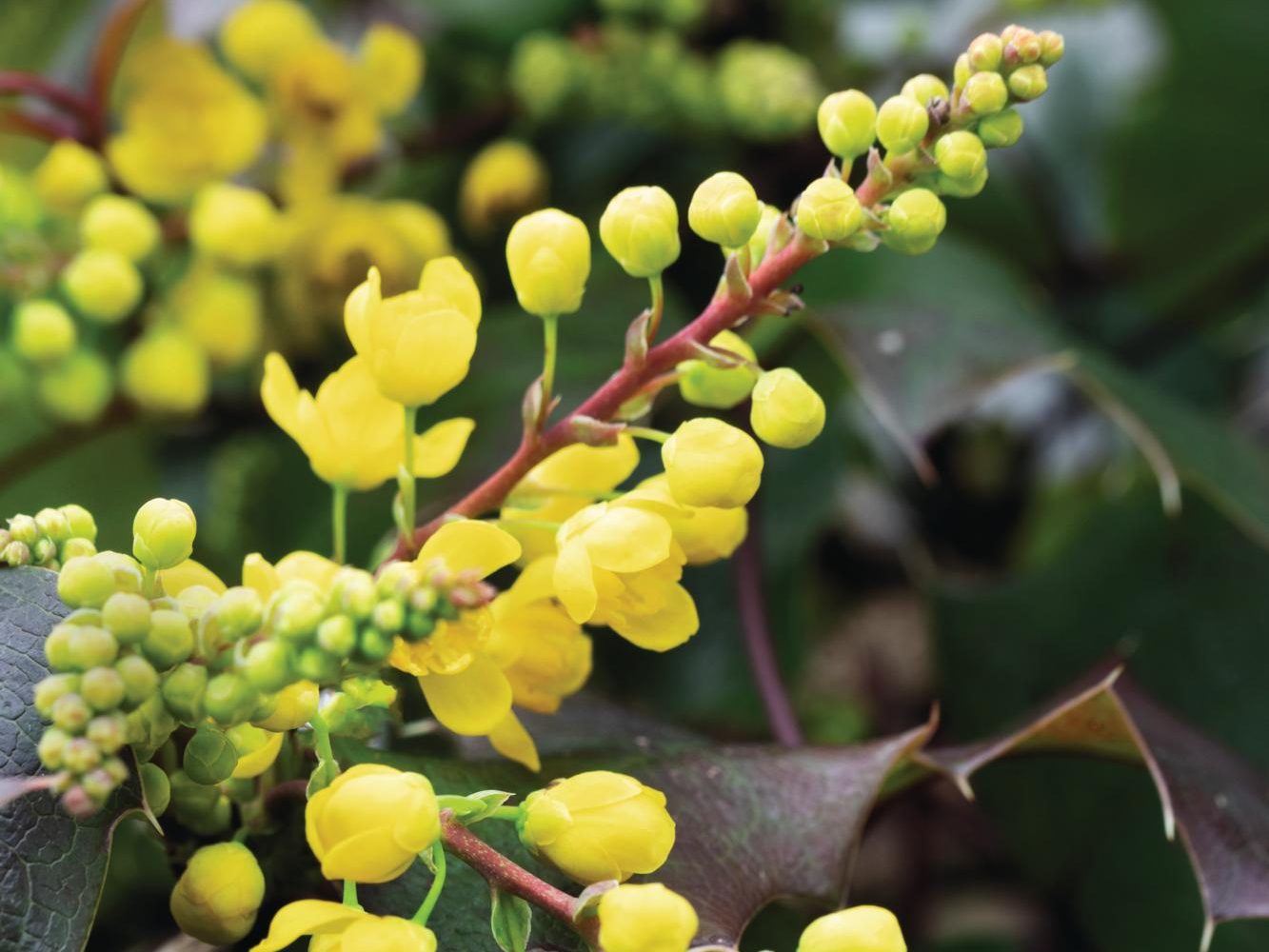
Offers one of the best displays of autumn foliage. Its prickly leaves become deep purple by winter. Dark berries follow yellow, moderately scented, early spring flowers. 1m x 1m. RHS H5, USDA 7a-9b.
Mahonia Volcano (= ‘MYOY’)
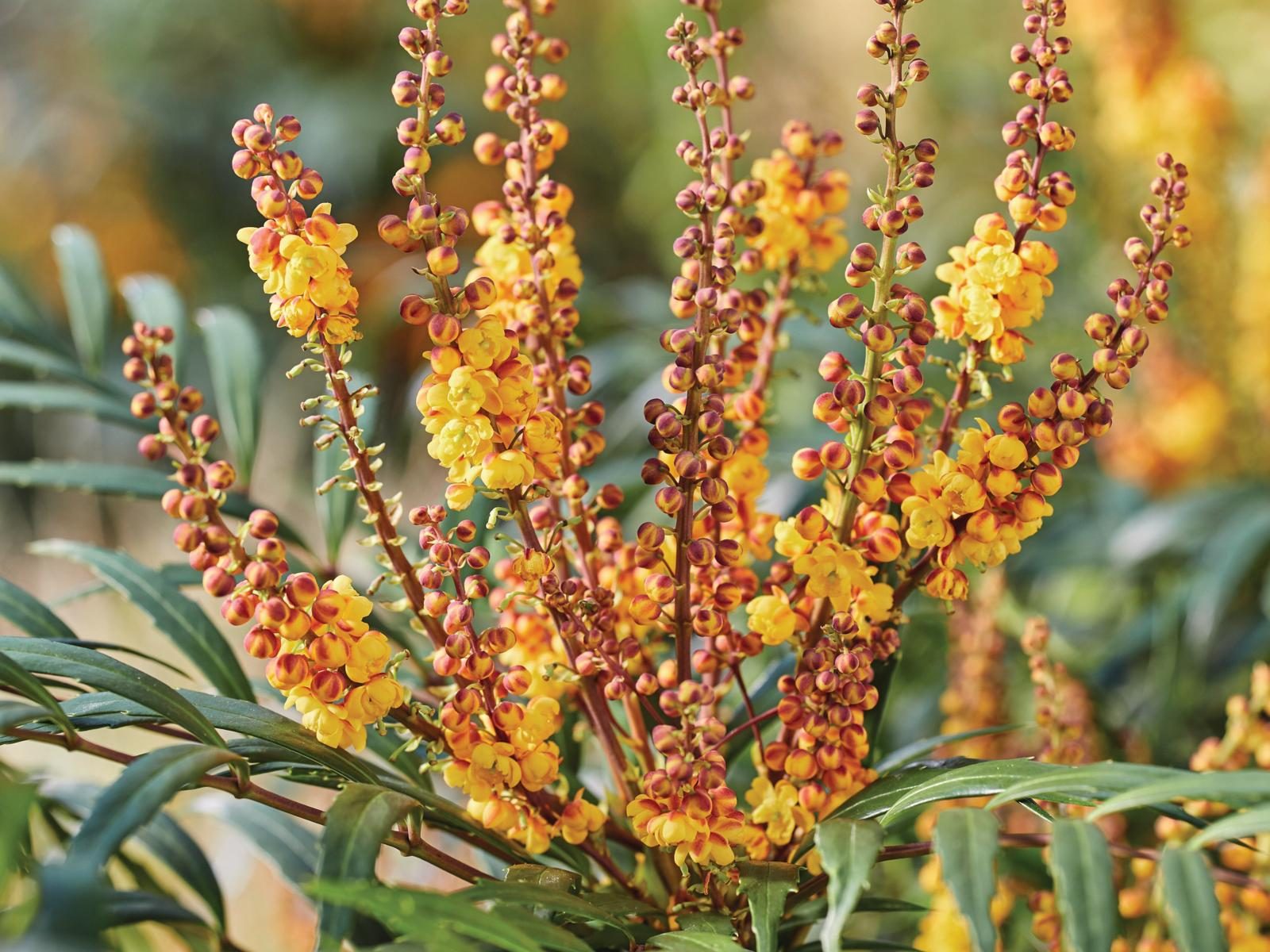
An exciting, spine-free cultivar with foliage that is not only soft and fine-fingered but subtly silver-tinted, bearing unusually gold-toned flowers that appear in early autumn. A real gem. 1m x 1m. RHS H5.
Mahonia nitens ‘Cabaret’
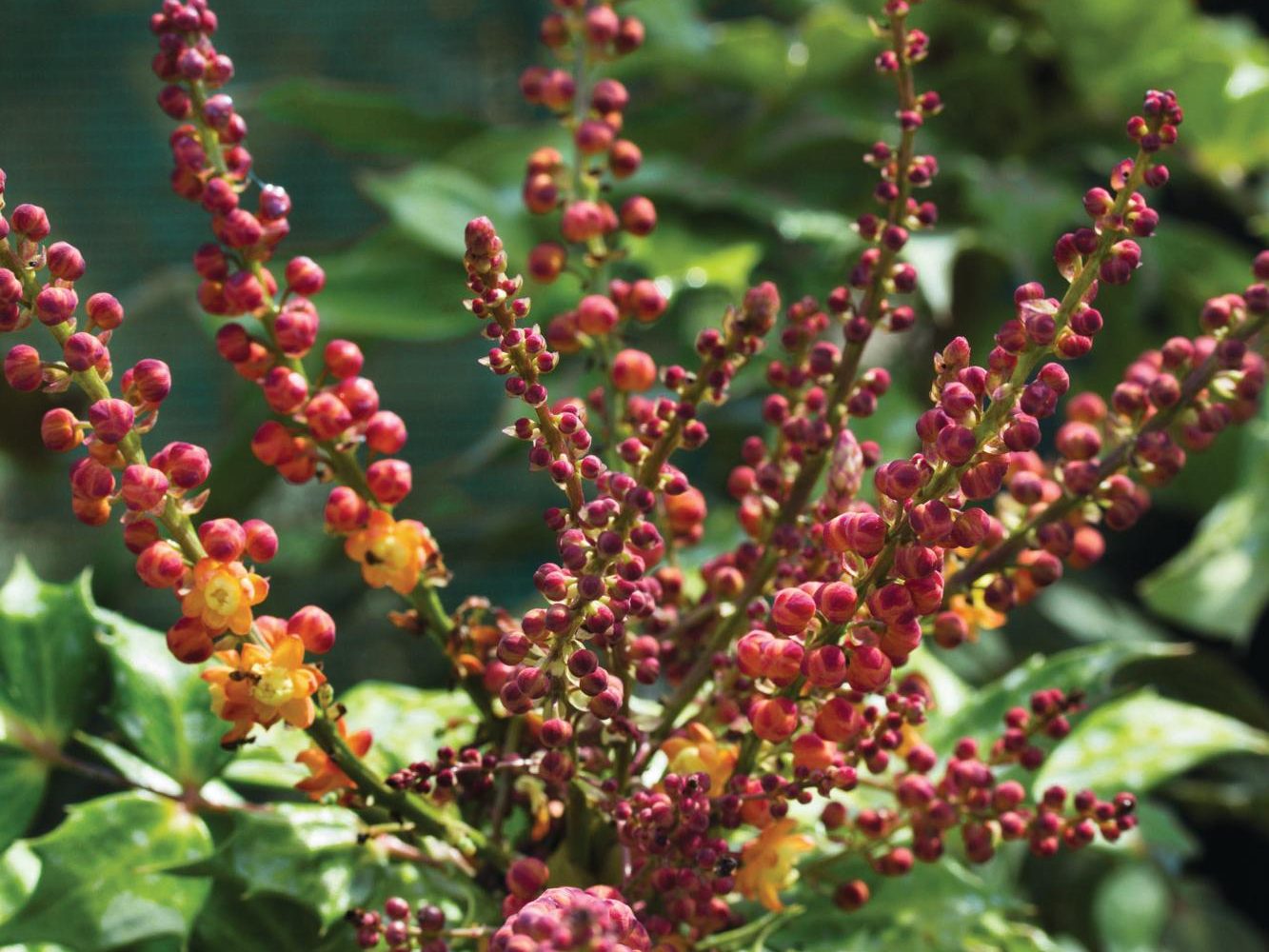
A striking, summer-blooming cultivar of this Chinese species with blood-orange buds (nitens is Latin for shining). Compact and glossy-leaved. 1.5m x 1m. AGM. RHS H4, USDA 6a-8b.
Mahonia gracilipes
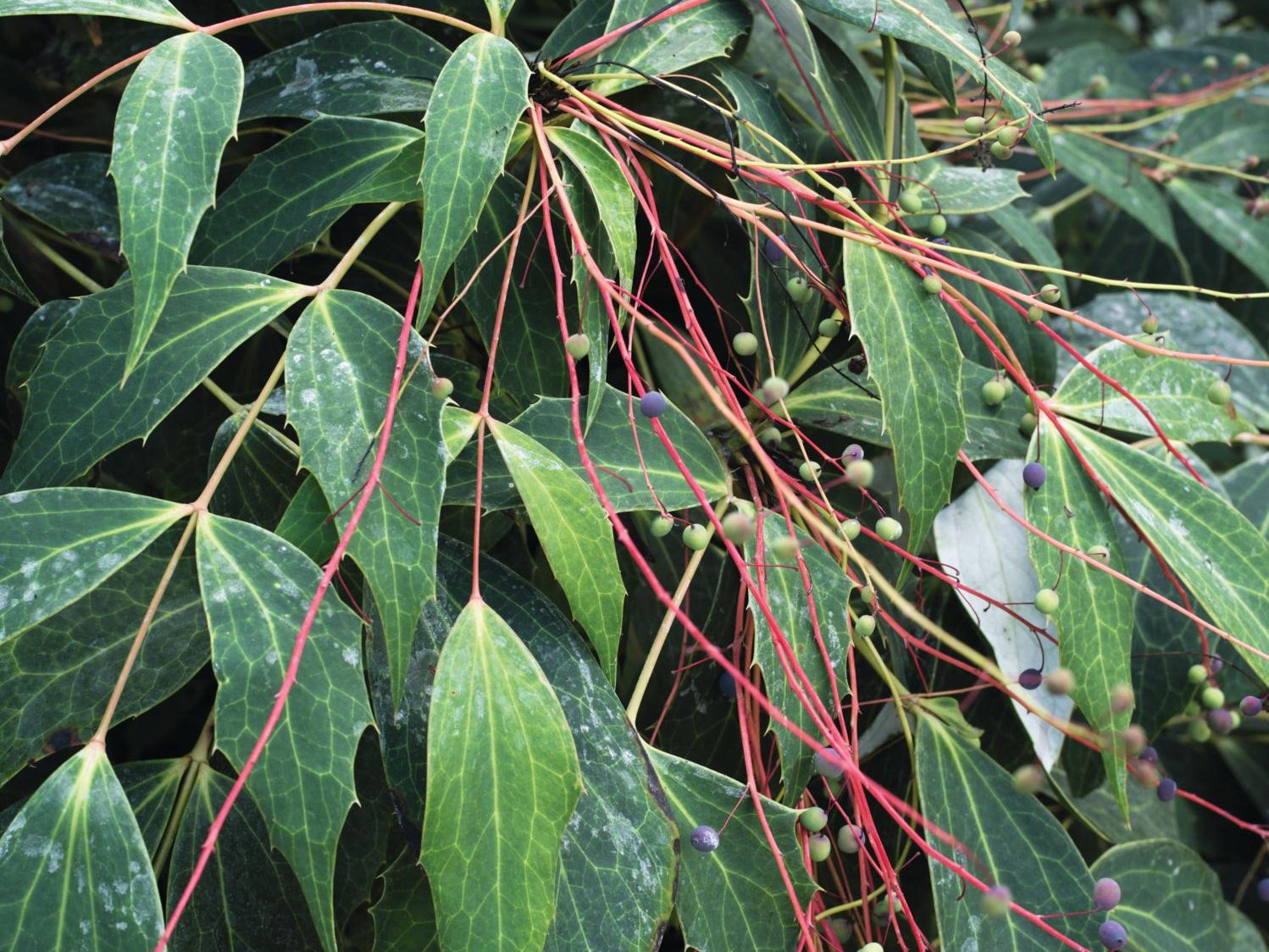
A compact species with spiny leaflets that are unusually white and waxy underleaf, while fringed red on top. Maroon summer flowers with pale centres are followed by black berries. 1.5m x 1.5m. RHS H5, USDA 7a-9b.
Mahonia x media ‘Charity’
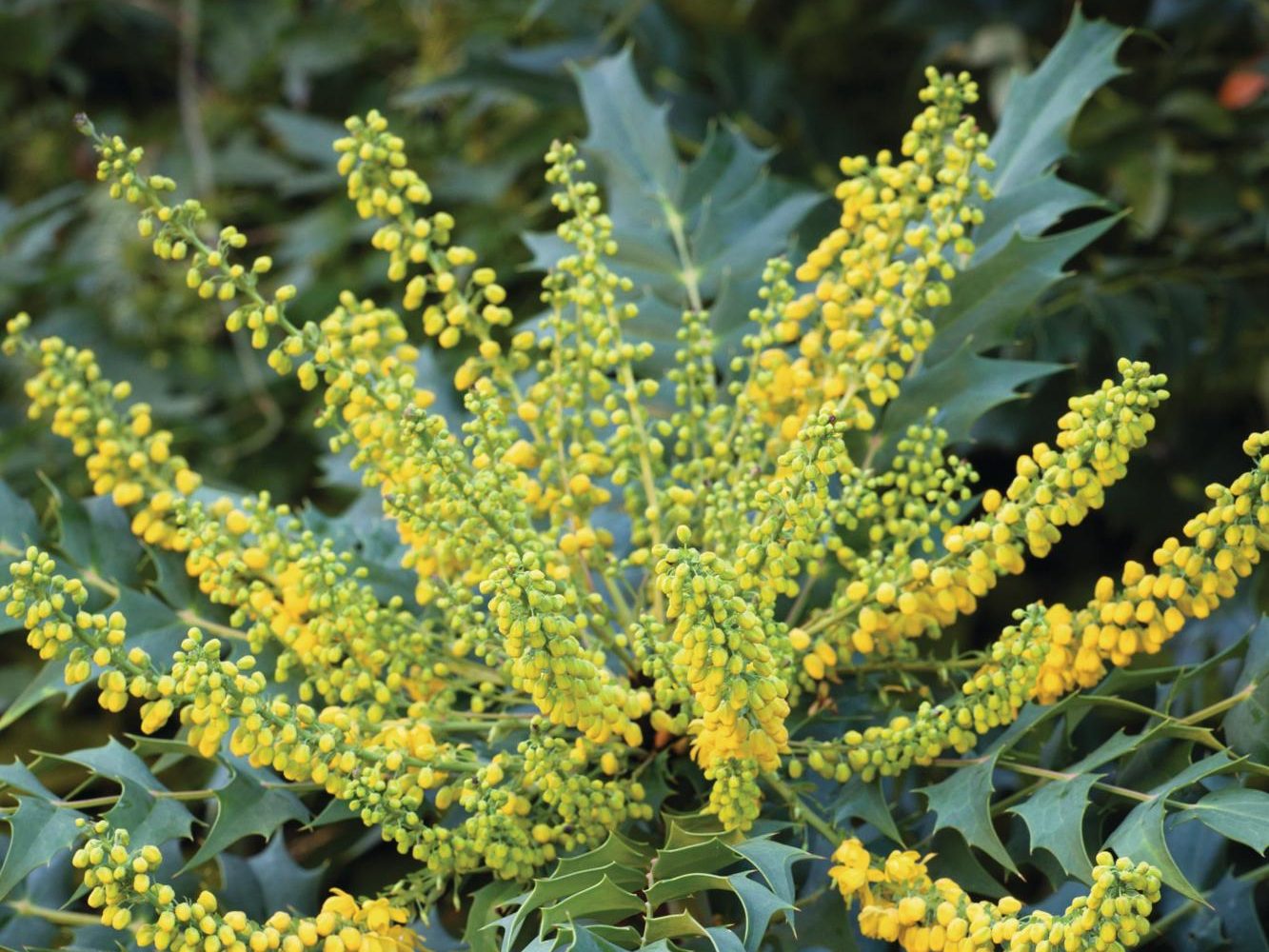
Possibly the most widely planted of all hybrid mahonias, it boasts both height and lucidity. Its slender, pale-yellow flower spikes offer pollinator forage throughout winter. 5m x 4m. RHS H5, USDA 7a-9b.
Mahonia oiwakensis subsp. lomariifolia var. tenuifoliola
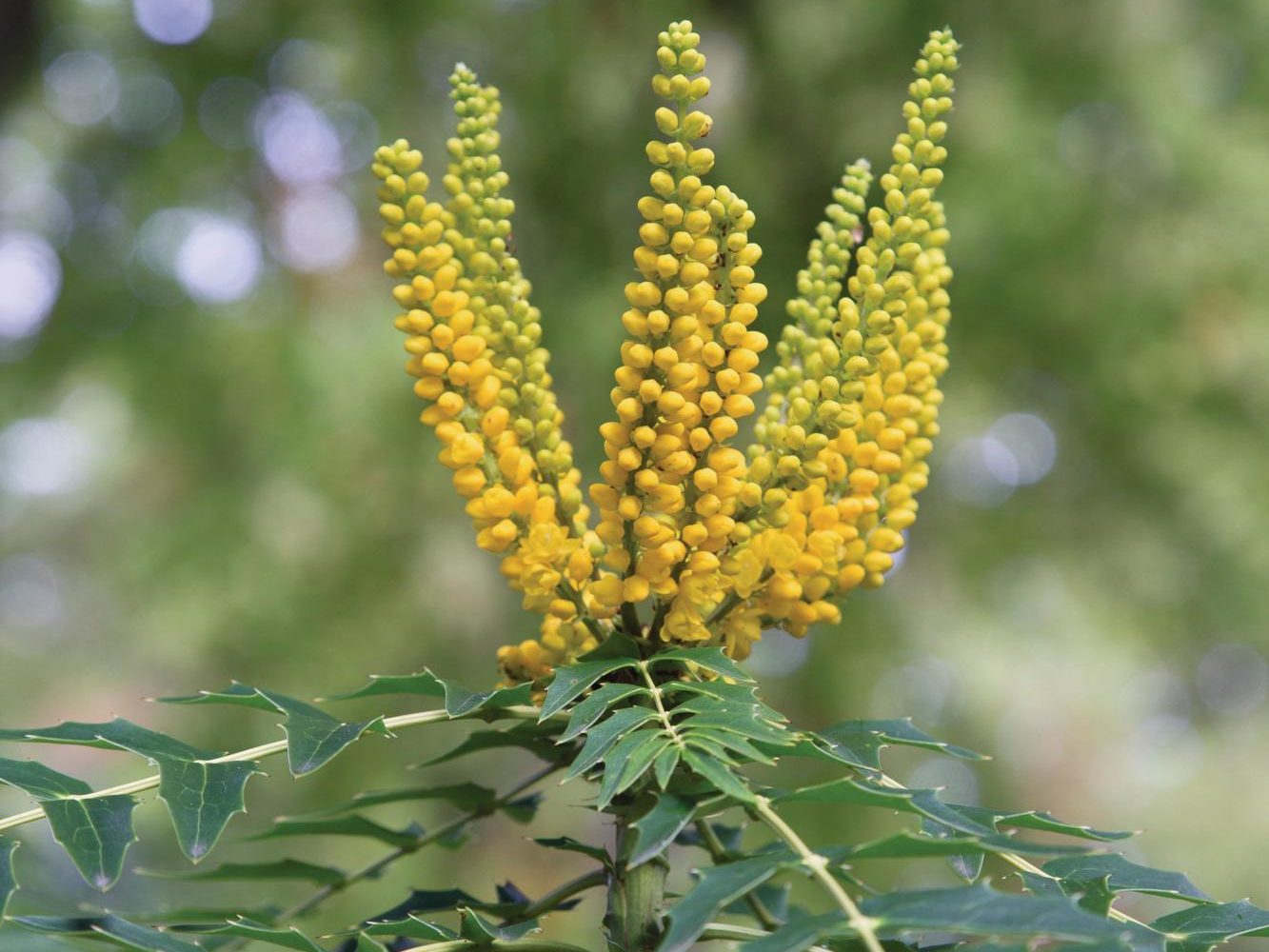
A stunning, hearty mahonia with leaves that flush a prominent copper when they first appear. Bold, yellow flowers in autumn. 3m x 2.5m. RHS H4, USDA 7a-9b.
Mahonia eurybracteata subsp. ganpinensis Meteor (= ‘Hillmah’)
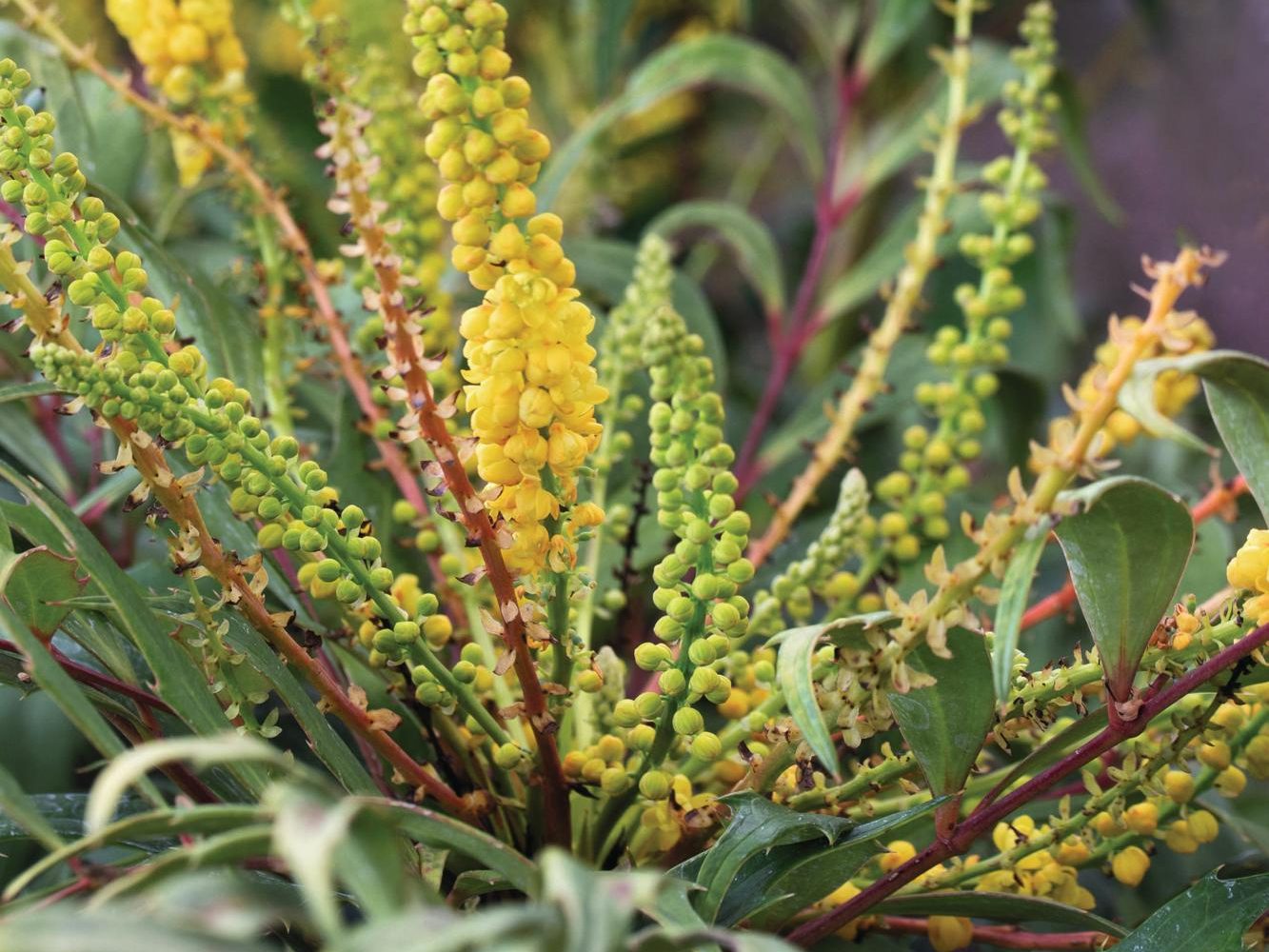
This soft-leaved mahonia shifts its foliage colour from ruby in spring to deeper greens in summer, with yellow flowers in late summer. 1.5m x 1.5m. RHS H5, USDA 7a-9b.
Mahonia japonica
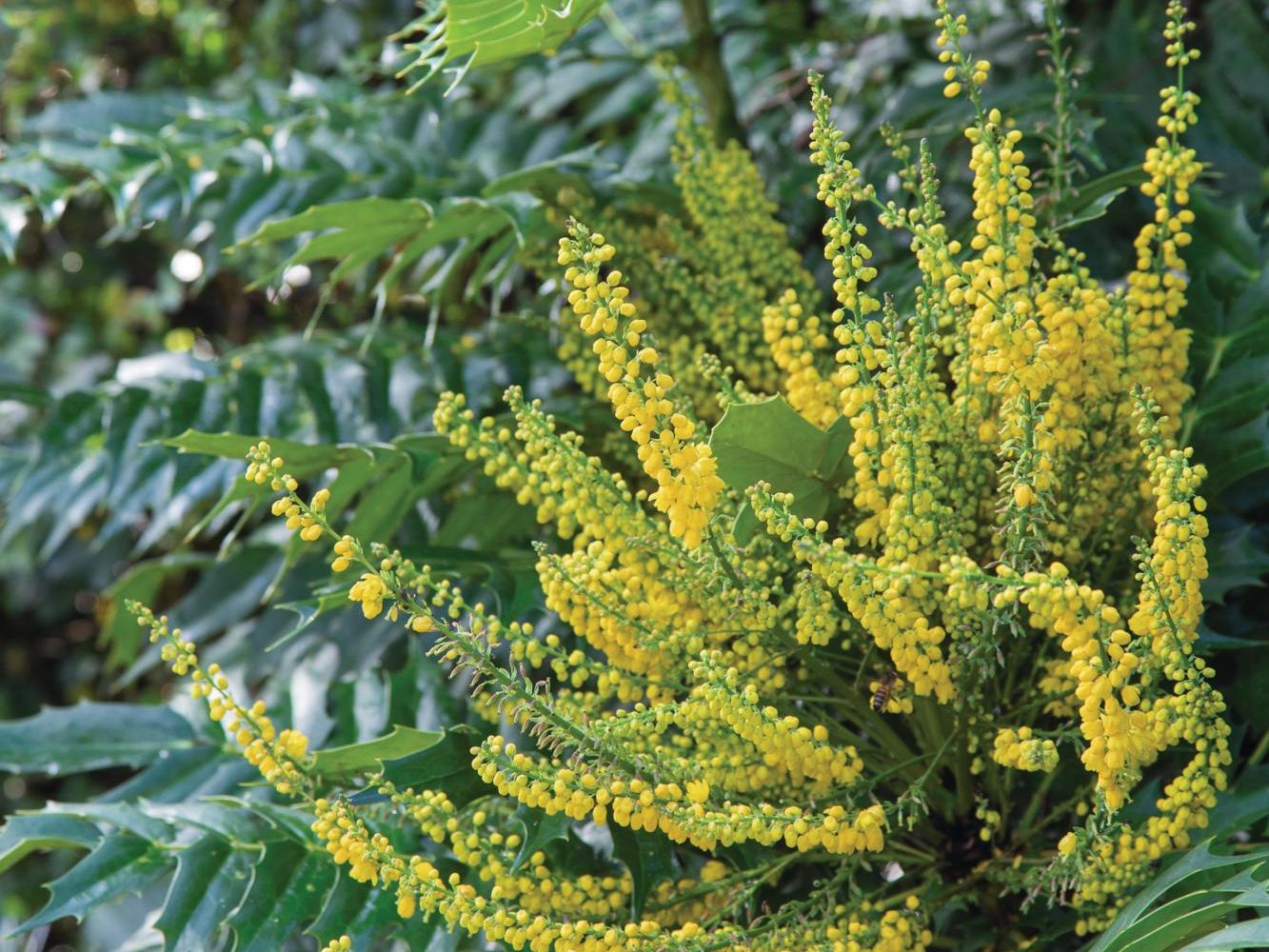
Erect, robust and reliable, the Japanese mahonia is a mid-size option with highly fragrant, light yellow blooms from late autumn and dark berries that follow in summer. 1.5m x 2.5m. AGM. RHS H5, USDA 6a-9b.
Mahonia x media ‘Marvel’
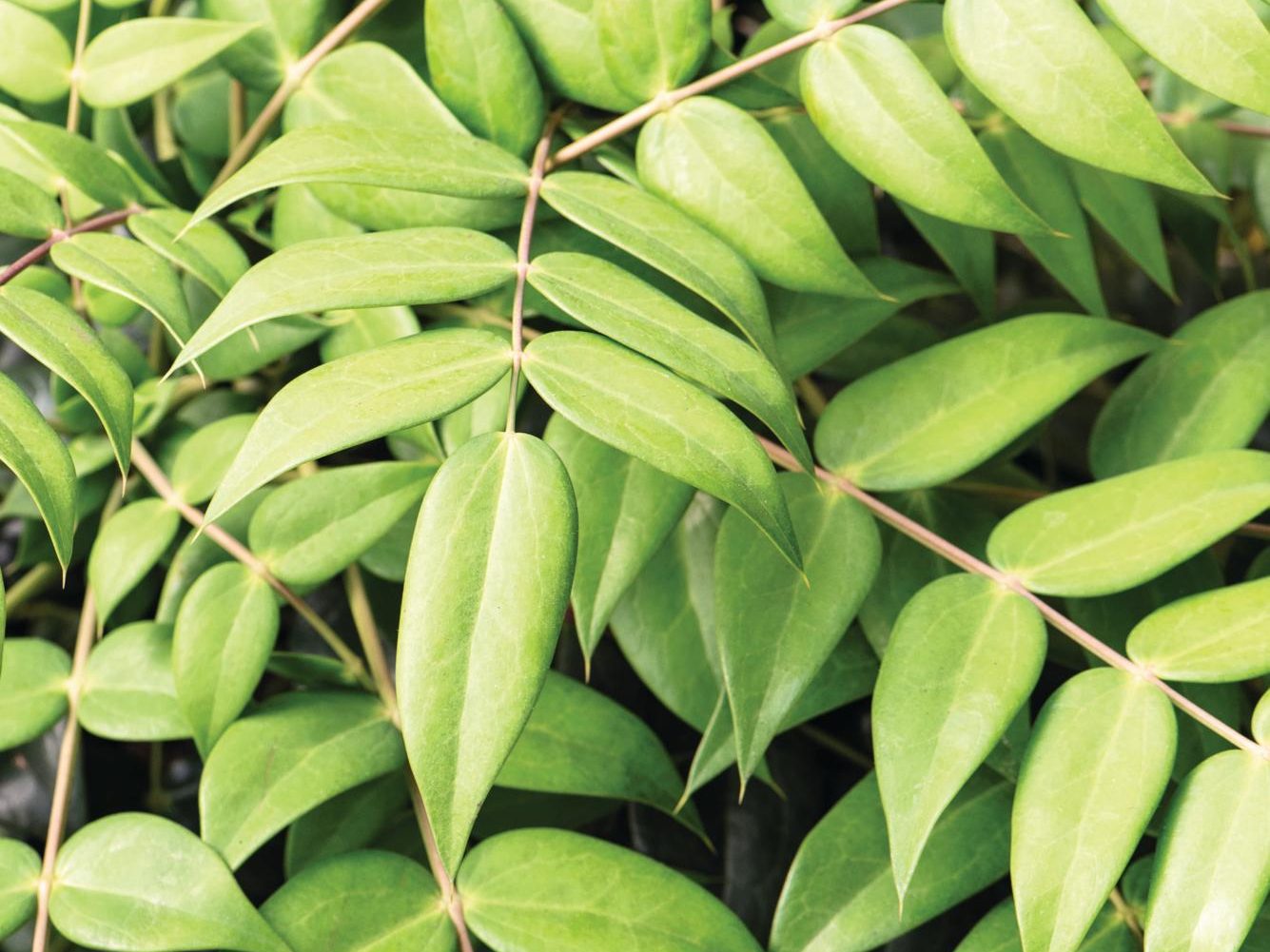
A compact cultivar that would suit a smaller space. ‘Marvel’ also offers softer, glossy, frond-like foliage and clusters of fragrant yellow flowers, which begin to artfully bow once in full bloom. 2.5m x 2.5m. RHS H5, USDA 6a-9b.
Mahonia aquifolium ‘Smaragd’
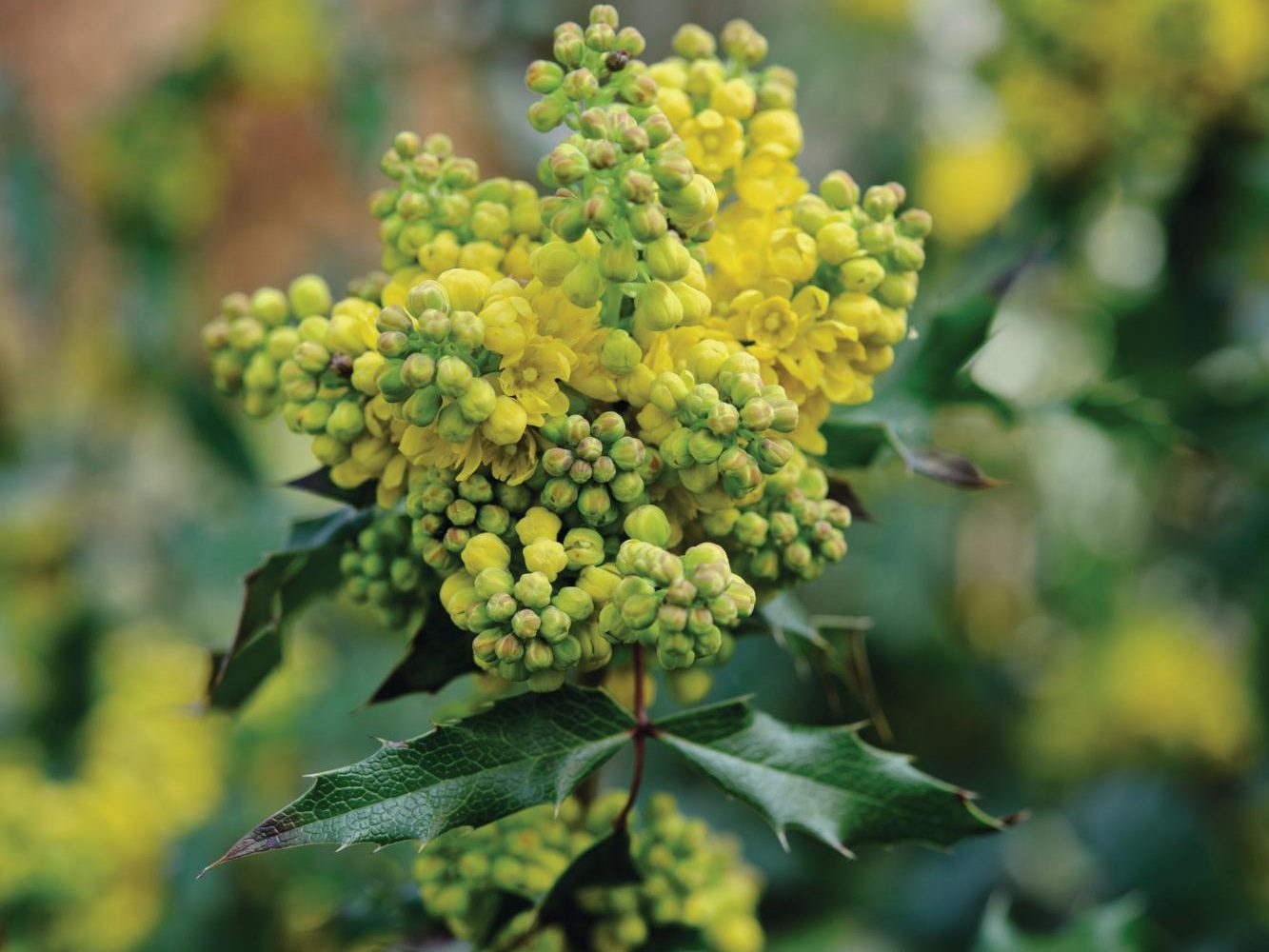
What ‘Smaragd’ lacks in height, it returns tenfold in flower density, with deep yellow blooms arriving in early spring, set off by the dark, maroon-bronze tones of its mature foliage. 1m x 1m. RHS H5, USDA 4a-9b.
Fact file: Mahonia
- What A genus of architectural, evergreen and predominantly spiny-leaved shrubs from the barberry family (Berberidaceae), bearing remarkably luminous, highly fragrant flowers in autumn and winter followed by blue-purple grape-like fruit in summer. Many botanists now regard Mahonia as falling within an enlarged Berberis, but as a separate genus Mahonia includes around 100 species.
- Season From autumn through to mid-spring, depending on species.
- Size From 50cm to 5m high, with a multi-stemmed, often branching habit.
- Conditions Grow in part or full shade, in moist but free- draining soil.
- Origins Eastern Asia as well as North and Central America.
- Hardiness Hardy throughout the UK with an RHS hardiness rating of H4-H5 and suitable for gardens in USDA zones
- 5a to 9b.
Where to buy and see Mahonia
- Burncoose Nurseries Gwennap, Redruth, Cornwall TR16 6BJ. Tel 01209 860316, burncoose.co.uk
- Paramount Plants & Gardens 131 Theobalds Park Road, Crews Hill, Enfield, London EN2 9BH. Tel 020 8367 8809, paramountplants.co.uk
- Sir Harold Hillier Gardens Jermyns Lane, Romsey, Hampshire SO51 0QA. Tel 01794 368787, hants.gov.uk/thingstodo/hilliergardens