Camellia sasanqua, and closely related species Camellia hiemalis and hybrid Camellia x vernalis, are often generically known as ‘sasanquas’, and are a showy counterpoint to autumn foliage and a beacon in the gathering gloom.
Less well-known than the spring-flowering camellias, Camellia japonica and Camellia x williamsii hybrids, sasanquas are versatile shrubs with neat evergreen leaves, and a floral show that brings a spectacular energy to the late-season garden. Single, double or with petalloid frills, and pink, white, striped or wine-flushed, they are particularly welcome at a point in the year where leaves are falling in earnest, and the darkest days still lie ahead. The flowers offer a bonus source of pollen and nectar for late-flying insects.
You may also like:
- How to grow camellias
- The best winter-flowering heathers
- Shrubs with colourful stems
- Seedheads for winter structure
- Evergreen shrubs for sun and shade
FACT FILE
- What Flowering shrubs; a group of extensively hybridised woody plants in the Theaceae family with evergreen leaves and often fragrant flowers.
- Season Flowers are produced in autumn and winter. Some cultivars produce decorative new foliage in spring.
- Size Mature plants vary in ultimate size from around 2.5-4m tall and 2.5-4m wide, but pruning after flowering will keep them more compact.
- Conditions Full sun and a sheltered position, with moist, slightly acid or neutral soil.
- Origins East to southeast Asia.
- Hardiness Hardy throughout most of UK with an RHS hardiness rating of H4-H5, but may need winter protection. Generally suitable for gardens in USDA zones 7a to 10b.
What to grow with sasanqua camellias
In National Collection holder Caroline Bell's garden in Devon, hydrangeas are a favourite companion for Camellia sasanqua. “I particularly like Hydrangea arborescens ‘Emerald Lace’ for its interesting, cut-leaved foliage,” she says. “And cultivars of H. macrophylla, such as ‘Merveille Sanguine’, which has leaves with a touch of red or purple.” She also recommends dark-leaved modern cultivars, including Hydrangea macrophylla ‘Dark Angel Red’, that colour well in the sun.
Shrubs and small trees that associate well with C. sasanqua include evergreen Eucryphia, or deciduous Enkianthus, Magnolia and Amelanchier, whose spring show of flowers is followed by gentle autumn colour and a pleasingly sculptural structure in winter.
Taller, more upright or crown-lifted specimens can be judiciously underplanted with a carpet of evergreen ferns, or with bulbs, as long as the soil is not poorly drained. Autumn-flowering Galanthus reginae-olgae, Colchicum or Cyclamen hederifolium can add to the seasonal spectacle, and mixed snowdrops, Crocus tommasinianus and Cyclamen coum look attractive in spring.
Sasanquas also make a fine ornamental hedge, and with their small leaves are well-suited to clipping or cloud-pruning.
Compact cultivars such as Camellia sasanqua ‘Tanya’ and Camellia sasanqua ‘Dwarf Shishi’ are good for growing in containers.
How to grow sasanqua camellias
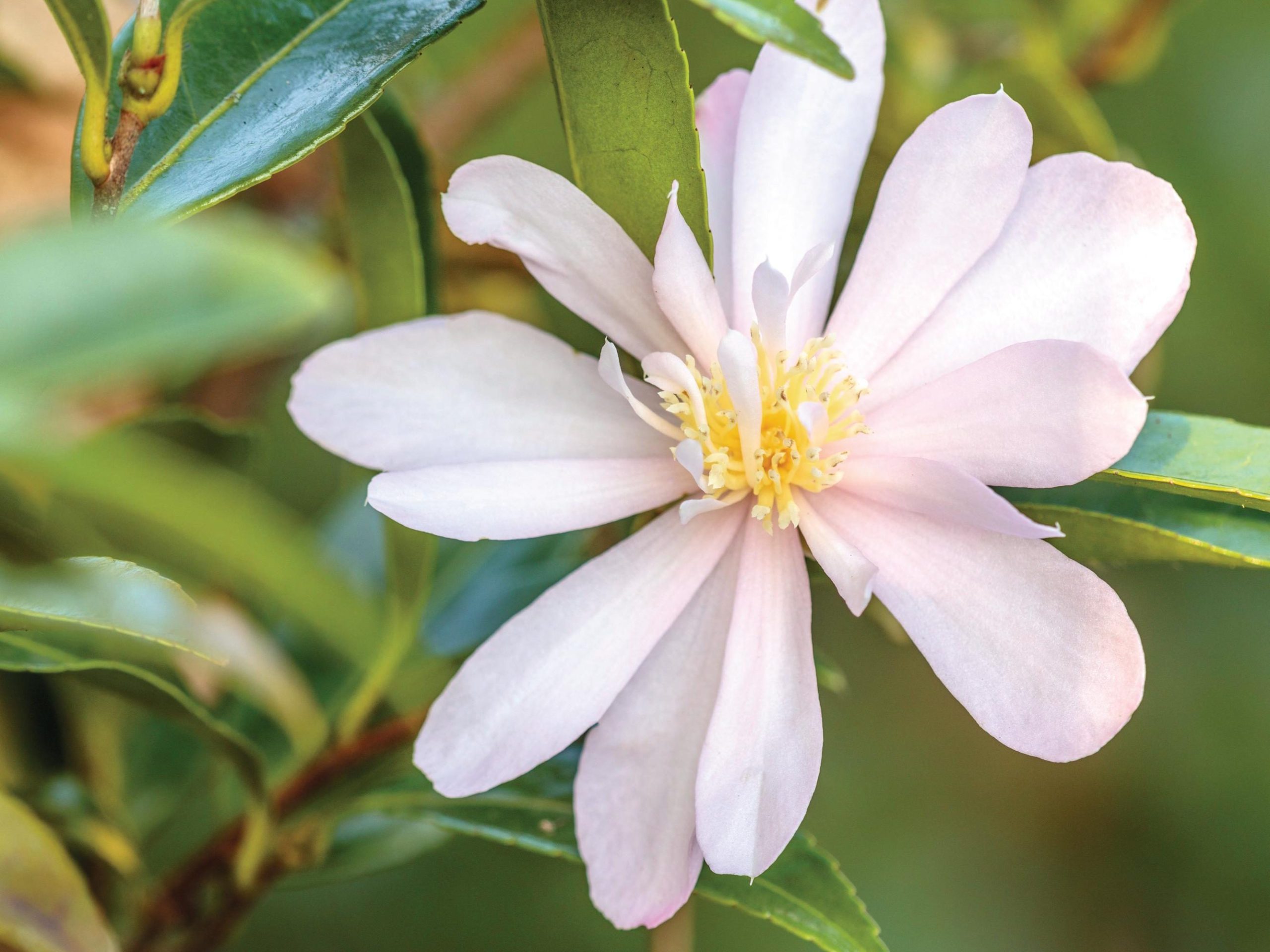
Where to plant sasanqua camellias
Unlike its spring-flowering relatives, Camellia sasanqua does not need part shade, and once it is established it will take full sun, as long as the roots remain moist. Height and habit varies, so there is a sasanqua for most garden positions.
While cultivars of C. sasanqua form handsome specimens, they also excel in a shrub border or woodland edge. They are best grown alongside plants that share their preferences for sunshine, water and soil with a slightly acidic pH, and which will complement them not just in flower but in their off season too.
Where to plant sasanquas
Plant sasanqua camellias in a site that is sunny but sheltered from cold winds, with enough time to acclimatise before winter. Soil should be moisture-retentive, with a pH that is slightly acid to neutral. Bear in mind the size of the mature shrub at the outset and allow enough space for it to grow.
How to plant sasanquas
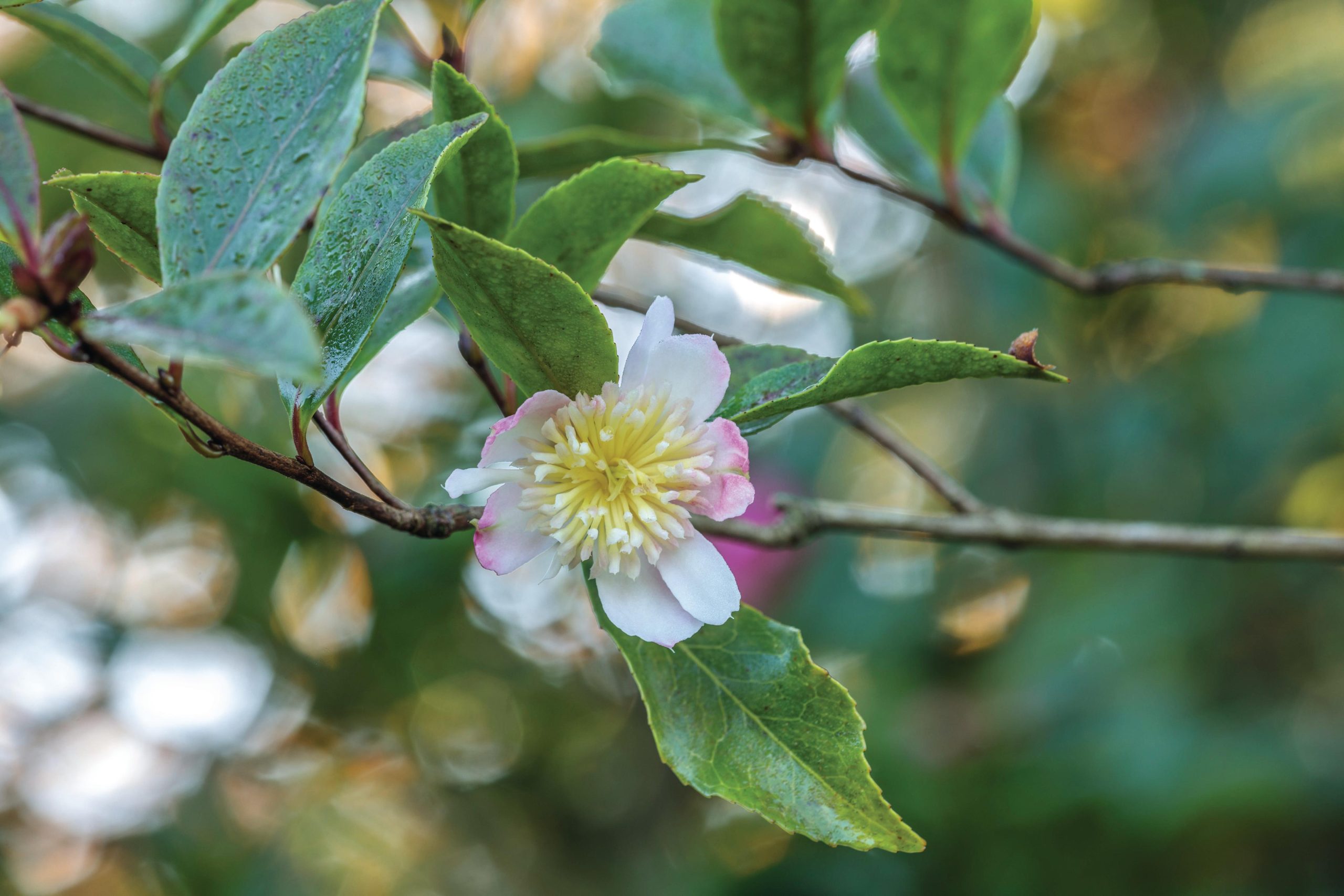
Dig a hole around twice the size of the root ball and add some extra organic matter such as leaf mould. Install a stake if required. Remove the young camellia from its container, tease out the roots and plant it so that the top of the compost is level with the surrounding ground. Water well and mulch around the top of the root ball, leaving the woody base of the plant clear.
On alkaline soils, sasanquas can be grown in large containers filled with ericaceous compost. Cultivars that are naturally compact perform best in pots, and attention should be paid to feeding and watering.
How to care for sasanqua camellias
In very cold weather wrap plants in horticultural fleece or an old blanket, and insulate pot-grown specimens with sacking or bubble wrap, as the plants will die if the roots freeze. Move pots into the shelter of a warm wall or relocate them to an unheated greenhouse or cold conservatory.
How to take cuttings from sasanqua camellias
Propagate by taking semi-ripe cuttings in mid- to late summer or hardwood cuttings in autumn and winter. Roots may appear faster if you wound the bottom of the stem and dip it in rooting hormone. Alternatively, sow collected seeds immediately in trays filled with gritty ericaceous compost and keep warm. The resulting seedlings will usually differ from their parent.
How to prune sasanqua camellias
Camellias don’t require routine pruning, but if they’re outgrowing their space or an ornamental form needs to be maintained, wayward stems can be cut back after flowering, until late May.
When to feed and water sasanqua camellias
Feed in early spring to boost growth and flower production, and prevent nutrient deficiencies. A single application of a slow-release camellia fertiliser is effective. Or give plants a liquid feed, formulated for ericaceous soils, periodically from spring into early summer. Avoid feeding excessively or too late in the season, as this stimulates late growth that may then suffer winter damage.
Water regularly while the plant is establishing, preferably using collected rainwater. In southern Japan, where Camellia sasanqua originates, the wet months are in summer with drier weather in winter. Therefore a shortage of water in the summer months is a major cause of bud-drop, and it is important to make sure they don’t dry out. Keep an eye out for vine weevil where plants are grown in containers.
The best Camellia sasanqua varieties to grow
Camellia ‘Sparkling Burgundy’
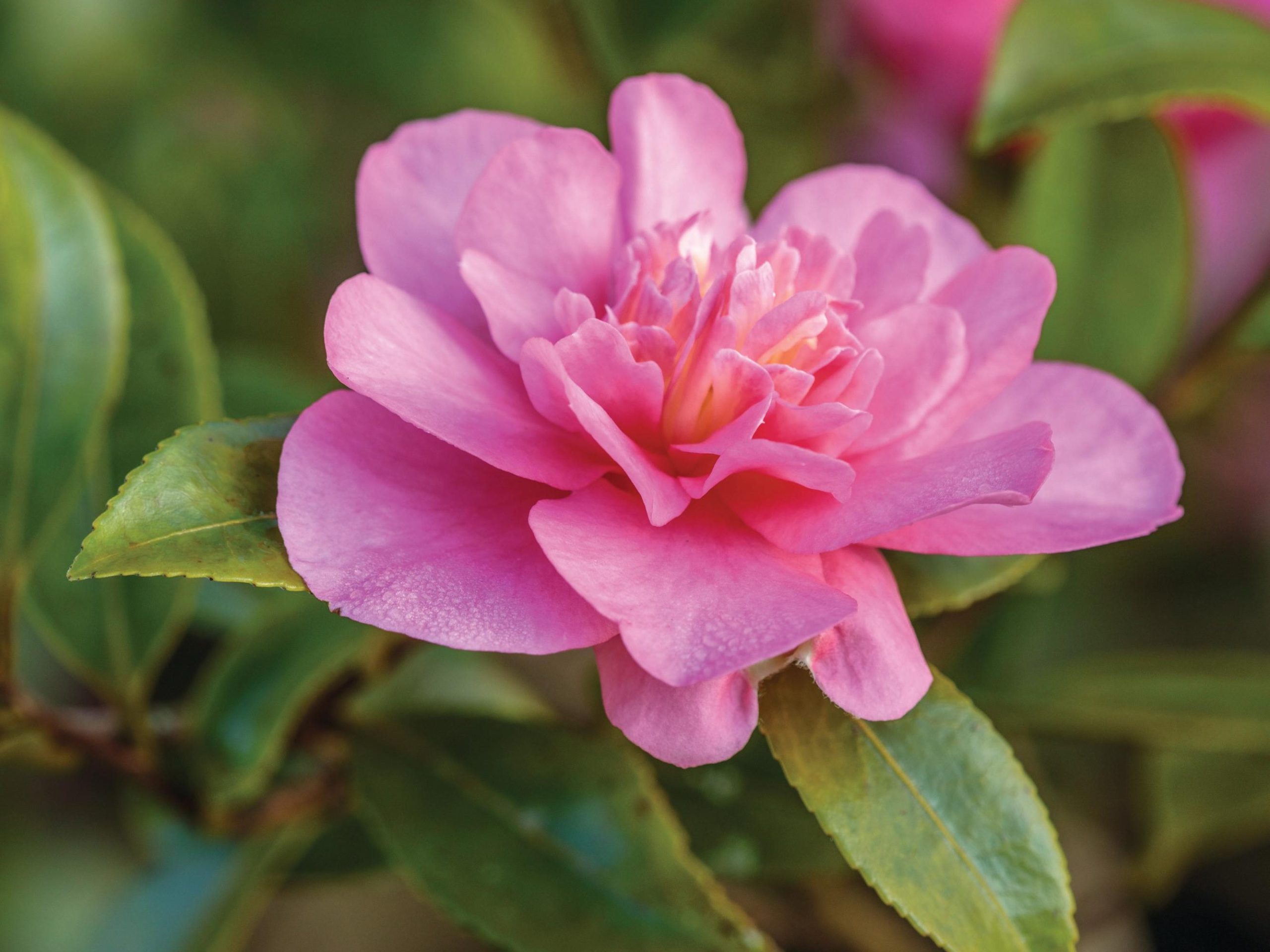
Popular and widespread, it was named the All-America Camellia in 1960. A reliable and tough plant with a slightly pendulous habit, it has a good scent on warmer days. Height and spread: 2.5-4m x 1.5-2.5m. AGM*. RHS H4, USDA 7a-9b†.
Camellia sasanqua ‘Plantation Pink’
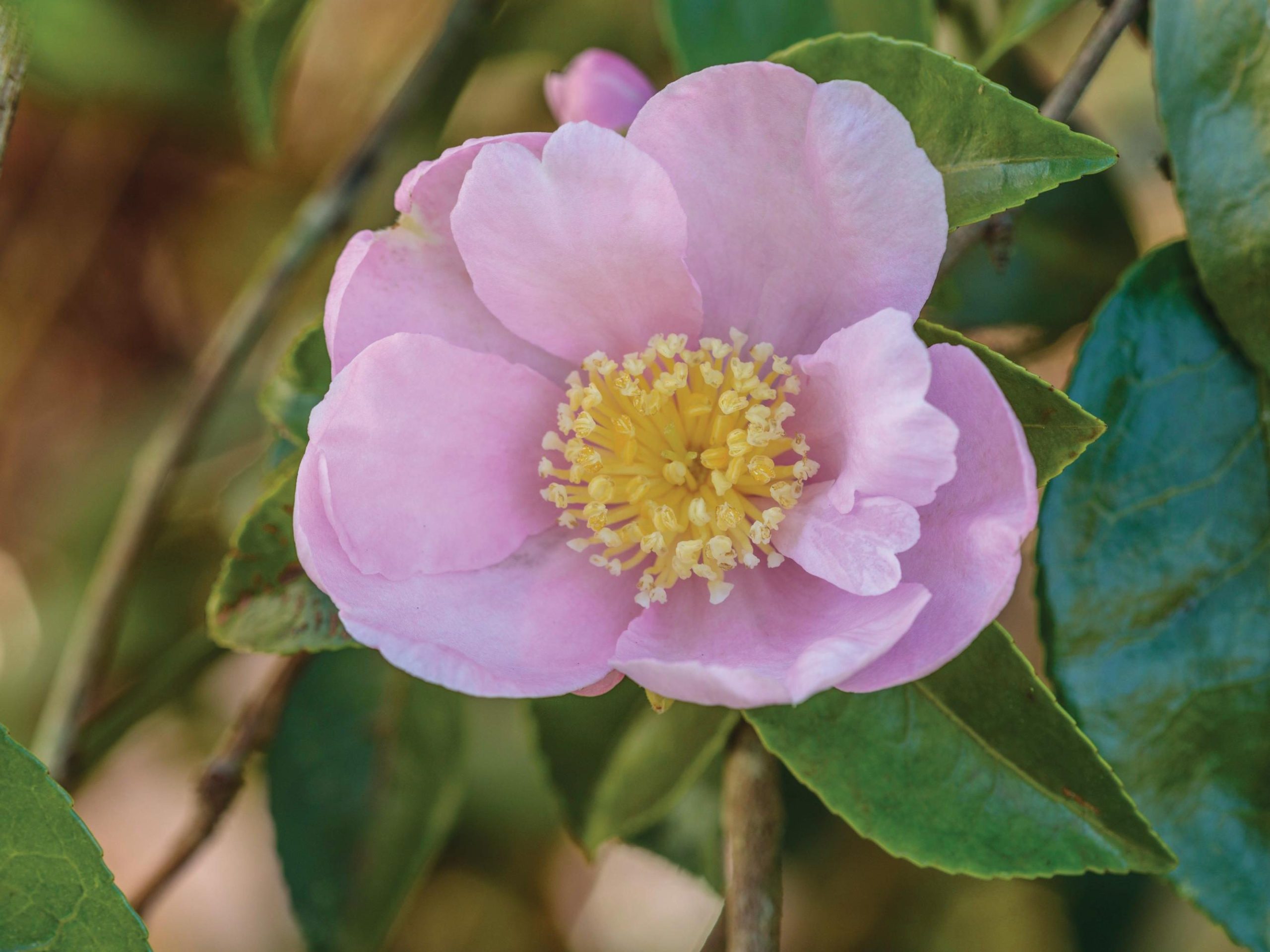
While not particularly free- flowering when young, this vigorous shrub makes a good wall-trained specimen. Place in a sunny spot near a window from where the perfume can be appreciated. 2-3.5m x 1.5- 2.5m. RHS H4, USDA 7a-9b.
Camellia sasanqua ‘Agnes O. Solomon’
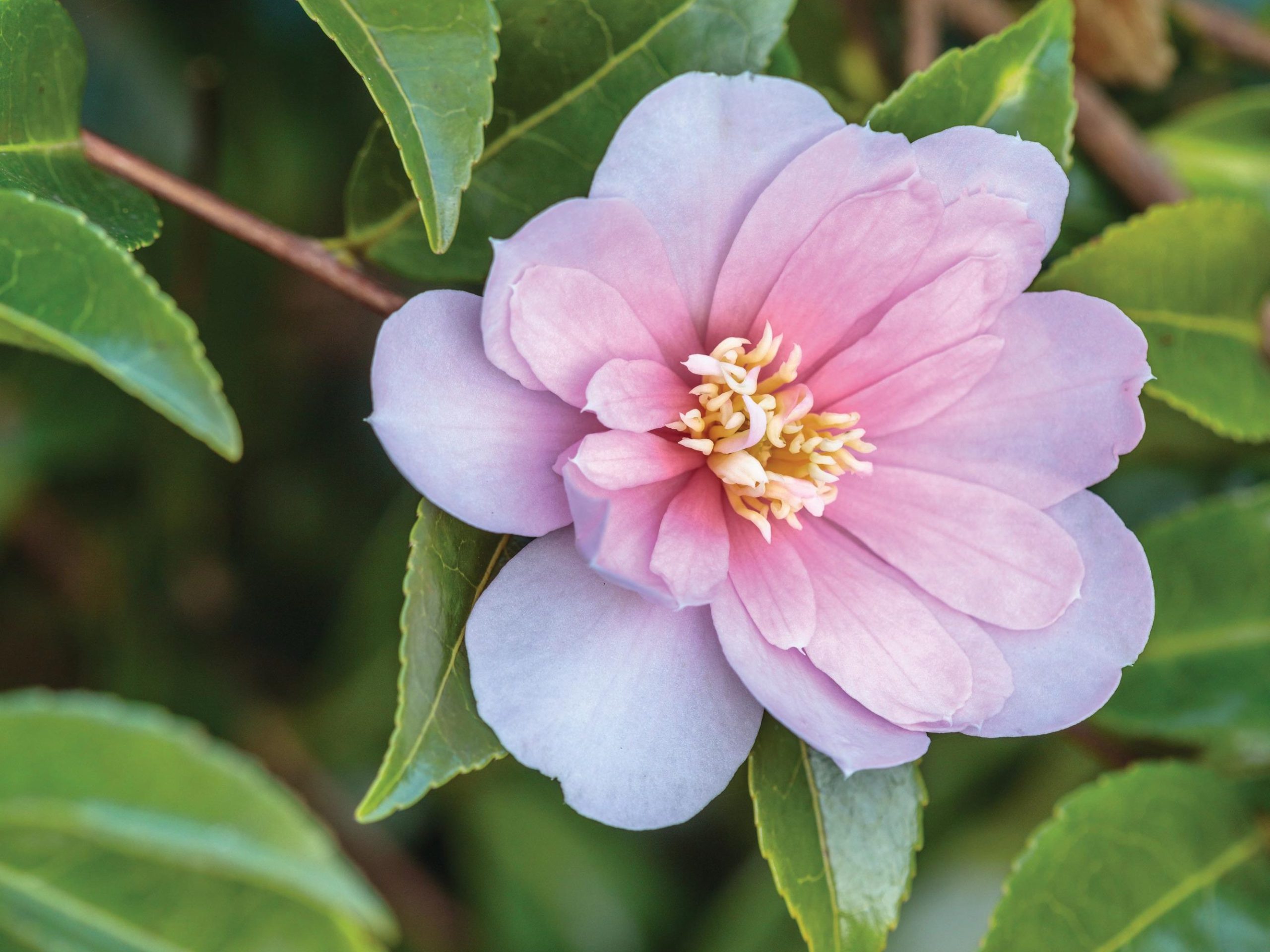
An erect and spreading plant that produces fragrant, semi-double or peony-form blooms in October and November. A floriferous nature makes up for its average vigour. 2-3m x 2m. RHS H4, USDA 7a-9b.
Camellia sasanqua ‘Hugh Evans’
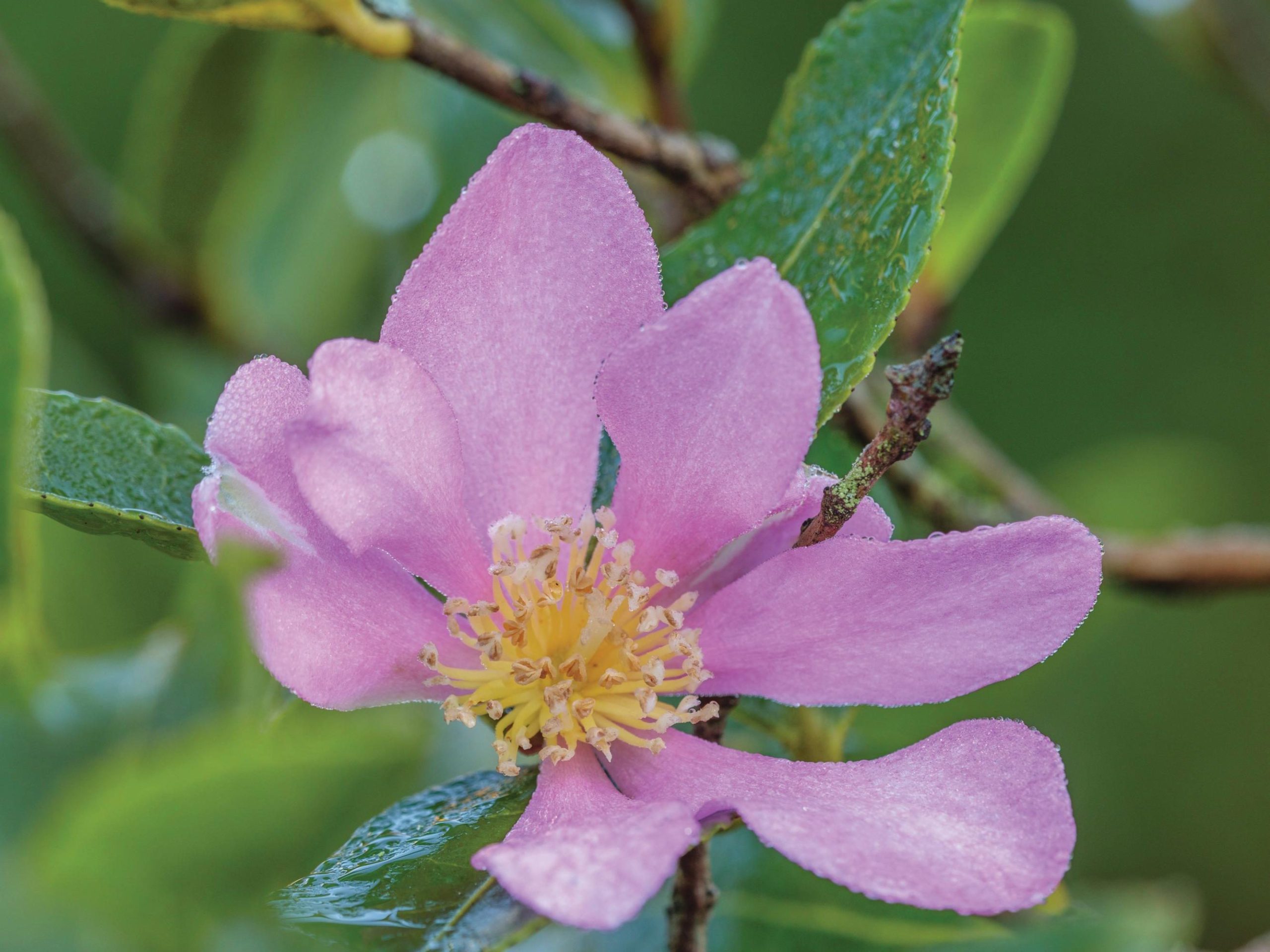
An upright and generous plant. Liberally produces single pink flowers in October and November. A sunny, sheltered spot will make the most of the scent. 2.5-4m x 1.5-2.5m. AGM. RHS H4, USDA 7a-9b.
Camellia hiemalis ‘Chansonette’
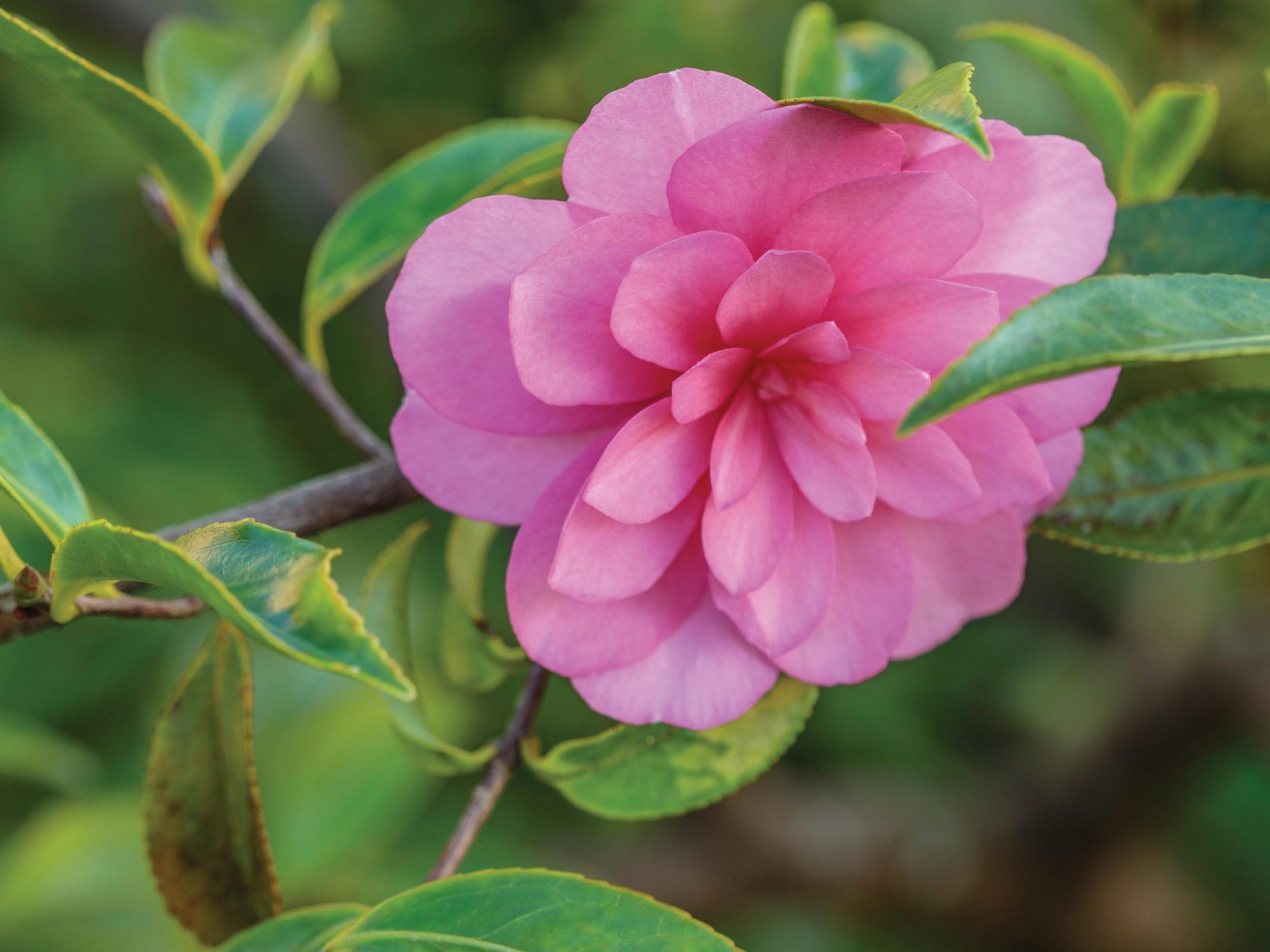
Easy to grow and vigorous, this mounded plant produces a good quantity of neatly double blooms, which are robustly pink but unscented. 80cm-1.4m x 1.5-2.5m. RHS H4-5.
Camellia ‘Snow Flurry’
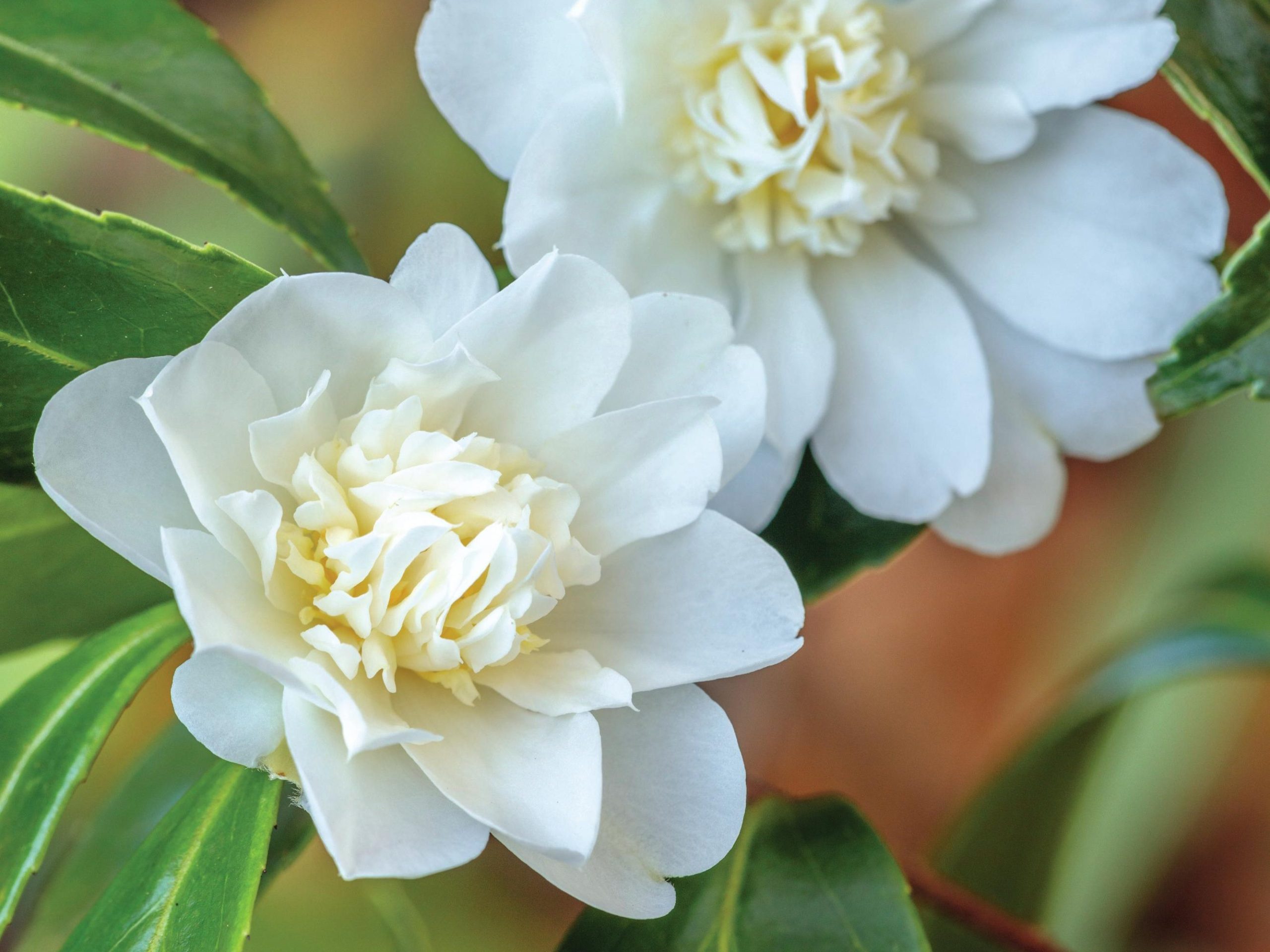
A hardy hybrid of C. sasanqua and C. oleifera with prolific and pretty, unscented flowers. Caroline recommends its seedling C. ‘Scented Snow’ as a fragrant alternative. 1.5- 2.5m x 1.5-2.5m. AGM. RHS H5, USDA 7a-10b.
Camellia hiemalis ‘Shōwa-no-sakae’
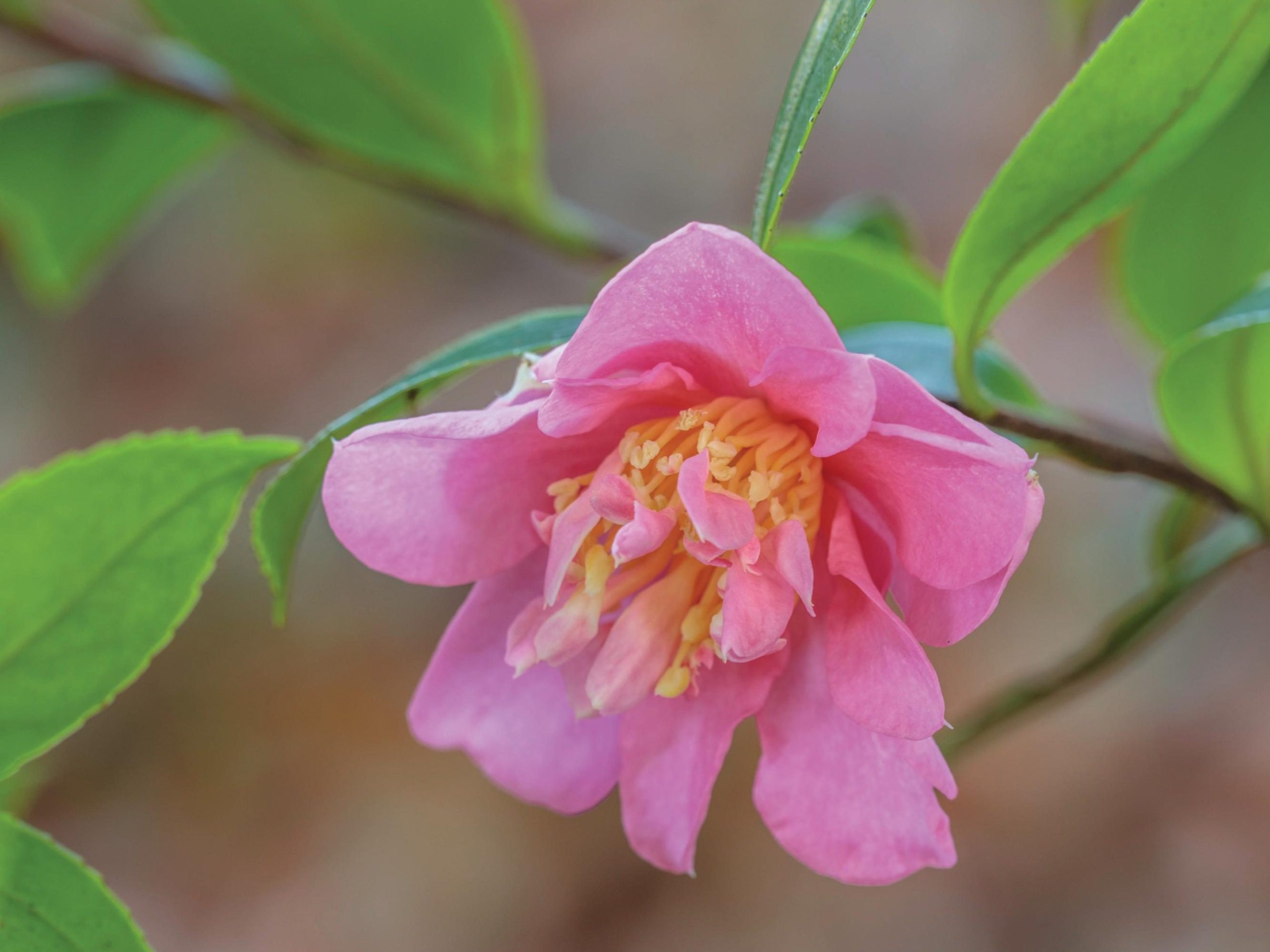
A bushy and fairly slow-growing plant, both the glossy leaves and scented, double, pink flowers are large for a sasanqua. Relatively shade tolerant. 1.5-2.5m x 2.5m. RHS H4, USDA 7a-9b.
Camellia sasanqua ‘Crimson King’
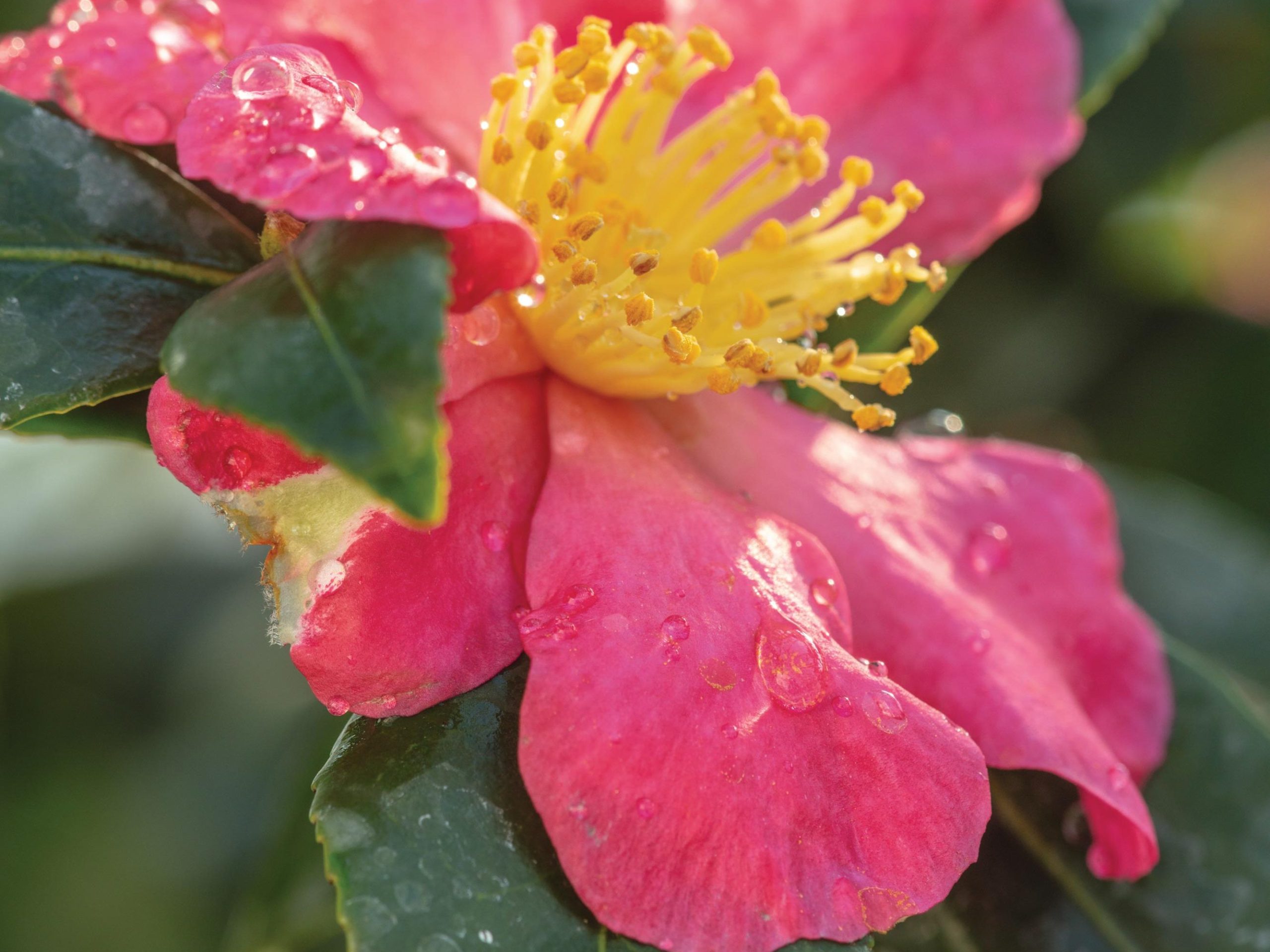
With golden stamens and red petals, the flowers are similar to C. x vernalis ‘Yuletide’, but larger and a little pinker, with a light, fruity fragrance. 1.5-2.5m x 1.5-2.5m. AGM. RHS H4, USDA 7a-9b.
Camellia sasanqua ‘Chojiguruma’
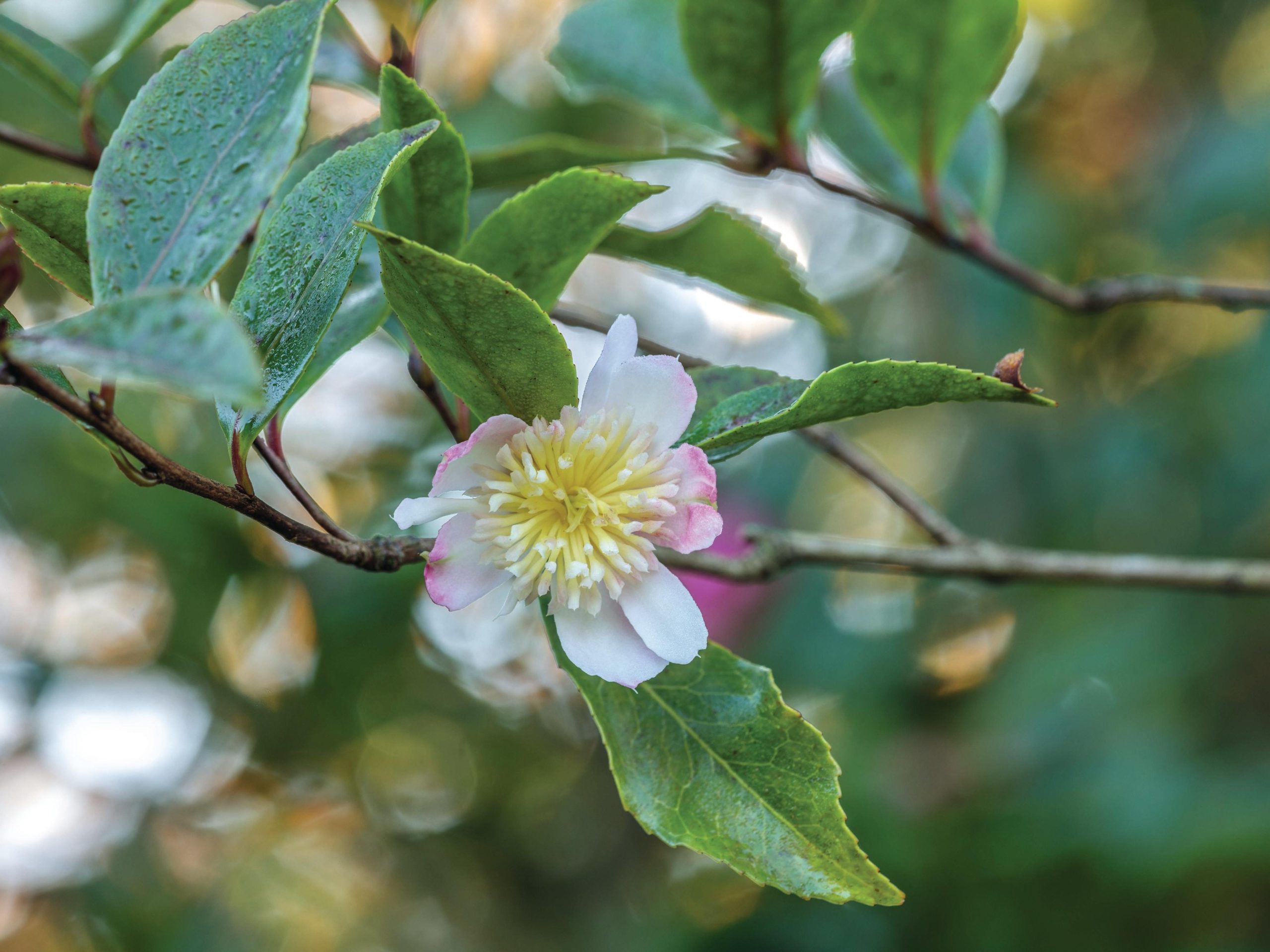
This delightful and interesting plant is thought to date from at least 1789. It flowers early and the unusual blooms are attractive to pollinators. 2.5m x 2m. RHS H4, USDA 7a-9b.
Camellia sasanqua ‘Rainbow’
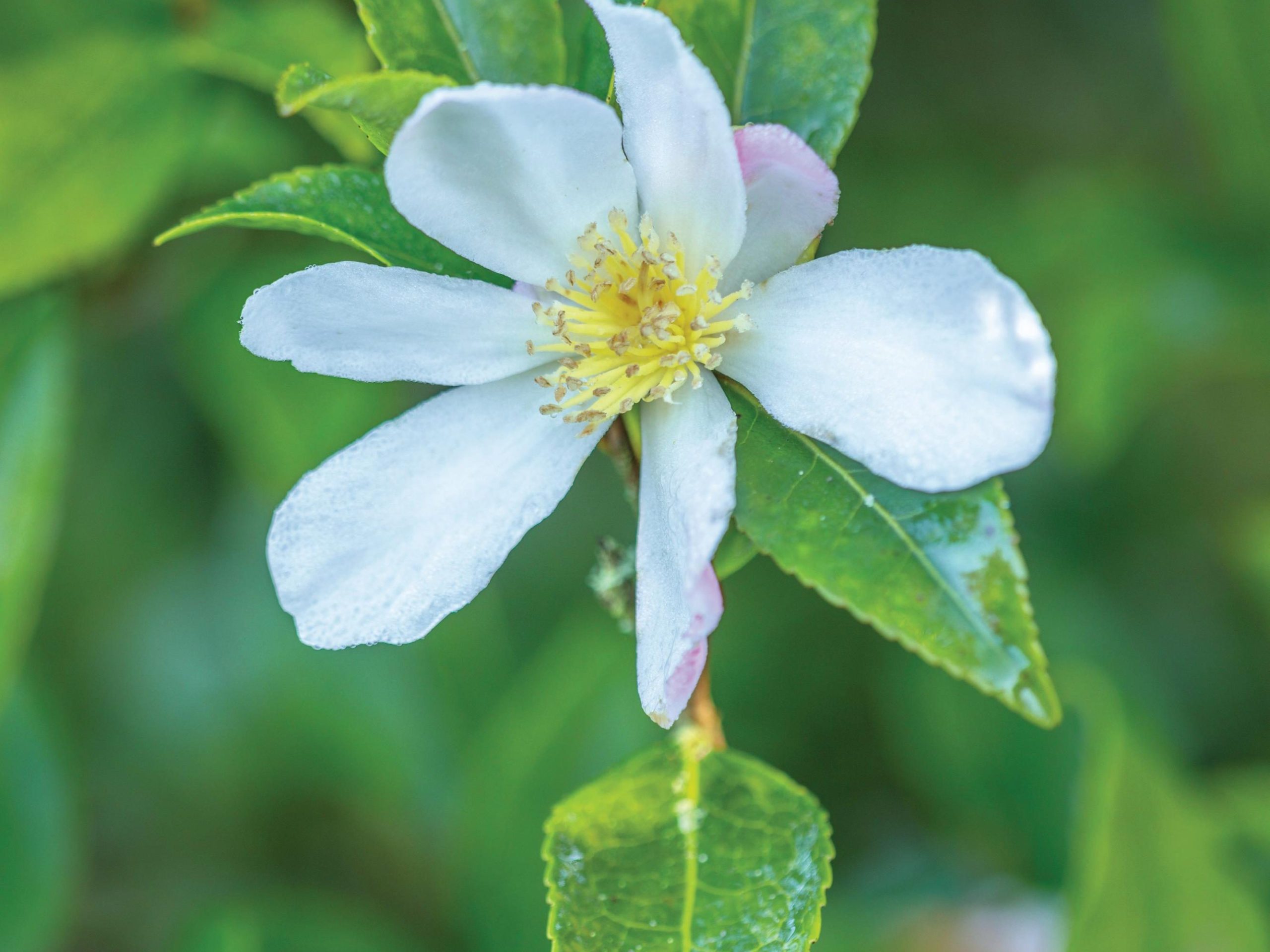
A reliable plant which flowers in part-shade as well as sun. Prolific, fruit-scented blooms with delicate red and white petals appear in autumn. 4-8m x 2.5-4m. AGM. RHS H4, USDA 7a-9b.
Camellia sasanqua ‘Sasanqua Variegata’
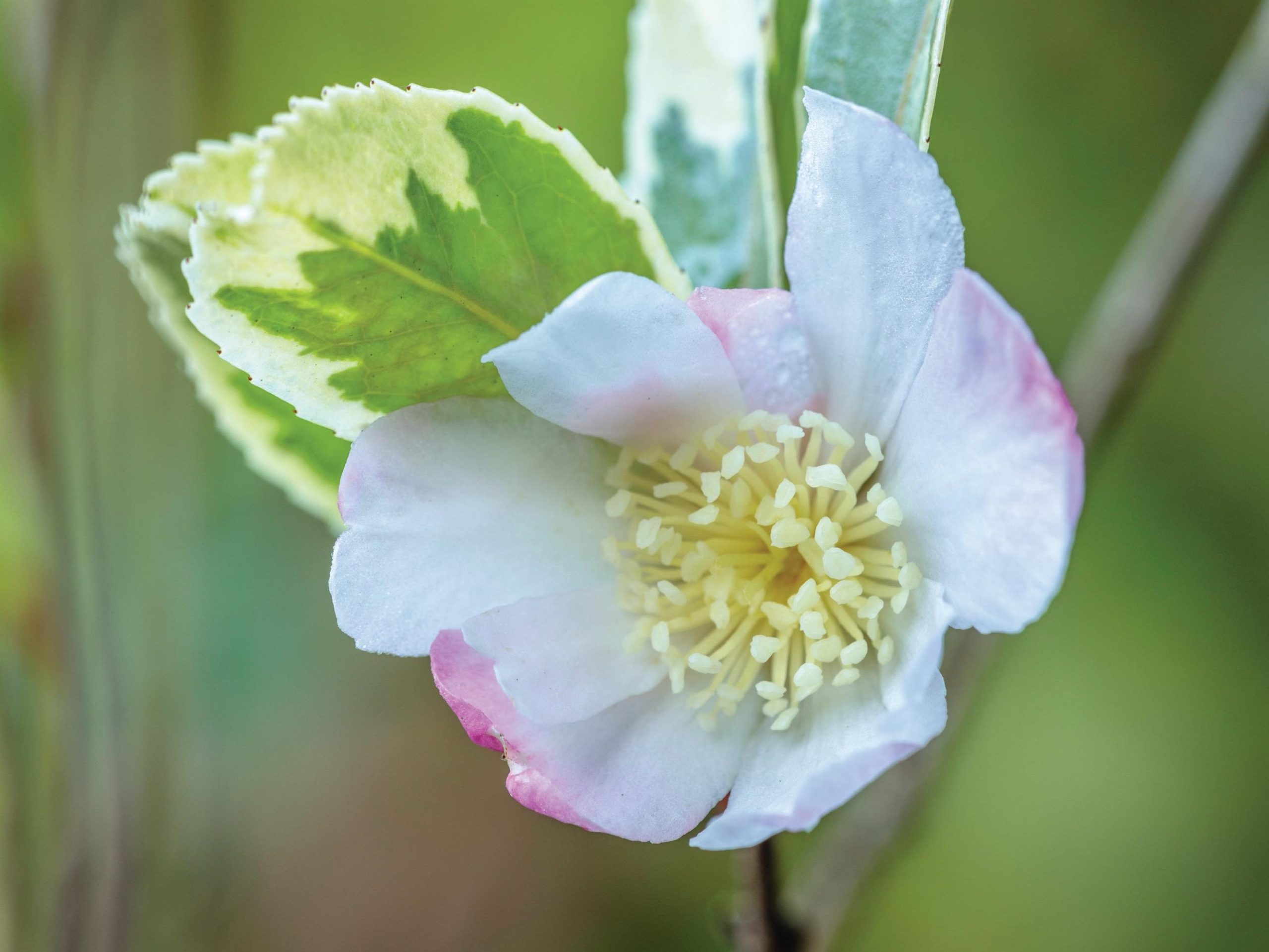
A vigorous, erect plant that forms a dense bush. Scented white flowers are produced over a long period and the foliage is attractive, especially when young. 1-1.5m x 80cm-1m. RHS H4, USDA 7a-9b.
Camellia sasanqua ‘Versicolor’
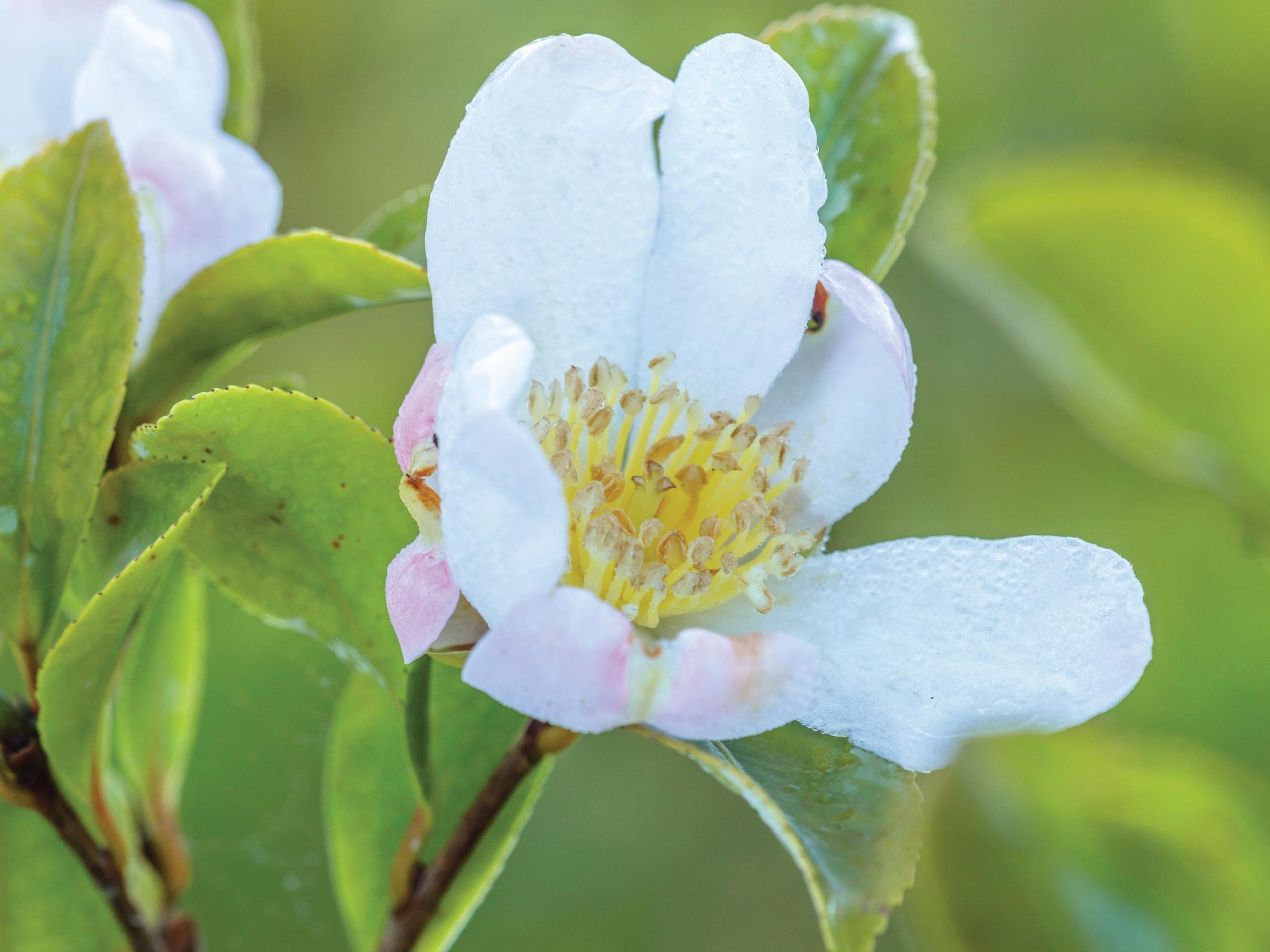
Single, unscented flowers are lavender-pink at the margins and tips and white at the centre. Flowers freely and for several months. 2.5-4m x 2.5-4m. AGM. RHS H4, USDA 7a-9b.
Camellia sasanqua ‘Jean May’
A shapely, spreading plant with curious but attractive semi-double flowers. These arrive
in late autumn and are carried over glossy, pointed leaves. 1.5-2.5m x 1.5-2.5m. AGM. RHS H4, USDA 7a-9b.
Camellia sasanqua ‘Sunrise Serenade’
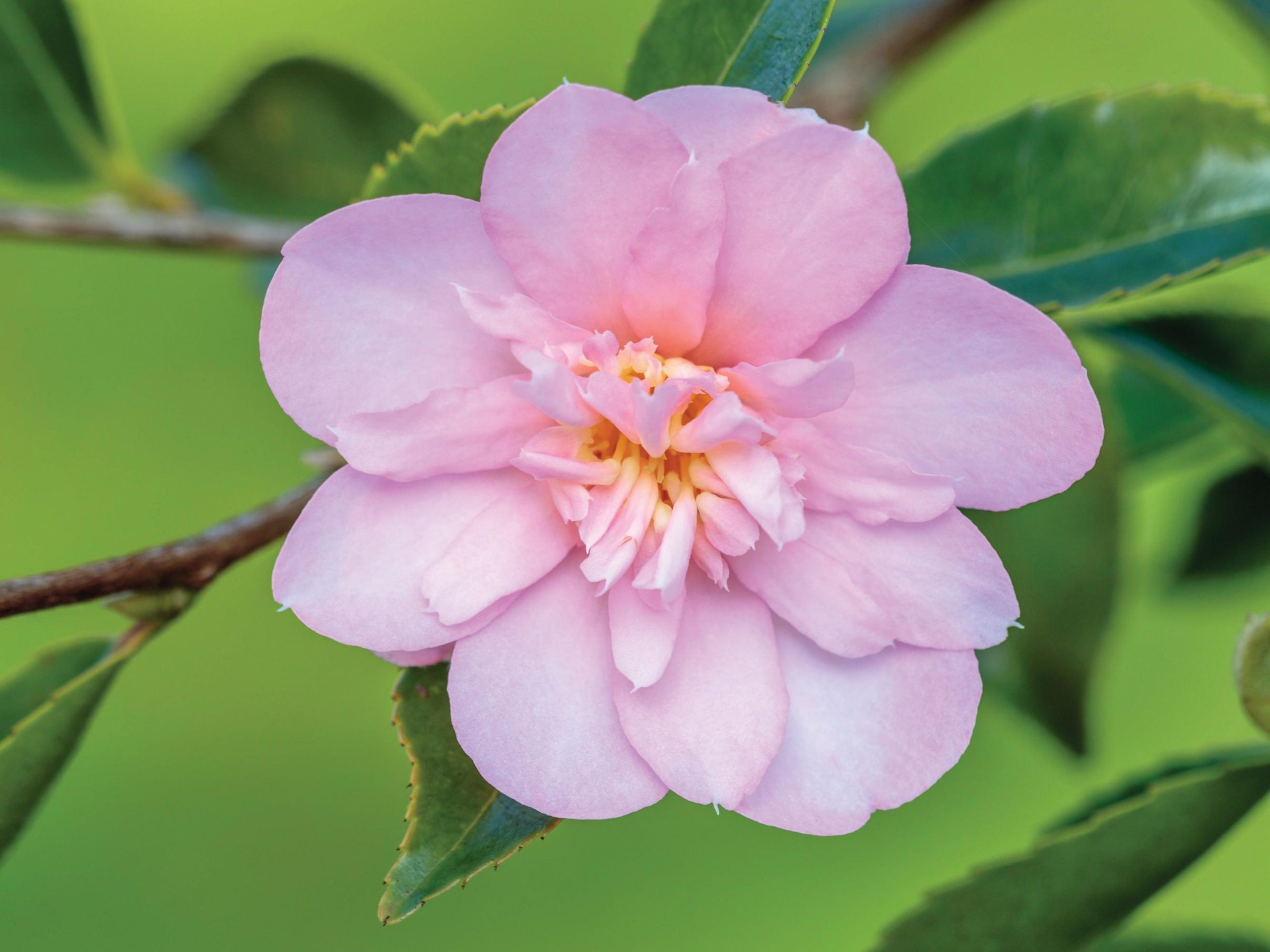
This free-flowering plant was raised from a chance seedling found in New Zealand. The loose, anemone-type flowers arrive in November. May benefit from staking. 2-3.5m x 1.5-2.5m. RHS H4, USDA 7a-9b.
Where to see and buy sasanqua camellias
- Caroline Bell Wringford, nr Tiverton, Devon. National Collection holder. Garden open by appointment late October to January. carolinebell@freeola.com
- Strete Gate Camellias 17 Seymore Drive, Torquay, Devon TQ2 8PY. Tel 01803 770710, stretegatecamellias.co.uk. Online only.
- Trehane Nursery Stapehill Road, Wimborne, Dorset BH21 7ND. Tel 01202 873490, trehanenursery.co.uk


