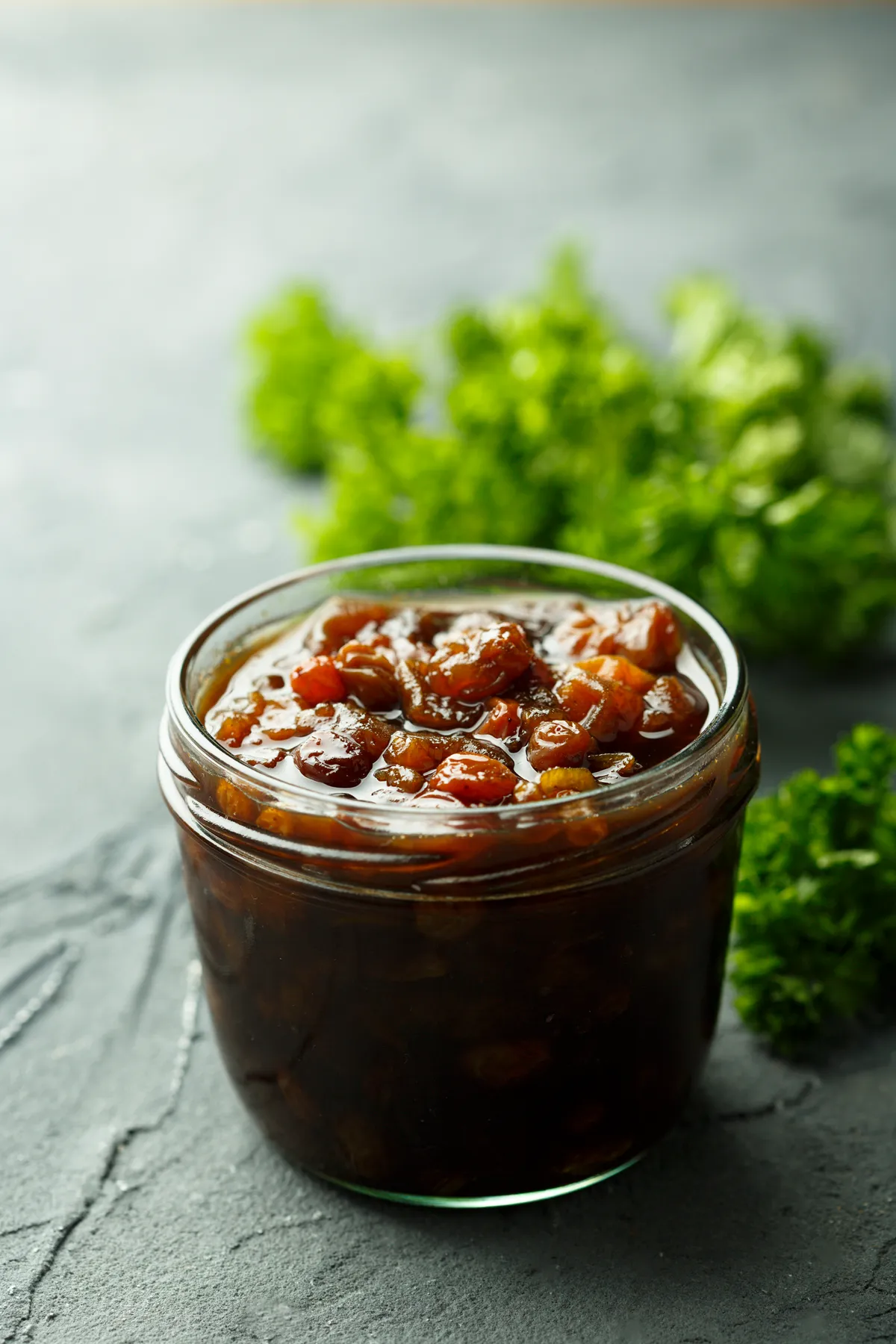
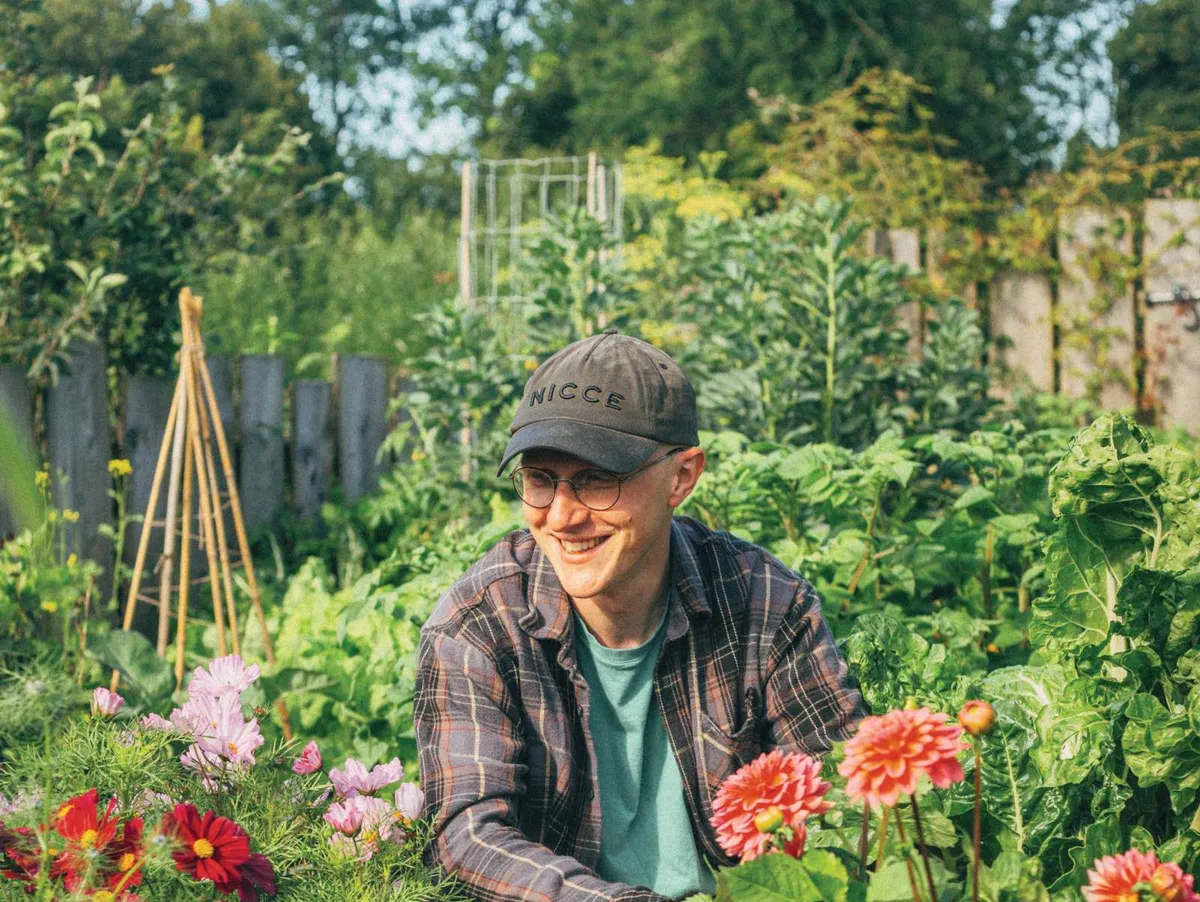
What one piece of advice from your new book would you like to share? A glut from the garden isn’t a bad thing, and can become so much more than chutney. Chefs and cooks sometimes struggle to get their heads around fermentation, but gardeners are naturals, mainly because they’re used to caring for something. In kitchens, it’s all about control, but to ferment is a nurturing act, a collaboration with nature, much like gardening. The point of harvest is just another step in the nourishment and transformation of ingredients into yet more deliciousness.
What sparked your interest in gardening? It wasn’t until I started gardening professionally that I realised how much my entire childhood was shaped by it. An early memory is sitting in my granddad’s greenhouse learning to take cuttings. What piqued my interest to return to gardening as an adult was flavour. I’ve spent all my adult life working as a chef, so stepping into the garden and growing food felt like the natural next step.
What is the best part of your job? Now I grow professionally for a market garden, I grow endangered landrace grain, such as ceirch du bach black oats, in collaboration with a seed sovereignty group. I run tasting events with growers across Wales who are breeding new, disease-resistant varieties of crops such as tomatoes and winter squash, and I turn them into delicious, seasonal ferments. And to top it all off, I get the privilege to write about it. What more could I want?
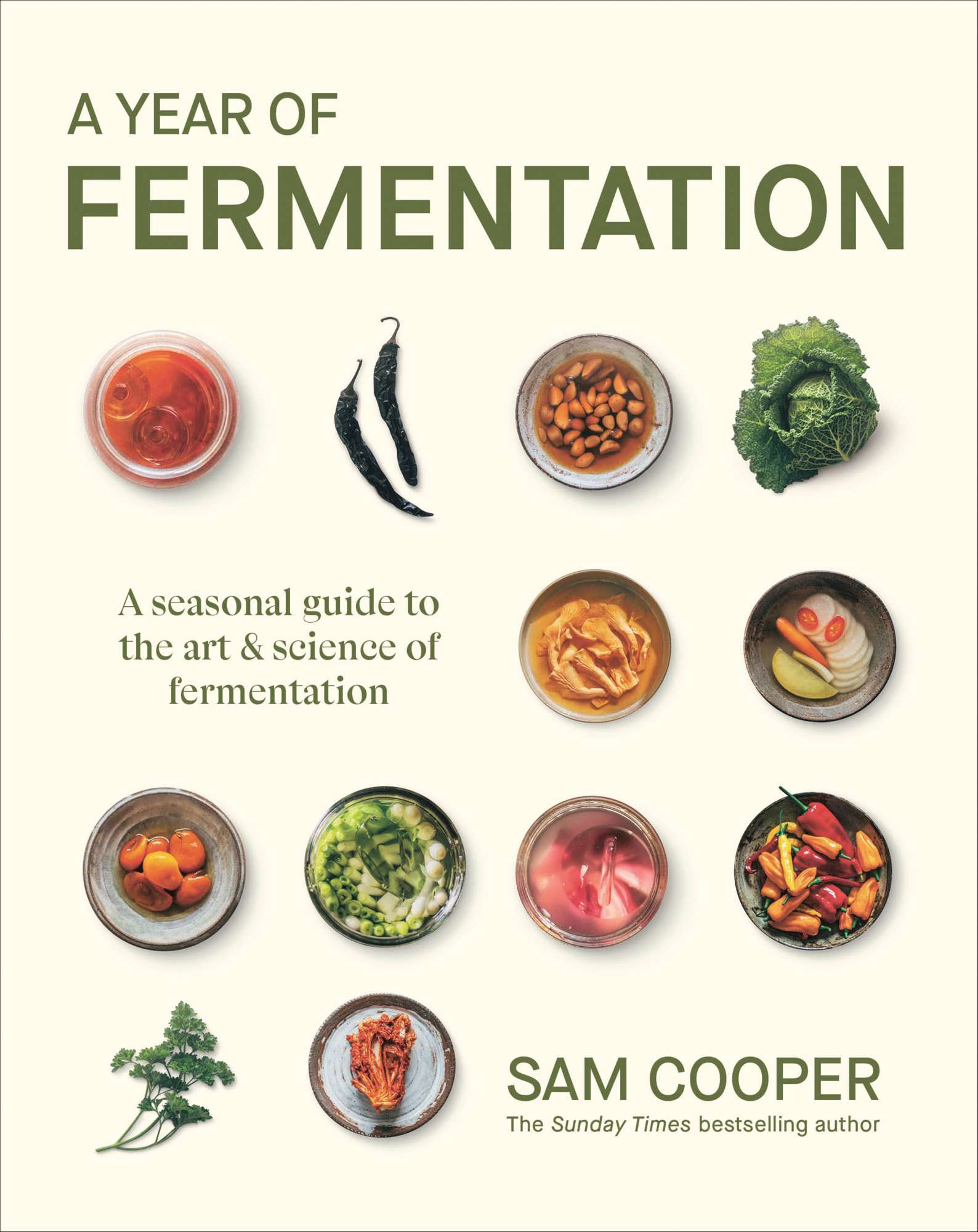
A YEAR OF FERMENTATION: A SEASONAL GUIDE TO THE ART & SCIENCE OF FERMENTATION
by Sam Cooper
Dorling Kindersley, £25
ISBN 978-0241779248
SQUIRREL_TEXT_14057761
What’s your biggest gardening mistake? I make a lot of mistakes, though not all of them end in failure. Last year, I accidentally grew two trailing courgettes that I thought were bush varieties. By the time I noticed, it was too late to replace them, so to save the other plants in the garden I sacrificed the paths and let them grow where they willed. I could hardly navigate the garden for the entire summer and first half of autumn, but the sheer amount of food I harvested more than made up for the hardship. Luckily, my wife and I are big fans of courgette. I also turned everything we didn’t manage to eat into a special type of kimchi called hobak kimchi to last over winter.
What’s your guilty gardening secret? I dig. For context, the first garden I worked in was no-dig, but with my background in fermentation and friends within microbiology, I came to the conclusion that no-dig is a bit unnecessary. Sure, practise minimal-disturbance gardening, but don’t throw out your shovel or feel guilty over a spud. I’ve spoken to gardeners who genuinely believe that the entire microbial world is one loud cough away from extinction, but microbes are far more resilient than we give them credit for. Disturbance is a key part of nature. During a storm, hundreds of trees might topple, displacing huge amounts of soil. In the past, Britain was home to wild boar, prolific diggers. To me, it’s the equivalent of saying you’ll never wash your hands with soap out of fear you’ll irreparably damage your skin microflora. The real danger is the overuse of chemical pesticides and fertilisers, but I don’t have time to go into that right now…
What do you wish you’d known earlier? Sometimes things just die. It’s not your fault. All you can do is sow extra just in case.
What’s your favourite garden? I love walled gardens, especially those connected to kitchens. Hampton Manor in the West Midlands, where I run fermentation workshops, has a beautiful garden connected to its restaurant. I’m also a huge fan of orchards. There’s something almost sacred in the stillness of an orchard heavy with fruit. Each year, we gather to press apples and make cider at a friend’s smallholding, and the sound of windfall apples in wheelbarrows, a campfire and kettle, and the sweet scent of apple in the air is something I hope I can be a part of for the rest of my days.
SQUIRREL_14057761