April is when the garden really shows its potential for growth, gathering momentum as day length, light intensity and temperatures increase. While refreshing, this month can be busy for gardeners, and it’s a good time to concentrate on completing any jobs from late winter, such as veg-bed preparation.
- Here are the best April flowers for your garden
It’s also a great time to do staking and mulching now, before border plants grow too tall, making these tasks more time-consuming. Consider using natural materials to offer plants support – jute string, coppiced hazel bean poles and pea sticks work well when staked, tied and woven together, adding natural interest before they disappear among the growing plants.

This is prime time for planting new plants and sowing seeds for the growing season ahead too. The combination of moist soil and warming weather make the perfect conditions for hardy herbaceous perennials and ornamental grasses, which will quickly establish.
To help you along, we asked for advice from several expert professionals in ornamental and kitchen gardening to create the ultimate list of jobs to work on this month to make your garden really amazing by the time summer arrives.
For more monthly inspiration, head to our piece on gardens to visit in April and what to plant in April.
Gardening jobs for April
Weeding
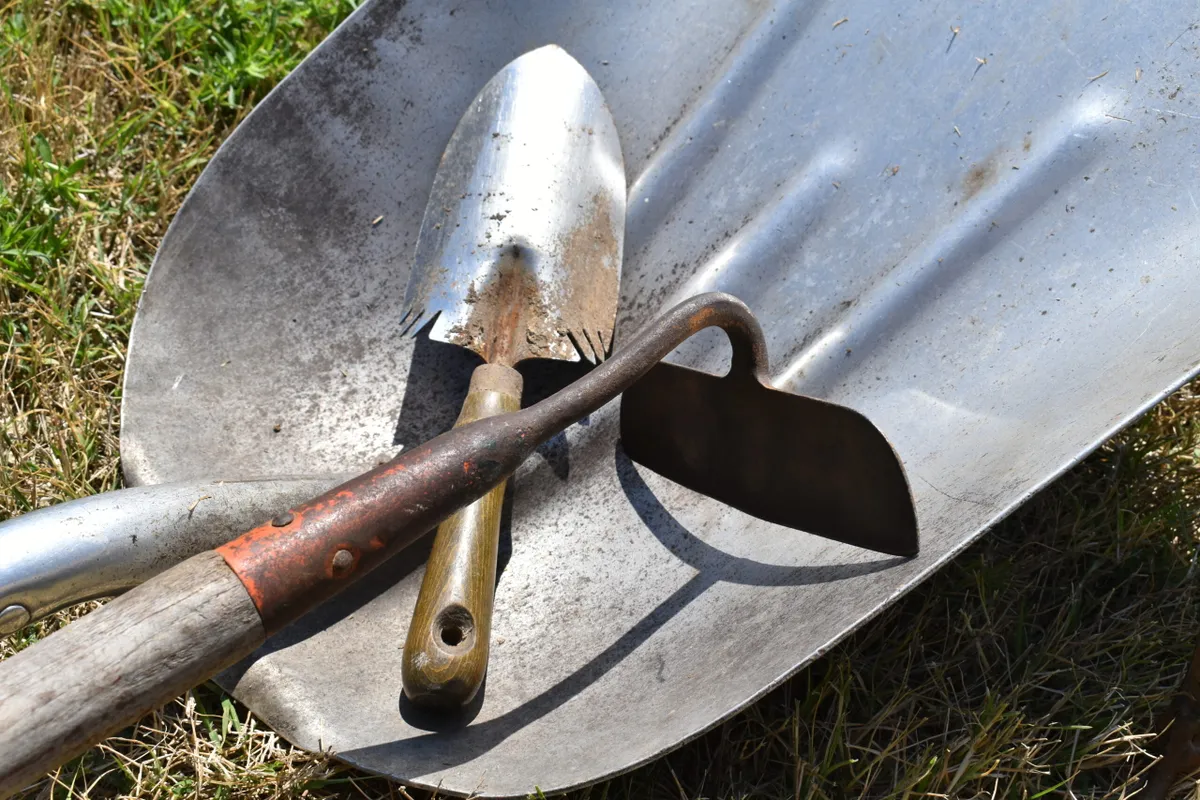
As garden plants come into growth, so do weeds, and catching any undesirables now will save you time later in the year. Mulch or hoe borders and bare soil to prevent annual weeds, and hand weed perennial species. Keep on top of them with regular hoeing using a Dutch hoe with a good, sharp edge.
Sow and pot on veg

Start sowing warmer weather crops, such as French and borlotti beans, pumpkins, squashes and courgettes. If you’re pushed for space, old egg cartons on a sunny windowsill will work very well. You can also start potting on plants sown in February and March into larger pots, such as cucumbers and tomatoes.
Start sowing salad crops

Start sowing salad crops in small batches every three to four weeks, so that you have a succession of crops throughout the summer. Stick to lettuce, or a seasonal salad seed mix, and avoid rocket or mustard, as these are very susceptible to flea beetle if sown too early.
Repair patchy lawns

Grass can look patchy, bare and weedy in spring but you can easily restore a lush green sward with these simple steps.
Head of gardens at Mounton House, Tim Stretton, follows a comprehensive lawn renovation process using organic and environmentally friendly methods, which will transform any problematic patch of lawn back into a healthy, green sward in time for summer.
The first step involves cutting the lawn short and strimming the edges, to achieve an optimal working height of grass for the subsequent renovation steps.
Next is hand removal of broadleaf weeds – Tim uses a penknife – making sure to extract the taproot while minimising damage to surrounding grass areas so you don't create large holes in the lawn.
Then comes the scarification stage - here Tim uses a springbok rake to rake out the moss and thatch layer (dead grass), creating a crosshatch pattern at 90-degree angles. He is aiming to create vertical cuts through the top soil layer and grass to encourage strong even regrowth.
Tim aerates the lawn using a garden fork to create holes to improve drainage. This process prepares the lawn for effective top dressing.
Then he applies a thick layer of clean washed sharp sand with a large spade across the whole space - a cost-effective top dressing material. He brushes in the sand with a rubber rake, using it to fill the holes he made via tining and to raise the levels of divets and dips in the lawn.
He finishes the renovation by oversowing the area by hand with hard-wearing grass seed mix (containing ryegrass and fescues). Post-seeding, you’ll want to water the lawn if it doesn't rain in a few days.
Plant potatoes
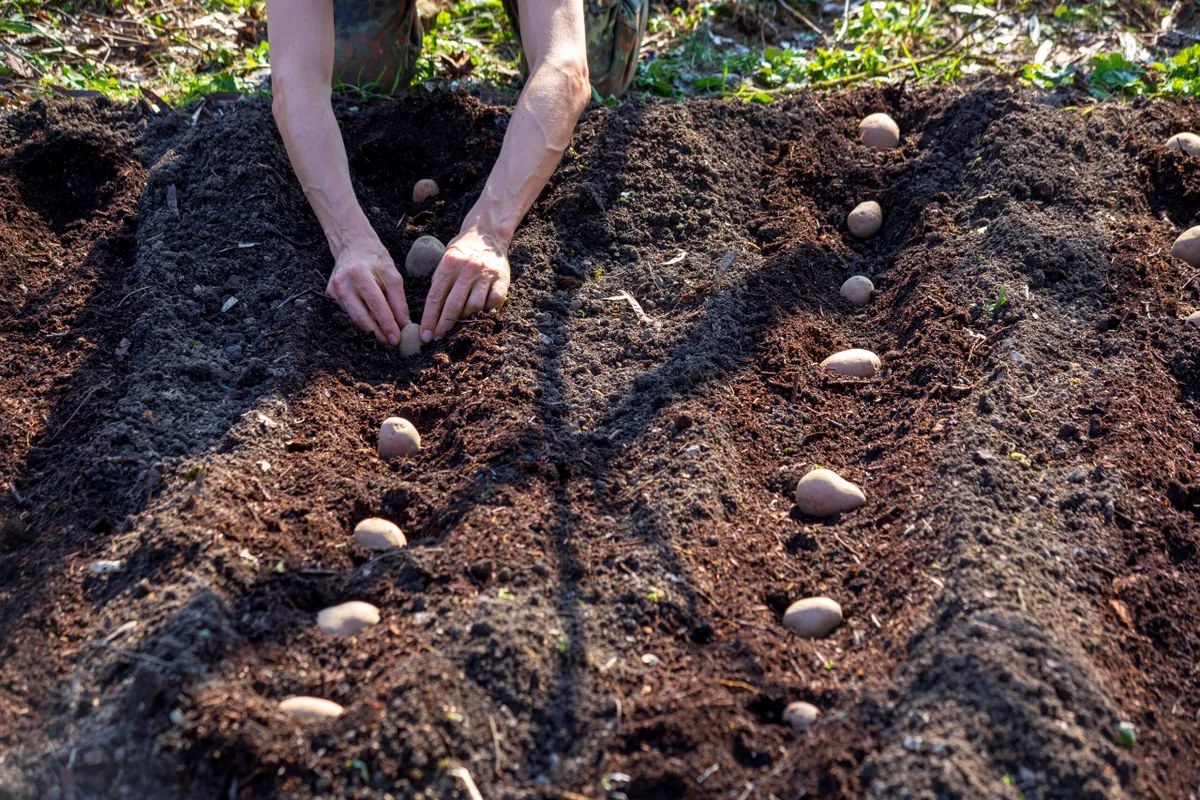
Now is the time to start planting potatoes. You could try planting new potatoes in bags, rather than in the ground. It’s so much easier to earth them up, and to harvest them at the end – just up-end the bag and the potatoes will tumble out. Just remember not to overcrowd them – as a rough guide, each potato will need around ten litres of compost.
Thinning and pricking out seedlings

Keep a close eye on emerging seedlings to make sure they are not going mouldy or damping off. This is caused by sowing too thickly and over-watering, but is easily rectified by thinning out the tiny plants.

Prick out and pot on seedlings into modules or larger pots, so they become strong and vigorous for planting out later in spring.
Feed fruit trees
Fruit trees will be kicking into growth now, so give them a good feed and weed around the base. Use a feed such as blood, fish and bone.
You may also like
Propagate globe artichokes
If you grow globe artichokes, this is the time to propagate them by making slips. Dig up the plant and, using a sharp knife, cut away sections from around the edge, making sure that each one includes a healthy root and shoot. The newly planted slips are unlikely to produce artichokes until the following year, so to ensure a good supply, it’s a good idea to dig up and propagate half your plants one year, and half the next.
Container planting

At this time of year container gardening comes into its own. The beauty of growing in pots is that you can move them around to make the most of the warmth and sunlight and cover them easily – or even bring them inside – if the temperature drops.
This is also the time to tidy up any perennial plants in pots. Remove any winter damage and top-dress by scraping off the top 4cm or so of soil and replacing it with high-quality, fresh compost or feed with an organic option such as seaweed. Or make your own liquid feed with comfrey and nettle.

Plan your summer container schemes now, ordering any seeds or plants. You can use cuttings of pelargoniums, plectranthus and salvias, although small plugs can be bought now and grown on for planting out next month.
Prune mophead hydrangeas

To maintain shape and size, and encourage flowering, remove old flowers, lightly pruning to the first or second set of buds below. Also remove a quarter of the oldest stems at the base to encourage new growth.
Tulip virus watch

Look out for tulip fire as these flowers emerge in April, and remove anything affected as soon as possible. Tulip fire is a fungal disease, Botrytis tulipae, that affects tulips. It causes brown holes in leaves and distorted growth. It is so-called as in bad cases, the foliage can look as if it has been scorched.
You may also see fuzzy grey mould around the dead areas of foliage and black fungal spores on the bulbs themselves. It is often particularly prevalent in warm, wet springs. The spores of tulip fire can persist in soil for several years and can also be carried on the bulbs themselves.
You may also like
- How to grow vegetables in pots
- Maddocks Farm Organics’ Bridget Wheeler
- How to make working from home happier with plants and the garden
Divide daffodils

Dividing narcissus is a great way to increase your stock and the speed of naturalising lawns. This is especially useful when the clumps become too dense with underground bulb material and go ‘blind’ – stop flowering.
Wait until the daffodils have finished flowering, then dig up and lift larger clumps with a spade. Gently tease the bulbs apart and replant ‘in the green’. With bulbs in the green, head gardener Tim Stretton at Mounton House often finds it is easier to slit the turf with a spade, so you don’t damage the daffodil’s foliage, which is essential for the bulb to gather energy before the leaves die off in summer.
If replanting in groups, try to space the bulbs around 5cm apart, and plant five to seven bulbs in each group.
Take cuttings
Spring cuttings from salvias and pelargoniums tend to root quite quickly and can produce garden-ready plants in their first year.
You may also like
- 10 endlessly useful plants chosen by the UK's most exciting gardener
- Want beautiful cherry blossom in your garden? Here are 18 of the best cherry blossom trees to plant
Plant out foxgloves
Digitalis can succumb to exposure, so it may be wise to overwinter young plants in 3-5 litre pots in a space where they can be easily fleeced during cold snaps and then plant them out in-situ during April, so they can get away in growth for a May-time show.
Harvest asparagus

You can harvest asparagus spears regularly from now until the middle of June before letting them grow on with ferny foliage.
Tidy allium leaves
A light trim to remove yellowing foliage on alliums can help improve the look of border schemes and pot displays.
Plant summer bulbs
It is your last chance to plant summer bulbs. Pot up or plant lilies, Amaryllis belladonna, Nerine and Eucomis.
Read our full guide on planting summer bulbs.
Waking up tender plants
Banana palms, begonias, cannas and dahlias you’ve been overwintering in a greenhouse can also be repotted and lightly watered now to promote growth.
Subscribe to Gardens Illustrated for inspiration dropped on your doorstep every month.
Editor's note: this feature was updated on 8 April 2026 to add new gardening tasks and photography.