"We were younger then,” says Jennie Marles, turning the pages of a photo album, revealing grainy shots of a complex of semi-industrial buildings – vast, asbestos-roofed sheds housing thousands of intensively reared pigs. Towards the top of the image is a concrete circular structure. “That was a 100,000-gallon slurry tank,” explains Jennie. “It took two years to get rid of it. When we came to view the place, the smell was so strong, most people didn’t even get out of their cars.”
You might also like:
- An ultra cool new garden designed by Piet Oudolf on a former poultry farm
- What its like to inherit an historic English hall with incredible gardens
- How to build a natural swimming pond
- The design changes you should not make in your garden - and what to do instead
Twenty years on, it’s hard to believe such a dismal scene ever existed. The barn is now a comfortable house, sensitively extended in green oak, and fronted by a broad band of decking. Where the sheds once stood, a glassy lake laps up to the very edge of the deck. Densely planted banks and a small island give shelter to wildlife. Half a dozen swans and a brood of fluffy cygnets sail serenely between preposterously painterly expanses of fat white water lilies. At one moment – wonder of wonders – a kingfisher arrives, and takes up a post on a pole at the edge of the water. “He’s here most days,” says Jennie. “In a moment he’ll dart down to catch a fish.” And he does.

“This is my little kingdom,” says Jennie contentedly. “I can just step outside, connect with nature, and instantly feel happy and calm.” Yet that kingdom, glorious as it is – ten acres of wildlife-friendly garden, woodland and meadow near Newton Abbot in south Devon – has been hard won. It took years to clear the site, more years to win planning permission, and yet more years to get a mortgage to fund the work. The labour was immense: crushing acres of concrete; felling the creaking poplars and gloomy leylandii that encircled the farm and cut off the views; meeting exacting planning requirements, such as a new access drive with a bridge strong enough to support a fire engine. (Two wide streams run across the plot.)
I can just step outside, connect with nature, and instantly feel happy and calm
They did as much as they could themselves. Jennie’s husband Jethro became a dab hand with a digger, excavating the lake and shaping the flat site into pleasing slopes and mounds to mirror the surrounding hills. While Jennie was already a keen gardener, nothing she had learned in her previous, smaller gardens had prepared her for a challenge like this one. So she was excited to discover the work of the Dutch New Wave, with their embrace of naturalistic perennial planting, and specifically the ecological approach of the late Henk Gerritsen.
"It really grabbed me because they were planting on a large scale, and using the kind of plants that I could bulk up quite quickly. That gave me a starting point. I started with just three groups of plants I liked, and within 12 months I could start dividing.” Replicating and refining has gone on ever since.

Jennie’s long, rhythmic borders are full of the plants made popular by Dutch designer Piet Oudolf, namely grasses and robust perennials with interesting form and long-lasting seedheads, such as eryngiums, veronicastrums, echinaceas and Phlomis russeliana, which she punctuates with rusty spires of Digitalis ferruginea and frothy white heads of giant Gerritsen favourite, Koenigia x fennica ‘Johanniswolke’.
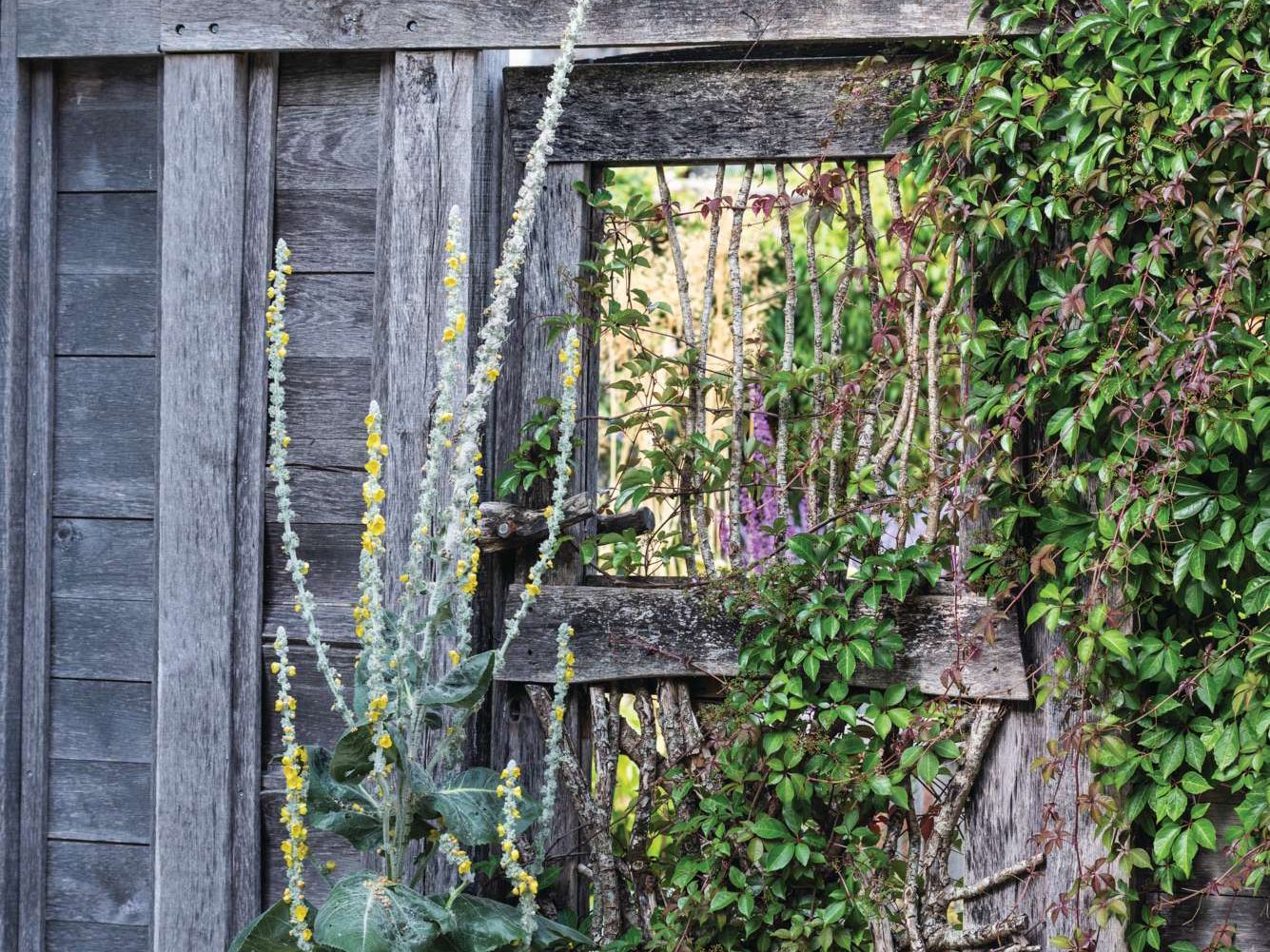
“I like to use cultivated versions of native plants in the border,” says Jennie. This means just two or three grasses that are suitable for the soil, such as Molinia caerulea subsp. arundinacea ‘Transparent’ and Miscanthus sinensis ‘Morning Light’. To these she adds Stipa tenuissima for softness, and Stipa gigantea for sparkle. Many plants are replicated in the courtyard, where the thin, rubbly soil and sheltered conditions lend themselves to Mediterranean planting. Starry Gillenia trifoliata, puddles of thyme and silvery mounds of Russian sage make an especially fine show in these conditions. Then beyond these intensively planted areas lie shady spring gardens, a four-acre perennial meadow and smaller areas of annual meadow, bright with insect-friendly flowers from June to the first frosts.
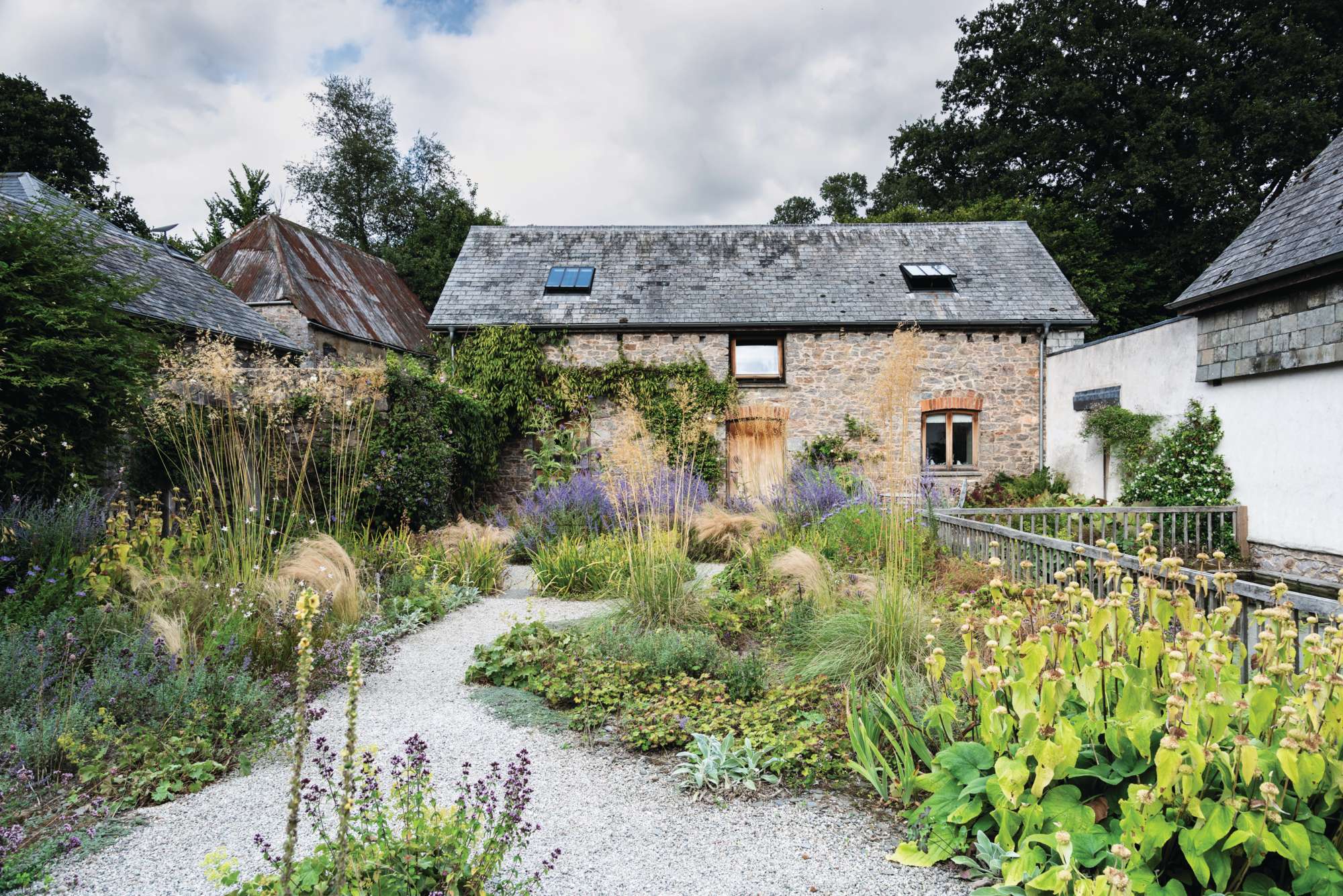
For years, Jennie and Jethro laboured alone, making a special effort in 2016 to spruce up the garden for a family wedding. “All we could see was the muck, and the million things that needed doing. But so many guests were wowed by the garden, and urged us to share it, that we were persuaded to open for the National Gardens Scheme.” Since then, they have never looked back – opening most summers for the NGS and welcoming gardening groups from June to September.
All we could see was the muck, and the million things that needed doing. But so many guests were wowed by the garden
Sharing the garden makes all the hard work worthwhile, and Jennie loves talking to visitors. But if she’s really honest, the visitors she enjoys most are the ones that stay for months at a time – the swans flying in from the Dart River, the butterflies in her wildflower meadow and the iridescent kingfisher dropping in each day for his lunch.
USEFUL INFORMATION Address Am Brook Meadow, Newton Abbot, Devon TQ12 5UP.
Open For the NGS on 11-12 July 2026, 2-6pm, and for smaller garden groups by arrangement. ngs.org.uk
Photographs Carole Drake


