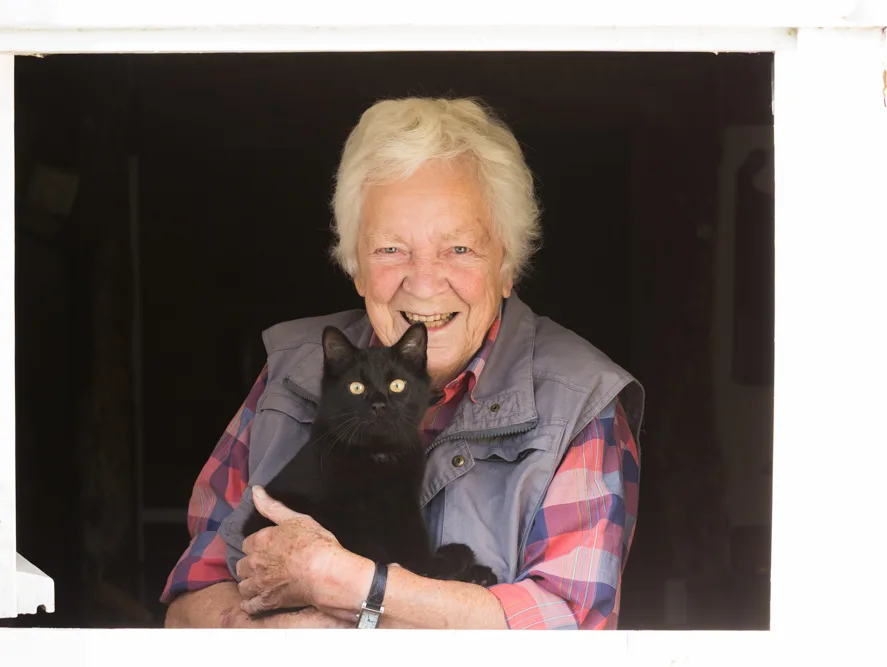
Elizabeth Strangman, the plantswoman best known for running Washfield Nursery in Kent and breeding hellebores, died in early August 2026. She is remembered by young and old across the horticulture industry as a unique and determined spirit with a deep love of plants.
Elizabeth was born in 1936 and grew up in Lavenham, Suffolk, a country child, with a growing fascination for the wildflowers that grew in the chalky meadows near her home. In a previous profile, she told Gardens Illustrated: “I used to borrow an old bike, a copy of Flowers of the Field and go off for hours, exploring,” she said. “It was war time and there was nothing much to do in the countryside, but I loved it.”
After leaving school, she converted her schoolgirl enthusiasm for botanising into the beginnings of a career, first by working at the Cambridge University Botanic Garden and then by spending a year at the then Studley Horticultural & Agricultural College for Women in Warwickshire, which was one of only two colleges accepting female students in horticulture.
You may also like
- Legendary nurserywoman Elizabeth Strangman's garden showcases her signature hellebores and a wealth of beautiful spring plants
- The remarkable and desirable colours of species hellebores
Having graduated, Elizabeth found work with the famous florist Constance Spry at Winkfield Place, Berkshire, where the flowers for arrangements were grown. She worked there for a year, but said of the experience: “I was always in trouble for doing things my way". Her father suggested she might like to come home to help him redesign their garden in Lavenham.
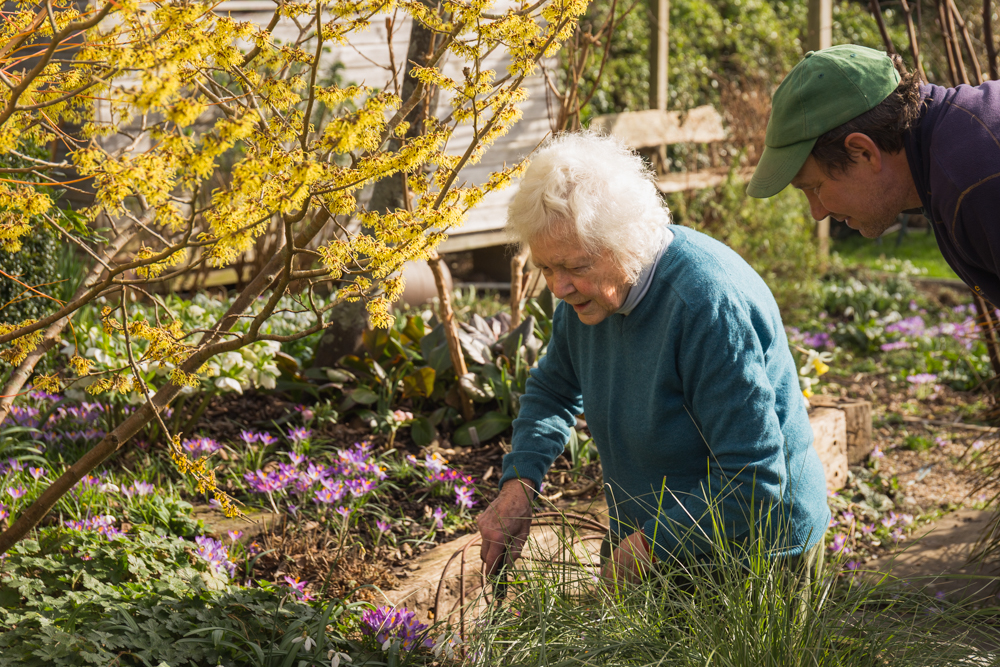
In 1961 she accompanied him on a plant-buying trip to Hilda Davenport-Jones's Washfield Nursery at Hawkhurst, and decided she would like to work there. During her early years at the nursery, Elizabeth suggested they start breeding the best of the purple orientalis hellebores for purity of colour and a fully rounded flower shape. Within three years she had achieved spectacular results.
Over the next 30 years, in addition to developing the nursery’s growing reputation for introducing exciting new plants, she continued to line-breed coloured orientalis types of hellebore, aiming for pure pinks, plums, greens, primrose and slate-black. Giving the eulogy at Elizabeth's funeral, her close friend Ed Flint described this as "her groundbreaking life’s work", adding that by "developing reliable seed strains, [Elizabeth] revolutionised and democratised what had been an expensive, elitist, garden flower of often dubious quality."
In 1968, Hilda Davenport-Jones died, and Elizabeth took on the management of Washfield. Elizabeth's partner Peggy, whom Ed describes as "the love of her life," was instrumental in building the nursery, and her premature death in 1980, just as the nursery began to take off, cast a long shadow.
To overcome this, Ed says, Elizabeth "threw herself into the nursery (fuelled by a diet of marmalade sandwiches)." Graham Gough, best known now from running his own nursery Marchants Hardy Plants, later joined as Elizabeth's business partner, allowing her to take time away to go plant hunting and seed-collecting in places including Bosnia and China. It was during the Bosnian expedition that Elizabeth found the double form of Helleborus torquatus, which was instrumental in breeding the Party Dress Group of hybrids, including the extraordinary dusky greeny-purple H. torquatus 'Dido' and H. t. 'Aeneas'.
You may also like
Following a stroke in 1999, however, Elizabeth decided to close Washfield and retire, taking the best of the nursery’s stock in pots to her new home of 15th-century cottage in Robertsbridge, East Sussex, where she devoted herself to the continued breeding of hellebores in a small but carefully planned garden by the River Rother. "Her decision to close Washfield and move down the hill to Robertsbridge was a painful but equally, easy decision to make," says Ed.
A few months after her move, however, the river burst its banks, and, as Ed describes it: "Robertsbridge was struck by a flood of biblical proportions. Six feet of water rushed through the house and scoured her new garden." Luckily, few plants were lost and Elizabeth, as always, brushed off the disaster and soldiered on.
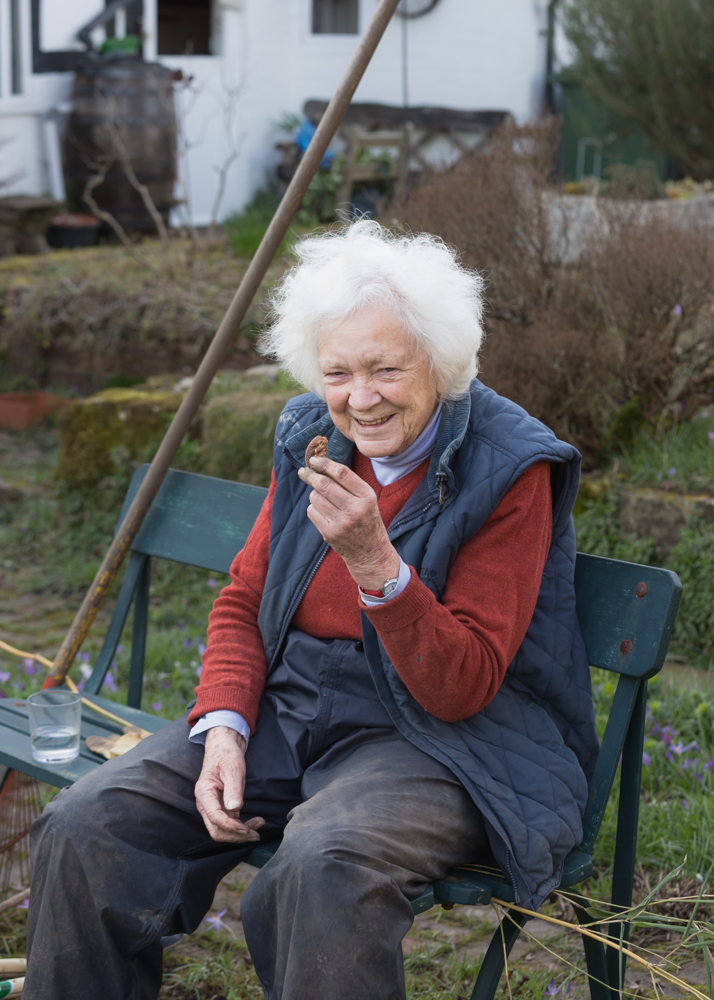
The garden that Elizabeth made at her new home, with help from friends including Ed and his wife Nicky, "became her raison d’etre," says Ed. "A Botticelli primavera in the spring; carpets of crocus studded with hellebores and precious snowdrops, sheets of cyclamen, all artfully but perfectly placed. In summer, her borders billowed with softly graded colour; nothing brash, coarse or abrasive. In the autumn, shimmering seedheads and delicate skeletons. It was her great joy.
A joy she willingly shared with students, friends and even, on occasion, grabbing the odd stranger off the street to come and share in her delight. Frequently visitors left clutching a handful of cuttings, with a pocketful of seeds or a grubby bag of bulbs, such was her urge to share and enrich the gardens and lives of others."
Elizabeth's lasting influence
"Elizabeth inspired generations of gardeners and horticulturalists around the world," says Ed. "The twice-yearly Dixter plant fairs became a source of great delight. She wandered about picking up treasures, making judgements and giving opinions; comfortable and an integral part of what she felt was her tribe."
You may also like
- Christopher Lloyd and the legacy of Great Dixter
- 'It changed my life': discover what it's like to volunteer at one of the world's greatest gardens
"Elizabeth Strangman was an exceptional nurserywoman and one of the most inspiring gardeners I have ever met," says writer Jodie Jones, who met and profiled Liz in recent years. "She would refuse to sell a plant to anyone she suspected wouldn’t care for it, but she was also kind and funny and so very generous with her knowledge. At her funeral the church was full of nursery people paying their respects to one of their best."
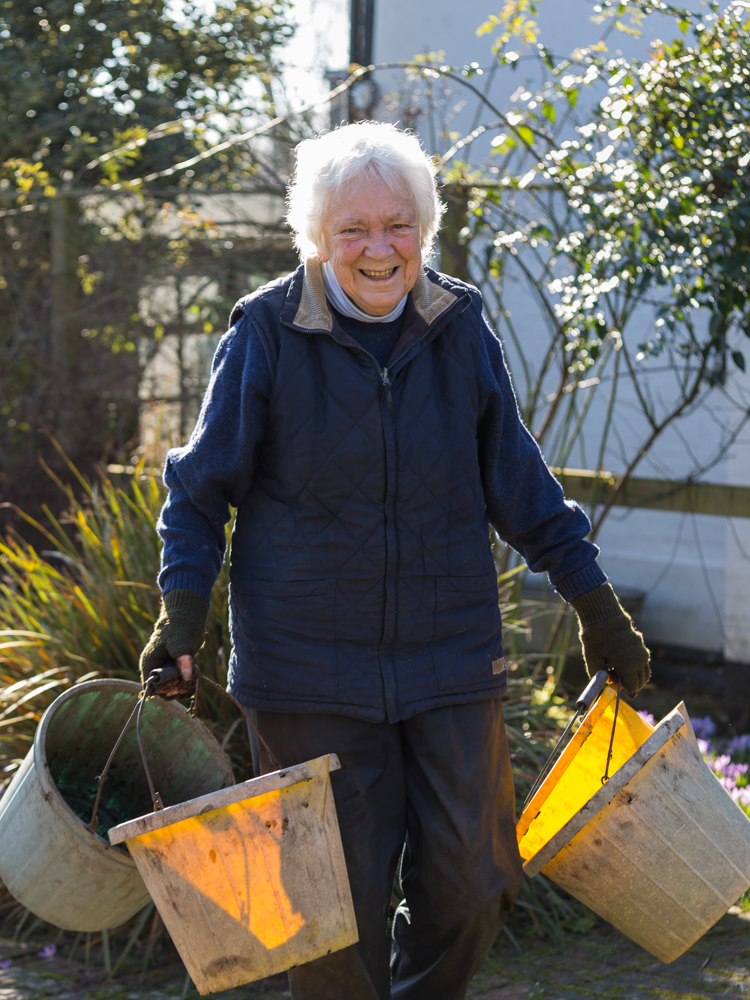
Many of the up and coming generation of horticulturalists owe much to Elizabeth, who often shared her knowledge and expertise generously. "[They] stand on her shoulders as she stood on the shoulders of those who came before her," says Ed. "I can’t tell you how much pleasure and pride she took from watching them grow and succeed. I feel sure that in them her spirit and plants will live on and flourish."
One such up and comer is new nursery owner Jonny Bruce, who said of Elizabeth: "I would say that she was a kind but critical source of sage advice - I often hear her in the back of my mind when I think about plans for the nursery. She emphasised discernment and an unwillingness to compromise on quality while reminding me not to grow beyond my means. I feel honoured to have known her."
Shaun Blower, her gardener at Robertsbridge, echoes the sentiments of many: "She taught me that a plant is never just a plant, the people, places and memories attached to it are just as important, although good form and colour were, of course, still essential!
Her garden was full of plants that reminded her of friends and adventures around the world. Her curiosity and love for plants never faded. I almost never came home from a day's gardening empty handed. I feel very lucky to have known her."
The closing words from Ed's eulogy at her funeral feel a fitting tribute to the remarkable woman beloved by many: "Elizabeth was driven, a force of nature; opinionated, irascible, kind, generous, loyal, loving and wise, unfailingly and unflinchingly honest. A source of inspiration who will be missed by the great many who had the great good fortune to know her."
Editor's note: some information and words in this article were taken from a print profile of Elizabeth written in 2002 for Gardens Illustrated by Kirsty Ferguson.