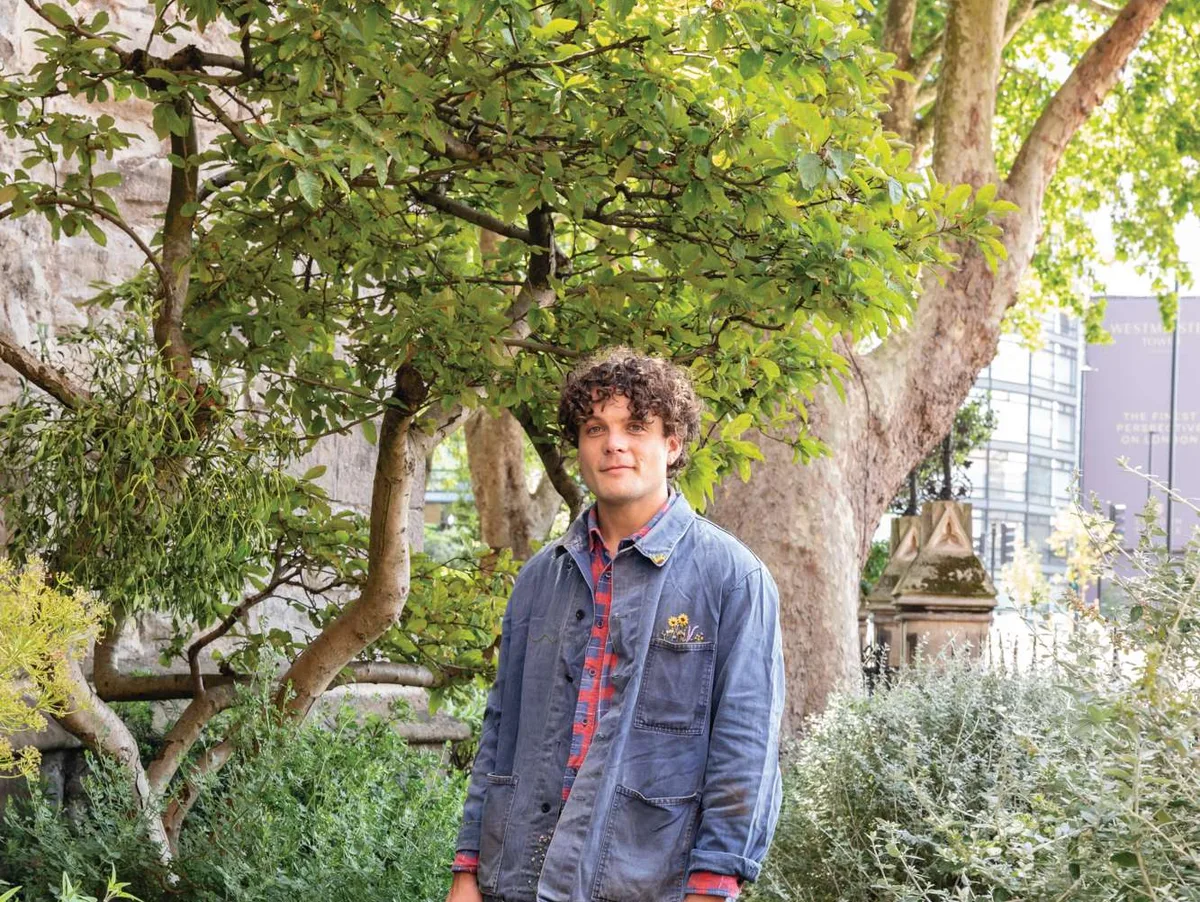
First plant love There is an enormous dead oak tree that has been standing in the middle of a field near where I grew up, and I was always fascinated by the architectural beauty and the nature it brought.
Horticultural hero I really admire Dan Pearson’s work. Every design decision is so carefully considered and that makes for gardens that feel complete and thoughtful.
Three most worthwhile tips If you want to create a naturalistic garden, plant a few taller plants at the front of the border. It will create a very natural look. Nature often doesn’t behave exactly how we want it to. Second, avoid the ‘washing machine effect’. There is often a tendency to put plants solely around the edge of the garden to create a border. But nature never behaves like this, plants often self-seed into charming positions. Finally, bring planting right up to the house. It will bring the garden into the living space, making you feel more connected to the garden.
Most valuable training I built a strong foundation at Nottingham Trent University with my degree in horticulture, but I strongly believe in continuous professional development and would hate to become stagnant. I’ve had so much training in recent years, both informally through working with colleagues, and formal courses at the Agroforestry Research Trust with Martin Crawford and Hilldrop with John Little.
Dream plant destination I’m drawn to Himalayan plants, and would love to see them in their natural habitat.
I’d love to see horticulture as an industry becoming more inclusive. Gardens are a luxury, but they really shouldn’t be
One overlooked sustainable gardening practice Factoring composting and water collection into garden designs at their inception is an excellent way to ensure sustainability.
Next big project I’m currently working on a canalside project alongside Ryan Thomas, which is really exciting. We are taking a lot of inspiration from the plants and landscape found along the canal.
A goal for the future I love what I do already, but I would like to work on more public spaces and communal gardens. Partly for the challenge of catering to and working with a broader, more unpredictable clientele: the general public. But mostly because I feel everyone deserves the benefit of a garden.
Where horticulture is heading I’d love to see horticulture as an industry becoming more inclusive, to both people with gardens and those designing them. Gardens are a luxury, but they really shouldn’t be.
Instagram @scholeygardendesign
Special thanks to The Garden Museum where this portrait was take