Few nurseries have as spectacular a setting as Stauden Kopf, nestled in open countryside and framed by the Swiss and Austrian Alps. Thomas and Elke Kopf moved to this two-and-a-half acre plot on the outskirts of the town of Sulz, in the far west of Austria, in 1998, but the nursery has its origins nine miles to the south, in the town of Frastanz, where Thomas’s parents ran a nursery called Blumen Kopf.
You may also like
- Maximum impact plants - grow one of these for wow-factor focal points in the garden
- The nursery that's changing the face of Australian gardens
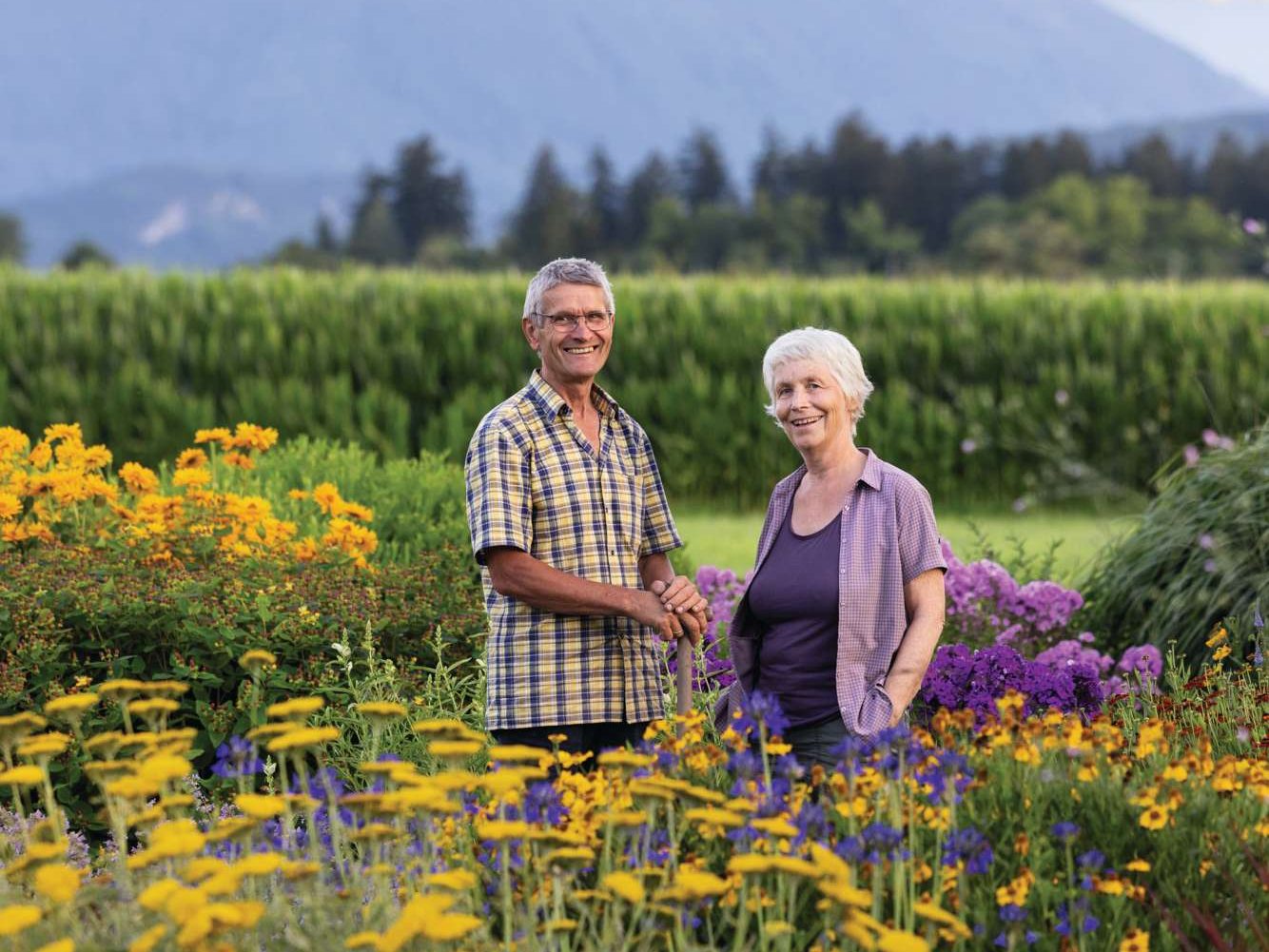
In 1986, Thomas began to develop his own range of perennials within his parents’ nursery, and five years later, once she had finished her studies in garden and landscape design, Elke joined him. For the next seven years they worked together before finally establishing Stauden Kopf as an independent business in Sulz. This period was an important foundation. “With 12 years’ experience under our belts, we had the confidence to move quickly and invest in the site, which was just an open field when we bought it,” says Thomas.
The pair planted trees and hedges, which now provide shelter and screen the nursery from the busy road that runs along its northern boundary. On turning into the car park, you are presented with an inviting entrance, edged on one side with a dry-stone wall that Thomas and Elke built themselves, and generous plantings of grasses and perennials. These elegantly laid-out beds are defined by an easy naturalism, with drought-tolerant choices such as salvias and agastache, which are well suited to the nursery’s free draining, stony ground.
You may also like
- Where designer's buy their plants - discover the display garden and nursery that inspires the UK's top placemakers
- Architect Tanja Lincke's wildly romantic Berlin garden
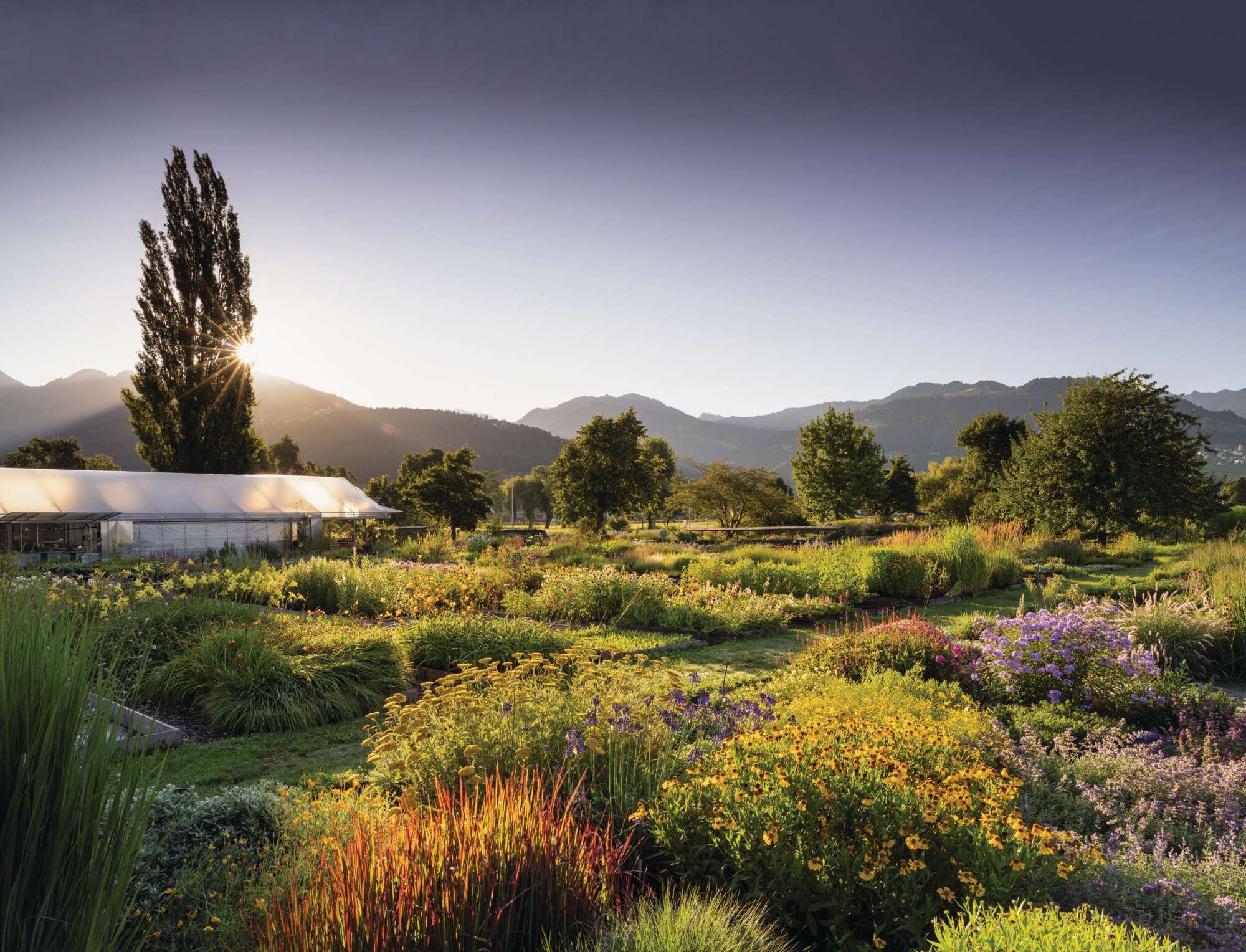
The entrance path leads past rows of stock plants, which provide propagation material for the nursery, towards the large greenhouse. In the main sales area, thousands of pots stand in organised beds. The whole space is punctuated with mature trees and shrubs, and the mountains rise up in the distance, offering a dramatic backdrop.
While Elke focuses on the design and maintenance, Thomas leads the production with a team of around three. He visited UK nurseries in 1997 and was particularly inspired by Bob Brown at Cotswold Garden Flowers, and his selection of “good forms of usual plants”. This helped form the basis of an assortment that has been selected for its pest and disease resistance, in particular against slugs.
The nursery secured its organic certification in 2001, but from the beginning the couple have produced their plants organically. “This is simply an approach to life for us,” explains Elke. To ensure this organic standard, they propagate more than 90 per cent of their herbaceous perennials in-house (some woody plants and bulbs are bought in), and do so in their own home-made compost.
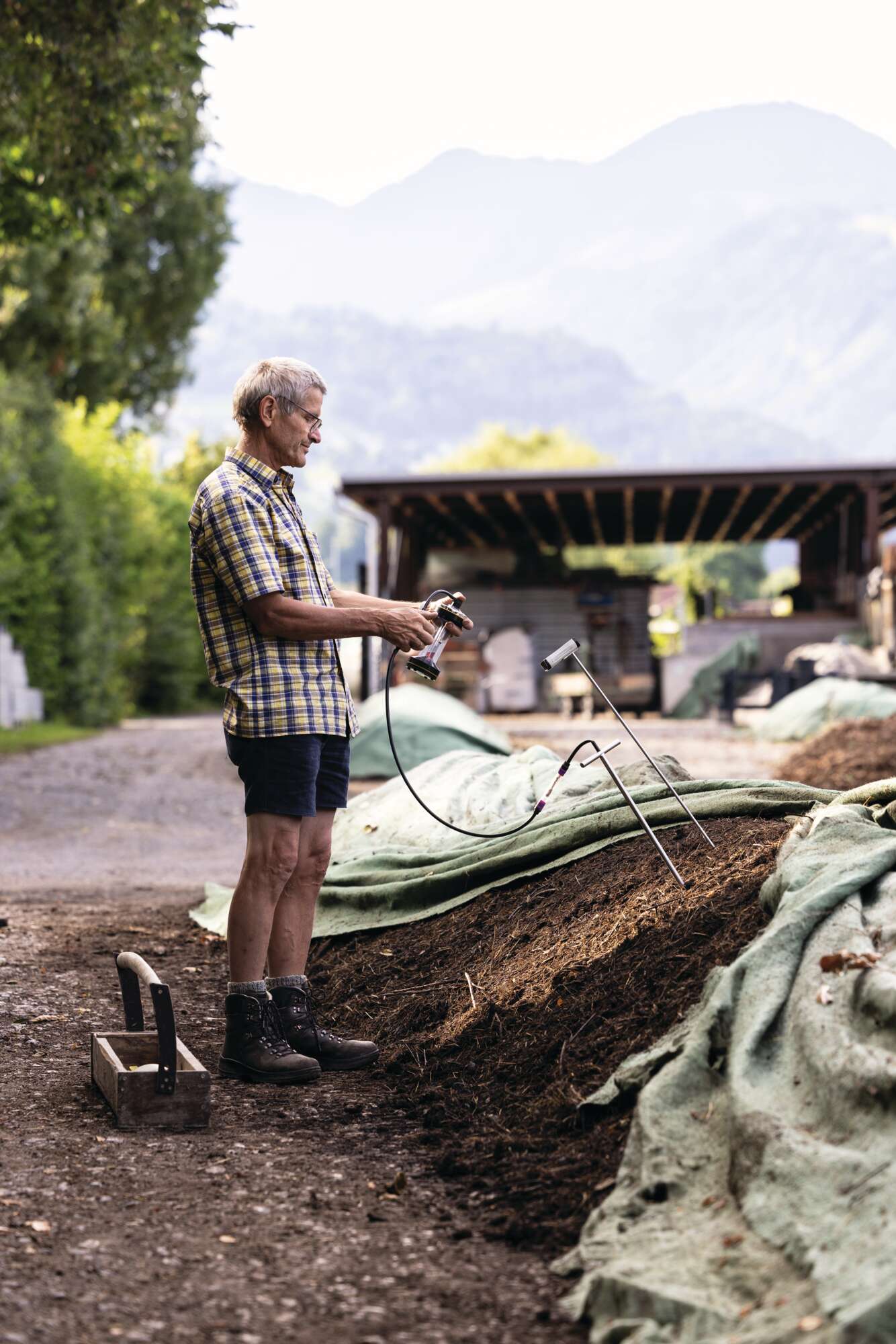
The compost is made using the controlled microbial composting (CMC) method where low windrows are regularly turned to maintain aerobic respiration, and a consistent temperature in the middle of the heap of above 60°C. To achieve this, there are many variables that need to be considered, including moisture content and the correct ratio of nitrogen-rich ‘green’ elements (kitchen and garden waste, manure, grass) versus carbon-rich ‘brown’ elements (hedge clippings and prunings).
You may also like
- Mulching and compost are the black magic of gardening
- Simple compost: how to compost without the faff
Some loam and finished compost rich in microorganisms are scattered across the heaps, which are then turned every day with the help of a special tractor attachment for the first week, and then less as the heaps mature. To gauge the heap’s needs, Thomas keeps fastidious daily records of both temperature and CO2 levels. This remarkable record has allowed him to alter his method and recipe to suit the nursery’s unique requirements. The process may be labour intensive, but the pair are convinced by the result – a weed- and pest-free but still microbially rich compost, produced in as little as six weeks.
Thomas and Elke are both in their early sixties but show no interest in slowing down. In 2022, with the help of their youngest son Aaron, a trained landscaper, they completely renovated their personal garden, which lies at the back of the nursery site. They built a series of dry-stone walls and brought in more sand and gravel to create raised planting beds. In July, these beds are a haze of silvery blue Echinops, white Anthemis and purple Verbena. A splash of acid-green provided by Euphorbia seguieriana subsp. niciciana cuts through, while Seseli elatum subsp. osseum and clouds of pastel-pink Althea cannabina further soften the scene.
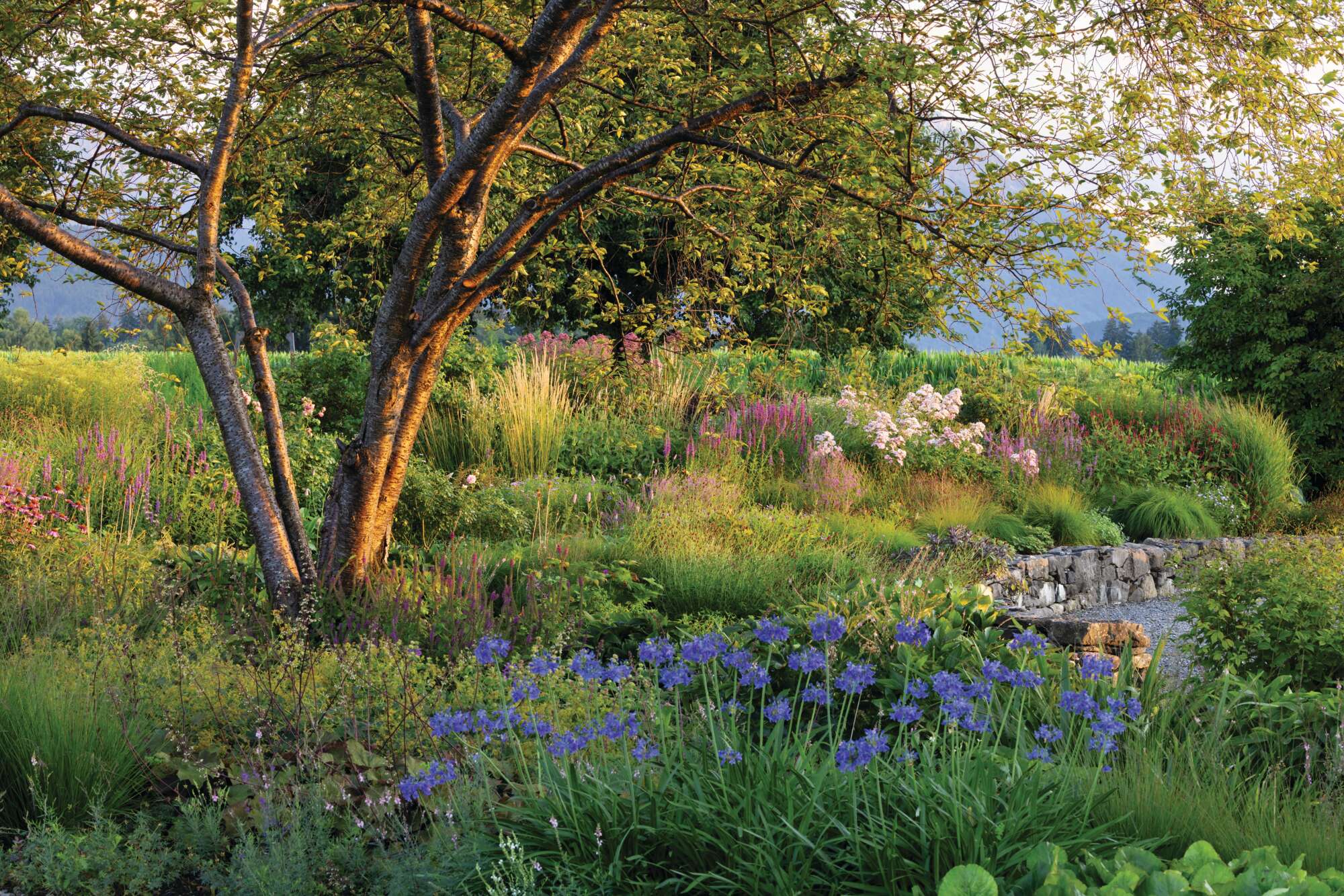
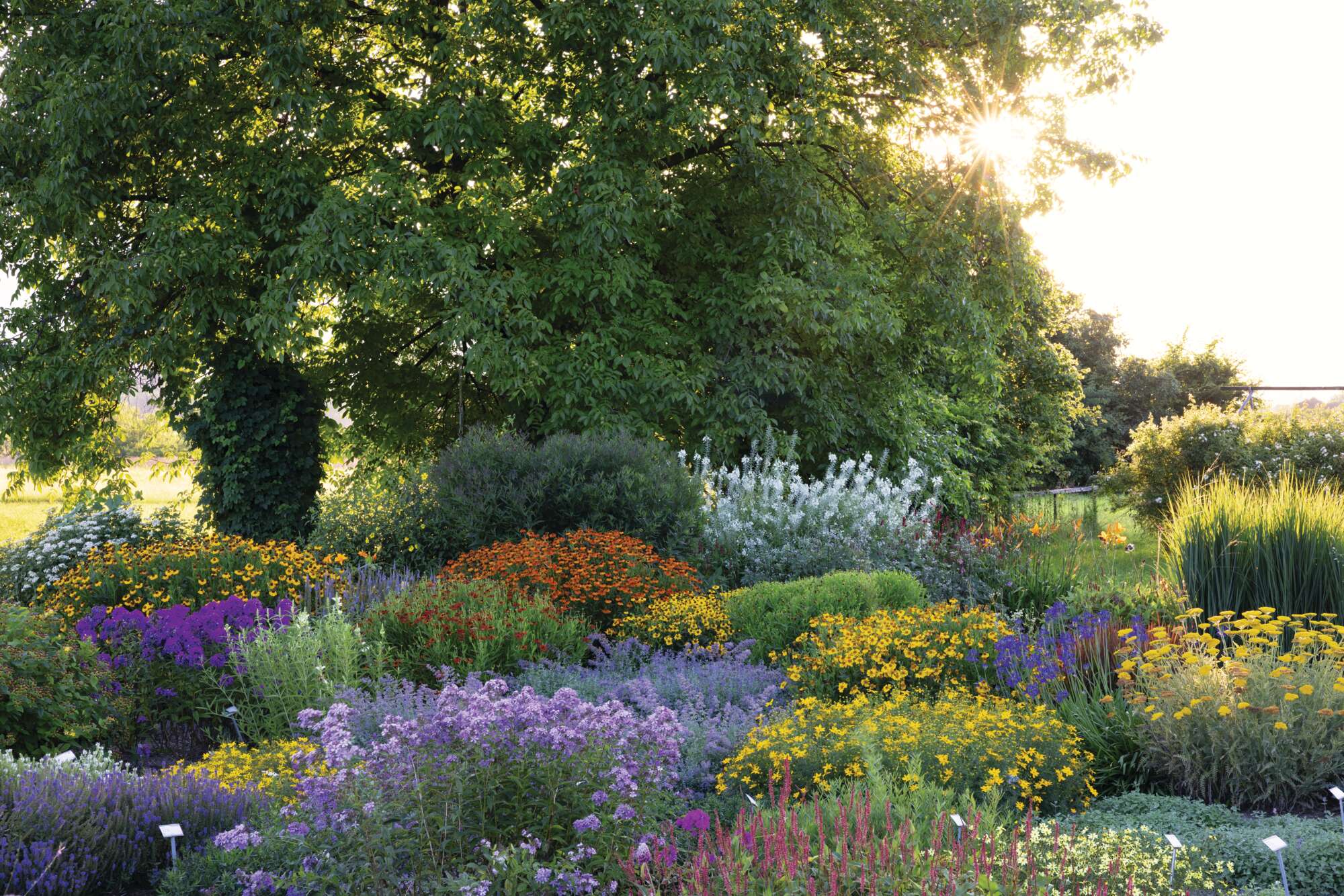
In the display areas, there is a restrained and naturalistic style of planting, but there is plenty of colour to be found in the various stock planting areas that surround the nursery. “We really want our visitors to see how to use our plants in combinations and inspire them to try different varieties,” explains Elke.
As well as inspiring customers, they also hope to inspire the next generation of gardeners through education. “Since the beginning, we have had many trainees who are keen to learn our methods.” In many modern nurseries, daily tasks do not require the specific knowledge demanded by more traditional nurseries. By growing the plants on-site as well as propagating them, students learn the behaviour of a specific plant throughout its entire lifecycle. They can discover the tricks to persuade recalcitrant seed to germinate, the idiosyncrasies of certain cuttings to root and the best time to divide a particular perennial. This is important but vulnerable knowledge that cannot be so easily learned from a book. This sort of work allows one to understand plants and the soil but also the local climate – understanding that is blunted in a business model that depends on plants bought in for quick resale.
“We do not have a clear plan for the future of Stauden Kopf,” admits Thomas. By leading by example, however, he and Elke hope to encourage a new generation of ecologically minded growers to start their own nurseries.
Find out more about Thomas and Elke’s nursery at stauden-kopf.at
Subscribe to Gardens Illustrated to have inspiration dropped on your doorstep every month.


