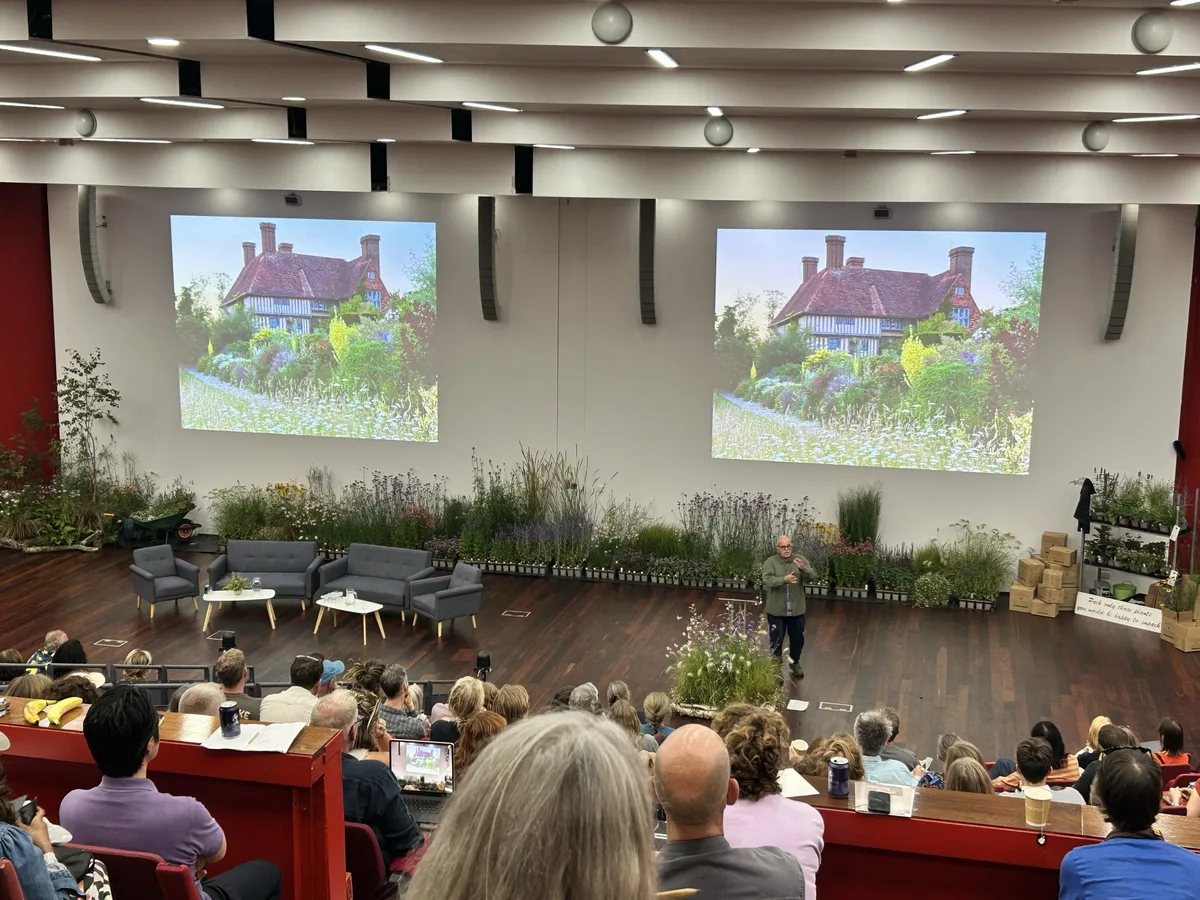
The Beth Chatto Symposium is a favourite of the ‘horterati’ - a three-day event that takes place at the University of Colchester every two years, with speakers from around the world giving presentations or doing on-stage discussions.
This year’s theme was Connections through time, and the first presentation with Jennifer McElwain ran through 400 million years of tree evolution and her work measuring the carbon in the atmosphere in deep time, and raised such intriguing questions as exactly how you figure out what shade of green the trees were all that time ago.
Dry garden guru Olivier Filippi brought a charismatic presence to proceedings for his presentation on new plant, insect and bird interactions in a changing climate. The wildfires around his nursery have become more intense in recent years, with lignotubers that would have previously resprouted being burnt away and self-sown seedlings shrivelling in ongoing droughts. This has resulted in the brown, pocked pattern he calls a ‘leopard-print landscape’, and the collapse of the pollen and nectar supply.
Olivier Filippi gave many examples of new relationships developing between native fauna and invasive non-native plants
Gardens can act as shelters, but with no water for irrigation, more reliable sources of nectar are needed, such as from plants from further south which can extend the phenology calendar, even though these plants are considered non-native or ‘exotic’ invasives in many cases. He gave many examples of new relationships developing between native fauna and invasive non-native plants in the South of France, such as gulls with opuntia berries and wild bees with specialised diets that are broadening their range of pollen plants to survive - observations we were sure would start a heated conversation about native vs non-native, but did not.
Sheila Das, head of gardens with the National Trust, presented her strategy for the charity’s many properties: slow gardening. This strategy will see it pivot in several ways including switching from a focus on quick fix, big reveal Projects “with a capital P”, to long-term evolving garden systems. She is advocating for less annual plantings and more perennial schemes grown from bare roots; polycultures; soil health; and being process led rather than task focused.
She is aware that messaging and storytelling is important for both the industry and members, and believes these changes will result in more sustainable, biodiverse, inclusive outcomes. Other takeaways from her talk were that ecological succession needs to be taught on horticulture courses, woodland-edge planting is the perfect solution for most gardens, sand and ‘waste’ gardens are not the only show in town and the language we use matters – ‘maintenance’ is something you do to your car, not your garden, she says.
Kelly Norris took everyone away to the prairies with his presentation in which he pleaded that we don’t just see them as an aesthetic form, but instead as a process that has lessons for other ecotypes. He suggested there are ways to transport the idea of the dynamic systems of prairie to other places if we read the landscapes we live in, but sadly there was no time for him to explain this in further detail.
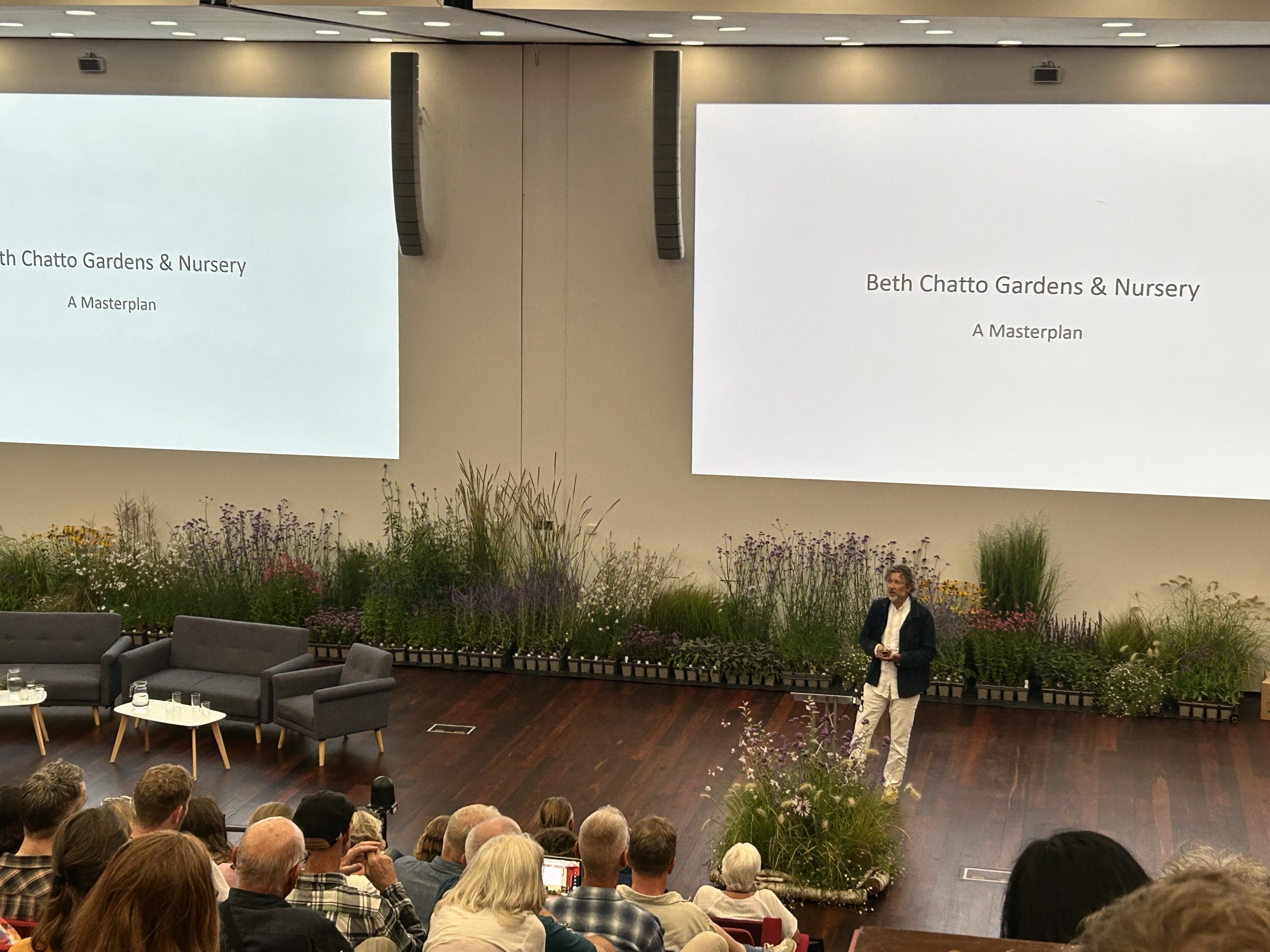
Dan Pearson followed with the new masterplan for the Beth Chatto Gardens, taking us through plans for the new seven-acre plot of land they have acquired on a long-term lease and changes to the original garden and nursery site. There will be a new meadow and woodland which will act as breathing spaces, and minor edits to the existing garden, introducing a Mediterranean ‘spine’ of dry gardens that will run from the back of Beth’s house and her scree garden down and around to the Reservoir Garden below the nursery.
There will also be a series of new stock beds in block formations and in sand, so plants can be reliably grown on for sale in dry conditions. There will be no changes to the Damp or Woodland Gardens, and the Gravel Garden is being gently expanded by gravelling over the old tarmac drive that ran alongside, making it feel more generous. Also, to prevent the common confusion of visitors on arrival, a new entrance is being created for better flow.
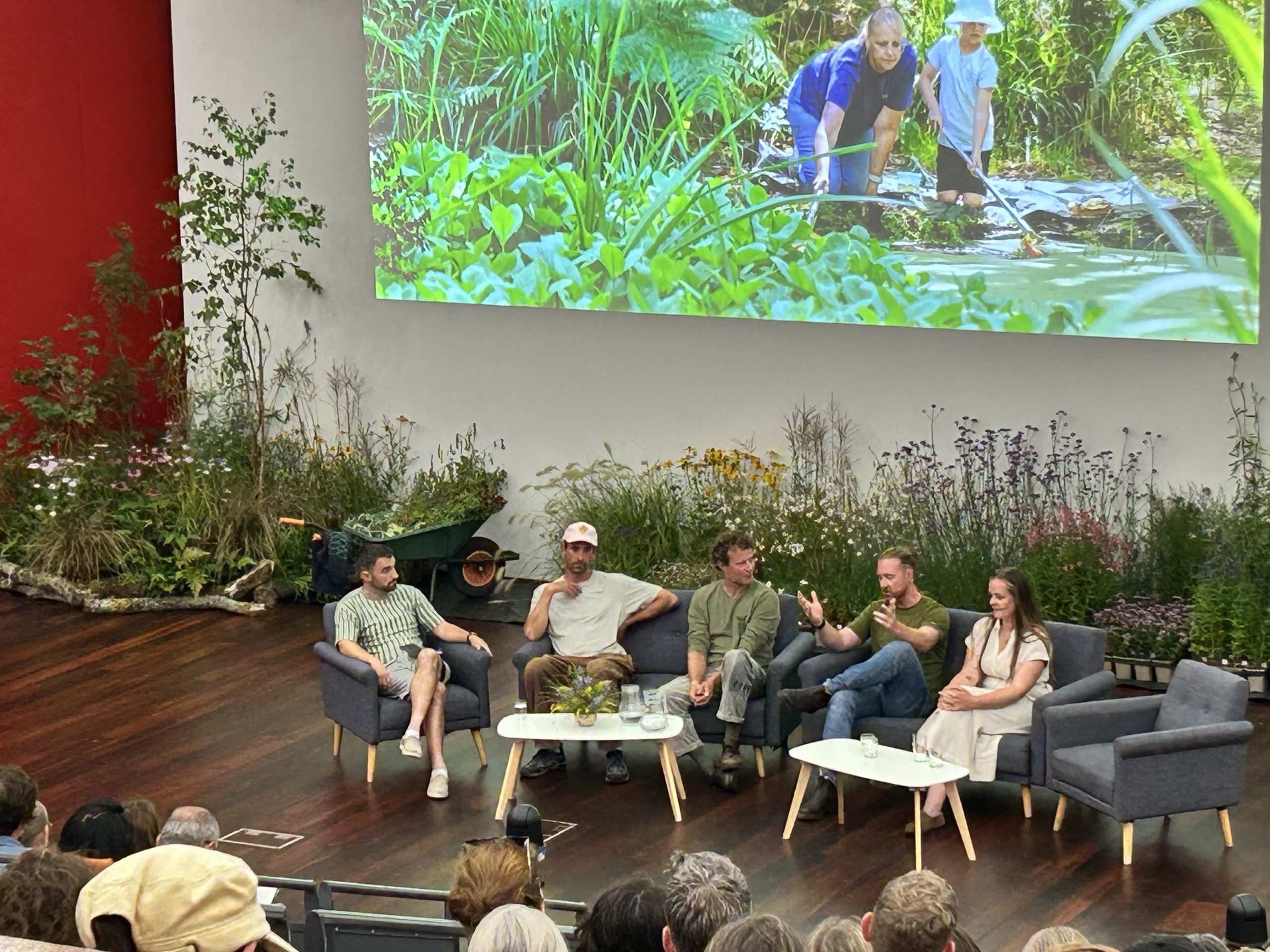
There were panels and conversations throughout day one too, from closing the green gap, art, and climate change anxieties to starting up a nursery, with the new kids on the block of the plant scene discussing going up against garden centres and supermarkets, and plant trends.
Day two kicked off with a book reading/poetry recital with author Elizabeth-Jane Burnett, before ‘barrister for the Earth’ Monica Feria-Tinta took to the stage to tell us about her work defending the planet and garnering rights for nature including suing Australia and gaining legal personhood for rivers.
Kasey Toomey from LA-based design practice Terremoto explained the studio’s radical approach to landscape design, including labour acknowledgement for the contractors they work with and being experimental in diverse ways with hyperlocal plants and materials, and with more time could have presented all his chosen projects in detail to the eager audience.
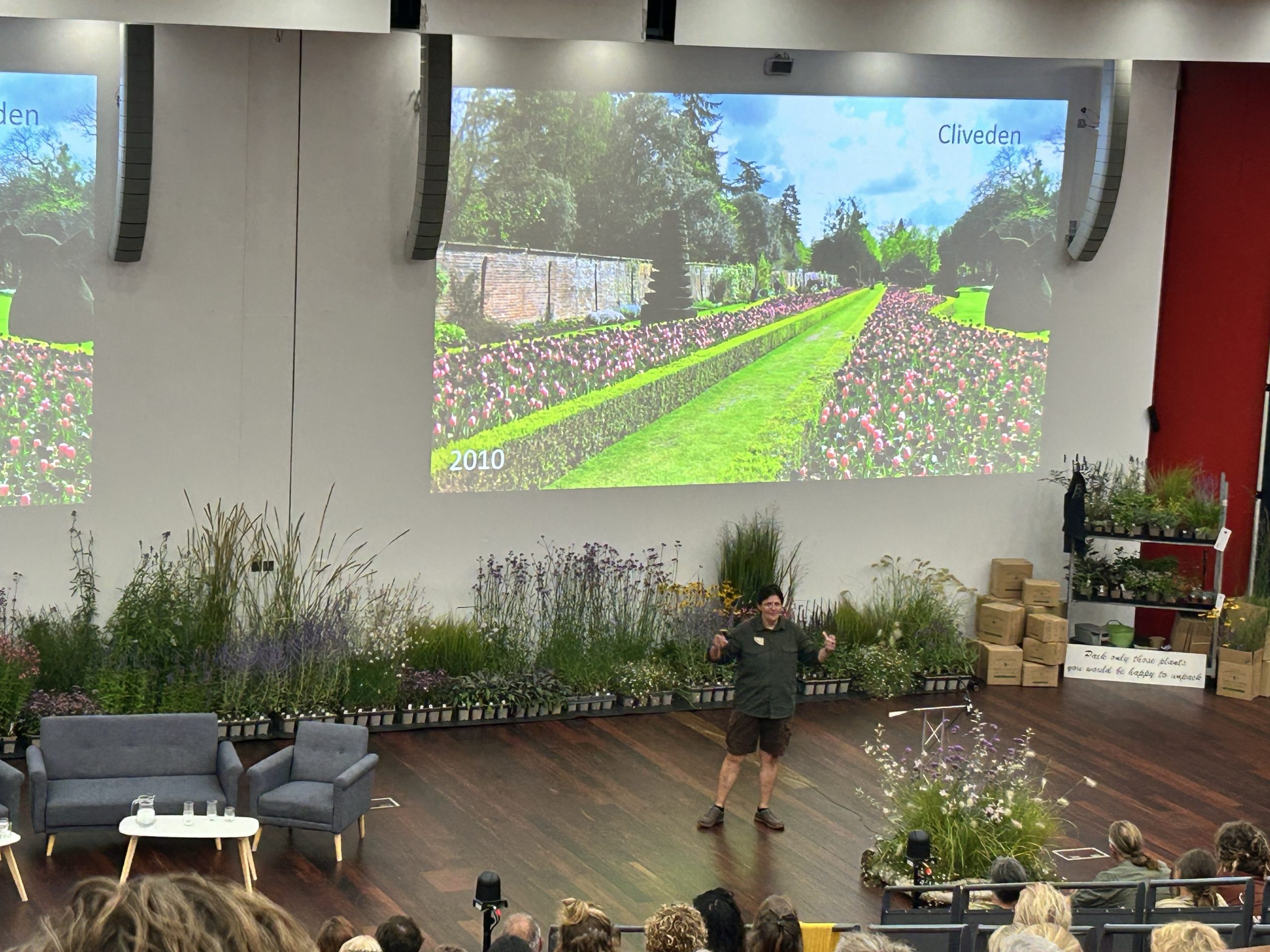
There followed more talks on new research around plants, people and community gardening with Helen Hoyle, the invisible world of microbes with researcher Jake Robinson and symbiotic relationships in nature with science communicator Sophie Pavelle.
Fergus Garrett gave the final talk with a joyful, humorous romp through Great Dixter’s inspiring mix of curiosity, creativity and complexity, including Christo’s memorable shirt and border colour palettes, and the rousing call to action that ‘people matter’.
Day three will feature an informal collection of workshops, talks and Q&A sessions at the Beth Chatto Gardens itself, closing out the fourth symposium, and leaving us all wondering what and who might feature at the fifth event in 2028.