You may have been too busy, or lazy, to get your daffodil and tulip bulbs in the ground last autumn, or the squirrels ended up making a banquet out of them. Whatever the reason, if you are now staring out at a blank, dull garden with no interest, there’s no need to fret.
There’s an easy way to bring a little joy and colour into your plot last minute, with a few carefully chosen spring flowers that can go in a pot or a border immediately for instant results. Look for these proven winners at your local nursery or garden centre and plant them up for a beautiful view this spring, and every spring from now on.
Flowers to buy at the garden centre now
Primroses
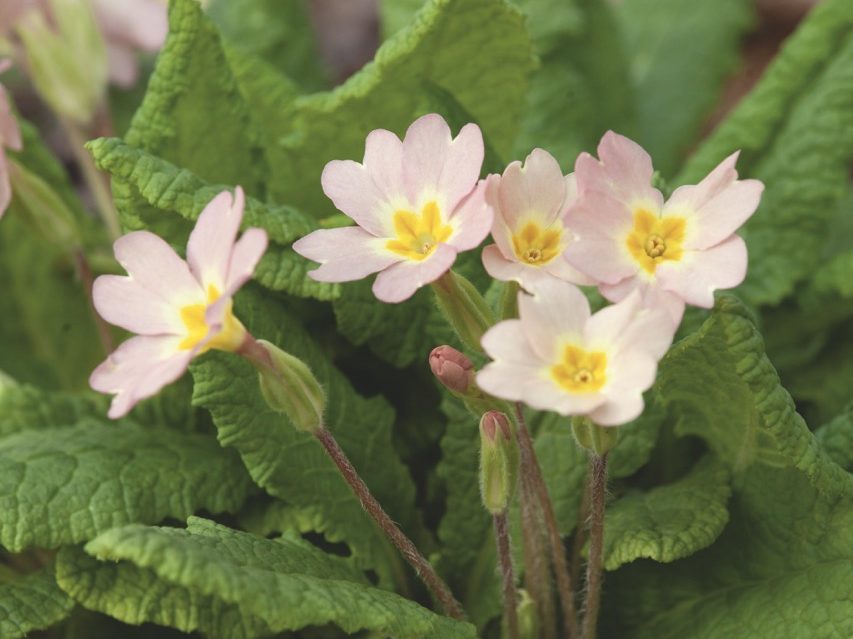
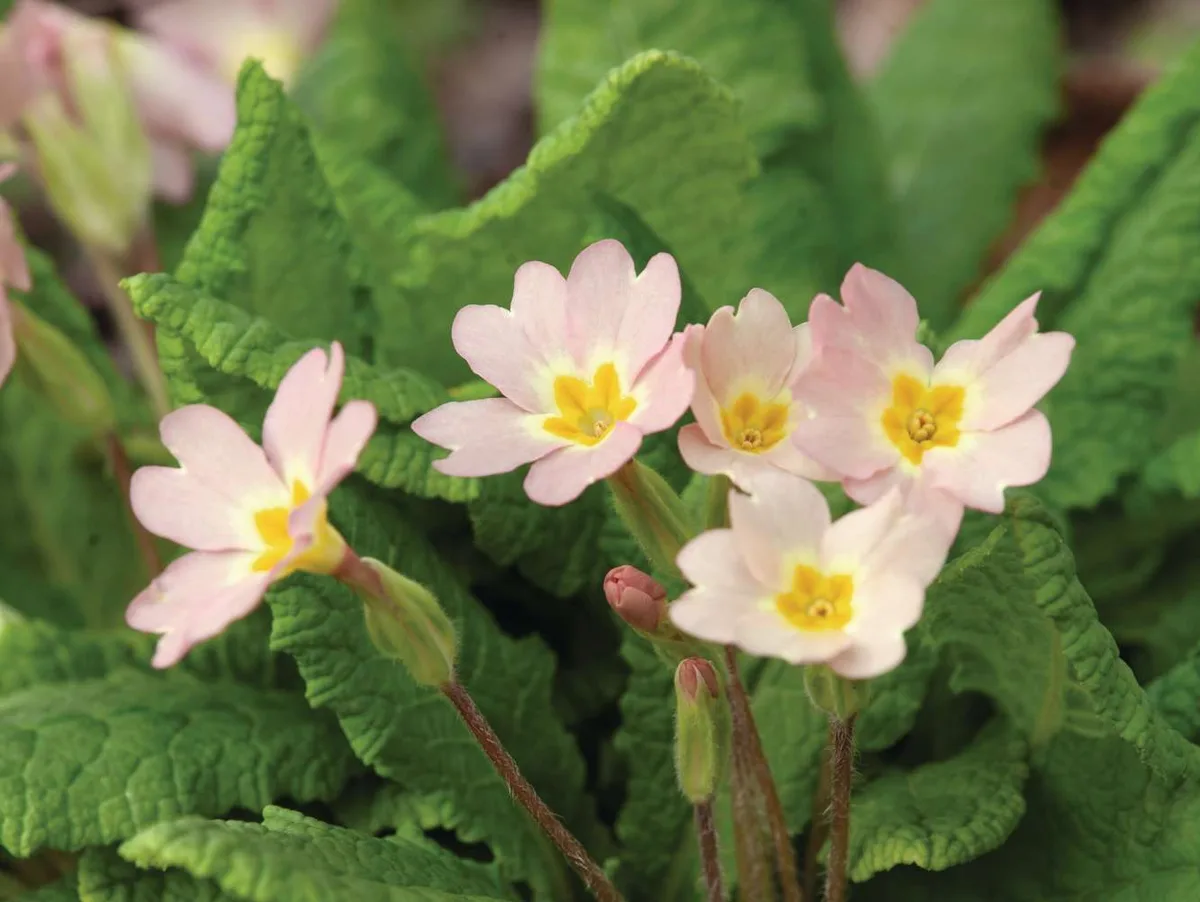
The common British native primrose, Primula vulgaris, is ubiquitous but still has an elegance and charm. Its pale-yellow flowers are the perfect partner to spring bulbs, but there are ample forms in various colours from pink to purple and orange, and pretty cultivars to choose from.
James Hitchmough, best known for designing plantings for the London 2012 Olympic Park, is a big fan and uses it for spring interest and to stop weeds coming up in his schemes of summer-flowering perennials and grasses. “It’s a sublimely lovely woodland edger with evergreen rosettes from autumn to early summer,” he says. “It self-seeds like crazy, but is incredibly tolerant of everything and fabulous for a groundcover under taller herbaceous and woody species – just don’t mix it with small treasures.”
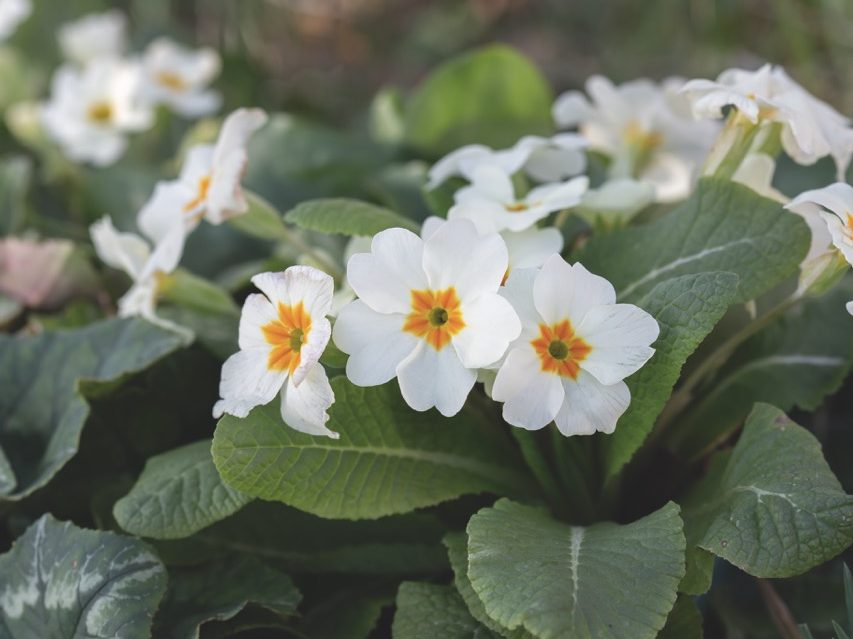
Nurserywoman Rosy Hardy suggests Primula ‘Heritage Cream’, a selected form with wonderful, large, cream flowers for a long period in spring. “It works well in a container but also in the ground to lighten up the dark spots in a garden,” she says.
Looking for a showier option? The drumstick primula, P. denticulata, is colourful and easy to grow, with distinctive flowers appearing from March to May.
Violets
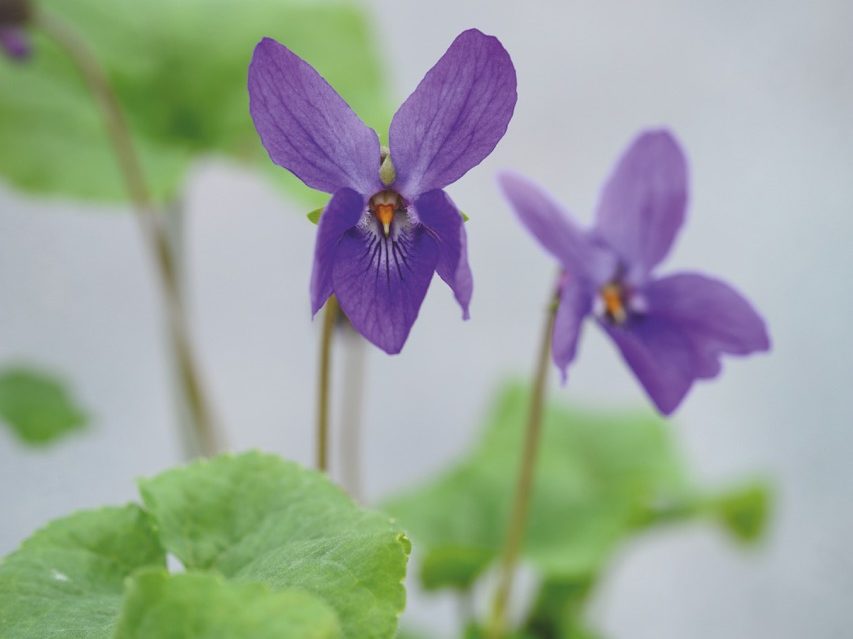
These hardy perennials with small, fragrant flowers form a loose, low, semi-evergreen mat, and are easy to grow, blooming just when we need some colour in late winter and early spring. They need winter sun and summer shade in moist but free-draining soil. Violets associate well with small early spring bulbs and are robust enough to establish and spread in areas where grass is left slightly longer. Keep deadheading throughout the flowering season to encourage more flowers.
Good options include widely available Viola ‘Königin Charlotte’ (above), which flowers freely from autumn until early spring with upward-facing, cool indigo flowers held well above the foliage.
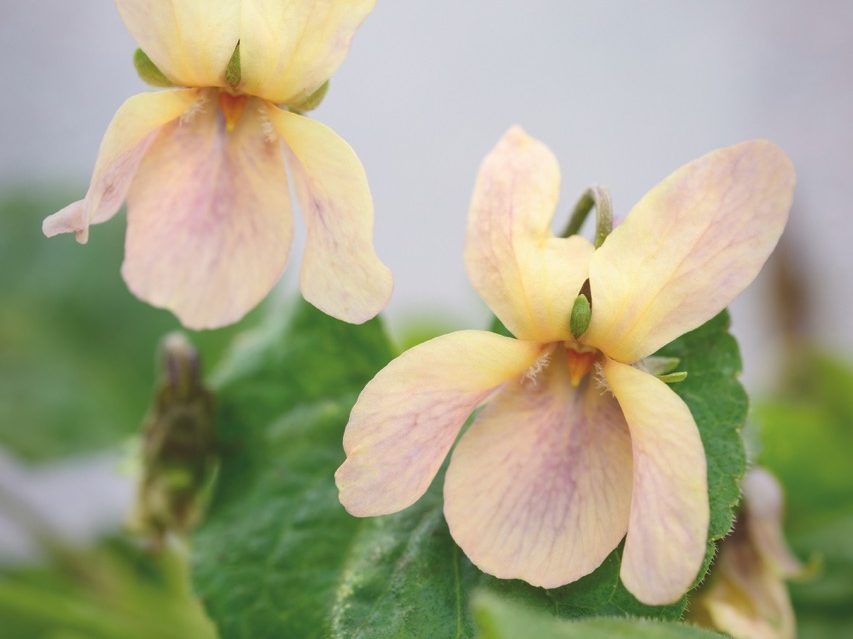
V. ‘Crepuscule’ flowers are a mix of palest yellow, cream and apricot shades, and it is easy and free-flowering, but unscented. Designer Dan Pearson is a fan and grows it in his own garden. “It is valuable for its adaptability,” he says. “Its evergreen foliage makes a good cover for spring bulbs when they become dormant and useful groundcover under the skirts of later-to-emerge perennials and deciduous shrubs.”
He says it prefers a moisture-retentive soil in more open positions, but can take dry shade in summer once established.
Forget me nots
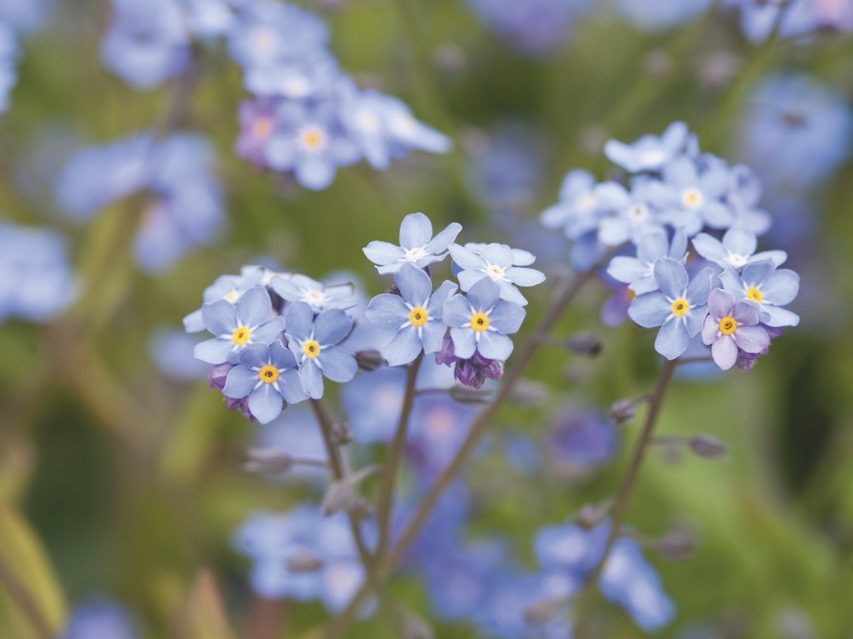
Myosotis sylvatica is a pretty, variable, late spring to early summer flower that is good for pollinators, with grey-green leaves and loose clusters of abundant bright pale-blue, fragrant flowers with a yellow eye emerging from deep-pink buds.
Gardener Arthur Parkinson loves the tiny blue blooms, especially of the cultivar ‘Bluesylva’. “It’s a self-seeding biennial but it’s therefore a helpful weed suppressant; the more, the merrier for flower beds. I like that once they are over, it’s a job of seconds to just pull the old plants out.”
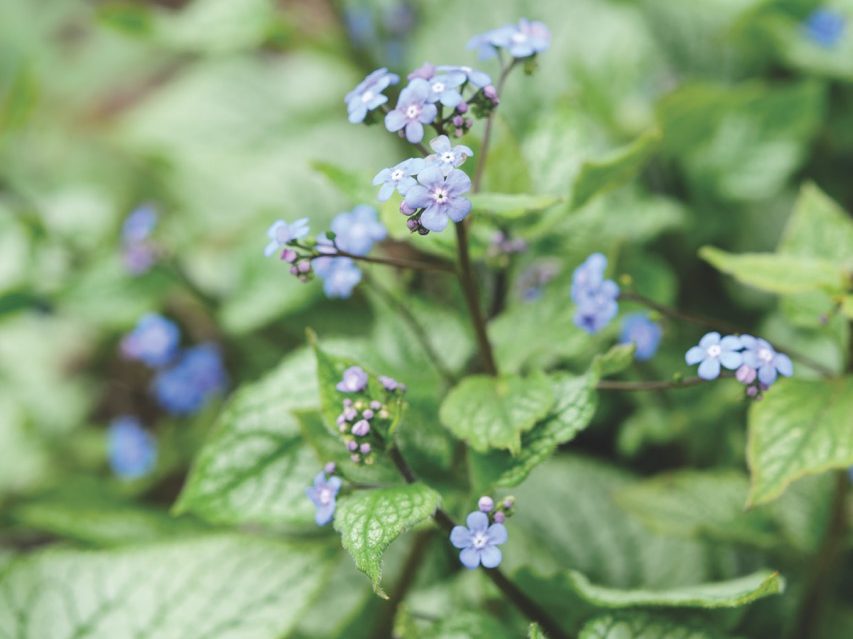
If, however, you can’t find this short-lived perennial at the garden centre, you can create a similar spring time effect with Brunnera. Brunnera macrophylla ‘Jack Frost’ (above) has pretty forget-me-not flowers in April and beautiful silver leaves netted with green, which get bigger and bigger as summer goes on.
“Given enough food and water, the leaves can be magnificent,” explains nurserywoman Derry Watkins, “making good groundcover, and long outlasting the flowers. They need a rich, deep, humus soil and an ample supply of water to look their best – but are worth it.”
Hellebores
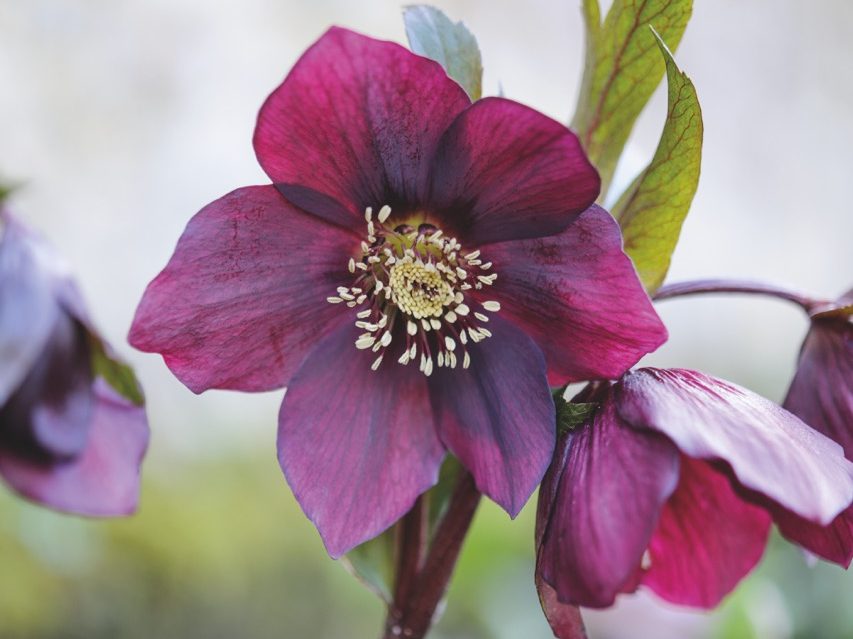
These herbaceous perennials, also known as Lenten roses, have nodding, bell-shaped flowers and glossy, semi-evergreen foliage. Single, double and semi-double flower forms exist in a range of pinks, purples, yellows and whites, often with speckled or spotted sepals.
“I always look forward to seeing hellebores,” says Tom Brown, head gardener at West Dean garden in Sussex. “Recent breeding has ensured there is now a full spectrum of colour to provide the perfect late-winter pick-me-up. Dark-purple hellebores such as Helleborus x hybridus ‘Queen of Spades’ associate beautifully with other pale-pink flowers in borders and pots. Just give them rich, well-drained soil in part shade.”
You may also like
- Looking for colour in winter? Hellebores are perfect flowers for the season- here's how to plant, care for and sow them
- The remarkable and desirable colours of species hellebores
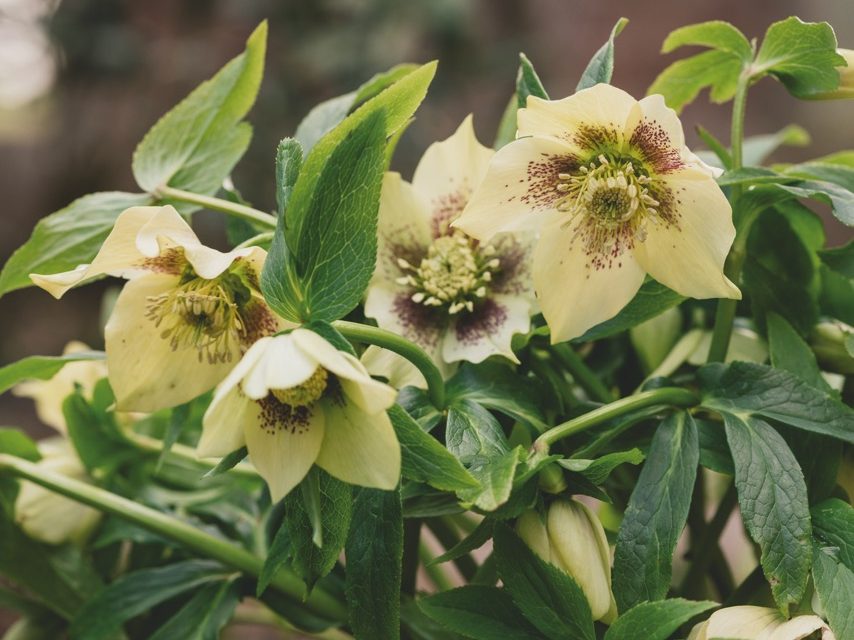
Andrea Brunsendorf, head gardener at Lowther Castle in Cumbria, likes the cultivar ‘Yellow Lady’ (above). “It is noted for its evergreen, leathery, dark-green, glossy leaves and pale-yellow cupped flowers with maroon spots. Cutting the leaves back in late winter will show off the charming flowers even more. It self-seeds happily.”
Wallflowers
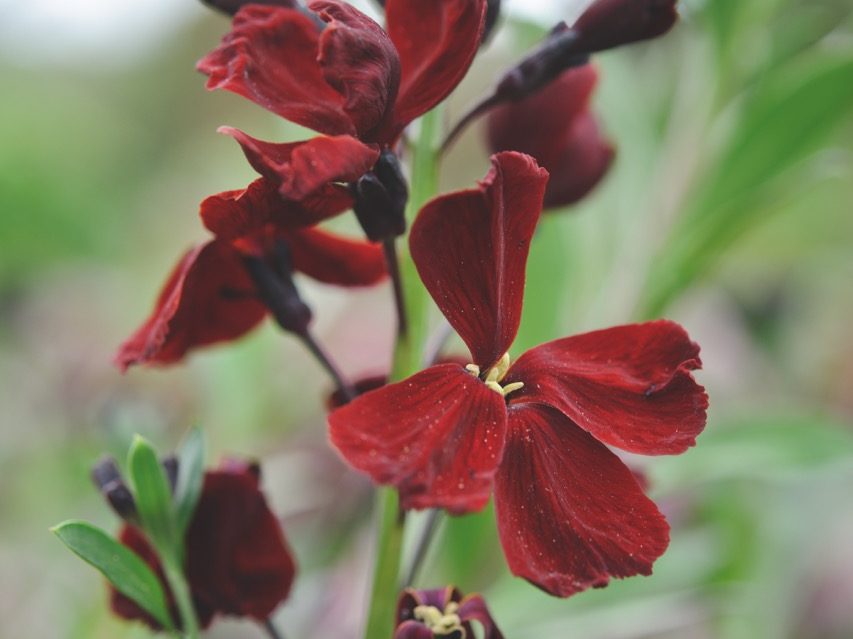
In the UK gardeners tend to grow wallflowers - strictly speaking a short-lived sub shrub - as hardy biennials, using them as bedding plants in spring. Plantswoman Chris Marchant loves the striking cultivar Erysimum cheiri ‘Blood Red’ (above). “The velvet-textured, dark-red flowers make an exciting contrast with tulips, if you have them,” she says. “The fragrance is strongest after an April shower, when still air is gently warmed by sun.”
You may also like
- This long-flowering plant will bring colour to your garden from spring to summer here's how to grow the loveliest
- Why we should all be planting wildflowers in the garden
There are also several reliably perennial wallflowers that will come back every year for three or four years. “Erysimum ‘Winter Orchid’ (below) stands out from the rest because it comes into bloom in October and flowers sporadically throughout the winter months, culminating in an explosion of colour in early spring,” says Derry Watkins.
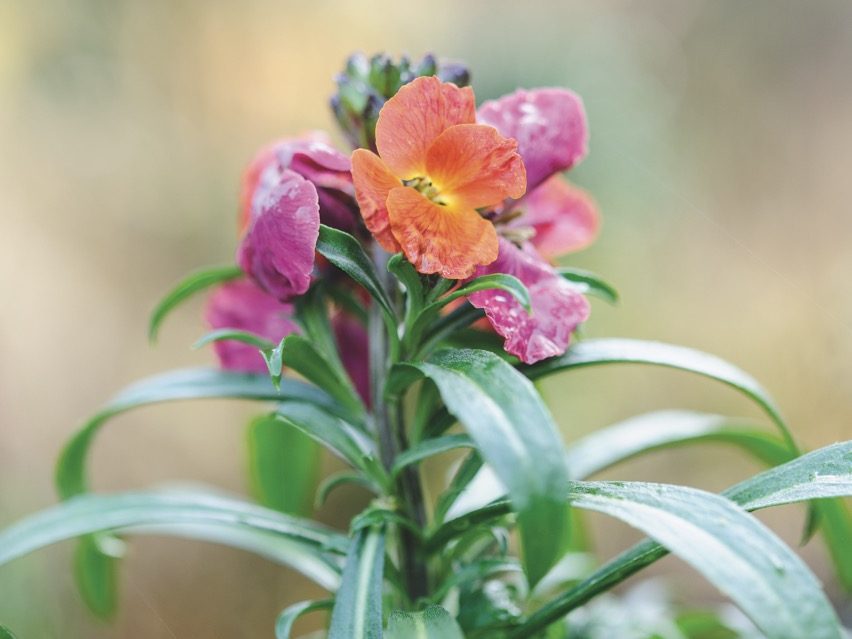
“The flowers are fragrant and larger than most wallflowers; copper-red when young, gradually turning purple, so there’s an amazing array of colour. The plants are tidy, compact mounds.”
Designer Penelope Hobhouse chose the ever-popular purple-flowered Erysimum ‘Bowles’s Mauve’ as one of her 100 top plants for Gardens Illustrated, citing its length of flowering and suitability for new gardens as real selling points.
London pride
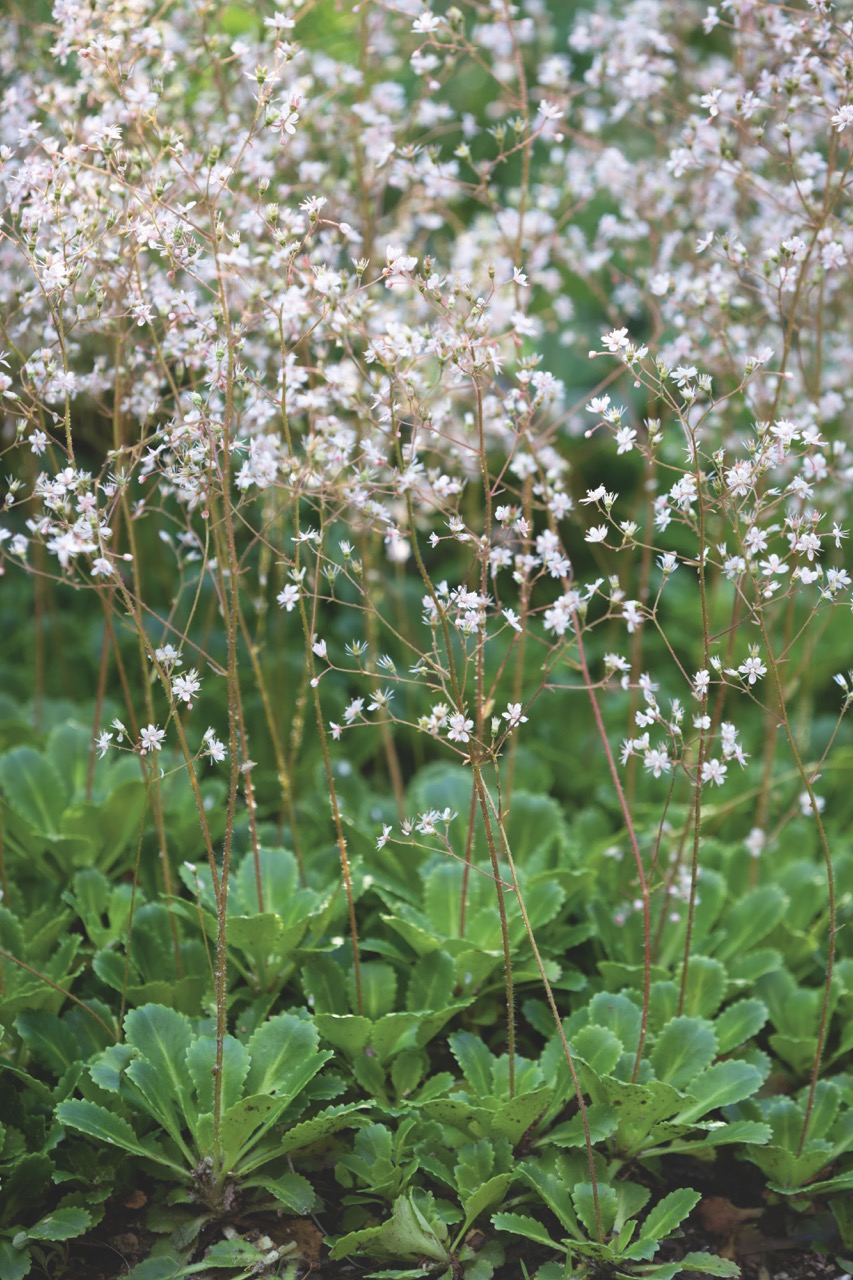
Although seen as an old-fashioned plant, gardener and TV presenter Nick Bailey has a soft spot for London pride, Saxifraga x urbium. Evergreen and reliable, it works well in containers, nooks and crannies such as in drystone walls, and as groundcover at the front of borders.
You may also like
- These 9 plants could solve your biggest gardening problems, says TV's Nick Bailey
- The nine types of plant you never knew you needed in your garden
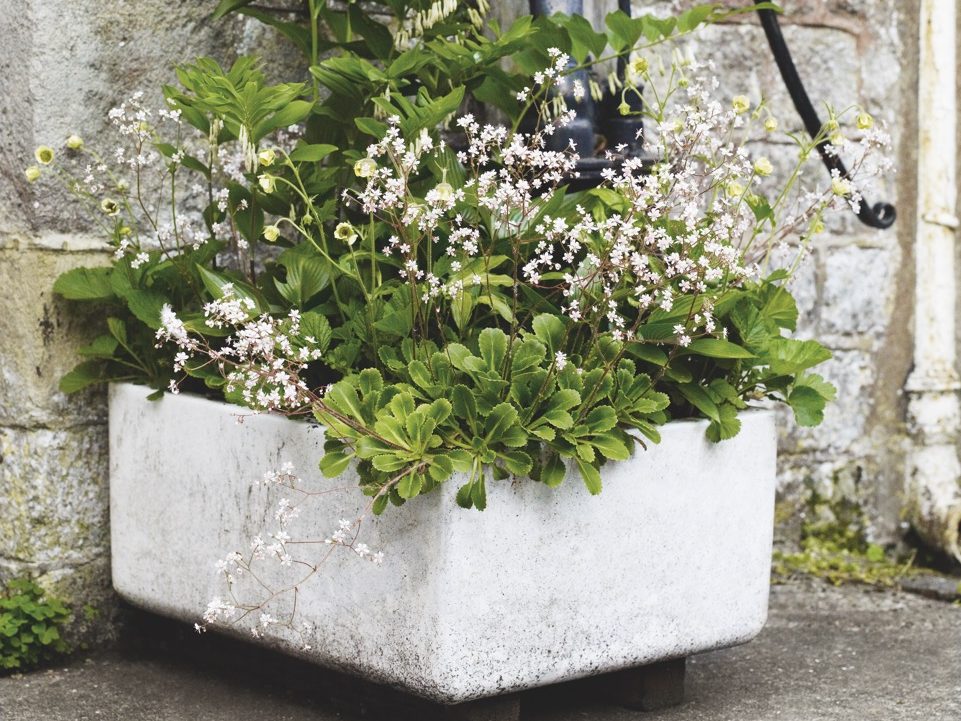
“It’s a hugely underused perennial, which produces rosettes of spatula-shaped leaves that have a serrated edge, and just keep looking good. Top that with a flurry of floaty flowers in white with a pink centre and, to my mind, you have a near-perfect plant,” he says.
Columbine
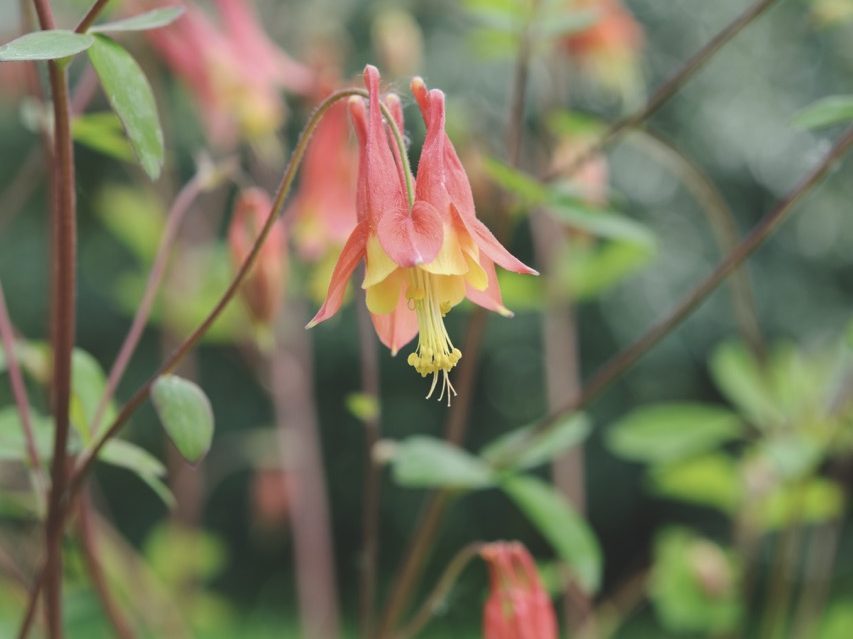
Also known as granny’s bonnets, Aquilegia is a stalwart of the spring cottage garden that looks delicate and airy but is brilliantly slug-proof, despite not having tough or hairy leaves.
Striking cultivars include scarlet and yellow Aquilegia canadensis (above), or more classic choices such as maroon and white ‘William Guiness’, pink ‘Nora Barlow’, dark-maroon ‘Black Barlow’ and ‘Yellow Queen’.
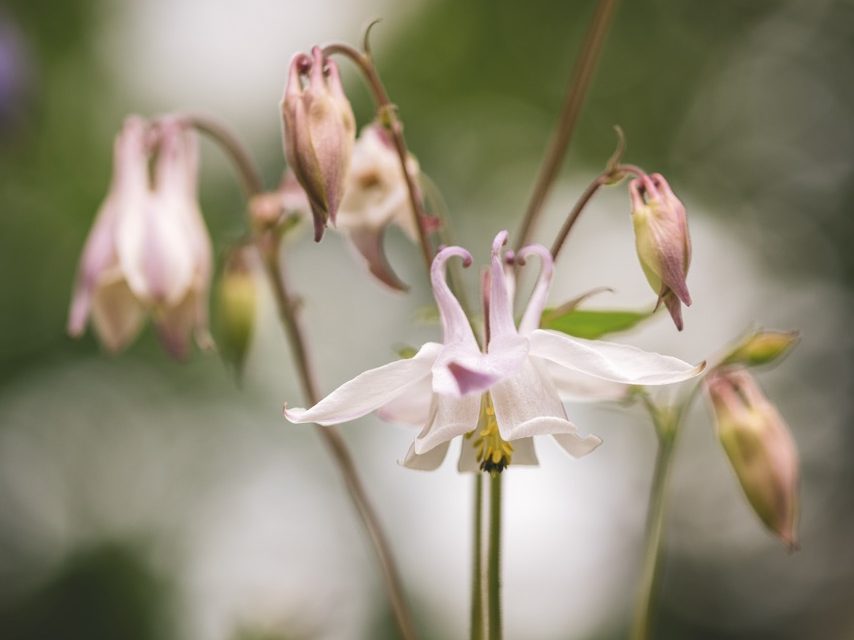
“Aquilegia vulgaris is a short-lived perennial that I love to plant it with mid-season tulips, so the colour-saturated tulips can emerge through its fresh and delicate spring foliage,” says Andrea Brunsendorf. She recommends growing it in moist, well-drained, moderately rich soil in full sun to part shade. It can suffer from mildew on dry soils.
Elephant’s ears
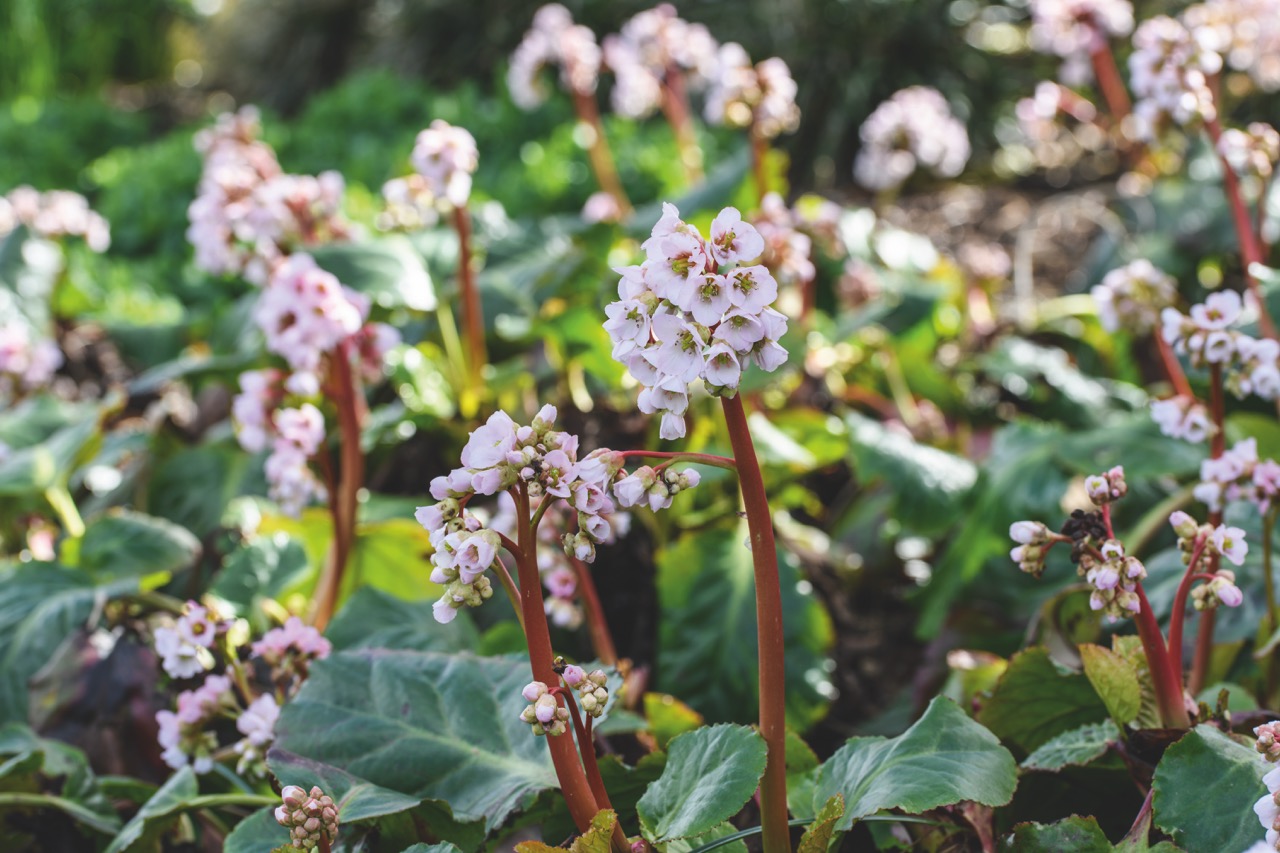
Bergenias are low-maintenance, easy-going evergreen perennials that will brighten up the early spring garden with their colourful booms. They are also tough plants that can be grown in sun or partial shade.
Horticulturist Richard Wilford has a couple of particular favourites to look out for. “Bergenia ‘Bressingham Ruby’ is great for spring flowers, with deep red-magenta blooms rising above rounded leaves that turn purple in winter.
You may also like
- Are Bergenias the most hated plant? You need to reconsider these low-maintenance easy-going evergreen spring plants
- Looking for plants that won't get eaten by slugs? Here are 38 slug-proof plants and flowers that won't get munched by molluscs
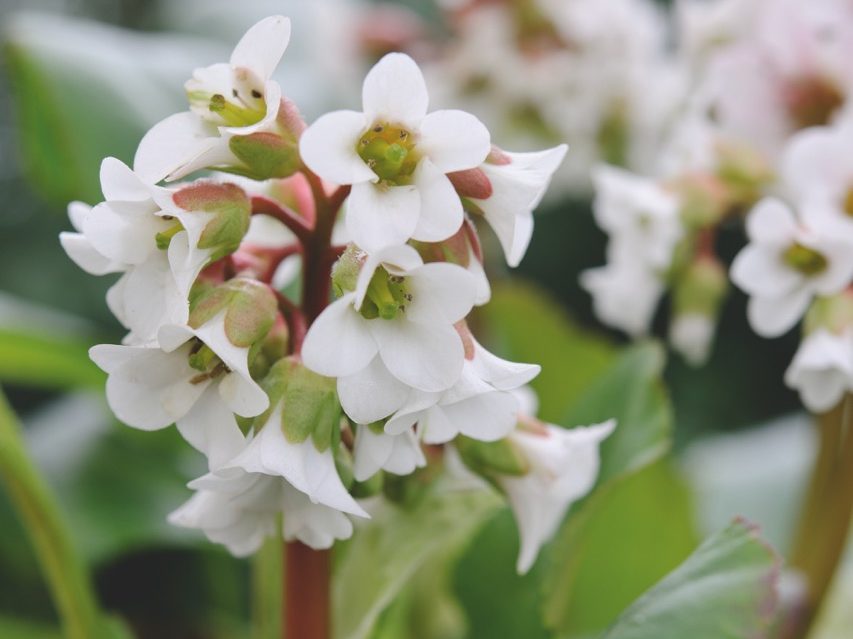
“B. ‘Bressingham White’ is a free-flowering form with pure-white flowers that become tinted with palest pink as they age, held on red stems,” he says. “The leaves remain green throughout winter.”
Bleeding hearts
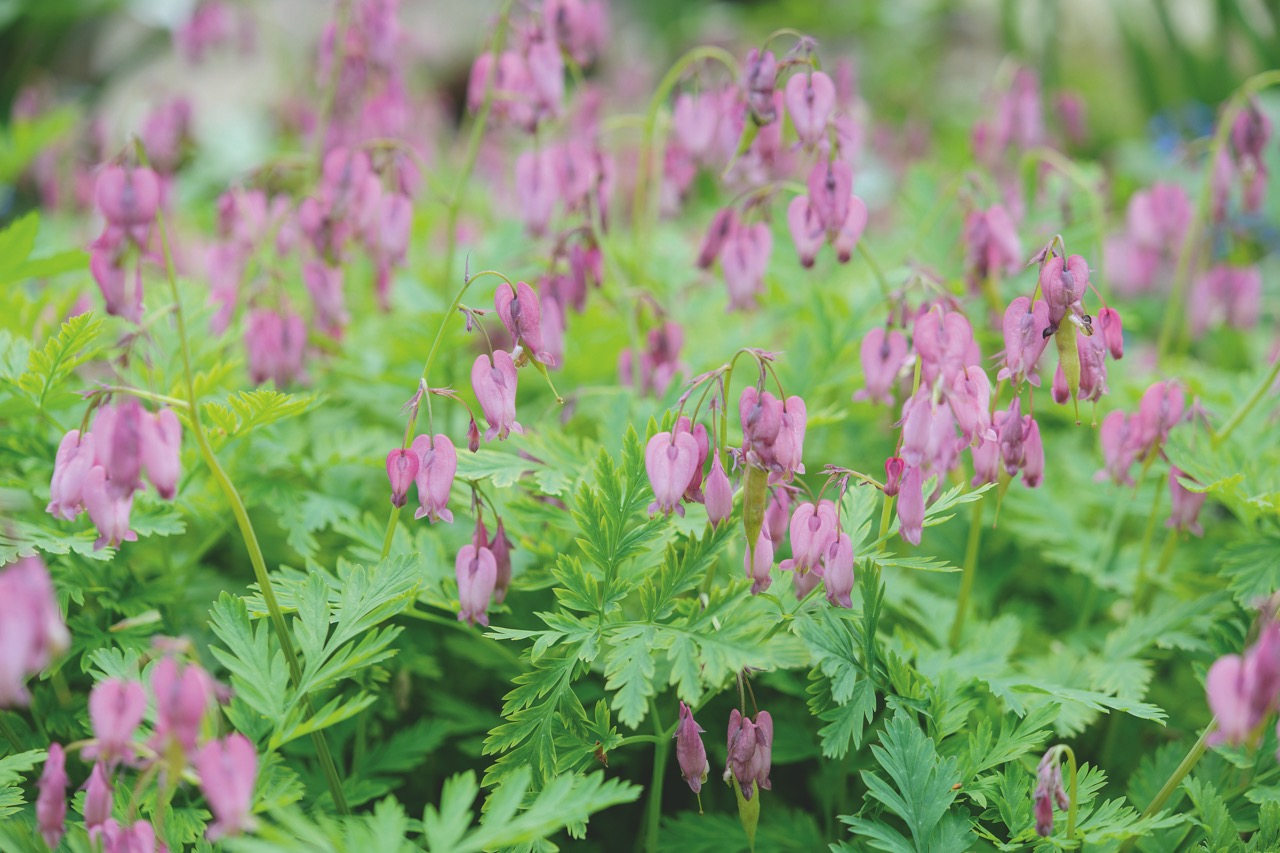
Also known as Dutchman’s breeches, the flowers of Lamprocapnos and Dicentra are striking in spring with their dangling heart-shaped flowers. Mat Reese, head gardener at Malverleys garden in Hampshire, likes pink-bloomed Dicentra formosa best. “It’s a particularly good coloniser that creates lovely drifts of soft-green, fern-like foliage, above which numerous blossoms are held in thin, drooping racemes.
“It looks pretty when growing among other spreading woodlanders with contrasting foliage, such as epimediums or bergenias,” he says. “These combinations can be quite satisfying, creating tapestry-like carpets of different textures and shapes that also help to keep weeds at bay by sewing up the ground and hiding the soil.”
Additional words: Hannah Gardener, Matt Biggs, John Hoyland, Janice Shipp