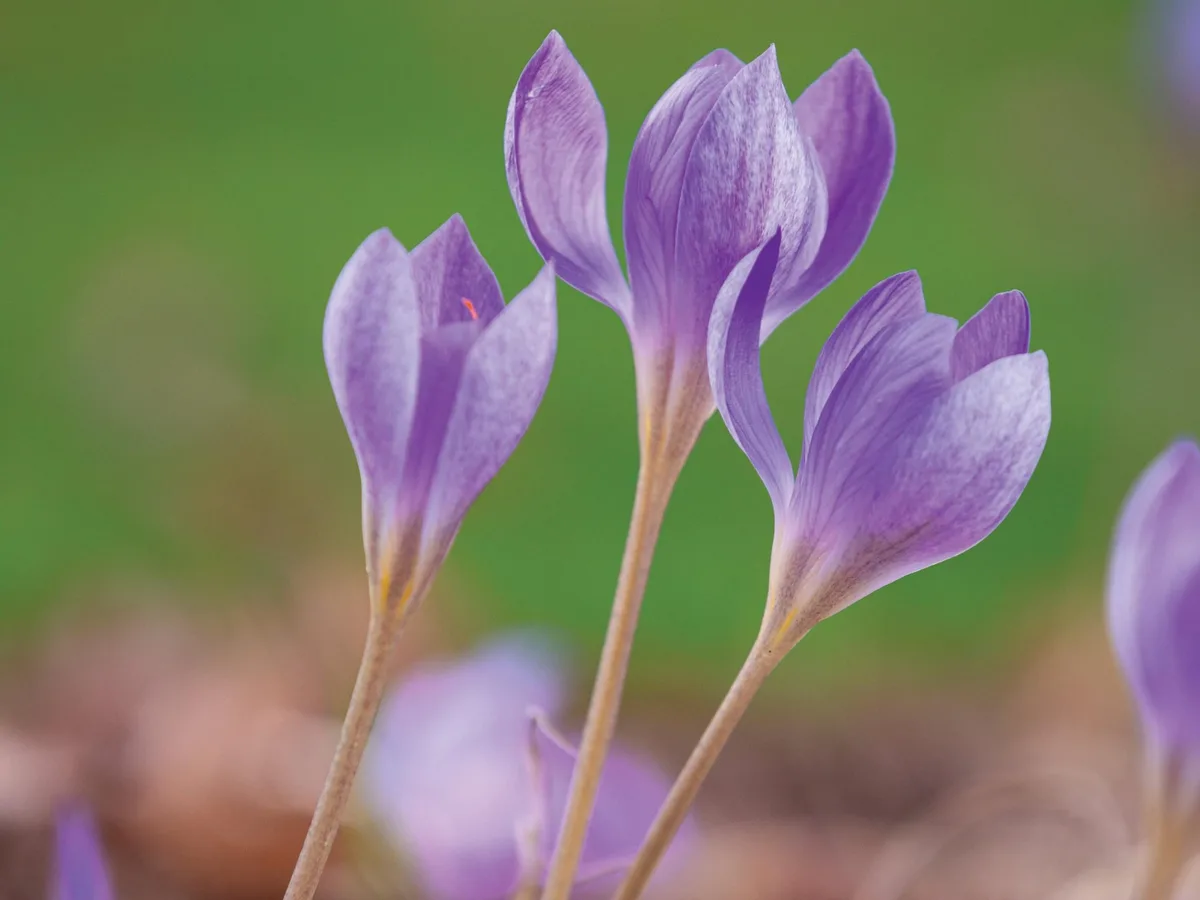
Too many years ago, I spent a very happy few days with friends in the Peloponnese. It was early November; rain had fallen and the landscape was lushly green with reviving grass and germinating annuals. There were sheets of bulbs in flower everywhere, including cyclamen (both Cyclamen hederifolium and Cyclamen graecum) and crocuses of several species, with purple carpets formed by Crocus goulimyi looking like Crocus tommasinianus in February at home.
Scillas, colchicums, narcissi and anemones proliferated, and golden clots of Sternbergia lutea were common, memorably in the ruins of Mycenae. There were even snowdrops, the autumn-flowering Galanthus reginae-olgae, appearing in the cooler, moister places where the plane trees grow in mountain ravines.
You may also like:
- When to plant bulbs
- 36 of the best plants from Avon Bulbs
- The best bulb suppliers: where to buy bulbs
- The best spring bulbs to plant in autumn
- How to grow and care for daffodils
- How late can you plant bulbs?
- 21 brilliant bulbs that will give you colour in every season
Seeing these species in the wild explained their growth pattern to me. Just as spring-flowering bulbs respond to improved conditions of light and warmth, so do the autumn-flowerers respond to moisture after dormancy; all are poised to spring into life as soon as conditions permit. Many rush up without their leaves, which expand later.
The signal for autumn flowers to start may be a drop in temperature or an increase in moisture, which
is frequently the same thing. Their flowers exploit a window of mild weather with abundant insect pollinators still around, and their foliage can expand and take advantage of reduced competition for light through the winter and spring months.
Autumn-flowerers respond to moisture after dormancy, poised to spring into life when conditions permit
When gardening with autumn-flowering bulbs, we need to consider these habitat conditions – emergence and growth while there’s not much else around. It’s easy for their impact to be lost in a garden still full of late perennials, as I find in my own garden. A few snowdrops don’t have much impact in autumn when the dahlias and Michaelmas daisies are still in full swing, however one may feel about the boasting rights of having them in October. Instead, plant them under a reliably colouring Japanese maple as they are at Thenford House, Northamptonshire, so they emerge through the fallen leaves.
Cyclamen hederifolium will grow anywhere, but always looks best when spreading under deciduous trees in a mixture of white and pink flowers. Some forms are scented and should be sought out, as their perfume will waft around the garden. The flowers are followed by beautiful leaves, among which other bulbs can be planted – perhaps a smattering of blue-flowered Crocus speciosus or Crocus pulchellus for autumn, with snowdrops and Crocus tommasinianus for later.
In recent years it’s become apparent that Cyclamen graecum will also flourish in the open garden. It needs a good hot site, properly dry in summer, but its rich pink flowers and beautifully marked, almost iridescent leaves, are worth giving a good spot.
For me, the workhorses of all the autumn-flowering bulbs are the colchicums. Different species and cultivars emerge through the period mid-August to early October, producing solid, colourful masses of flowers that can stand up to, and complement, dahlias and their like. They need to be grown where there is an open space for them at flowering time (it’s easy for them to be overgrown and flower unseen under perennials or long grass).
For me, the workhorses of the autumn bulbs are the colchicums, producing solid masses of flowers
I like their big leaves in spring, but if you aren’t keen on bulb foliage it will be less conspicuous in a meadow situation, and there the flowers show up well (but do make sure the grass is cut before they emerge). For lawn planting, my first choice is Colchicum autumnale ‘Nancy Lindsay’, with richly pink but not enormous flowers. The gorgeous Colchicum speciosum cultivars and hybrids may fit better in the border.
Several autumn-flowering bulbs come from South Africa. Amaryllis belladonna, from the Mediterranean climate of the Western Cape, follows the same growth pattern, flowering as autumn arrives there and growing through the winter. Its leaves are sensitive to hard frosts, so it needs a warm, sunny spot – make sure it’s accessible to smell the strong, pear-drop fragrance.
Several Nerine species, particularly Nerine sarniensis and its hybrids, are also autumn-flowering and winter-growing, but are not hardy in the UK. The one to grow here is Nerine bowdenii from the Eastern Cape, which will clump up and flourish anywhere in the garden. It looks fantastic in a woodland setting, among Hydrangea paniculata, for example, and doesn’t need the shelter of a warm wall. As always, make sure the foliage, which grows through the spring and summer, isn’t overshadowed. The buds of Nerine bowdenii are formed two years before they flower, so consistent, good cultivation guarantees blooms.
Autumn-flowering bulbs add another layer to the late-season garden display, continuing the show and bringing welcome colour and bright cheer just when the darker nights begin to draw in.
The best autumn-flowering bulbs to grow
Crocus goulimyi
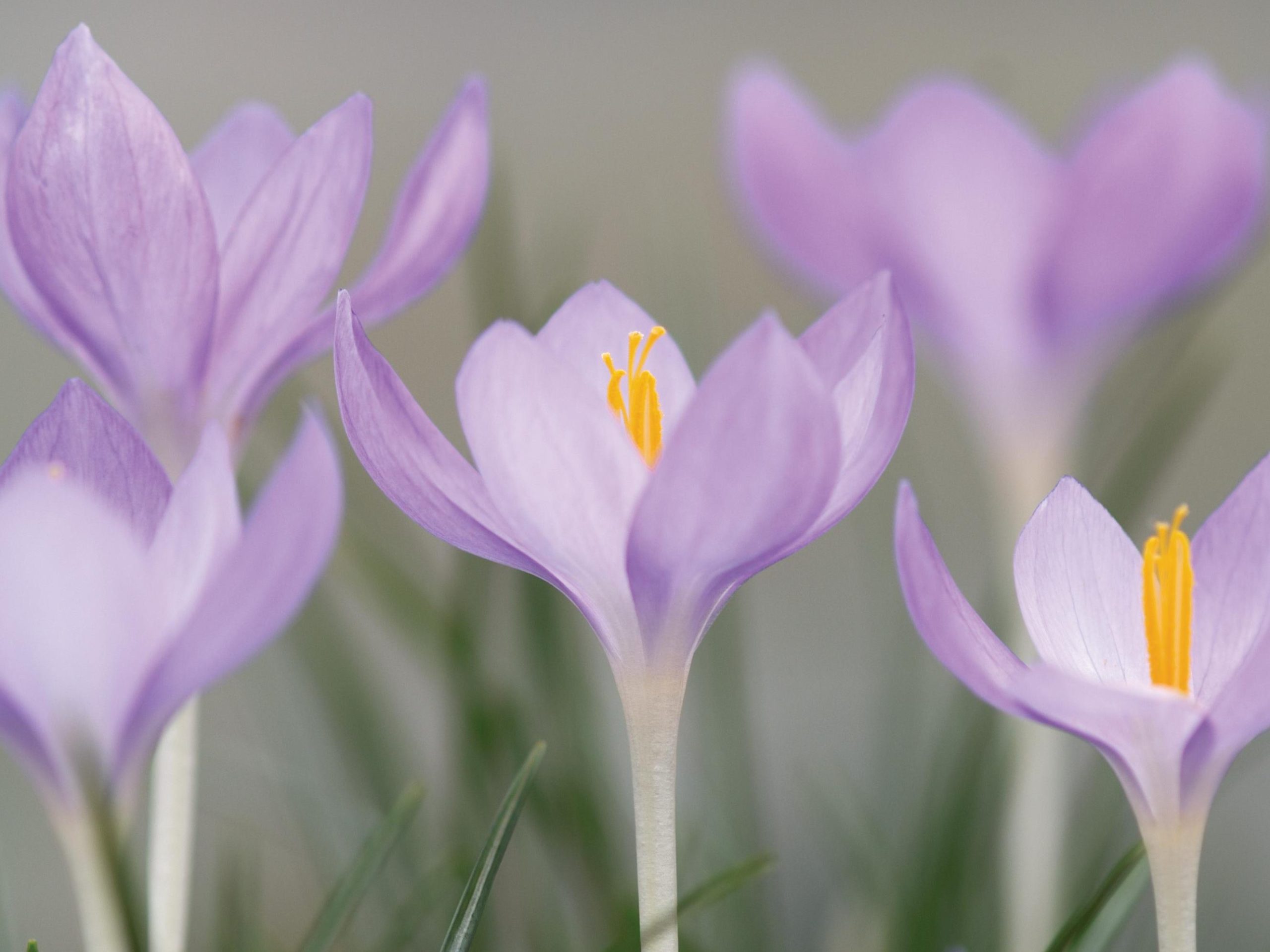
A reliable October-flowering crocus from Greece, for a bright, sunny place in well-drained soil; rock garden conditions are ideal. It flowers with the leaves visible. ‘Mani White’, with clean, white flowers is equally amenable. Height 12.5cm. AGM*. RHS H6, USDA 6b-7a†.
Nerine undulata
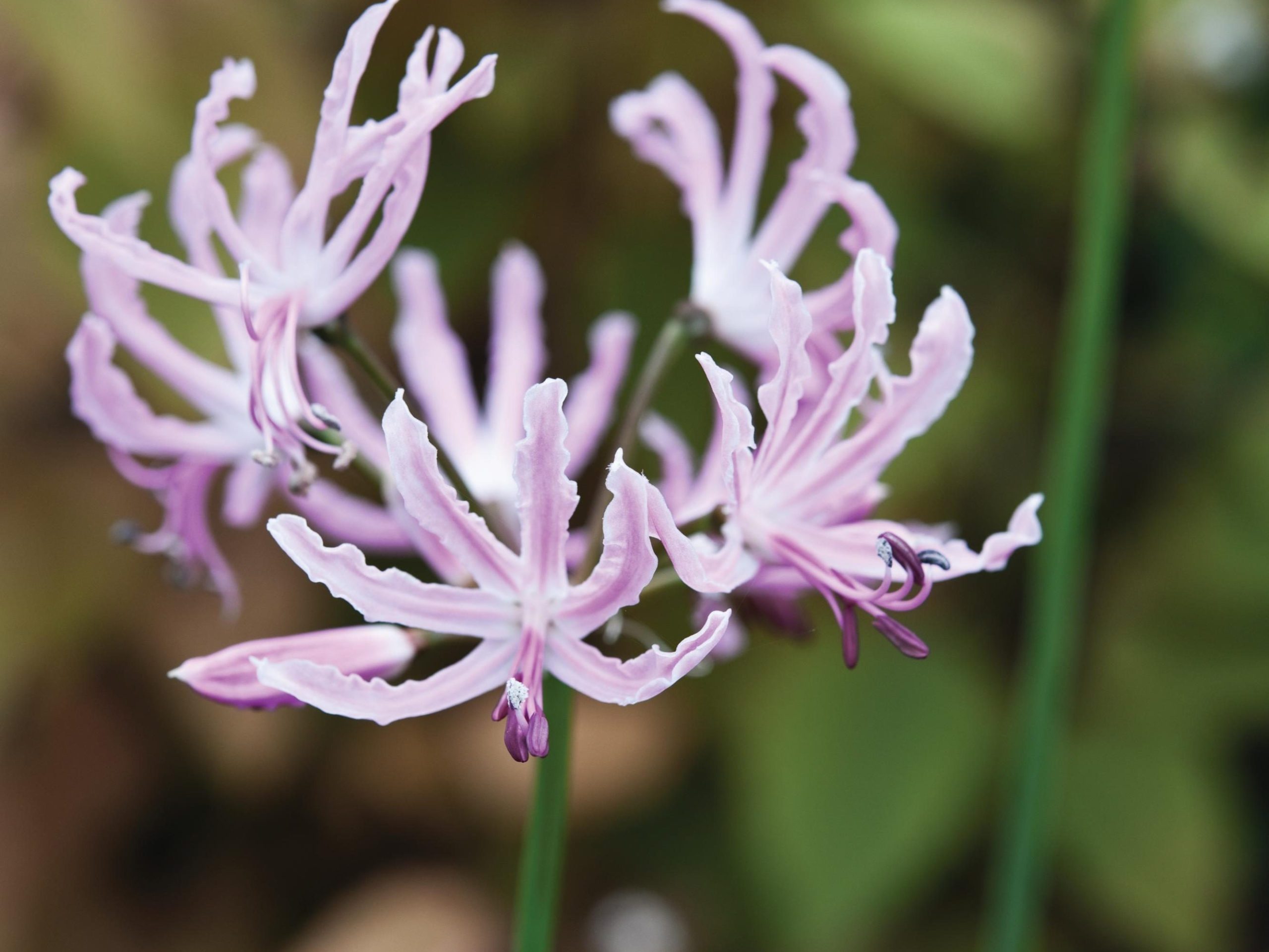
One of the smaller, less frequently seen species, this is worth planting in a sheltered place, or cultivating in a pot in a cold greenhouse. The white clone N. undulata (Flexuosa Group) ‘Alba’ is particularly lovely. 30cm. AGM. RHS H6, USDA 9b-10a.
x Amarine tubergenii
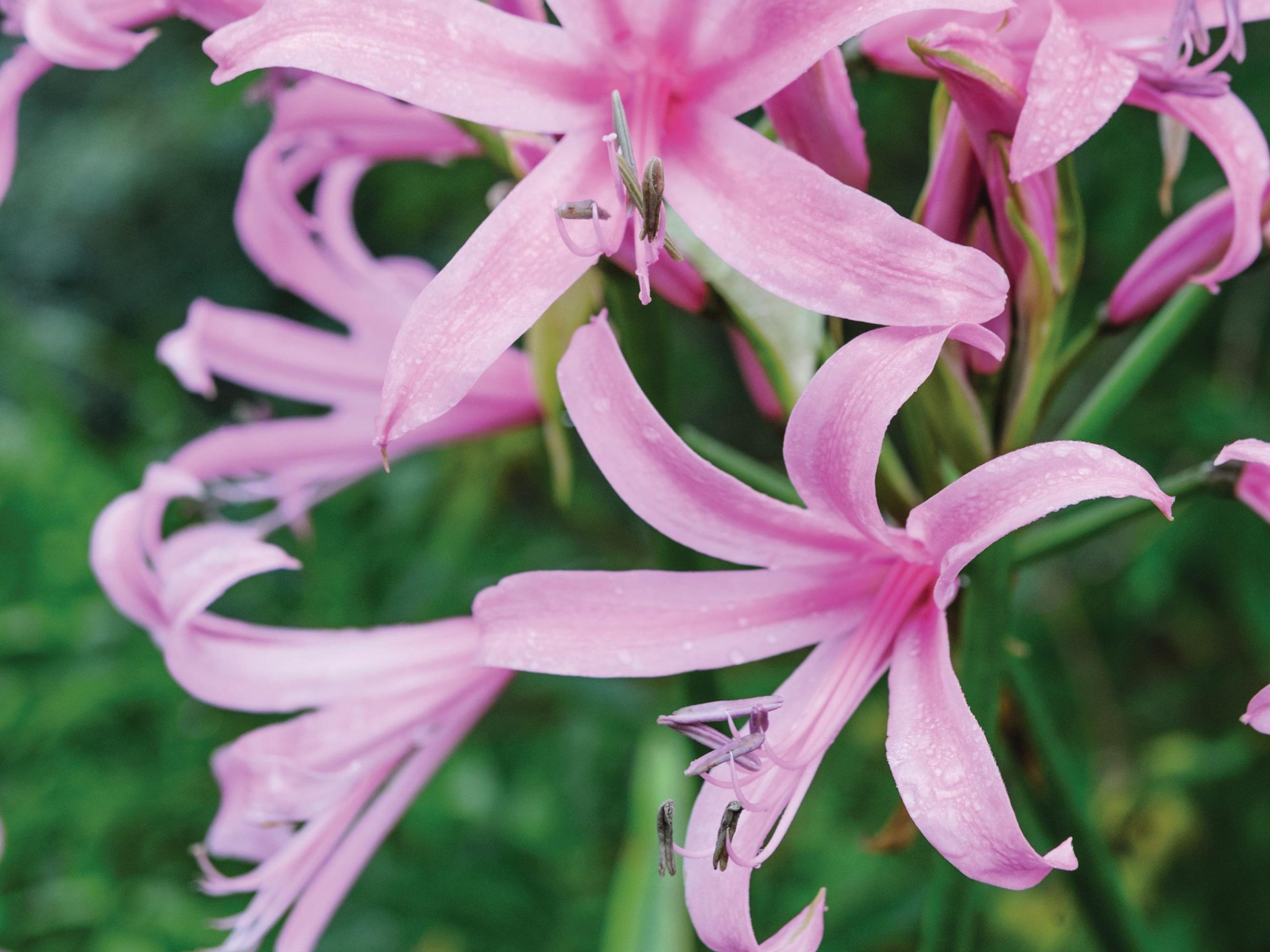
The various clones in this Nerine x Amaryllis Belladiva Series range from white to shades of pink. Tall, robust stems bear many large flowers. Leafy in spring, they need ample moisture while in growth. 30-40cm. RHS H4, USDA 7a-8b.
Arum pictum
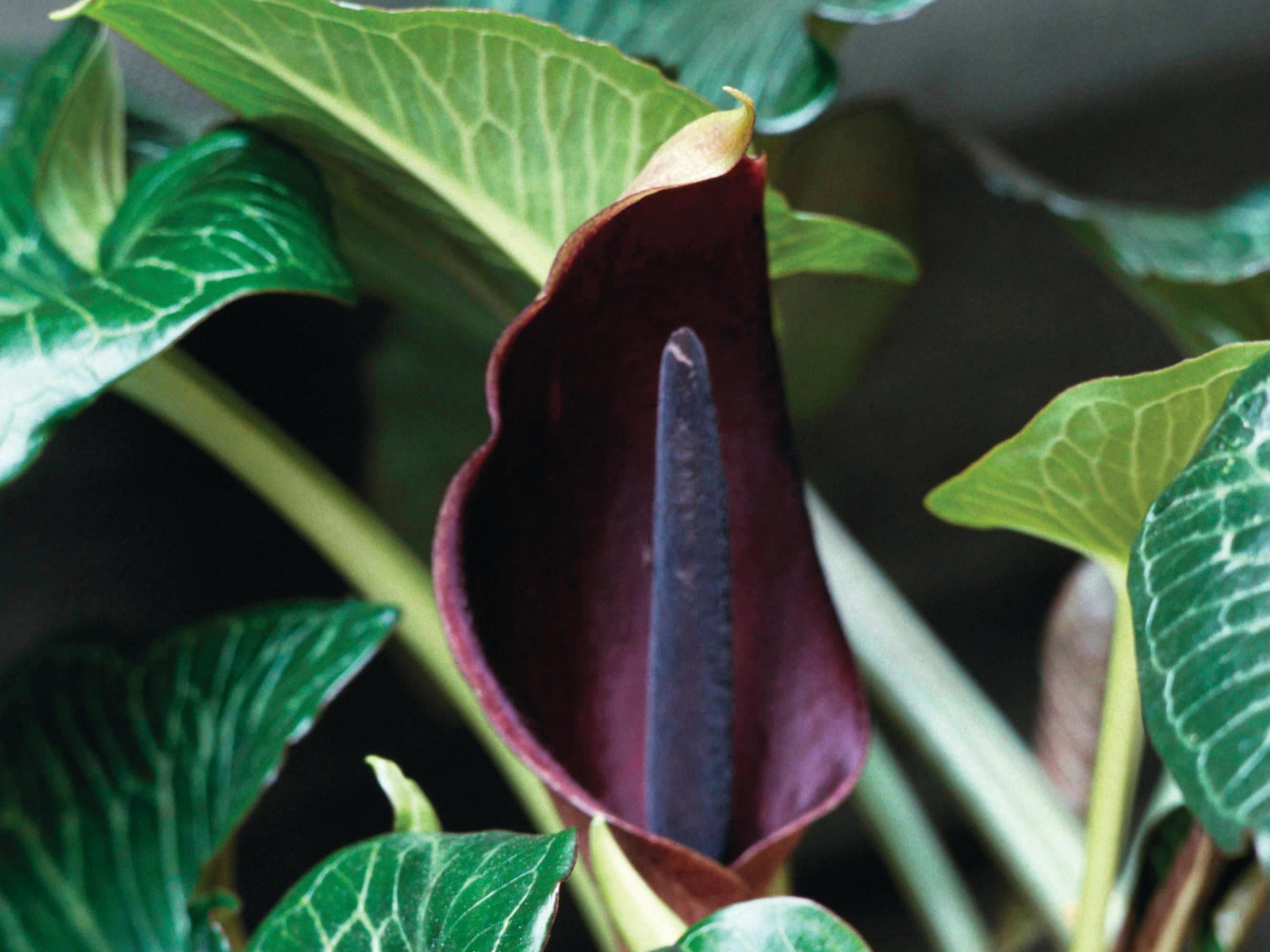
An oddity from the Balearic Islands. Short-lived maroon inflorescences smelling of horse dung are followed by handsome, dark-green leaves. Needs a warm spot. Seek the silver-veined ‘Primrose Warburg’. 15cm. RHS H3-4, USDA 9a-9b.
Nerine bowdenii
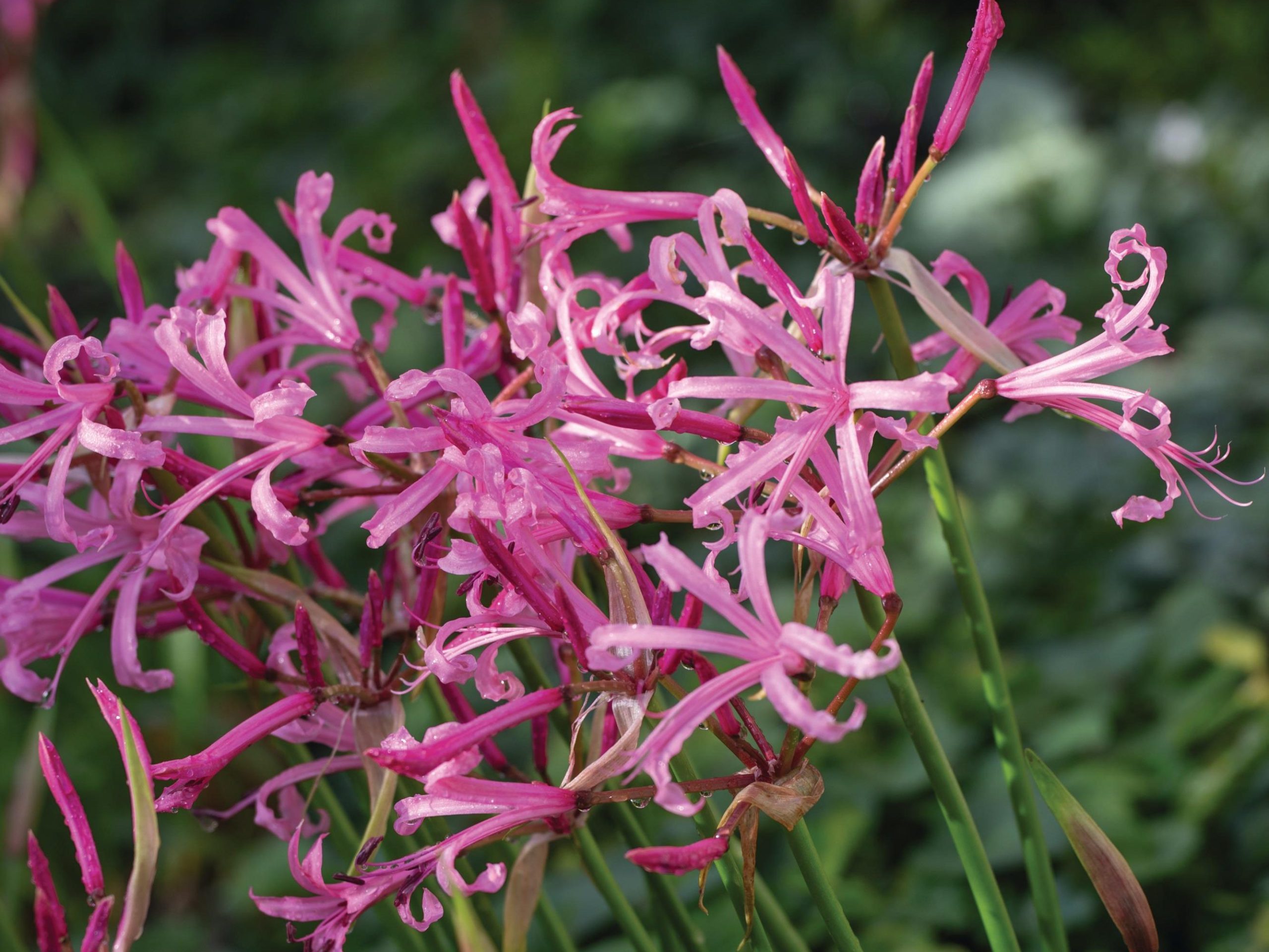
A South African stalwart that will grow almost anywhere, appreciating more moisture than it’s often given. Many forms are available, from white to rich pink. Leaves appear in spring. 45cm. AGM. RHS H5, USDA 7b-8a.
Galanthus elwesii (Hiemalis Group) ‘Barnes’
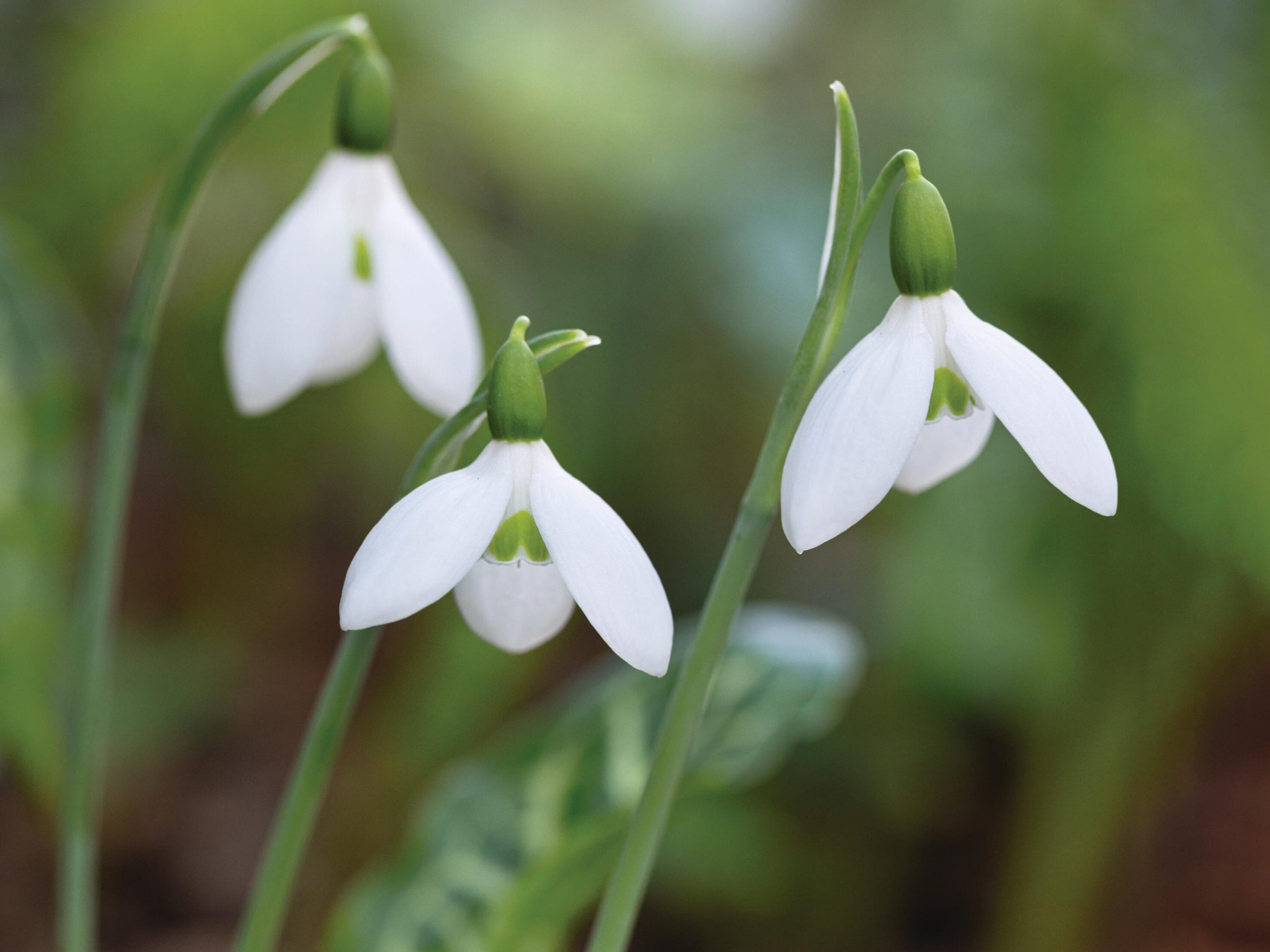
A reliable early snowdrop, appearing in late October or early November, soon forming a decent clump. The grey leaves develop fully after flowering. Needs a sunny but not arid location. 12.5cm. AGM. RHS H5-6, USDA 6a-7b.
Sternbergia lutea
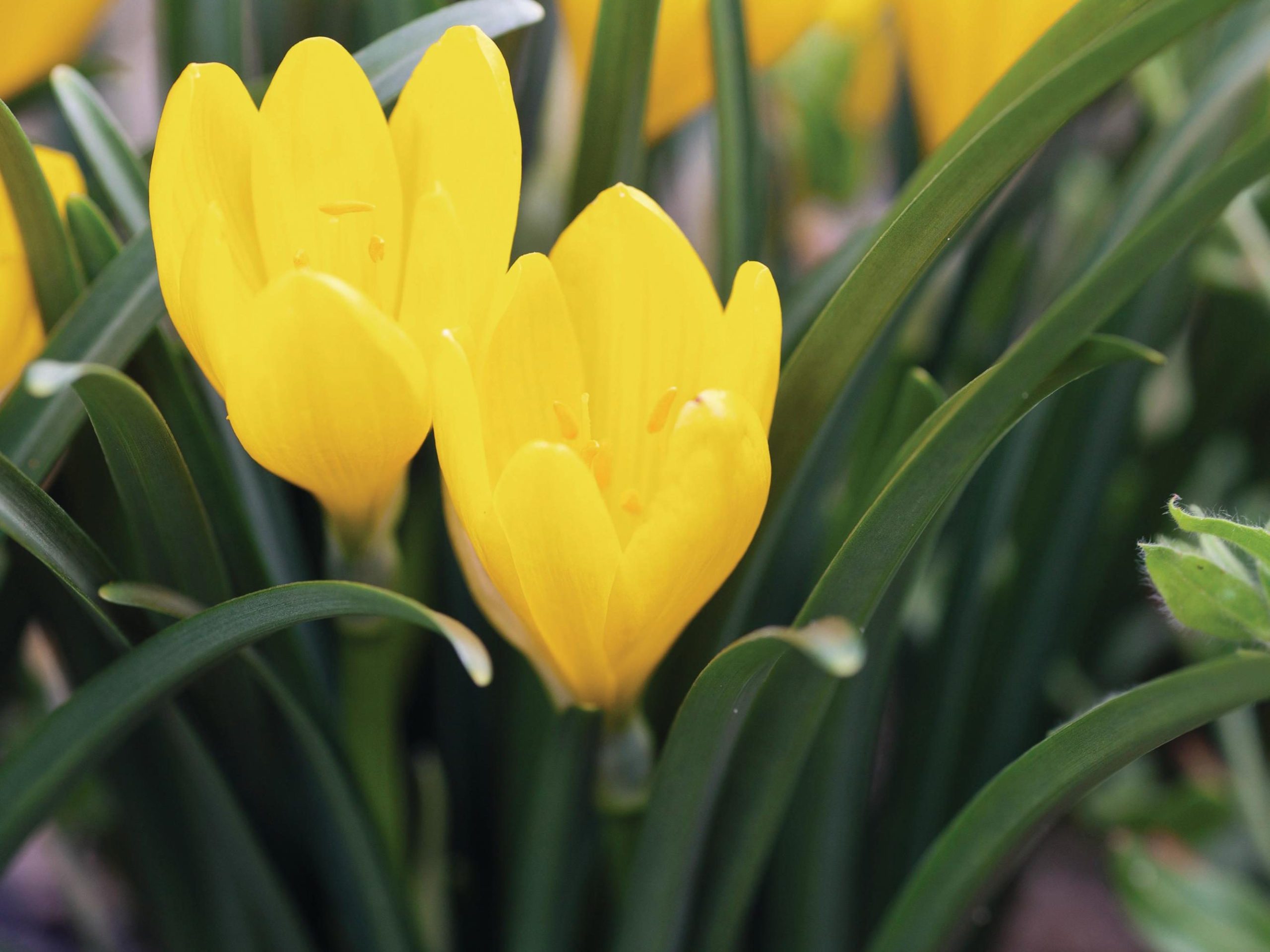
Not a golden crocus, but a member of the Amaryllis family, with dark-green, fleshy leaves. Angustifolia Group (seen here) quickly bulks up to form a good patch and is hardier than many others. 12.5-15cm. AGM. RHS H4, USDA 7a-8b.
Colchicum speciosum ‘Album’
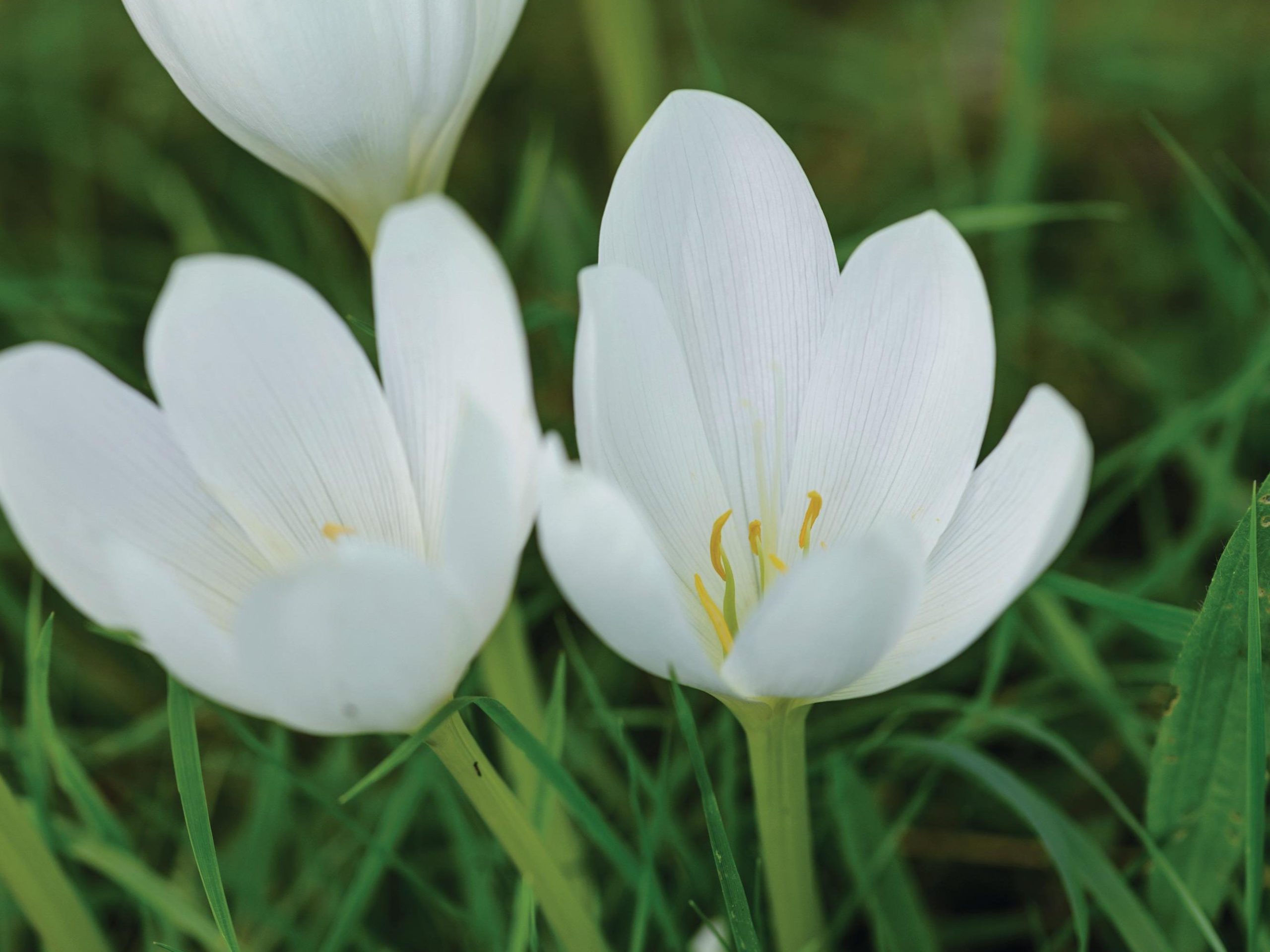
My favourite colchicum. Huge, exquisite, pure-white flowers with a green throat appear in late September or early October. Good living in fertile soil gives the best results. 15cm. AGM. RHS H6, USDA 5a-6b.
Colchicum x agrippinum
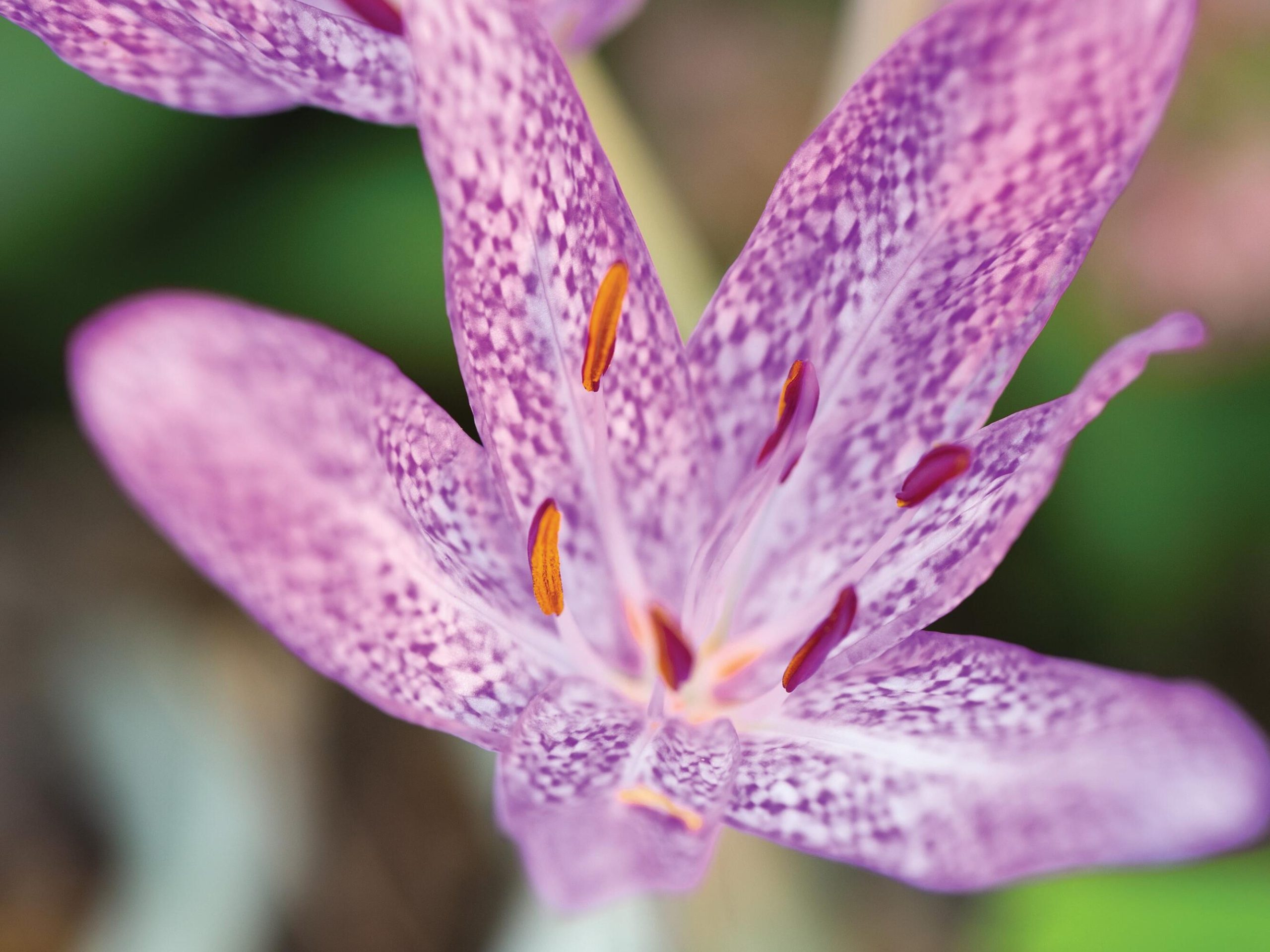
A low-growing plant with masses of flowers from late August through September; one of the best colchicums for planting in grass. Beautifully tessellated flowers with purple-and- gold anthers. 12.5cm. AGM. RHS H5, USDA 6a-7b.
Cyclamen graecum
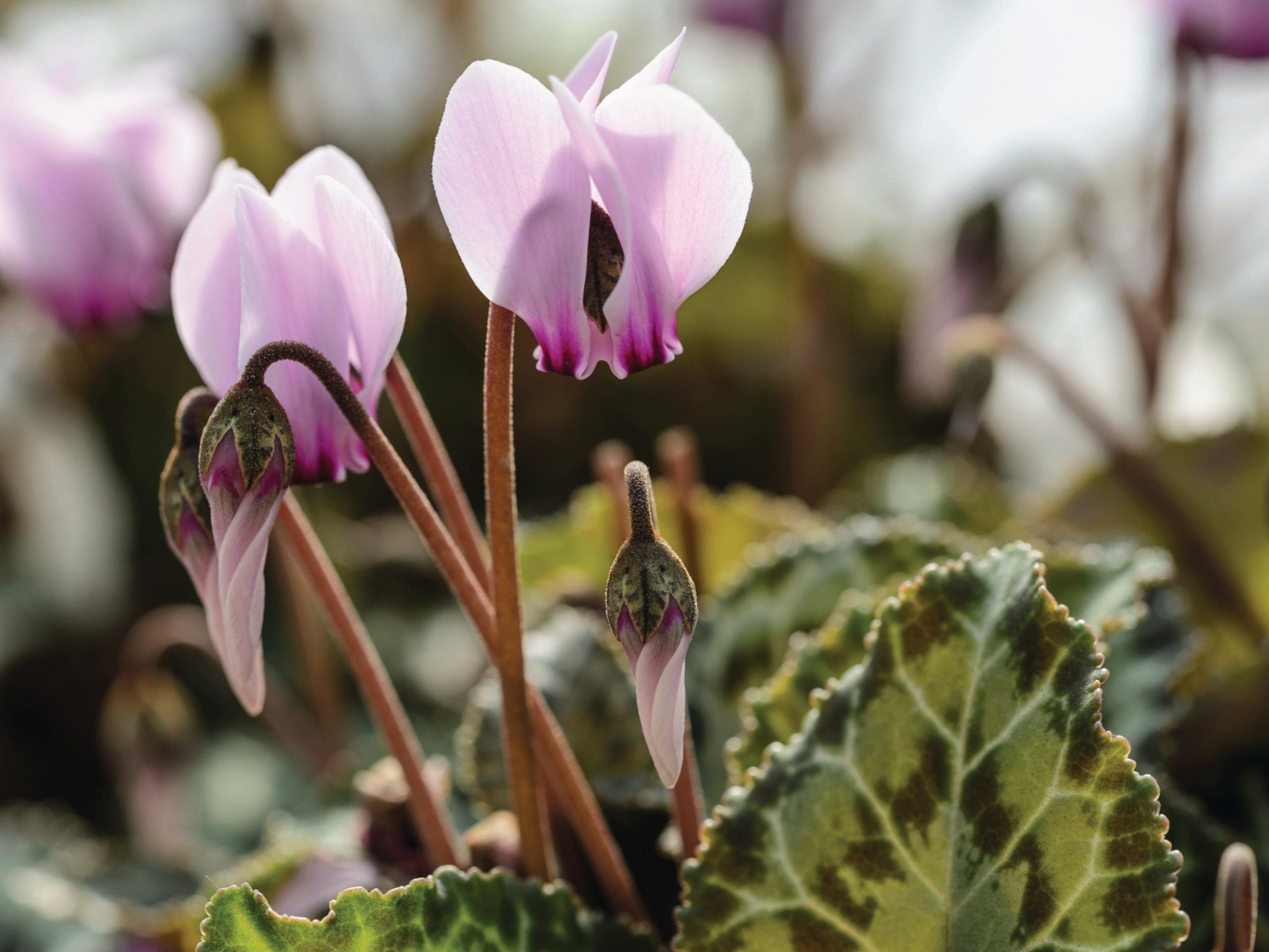
Needs a hot spot with excellent drainage, but with milder winters it is increasingly successful outdoors. Beautiful flowers and handsome foliage. Deep roots resent disturbance. 10-12.5cm. RHS H4, USDA 8b-9a.
Cyclamen hederifolium
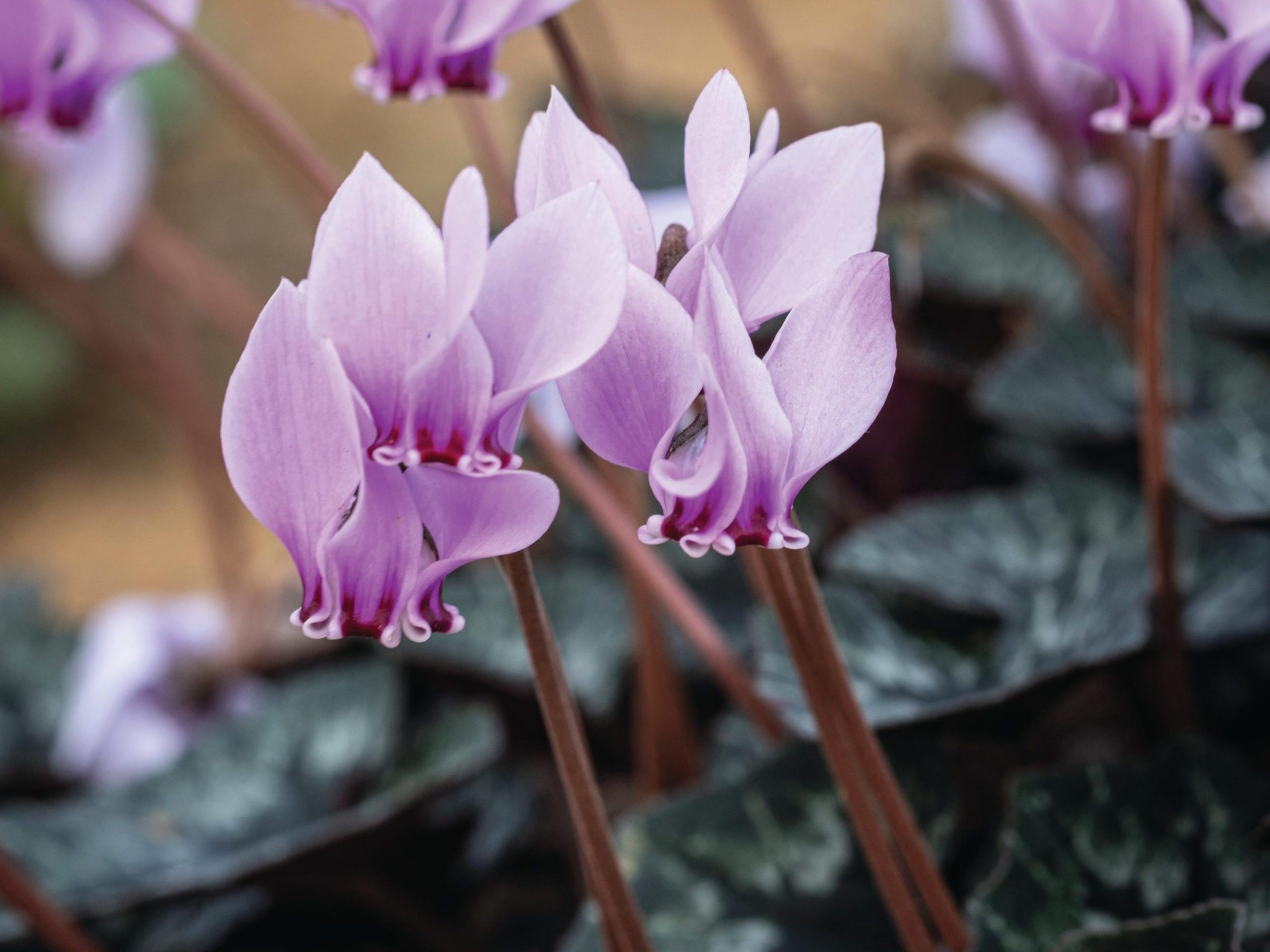
Classic cyclamen, often starting to flower in late July but continuing into late October or November. Pink is the typical flower colour but white is also common. Plant growing plants, or scatter seed. 10-12.5cm. AGM. RHS H5, USDA 7b-8a.
Amaryllis belladonna
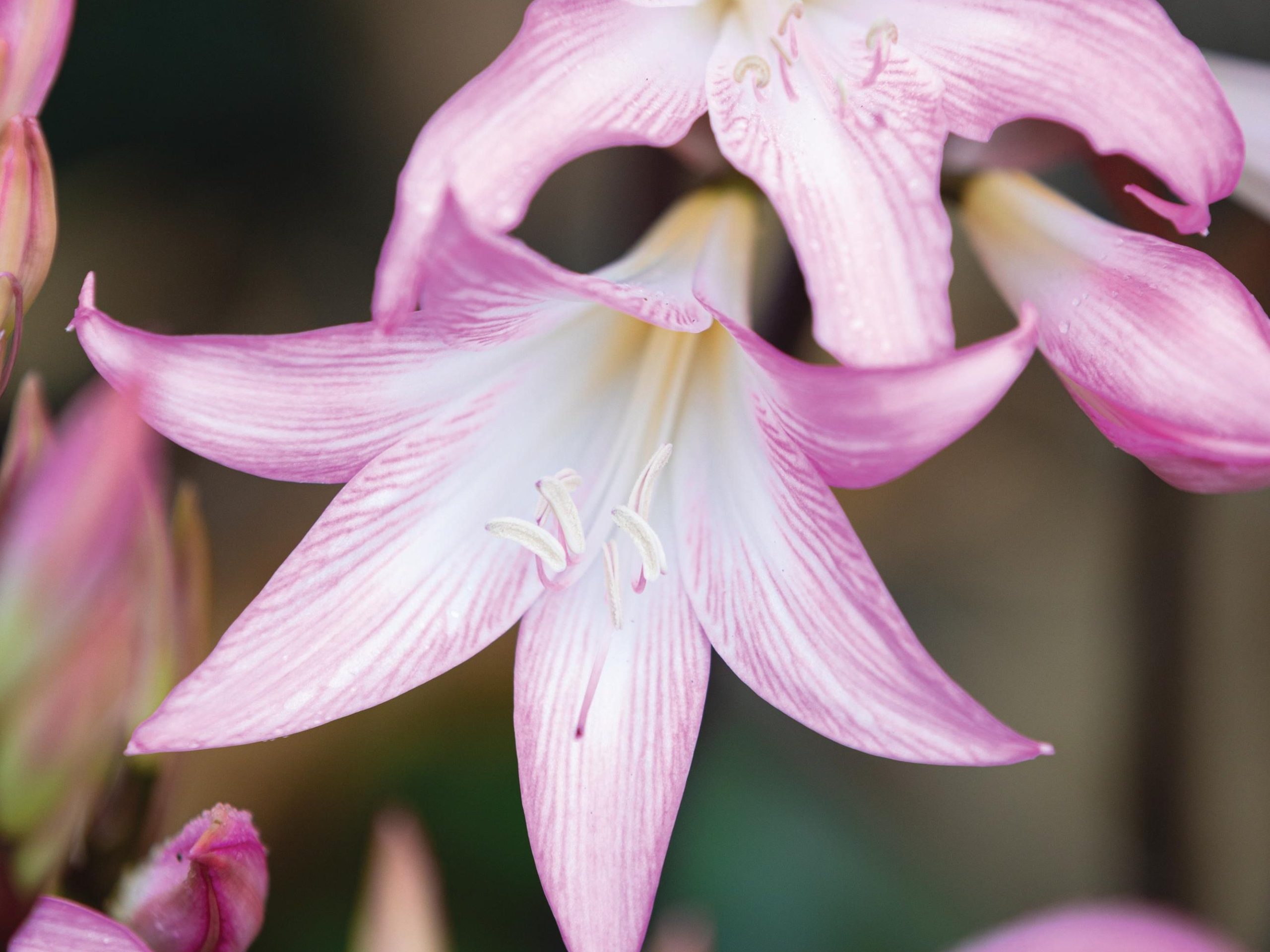
In cultivation, this needs a warm, sheltered, sunny place so its lush leaves don’t get too badly frozen in winter. A good soaking in August will encourage flower appearance. 35-45cm. AGM. RHS H4, USDA 8a-9b.
Crocus speciosus
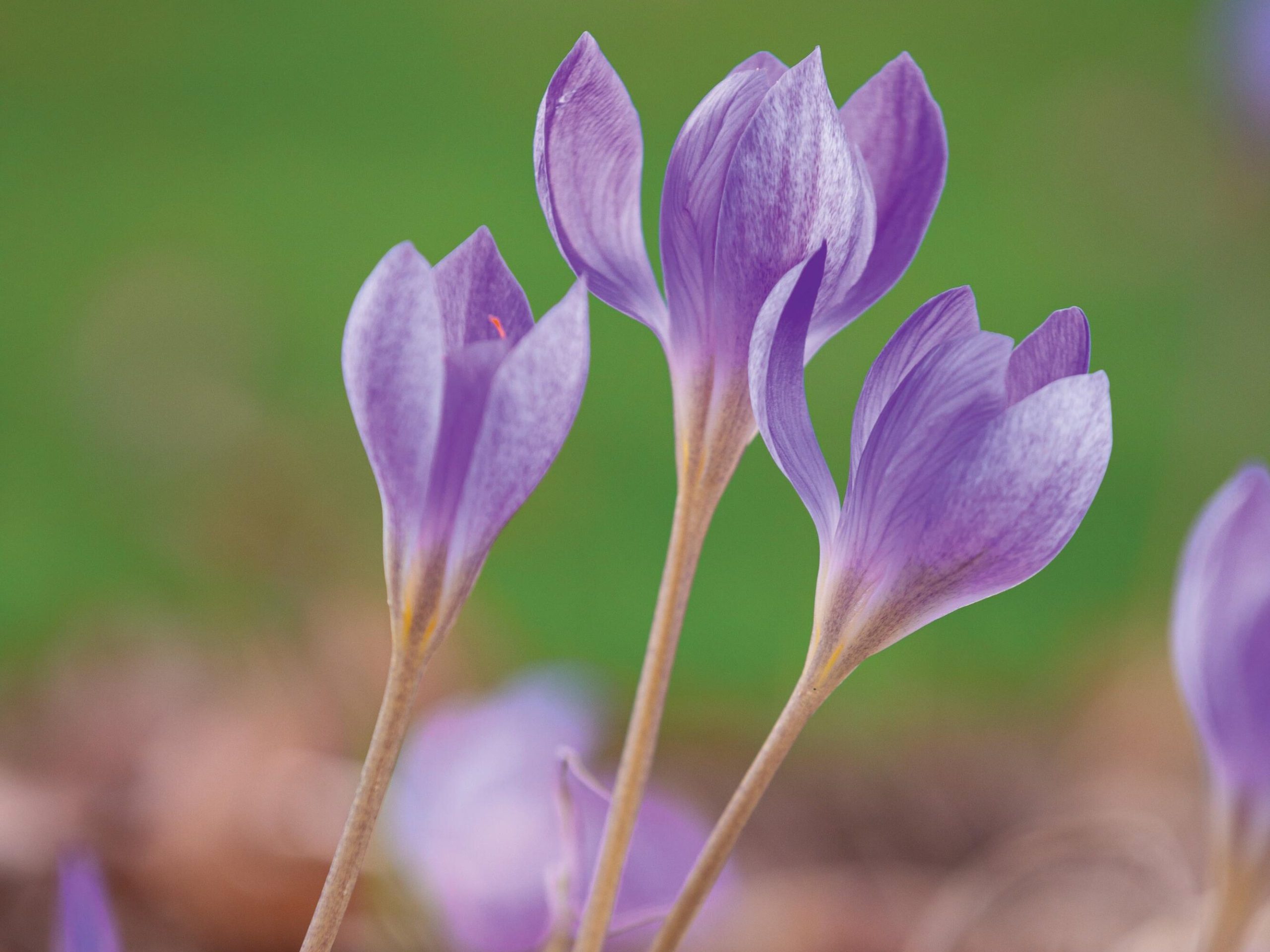
The best and showiest of autumn crocuses. Spreads freely when happy, and is useful for naturalising in grass or under trees. Variable in colour and size, the best forms are a good dark blue with conspicuous veins. 12.5-15cm. AGM. RHS H6, USDA 5a-6b.
Crocus pulchellus
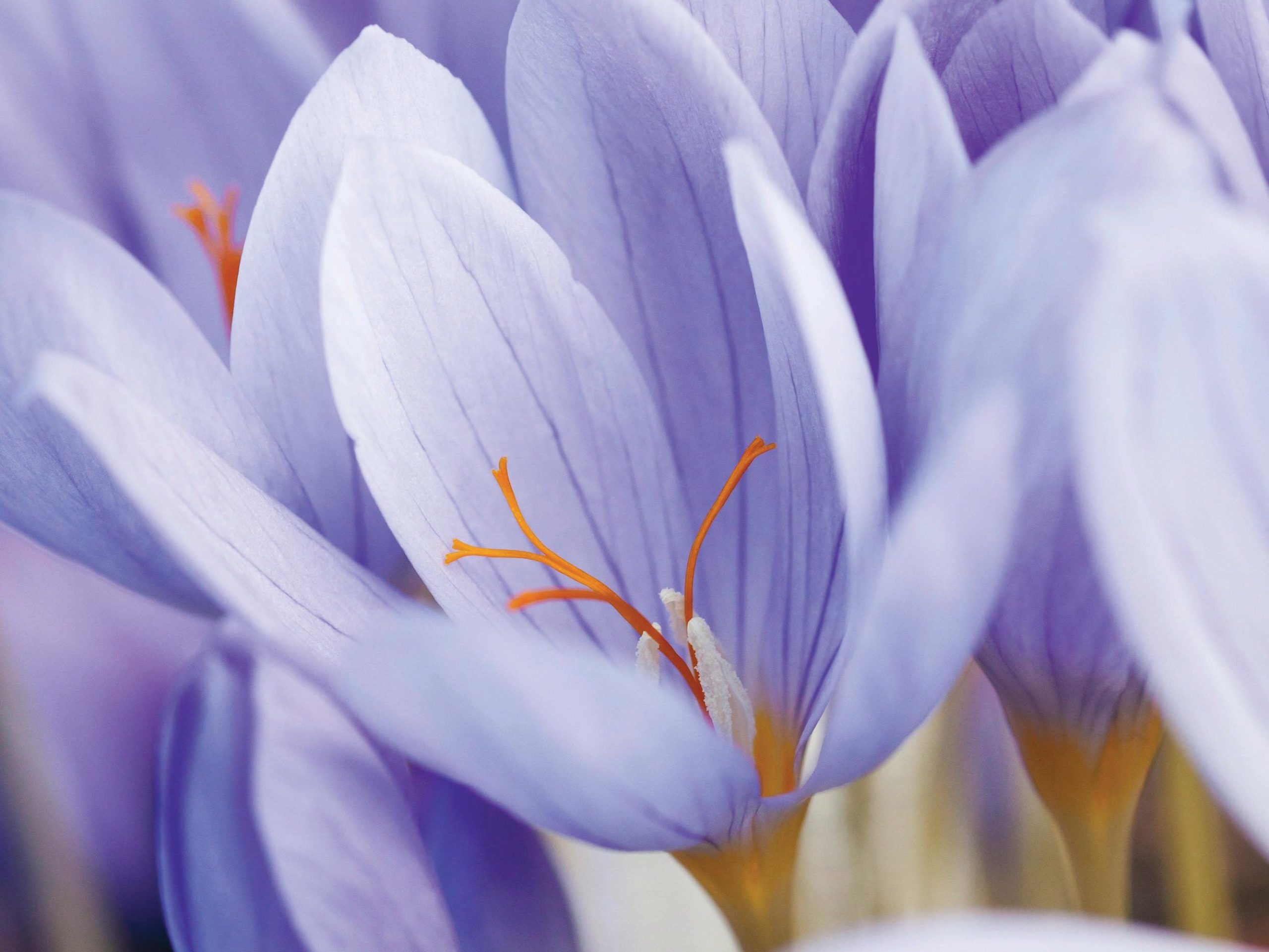
Beautiful blue flowers with a yellow throat and finely divided orange stigmata. A woodland plant in the wild, from near Istanbul, it is happiest in places that don’t get too dry and will then self-sow. A white form is also available. 12.5cm. AGM. RHS H6, USDA 5a-6b.
How to grow autumn-flowering bulbs
Where to plant autumn-flowering bulbs
It is difficult to generalise with so many origins and plant types, but most will want a sunny place, to ensure that their flowers open, and maximum light while growing, so it is best not to let their sites get overgrown by other plants in summer.
Good drainage is needed by all, but it should not be assumed that they want poor soil – most bulbs are greedy feeders. It always helps to water bulbs in a dry spring so that they can keep growing for as long as possible and fatten up for next season.
Many autumn-flowering bulbs look well in grass, especially if the sward is not too tight. Thin grass under trees is ideal for Cyclamen hederifolium, Crocus speciosus, Crocus pulchellus and colchicums, though the latter can manage rougher conditions. Turf can be mown from after the flowers fade to up until the leaves appear.
Place Nerine bowdenii, x Amarine and the larger colchicums at the front of the herbaceous border to bring freshness late in the season. Hyacinths are useful companions to provide spring colour in the same areas.
In the rock garden, smaller bulbs appreciate the extra drainage, and are more visible than they would be elsewhere. Examples include many crocuses, snowdrops, smaller cyclamen, the diminutive snowflake Acis autumnalis and Scilla autumnalis.
Species from Mediterranean climates with winter-green foliage such as Arum pictum and Amaryllis belladonna are at risk from frost damage, so grow them at the foot of a south-facing wall.
When to lift autumn flowering bulbs
Most autumn-flowering bulbs can be lifted and divided while dormant in summer, when it seems that the clumps are getting congested. The amaryllids (Amaryllis, Galanthus, Nerine and Sternbergia) do not like to be desiccated, so replant them promptly and don’t damage any persistent roots.
Colchicums multiply fast and produce dense masses of corms, easily lifted to spread around, though they will persist for decades untouched. Cyclamen must be grown from seed, and it is rewarding to sow crocuses either in situ from seed collected in May, or in pots in a cold frame.
How to protect bulbs from pests
Most of the species discussed here are seldom afflicted by pathogens. Mice and squirrels enjoy crocus corms; planting them deeply helps. Some of the more tender species may suffer in hard winters if their foliage is damaged, but the bulb usually survives. Most bulbs will be killed if they get frozen while growing in pots, so plunge plants in pots into a sand bed.
Where to see and buy
- Avon Bulbs Blows Lane, Sutterton, Boston, Lincs PE20 2EJ. Tel 07425 833906, avonbulbs.co.uk
- Jacques Amand The Nurseries, Clamp Hill, Stanmore, Middlesex HA7 3JS. Tel 020 8420 7110, jacquesamandintl.com
- Kevock Garden Plants Kevock Road, Lasswade, Midlothian EH18 1HX. Tel 0131 454 0660, kevockgarden.co.uk