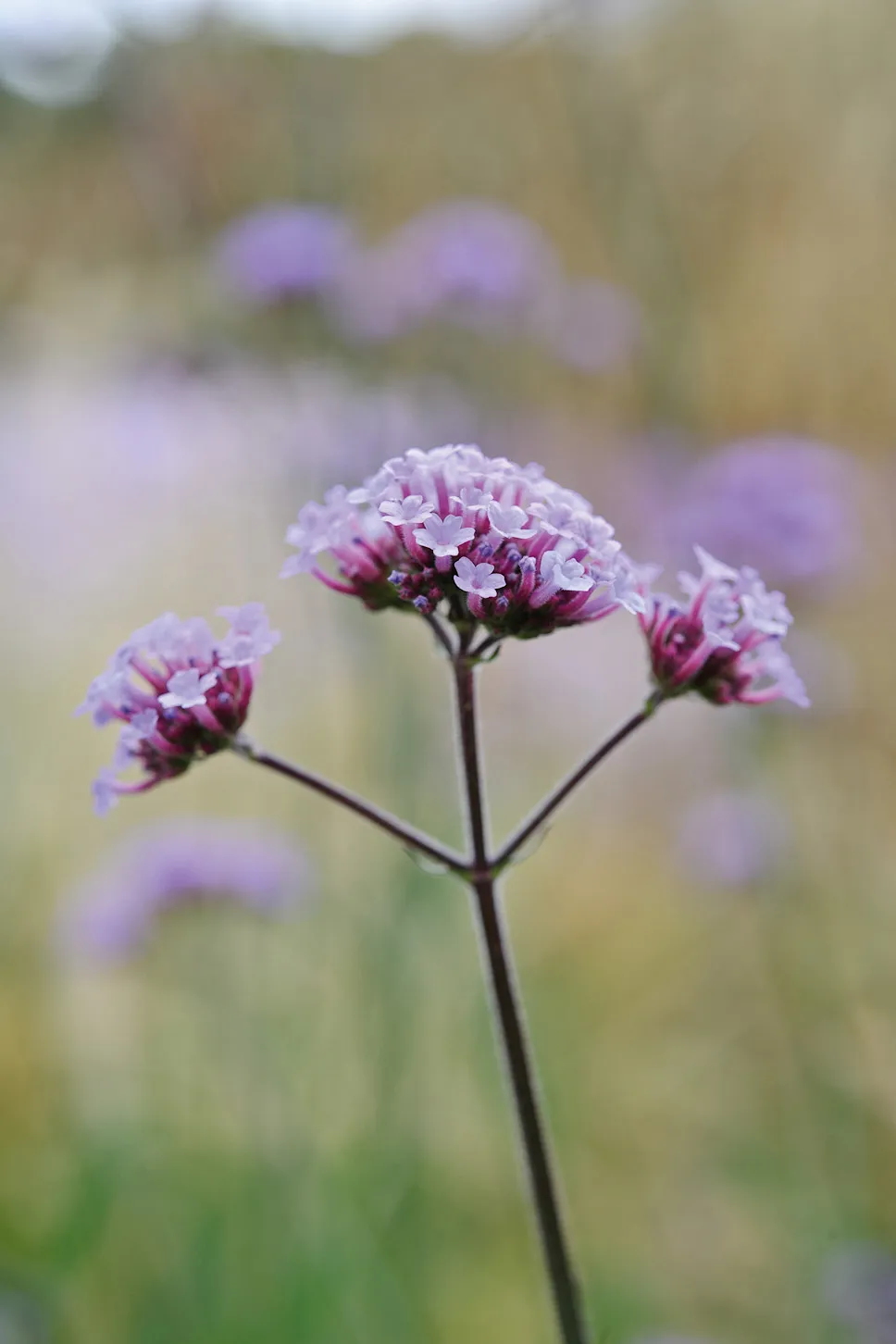
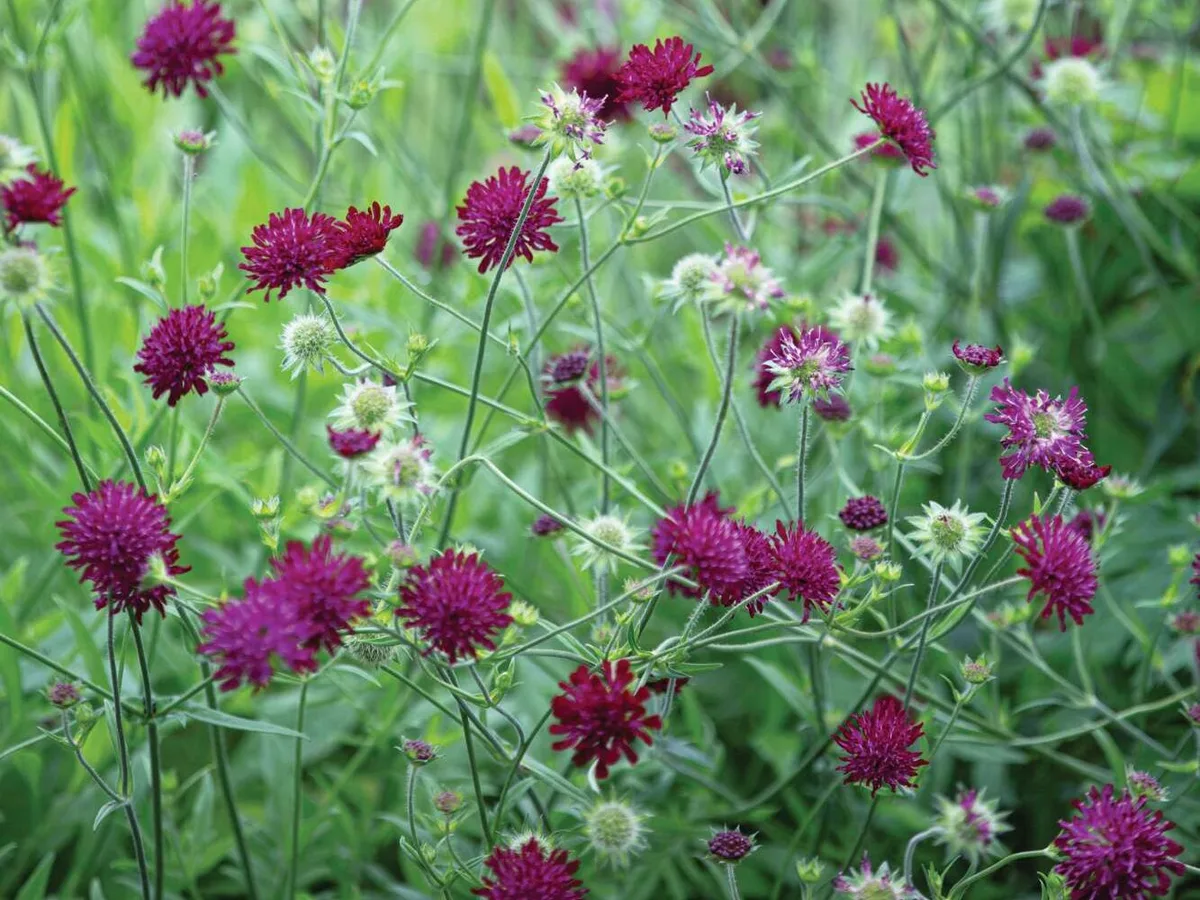
With their variety in size and colour, continuity of flower, gentle well-behaved nature and appeal to both humans and wildlife, there is every reason to add a few jolly pincushion or scabious-like flowers to your garden this year.
The field scabious, Knautia arvensis, shares its appearance and characteristics with several other genera, including Cephalaria, Lomelosia, Succisa and Succisella, along with the true scabious, Scabiosa.
A scabious flower is actually a cluster of many separate flowers held tightly together to give the appearance of one large one, known as a composite inflorescence. Within this, the individual flowers open over a period of time, releasing their pollen and nectar gradually - remaining highly desirable to bees and other pollinators for several weeks.
In fact, the flowering season can last for months, often from early summer or midsummer through to autumn. Once the flowers have finished, many, including Cephalaria litvinovii and Lomelosia cretica, produce attractive seedheads that are enjoyed by garden birds and insects.
You may also like
- How to grow perennial foxgloves, fast becoming a designer favourite
- How to grow zinnias - plus the best to grow
In the garden, they are happy in moderate to free-draining soils and will enjoy a sunny south- or west-facing aspect. Gardeners with heavier soils should mound the bed to create conditions that will be more free-draining, as most dislike being waterlogged when dormant. Despite their gentle, soft appearance, they can take exposed and alkaline conditions, so still grow well on windy sites and in thin, chalky soils. In fact, growing them in rich soils can make them rather soft and lush, which is fine for summer but in winter can make the enlarged soft crowns susceptible to frost damage.
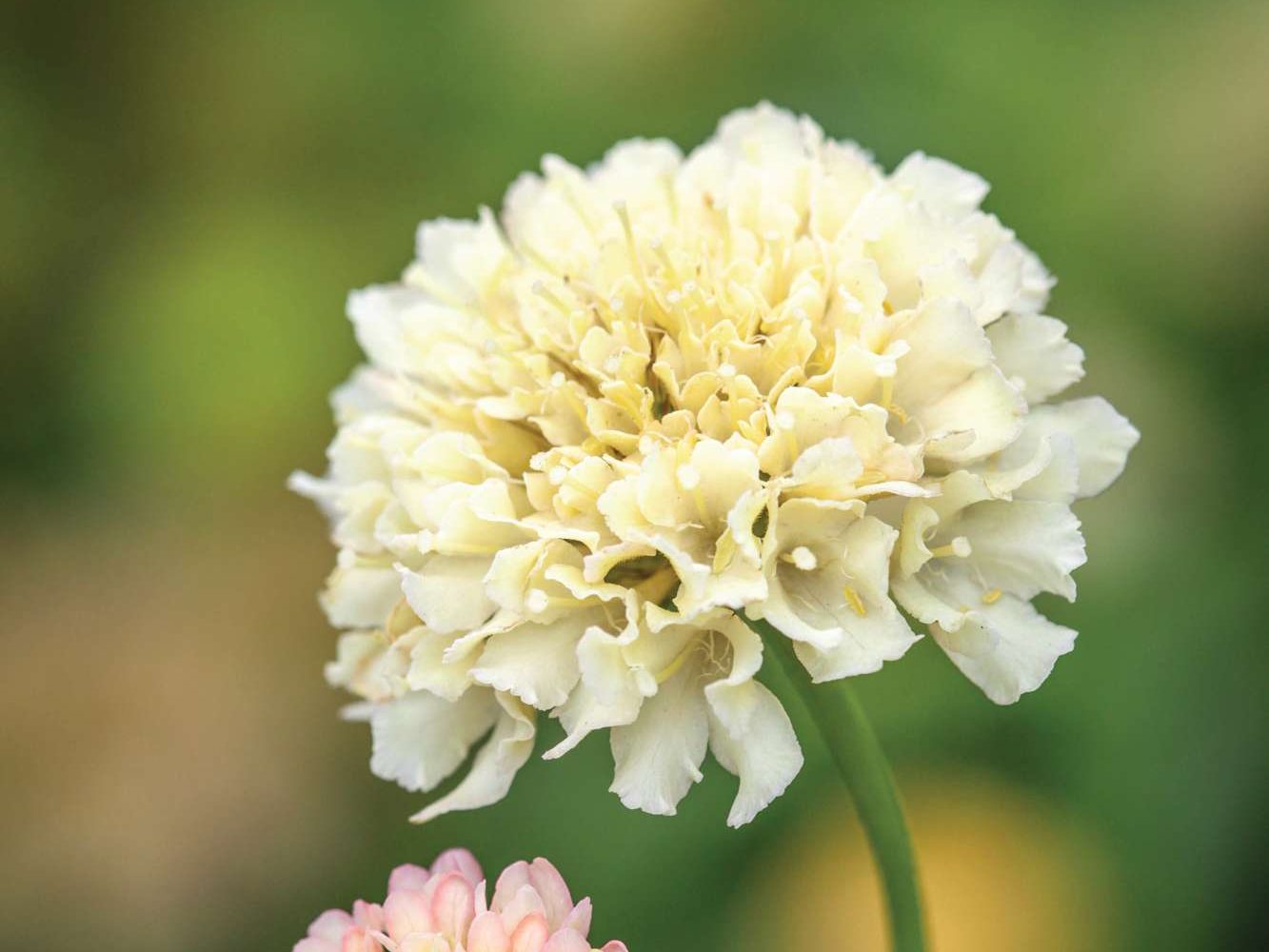
Their natural, relaxed aesthetic means they work well in many different styles of garden. Cottage and mixed borders show them off perfectly, especially the larger-flowered, more cultivated varieties such as Cephalaria gigantea and Scabiosa caucasica ‘Perfecta Blue’. The slightly smaller flowering types like Cephalaria alpina and Knautia macedonica work well in naturalistic or grass borders, as well as gravel beds, thanks to their informal wiry habit and self-seeding tendency. Going even more wild, the native Succisa pratensis and its creamy-yellow cultivar Scabiosa ‘Buttermilk’ will delight in meadows and grassland.
As they naturally grow alongside other plants, they look great when partnered with herbaceous perennials such as Salvia, Cirsium, Hemerocallis, Valeriana, Verbena and Veronicastrum. Ornamental grasses such as Molinia and Miscanthus, Panicum and Pennisetum work well too. One point worth remembering is that these plants prefer to not be smothered by their neighbours and so matching size and vigour of any plant partners is important for success.
How to grow scabious flowers
When to plant scabious
Being summer-loving herbaceous perennials, they are best planted in spring to summer, allowing plants to establish fully before the colder temperatures of winter arrive.
How to plant scabious
Match the level of the plant in the pot with that of the surrounding soil to avoid planting too deep, as this can cause stems to rot. Planting slightly high or on a mound can also help. No additional
organic compost is required. Allow space from neighbouring plants for light and air to promote strong, healthy growth.
Caring for scabious
An organic or gravel mulch can be applied in spring, but try to not smother the crown and growth points, as this can cause rot. Water during dry periods in the first year to aid establishment, but in following years this should not be necessary.
Pruning scabious
Deadheading plants will promote continued flowering; remove entire stems after flowers have finished rather than individual flowers. Plants will naturally die back in early winter to a few basal leaves. Old, dead growth can be removed or left until spring as extra frost protection.
Propagating scabious
Basal cuttings can be taken in mid- spring and root well when given some bottom heat and humidity in a propagator. Select strong stems almost pencil thick and 10cm long, cutting low at the base below a leaf node, before inserting into a peat-free compost and perlite cutting mix. Alternatively, bought seed that’s been cold stratified can be sown inside in early spring, pricked out and grown on for planting in late
spring or early summer. Some of the less hardy cultivars like Scabiosa atropurpurea ‘Beaujolais Bonnets’ can be grown as an annual or short-lived perennial, as they will still flower profusely in their first year.
Scabious problems
This group of plants is mostly trouble free in the right growing conditions. Stem and winter rot are most common and Knautia macedonica is prone to powdery mildew in dry summers. To alleviate the problem, water and then cut back flowering stems and infected foliage, and apply a composted mulch annually.
Beautiful pincushion flowers to grow
Knautia macedonica ‘Mars Midget’
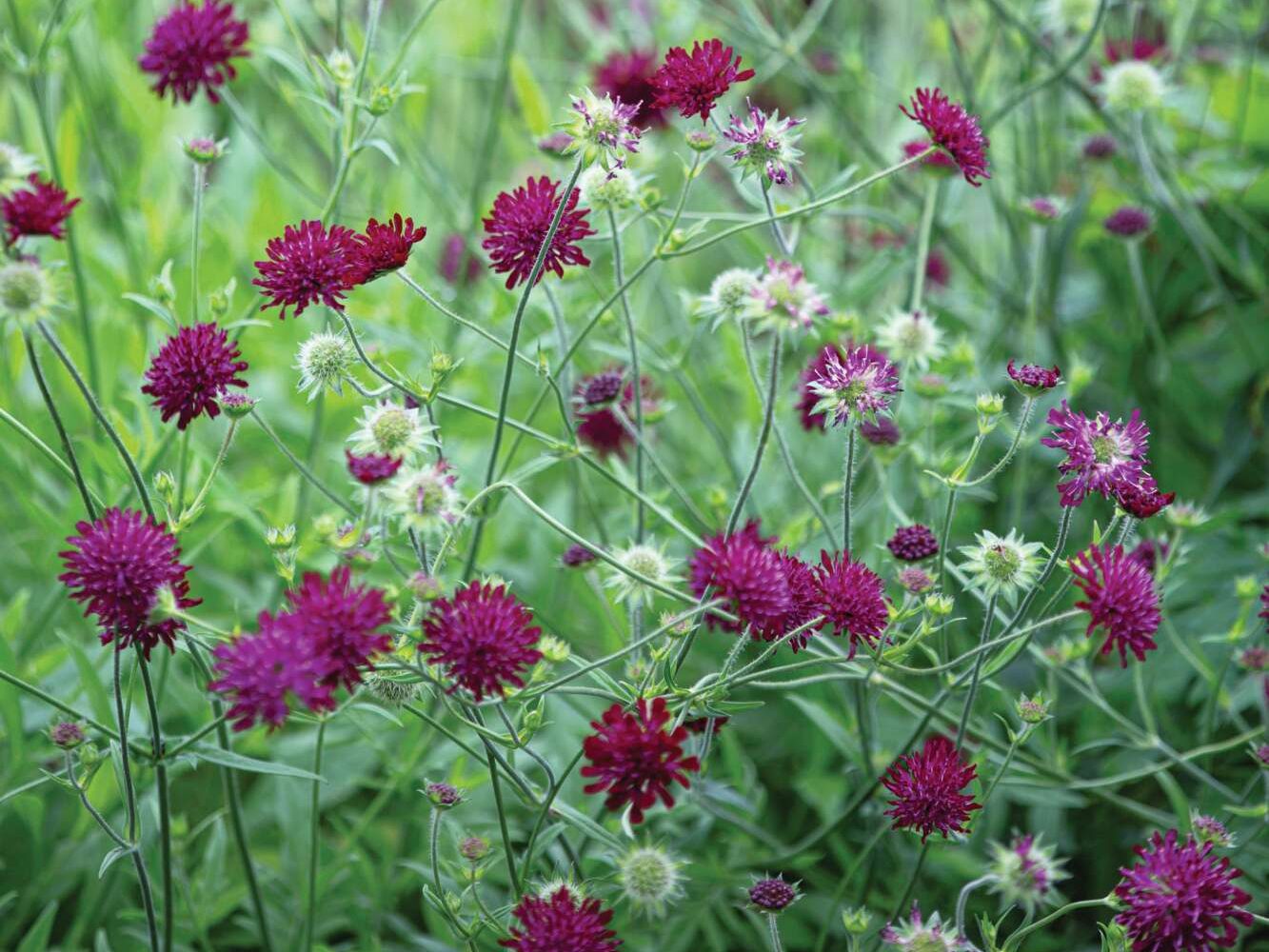
A compact version of the species, forming a mound of tidy mid-green foliage and crimson flowers that sit neatly at 50cm tall. Best towards the front of a border. Height and spread: 50cm x 40cm. RHS H7, USDA 5a-8b
Lomelosia cretica
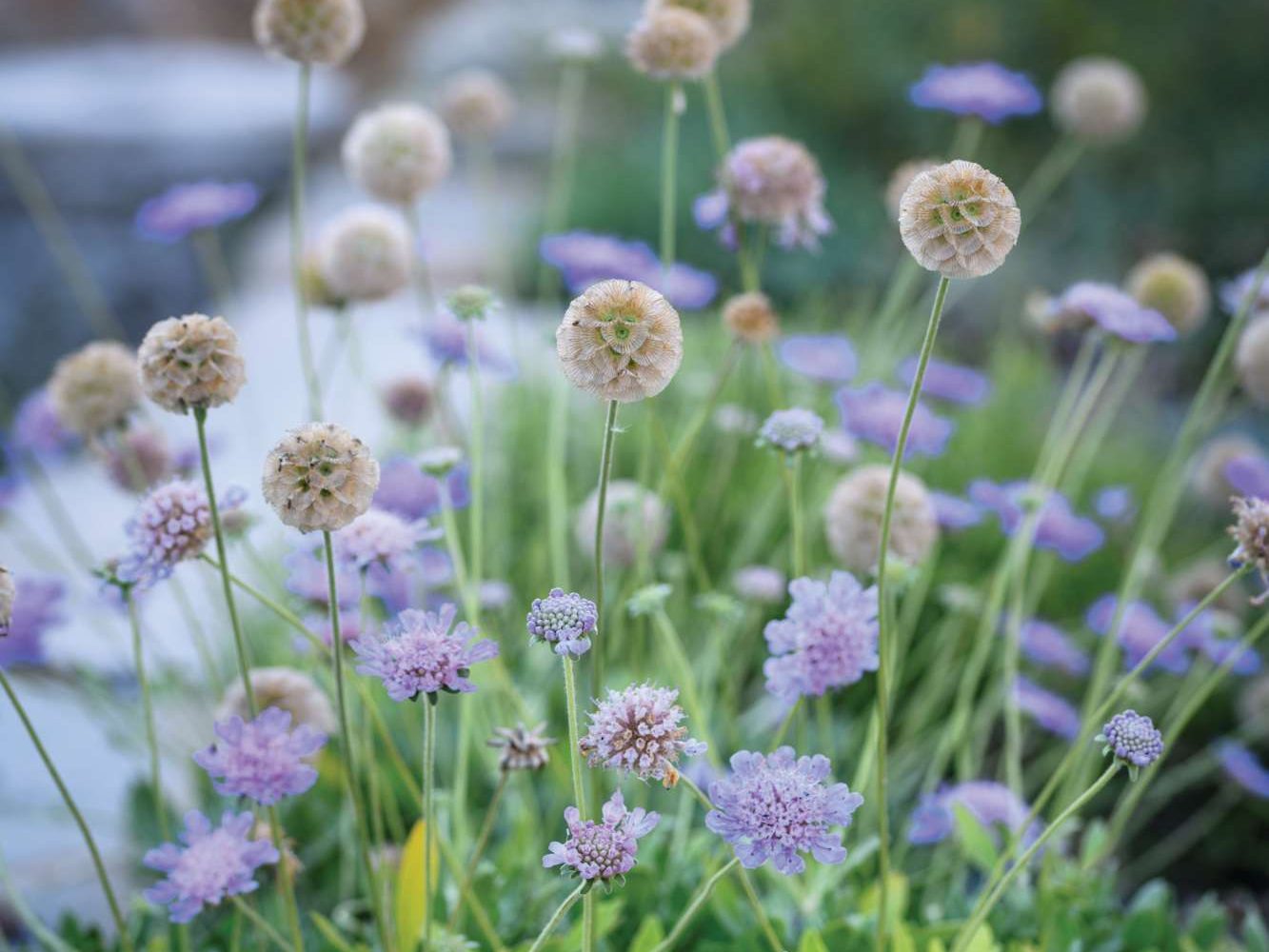
Lilac-lavender flowers are held on slender stems from late spring into summer, followed by attractive, papery, spherical seedheads, above a compact mound of silvery-green foliage. 45cm x 45cm. RHS H4
Scabiosa caucasica ‘Perfecta Blue’
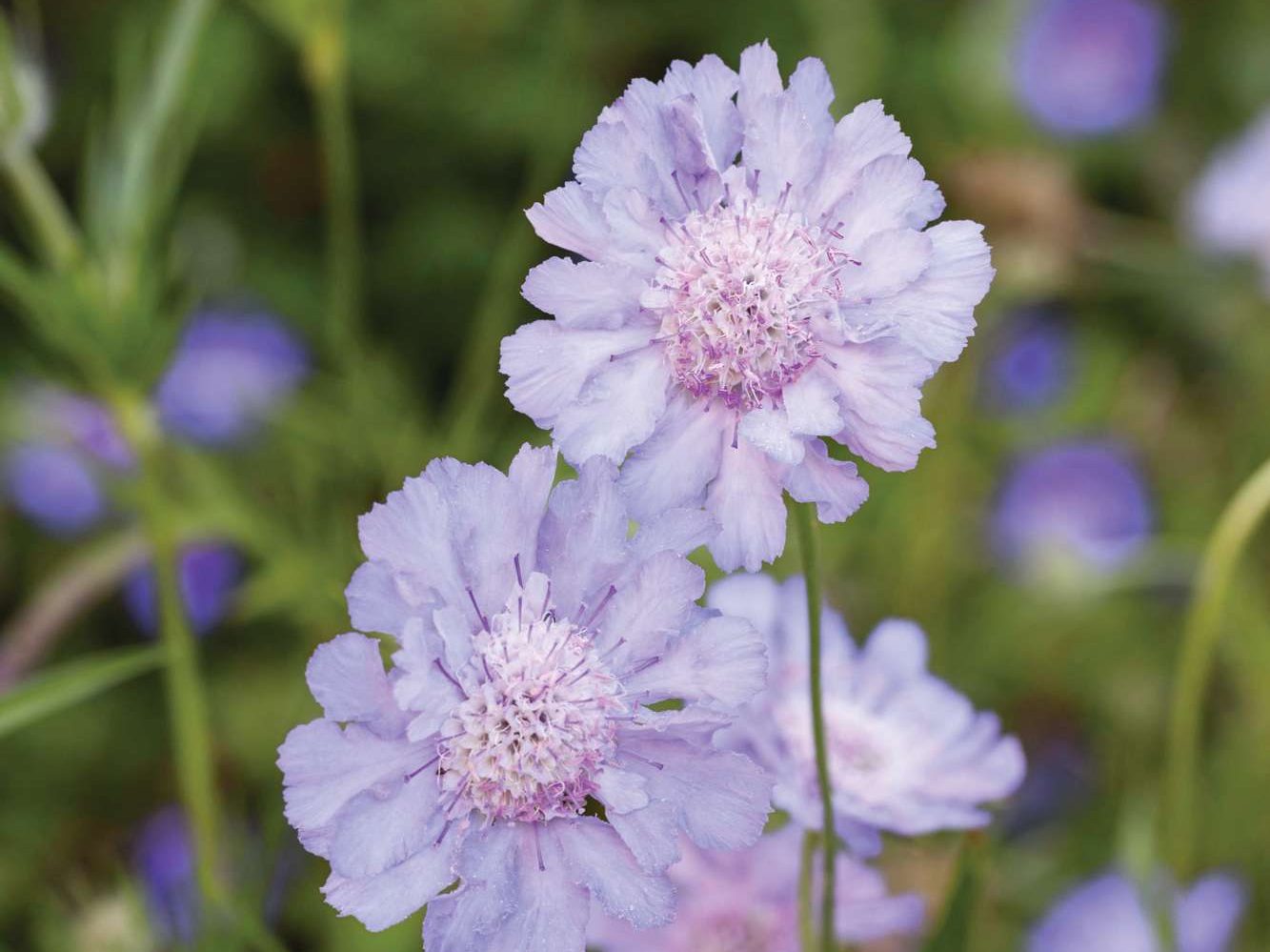
Large lavender-blue flowers with pale centres and frilly edges appear throughout summer to early autumn, held on strong stems above compact, fine, grey-green foliage. 45cm x 45cm. RHS H4, USDA 3a-10a.
Succisa pratensis
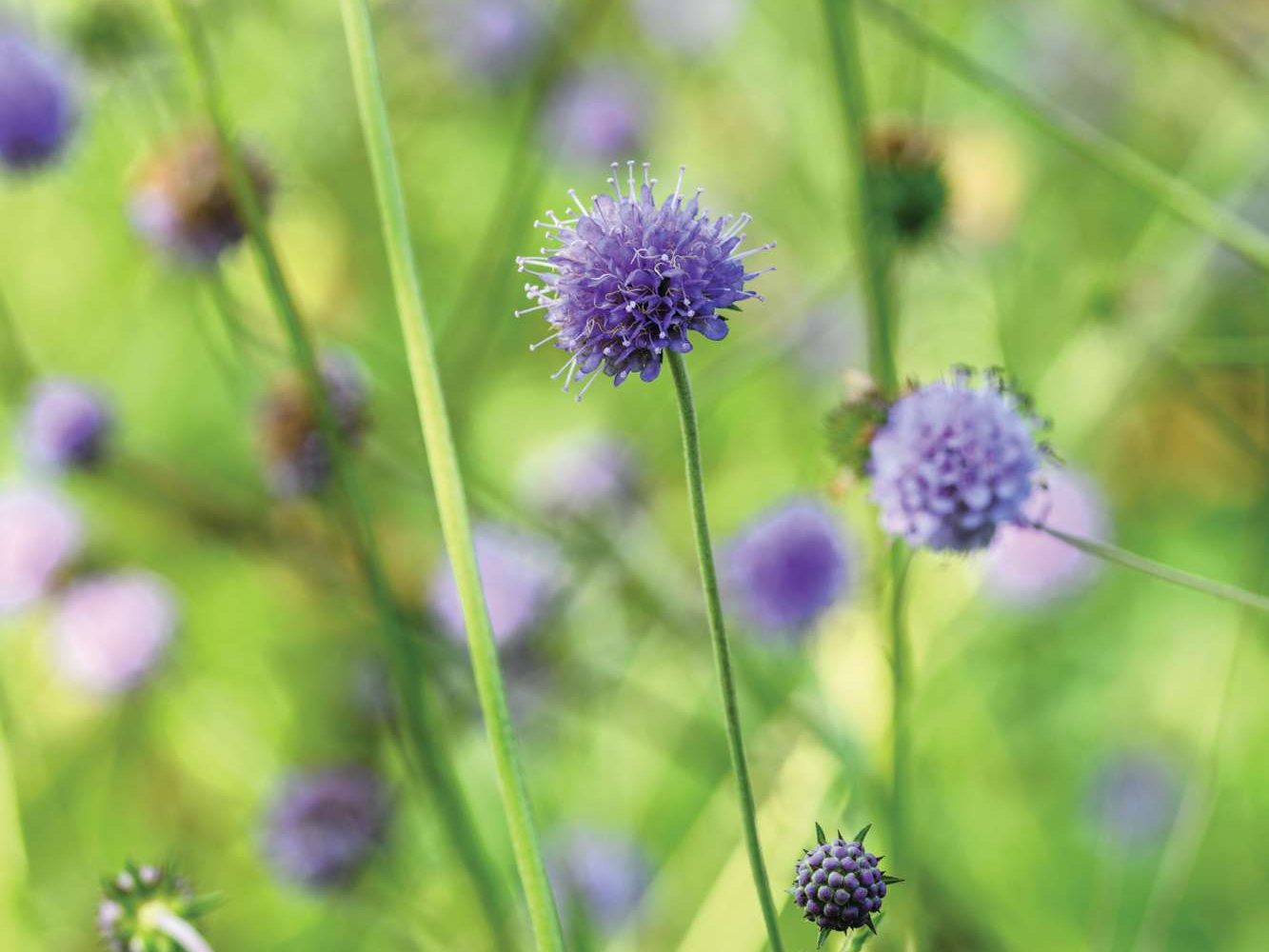
A native perennial with a rosette of deep-green, hairy leaves and masses of spherical violet flowers
held high on thin, wiry stems through summer into autumn. Followed by attractive seedheads. 80cm x 50cm. RHS H7, USDA 4a-8b.
Cephalaria gigantea
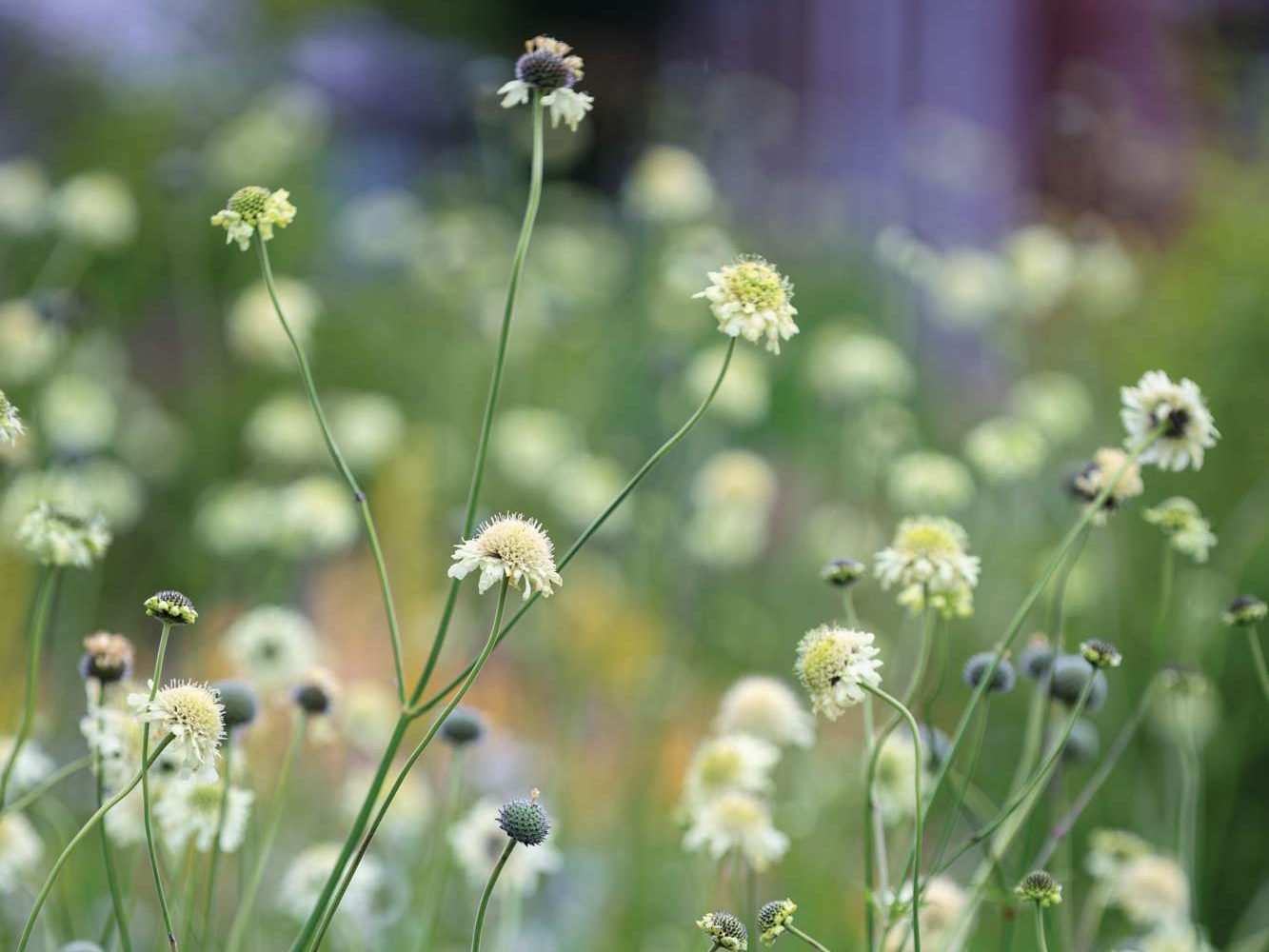
A large statuesque perennial with a mound of mid-green foliage, giving rise to strong stems holding large, pale-lemon flowers of 6cm across from early to midsummer. A strong grower. 2.5m x 1m. RHS H7, USDA 3a-7b.
Succisella inflexa ‘Frosted Pearls’
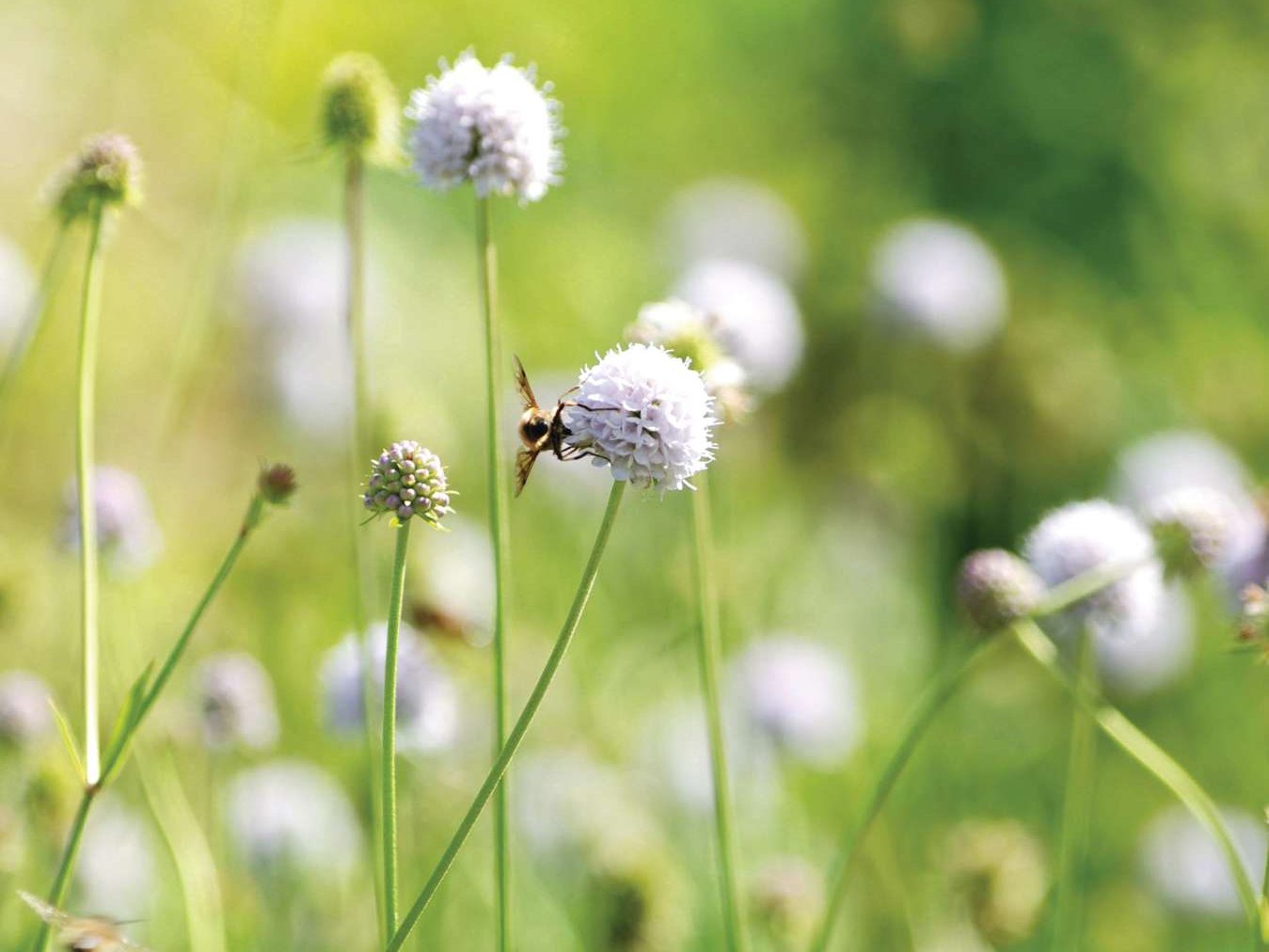
Slow-creeping perennial with low, linear leaves and branching upright stems topped with masses of
small, spherical, pale, ice-lavender flowers, which last from summer until early autumn. 1m x 50cm. RHS H6, USDA 5a-8b.
Scabiosa columbaria subsp. ochroleuca
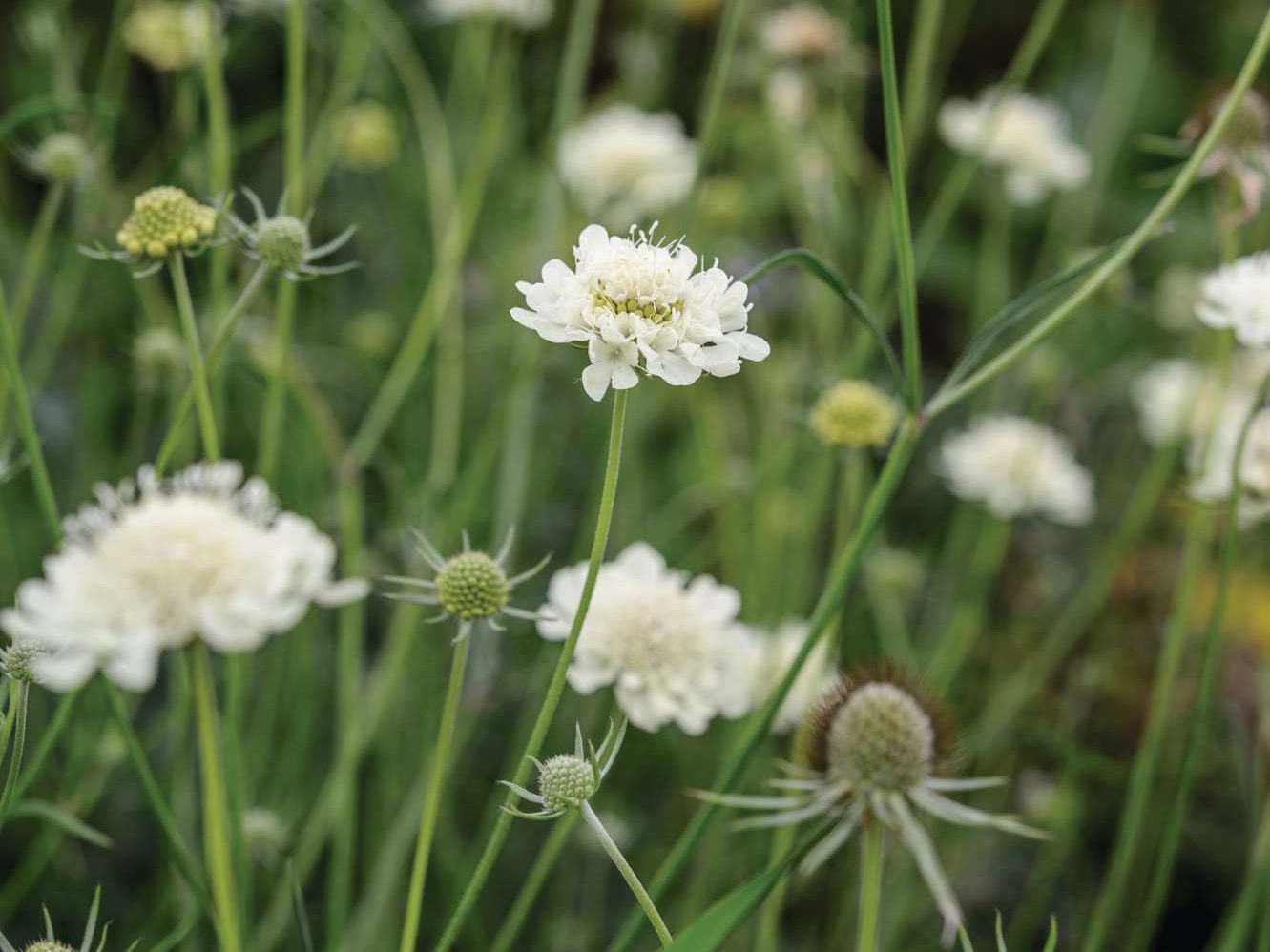
A reliable dainty perennial forming a clump of grey-green foliage giving rise to masses of pale-lemon
flowers through summer into autumn. 90cm x 60cm. RHS H5.
Scabiosa atropurpurea ‘Fata Morgana’
A hardy annual or short-lived perennial with fresh green foliage. Dense antique apricot-cream pincushion flowers appear from midsummer into autumn. 90cm x 40cm. RHS H4, USDA 1a-12.
Scabiosa atropurpurea ‘Black Knight’
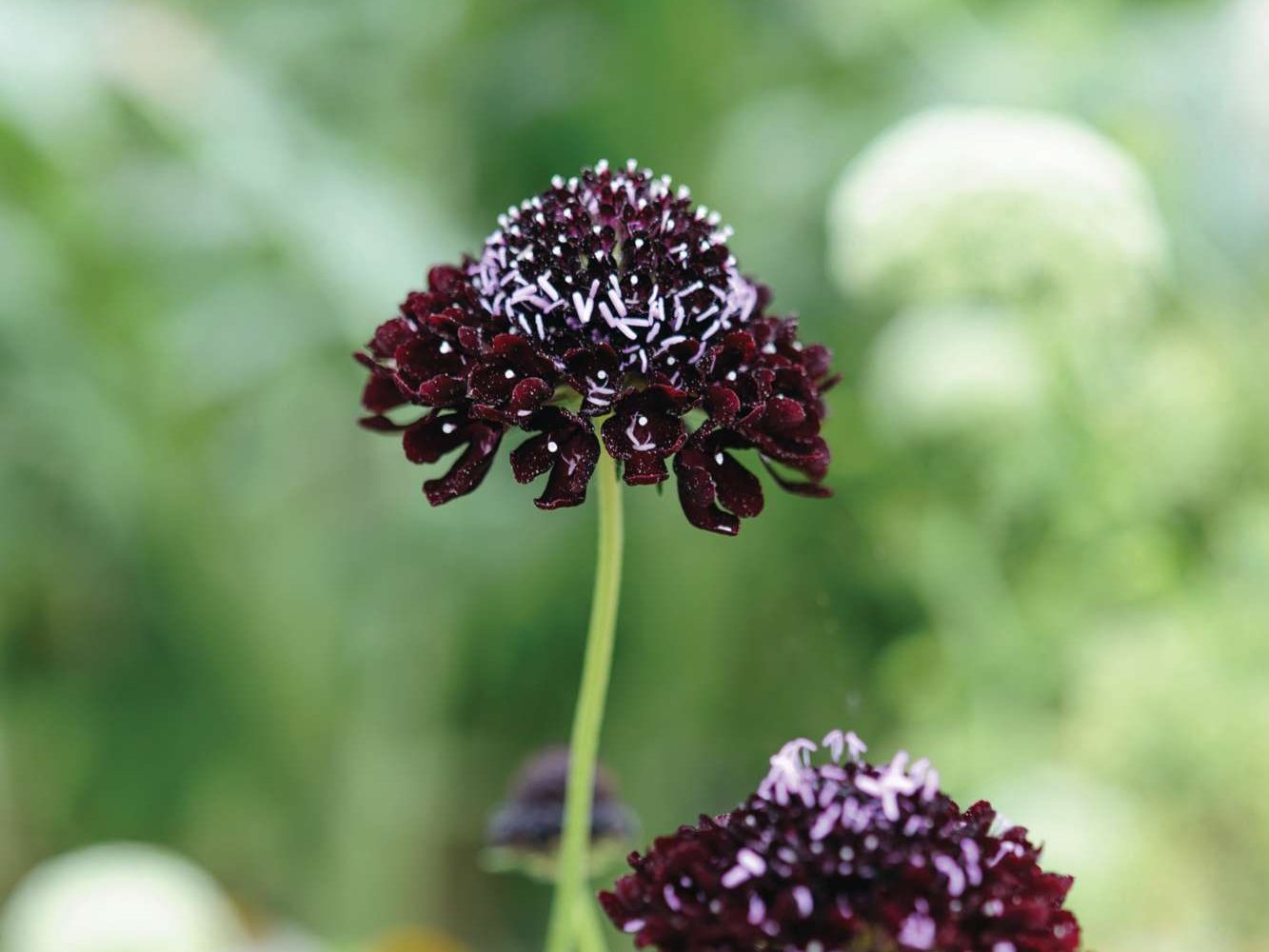
Another hardy annual or short-lived perennial with darkest-burgundy, almost-black flowers with cream stamens from midsummer into autumn. 90cm x 45cm. RHS H4, USDA 1a-12.
Knautia arvensis
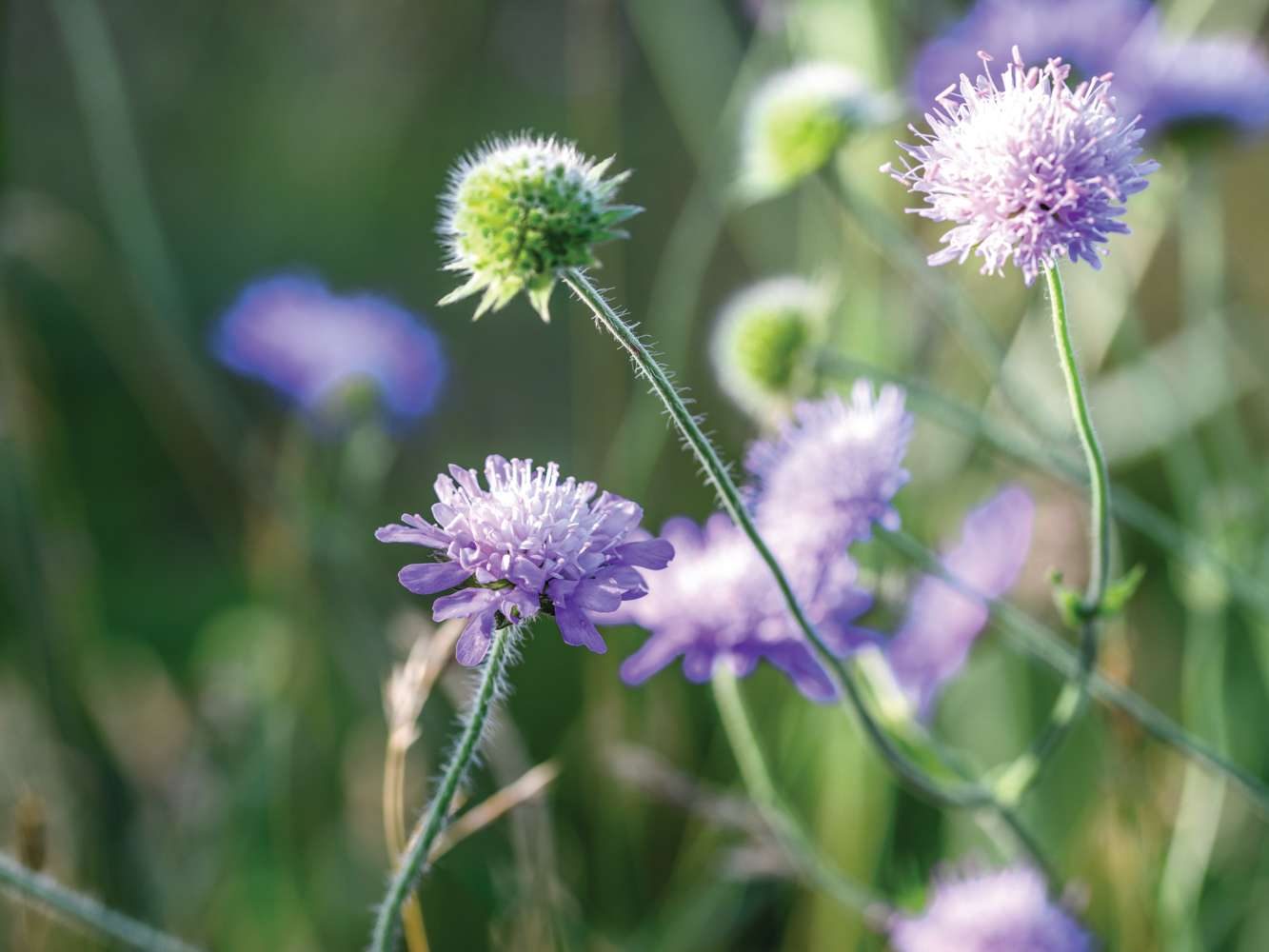
A clump-forming native with soft, hairy leaves and stems. Deep roots allow it to thrive in dry, exposed
sites. Pale-lilac flowers of 4cm across bloom through summer and into autumn. 1.5m x 50cm. RHS H7, USDA 4a-10b.
Cephalaria balansae
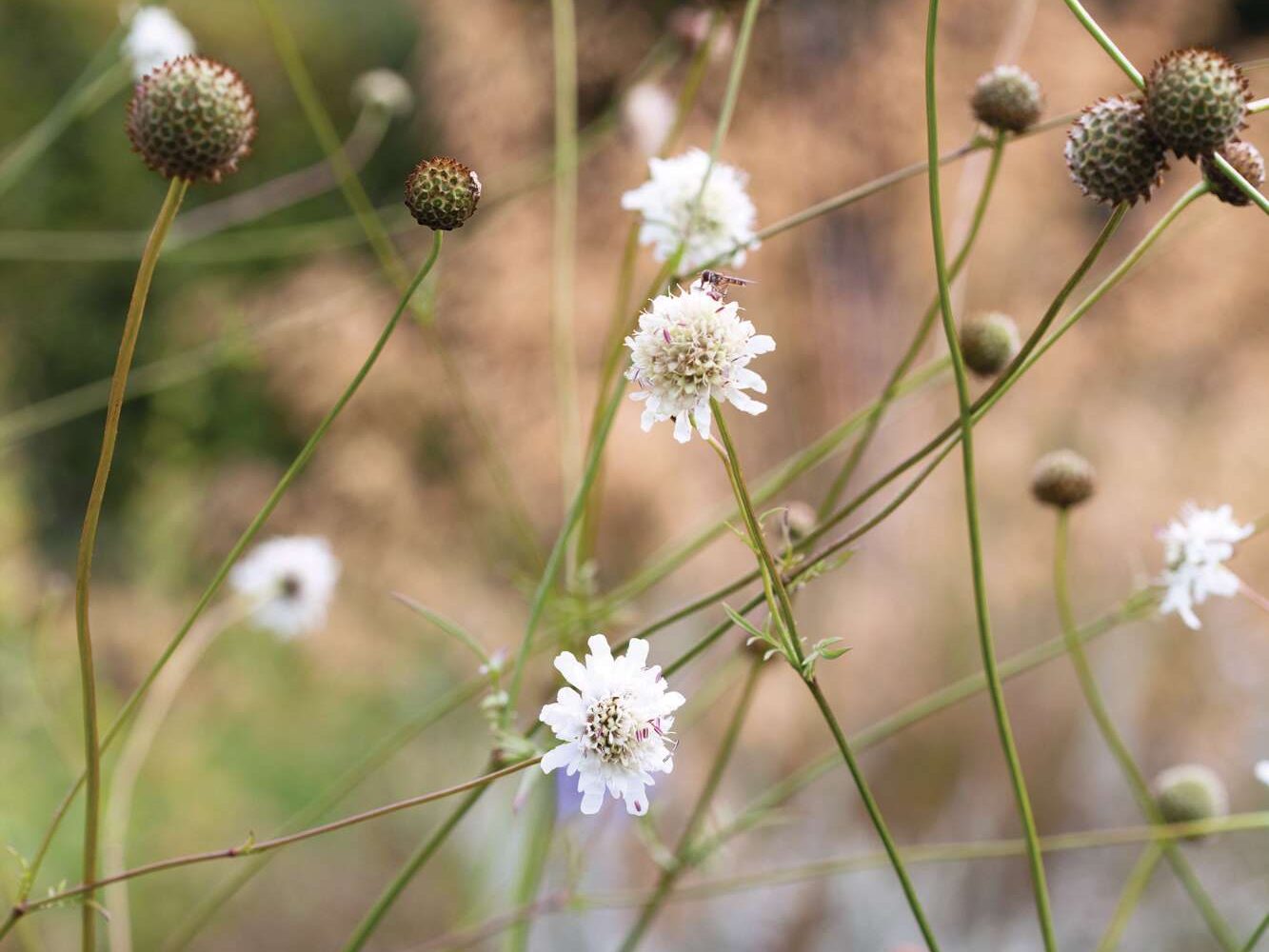
A tall, airy perennial from Syria with numerous small, greenish-yellow flowers in summer, followed by attractive seedheads in autumn – hence its common name of teasel-like scabious. 1.5m x 50cm. RHS H7.
Knautia macedonica Melton pastels
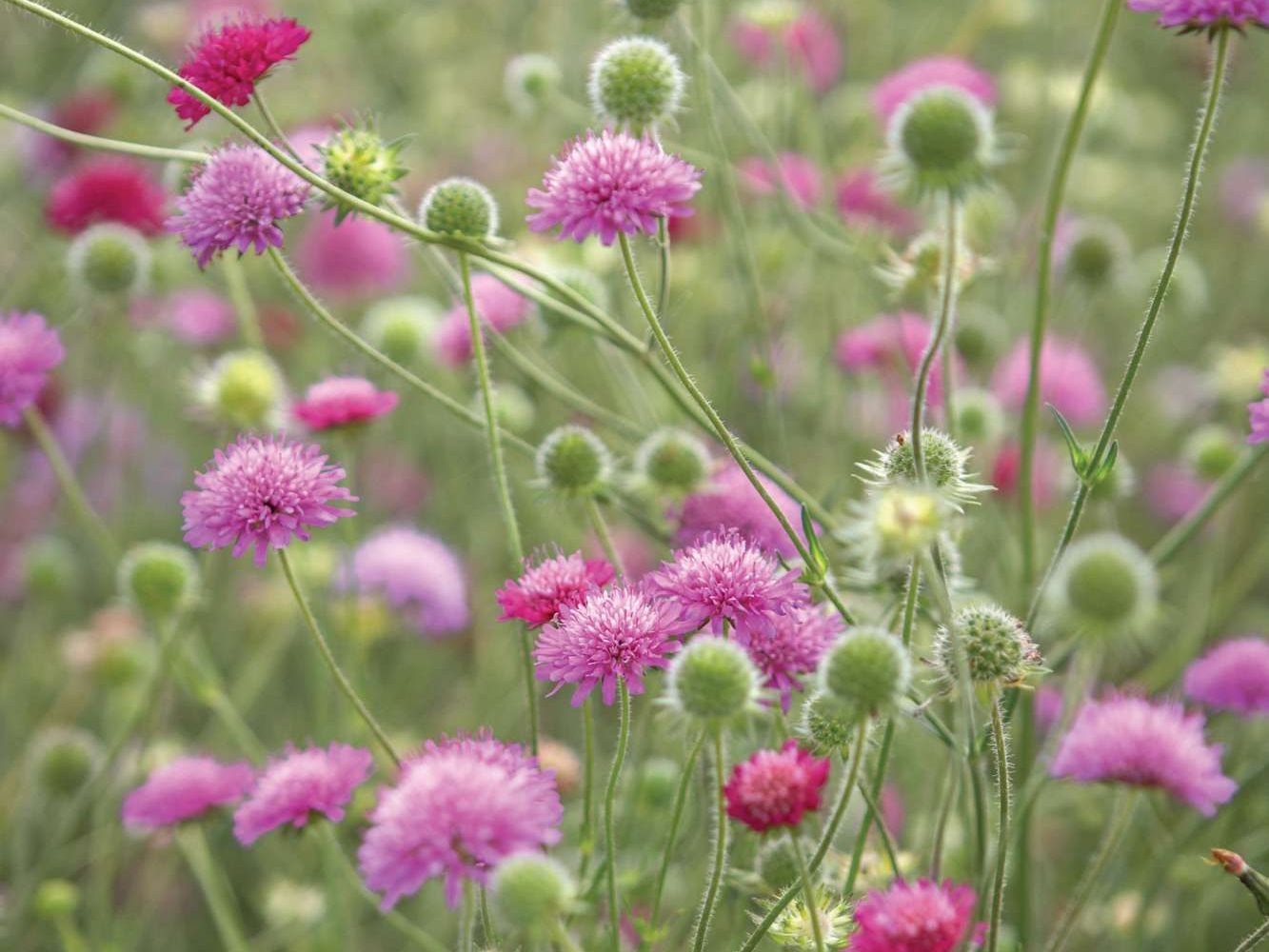
A seed-raised, clump- forming perennial with dark-green basal leaves. Flowers throughout
summer into autumn in various shades of crimson, mauve, pink and salmon pink. 1m x 50cm. RHS H7, USDA 5a-8b.
Scabiosa atropurpurea ‘Beaujolais Bonnets’
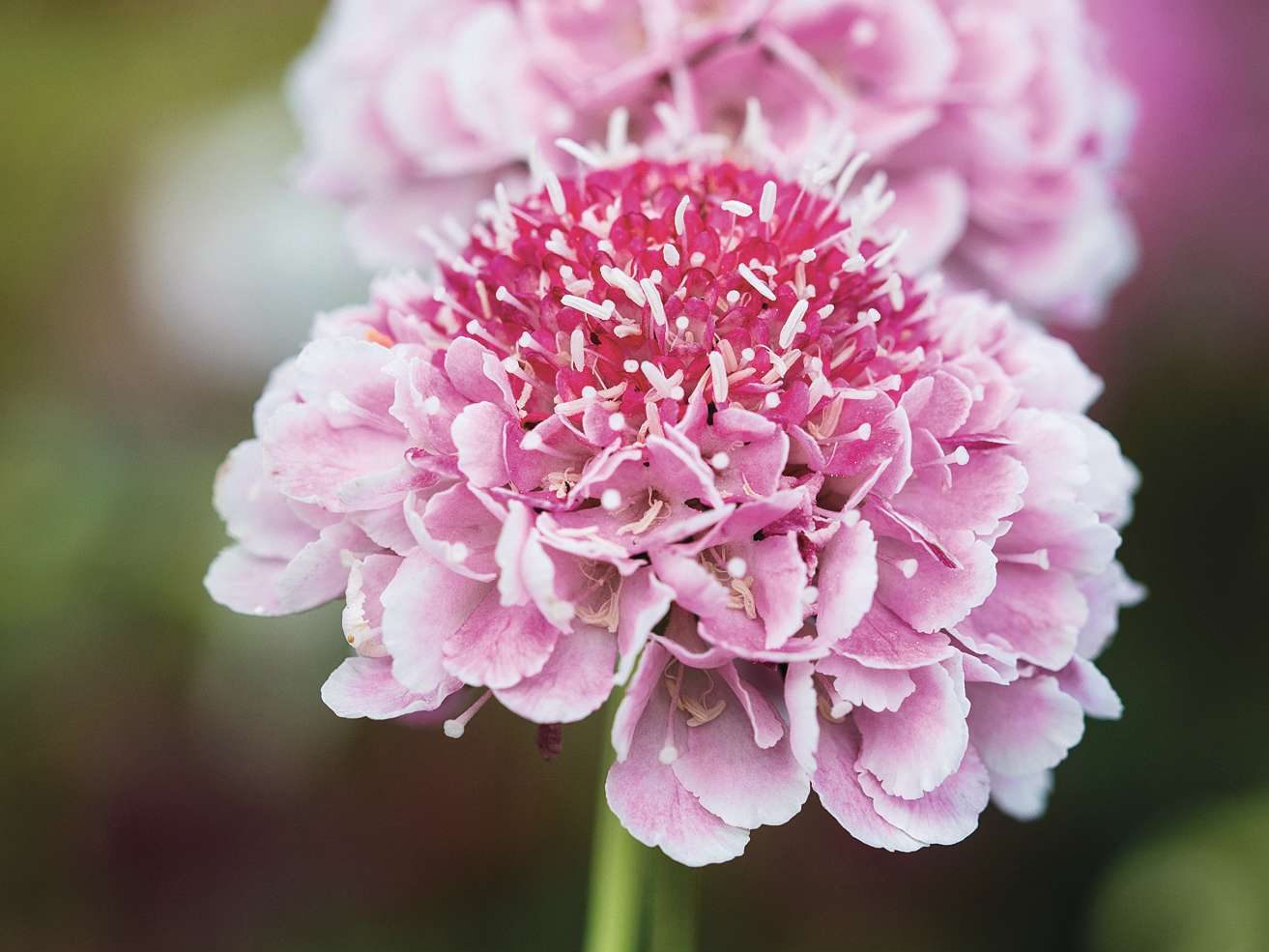
A hardy annual or short- lived perennial with flowering stems that hold dense, deep-magenta to light-pink flowers from midsummer to early autumn. Fresh green foliage. 70cm x 45cm. RHS H4, USDA 6a-9b.