Using mostly evergreen, foliage plants is a bold choice in a garden. In this small London garden, garden designer Alasdair Cameron has ensured cohesion by using a limited palette of plants that are mostly evergreen. “In such a small space, I like to keep things simple, otherwise it gets too busy and makes the space look smaller,” says Alasdair. He has used a mainly green, white and pale-pink palette, with evergreen yew domes, tree ferns and ‘curtains’ of climbing plants such as scented star jasmine and stauntonia for year-round interest. Although the planting spaces are relatively small, the effect is full and tranquil and, most importantly, the space works incredibly well.
Best foliage plants
- Mind your own business (Soleirolia soleirolii) - spreading plant with tiny evergreen leaves. Can be used as ground cover, as an alternative to a lawn or in a living wall.
- Stauntonia hexaphylla – an evergreen climber with apple green leaves and small but deliciously scented flowers in early spring.
- Muehlenbeckia – a deciduous shrub with small dark green leaves. Grow as a climber or ground cover.
- Yew (Taxus baccata) - an excellent alternative to box, that can be clipped into balls and topiary.
- Hebe rakaiensis - a compact, rounded evergreen small shrub that is another great alternative to box.
- Pittosporum tenuifolium ‘Golf Ball’ - attractive shrub with pale green leaves.
- Hart's tongue fern (Asplenium scolopendrium) - glossy, crinkled evergreen leaves.
- Shuttlecock fern (Dryopteris filix-mas) - large fern with stunning fronds that looks especially attractive as it unfurls
- Star jasmine (Trachelospermum jasminoides) - evergreen climber with star-shaped, scented flowers.
- Prostrate rosemary (Rosmarinus officinalis Prostratus Group) - a prostrate form of rosemary, with blue flowers in early spring.
- Tree fern (Dicksonia antarctica) - an eye catching trunk and fern-like foliage.
Here are five tips from Alasdair on using evergreen foliage plants in the garden.
Consider the different shades of green
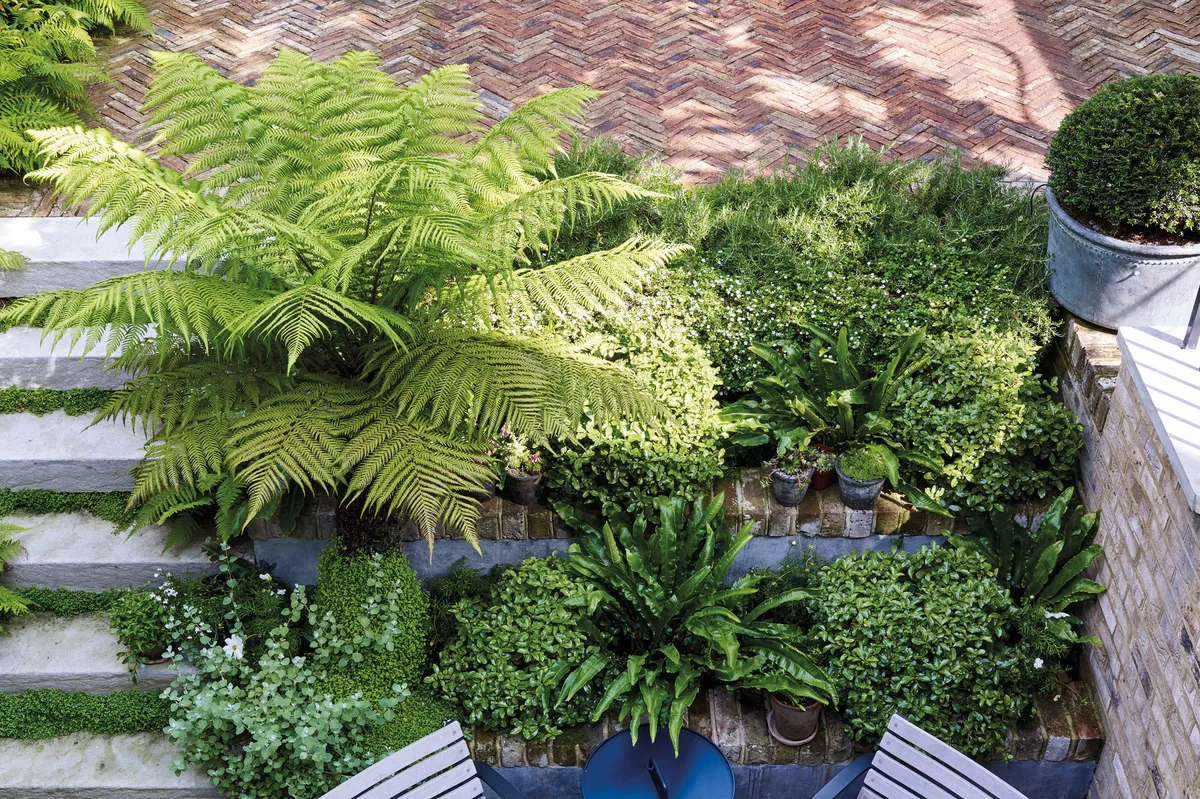
Thinking of foliage plants as just ‘green’ belies the many different shades there are to play with. For example, mind-your-own-business (Soleirolia soleirolii) is a bright, almost electric green; Stauntonia hexaphylla, a favourite climber of mine, is an appley green, while Muehlenbeckia has a more brownish hue.
Consider foliage textures and proportions
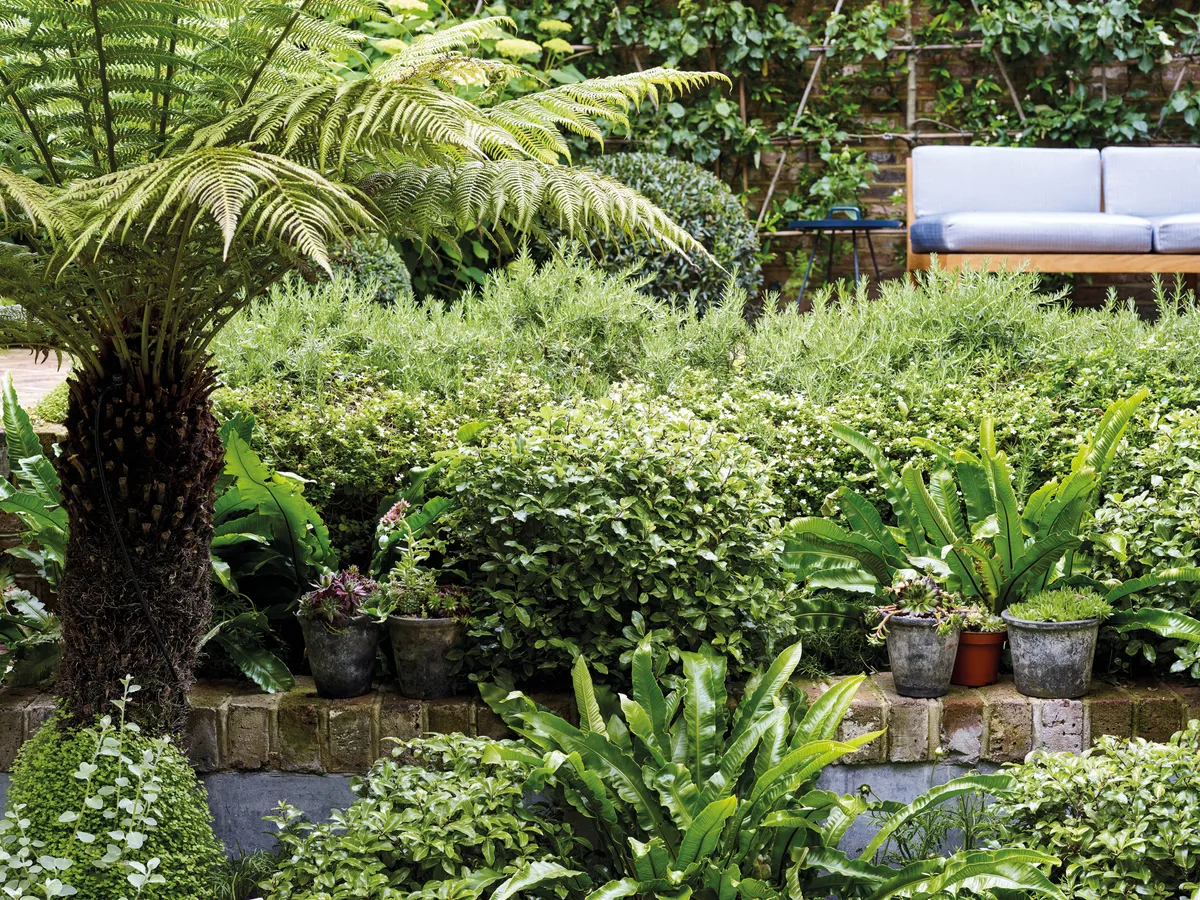
When you're using just one colour, foliage texture and proportion take on a far greater importance. I think spheres of Taxus baccata, Hebe rakaiensis and Pittosporum tenuifolium ‘Golf Ball’ look great together – the leaf sizes are similar but they provide both different shades and textures.
Make sure you have some flowers in summer
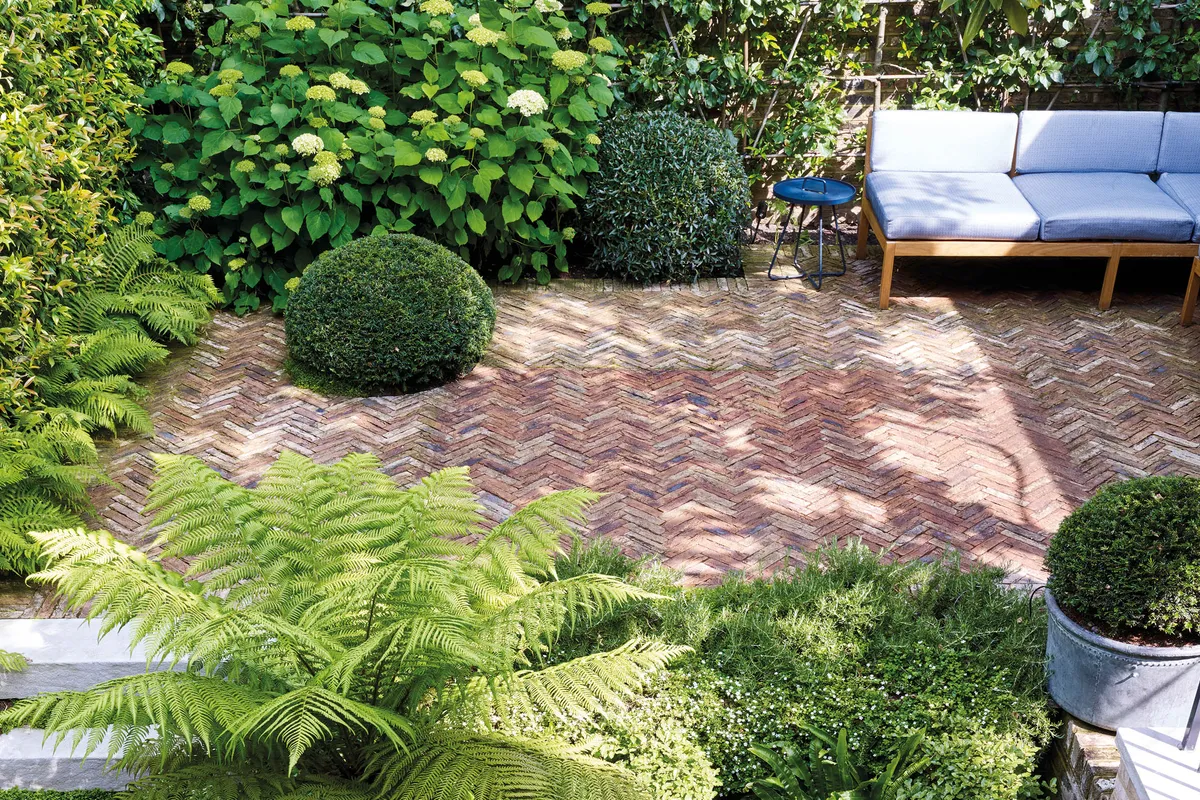
Use evergreens for winter interest and structure, but make sure you have some summer flowers nearby. Evergreens can feel a bit dark in summer. Alastair adds annuals, such as ammi and orlaya, to bring subtle colour. Seasonal lifts also come courtesy of Rosa ‘Cécile Brünner’, long-flowering Hydrangea arborescens ‘Annabelle’, the spring blossom on a pleached panel of Malus domestica ‘James Grieve’ at the rear of the garden.
Be sure to include ferns
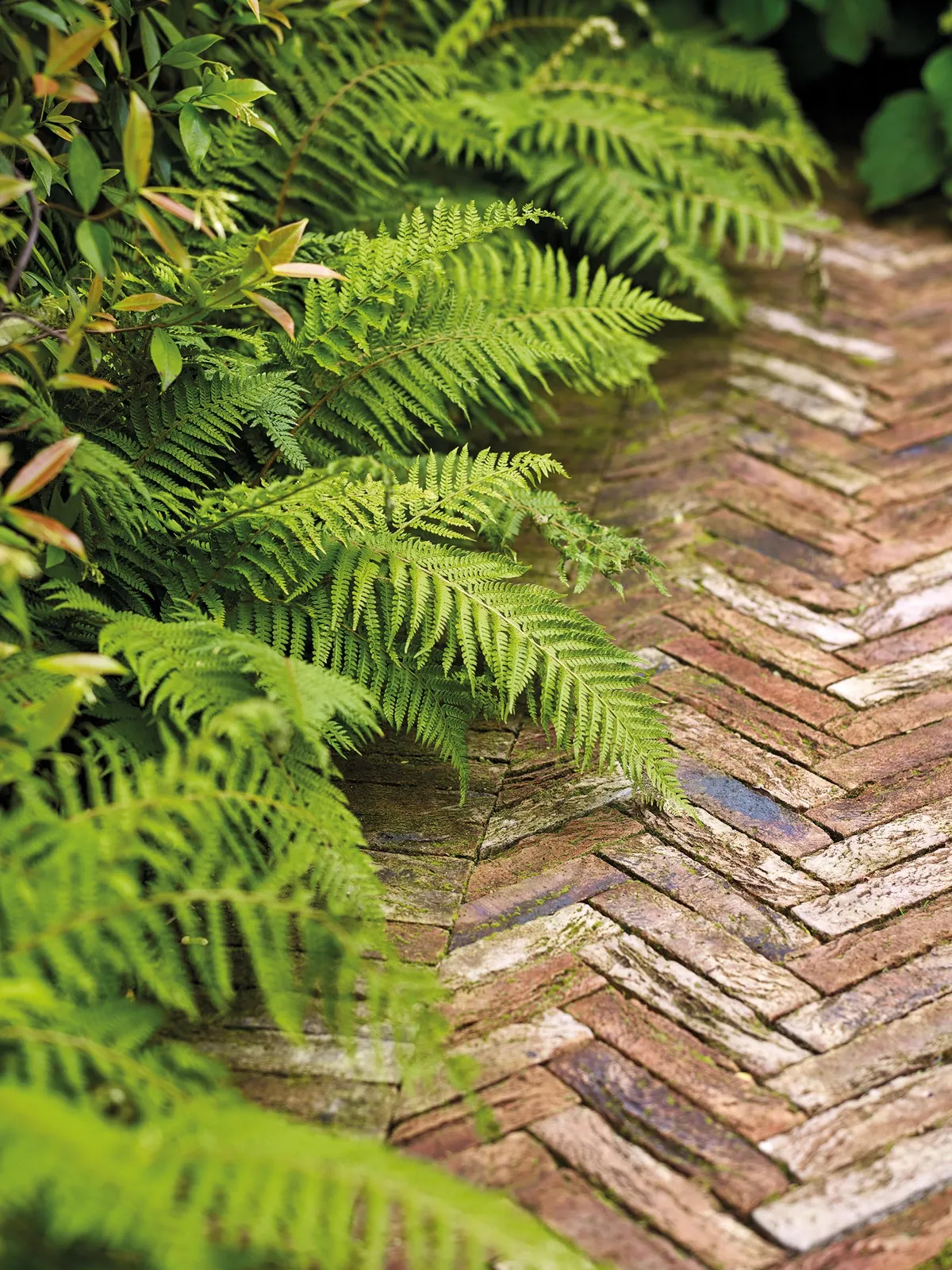
Ferns are great plants for a green garden and for foliage – they have so many different textures and shapes – and they are especially good when they unfurl. I love the glossy, crinkled leaves of the hart’s tongue fern Asplenium scolopendrium and the shuttlecock clumps of the male fern Dryopteris filix-mas.
Think about vertical and horizontal surfaces
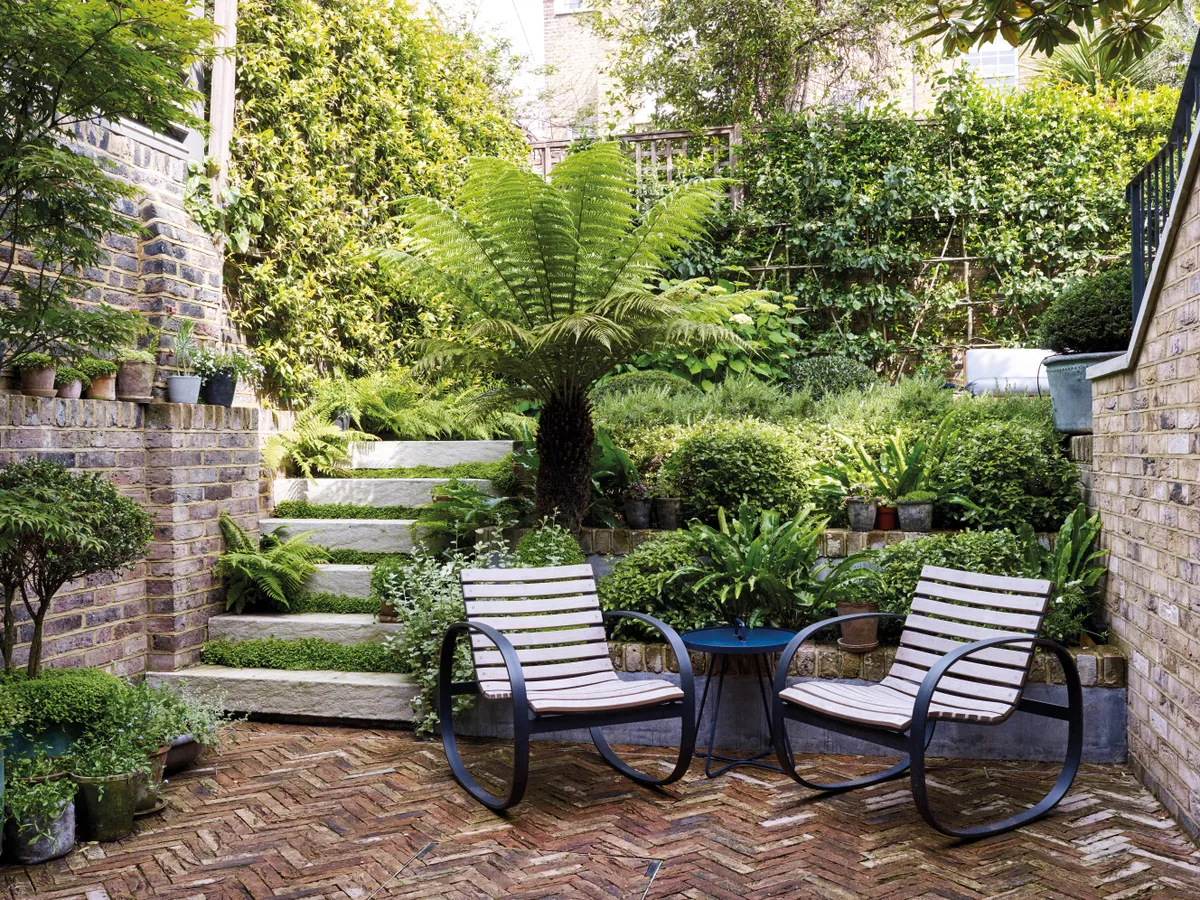
Think about the different planes in your garden and how to dress them. I use Trachelospermum jasminoides like a curtain of foliage, and I love the way prostrate rosemary sprawls across the tops of walls or planters. Steps can be softened by ribbons of Soleirolia soleirolii.


