Whether on a roof, balcony or in a garden, pots are the ultimate in achievable results. In my own front garden I enjoy using pots to change things with the seasons alongside an evergreen backbone – snowdrops, hellebores and witch hazel in early spring; then narcissus and leucojum; and Mahonia eurybracteata subsp. ganpinensis ‘Soft Caress’ in autumn.
In the back garden, houseplants like begonias, which usually own the bathroom, get a summer holiday outdoors in the dappled shade and protection of the lea of the house, giving the garden a seasonal tropical injection.
Gardening in pots can span every type of plant type, from bulbs and alpines to ornamentals and edibles. For the latter, the restricted sides help with vigorous plants such as mint or horseradish, though
do remember they can still root through drainage holes if given the chance, so consider setting these pots in saucers or on hardstanding.
How to create a beautiful container garden
Group pots together

With pots, work in odd-numbered groups, varying height and width, using one large anchor pot with smaller ones around it. Do thriller-filler-spiller: one focal plant, supporting companions and trailers over the edge.
Discover how to plant the pot display created by Jenny Barnes, above
Switch pots in and out

At Great Dixter, the celebrated entrance display gives each container to a single species, ensuring the right conditions – soil, drainage, light and water – and because each pot is a self-contained unit, the display can be edited at will. Although there are many pots, each is given space to shine, with contrasts in texture, shape, height and habit creating exuberance. Dozens of terracotta pots in varying sizes are grouped together; the consistency of material holds the display together, while pot form varies too and is matched to plant. As in any garden planting, it’s the combinations that matter: eye-catching flowering plants and plenty of foliage, contrasts of textures and heights, and a few impact pieces to carry the show.
Choose containers you really love

In a small space everything is on show. Pots and troughs should be large enough to buffer roots against drying out. If you're gardening on a roof terrace or balcony, check the weight limits before you begin, calculating based on the weight of wet soil, not dry. As with any container planting, the medium may need refreshing despite fertigation (applying feed through irrigation), so plan ahead practically: where will that happen, and how will you manoeuvre the plants in a confined space?
Go for large containers
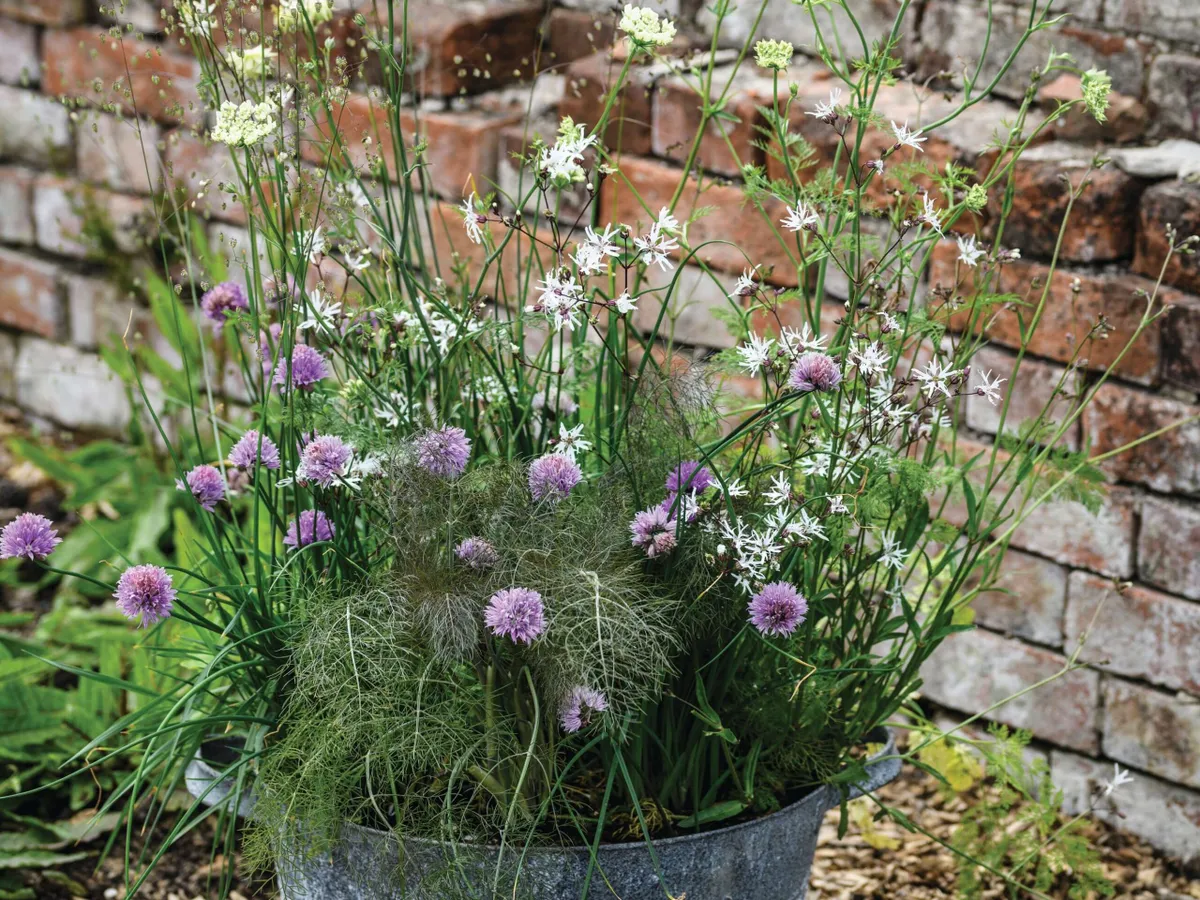
In small spaces and paved courtyards, large containers are transformative. With enough soil volume, containers can support small trees, shrubs, perennials and trailing plants in layered combinations that deliver long seasons of interest.
Discover how to create Jo Thompson's edible container, above
Think about compost, watering and drainage

Watering will always be needed when gardening in pots. If you’re busy or forgetful, consider pots with reservoirs and group plants so they shade and shelter one another.
Regular feeding and mulching help replenish nutrients, while in the dormant season, trees can be carefully lifted, root- pruned and replanted to refresh the growing medium.
Drainage is vital: containers should always have four ample holes and ideally be raised on feet. Add more drainage holes than you think you’ll need in pots if your plants prefer dry conditions. Conversely, for plants that like moisture, drill weep holes further up the sides of the container to create a small reservoir at the base. When filling a large container, consider adding a watering point – a short section of pipe sunk into the mix – to get water down below the surface.
And for anything intended to stay in a pot long term, include loam or soil in the mix: compost alone breaks down too quickly to sustain plants over the years. Top the compost with fine gravel or shell to suppress weeds and reduce evaporation.


