Summer is associated with intense colour, bejewelled and dazzling plants shouting out their enjoyment of the warmer weather. But it’s possible to achieve equally impactful container displays with more quirky combinations, using edibles, tender succulents and carnivorous plants as well as favourite perennials to create a talking point and ring the changes.
8 quirky plant combinations for summer
Beans, chickpea and nasturtium
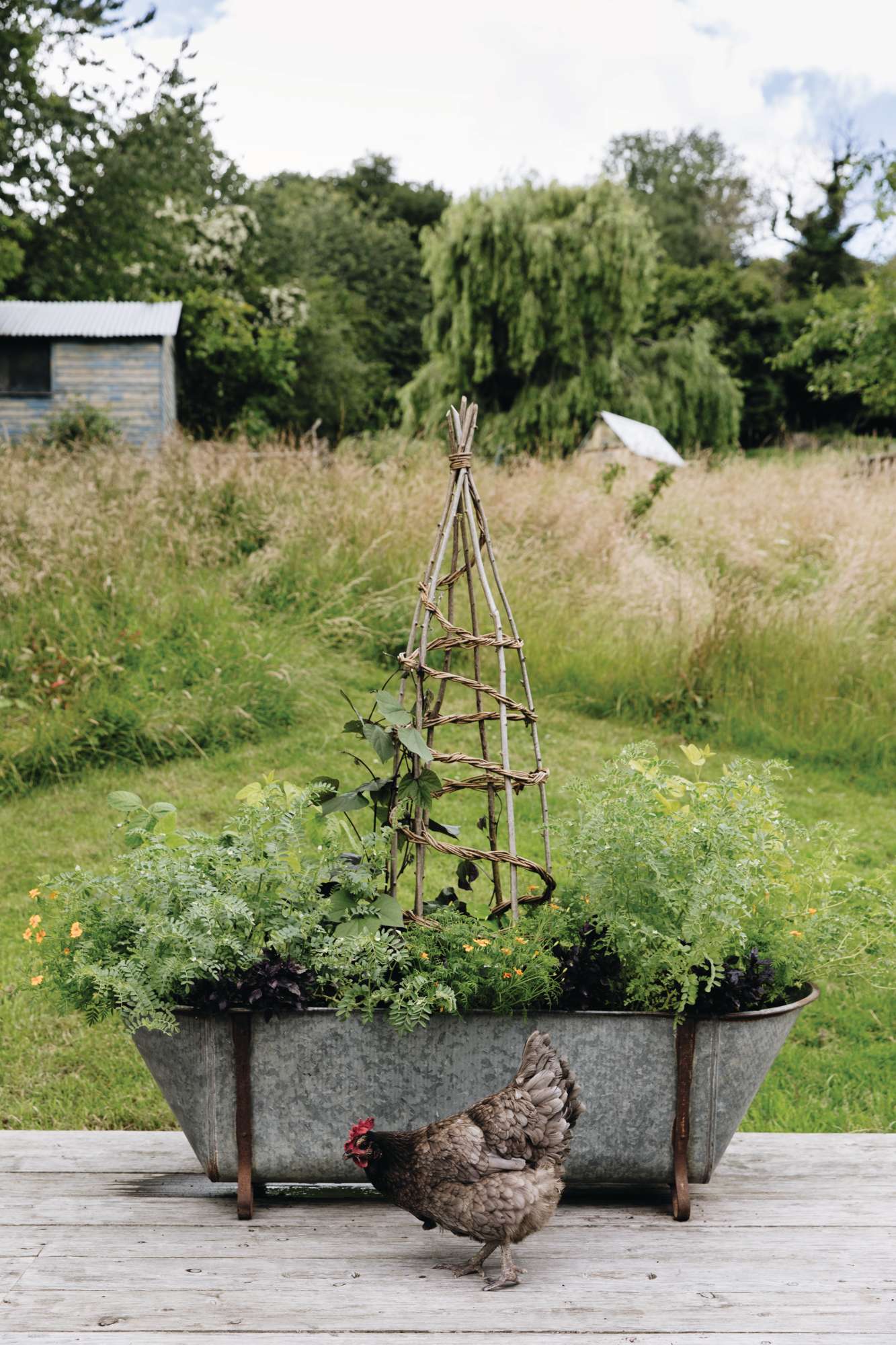
In this trough, I’ve opted for an African hyacinth bean (Lablab purpureus ‘Ruby Moon’), which has attractive foliage before the purple flowers and glossy pods appear. The nasturtium Tropaeolum minus ‘Ladybird Rose’, not yet visible here, will join it with antique, rose-like flowers later in the season.
The chickpea Cicer arietinum ‘Principe’ and Tagetes tenuifolia ‘Tangerine Gem’ have very fine foliage and contrast well with the broad leaves of the soya beans (Glycine max), and the dark-purple basil leaves of Ocimum basilicum var. purpurascens ‘Purple Ruffles’ stand out against the fresh greens.
Chervil, dill and beetroot
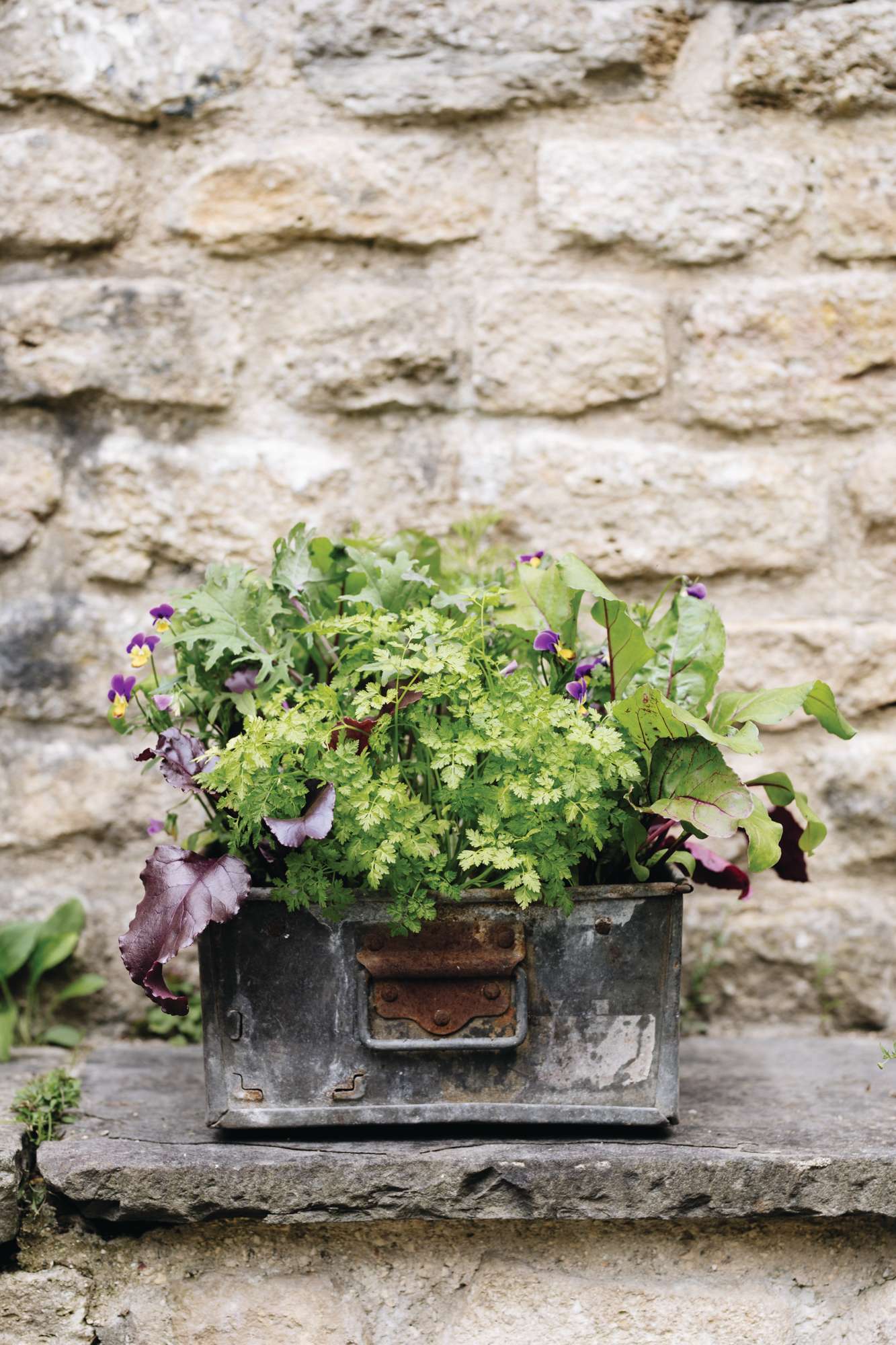
Here, the delicate leaves of aniseed-flavoured chervil (Anthriscus cerefolium) and the fine, feathery dill (Anethum graveolens) are a nice contrast to the bolder foliage of the beetroot – Beta vulgaris ‘Bulls Blood’ and B. ‘Bona’ – and kale, Brassica napus (Pabularia Group) ‘Red Russian’. The wild Viola tricolor flowers bring a bit of visual zing to the party.
You may also like
If you keep the container in a cool place, such as a cold greenhouse or porch, you could be picking leaves throughout the winter.
Love-lies-bleeding, asparagus pea and iceberg lettuce
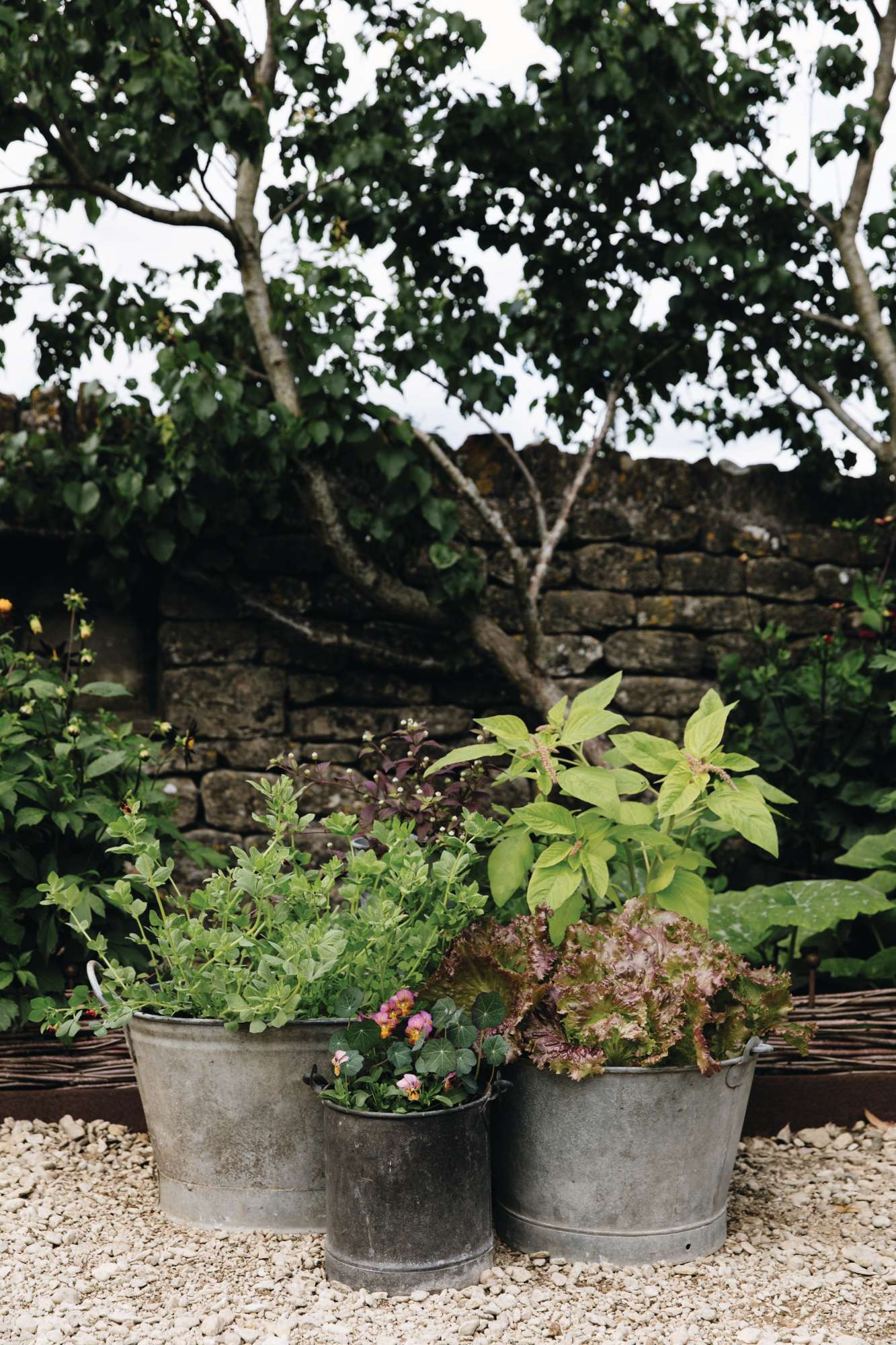
I particularly like the unusual, muted, coral tones of love-lies-bleeding, Amaranthus caudatus ‘Coral Fountain’, flowers so I’ve tried to pick up on this with other plants in the arrangement, such as Viola cornuta ‘Apricot Antique. The bold, lime-green foliage also contrasts well with the darker tones of the iceberg lettuce (Lactuca sativa ‘Red Iceberg Sioux').
The bright white button flowers of the Lippia dulcis give the composition a bit of a lift and its attractive leaves give a sugary sweet hit to a salad. There is also an asparagus pea Lotus tetragonolobus and nasturtium Tropaeolum majus ‘Blue Pepe’ – both of which have red flowers.
Aeonium, pelargonium and echeveria
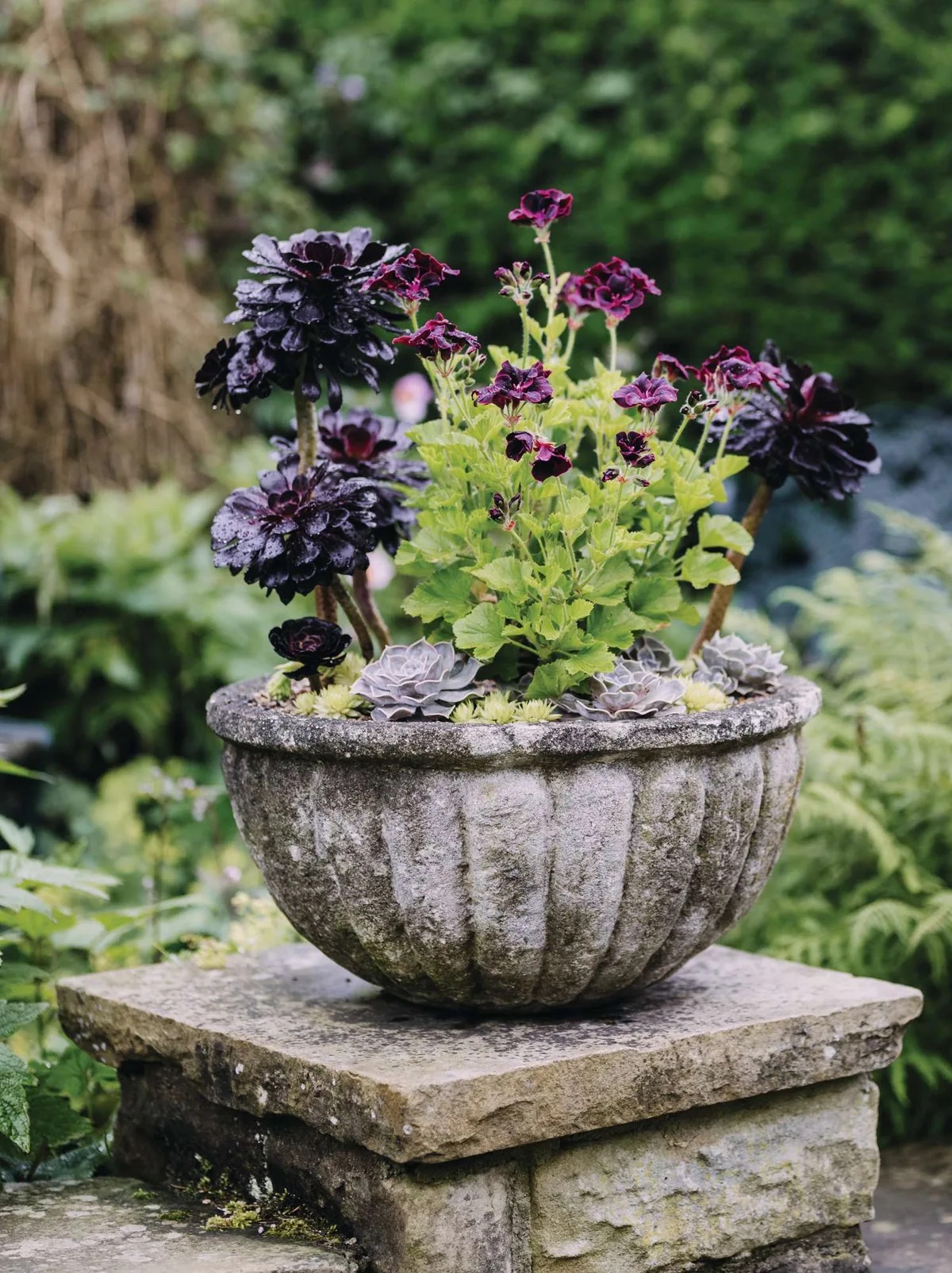
In this carved, stone bowl, a mixed carpet of Echeveria lilacina and Sempervivum ‘Standard Green’ sits below the rising stems and dark, rich heads of Aeonium ‘Zwartkop’. The aeoniums are planted at the bowl’s edge to show off the patterned markings of spent petioles on their naked stems.
You may also like
The equally dark Pelargonium ‘Lord Bute’ sits towards the back and centre, so as not to overshadow the succulents. Carefully topping off the bowl with horticultural grit gives the desired dry-garden feel.
Vervain, Achillea and Salvia
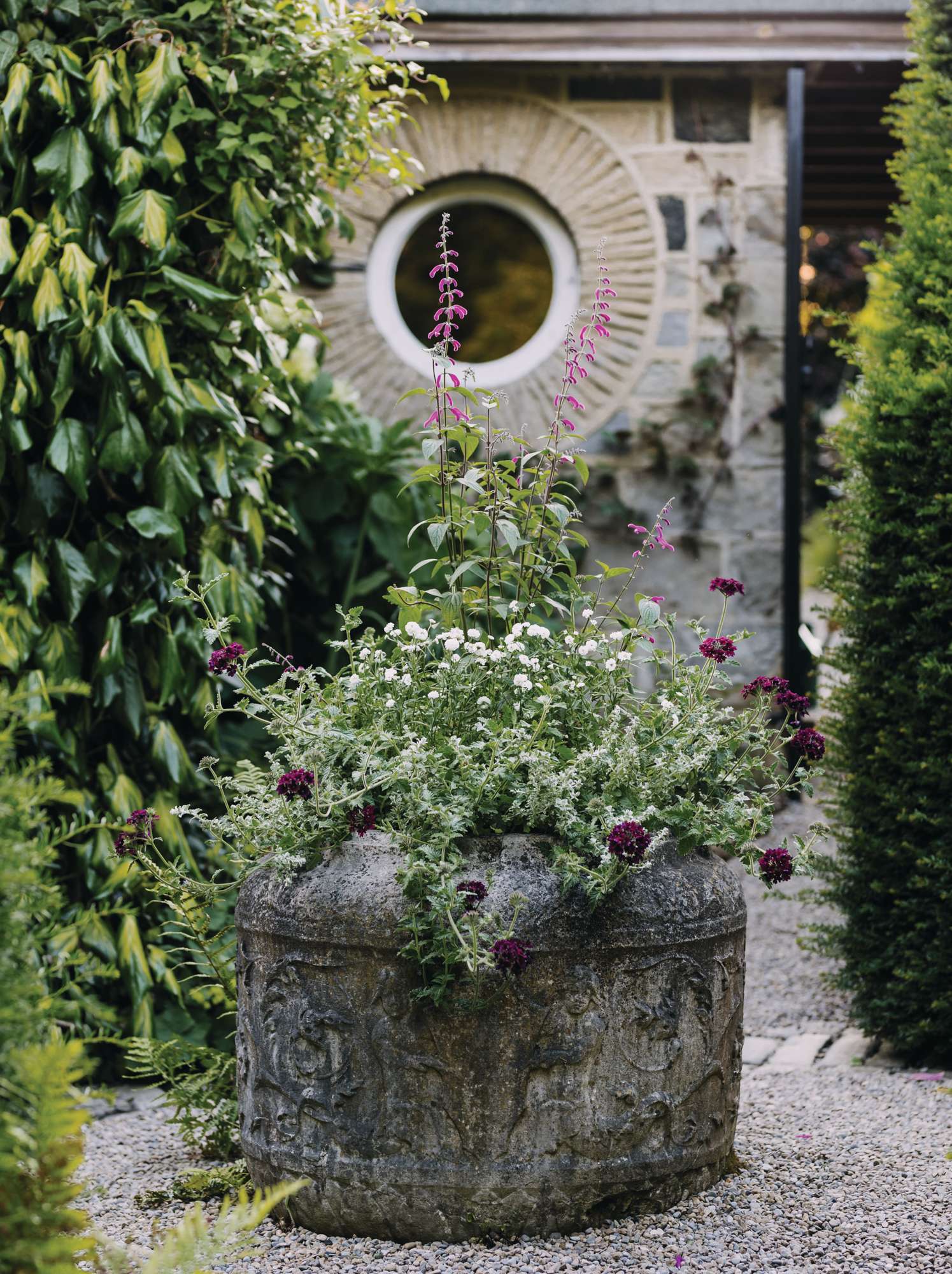
In this repurposed wellhead container, vervain Glandularia ‘Claret’ produces dark-red pincushions that twist happily with the common but useful silver foliage of Plecostachys serpyllifolia. Both will spill out and engulf the font for an informal and romantic feel.
Salvia curviflora sends out vertical stems covered in intense but pleasing pink, hooded blooms, while the short, white Achillea ptarmica ‘Noblessa’ hides the naked legs of the salvia and ties in gracefully with the plecostachys.
Carnivorous pitcher plants, Venus flytrap and sundew
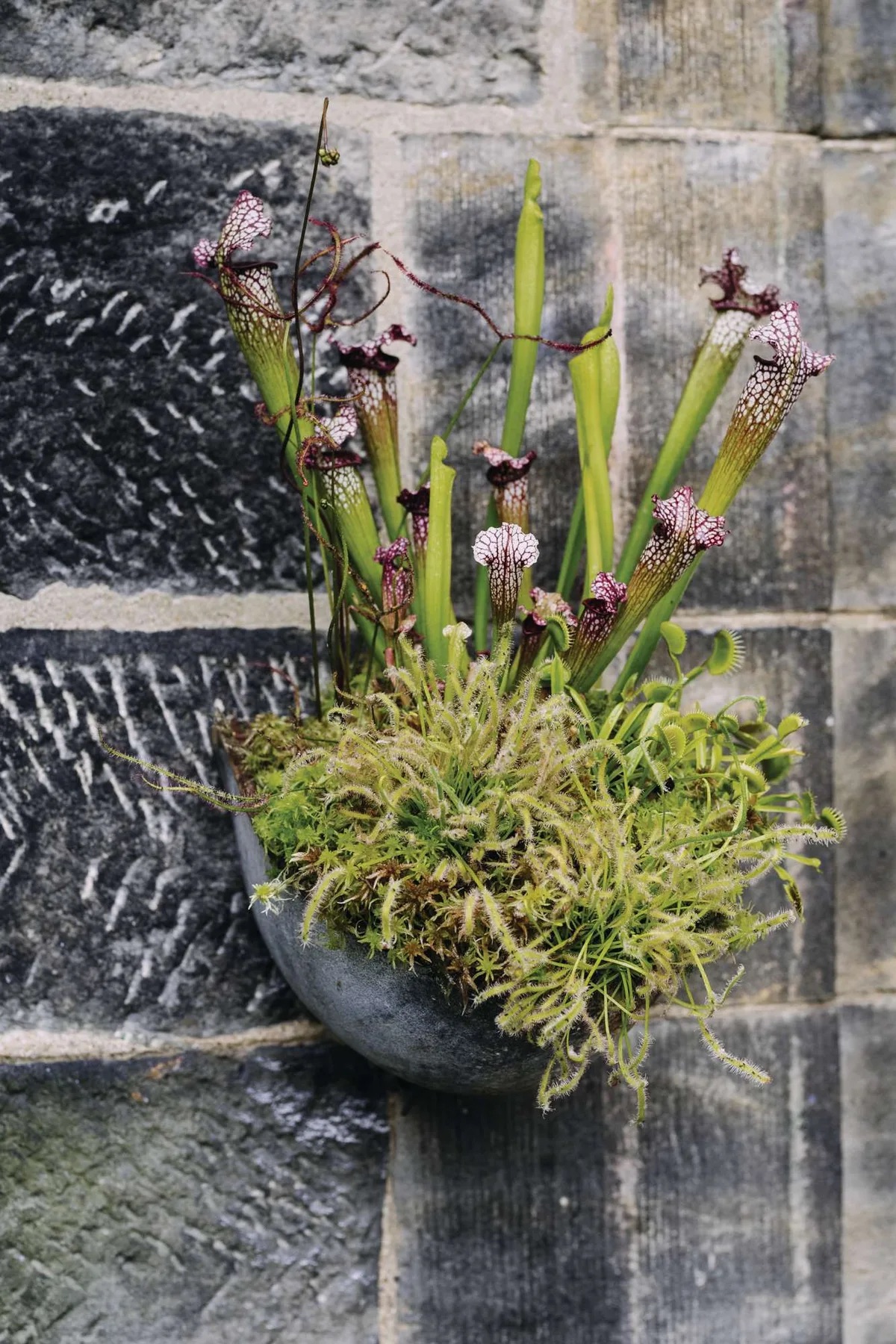
Native to sunny bogs, these carnivorous plants thrive in wet stagnant conditions, the near opposite to most pot displays. Planted at the back, tall, attractive pitcher plants (Sarracenia leucophylla hybrid) with intense lime-green tubes topped with white hoods and beautiful purple veining stand out against stonework. Fresh cylinders emerge from among the sphagnum moss each week.
You may also like
Below, a mingle of Venus flytraps (Dionaea muscipula) and delicate Drosera binata and D. capensis ‘Albino’ create a gauntlet of traps for unsuspecting insects.
Aeonium, verbena and sedge
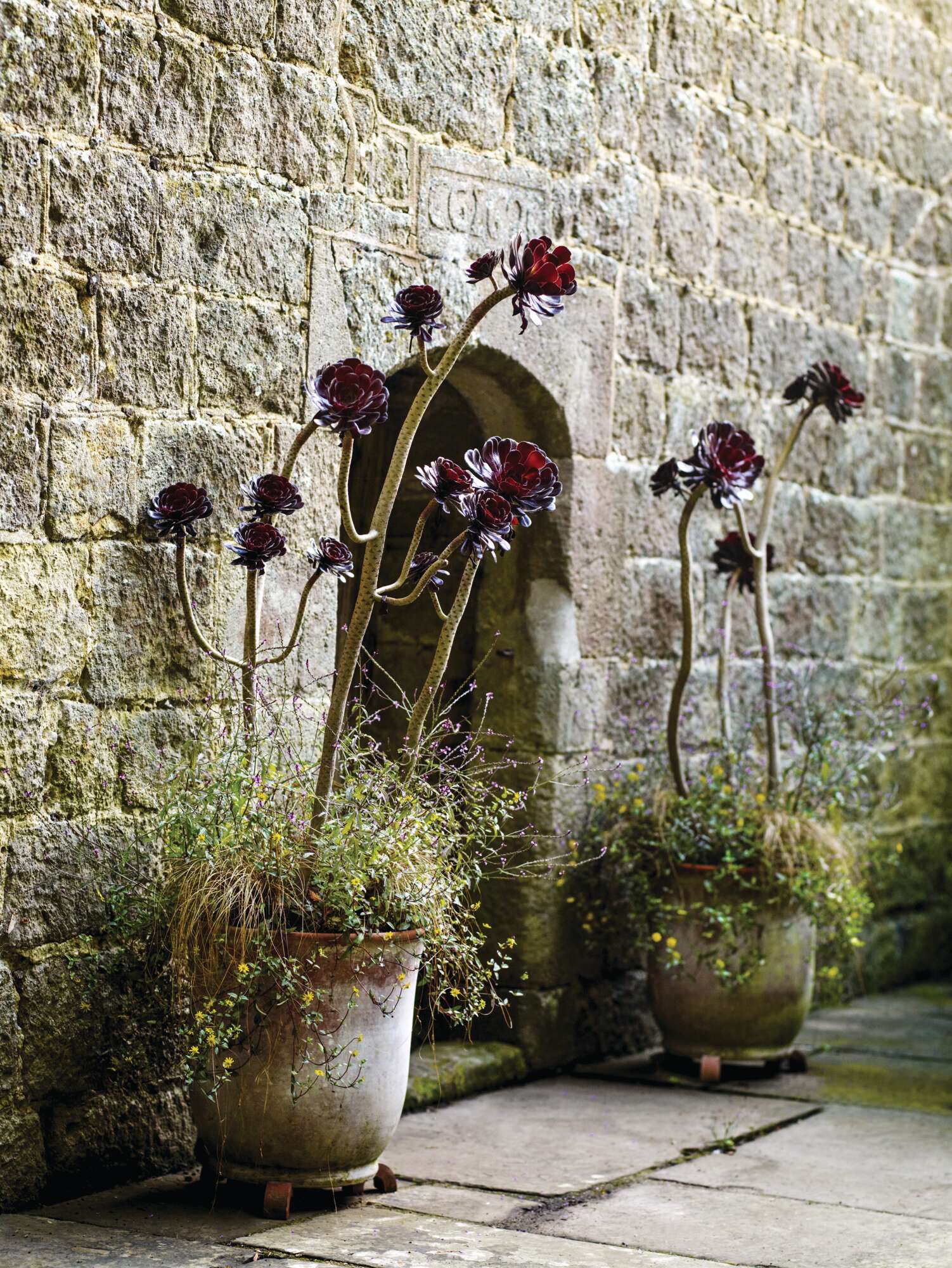
Location often dictates the tone of a display and this one required something dramatic and characterful. The Aonium 'Zwartkop' is a key element, while informal clouds of Verbena officinalis var. grandiflora 'Bampton' and Sanvitalia procumbens finish the display. Scrambling through bronze sedge, Carex buchananii, they softly crown the pots, revealing discreet bursts of colour to inquisitive spectators.
Hosta, disporum and fern
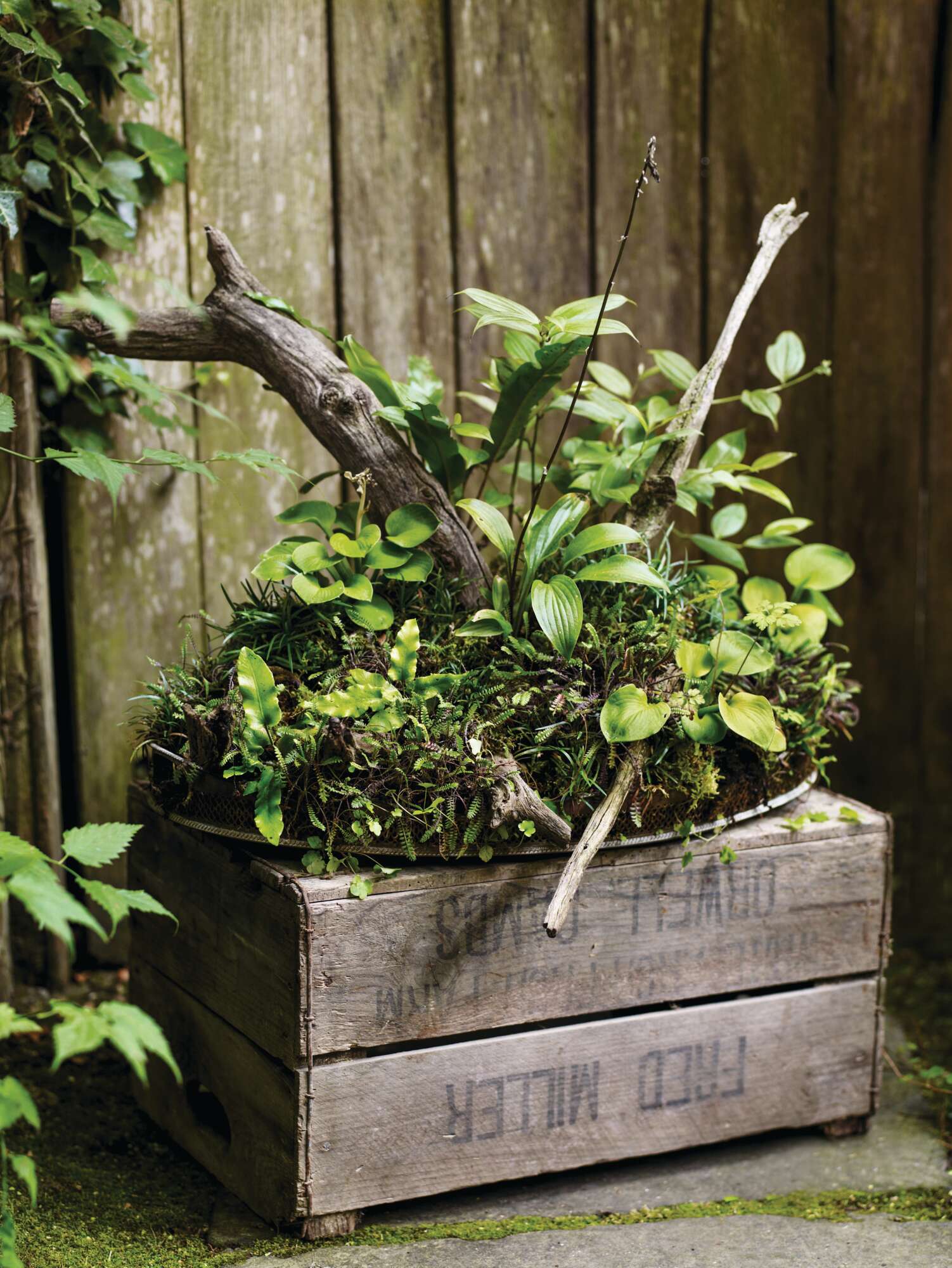
This display celebrates form and texture, from the lusciously curved leaves of Hosta 'Giantland Sunny Mouse Ears' and H. 'Emeralds and Rubies', through to the bony fingers of the old branches.
Rising from the tray, the mound of narrow-leaved Ophiopogon japonicus 'Minor' and Leptinella squalida 'Platt's Black' form the perfect backdrop for the bold leaves of the Hosta and glossy fern Asplenium scolopendrium. At its summit, the arching stems of a young Disporum longistylum 'Night Heron' give a nod to the exotic while adding additional height.