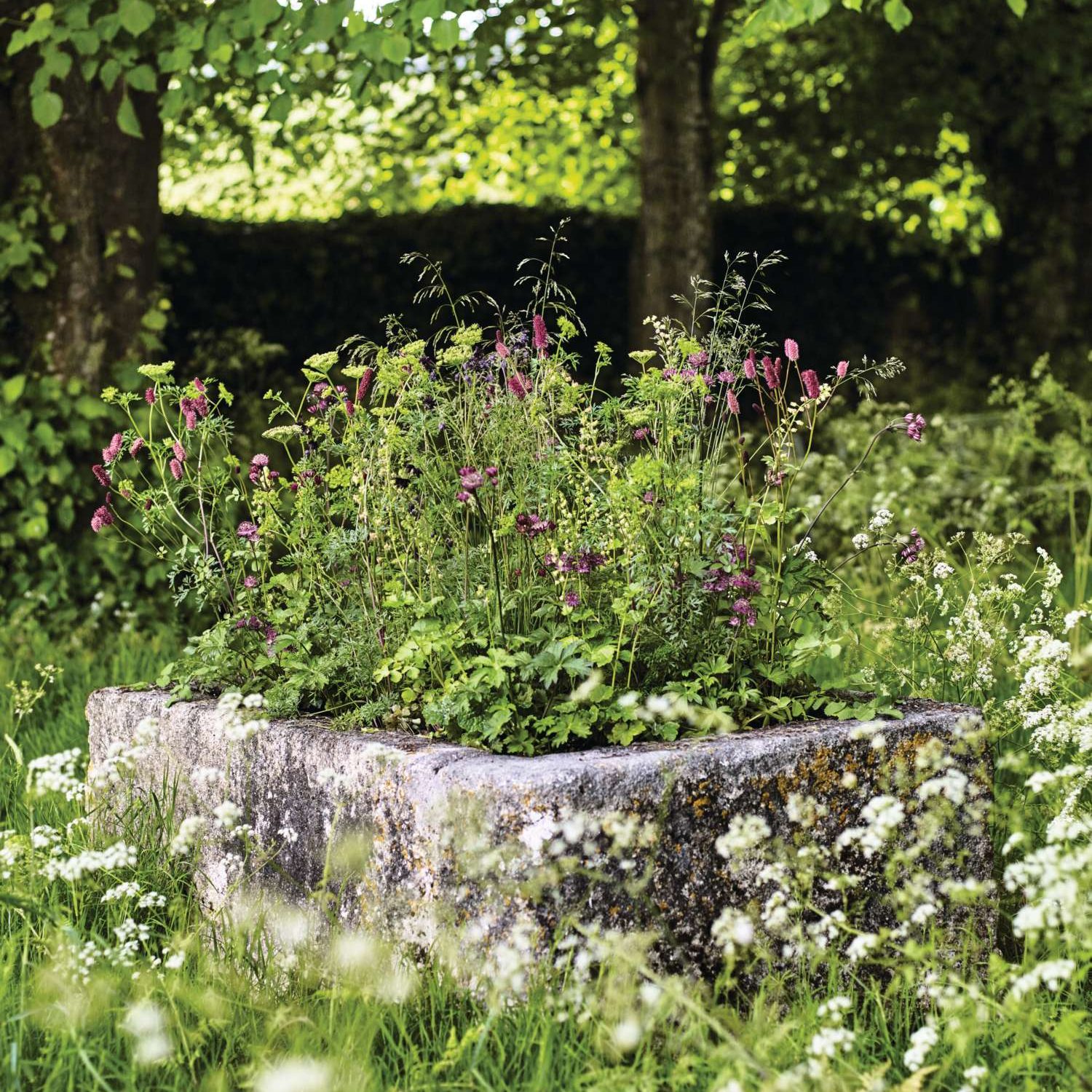
For this container I wanted to emphasise the contrast between the weighty stone trough and the planting, so I chose delicate, airy plants with open structures to catch the breeze. The trough is set beneath tall trees in an area of rough grass and cow parsley so the planting mix has a natural feel, reminiscent of a wildflower meadow.
This is a scheme that works well in this stone trough, but it could work equally well on a smaller scale in, say, an old, galvanised water tank.
How to achieve the look
Container and composition
This antique trough (1.8m x 1m) was originally a water container for livestock and so to convert it into a planter it needed drainage holes drilled in the base. I filled the trough with a 20cm layer of gravel before
topping up with a general-purpose, peat-free compost.
The colour palette is restricted to greens and creamy yellows with the contrasting dark red of the Sanguisorba and Astrantia threaded through the mix.
Cultivation and care
As this trough is so large I approached it as I would a small planting bed, and placed the structural plants (three Deschampsia, five Astrantia and four Cenolophium) first as these have the longest season of interest and create the backbone of the scheme.
I then wove four Sanguisorba and five Tellima through these; the Sanguisorba to give a higher tier of colour, while the Tellima serves as an underplanting.
You may also like:
- How to create a beautiful garden using only pots
- A moisture-loving container display in an upcycled bucket
- Create a colourful houseplant display
- 19 plant combos for stunning spring pots
Finally, I dotted through three Aquilegia, their purple-black flowers repeating the dark flush of the Astrantia stems. Light, dappled shade is best for this mix, with a good water once a week in dry spells. The Astrantia will flower all summer if picked on a regular basis and makes a wonderfully long-lasting cut flower.
I always try to incorporate Cenolophium into my planting schemes as it has such a long season of interest, the pale-green May flowers maturing to pure white before fading to ochre in September. The whole plant retains its structure well into the autumn once the flowers have faded.
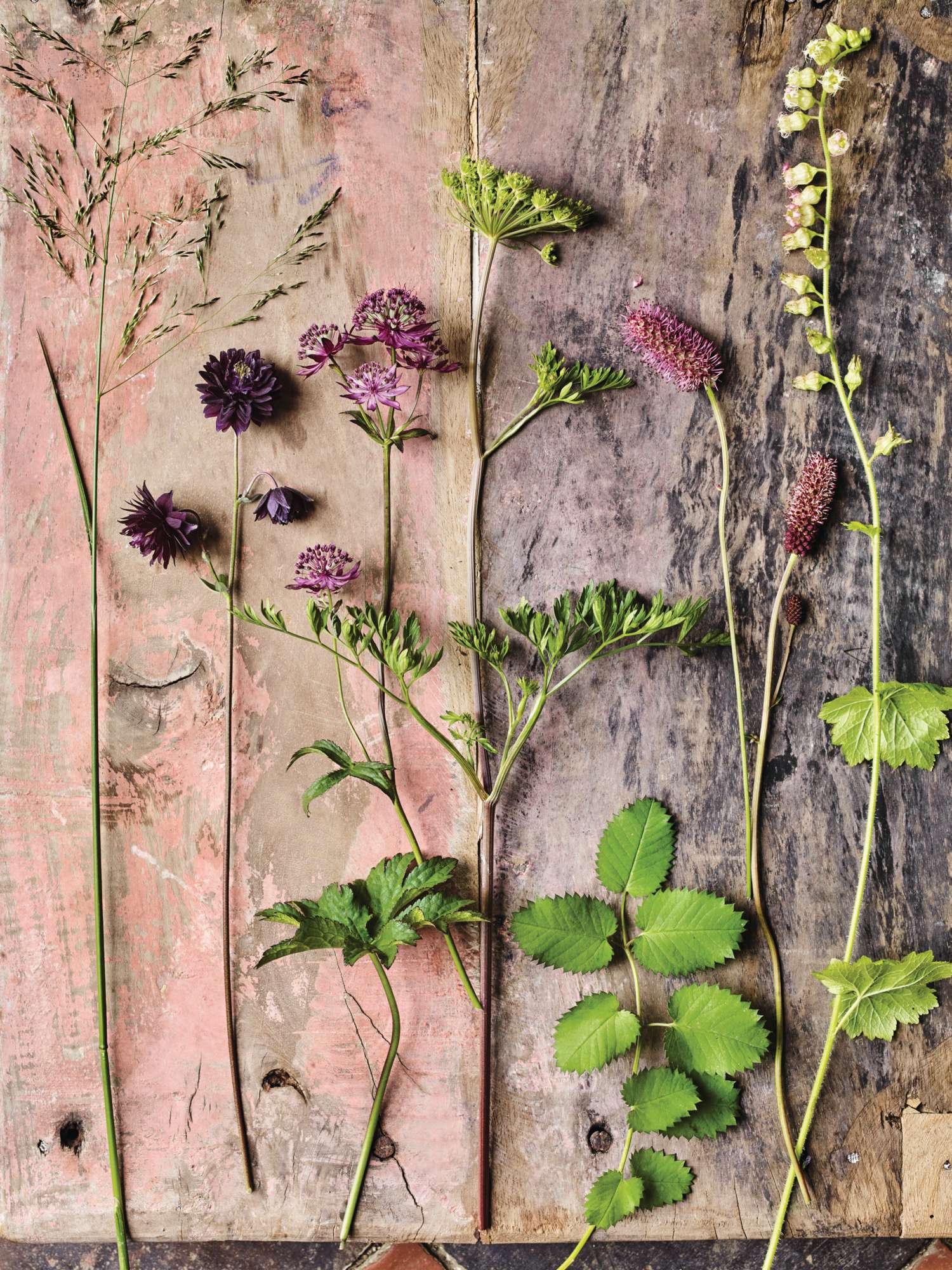
Plants (left to right)
1 Deschampsia cespitosa A UK native grass with light-green foliage topped by a large, open cloud of flowers. 70-80cm x 1.2m May – July. RHS H6, USDA 4a-10b.
2 Aquilegia vulgaris var. stellata ‘Black Barlow’ Deep-purple-black double flowers. May – June. 80-90cm x 45cm. RHS H7, USDA 3a-8b.
3 Astrantia ‘Burgundy Manor’ Large deep-red flowers with dark-purple stems. May – August. 50-60cm x 50cm. AGM. RHS H7, USDA 4a-7b.
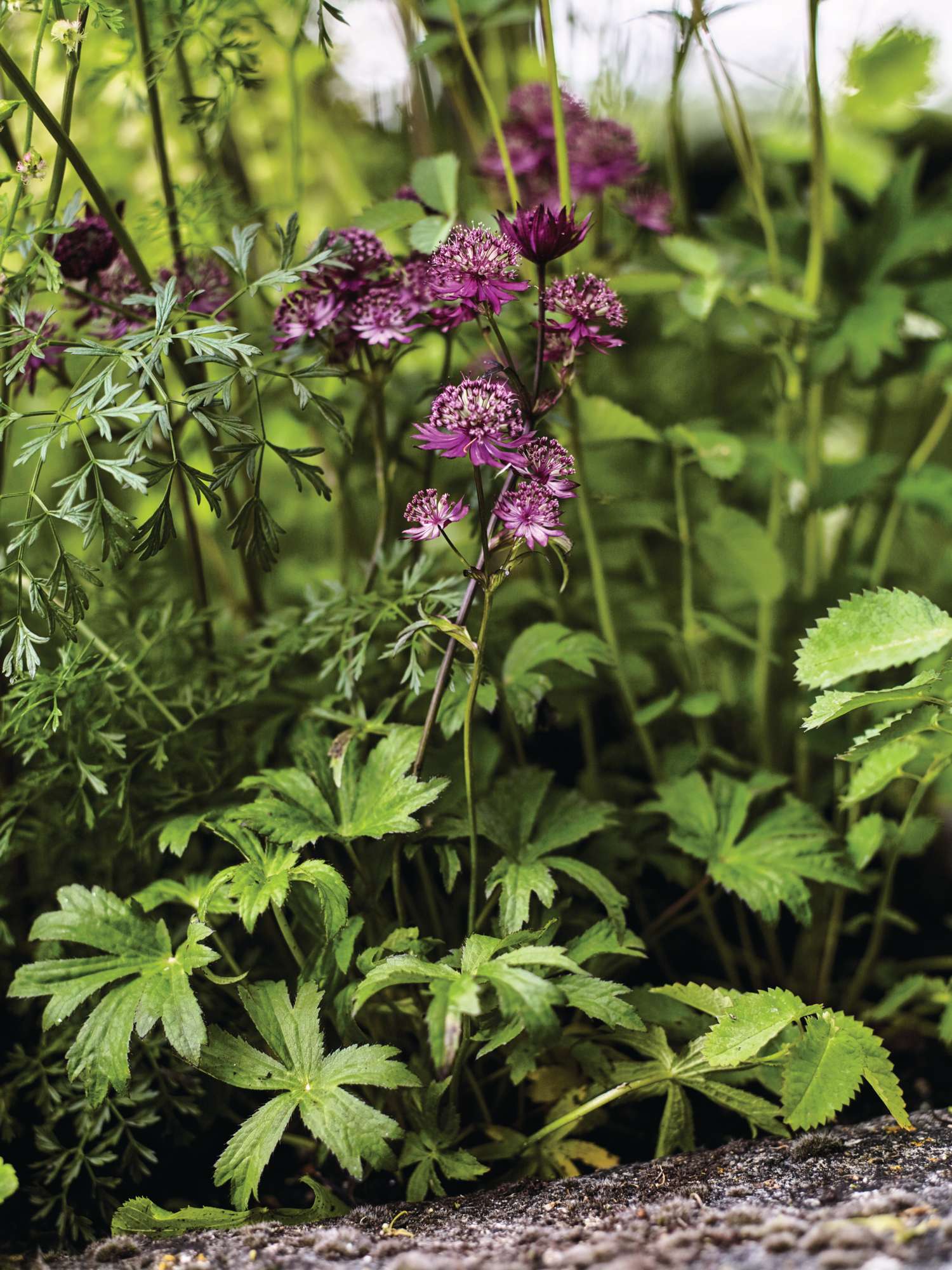
4 Cenolophium denudatum Umbels of pale-green to white flowers and ferny foliage. May – August. 1m x 75cm. AGM*. RHS H6, USDA 6a-10a.
5 Sanguisorba menziesii An early species with dark-red, bottle-brush flowers on wiry stems above grey-green foliage. May – July. 50-70cm x 50cm. RHS H7, USDA 4a-8b.
6 Tellima grandiflora Pale-yellow flowers above evergreen foliage. May – June. Height and spread: 50cm x 30cm. RHS H6, USDA 4a-7b†.
*Holds an Award of Garden Merit from the Royal Horticultural Society. †Hardiness ratings given where available.
Recommended suppliers
- Architectural Heritage (stone trough) Tel 01386 584414, architectural-heritage.co.uk
- Applegarth Nurseries Tel 01608 641642, applegarthnurseries.com
- Cotswold Garden Flowers Tel 01386 833849, cotswoldgardenflowers.co.uk
- Manor Farm Nurseries Tel 01327 260285, manorfarmnurseries.com


