To mark our November issue of Gardens Illustrated, which is guest edited by the legendary Dutch garden designer Piet Oudolf, we are talking to 10 of the gardeners and horticulturists who care for the gardens he has created over the years.
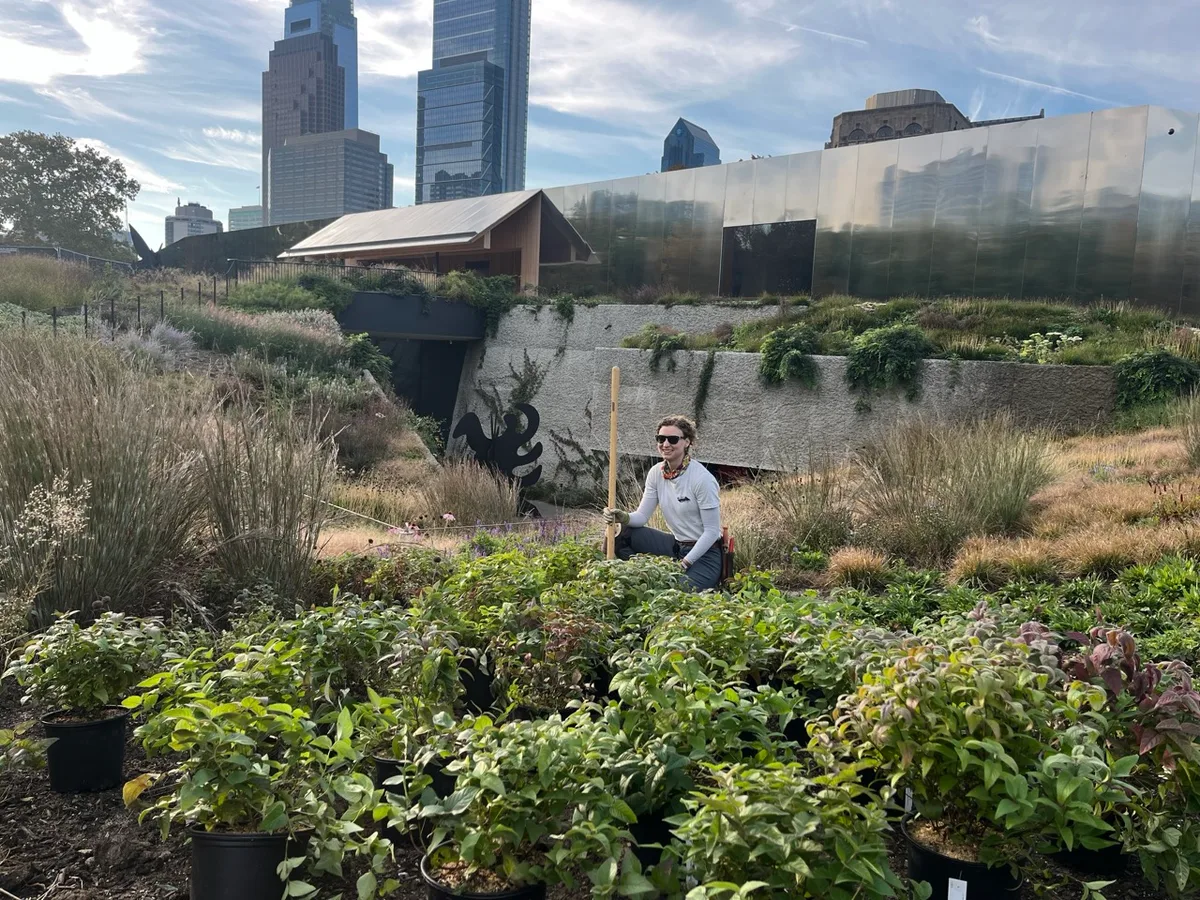
First up is Erin Monda, horticulture manager at the new Calder Gardens art space in Philadelphia, which saw its first growing season this year. Piet’s landscape there includes a meadow, woodland, sloping and sunken areas, and a ‘robust border’, all on a 7,000-square-metre trapezoidal lot enclosed by four busy roads of honking cars and bike commuters.
Erin Monda
Calder Gardens is unique because of the way art, architecture, and landscape are integrated into a single immersive experience. Rather than functioning as a traditional museum, it was designed as a place for contemplation and discovery, where visitors move through a sequence of gardens and indoor galleries that encourage slow observation and reflection.
The whole site encompasses 1.8 acres, with the planted areas of the garden covering about one acre total.

I started at Calder Gardens in April 2025, just a week before Piet Oudolf's visit to supervise the tree planting. The perennials were planted throughout the summer of 2025, before Calder Gardens opened to the public in September 2025, so they are only a year old!
Having the opportunity to be involved from the very beginning of the construction process was incredibly important, as it gave me firsthand insight into how every aspect of the garden came together.
In November 2025, after the installation phase and maintenance period were completed, I officially took over management of the gardens.
A classic Piet Oudolf garden
The garden features some classic Piet Oudolf planting styles, with a meadow containing a backdrop of Sporobolus heterolepis and Schizachyrium scoparium 'Smoke Signal' grasses. Each meadow that Piet designs is unique, and he was so thrilled with the evolution of our meadow when he came to visit this June.
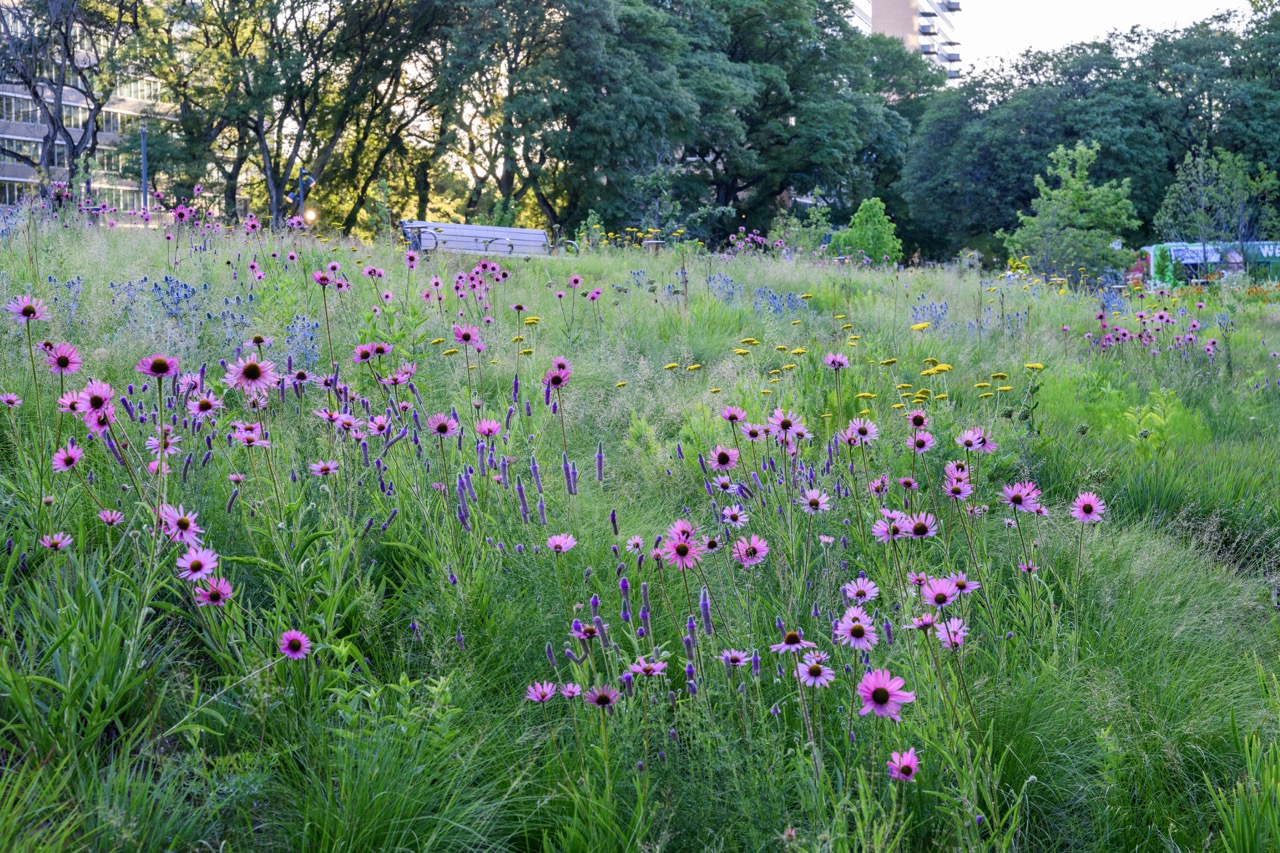
Calder Gardens also has a new planting style in an area Piet calls the Robust Border, and two sunken areas with vines climbing up the walls and cascading down. Over time, these will really change the effect and feeling of these spaces!
At Calder Gardens, the very naturalistic feel of the garden contrasts with the more formal gardens in the area. And the gardens are free to walk through any time the art space is open.
You may also like:
- Watch: Piet Oudolf’s layout and installation of Calder Gardens
- 24 plants from Piet Oudolf's field at Hauser and Wirth in Somerset
Working in a Piet Oudolf garden
It’s been so fun! I’ve really enjoyed seeing the progression of the plantings and being in the first row of watching his vision come to life over the first two seasons. In particular, I enjoy watching the different plant combinations (generally two different plants within one group) evolve and mature, as that changes the feel of those groups and their visual contribution to the plantings around them.
One of the challenges of the job is finding the specific plants used in Piet’s designs. Many of them are unique species or cultivars that are not commonly grown in the USA, so having connections with Piet’s colleagues and local nurseries is essential for sourcing these plants. However, Piet chooses these specific plants for a reason, so it doesn’t take long to realize why they’re worth the effort to find.
The main difference between working at Calder Gardens and the arboretum where I worked before is the freedom of design. In my previous position at the nearby Morris Arboretum & Gardens, I was responsible for designing the different perennial and annual gardens in my assigned section.

Now, while I make sure to stick to Piet’s design and plant list, I enjoy the discussions with him about these topics and still have the freedom of the day-to-day management decisions. And I still have so much to learn about garden design as the garden changes and evolves throughout the seasons and years.
I’ve already learned so much about garden design, plant selection, appreciating full plant lifecycles, and ecological management.
Public reaction
One really fun aspect of working at a Piet Ouodlf garden is interacting with the Piet Oudolf fans that come visit. They often spend lots of time in the gardens and really take them in! It’s easy to tell who the gardeners are by the way they discuss and study the plants, and I enjoy answering the questions and sharing their awe of the gardens.

Because of the central location of Calder Gardens, we also get many visitors that wander through the gardens instead of taking the sidewalk. I enjoy answering the questions of these passersby. Many visitors are so happy to have such a vibrant garden instead of the grass and sparse trees that were on the site before Calder Gardens.
Working with Piet Oudolf
The community of gardeners that care for Piet Oudolf gardens is incredible! When I started at Calder Gardens, I felt so welcome by staff at The High Line, Lurie Garden, and Oudolf Garden Detroit and I look forward to our continued discussions and learning from each other.

I’ve worked with Piet on several occasions throughout the garden construction and installation, including when he was on site for the tree planting in April 2025, perennial planting in June 2025, and when he came back to visit this June.
He is easygoing and easy to get along with, and arrives on site ready to get to work. He has such a clear vision and I learn so much from his many years of experience during each conversation! I also so appreciate that any edits to the garden are very much a discussion between us.
While Piet is very likely the most famous garden designer in the world, he is so humble! His love of his work is so clear and I can’t wait to see his other new designs.
Meet nine more Piet Oudolf gardeners across Europe, Asia and the USA in our November issue of Gardens Illustrated, on the newsstand from 10 November and available to buy at ourmediashop.com