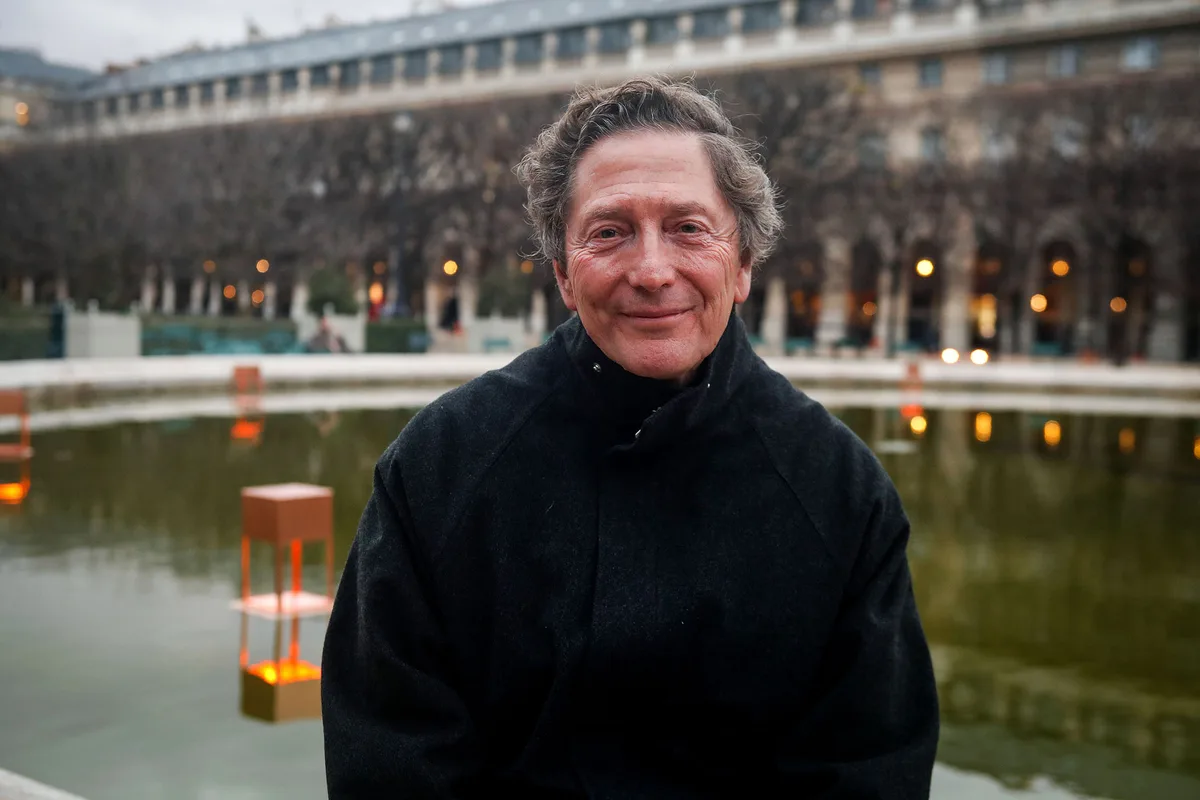
Garden design has lost one of its leading figures in Spanish landscape designer Fernando Caruncho, who has died aged 68. Fernando was lauded for his gardens, which are often called minimalist and contemporary, and are known for being harmonious and timeless.
“People say I am contemporary,” he told me when I interviewed him back in 2017. “It is a discussion that is not interesting to me. Obviously I am contemporary, because I live now!” A charming, smiling presence, Fernando always saw himself as "a gardener", who identified and revealed the latent qualities of spaces. “To be a gardener is to be a man,” he said. “It is a profession, but it is also a way to be a human being.”
Fernando grew up in Madrid, under Franco, in a family of creatives, and spent summers in the countryside at his grandfather’s house near Malaga, where he developed an appreciation for nature. “That is my first memory of being in a garden, with the scent of jasmine, orange trees and myrtle. It had a real impact on me,” he said.
As a boy, Fernando enjoyed reading – “one of the most beautiful things in life” – and studied philosophy after leaving school. But he felt something was missing, noticing it was all talk and no action, and was almost ready to drop out of university when he attended a lecture on landscape. “I realised that to be a philosopher, you need to be a gardener. This transformed my whole life – I discovered my happiness.”
You may also like:
- A rural Ibizan garden from designers Miguel Urquijo and Renate Kastner
- Monty Don: 'We underestimate in this country how privileged we are'
In 1979, he joined the landscape studies programme at the Castillo de Batres, and opened a studio. At the age of 21, his first project was for his uncle Paco Muñoz, a notable interior designer whose new house had been designed by the famous modernist architect Richard Neutra. For his uncle's small garden, Fernando took inspiration from 17th-century gardens in Kyoto, using gravel, acers and clipped box, spending months searching the countryside for the perfect rocks.
Two years later, when a journalist from the French edition of Vogue visited to see the house, she was so impressed by the garden she ran a feature article on it that launched Fernando’s career. He then went on to work on projects across the world, from Spain, Morocco and the UK to New Zealand, Tokyo and the US.
Mas Floris near Girona, Spain, was one of Fernando's notable projects; a garden of ten acres with all the hallmarks of his style – a pared-back palette of Mediterranean plants, a symmetrical layout and a reflecting pool to bring the sky down into the garden.
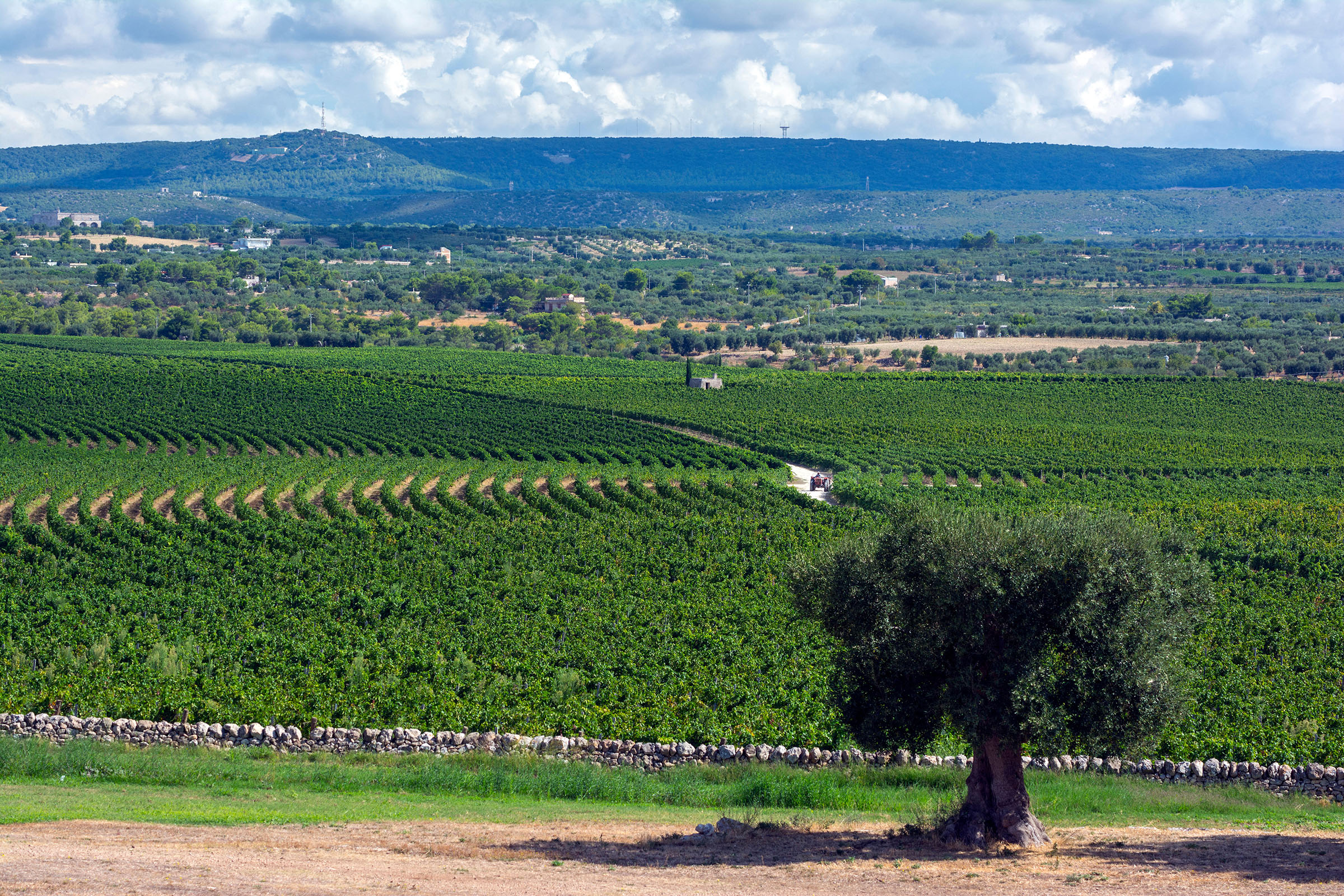
The world of design really started to pay attention with the landscape at Mas de les Voltes, in Catalonia, where parterres of wheat were framed by olive trees and sentinels of cypress; and he confirmed his place in the pantheon of designers with Amastuola in Puglia, Italy, where he laid miles of espaliered grapevines in a pattern of undulating arcs, like waves in a sea of green.
Fernando's own garden at Casa Caruncho embodied his style, and when it was affected by disease, leading to the removal of 1,000 square metres of clipped Escallonia, Caruncho was philosophical. “We have the perception now in modern society that everything should be happy all the time, and death is dramatic and traumatic. We need to accept it as a normal thing. To have lost these masses of plants was awful, but I began to understand that even the process of death in the garden has its beauty.”
In response, Fernando sowed thousands of white Cosmos to fill the space, bringing beauty for one season, before vanishing. “It gave us an opportunity, the chance to do something I never do: make a space full of flowers!”
Usually though, his approach for clients was more measured. Every project involved the same careful, considered process. To begin with, he would visit the site several times to discover the spirit of the place, the genius loci. “When you approach a place for the first time, it is like meeting a person,” he said. “You have to spend some time with them, get to know them.”
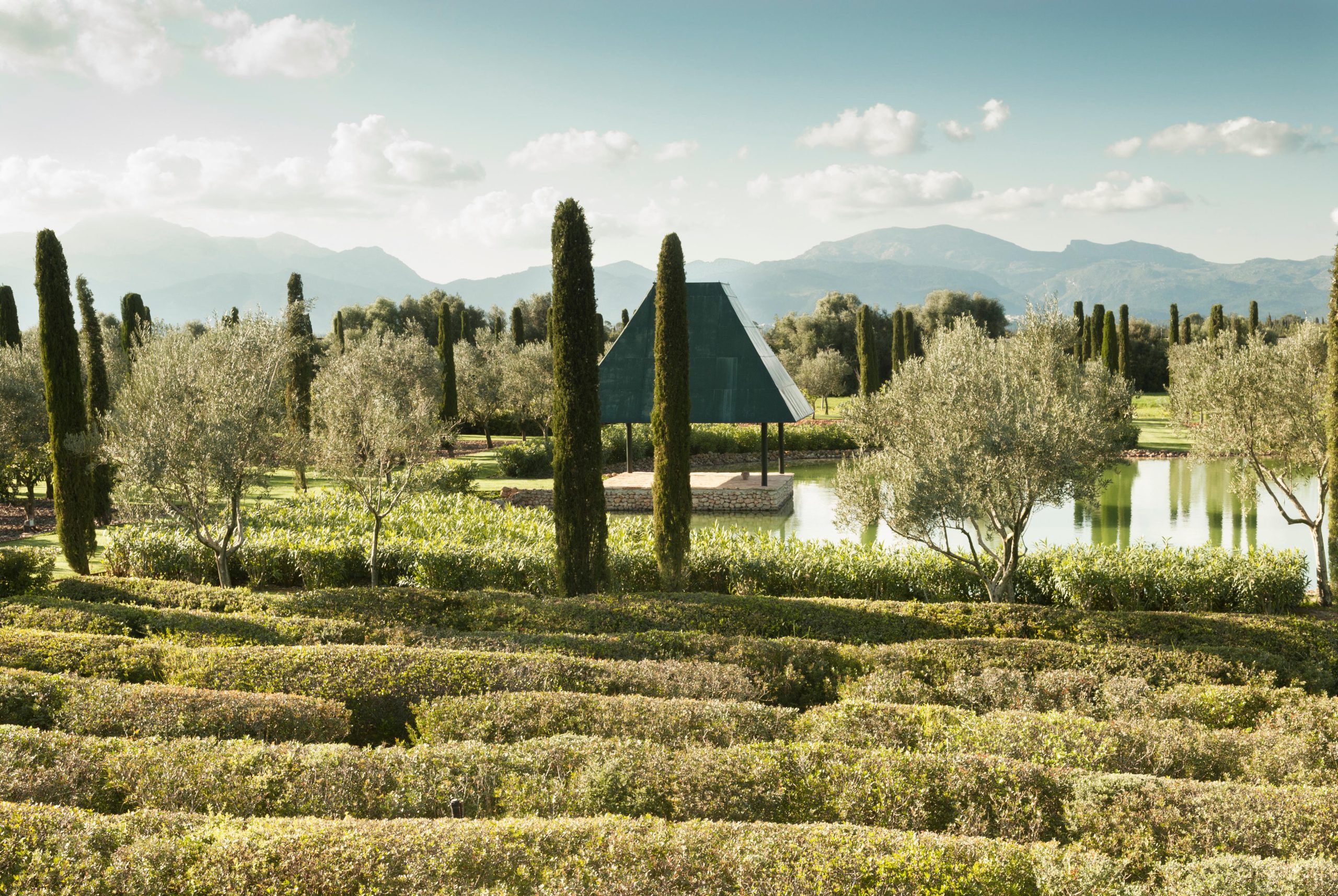
Fernando also walked a lot in the surrounding area outside the garden, as for him the key to a successful design was the synergy of the architecture of the house with the garden, and the garden with the wider landscape. He waited for the concept for the garden to reveal itself, like an impish muse: “The idea likes to play hide and seek with you.”
Back at his studio, he would draw sketches, and detailed scale models were constructed. These maquettes are astounding, topographically accurate miniscapes big enough for his team to clamber around on as they experiment with the placement of elements.
In the past decade, Fernando was thrilled to be joined in practice by his two sons, Fernando and Pedro, who both trained as architects.
He told me he felt it was imperative to pass on what he knew to younger designers. “In these difficult times, we must ensure we transmit what we know to the next generation," he said. "It’s the history of gardening – people passing on the torch in a very big chain of knowledge over the centuries. This is so important, because knowledge is the key to discovering beauty, and that should be the goal of all our lives.”
When I asked about the future, and how he saw garden design and horticulture developing, he made it clear that now is the time to act. “This is the best moment in the past century, though it may not seem this way. Modern life is uncertain, and if it continues in this way, where we put the unimportant first and the important last, it will be a disaster. We must consider the Earth our paradise, or we are lost.
"So, now is a moment for a garden mentality," he continued. "The garden is the space in which to recuperate the lost connection between man and nature, and provide people with the possibility to return to dignity and happiness. That is the big responsibility for future garden designers.”
His son Pedro posted a touching eulogy on Instagram this week: 'He believed in the transmission of knowledge and emotion as the founding act of the garden... I have had the privilege of working at his side and sharing unforgettable moments. Today I proudly join that chain of time as one more link, continuing the work of the studio through its projects and honouring his immeasurable legacy. Today, father, I carry your torch.'