“We no longer use the word pest really when talking about those kinds of organisms,” says Josie Stuart, a Senior Entomologist at the RHS. “We really push the idea of having a nice, balanced garden ecosystem and we encourage gardeners not to see all plant feeders as pests.”
In the past gardeners have been given myriad advice on how to remove or kill creatures in the garden that are damaging plants, but these creepy crawlies are misunderstood. Although there are some pests that can wreak havoc in the garden, all of them fill a niche that serves a purpose in your ecosystem.
Damage to plants can be made by a range of different garden visitors – leaf cutter bees making notches in the leaves of your roses could easily be mistaken for caterpillar damage, but most gardeners would welcome the sight of the former but not the latter. Reframing our view of ‘pests’ plays a large part in working with them in the garden.
You may also like
- Sworn enemies no more: we should ban the word ‘pest’ and give garden critters a rebrand
- Destroyed lawns and munched veg - here's how to protect your garden from 9 destructive visitors
Here, we identify four pests you might want to worry about and four you don’t need to give a second glance at. For all eight, we provide expert advice on how to support or control numbers in the garden.
Four to worry about
Box moth
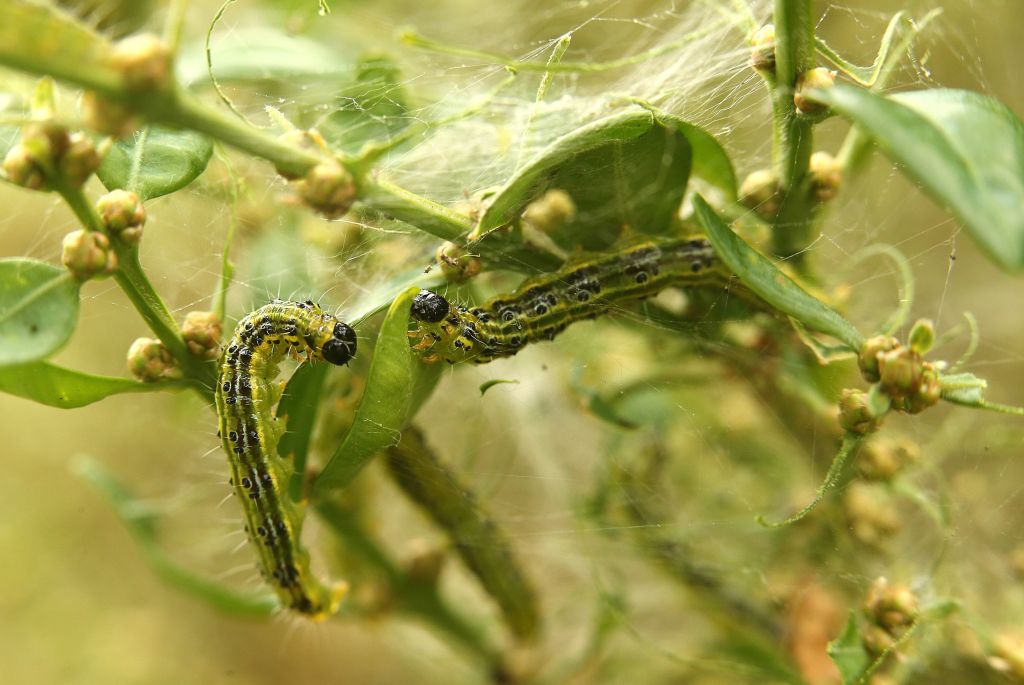
The box tree caterpillar, also known as box caterpillar, box moth or box tree moth, has become a major pest of box (Buxus) plants in Europe in recent years – it can defoliate plants, ruining box balls, topiary and hedges in a matter of days. The signs of box caterpillar can be similar to that of box blight.
While box caterpillars will not usually kill a box plant outright, they can weaken it through repeated attack, as the plant loses its ability to photosynthesise. When all the leaves have been eaten, the caterpillars start eating the green cambium layer of the bark, which will kill that branch. If the main stem is eaten, it will kill the plant.
Signs that your plant has box moth caterpillar include: leaves stuck together with webbing, dieback, lime green and black caterpillars within the plant and moths around the plant. There are a few treatments for box moth caterpillar, but Josie says the first port of call is to create space for their natural predators.
You may also like
- New product in the fight against box caterpillar
- The best alternatives to box to help you avoid box blight and box tree moth
“The caterpillars of box moth have quite a range of natural enemies,” says Josie. “Parasitoid wasps are a really good natural enemy of box moth. Social wasps too, as well as spiders and ants. So having a healthy population of all of those will really help.”
If you’re still having trouble, manual intervention may be needed. “You have to go out and pick the caterpillars off,” says Josie. “Then you know you’re definitely getting them.”
However, if you’ve moved to a new garden and you’re in an area where box moth is prevalent, prevention is easier than cure. “Just don’t plant box if you’re in an area where box moth is present. We have a range of alternatives that have the same sort of aesthetic as box.”
Vine weevil
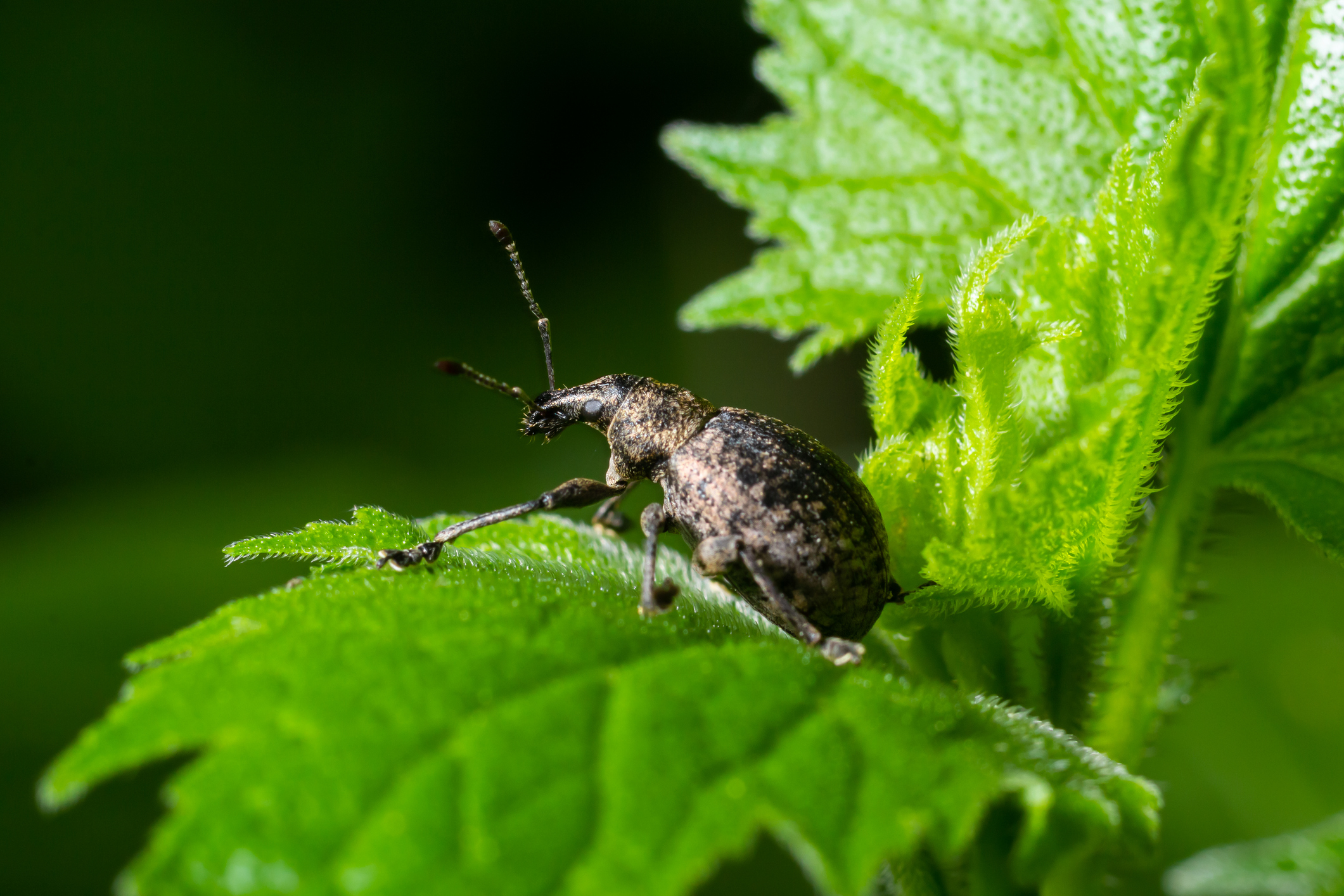
Vine weevils are small beetles with broad snouts, and their larvae are small white grubs with a brown head. They feed on a large variety of plants, both indoors and outdoors, but are most damaging to plants in pots. “The adults will leave that notching on the leaves, but this isn’t really a cause for concern. As long as the plant is otherwise healthy and quite well established, it can withstand that sort of feeding,” says Josie.
“The adults are also really great food for birds, frogs, toads and hedgehogs. So if you encourage these natural predators that will help manage their populations anyway.”
The grubs can be more problematic, especially if you garden in containers. “This is because those natural predators can’t really get to them,” says Josie. “Plants like strawberries and primulas can be killed.” Other susceptible plants include heucheras and sedums.
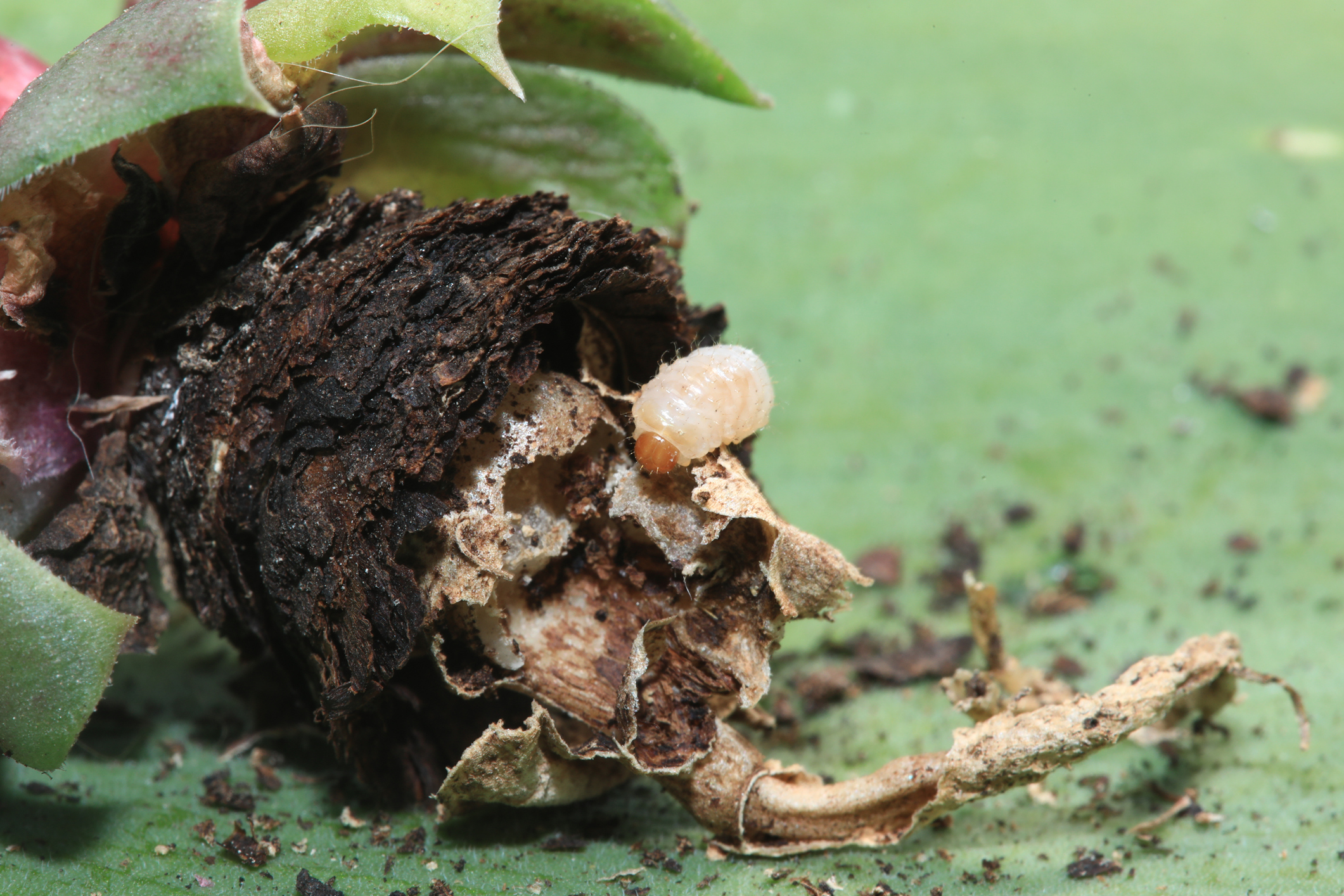
The grubs feed on the root systems of plants, and this can lead to the death of the whole plant if enough of the roots are damaged. They are most active over autumn and winter. Signs of vine weevil grubs mostly manifest as wilting of the plants and then death.
Solutions to vine weevil infestations include removing plants from pots and stripping all the soil away from the roots and planting in fresh compost, but this is time consuming. The grubs can be left out in a dish for the birds, robins in particular love them.
“There is a nematode that can be used for the grubs,” says Josie. “But it does require quite warm soil temperatures, so it depends on the time of year.”
Mealybug
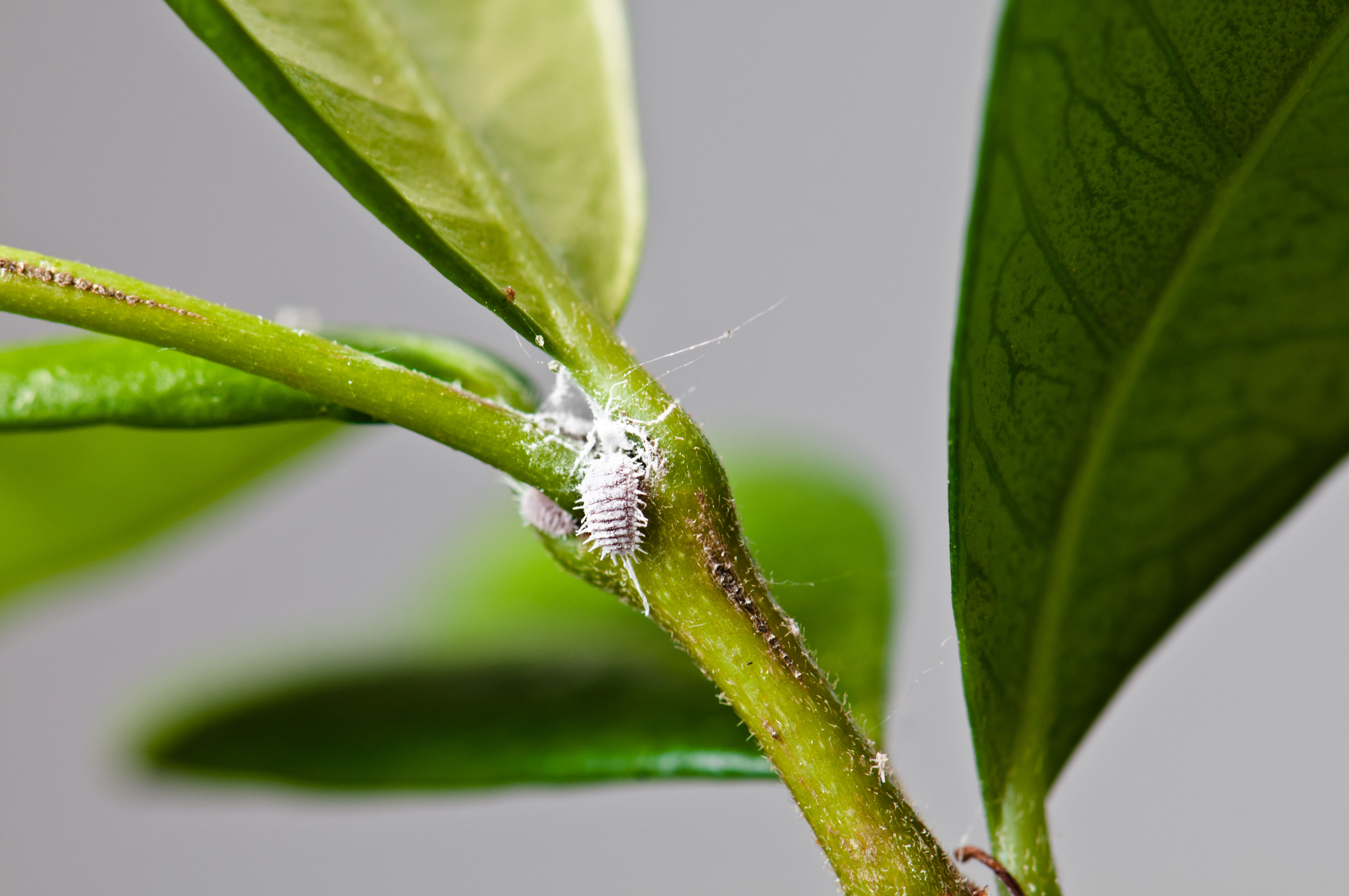
Glasshouse mealybugs are sap-feeding insects that are common on houseplants and greenhouse plants. They can weaken plants with their feeding and excrete honeydew which allows the growth of sooty mould. Once they take hold, mealybugs can be difficult to eradicate and they can multiply rapidly.
“Again, prevention is always better than cure,” says Josie. “Inspect new plants and keep them separate for about a month before adding them into your collection.” If you spot mealybugs on one of your plants, isolate it immediately and do a thorough inspection of surrounding plants. They can be tricky to eradicate because they like to live in the inaccessible parts of plant, around leaf axils, lead sheaths, between twining stems or under loose bark.
“If your plant is really heavily affected, sometimes it is easier to dispose of it,” advises Josie. However, there are some solutions. “There is a lady bird you can purchase, that’s actually called the mealybug lady bird and is a biological control for glass houses.”
Slugs and snails
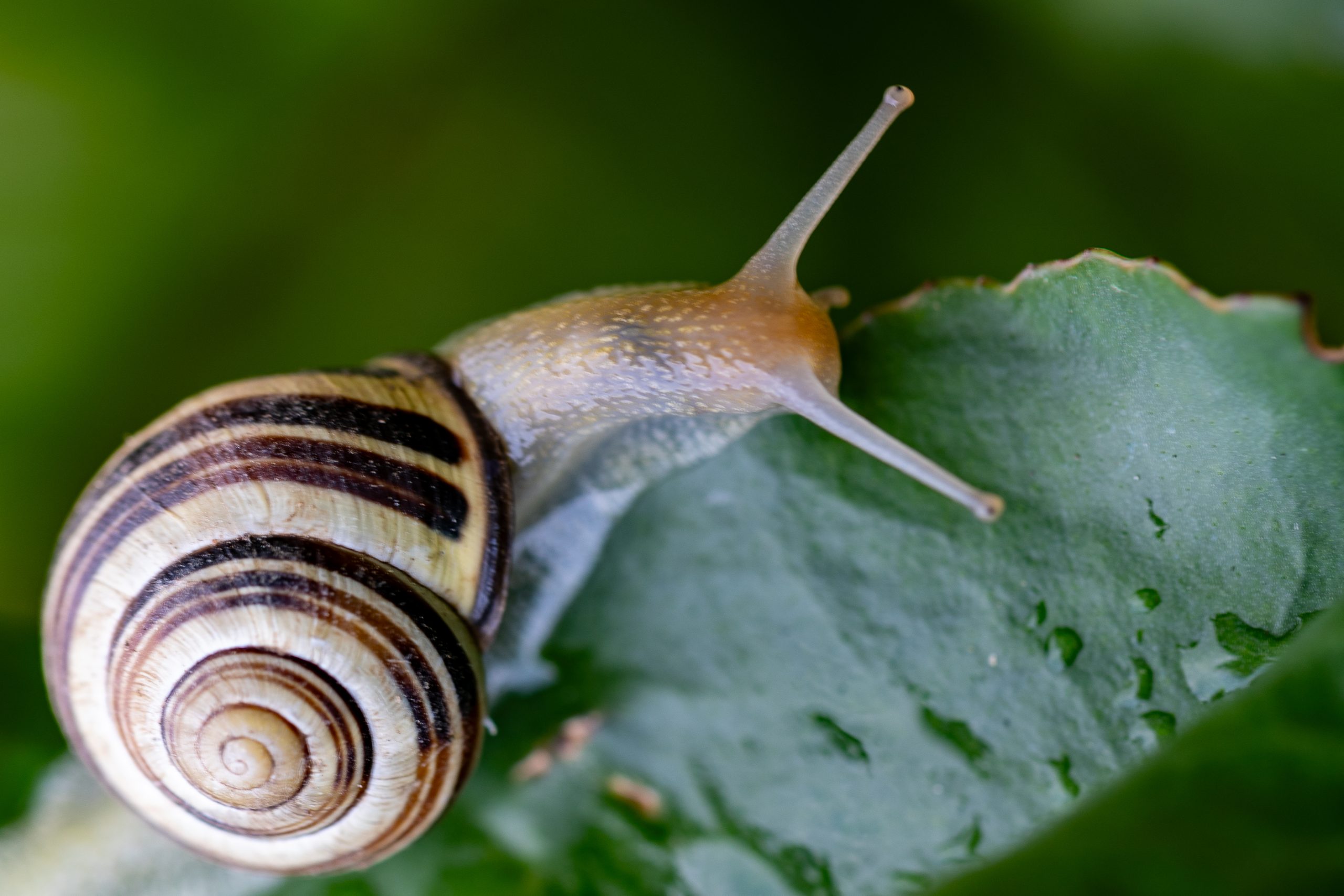
Slugs and snails are the garden creature that the RHS gets asked about most often. “The number one is pretty much always slugs and snails,” says Josie. “2024 was our sluggiest year on record.”
You may also like
- Slug-proof veg: the ultimate list of 17 vegetables that slugs and snails won’t eat
- "They're a massive nuisance" - but here is why you need to make friends with slugs and snails anyway
Slugs and snails have traditionally been seen as one of the biggest enemies of gardeners – especially those who like to grow leafy plants such as hostas and cabbages. Slugs can decimate displays overnight with their munching, leaving gardeners at a loss and often resorting to killing creatures with beer traps or slug pellets. However, these methods are indiscriminatory and may be killing a much wider range of animals than intended. “There are around 44 species of slugs in the UK and about 90 species of snail,” says Josie. “Only a really small percentage of those will actually eat plants. The rest are detritivores, so will eat dead matter or organic matter.”
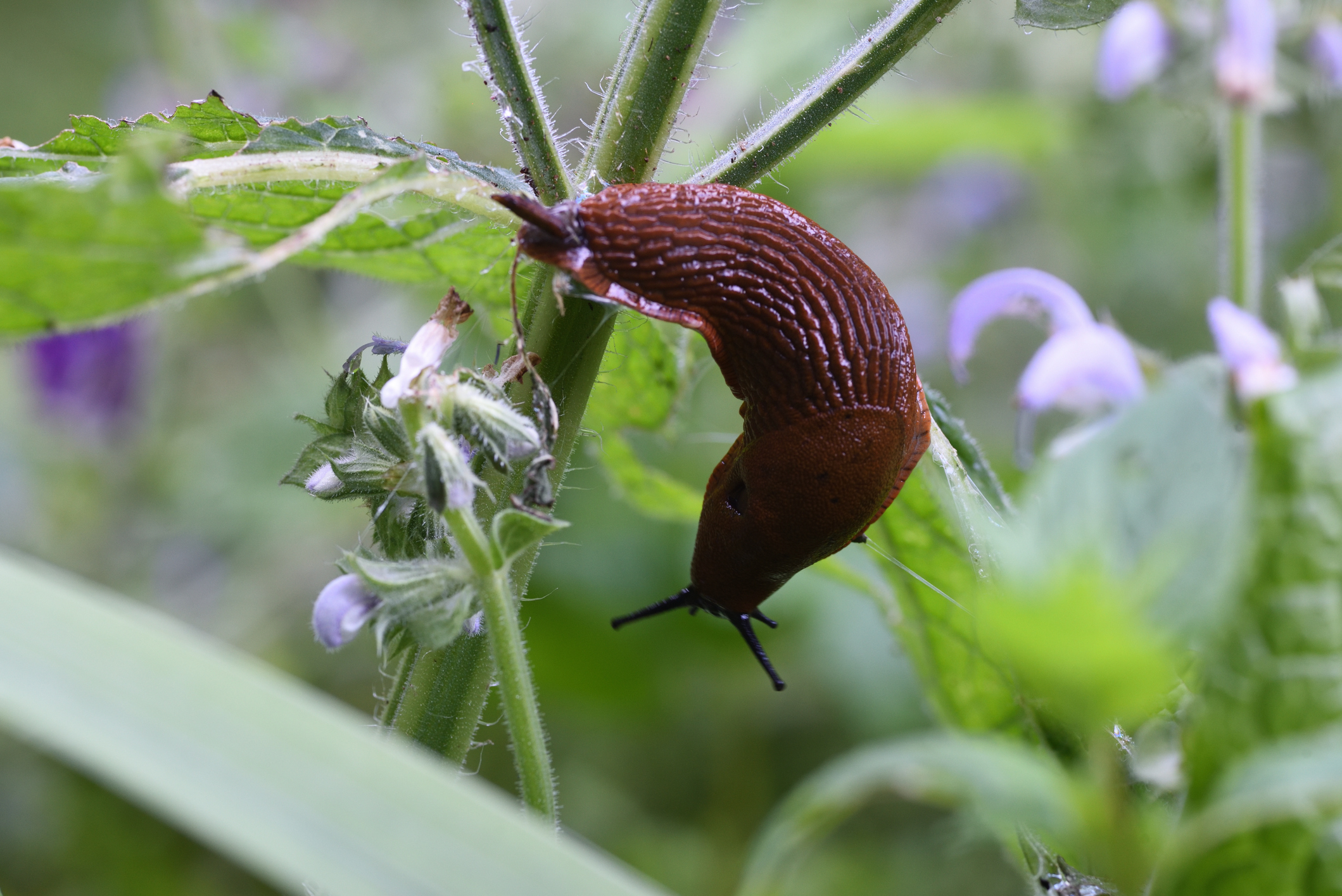
Slugs and snails can obviously cause difficulties for gardeners, but they deserve space in our gardens anyway. The best way to control populations is to have a balanced eco-system, and to attract lots of birds and other predators.
You may also like
- Slug control: the ten best organic slug controls
- Looking for plants that won't get eaten by slugs? Here are 38 slug-proof plants and flowers that won't get munched by molluscs
Josie also recommends a top RHS tip for managing slugs and snails in the garden: “Make sure you’re watering earlier in the morning rather than in the evening, because slugs are nocturnal. So if you’re watering in evening time, you’re essentially providing a really lovely buffet of nice, juicy, wet plants. In the morning the number of slugs is lower, and this will make your plants less likely to be eaten. I think studies have shown this to be just as effective as old-fashioned slug pellets.”
Four NOT to worry about
Whitefly
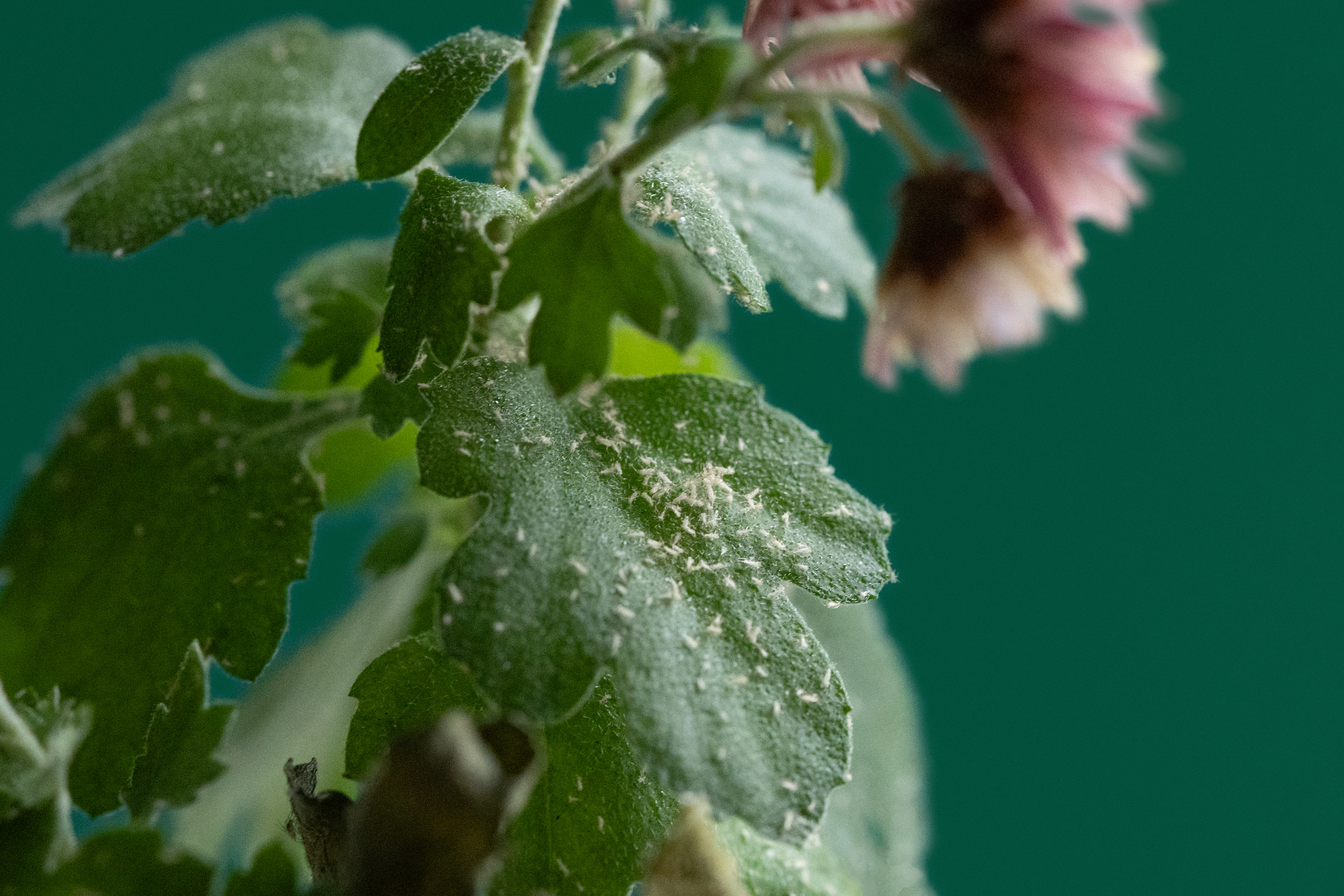
Whitefly are tiny sap-feeding insects that mainly live on houseplants and greenhouse plants. They excrete honeydew which contributes to the growth of sooty moulds on plants.
Glasshouse whitefly can feed on many vegetables and ornamental plants grown in greenhouses as well as house-plants, including cucumbers, melons, tomatoes, peppers, Pelargonium, poinsettia and Verbena.
It is easy to spot whitefly on plants as clouds of them will lift off when disturbed. Josie advises a preventative approach. “Inspect new plants and keep them separated for about a month before adding them to your collection,” she says.
As long as you deep-clean your glasshouse in winter and keep removing unwanted plants from the space while ensuring good ventilation, whitefly should not cause too much of a problem for gardeners. Parasitoid wasps can be introduced if you’re struggling with an infestation. Encarsia formosa prey on whitefly scale nymphs and can be purchases from biological control suppliers.
Aphids
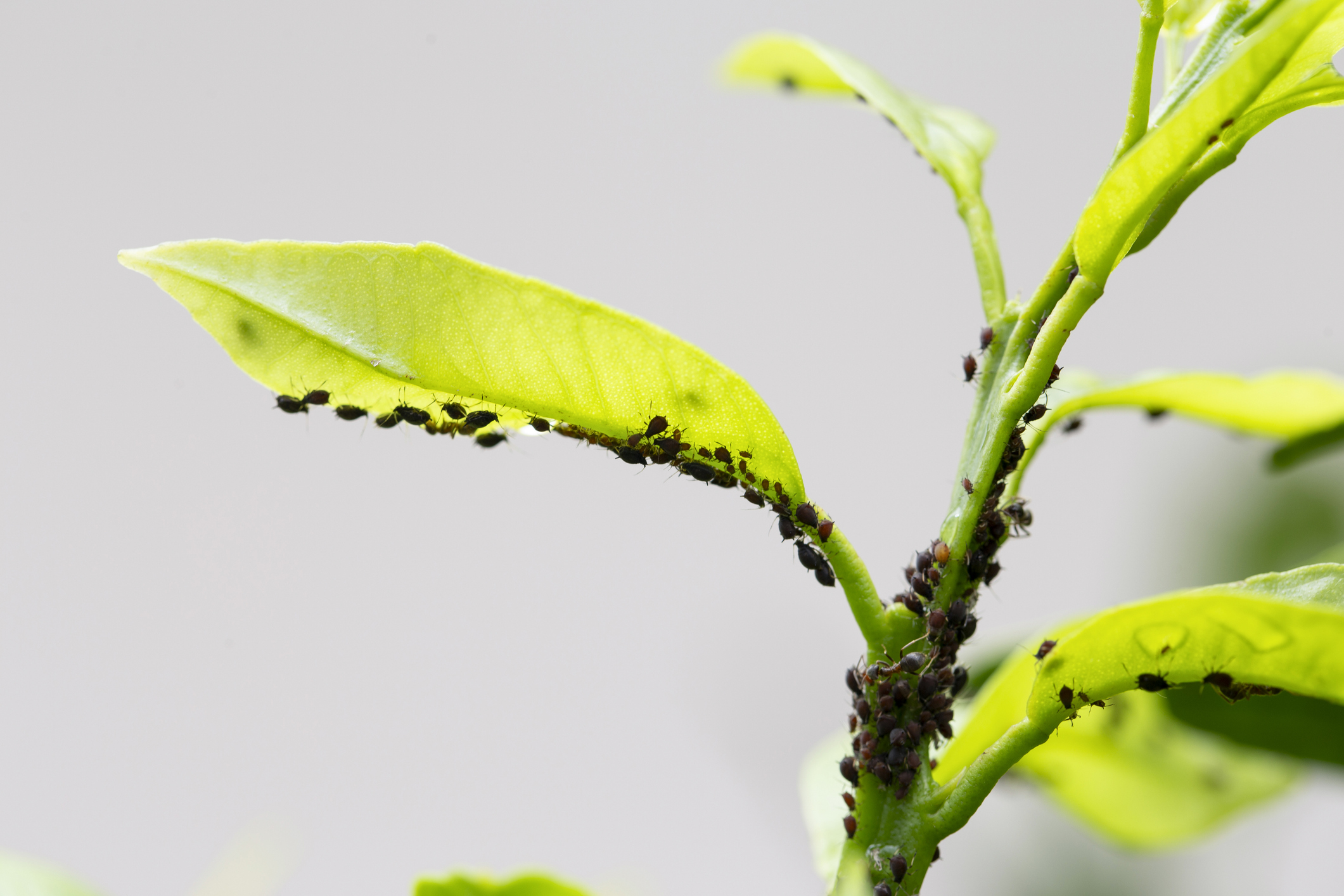
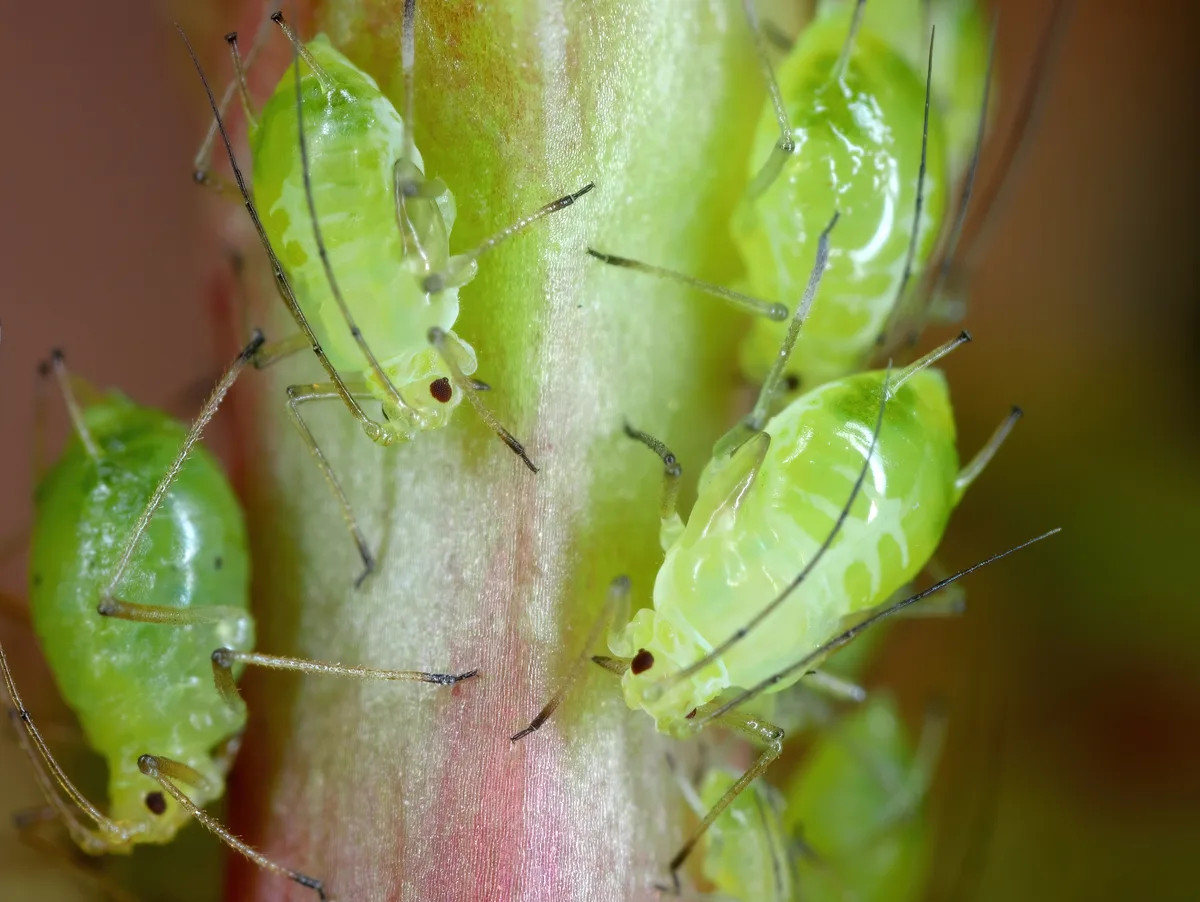
More commonly known as greenfly, or blackfly, aphids are small sap-feeding insects which actually occur in a wide range of colours and live on a wide range of garden plants. Over 600 species are found in the UK, and many are unwelcome in gardens due to their reliance on plant sap to sustain their highly successful colonies. Aphids provide an incredibly rich source of food for many other beneficial garden insects and birds and without them, gardens, as we currently know them, would be very different places.

“Last year in particular, we had a load of aphid enquiries and that was purely because we had such a warm start to last year so populations increased quite rapidly,” says Josie.
Aphids are herbivores and sit at the bottom of the food-chain, underpinning much of the garden’s eco-system. “I know they are quite prevalent and quite a persistent garden insect,” she adds. “But if you’ve got really established plants, their feeding activities aren’t going to be doing too much harm. They also have loads of natural enemies, including hoverflies.”
“There are so many species of hoverflies whose larvae will eat aphids – hoverflies are fantastic pollinators and allowing for some aphids in your garden supports these predators to thrive too.”
Caterpillars
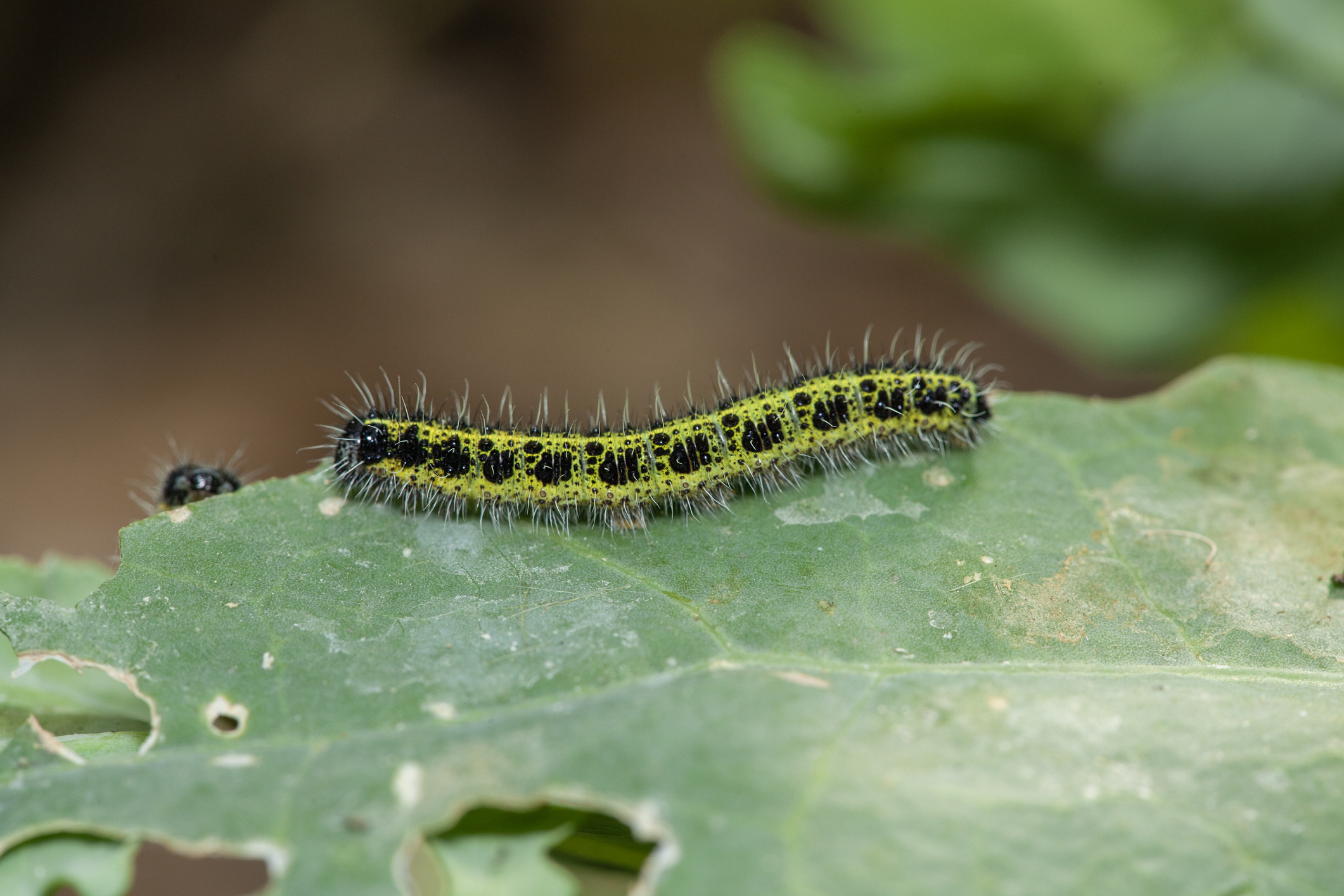
The word caterpillar is all encompassing and covers many different species from cabbage white butterflies to oak processionary moths.
Oak processionary moths are a ‘notifiable pest’ that government agencies are looking out for. So in cases like that, says Josie, human intervention will be needed. But most other caterpillars should be left alone.
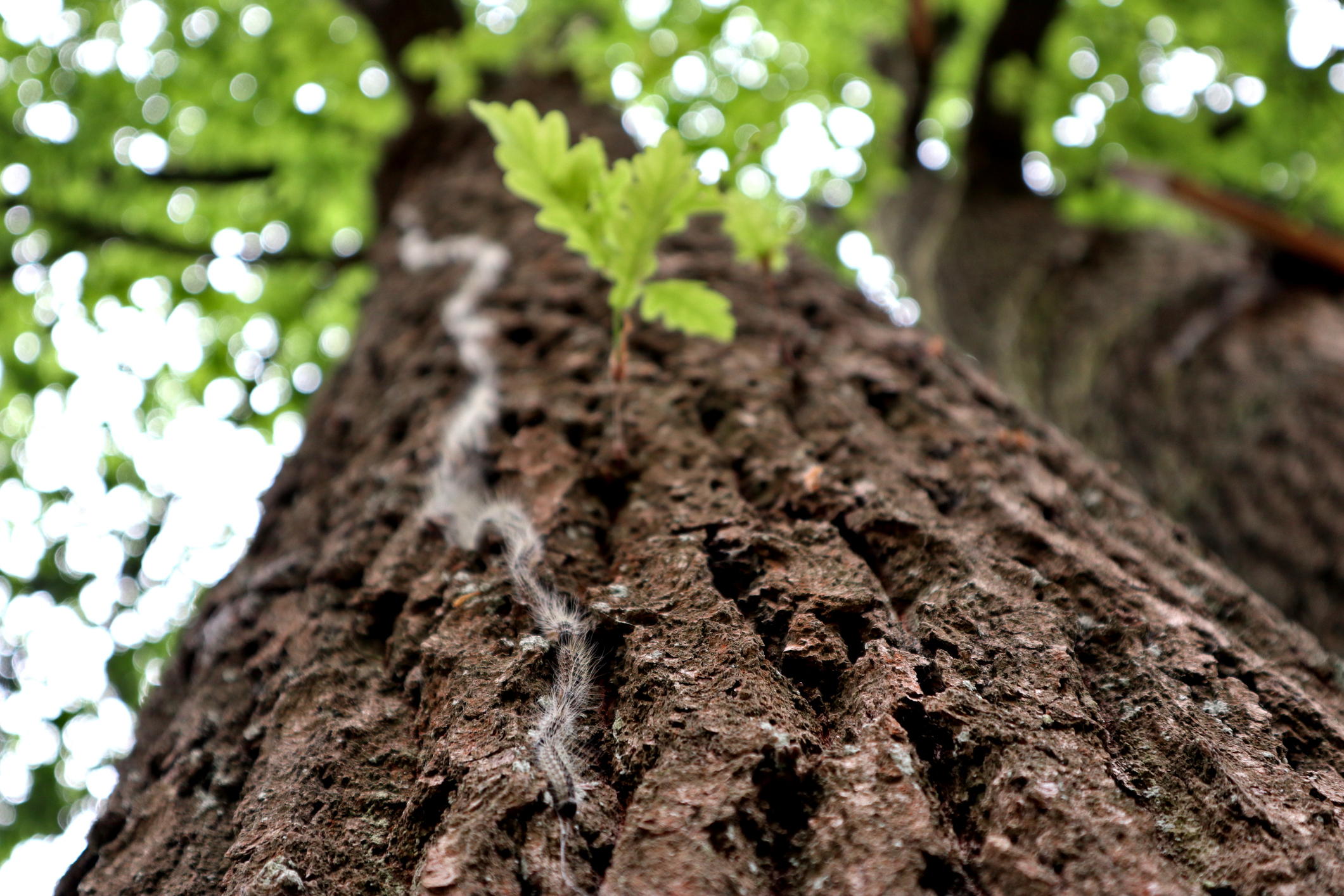
“Caterpillars are the larval stage of moths and butterflies,” explains Josie. “If you want pollinators in your garden, you’re going to have to withstand some feeding from their caterpillars.”
Caterpillars are also amazing food for a range of birds. At the RHS Spring Conference, Kate Bradbury, a writer specializing in wildlife gardening, said “caterpillars are the bedrock of biodiversity. Baby blue tits can eat 100 a day and in a dry spring, they provide water for birds bringing food to their chicks.” They also form part of hedgehog diets too.
Plants that we used to see as weeds can often be the best for supporting butterfly and moth caterpillars. These include common sorrel, stinging nettles and bird’s foot trefoil.
Wasps
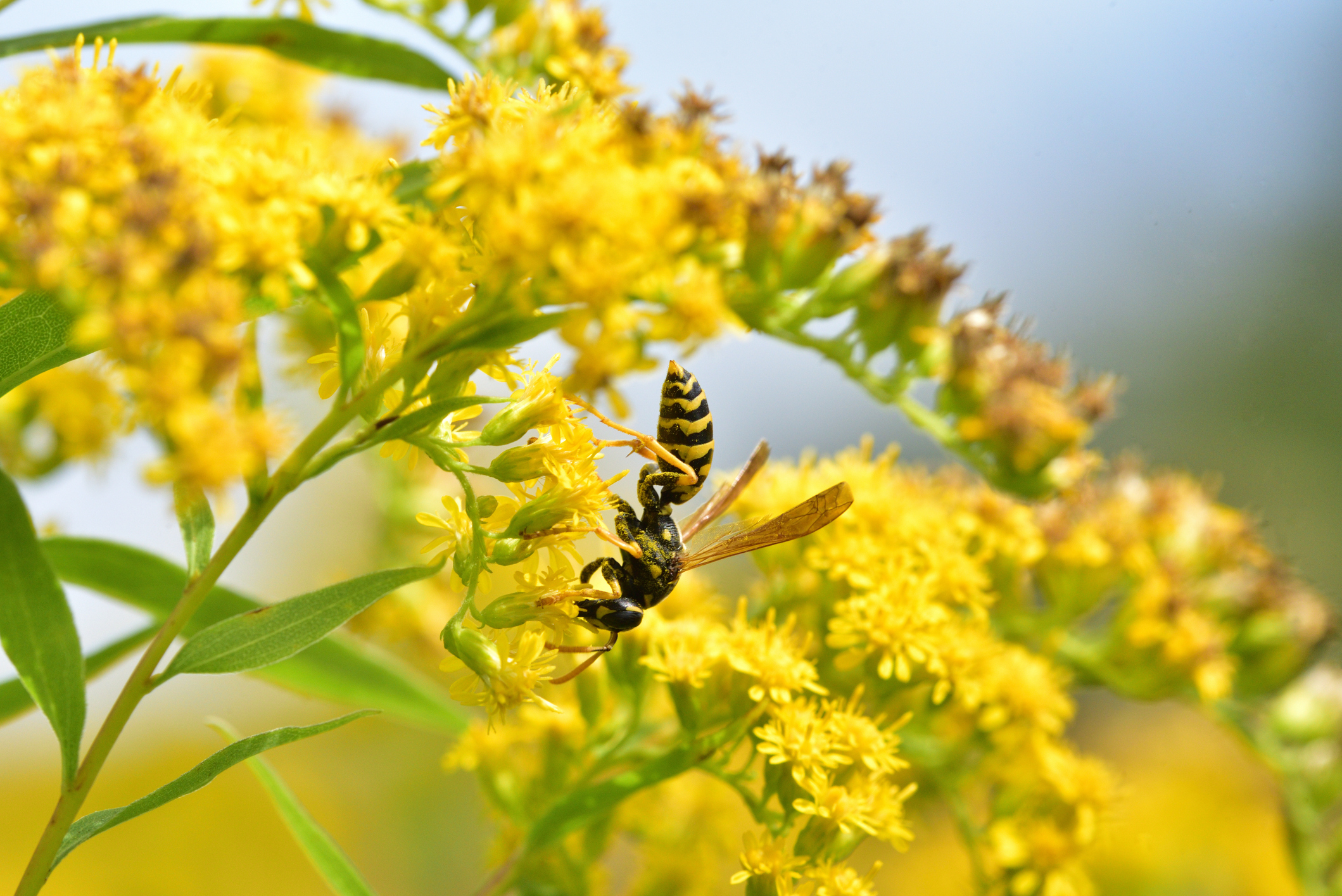
During the summer months it can seem wasps’ main role is to disrupt family picnics but these important, incredibly well-adapted, and largely harmless to humans, predators are an incredible asset to gardens.
There are over 100,000 species of wasps currently described in the world, and in the UK alone there are 7,000 species. Social wasps - yellowjackets and hornets, which are the ones that most people recognise as wasps - account for only around 1,200 of total known species – and for only 9 in the UK.
Most people don’t like wasps because they sting, however it’s worth remembering that bees sting too, and yet gardeners love bees because of their pollination services and a long-held view that bees are ‘useful’. Yet wasps not only provide similar pollination services, but they are also a natural form of pest-control and are very efficient decomposers making them extremely ‘useful’ garden companions. To add to this, around 70 per cent of wasps don’t actually sting.
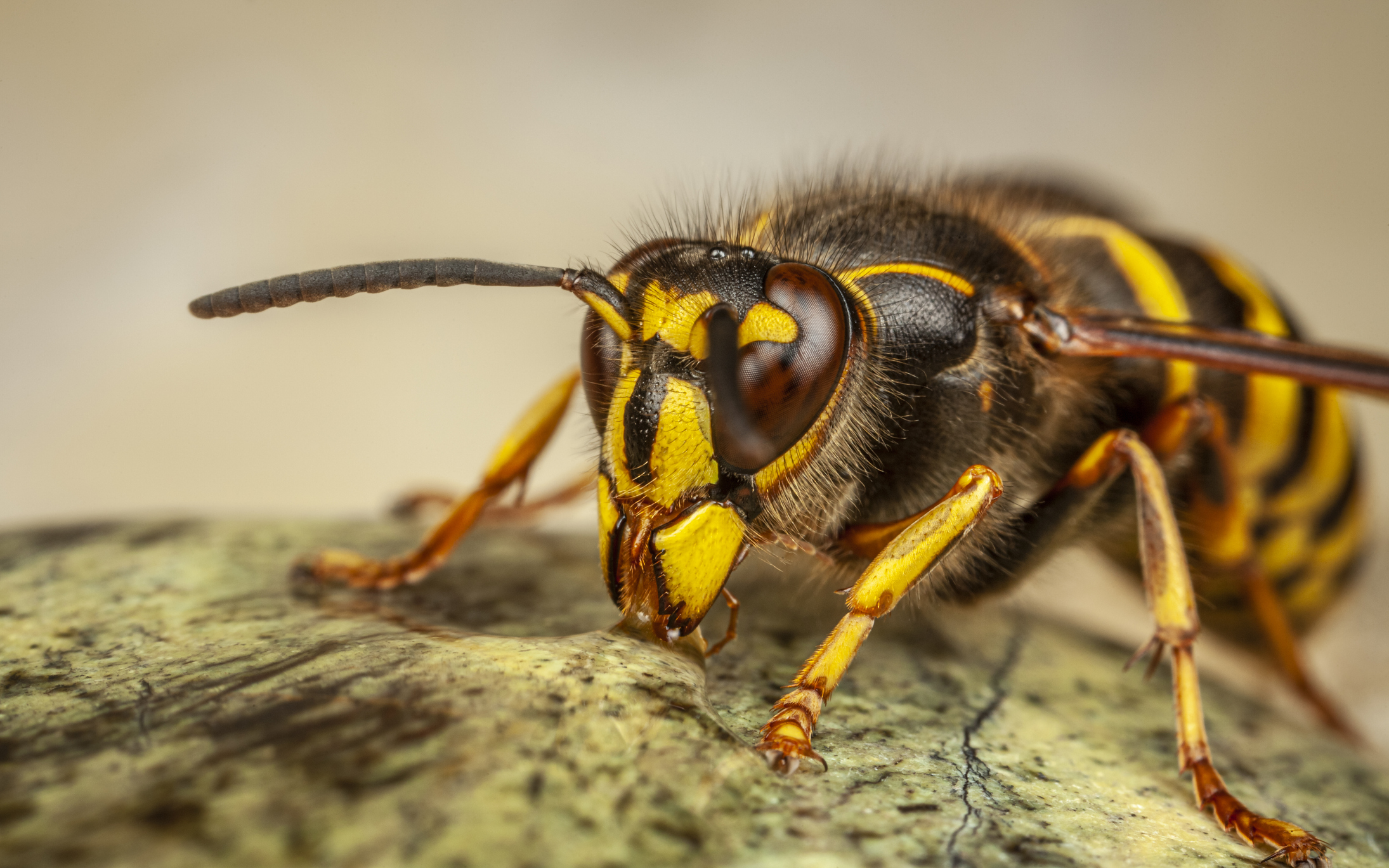
Wasps are hunters, usually of other insects and arthropods, because their offspring require meat to develop into adults. This makes them very efficient natural pest-controllers, including insect pests in gardens like caterpillars, aphids and weevils. Wasps are also pollinators. Adult wasps may be hunters, but they don’t eat the meat themselves. They find nutrition from nectar in flowers and in doing so, they carry pollen from flower to flower.
“Wasps are part of a natural garden ecosystem, so unless you’re allergic to them there is really nothing to worry about with wasps,” says Josie.