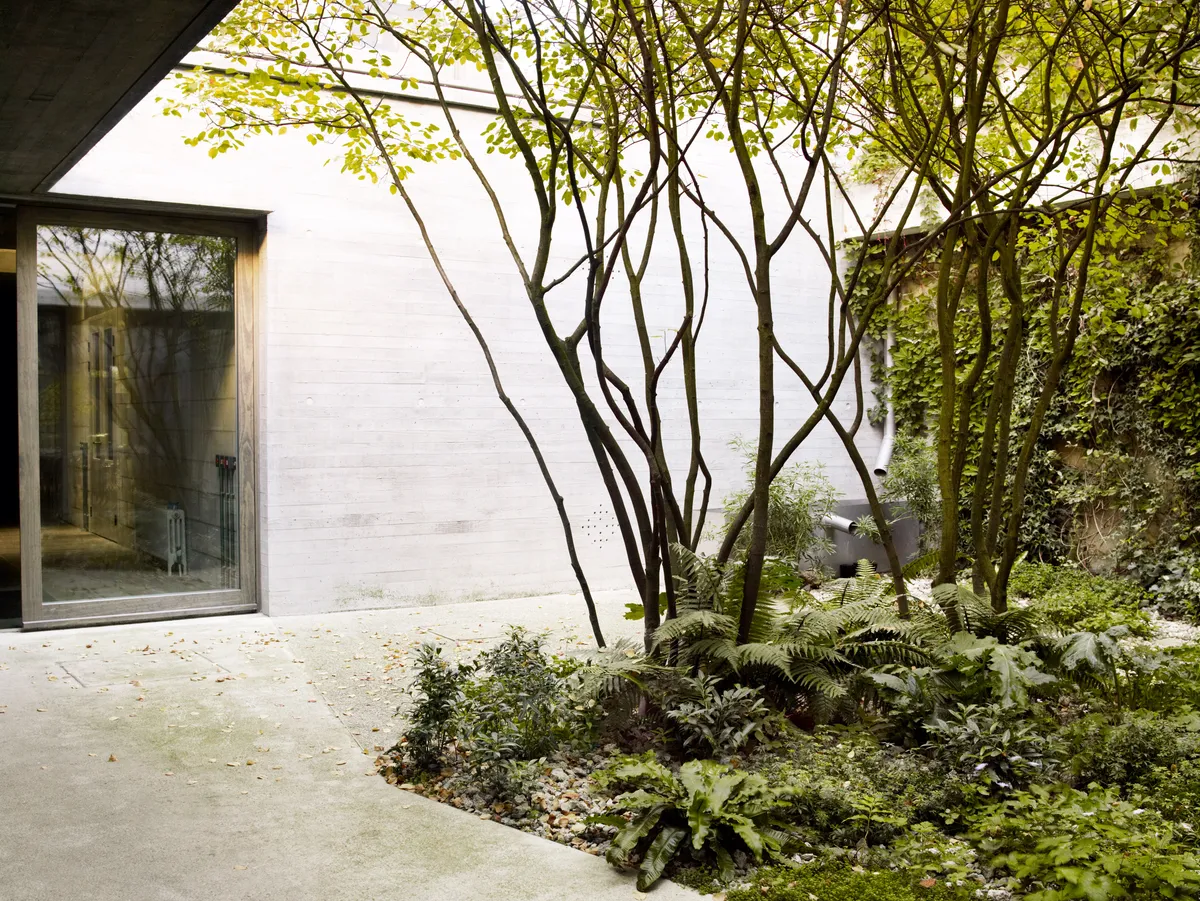
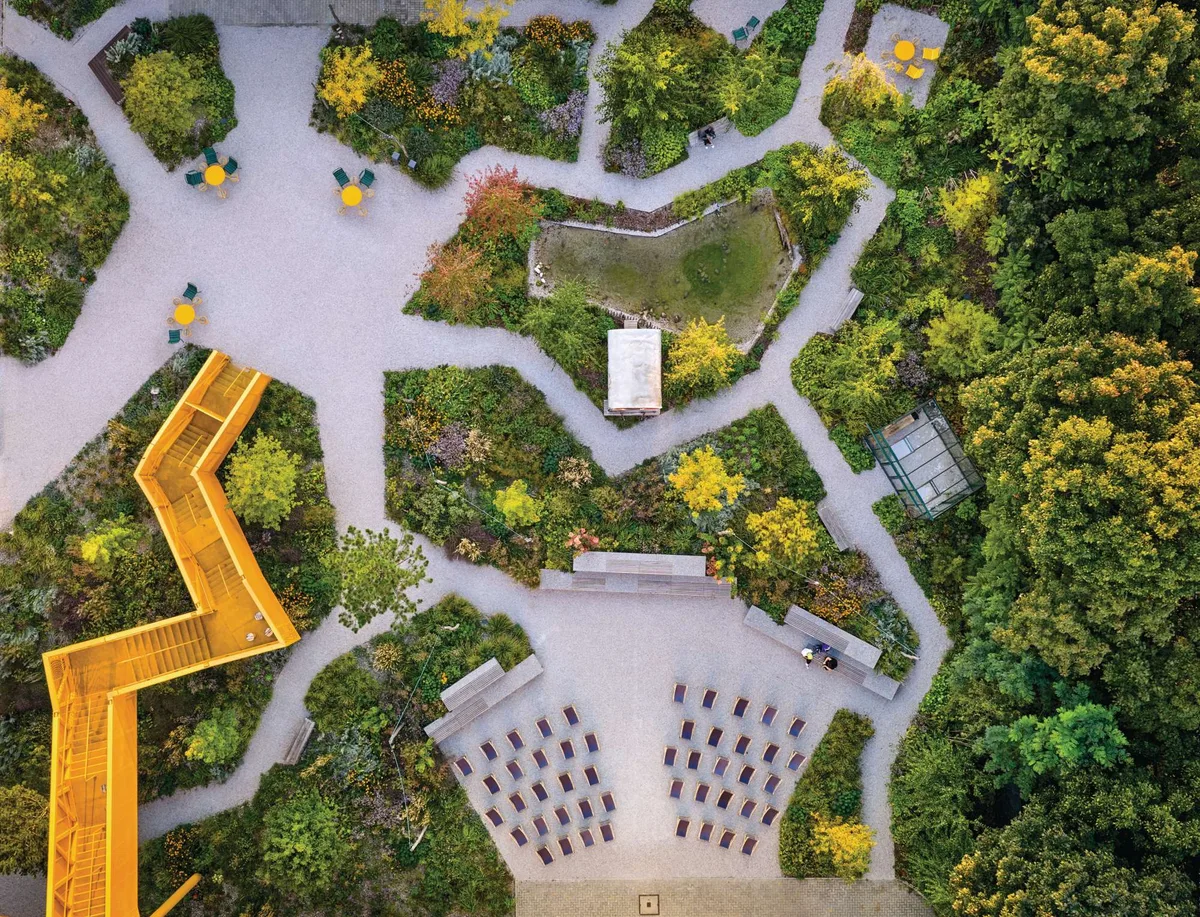
Transforming a barren six-acre commercial landscape into a lush, green hub for plants, people and wildlife is no easy task. Delivering a scheme that reuses the waste materials on site and prevents them going to landfill raises that bar even higher.
Embracing this challenge, designers Charlotte Harris and Hugo Bugg knew they had only one choice when tasked with creating a sustainable, biodiverse garden at the former Berlin Union Film Studios (BUFA).
You may also like
- Meet the couple who turned an empty field into a colourful organic nursery in the shadow of the Alps
- Get the designer look for less: pro tricks for garden style on a budget from Charlotte Harris
“The studios were constructed more than 100 years ago and are among the oldest in Europe. They played host to an early Walt Disney film, but also had a dark period when they were the home of Nazi propaganda film making,” explains Charlotte.
“The buildings were originally surrounded by landscaped gardens, but these were gradually paved over with concrete blocks. When we first visited the site, it was a collection of ramshackle buildings and dumping grounds for everything from old toilets to concrete waste.”
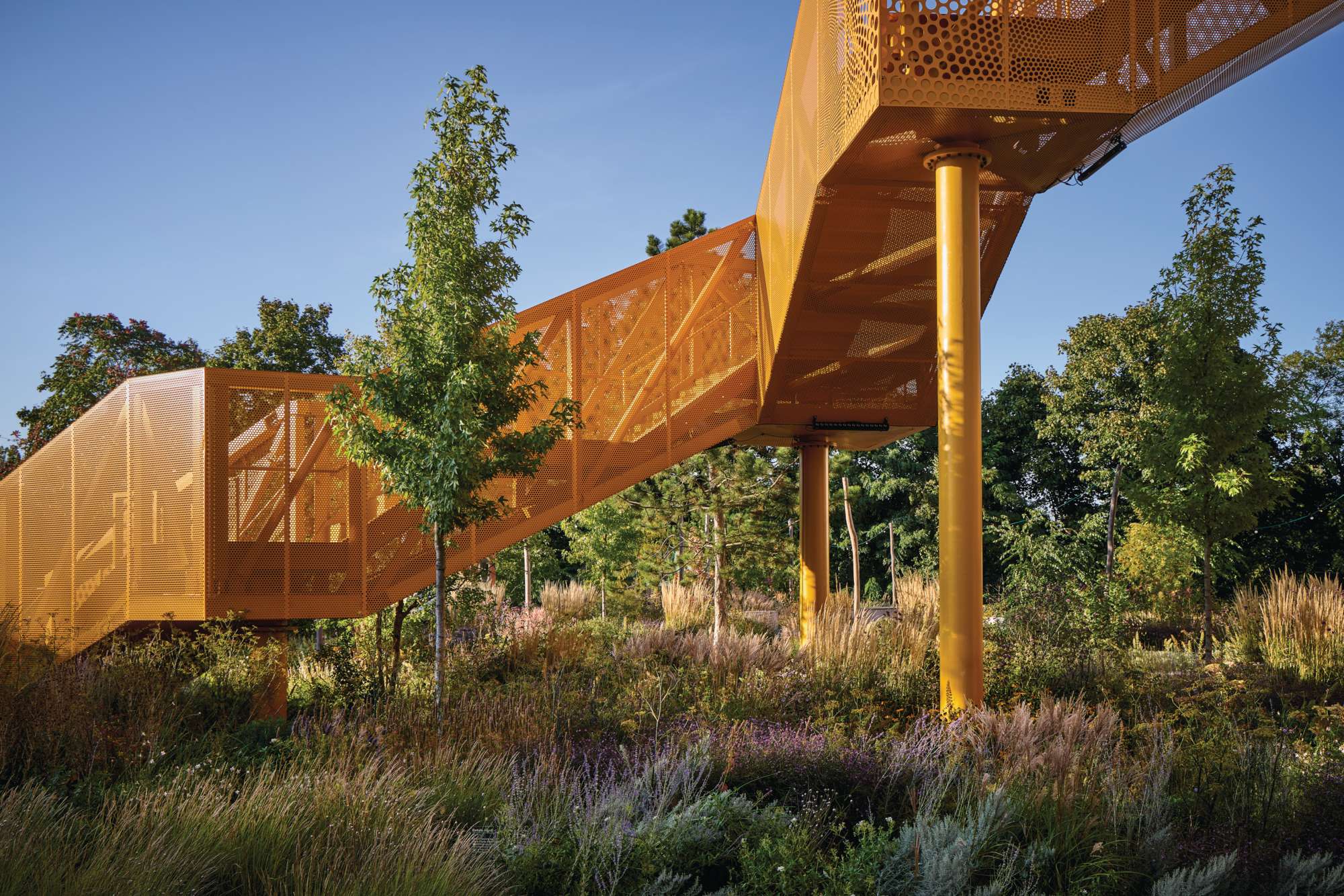
Harris Bugg Studio was brought in to transform the studios into a creative campus by Fabrix, a London-based development and investment company specialising in underused urban spaces. “We’d worked with them before and liked their ethos,” says Hugo.
“And when the BUFA project landed, we saw a potential to test at a large scale the idea of working back from what we had, rather than bringing in virgin materials. John Little [of the Grass Roof Company and Hilldrop in Essex] was an inspiration for this idea and we remain grateful for all his help and support.”
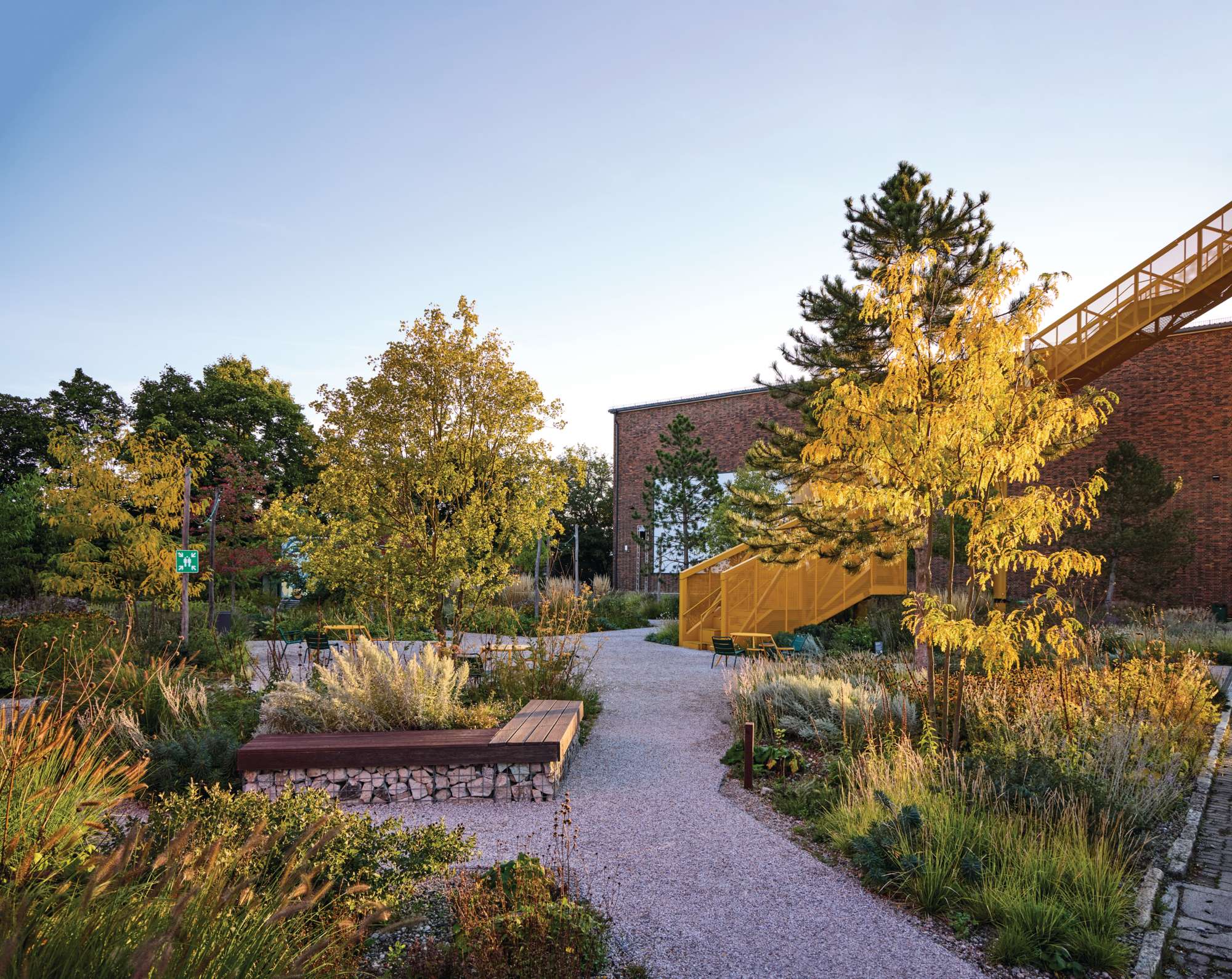
Harris Bugg’s proposal was to use as much of the unwanted architectural and landscape elements as possible. “We lifted 25 per cent of the paving to create green areas and used the crushed waste for mulches and wildlife habitats. Block paving was made into benches and edging, saving hundreds of tonnes going to landfill,” says Charlotte.
“Six years ago, working with waste materials was less common than it is now, and we explained to Fabrix and Dutch architects MVRDV that while the gardens may not look polished, they would be filled with life, optimism and swagger. To their credit, Fabrix took a leap of faith and agreed.”
The designers began by creating a temporary ‘meanwhile garden’ in the centre of the site, to show how a green space could work. The effect was transformative, and it soon became a social hub, drawing people outside to enjoy the plants and fresh air, becoming a space to meet for a coffee or a beer, or just hang out with friends. “So when we started work on the permanent gardens, everyone was on board,” says Charlotte.
The team first worked on the east and west sides of the site, before turning their attention to the central area where the meanwhile garden had stood. “The soil beneath the paving tested positive for pollutants, so we selected plants with phytoremediative qualities to start the process of improving the contaminated ground. These species either absorb toxins through their roots or break them down and release them as a harmless gas,” explains Hugo.
Trees such as Gleditsia triacanthos ‘Skyline’, shown below, help to remove pollutants in the soil.
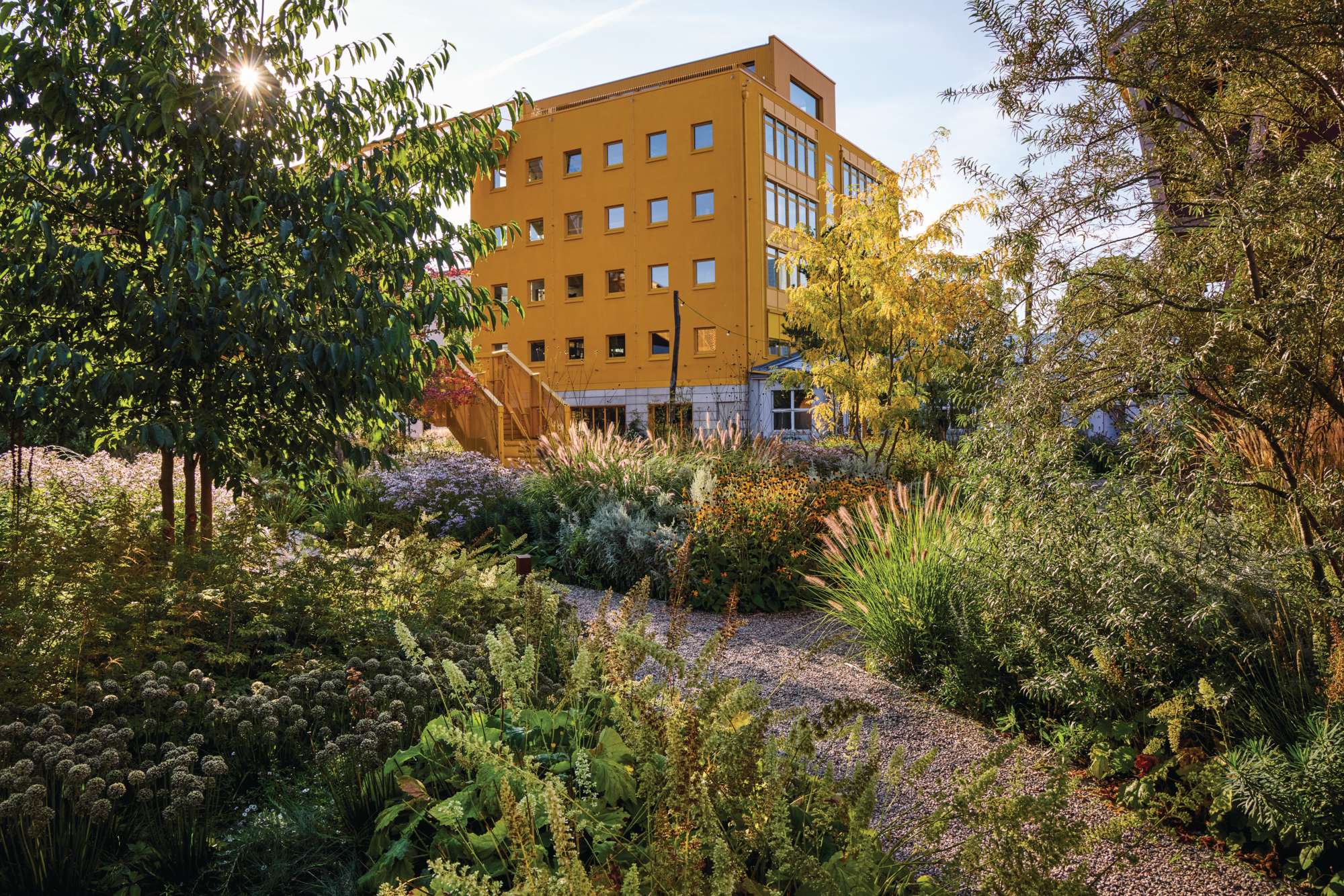
“We planted more than 100 new trees throughout the campus to provide shade and seasonal interest, together with thousands of perennials and shrubs, each chosen for its climate-resilience and pollinator appeal.
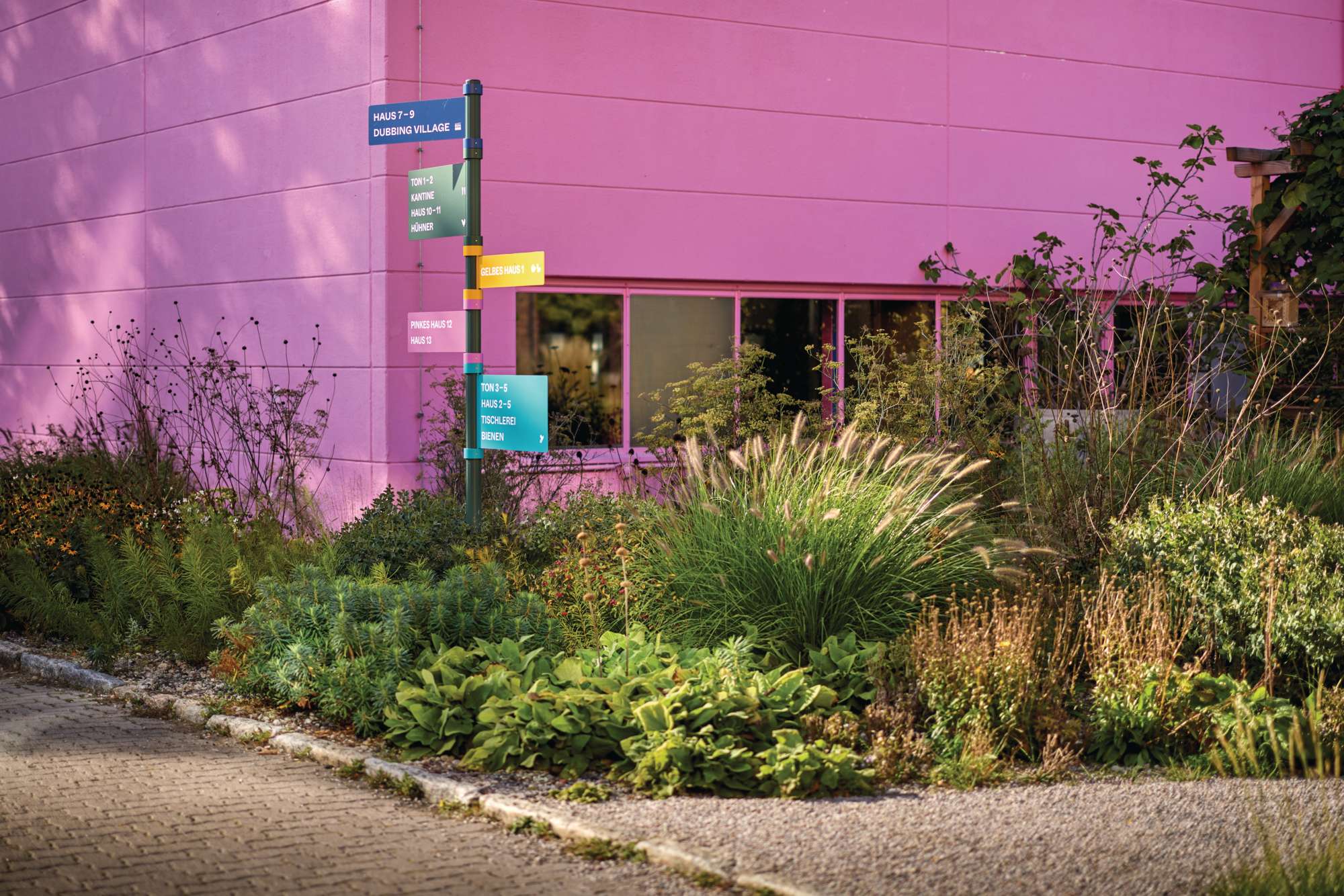
"The plants also had to be adaptive to the free-draining, low-nutrient crushed material mulches, and hold their own against buildings MVRDV had reclad in fuchsia pink and sunshine yellow; the bold colour intervention that transformed the once-grey campus.”
You may also like:
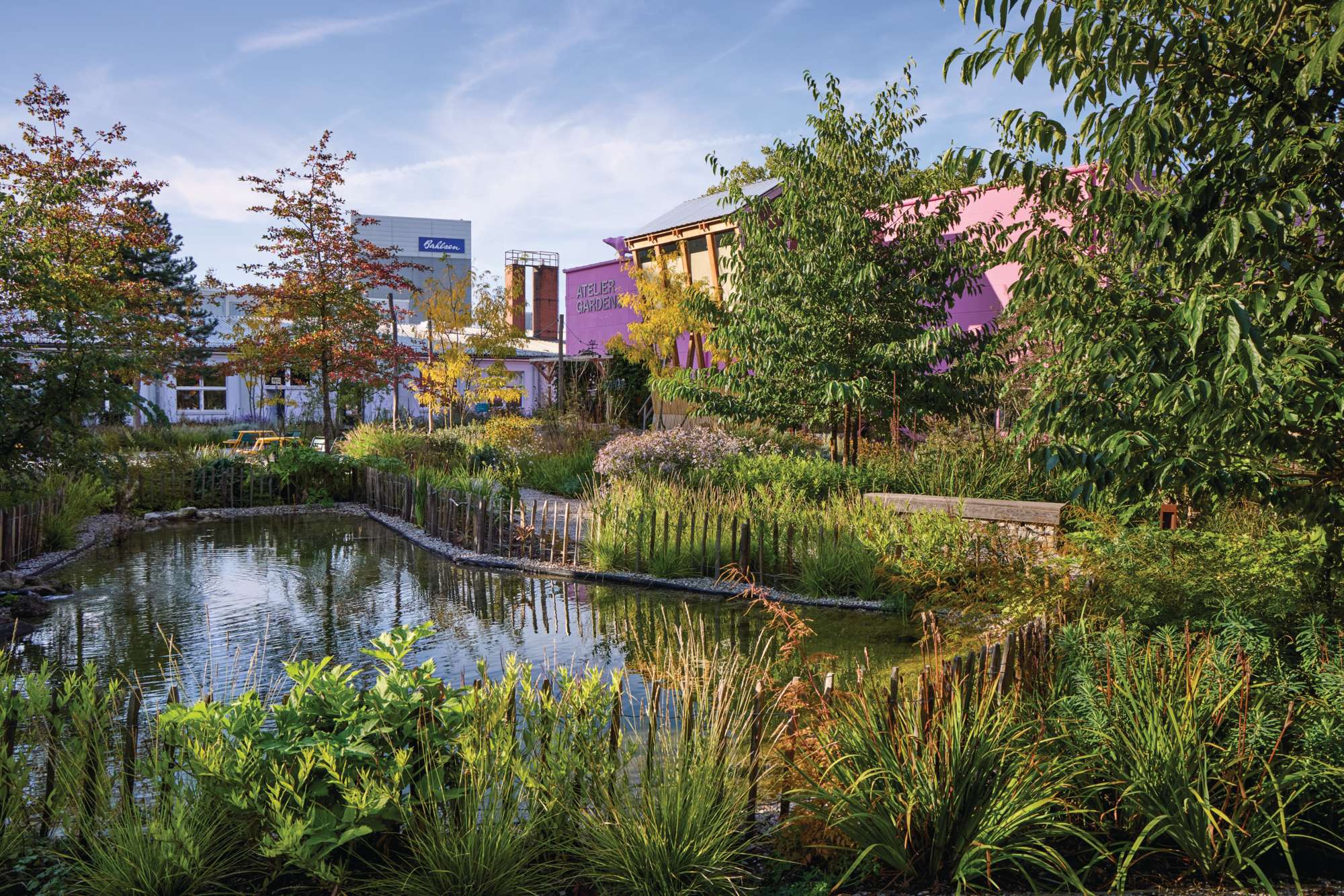
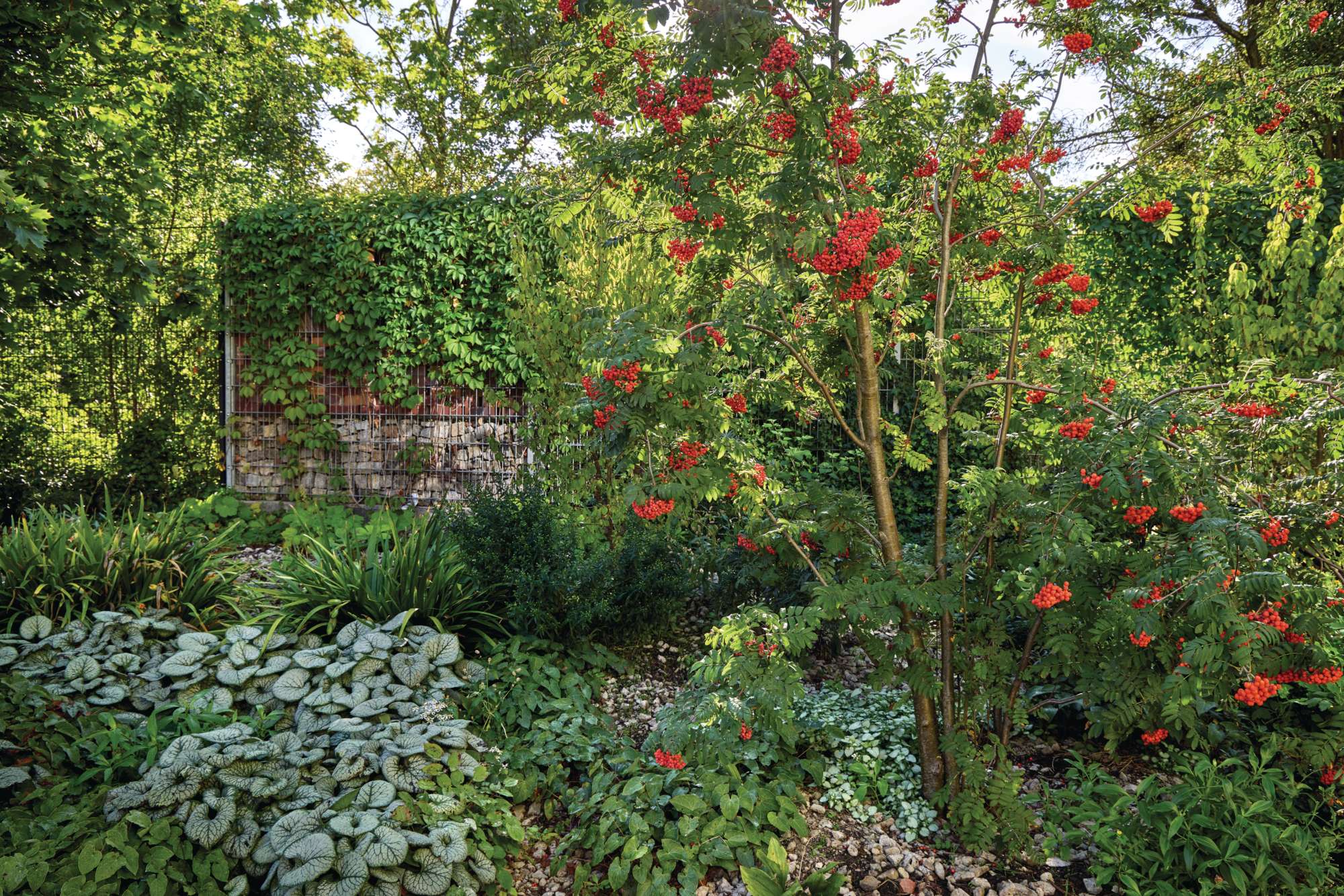
Other waste materials were also put to good use. Painted chunks of dumped concrete were made into boulders, while timber-topped gabions have become habitat-rich benches. The twin open-wire fence around the perimeter of the campus has also been transformed into a wildlife haven by filling the gap in the middle with old bricks, paving and prunings, while self-clinging climbers such as Parthenocissus quinquefolia create leafy veils.
As well as the main gardens, green pockets were squeezed in wherever there was space, and now more than 25 per cent of the campus is planted.
Charlotte and Hugo say their designs were inspired by the idea of pioneers. “The site was once home to the pioneers of the early film studios, and more recently to creatives and a community of social and regenerative entrepreneurs, activists, micro-farmers and others looking to drive change,” says Charlotte.
“Pioneers, whether human or botanical, reclaim inhospitable spaces. They are resilient and adventurous, creating the conditions for other people and plants to follow, and these were the qualities we wanted to embody. From something bleak, it’s become a joyous space where community life has grown, a campus gardening group is flourishing and wildlife has made a home.”