It’s not often that an opportunity like this comes along,” says Chris Brown, the Kew-trained head gardener of the private garden at Knowle House, set in the Sussex-Kent Weald. As Chris enthusiastically explains, the garden holds a rich historic past and much horticultural merit, coupled with the current custodians’ wish to resurrect and bring forward the horticultural prestige of its past.
Dating back to the late 1920s, the then owners Joseph and Gladys Benskin commissioned George Dillistone to design the garden. Well-known and respected in his time, Dillistone came from a long line of Essex and Suffolk nurserymen, most notably his great grandfather Ezekiel Dillistone, who bred the famous dessert apple ‘Sturmer Pippin’.
You may also like
Dillistone cut his teeth working as a garden designer for the landscaping firm R Wallace & Co before his love of plants led him to set up independently, working on private commissions and becoming highly desired, and respected by his contemporaries, including Edwin Lutyens, Gertrude Jekyll and William Robinson. However, unlike the aforementioned, Dillistone’s name and work have gone relatively unnoticed over time. For Chris, this historic discovery forms part of the charm in working on the garden. “I love to champion the unsung hero,” he admits.
After Gladys’s death in 1978, the house was split into three dwellings with sections of the garden and estate sold off to independent third parties. Thankfully, Dillistone’s formal garden to the rear of the house was protected by a covenant, ensuring its preservation. Over time, however, the garden became obscured, its layout and design eventually buried beneath years of leaf litter, crumbling walls and overgrown plants.
When the current owners moved to the property in 2017, they had little previous knowledge of Dillistone’s work. Initially they had purchased two thirds of the property, but were able to acquire the remaining third in 2023, at which point they began restoration works to reunite the three dwellings and gardens back into one.
As they started planning their work on the house and garden they also began to uncover some of the details of the garden’s history and its significance, befriending Elisa Segrave, who is the granddaughter of Gladys Benskin. Elisa was able to help with archival material of both the house and garden, including letters from Dillistone to Gladys and photographs that detailed both planting and design. This information provided a bridge into the history of the property, giving clear direction in how the garden could be revived.
You may also like
- POV: You've inherited an historic English hall with two moats: now what?
- A peaches and cream container combination for a bold early summer planter
It was at this time that Chris was brought on board to design and manage the project. “There was so much useful information to help us unearth the garden,” he says. As scaffolding surrounded the walls of the house, work began in the garden, restoring retaining walls, steps, paths and the formal pond. Chris recruited the expertise of stone mason Daniel Ritchie, who sourced the matching oolitic limestone (originally from the Cotswolds) to repair the retaining walls. These were dismantled and then rebuilt, artfully mixing the new stone with the old.
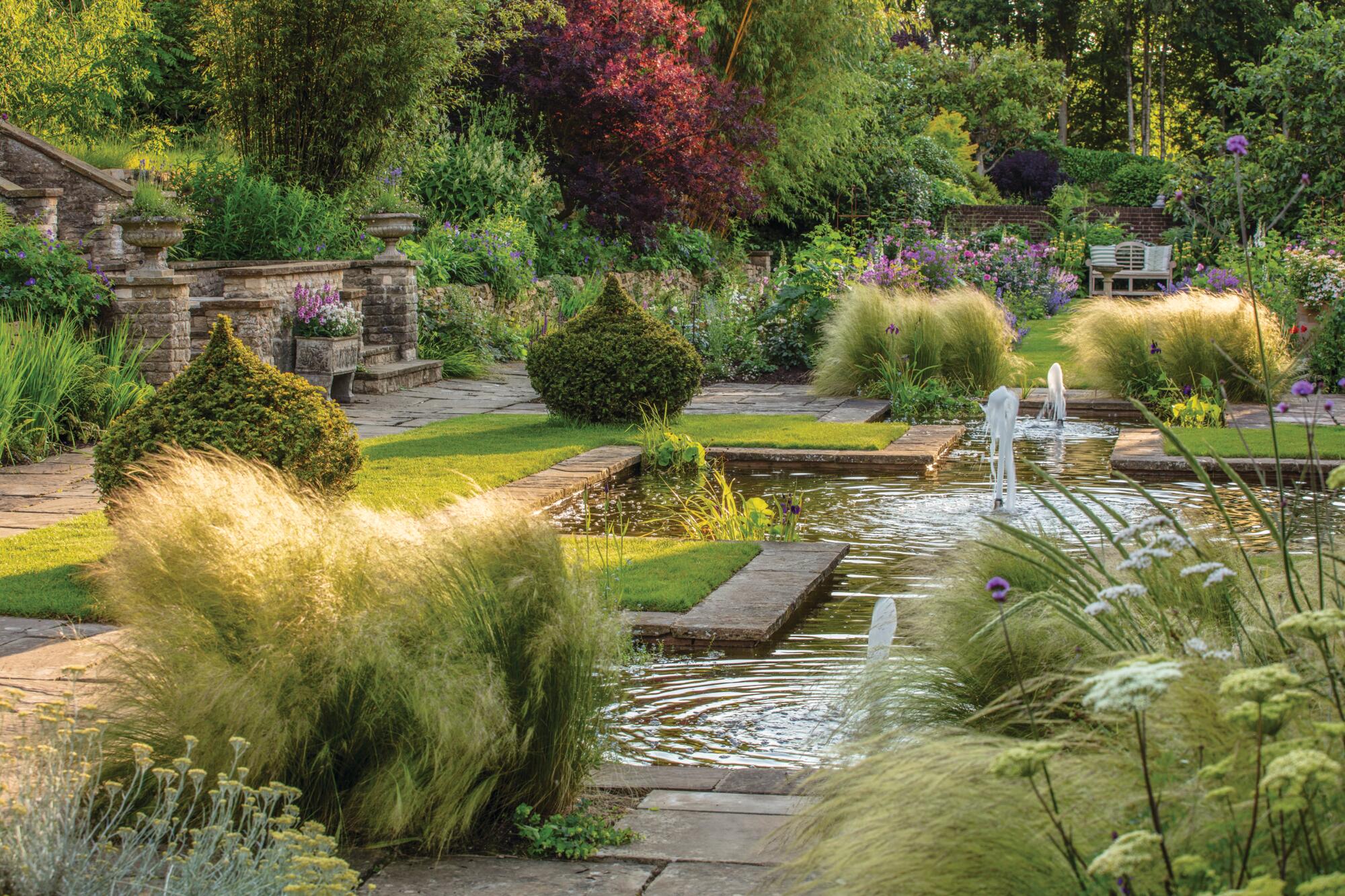
The paths and steps were re-laid with the existing York stone found on site, and left un-pointed in part to allow for the future colonisation of plants. “We extended and added a few extra paths for practicality and balance,” says Chris. To avoid the garden becoming a pastiche, the planting was allowed more freedom. “We want to preserve and tell the plant stories of the past, but also embrace today,” he says.
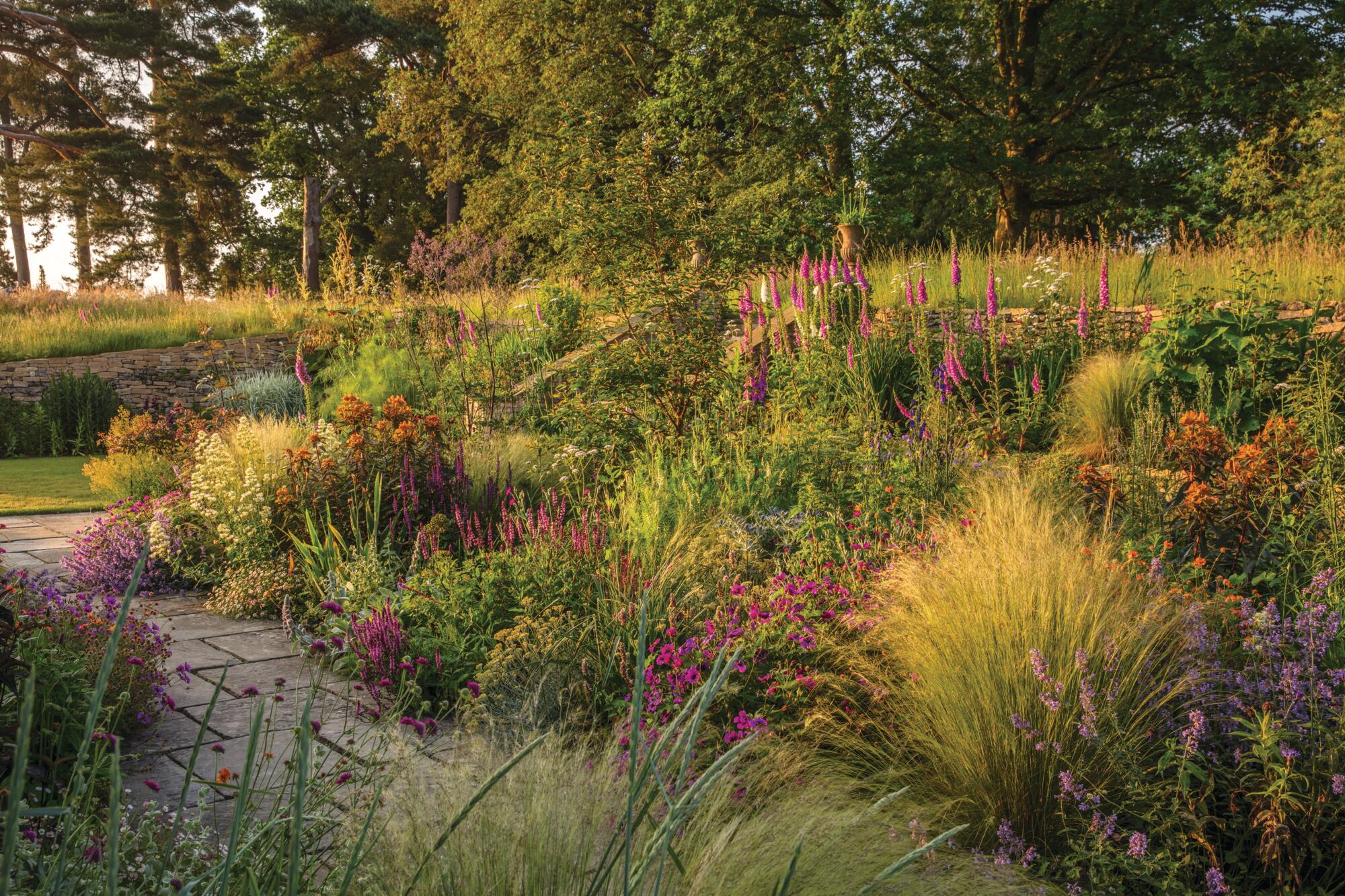
This has allowed Chris to flex his botanical muscles while still holding on to some of the key species of Dillistone’s design. On the eastern side, Amelanchier canadensis (chosen from Dillistone’s plant list archive) stand guard either side of the steps, among a relaxed cacophony of colourful perennials including Achillea filipendulina ‘Cloth of Gold’, Bistorta amplexicaulis ‘Alba’, Cirsium rivulare ‘Atropurpureum’, Echinacea pallida ‘Hula Dancer’, Heliopsis helianthoides var. scabra ‘Summer Nights’ and Salvia yangii to name just a few.
You may also like
- Discover this gorgeous wild garden in Mallorca
- A naturalistic, flower-filled garden on an old pony paddock
These are expertly stitched together with the textural ornamental grass Stipa lessingiana, “a far superior plant to Stipa tenuissima” in Chris’s opinion, which flops less and gives movement to the planting. In addition to this, he uses self-seeding species such as Centranthus ruber, Digitalis purpurea, Silene coronaria and Tragopogon pratensis, adding a dynamic evolution to the planting.
The result is a dense mix of successional flowers and foliage, which Chris confirms needs less staking, as they help support one another. “I tend to avoid planting density recommendations by a country mile, allowing annuals and self-seeders to find their own space within the permanent planting.”
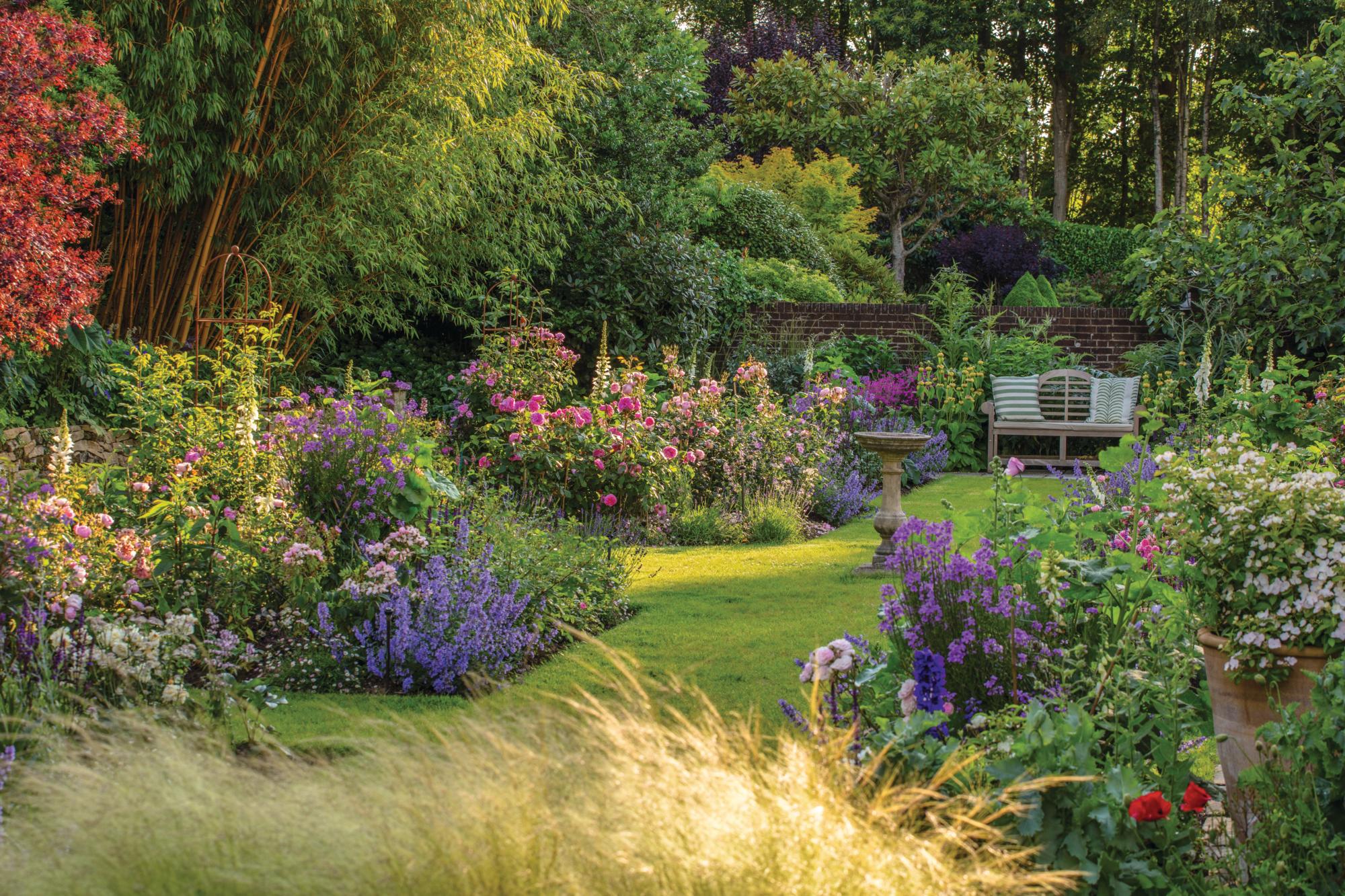
In contrast, the west side of the garden is given over to roses, as it was before. Obelisks of Rosa ‘Ispahan’ and spires of Verbascum chaixii ‘Album’ punctuate the hummocks of old English shrub roses, while lavender and salvias cushion the ground beneath.
A prized re-introduction to the garden is Rosa ‘Gladys Benskin’, a hybrid tea rose introduced by Alex Dickson & Sons in 1929, and named for the house’s previous custodian. The rose was thought to be extinct but, undeterred, Chris found a historic rose enthusiast, rosarian Mary Hember, who eventually discovered it growing in the Europa-Rosarium, a German rose garden in the Saxon town of Sangerhausen that is home to world’s largest collection of roses. Despite post-Brexit phytosanitary restrictions and transport logistics, propagation material eventually made it to the UK, and on the second attempt cuttings were successful.
You may also like
- This subtropical oasis is a must-visit garden this year
- Visit this 20-year passion project garden on a former stud farm
With Dillistone’s formal garden replanted and entering a new chapter of life, Chris’s attention is now turning to focus on the wider garden and the practicalities a garden needs to function. A greenhouse, composting area, apothecary garden and woodland garden are all on the horizon. With every step forward, however, new discoveries of the past influence the journey that Chris and the owners are treading, in re-creating this historically important garden.
8 key plants from Knowle House
Rosa ‘Mrs John Laing’

An upright hybrid perpetual rose with double silvery-pink flowers that are highly scented and repeat through summer into autumn above greyish-green foliage. Prefers full sun and rich soil. Height and spread: 1.5m x 1.5m. RHS H6, USDA 5a-9b†.
Valeriana officinalis
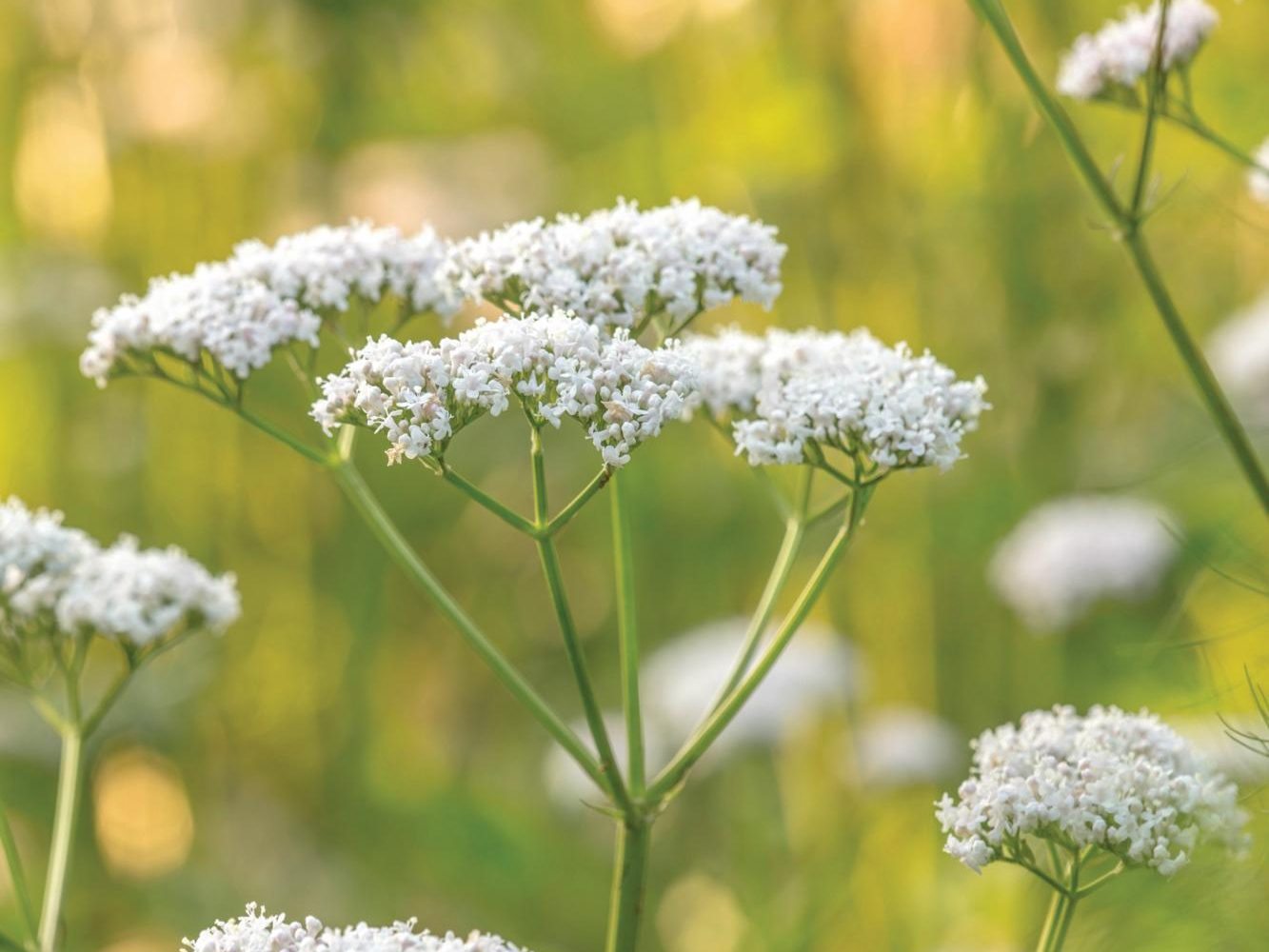
A clump-forming tall perennial with pinnate basal foliage and numerous umbels of sweetly scented flowers on slender stems from late spring to summer. 1.5m x 90cm. RHS H4, USDA 4a-7b.
Penstemon ‘Pensham Plum Jerkum’
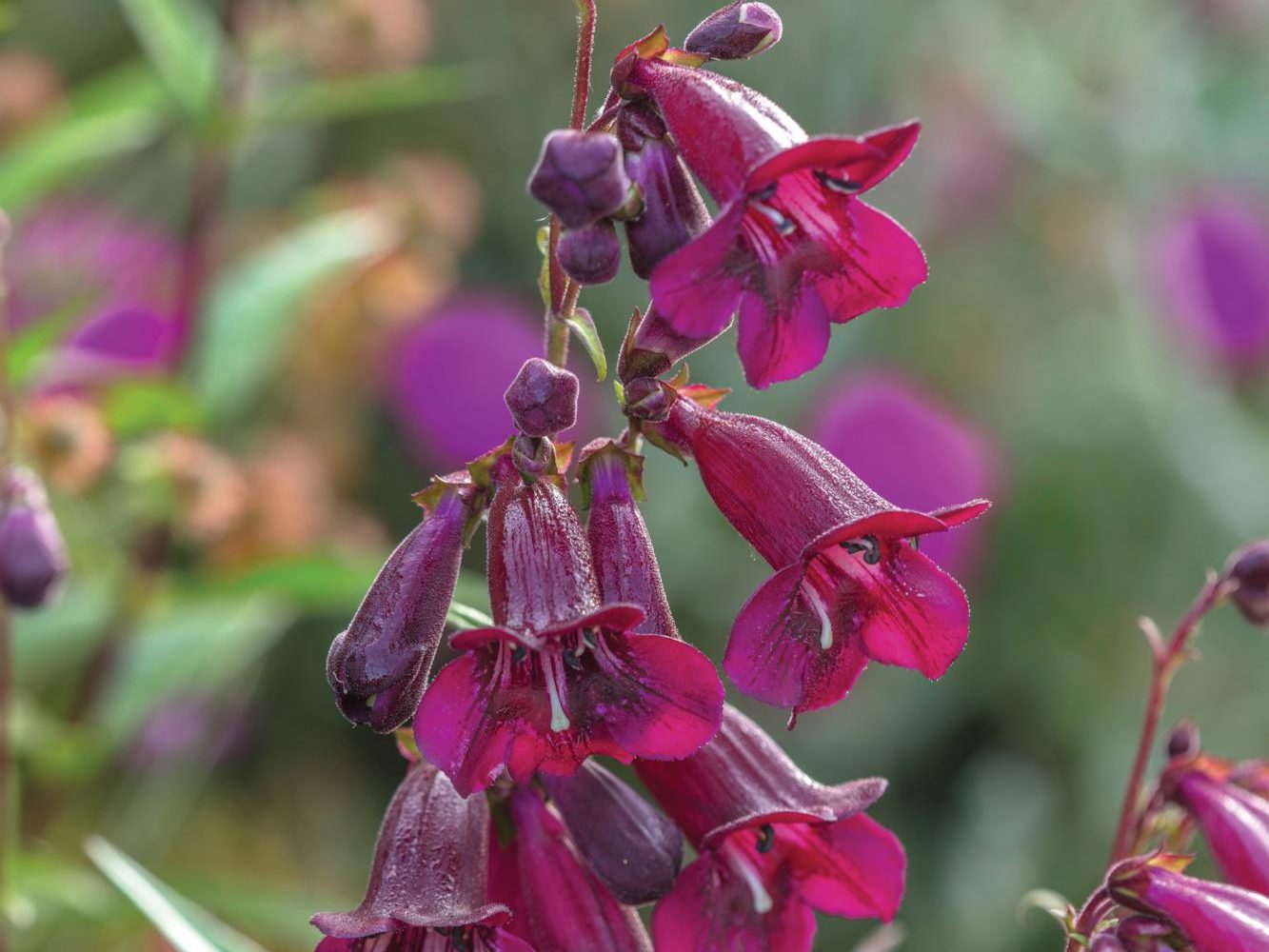
A compact, semi-evergreen perennial with upright stems of emerald-green leaves. From these emerge racemes of deep plum-purple bell flowers though summer into early autumn. 90cm x 50cm. RHS H4, USDA 3a-8b.
Lupinus ‘Masterpiece’
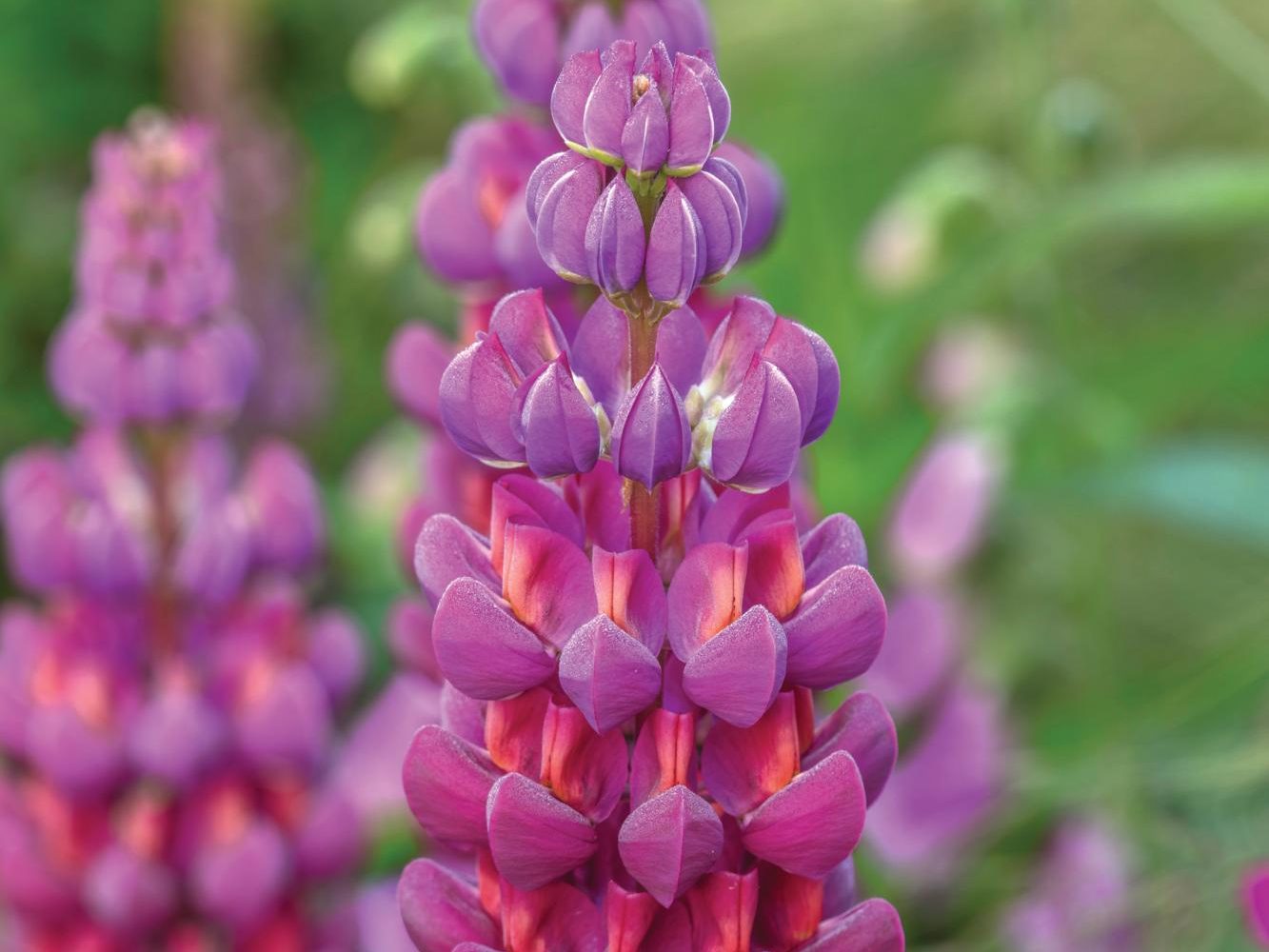
An upright perennial with bushy, deeply palmate leaves, giving rise in early summer to spires of intense reddish-purple flowers that have a contrasting orange fleck. RHS H5, USDA 3a-6b.
Rosa Dannahue (= ‘Ausa6b15’)

A compact bushy shrub rose with double apricot-coloured blooms that are lusciously scented and repeat through summer into autumn. 1.5m x 1.5m. RHS H5, USDA 5a-9b.
Leymus arenarius

A loose, spreading perennial grass with arching blue-grey linear foliage with stiff upright stems holding tight glaucous inflorescences that age to buff spikes. 1.5m x 1m. RHS H7, USDA 4a-9b.
Iris ensata
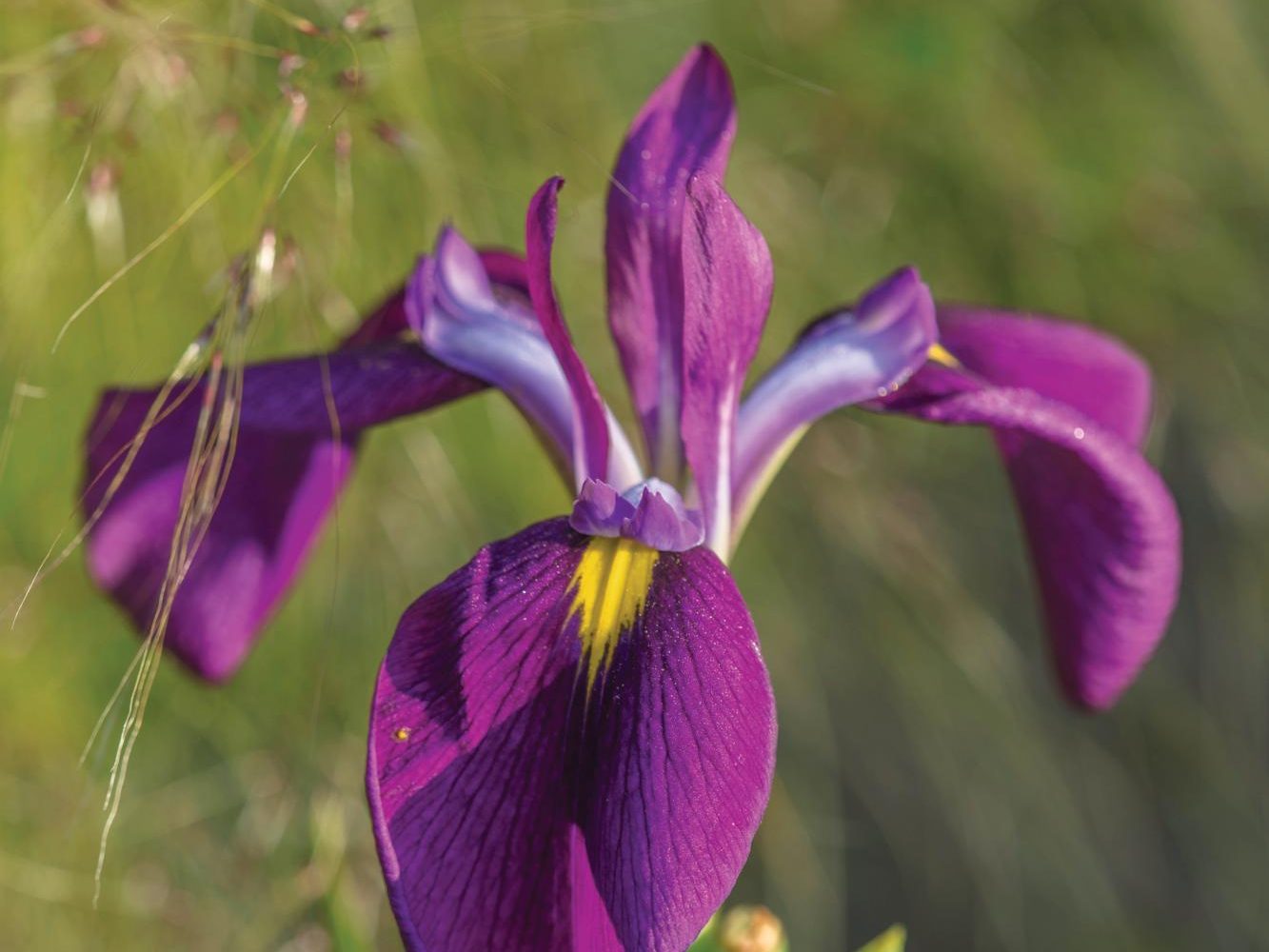
An elegant Japanese water iris with erect linear mid-green foliage and electric violet-purple flowers and contrasting yellow throat in summer. 90cm x 50cm. RHS H6, USDA 4a-9b.
Verbascum ‘Pink Domino’
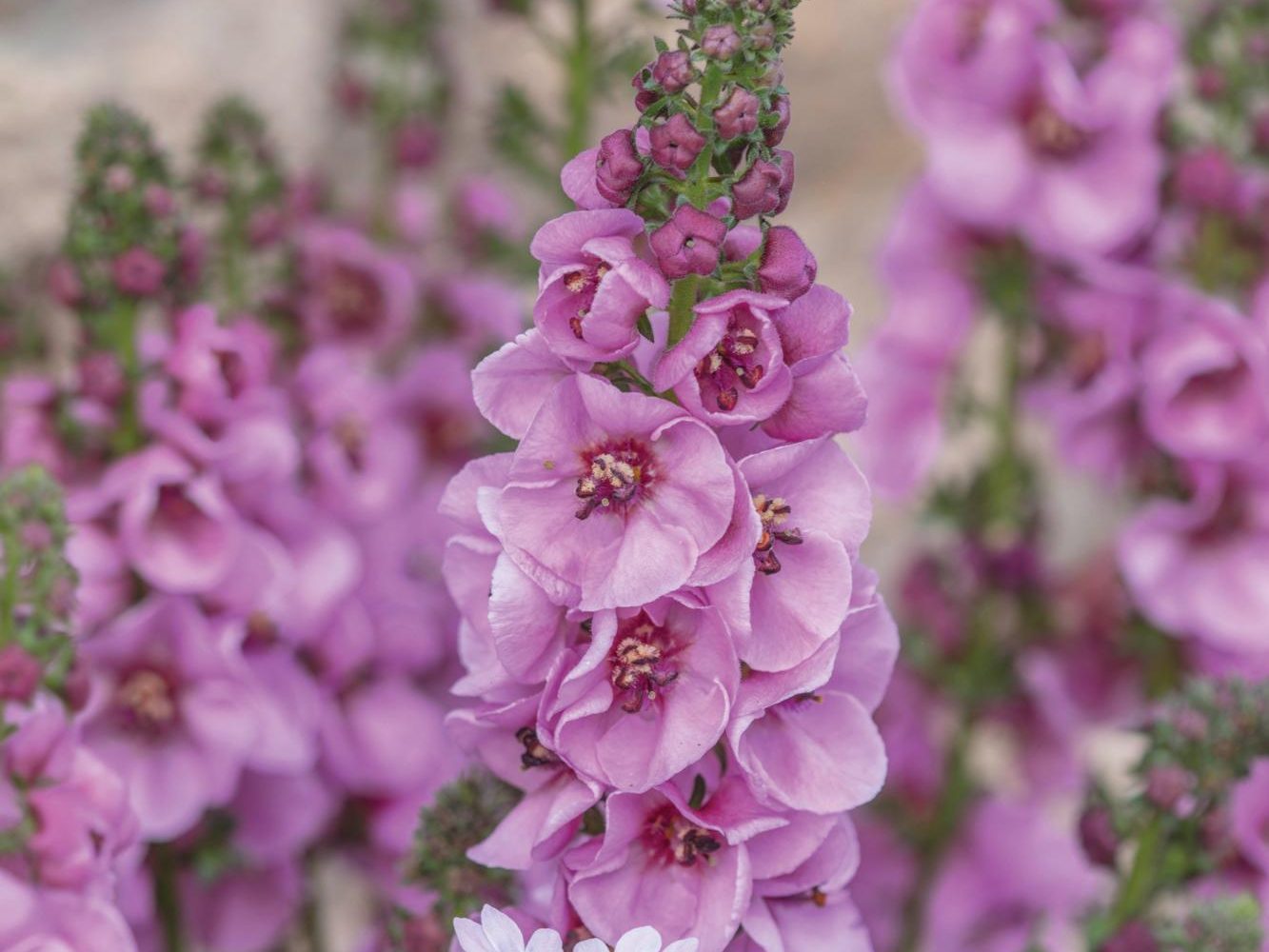
A clump-forming herbaceous perennial with a basal rosette of deciduous dark-green leaves from which rise spikes of dusky rose-pink flowers. 1.5m x 50cm. AGM*. RHS H6, USDA 5a-9b.
*Holds an Award of Garden Merit from the Royal Horticultural Society. †Hardiness ratings given where available.