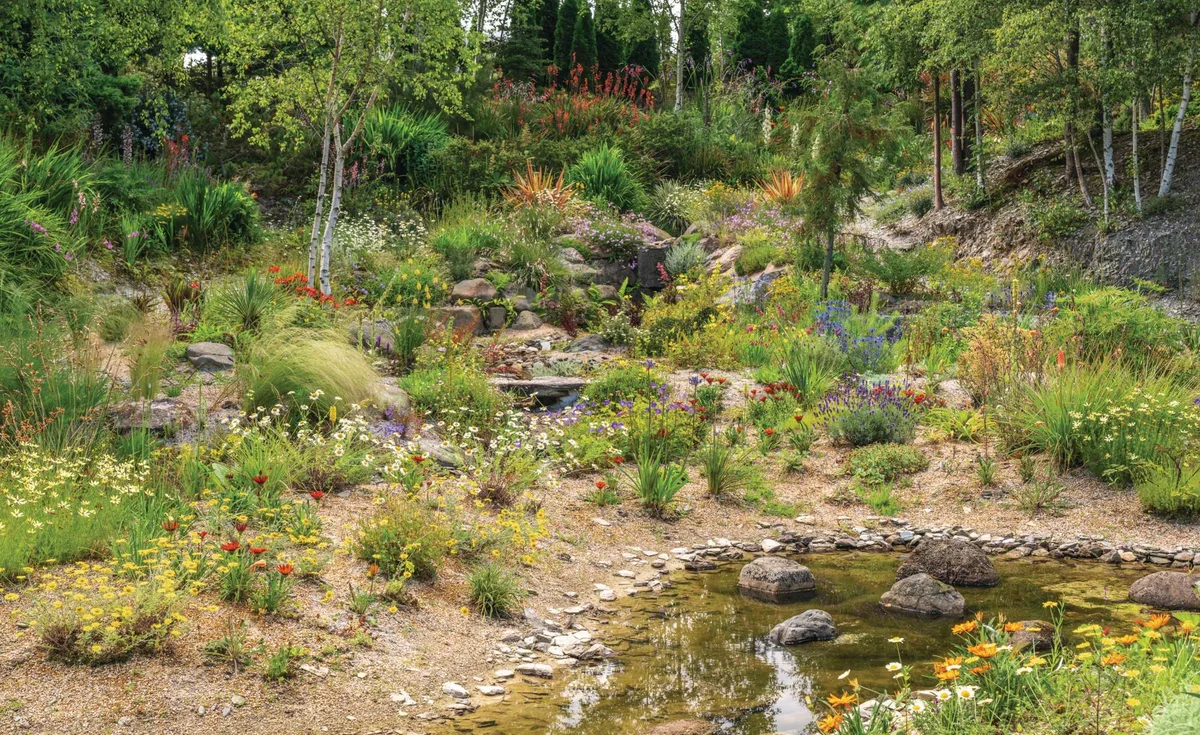
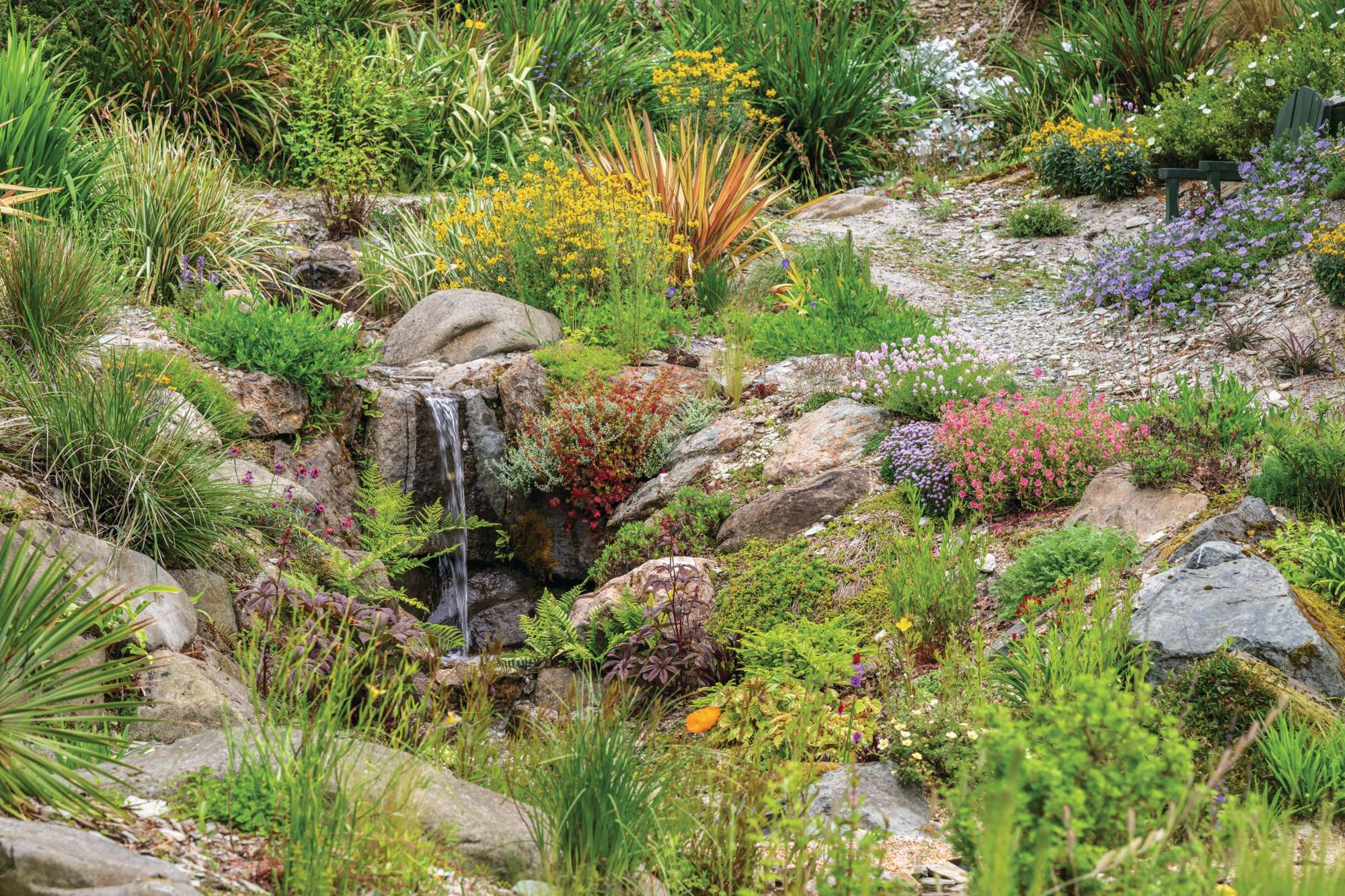
My wife Ros and I created Wildside garden in Devon from 2004 on, from a four-acre field on the brow of a hill, which gently sloped south. The concept was that by digging into the ground we would provide shelter from the wind and create a range of habitats to suit plants from all over the world. We stripped 20-30cm of topsoil off the whole field, exposing underlying shillet (degraded slate), which fortunately proved amenable to being dug out and reshaped.
The most exciting prospect was what we rather grandly called The Canyons, and this is where the new Tribute Garden now lies, covering about half an acre. I dug down 4-5m and with the removed spoil created sheltering banks up to 8m high. The overall effect gave the impression of a disused quarry.
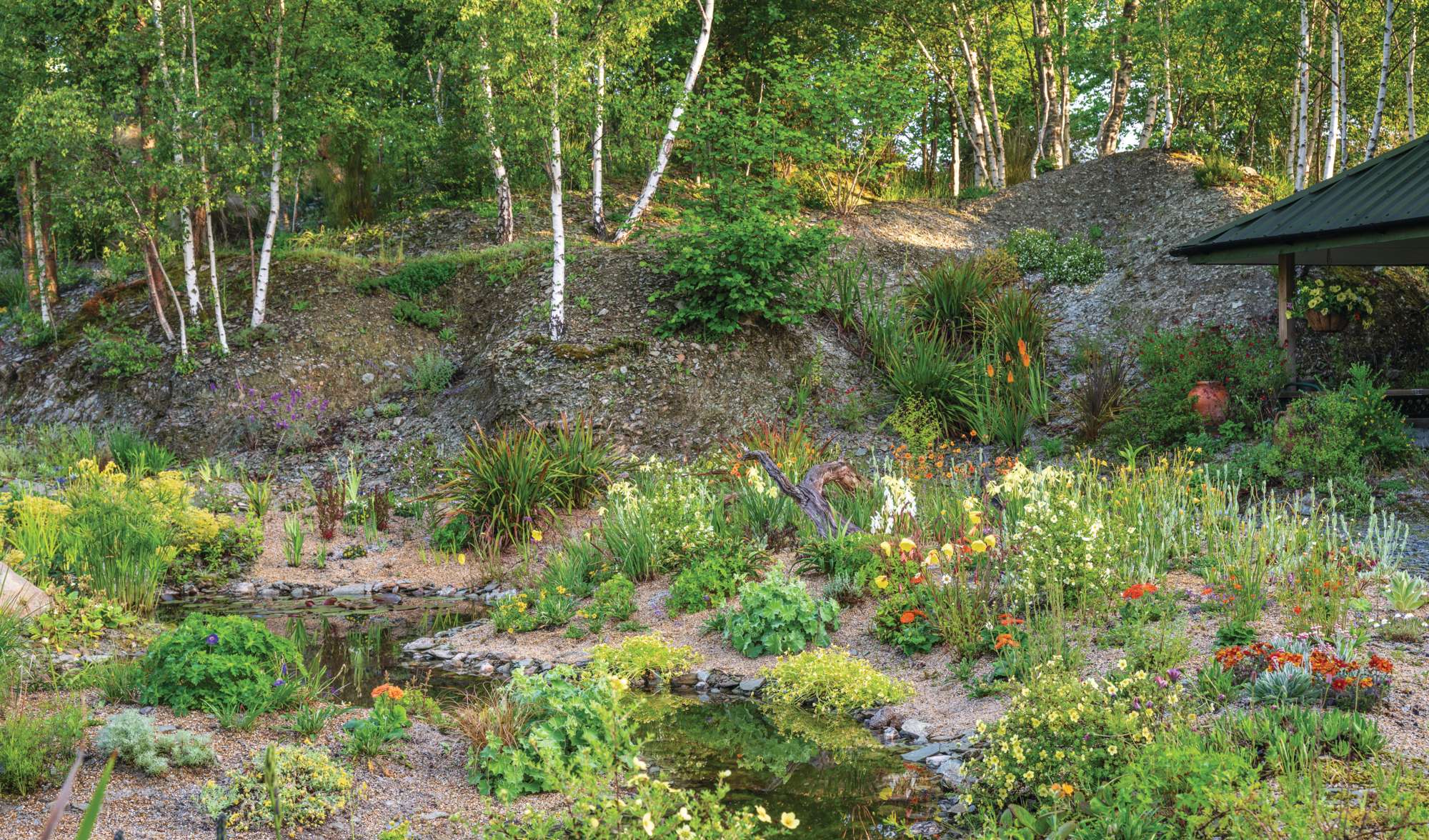
We initially created a large hole in the middle of this ‘quarry’, intending to create a natural swimming pool, with our own beach composed of 15 tonnes of sand. However, being bitten by bugs while swimming elsewhere rather put Ros off the idea, so it stayed in this unfinished state while we hoped to generate enough funds to make a South-African-inspired garden instead, with running water to reflect the flowers.
Then, in late June 2019, completely out of the blue, Ros was told the niggling cough she had been suffering from was in fact incurable lung cancer. In early September, she died. I decided to try to raise funds to complete the garden we had planned and talked about together, and the Tribute Garden was born. It is intended to be a celebration not just of her life, but of life generally, reflected in extracts from Rebecca Elson’s poem, Antidotes to Fear of Death, beautifully engraved onto Cornish slates on the garden’s approach. The last phrase, ‘flew off on bright wings’, hints at the brightly coloured flowers in the finished garden – the colours Ros so loved to paint in her artwork.
You may also like
- Keith Wiley on experimental gardening and the need to take risks
- 10 of the best gardens to visit for planting inspiration
The garden is inspired by South African plants, but growing them in Devon, where we get 1.5m of rainfall annually, is a challenge. On the steeper slopes, with shillet underneath, drainage is not a problem. Watsonia, Dierama, Kniphofia and fuchsias have thrived, with agaves, Cordyline, Phormium and yuccas adding spiky forms. I still hope to scatter foxtail lilies (Eremurus) across the hillside in the gaps between those strong shapes. So far, the relentless rain of recent winters has thwarted my attempts to get them established.
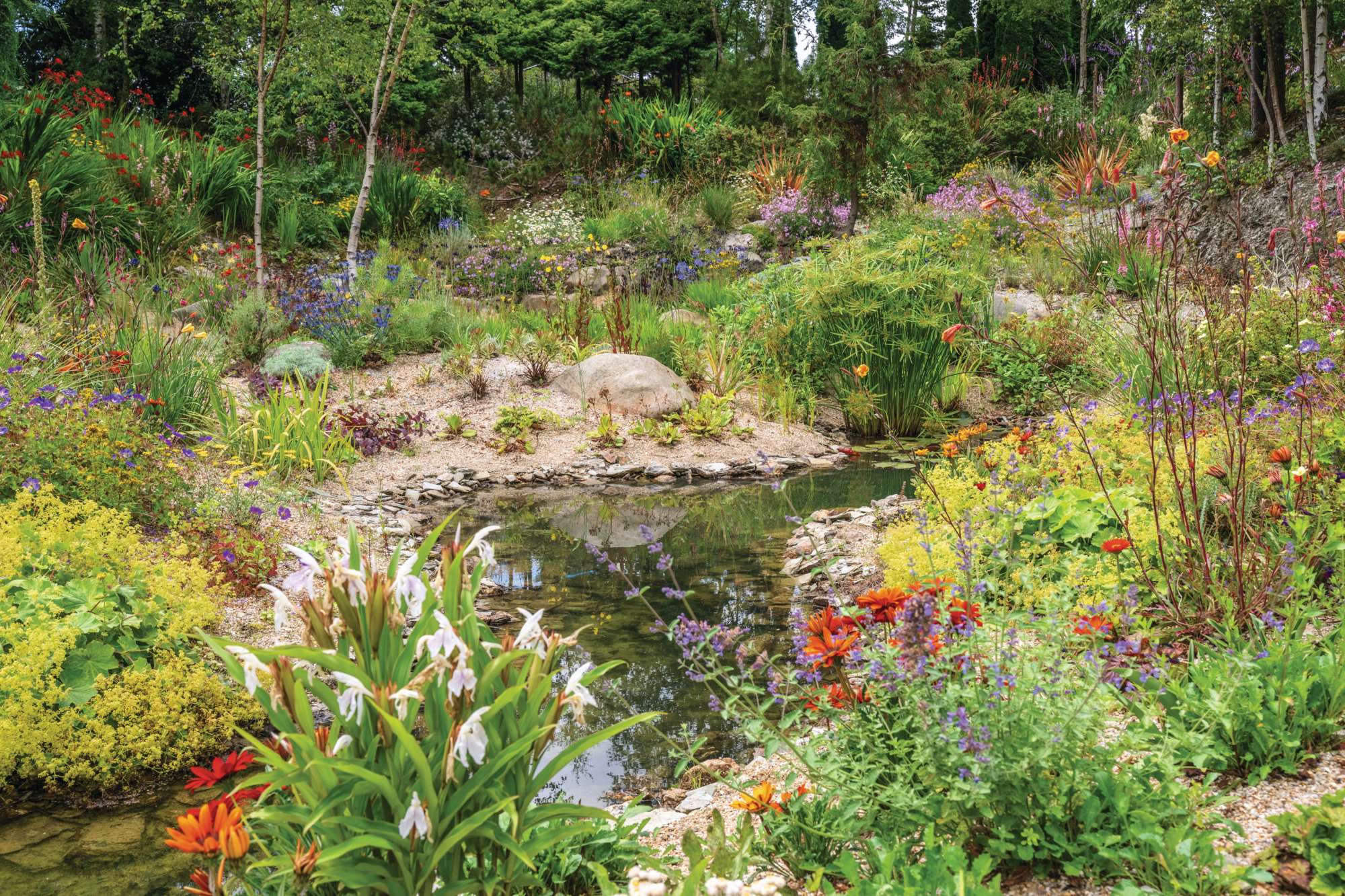
In the lowest areas are made-up sand beds, 20cm deep, over a layer of deeper soil. The plants have to send down their roots to find reliable moisture and develop extensive root systems which, once established, are better able to withstand drought conditions. Here, the plants are more dome-shaped, with blood-red and orange Gazania interspersed with Coreopsis verticillata ‘Moonbeam’ and Cota tinctoria dwarf. Golden lobelia, Monopsis lutea, can look fabulous with red Gazania for months in late summer, if the previous winter wasn’t too harsh. In spring, species tulips and crocuses scatter the ground.
You may also like
- "After my mother died, my father and I completed her ambitious plans for the garden"
- A walled garden, but not as you know it: discover the remarkable garden at Knepp Castle
Near the Pavilion (as our summerhouse became), I’ve used widely spaced, slightly taller perennials with lower-growing plants between, mimicking plant distribution I have seen in South African meadows. Among the taller stalwarts, orange Geum ‘Totally Tangerine’, lemon-yellow Moraea robusta and bright-yellow Oenothera stricta all mix beautifully with gauras and ox-eye daisies. The wider spacings allow taller Gladiolus species such as G. angustus, G. tristis, G. dalenii, G. cardinalis, G. carneus and G. ‘Ruby’ to add seasonal grace and charm.
Slightly smaller are the Roscoea which, despite being woodland plants, look fabulous coming up through the sand. Underneath are plants that stay close to the ground, such as Rhodohypoxis, Sisyrinchium and virtually any of the smaller-flowered plants we normally grow in our hanging baskets. I’ve tried calibrachoas, Portulaca, Helichrysum cymosum and Felicia amelloides, and all look great creeping at ground level.
You may also like
- How James Hitchmough used his Sheffield garden to trial South African summer perennials
- The summer-loving plant from South Africa that smells lovely and looks great
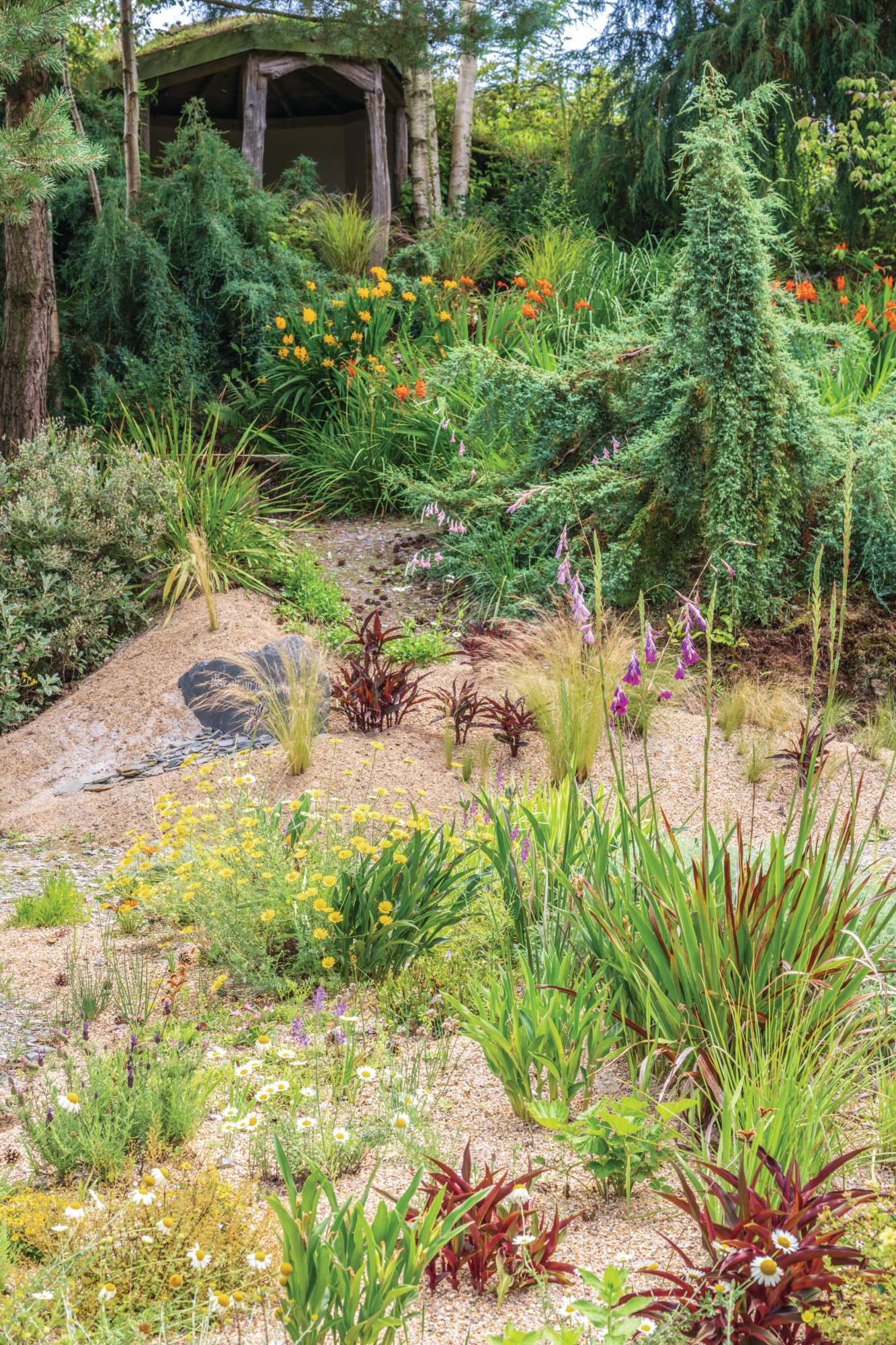
The plants I especially value now are the single bacopas, Sanvitalia and Convolvulus sabatius; the latter two proving to be winter hardy in pure sand. As summer gives way to autumn, Colchicum planted en masse, as well as nerines and amaryllis, look wonderful coming through on the banks, which I covered with a thin layer of shillet, enhancing the quarry feel. I suspect there are several hundred different taxa in the Tribute Garden. Creating it and hoping that Ros would be proud of the result gave me a focus to carry on when my life caved in. My plan, when funds allow, is to offer additional openings for people affected by cancer, and hope they too will find some solace here.
USEFUL INFORMATION
Address Wildside Nursery, Green Lane, Buckland Monachorum, Devon PL20 7NP.
Open Wildside is open every other weekend throughout July and August, and one weekend only in September and October. wileyatwildside.com