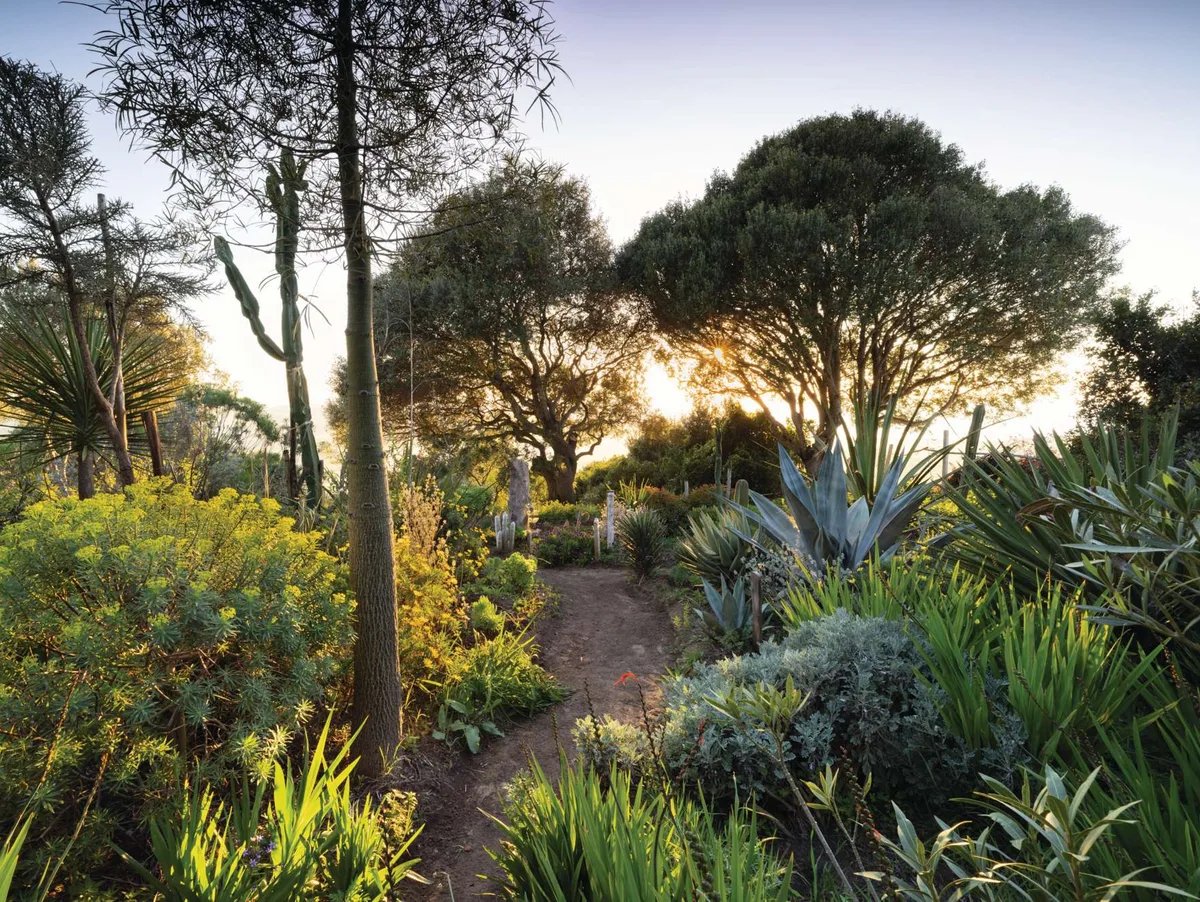
Twenty six years ago, Italian writer and gardener Umberto Pasti fell asleep beneath a remote fig tree on a stony hillside facing the Atlantic Ocean, 40 miles south of Tangier. When he awoke, he knew that he had to stay on that hillside and create a garden: a garden that would be a refuge for the flora of northern Morocco.
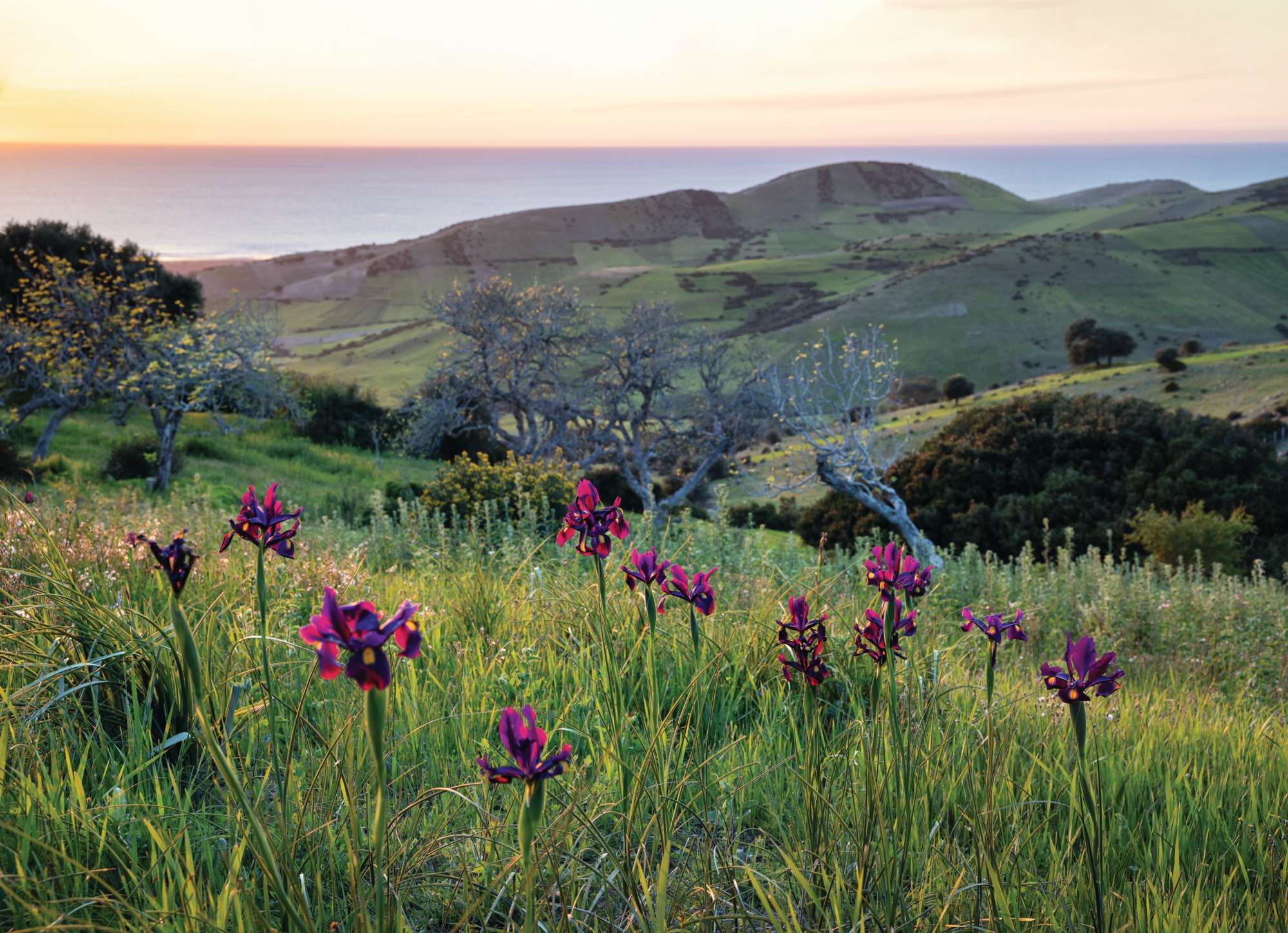
Umberto had already been a resident of Tangier for 15 years and was witness to the unbridled rapidity of urban expansion that was obliterating and quickly churning the countryside, burying flora in the process. He had first loved Tangier’s surrounding fields full of native Iris tingitana and the Atlantic dunes studded with Pancratium maritimum, only to witness the sand being scooped up and used in the making of concrete.
You may also like
- A dreamy Italian garden with an English flavour
- Le Jardin Secret: an Islamic garden in the heart of Marrakech
Nature was defenceless and Umberto was desperate to do something. He had great affection for these plants – botanical emblems of a culture that was being discarded in the most oblivious way – so he took matters into his own hands. What followed is a story of epic proportions, and a garden built out of a lifelong devotion to wildflowers, adventure and humanity.
Just to get started, Umberto faced an arduous task. Purchasing the land involved visiting 22 local landowners, which certainly got him known in the village and beyond. He began recruiting local people, who were initially bewildered at his ambition to create a garden. He strove on, drawing out the garden in the soil with the tip of a reed. Walls, steps and terraces were made using the stone that was scattered abundantly within the plot. High walls were created to form level ground and retain the soil: this framework anchored the garden upon what was previously an empty landscape. Next, a borehole was drilled – essential for the garden, but also for a fountain for local villagers who didn’t have easy access to water. The fairytale of the sparse beauty of the remote hillside was shattered by clanking spades and a raucous ferocity of workmanship, but a greater paradise was envisioned.
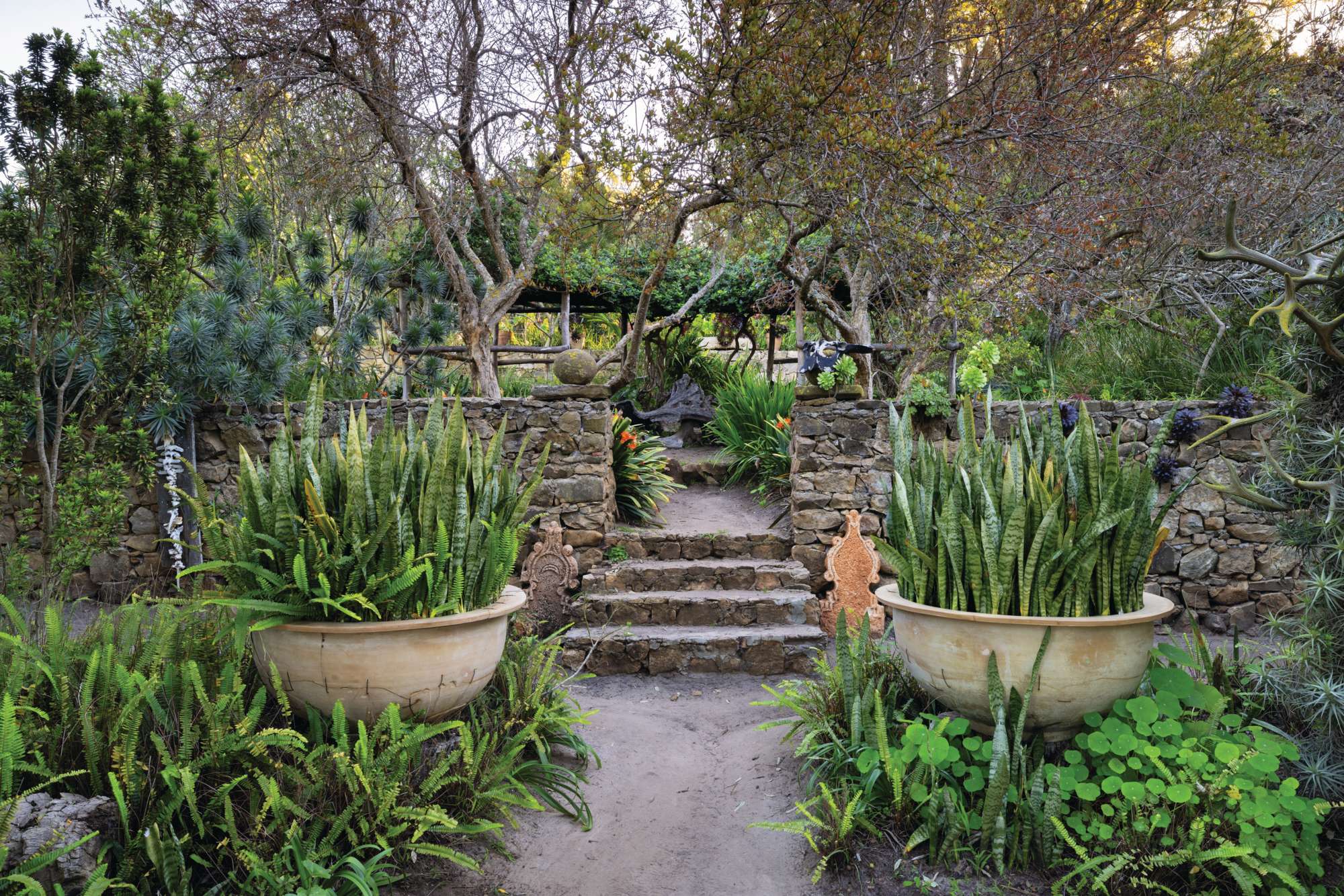
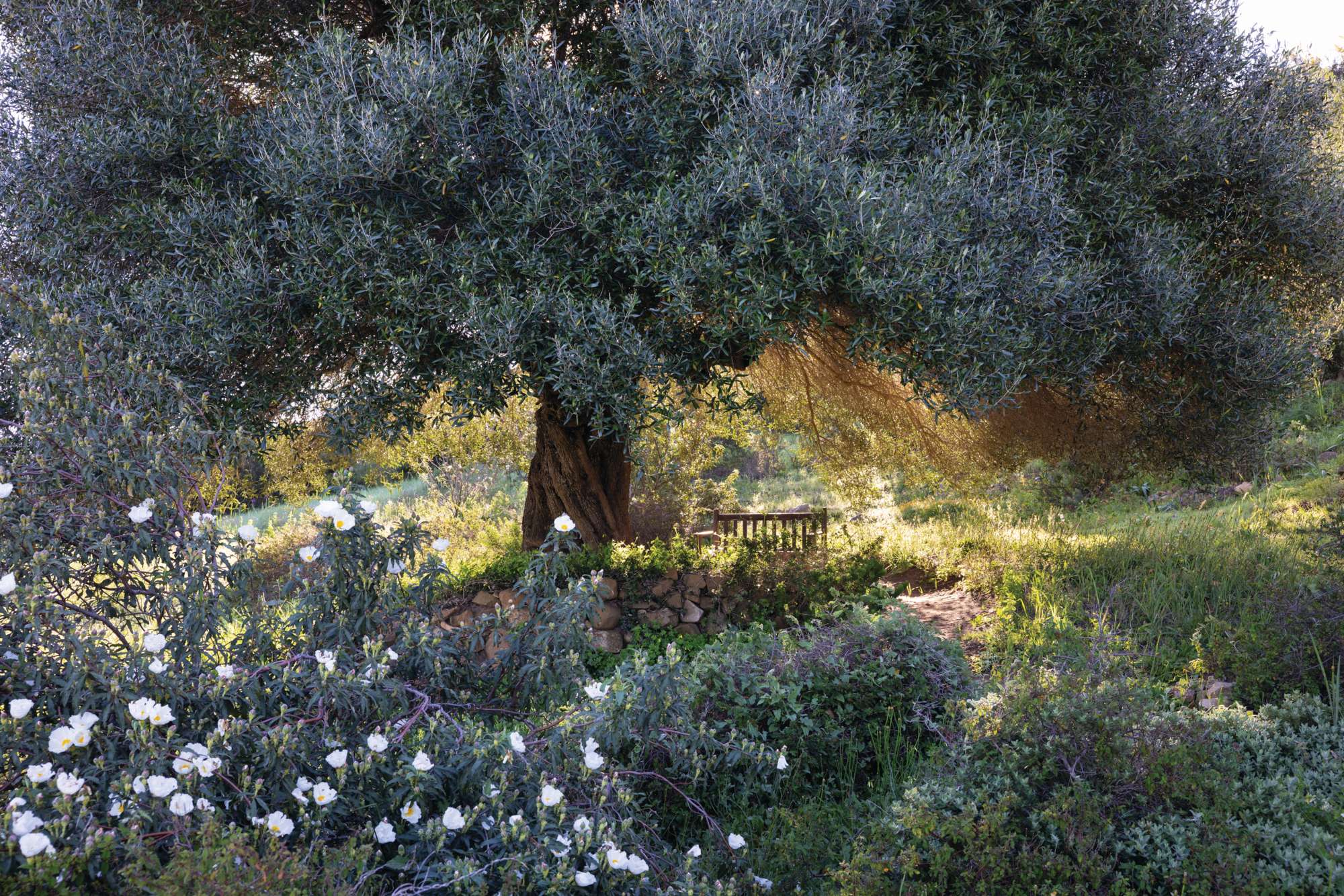
Umberto, who is best known as a novelist, began to conjure up narratives for the garden. He partitioned it up into a sequence of open-air rooms; some with a fictional creator, such as The Garden of the Portuguese or The Garden of the Englishman. Word soon spread among the surrounding villages and towns. Umberto would get word of huge trees uprooted by diggers on a building site nearby, and he would lead a band of brothers to rescue them. Each tree, bareroot and cut back to its knuckles, was transported first on a truck, and then on a lashed-together wooden platform drawn by six mules for the final few miles of dirt track to the garden.
Sackfuls of Narcissus obsoletus were saved from the ground amid the expansion of Tangier Airport. “It’s saddening to have to take them away from their place,” says Umberto. Yet in the face of these plants being lost forever, there is no time to waste. “Many times I’ve had to pay a digger driver some dirhams to wait a few hours, allowing me time to rescue the bulbs.”
You may also like
- A designer garden at the foot of the Atlas Mountains
- We bought an abandoned olive grove and brought it back to life
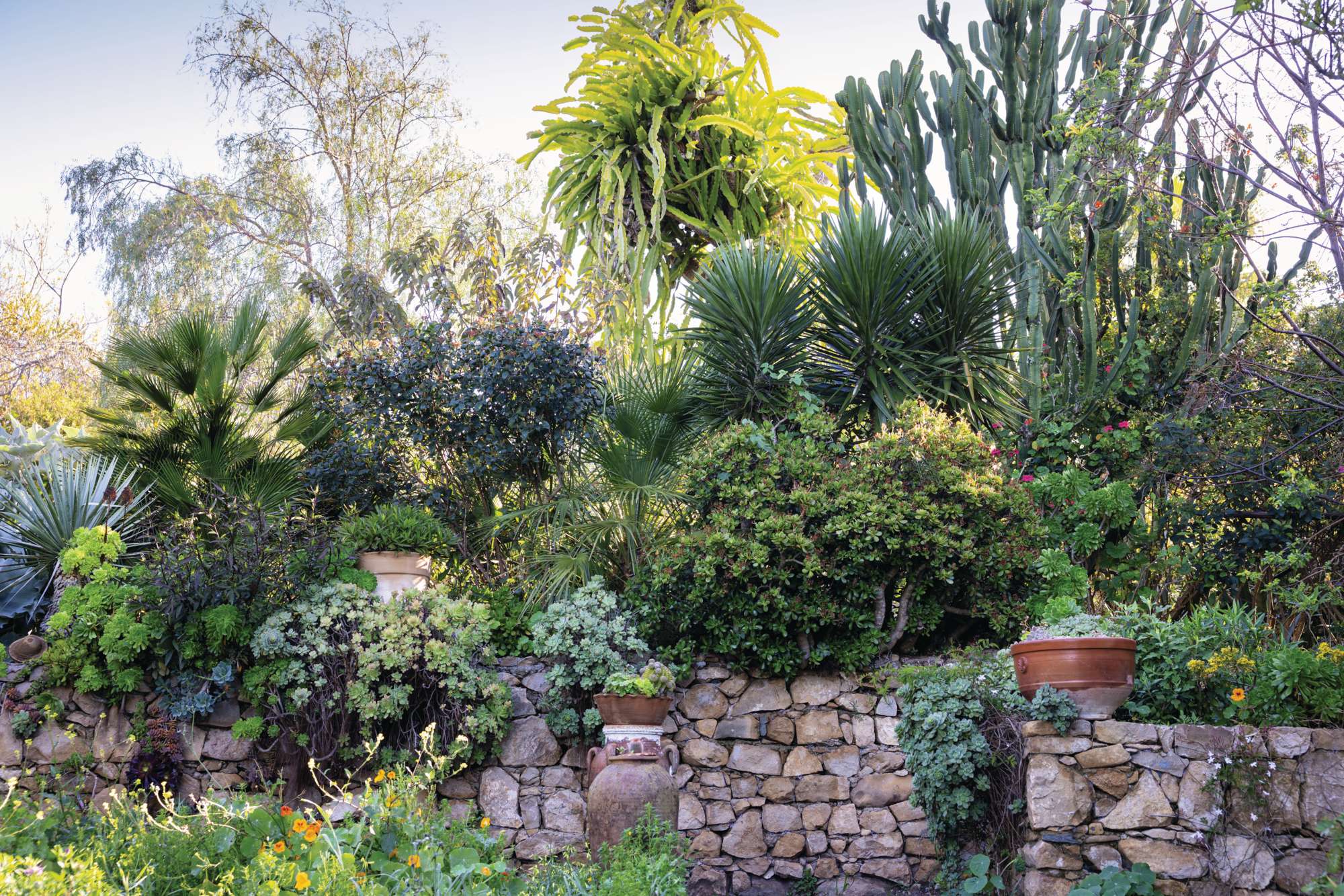
Navigating Rohuna is like entering an ancient world that is full of echoes of times past. Umberto’s lifelong passion for collecting runs through the garden, and is manifested in bench seats covered in tile fragments from Seville, Tunis and Fez; Mediterranean antique pots and urns that draw the eye along an axis; and thickets of vegetation including Agave from Mexico, Sansevieria from Madagascar and Clivia from South Africa. There is even a school on site, and children can often be seen giggling and skipping through the garden.
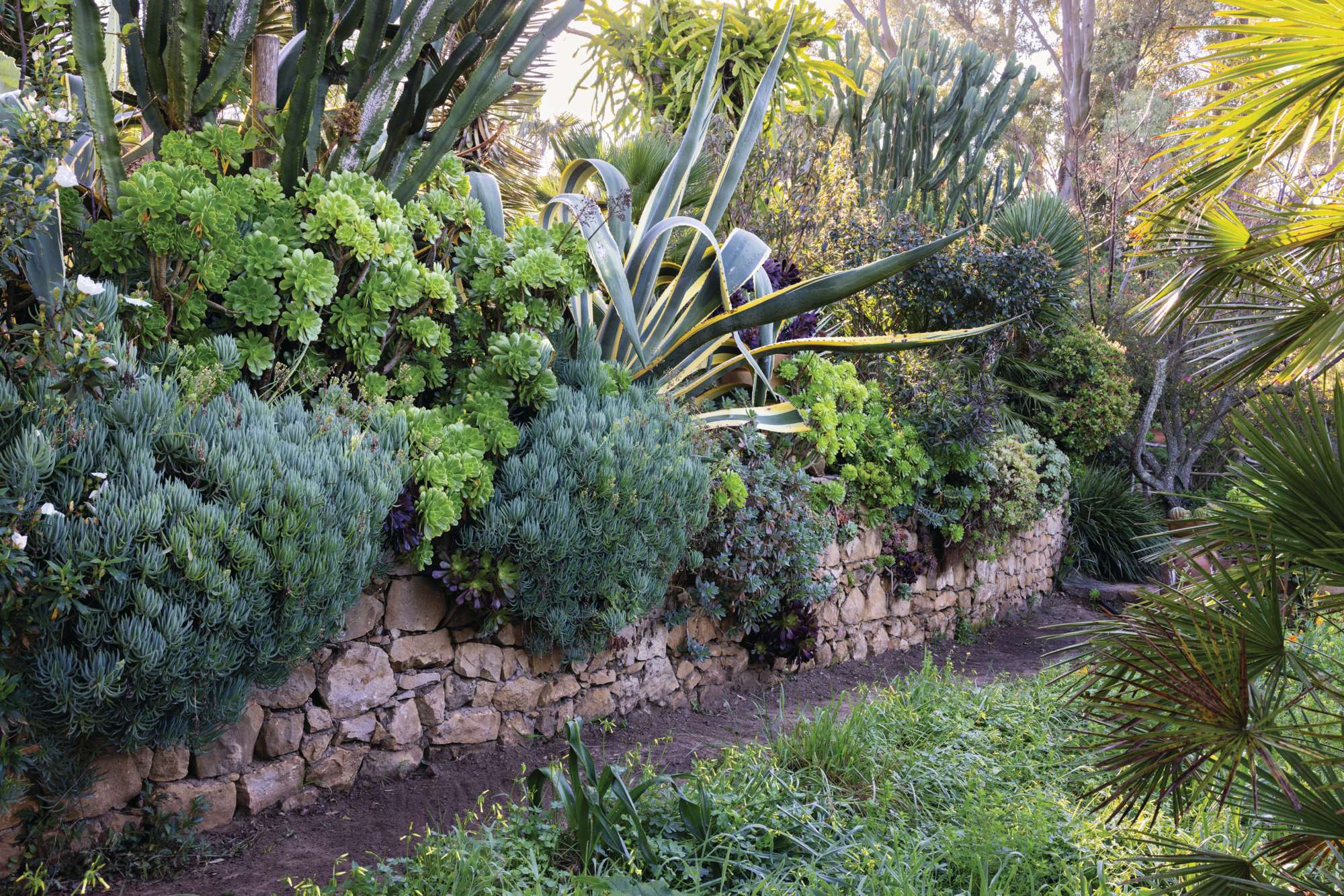
The garden now encompasses two modest houses, the Summer House and the Winter House, both built simply and in exacting detail to the vernacular style. Summer temperatures regularly exceed 40°C, and the area surrounding the two houses is known as the Garden of Consolation. Its purpose is to keep the spirit delighted while the vegetation in the surrounding landscape goes dormant – a natural response to the heat and low rainfall.
You may also like
- Introducing the GI Academy, expert talks when it suits you
- How a former pig farm became a tranquil garden that's a haven for wildlife
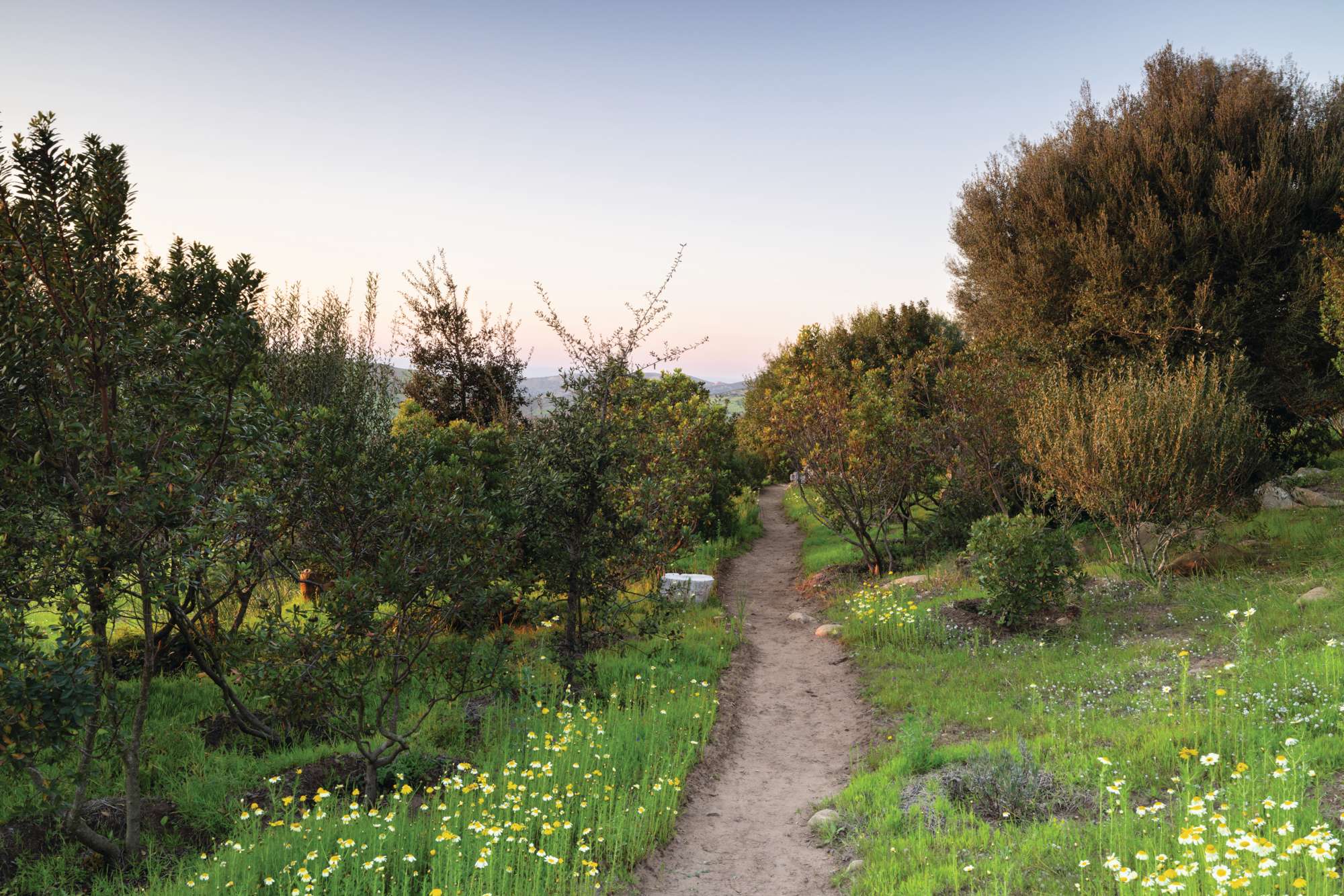
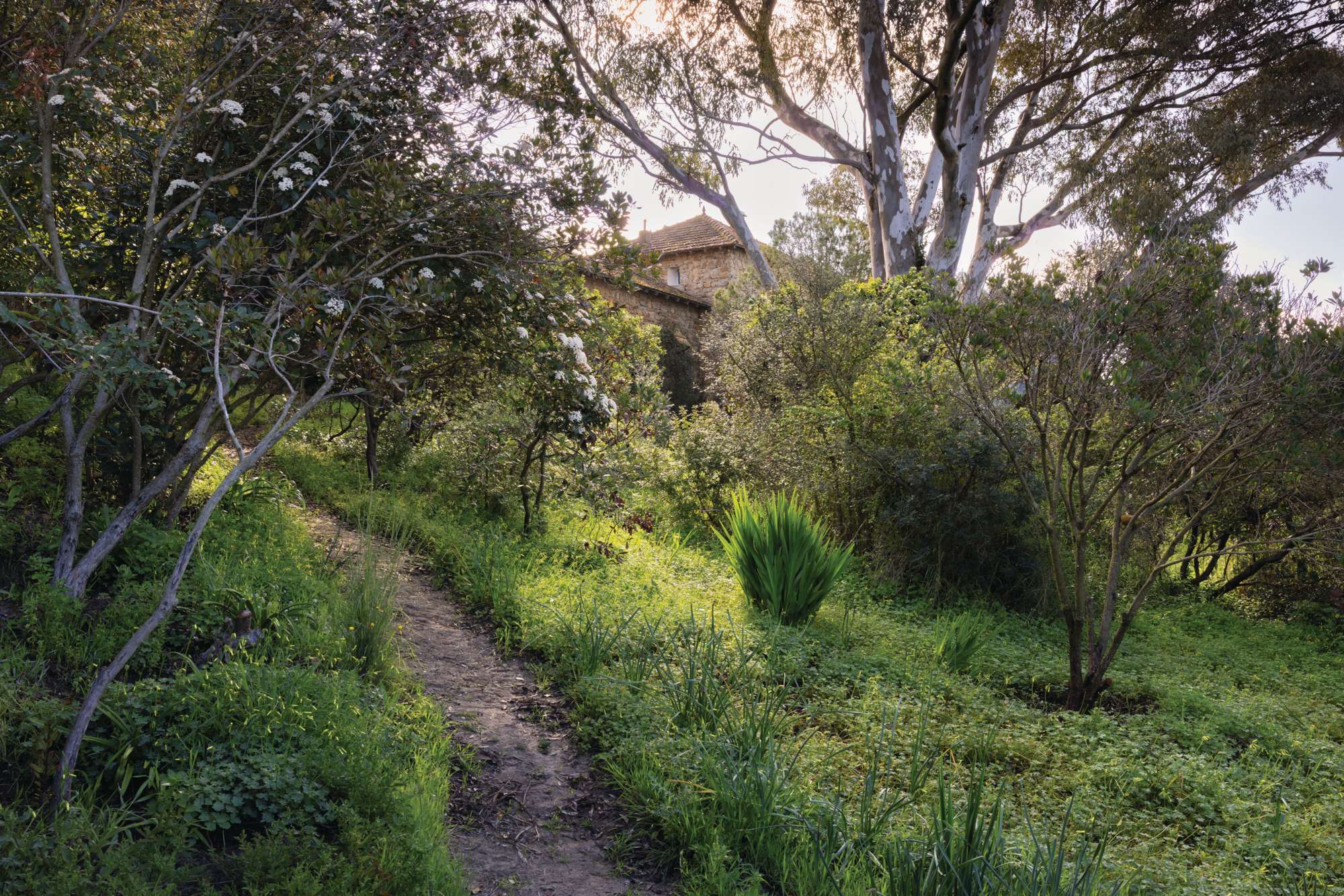
Over a bridge decorated with Arbutus wood is the expansive Wild Garden. Here, hundreds of plant species indigenous to northern Morocco have been relocated. The design touch here is light, with narrow, trodden footpaths that meander across sloping fields, under cork oak trees and towards views of the sea.
Across these 12 acres of beloved land, the floral calendar commences in November with autumn-flowering Narcissus obsoletus. Soon after, the short Iris planifolia blooms, followed by the first of the tall emblematic Iris tingitana, often around Christmas. It flowers until March, when its relative Iris filifolia takes over and signals the spring. Wild orchids, including several bee orchids, have also popped up. “I’ve never transplanted an orchid in my life,” says Umberto. “The dozen or so species have appeared over time.”
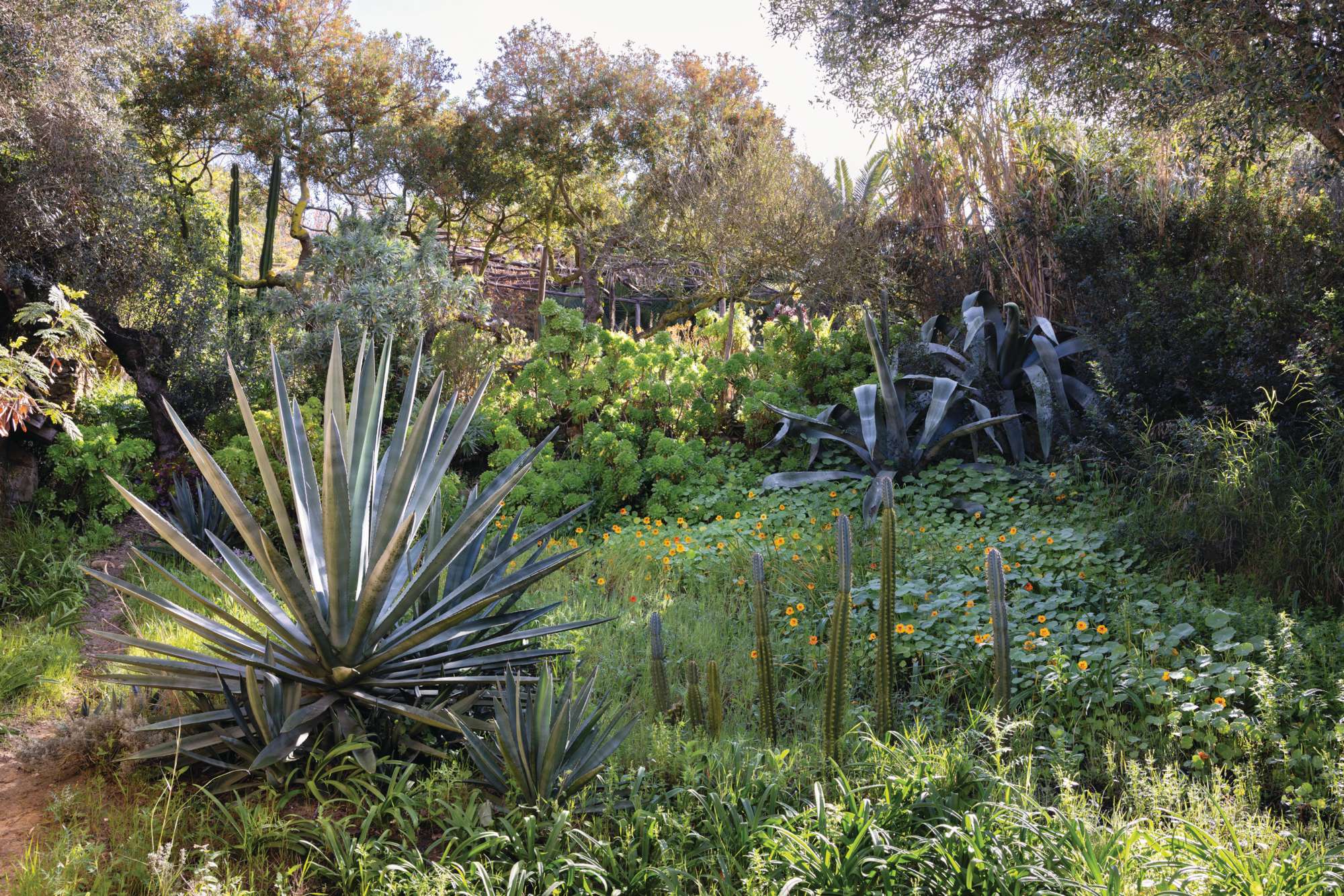
A now proliferating range of indigenous Cistus species were introduced to the garden from plants raised by French nurseryman Olivier Filippi, who had collected their seed in Morocco several years before. Local varieties of fig, peach and apricot trees are now being collected with the assistance of the botany professor at the nearby Larache University.
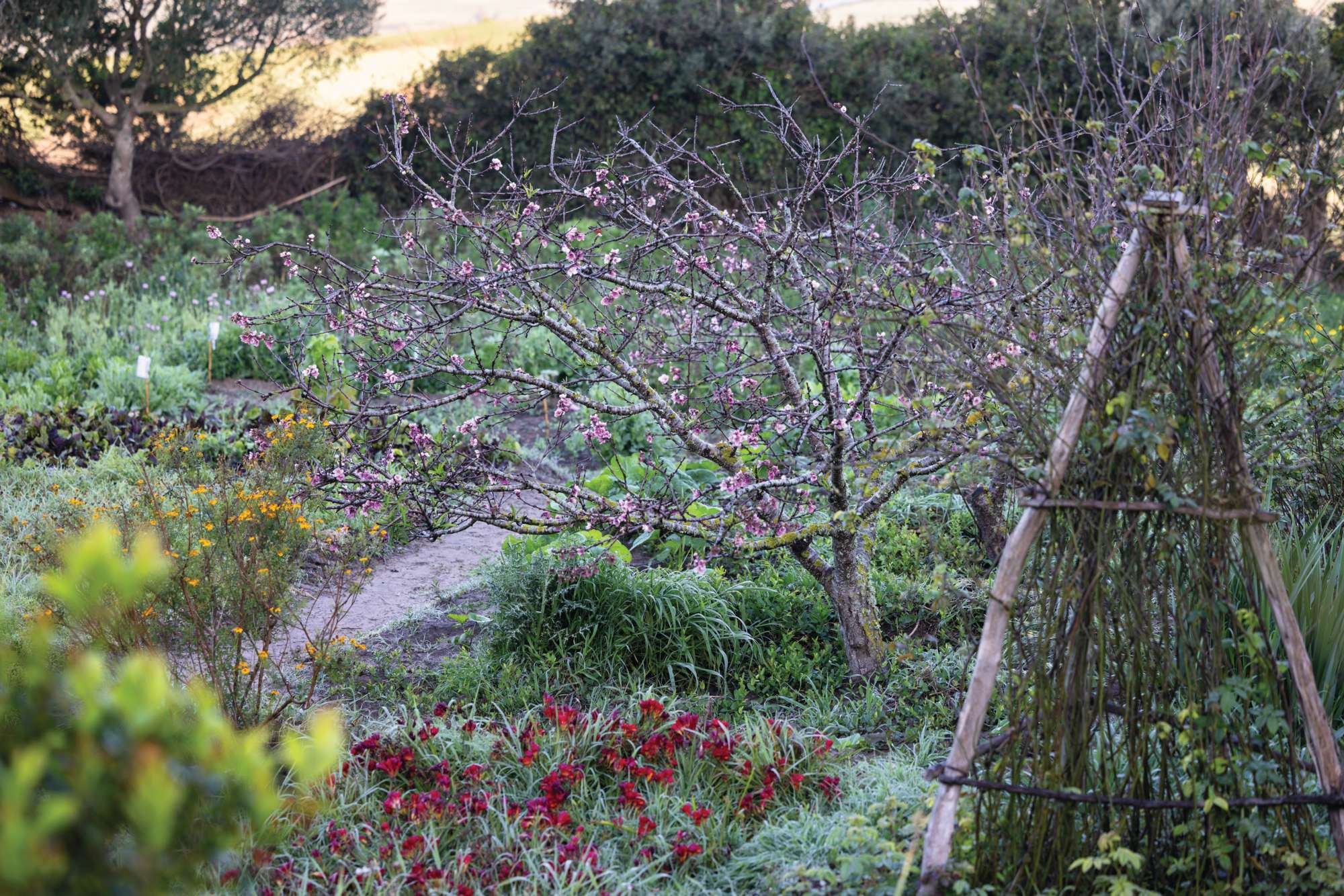
Twenty-six years after Umberto’s fateful nap beneath the fig tree, Rohuna is now visited by 3,000 garden and plant lovers every year. “I’m currently in the process of transforming Rohuna from an association into a foundation, so that it will continue into the future,” he explains. With thousands of bulbs prised from the treads of bulldozers, this incredibly precious botanical ark of a garden has acted as a catalyst for building a resilient community, and as a result, opportunities have sprung up within and beyond this remote village. With Marrakech’s renowned Majorelle garden, whose foundation generously supports Rohuna, Morocco has two stellar gardens that should be top of everyone’s must-see list.
USEFUL INFORMATION
Address Rohuna, Sahel Chemali, Asilah, Morocco.
Tel +212 660-318562.
Web gardenofrohuna.com
Open Year round by appointment
Subscribe to Gardens Illustrated for inspiration dropped on your doorstep every month.