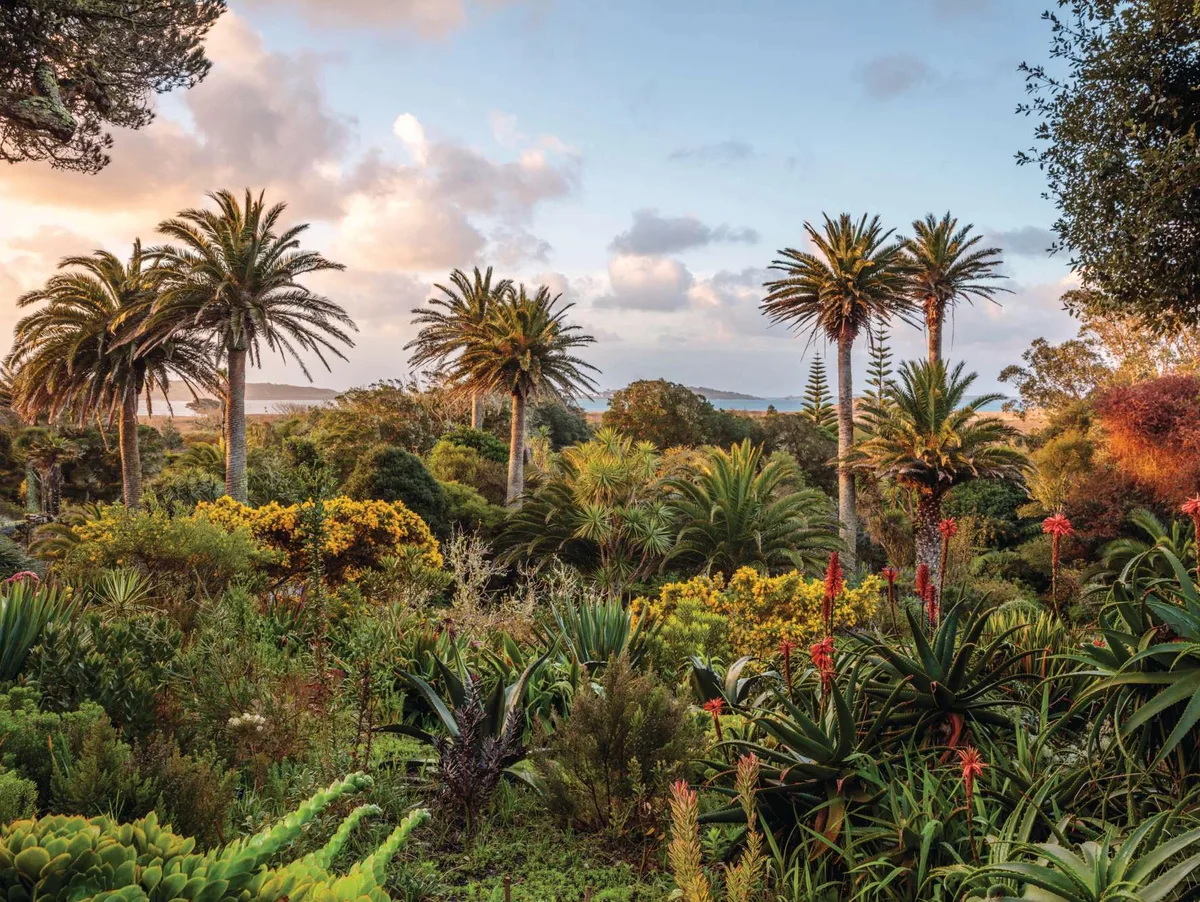
It’s difficult to imagine a more isolated garden than Tresco Abbey Gardens. Yet with its towering palms, 12-month growing season and riot of unusual and colourful blooms, this windswept treasure 28 miles off the coast of Cornwall has been making horticultural waves for centuries.
“It’s all about exchange,” says head gardener Andrew Lawson. “We have bonds with gardens from all around the world with which we share our plant range.” Now with climate change bringing new challenges, Tresco’s practice of experimentation, adaptation and forging global connections offers a guide for navigating our way through unsteady waters.
You may also like:
- 15 Mediterranean ideas to inspire you
- The 9 biggest problems in your garden and the plants to solve them
- Is your garden boring? These experts think so
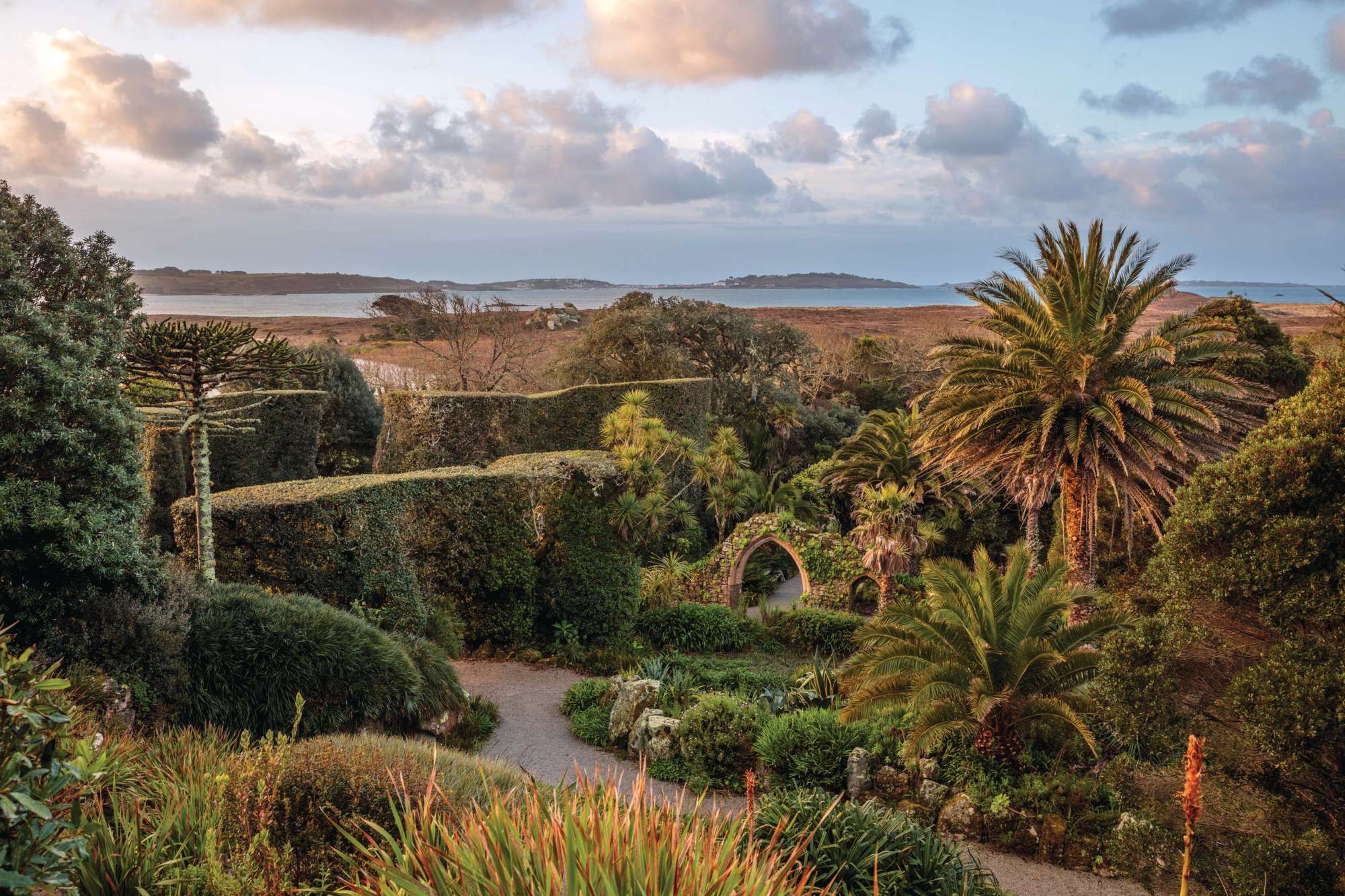
A garden with more than 2,500 species from the world’s Mediterranean climate zones does not just grow by itself. Despite benefiting from a microclimate, generated by the warm air of the North Atlantic Current, there was nothing but the ruins of a Benedictine abbey when Augustus Smith arrived in 1834. With a passion for plant collecting, he built walls to protect his specimens from salty winds, and later a shelterbelt. Wind-tolerant Pinus radiata and Cupressus macrocarpa from the Californian coast allow this subtropical haven to thrive. Six generations later, the tallest pines rise to 18m.
"Looking at plants in the wild, I’m always thinking: are these garden-worthy? They usually are."
Andrew has been steering the ship for three decades, alongside former curator Mike Nelhams. Together their rich horticultural network put Tresco on the world stage. Today, Andrew leads an eight-strong team growing unusual plants, many of which he and Mike spotted on travels to Madeira, the Canary Islands, South Africa and Australia. “Looking at plants in the wild, I’m always thinking: are these garden-worthy?” says Andrew. “They usually are, and I reach out to my contacts for seed. I’ve been chasing one plant for ten years: Echium portosanctense, from the island of Porto Santo. I’ve finally got some seed and can’t wait to get it in the garden.”
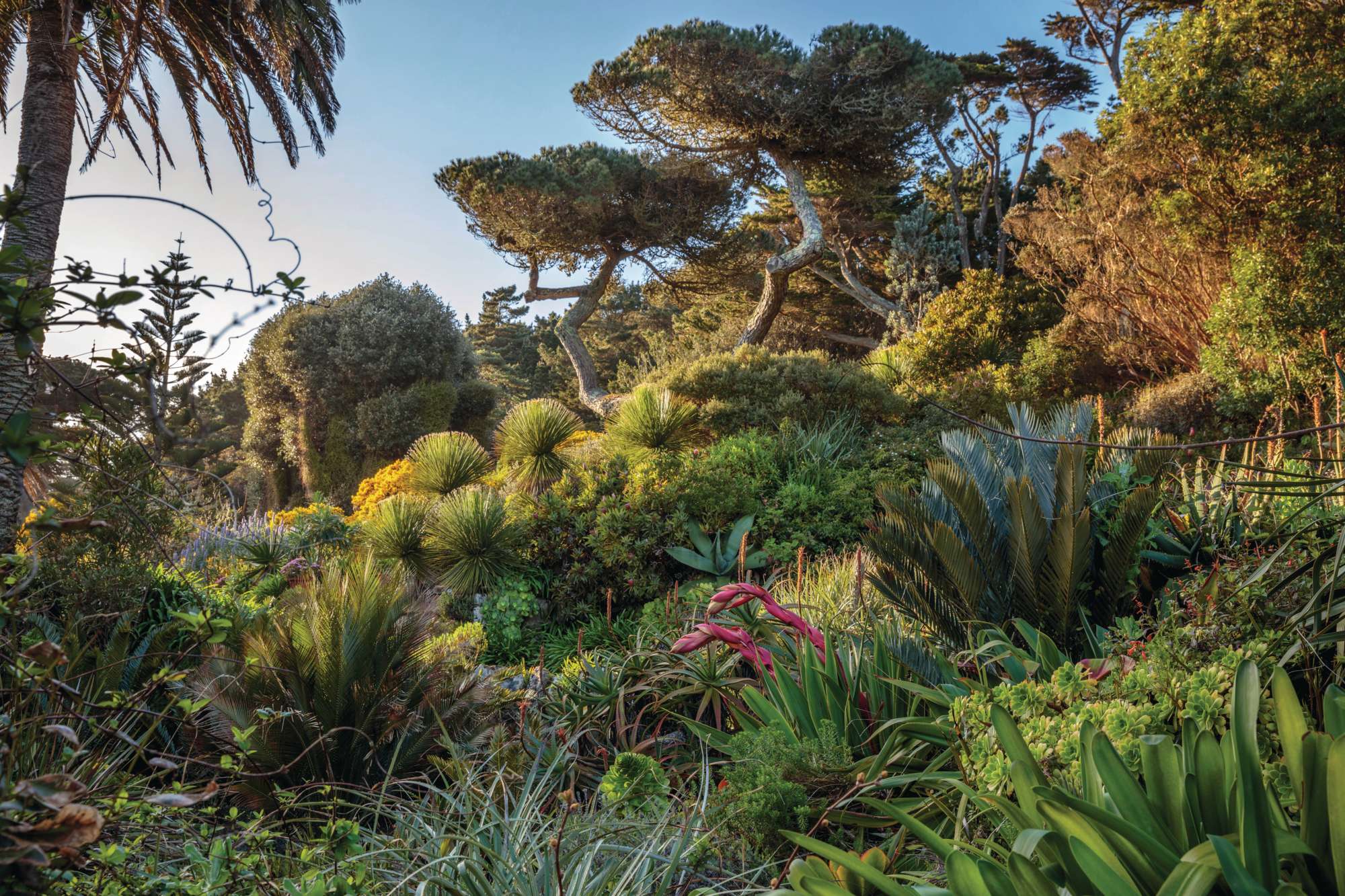
These plants become part of the rich green tapestry that rises up from the coast to spectacular views over the island. “We follow the practice of right plant, right place,” explains Andrew. “It’s not about forcing plants. It’s about finding the area they’ll grow in.”
"We follow the practice of right plant, right place."
On the top terrace, basking in shallow soils, are plants from South Africa, Australia and Mexico; plump pink and orange proteas, bustling with bees, steal the show. Avenues cut through the jungle, leading you down to the next terrace. There, deeper soil allows bursts of orange-feathered strelitzias, kaleidoscopic passifloras and the intoxicating scent of Lonicera hildebrandiana alongside other dazzlers from central Columbia and rest of tropical America. The path down is punctuated by agaves and cycads, until the damp and cool air hits beneath the canopy of pines and Phoenix canariensis. Here lies a rich tapestry of ferns, including Sphaeropteris medullaris, drunk with water, their black stalks swaying in the soft breeze.
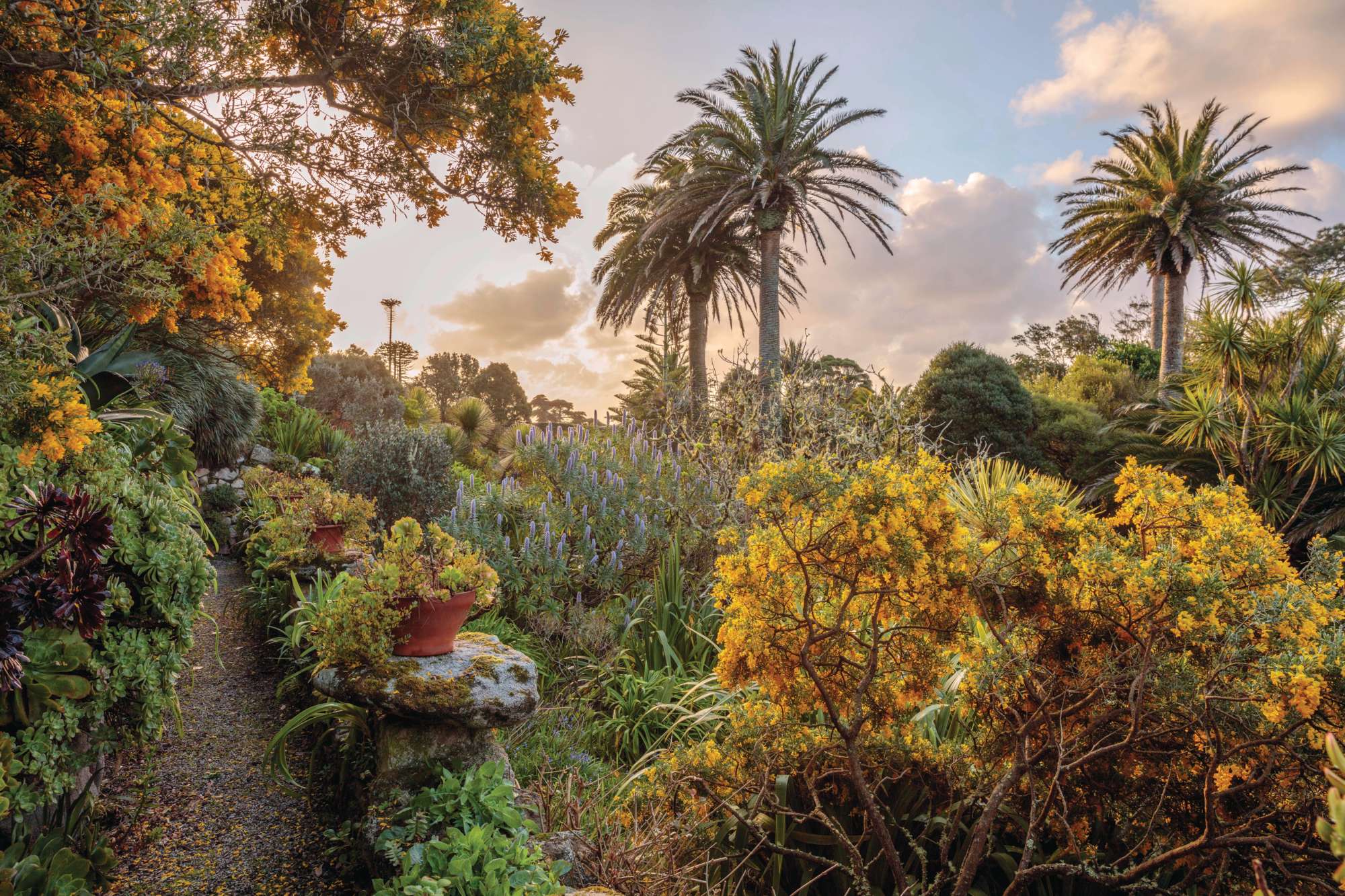
This oasis, however, is far from stable. “In 1987, a snow storm destroyed 75 per cent of the garden,” explains Andrew. “Then, with little time for us to recover, a 127-mile-an-hour hurricane ripped through the island in 1990, and 600 trees fell in just one night.” The generous horticultural community helped Tresco recover and some gardens, such as Royal Botanic Gardens, Kew, replaced lost specimens. “We’re still chasing some of the plants, but that’s part of the fun of it,” says Andrew.
As climate change brings more extremes, Tresco will face high winds, heavy rainfall and threats of cold snaps. Andrew admits the team can’t protect everything, but the milder microclimate brings its own problems that may be a sign of things to come for the rest of the UK. “Tresco’s early insight into warmer temperatures and experience of pests and diseases, such as scales and thrips, is going to be very important for gardens on the mainland,” says Andrew.
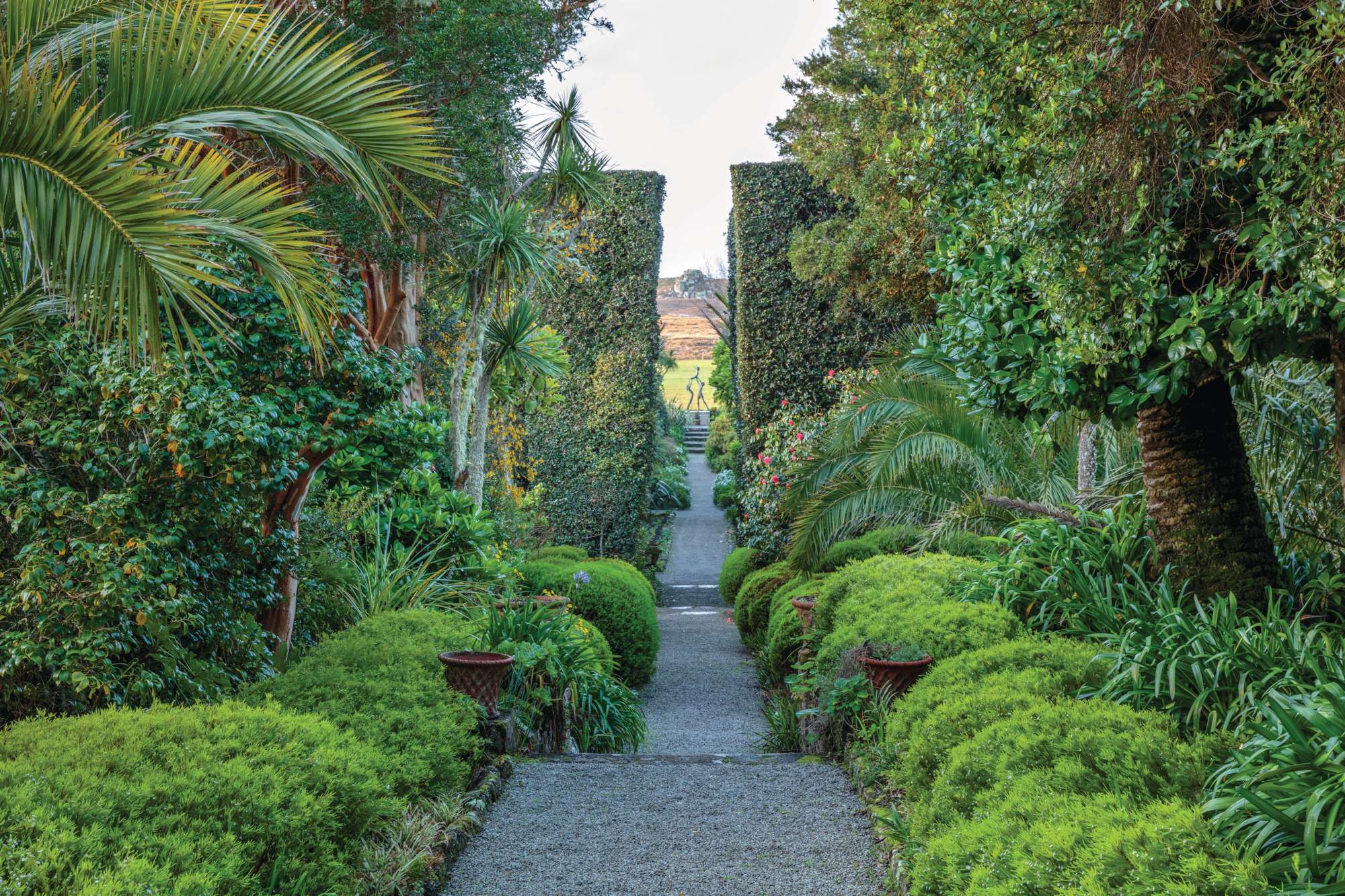
Tresco’s plant palette could also be a wealth of resources for them to use. A new database of plants is currently 95 per cent complete, thanks to the work of many of the students who come here on the garden’s annual scholarship. Andrew also wants to find GPS technology that will accurately document the garden, making it a more accessible resource for the next generation.
The future of many plants depends on the connections we have to support and learn from each other.
The future of many plants depends on the connections we have to support and learn from each other. “When we experience losses, we will keep trying again to see what will work,” Andrew says. The garden is taking part in the International Conifer Conservation Programme, growing species such as Phyllocladus trichomanoides, endemic to New Zealand. The scholars, who bring diverse experiences in exchange for knowledge and Tresco seeds, also form a part of this network as they root into new places. “Swapping plants is the only way we have of keeping it going,” says Andrew. “We are always trying to expand our collection.” Learning to be adaptable and experimental with plants is key, but most importantly it’s those networks of gardens that will be vital as unexpected and unpredictable things happen.
Words Mattie O'Callaghan
Photographs Clive Nichols