The Royal Parks charity has revealed a transformative new direction for how London's eight Royal Parks are planted and cared for. It is the first time a single vision has been established across all eight parks, and it will shape what visitors see and experience for years to come.
"Over 70 million people go through the parks every year," says Head of Horticulture and Landscape Strategy Matthew Pottage. "The really exciting thing for me is I think the opportunity we have to keep people noticing plants, to fight this phenomenon known as plant blindness, where people just see greenery, but they don't actually notice plants."

To fight this plant blindness, Matthew says the Royal Parks will be investing in 'unapologetic planting' - "putting exciting things in front of people."
"We have this opportunity," he adds. "And so a big part of it is what we're calling everyday wonder. So we are going to be putting on theatre, bit of showmanship, wow factor. And because of the scale of the parks and the scale of the horticultural areas where they demand confident planting."
You may also like
- Amazing gardens to visit in London
- One of Professor Nigel Dunnett's final completed projects now open to the public
Central London's heat island effect has produced a microclimate closer to the Mediterranean than to the rest of Britain, while drought, wetter, milder winters, flooding and increasingly unpredictable weather mean the planting that served these parks for a century must change. The Vision marks a shift from the Victorian palette these parks inherited towards a modern, more exotic and climate-resilient one.
Head gardeners from all of the Royal Parks sites have been instrumental in informing the Vision, both through their contact with the public and their understanding of the requirements of the parks and how they are changing. "After a summer like this, when it's a mission to keep anything alive, all the head gardeners have been screaming at me saying, we've got to change," says Matthew. "We can't keep doing this volume of bedding. And we can't. So they've helped shape a lot of it."
Four major new projects have been unveiled as part of the Horticulture Vision.
Hyde Park Rose Garden
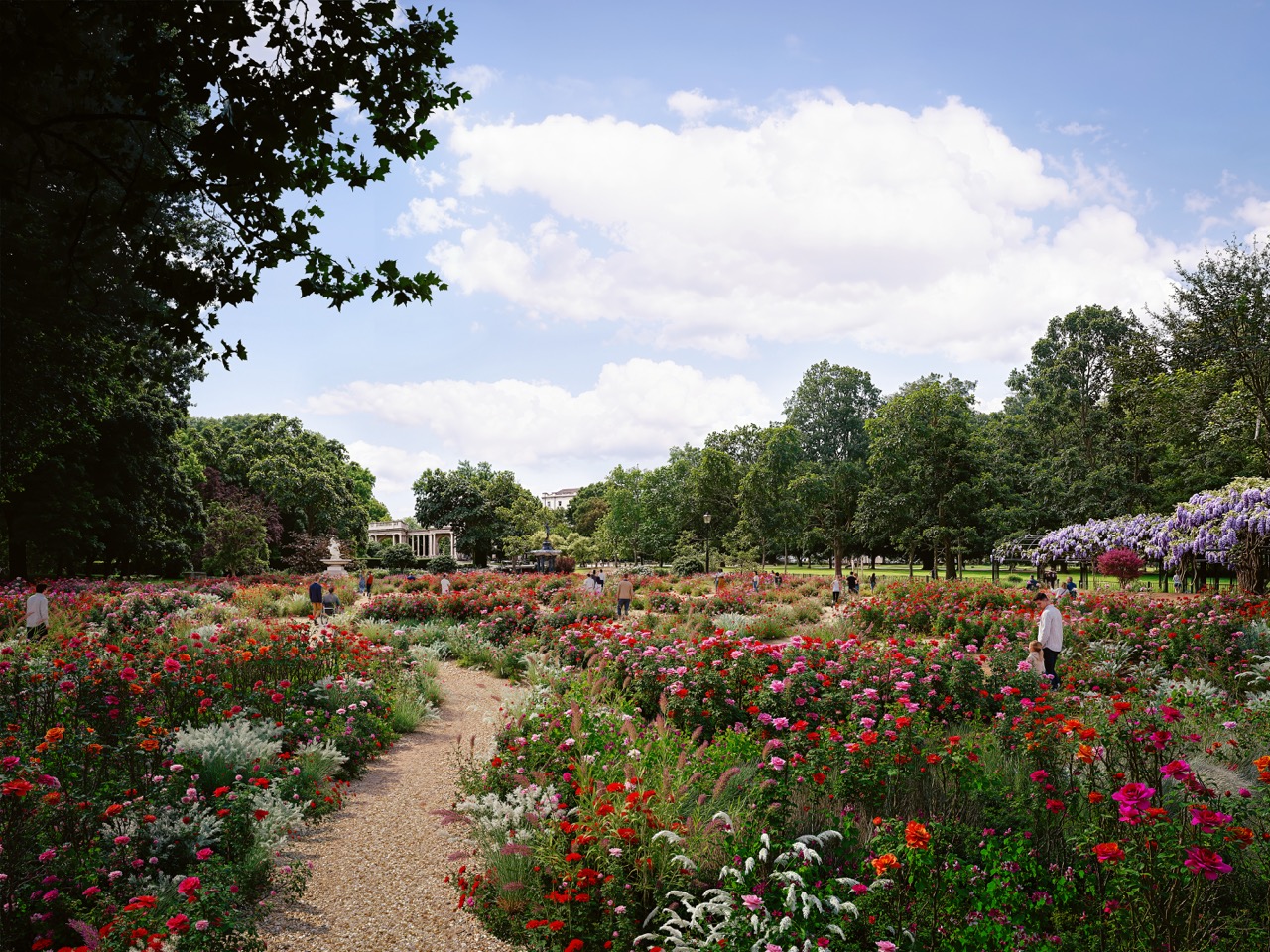
The Rose Garden's planting will be reimagined with Rosa persica varieties, an unusual rose tracing its origins to the Middle East and seldom seen in UK gardens. Its Middle Eastern origins give it resistance to heat and drought, and it flowers repeatedly through the season.
"The Hyde Park Rose Garden is having a huge facelift," says Matthew. "It wasn't memorable. It was just more hybrid tea roses with bedding, and the bedding was in lawns, finely cut lawns, which spend six months of the year brown. So we are pulling the whole lot up. The lawns will go, the bedding will go, the hybrid teas will go."
You may also like
- Roses: Our ultimate jargon and myth-busting guide and 49 of the best ones to grow
- Roses, roses everywhere: how the gardeners at Sissinghurst keep the famous garden on point all summer long
The roses will be planted among 20,000 diverse plants and up to 100,000 bulbs in vibrant pink and purple tones, with a new meandering path leading visitors through the planting. The garden's existing pergola will be replanted with an unusual variety of wisteria, chosen for its exceptionally long flowers, turning it into a tunnel of scent and colour and the longest wisteria walk in London.
"The Rosa persicas will just make it completely different to our other two rose gardens. And then after that point, we don't need any more rose gardens. There's so many other types of horticulture and plants we can showcase," Matthew adds. "So it's being a bit brave and having the courage to say, we don't need to do any more of that, pull it out, do something different."
You can donate directly to the Hyde Park Rose Garden.
A river of blue in The Green Park
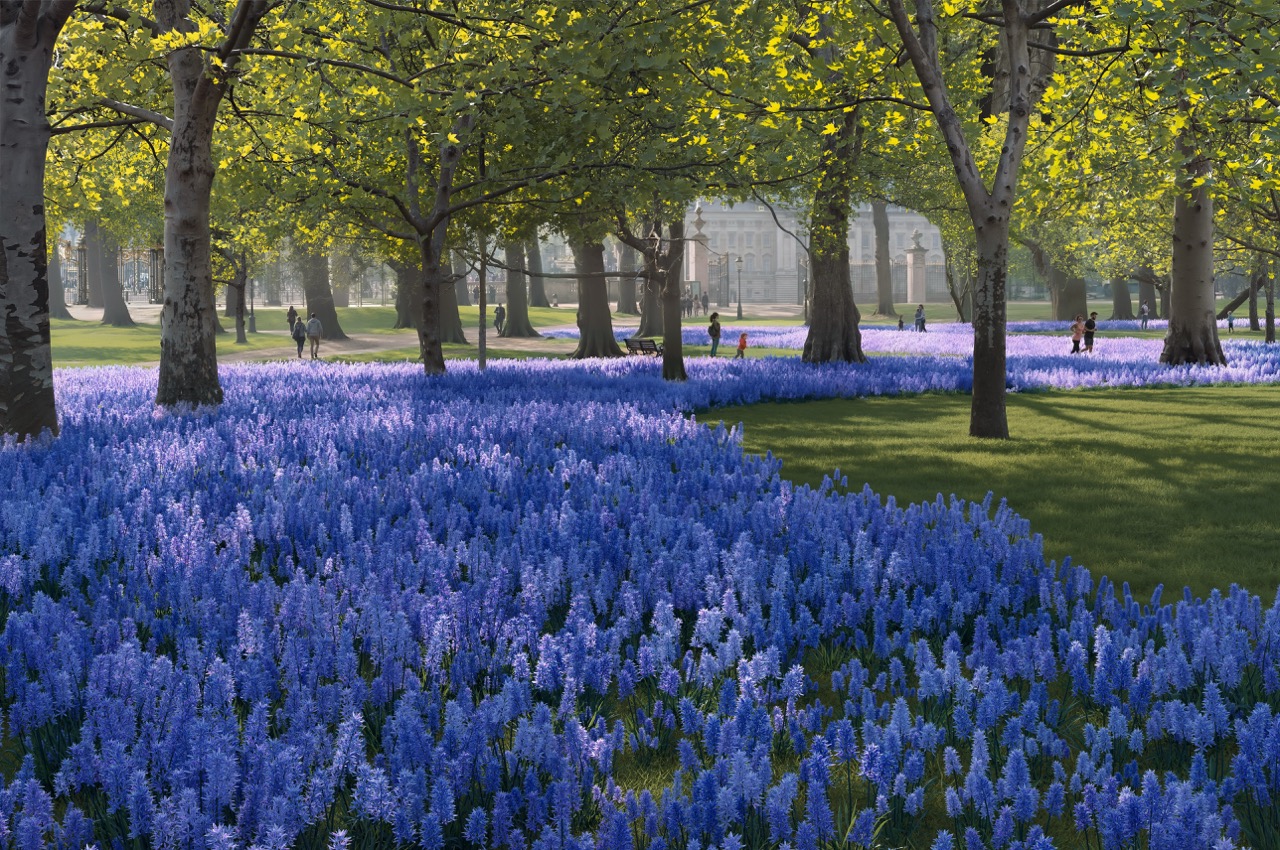
The Green Park was once home to the River Tyburn, one of London's lost rivers, long since piped underground, hidden from sight and lost from memory.
The charity will make a horticultural nod to it by flooding a river of blue flowers through the park, planting thousands of camassias, a climate-resilient perennial bulb. "We've got over 100,000 Camassia bulbs coming in this autumn and we're going to do a huge snaking river of blue through Green Park," says Matthew. "We just hope it will look pretty and get people engaging with the history of the park and its lost river."
The bulbs will flower for the first time in April 2027, bringing the park to life.
The Italian Gardens at Kensington Gardens
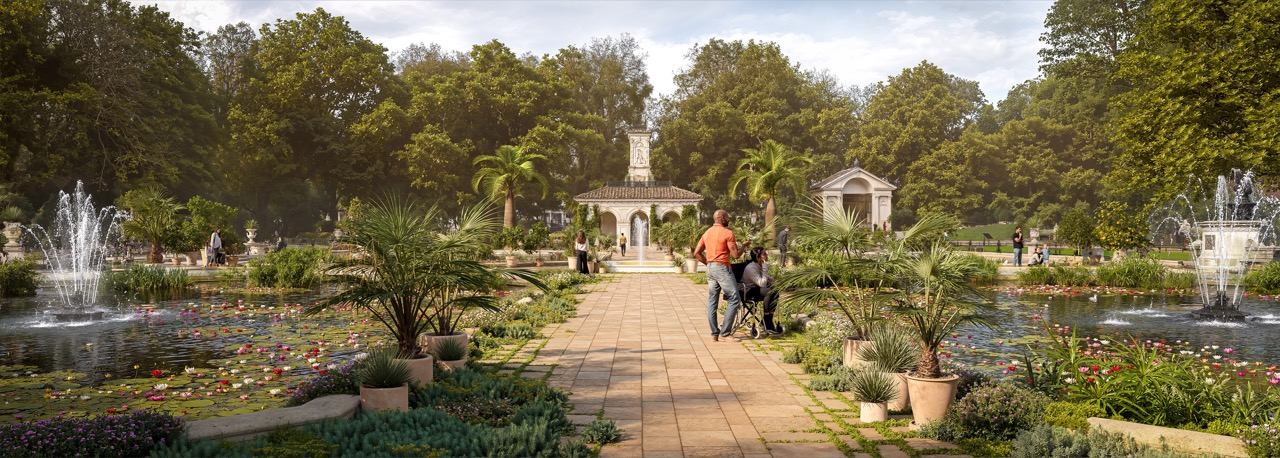
The Italian Gardens, said to have been a gift from Prince Albert to Queen Victoria, will be planted with exotic species from warmer parts of the world.
"Over the decades, they've lost their horticulture," says Matthew. "We've got pools there, we've got nice pathways and fountains, but generally all the horticulture's gone."
Drawing on historical photographs of planting, the charity will bring back theatre and spectacle back to the space. The magnificent urns, pools and fountains will be surrounded by heat-loving plants, and the pools will become a showcase of waterlilies, lotus and other sumptuous water plants. The crowning glory will be two bold Chilean wine palms which are set to flank the ornate pumphouse.
You may also like
- A dreamy Italian garden with an English flavour designed by Stuart Barfoot
- We bought an abandoned olive grove and brought it back to life with a meadow-style garden of wildflowers
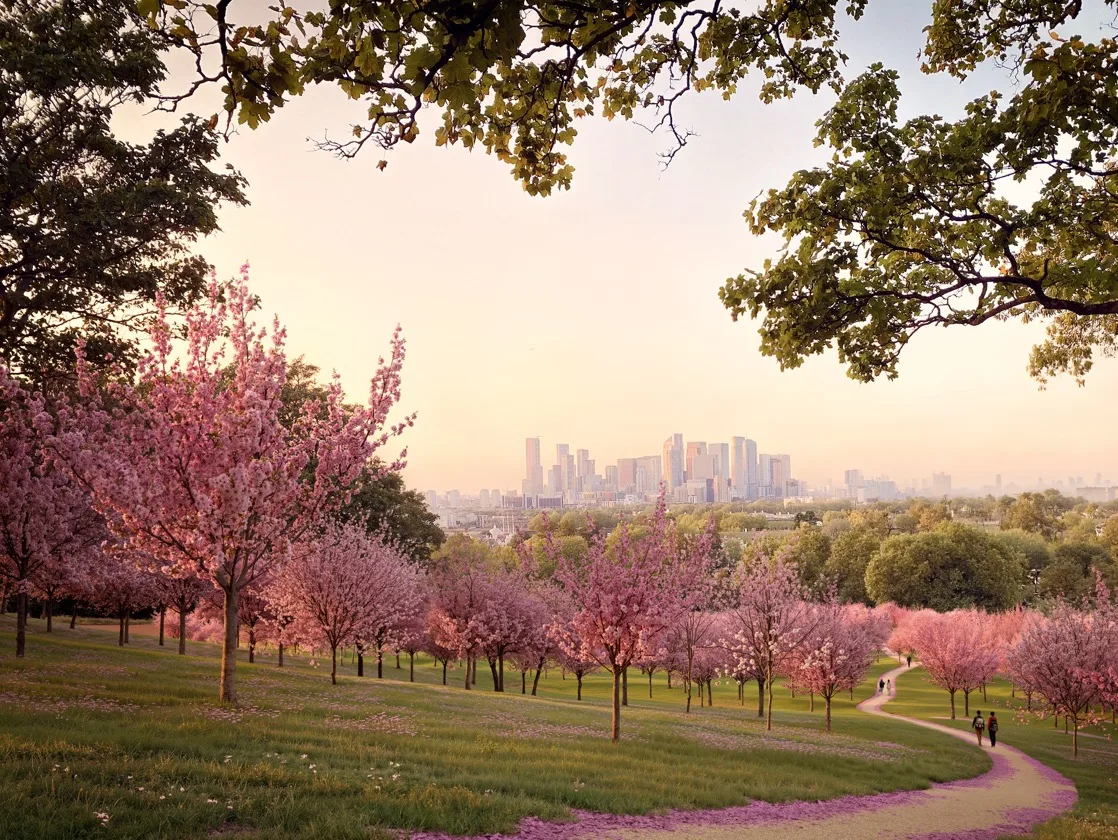
Blossom at Greenwich Park
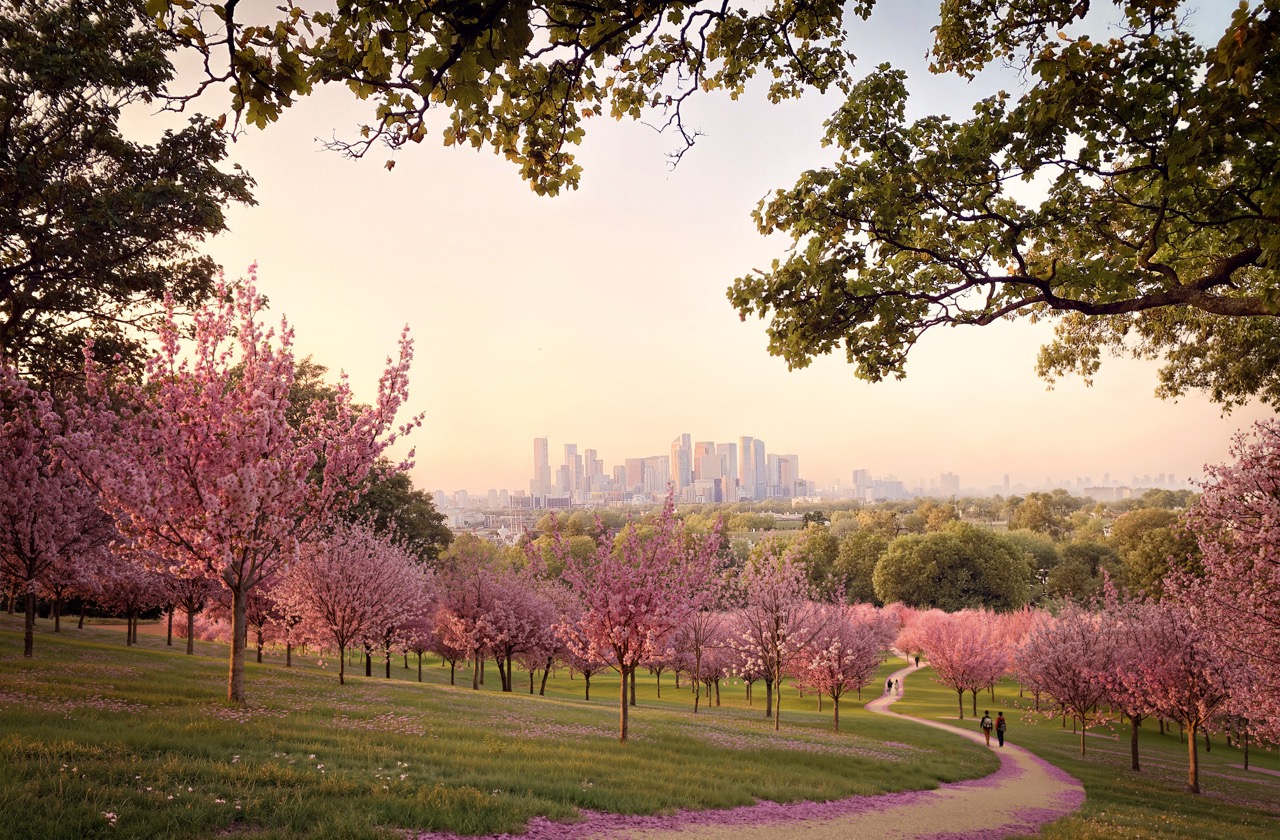
One phase of the Horticulture Vision that has already been started is the valley of blossom at Greenwich Park. "Greenwich Park often appears in Time Out and other magazines as a place to see cherry blossom," says Matthew. "And to be honest with you it's just a small path with a few cherries either side of it. So, thinking like the Victorians, how can we do cherries bigger and better at Greenwich to really put it on the map?
What we've done is we've chosen a whole hillside in Greenwich Park. It's a huge valley with a path running through it, and we've filled it with 150 pink flowering cherries."
As the trees mature the team hopes to offer people a real spectacle in the spring.
The overall aim of the Royal Parks Horticulture Vision is to engage people with nature and make them stop and take notice. "It's bigger and bolder but it's also more sustainable," says Matthew. "We wanted to showcase confident horticulture and make it more impactful for people."
The Royal Parks is still seeking funding for its various projects. For further information about the Horticulture Vision head to royalparks.org.uk