Phlomis, or Jerusalem sage have felted evergreen foliage and rough, textured bark and may be a familiar sight if you holiday in Spain, Greece or Turkey. They can be shrubs or perennials, and given a free-draining soil, sun and a little water, they make excellent, long-lived plants. Many are drought tolerant, which makes them especially useful as heatwaves and prolonged spells without rain are becoming increasingly frequent, and their seedheads remain attractive into winter.
You may also like
Phlomis mostly start flowering in early June, after the surge of spring-flowering shrubs, and this is helpful for filling that awkward gap in the garden between spring and summer. The neutral grey-green foliage is a good partner for most other colours and can be used to cool a hot combination of plants, such as heleniums, rudbeckias, or married with similar grey hues in a harmony.
Phlomis fruticosa can be used at the front of a border, and, as an evergreen, will serve as an anchor of pale foliage among fresh greens. It can be used in front of tall perennials, like some phlox, for example, to obscure any unsightly legs. Earlier in the year, it provides bones in the border to work against tulips and forget-me-nots.
Phlomis are perfect for Mediterranean or gravel-style gardens, and look great with modern architecture. They shouldn’t be crowded by other plants – give them ample space to grow into a good shape.
The seedheads of Phlomis are attractive and there is no need to deadhead as soon as the flowers have faded. They can be left through the winter, but should be removed before active growth begins in spring and new flowers are produced.
Some Phlomis are not particularly hardy and may suffer damage in very cold winters, but most species have the ability to regenerate from their rootstock in late spring if cut back hard. In colder northern gardens, it would be worth securing any phlomis a spot in a south-facing, sheltered location. This will give the plants some protection from the worst of the cold weather.
How to grow phlomis
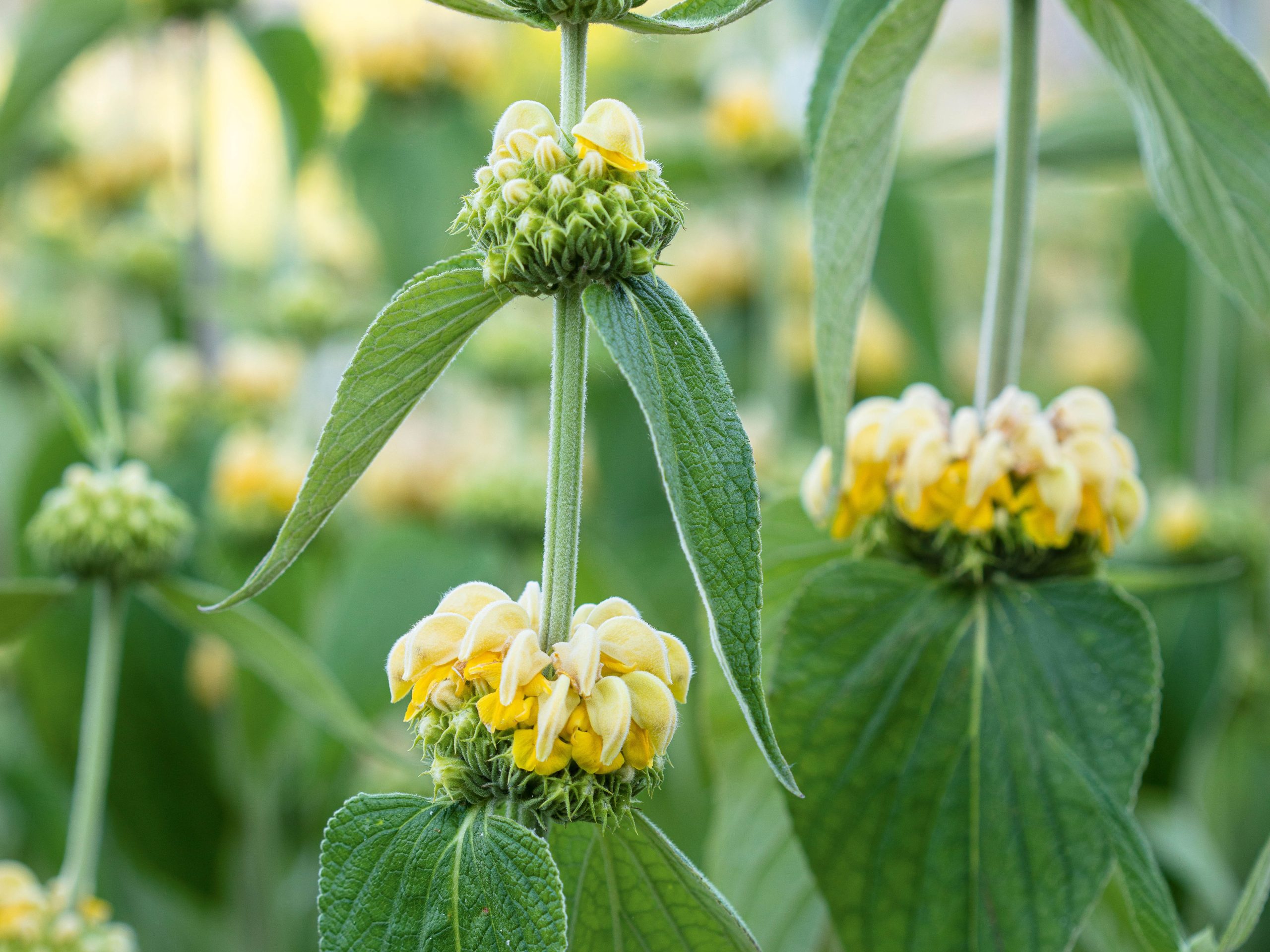
Where to plant phlomis
Choose an open, sunny site that doesn’t get waterlogged. Free-draining soil is best, but some, such as
Phlomis fruticosa and Phlomis russeliana, will cope in heavier soils. Select young, vigorous plants that show no signs of disease. If they appear rangy or top-heavy, a light formative prune will help promote bushy growth.
Phlomis prefer good drainage, so add horticultural grit to a heavy soil that tends to sit wet, especially for young plants with less developed root systems, as they are much more likely to succumb to excess wet.
When to plant phlomis
Ideally plant in spring, as this allows plants time to put down strong roots that will help them cope with winter wet. In very free-draining soils, you can plant in autumn, but Phlomis tend to survive cold, wet
winters more reliably once established.
How to plant phlomis
Mix a matching pot size worth of gravel with an equal amount of compost into the soil where you are to plant. More grit will likely only be needed on very heavy soils. Ideally, the prepared area should be roughly three times the size of the pot it is in. Water the plant well the night before planting and ensure it is still moist when going into the ground. Gently tease the roots out so they’re not spiralling and plant
into the middle of the improved position. Firm the soil well, and water the plant to help settle it into its new home. In dry weather water young plants until they are established.
How to care for phlomis
Phlomis generally make low-maintenance, healthy garden plants. Once established, they can be pruned quite hard and will regenerate well from old wood. Take care when handling, as the felted foliage can produce a dust that may irritate the throat and chest. Wear a facemask or prune when foliage is wet. Generally, Phlomis only need a light deadheading and prune to prevent stems from becoming
straggly – combine the two in midsummer after flowering. Older plants may become leggy, and can be cut hard back to the ground. A gentler option is to prune out a third of the older wood each year over a
three-year period. With herbaceous plants, split with a sharp spade, discard any old woody parts and replant a young portion.
How to propagate
Woody species are easily propagated from semi-ripe cuttings (approx 10cm long with three to four internodes) in spring. Make a sharp, clean cut just below a node on the stem, and insert your cutting
into free-draining compost. Place in a lightly shaded cold frame and water in. Keep the compost moist to encourage rooting, which should take about four weeks. Pot on into 9cm pots, and keep well-watered.
The best phlomis to grow
Phlomis purpurea
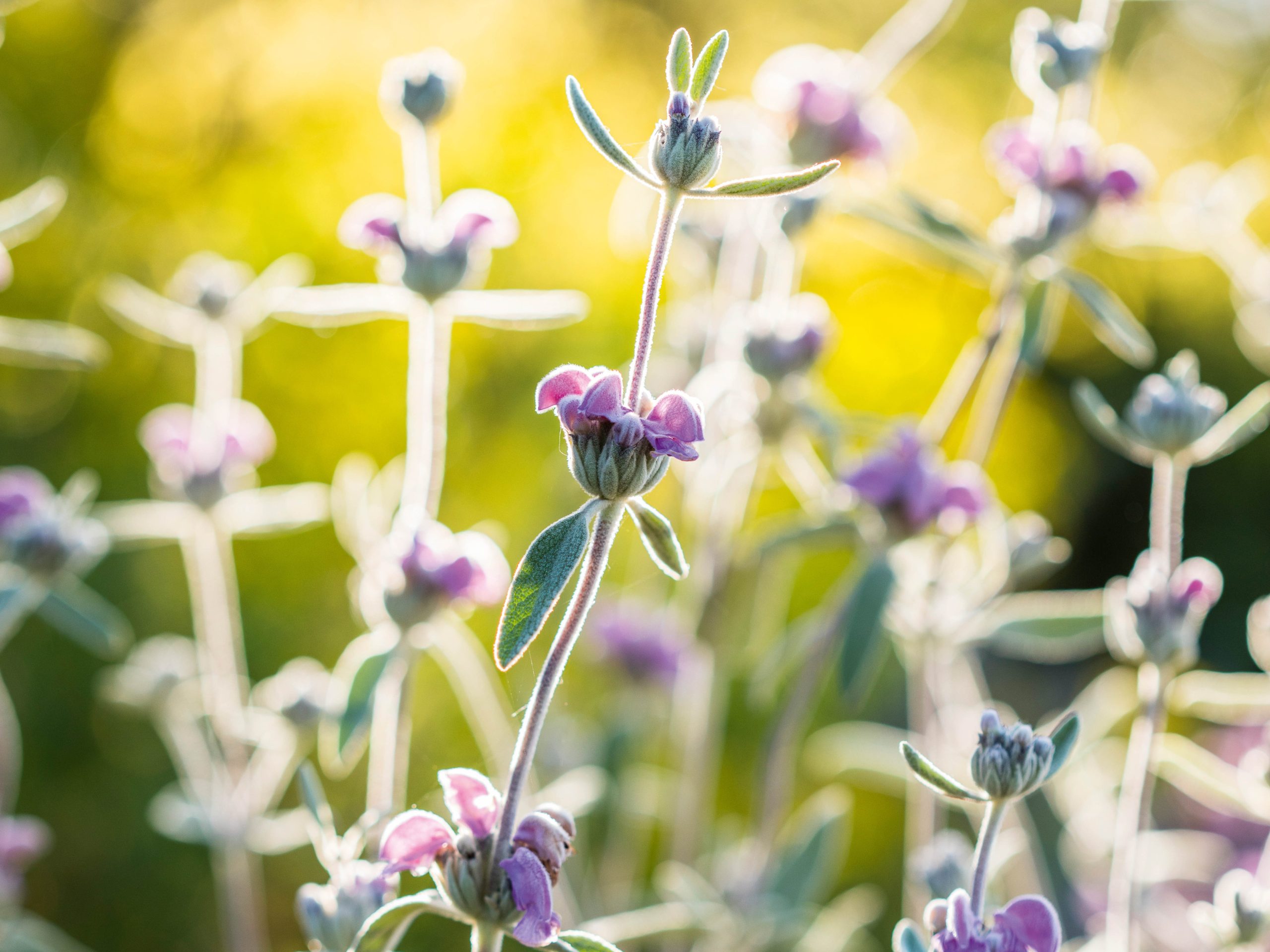
A broad, low-growing shrub that makes attractive silver-green woolly foliage and stems. Hooded, pale-lilac flowers are set in tiers up 60cm spikes. There is also a good white-flowered form. Height x spread 60cm x 60cm. RHS H4, USDA 8a-11.
Plomis sarnia
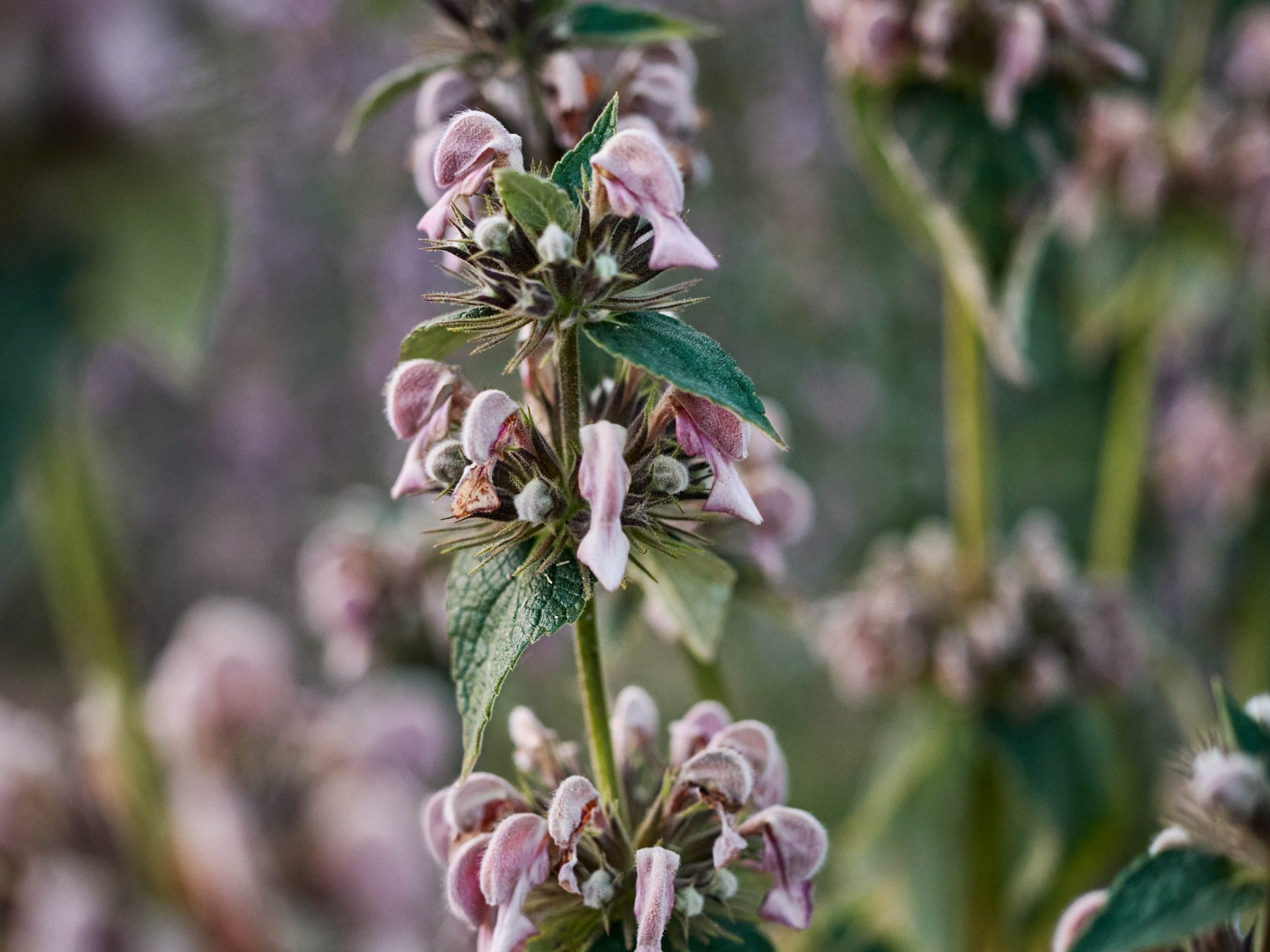
Commonly known as the Greek Jerusalem sage, this herbaceous perennial bears dusky pink to purple candelabra-style flowers above mounds of lance-shaped leaves that taper to a point. Similar to P. russeliana. 1.2m x 80cm. RHS H5, USDA 7a-10b.
Phlomis leucophracta
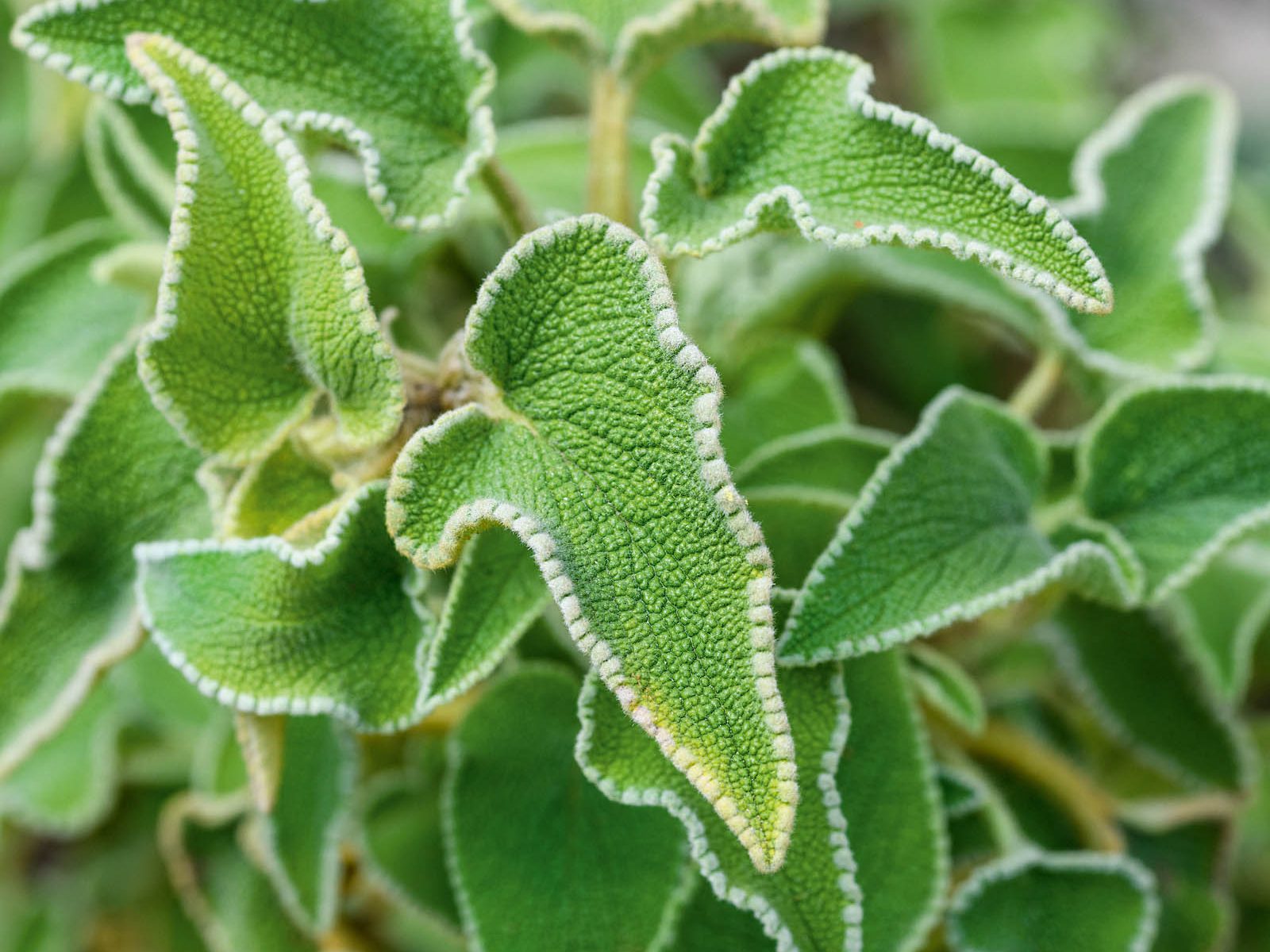
A rangy shrub with golden felt-covered foliage. Foliage is best if grown on dry, free-draining sites in full sun. The hooded flowers are bronze with a yellow lip. Cut back hard if it becomes leggy. 1.2m x 50cm. RHS H5, USDA 5a-9b.
Phlomis russeliana
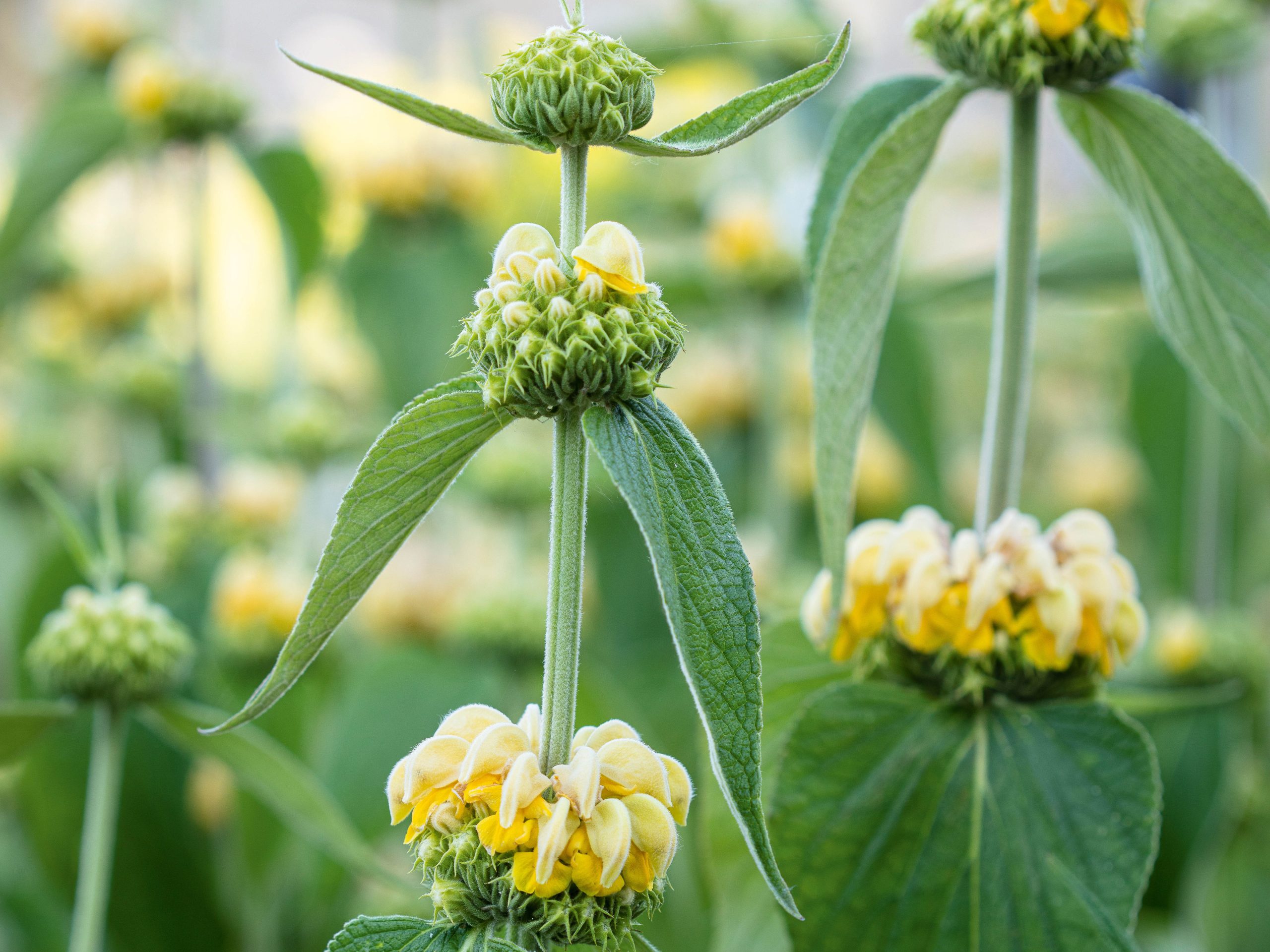
A brilliant self-seeding herbaceous perennial that produces tall stems bearing candelabras of
canary-yellow flowers and mounds of large green leaves. Attractive seedheads. 1m x 1m. AGM*. RHS H5,
USDA 5a-9b.
Phlomis longifolia var. bailanica
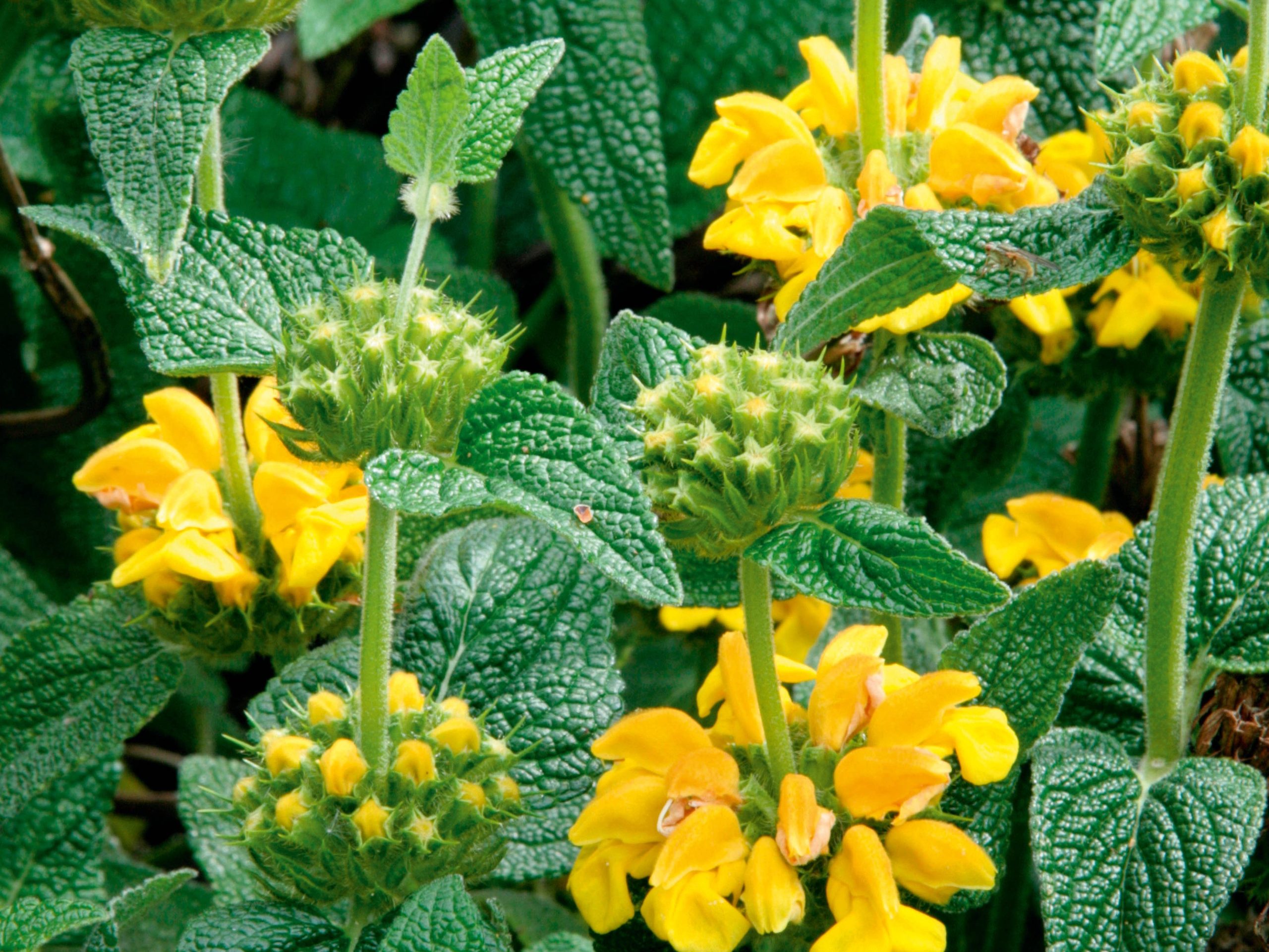
A reliable evergreen with golden, hooded flowers that benefits from a bit of space and a sunny
position. Young growth is covered in white wool. 80cm x 1m. AGM. RHS H4, USDA 8a-10b.
Phlomis lanata
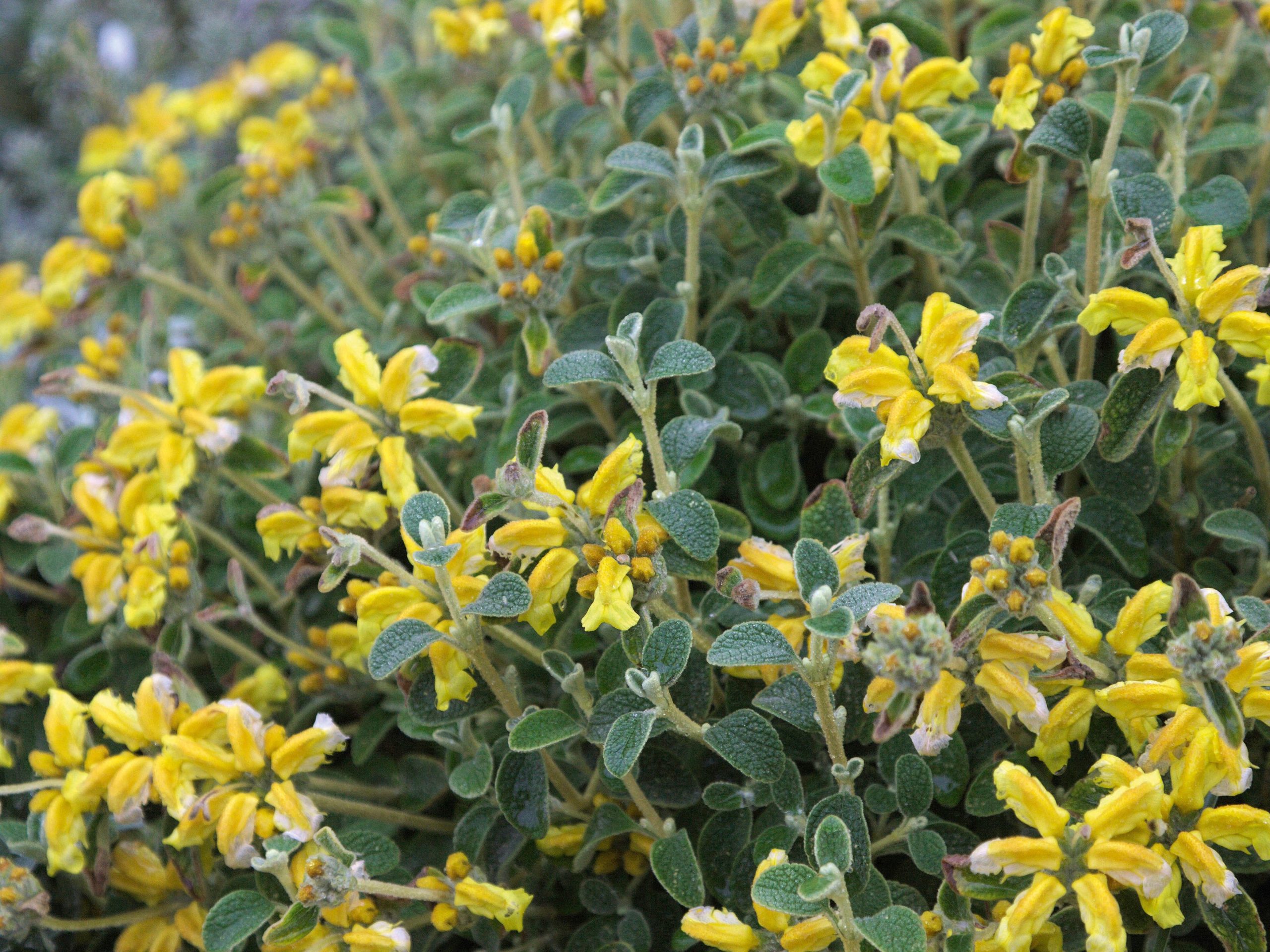
A relatively tight, rounded shrub of small, sage-like leaves with stiff stems carrying small candelabras of yellow flowers. Does best in full sun and with free-draining soils. 50cm x 50cm. RHS H5, USDA 8a-11.
Phlomoides tuberosa ‘Amazone’
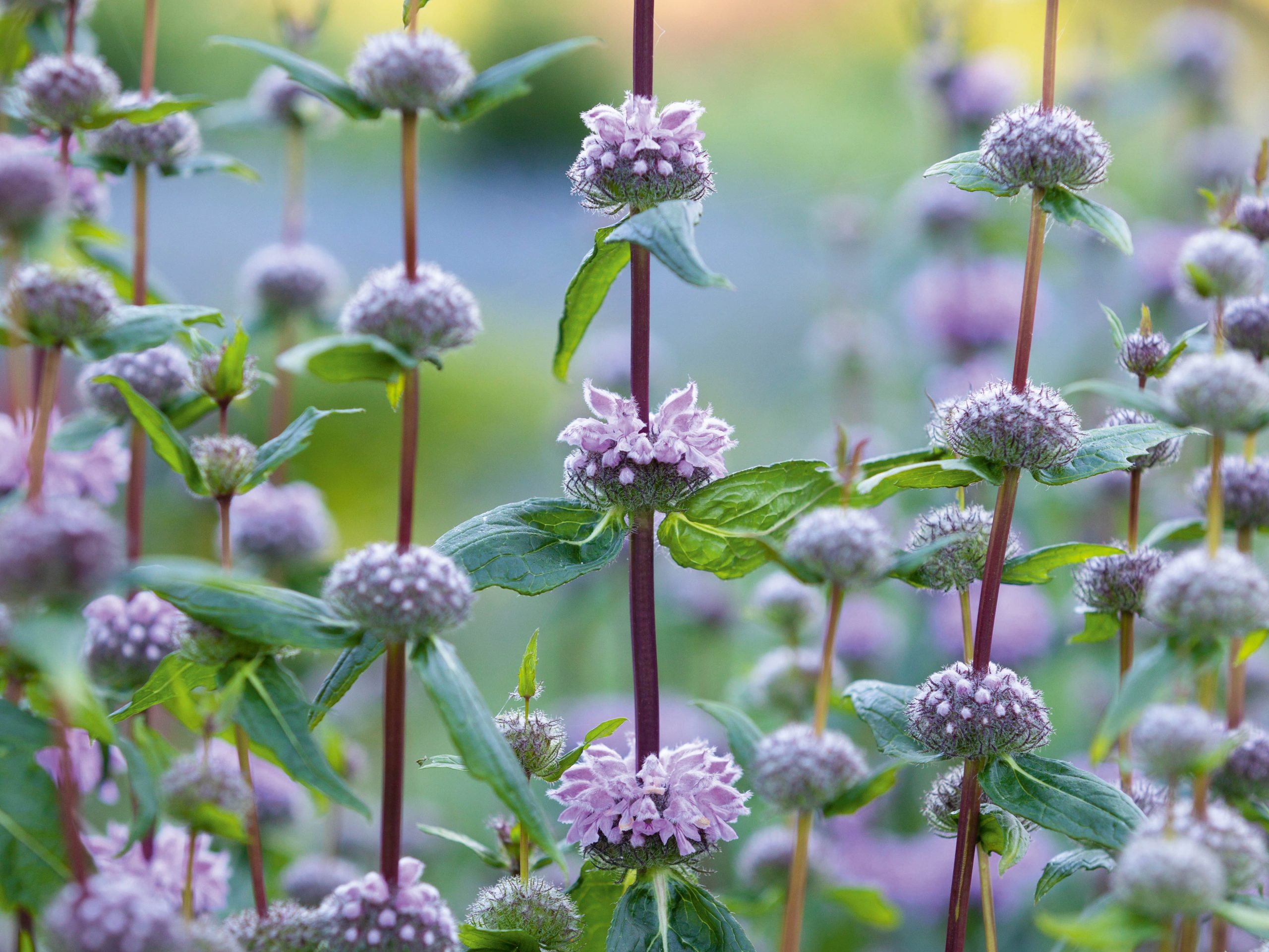
Introduced by Ernst Pagels, this tall cultivar produces masses of tall purple stems that carry whorls of soft-lilac flowers. The ornamental seedheads are long lasting. 1.5m x 80cm. RHS H5, USDA 6a-9b.
Phlomis chrysophylla
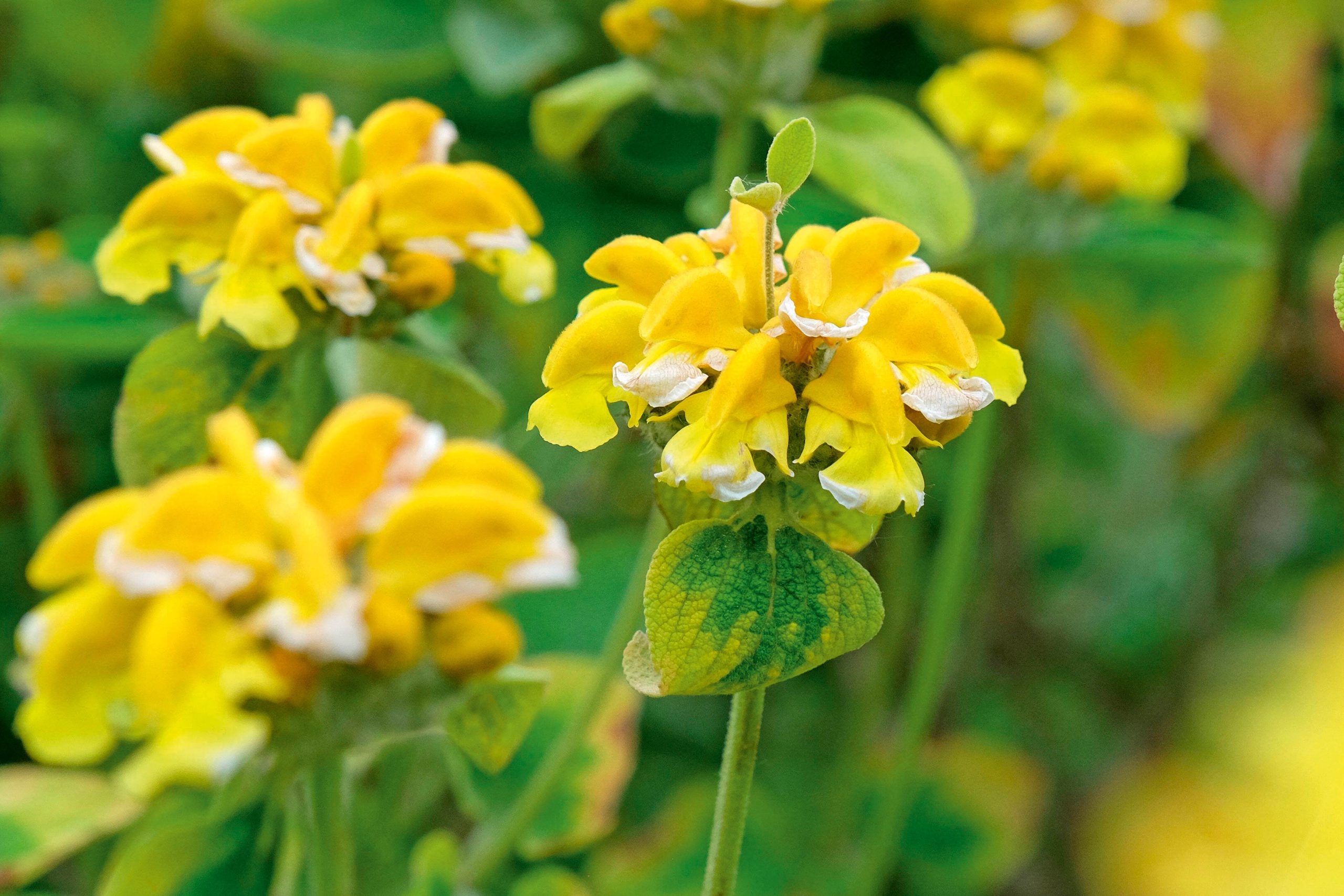
Produces mounds of golden-tinged foliage on upright stems. For the best coloured foliage, grow on poor, free-draining soils in full sun. Makes whorls of typical yellow, hooded flowers. 1.2m x 1.4m. AGM.
RHS H5, USDA 7a-9b.
Phlomis fruticosa
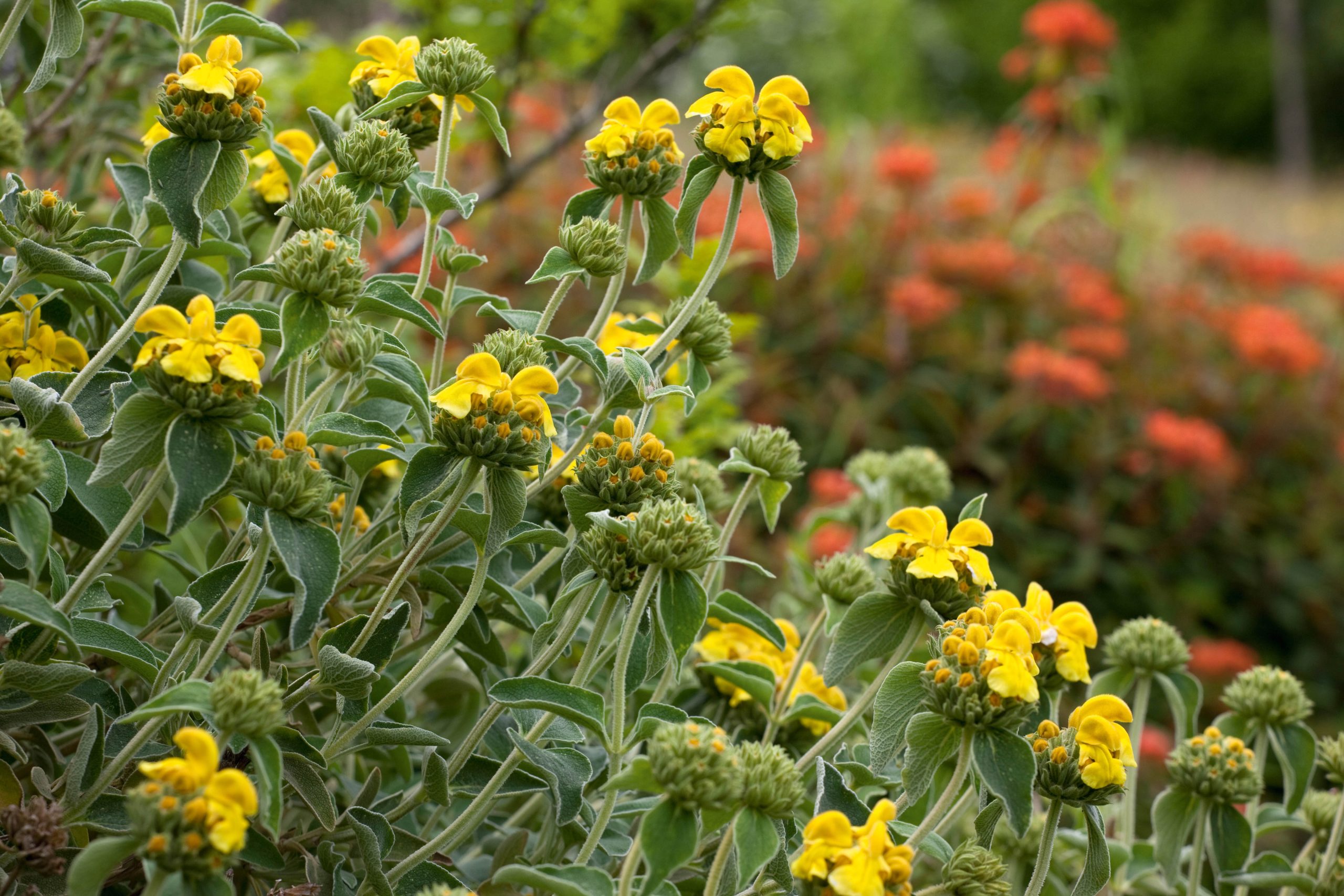
A good low-growing shrub with ascending stems that carry masses of attractive, felty leaves. Flowers are hooded with a large labellum and held in whorls. Prune after flowering. 1.5m x 3m. AGM. RHS H4, USDA 8a-10b.
Phlomis italica
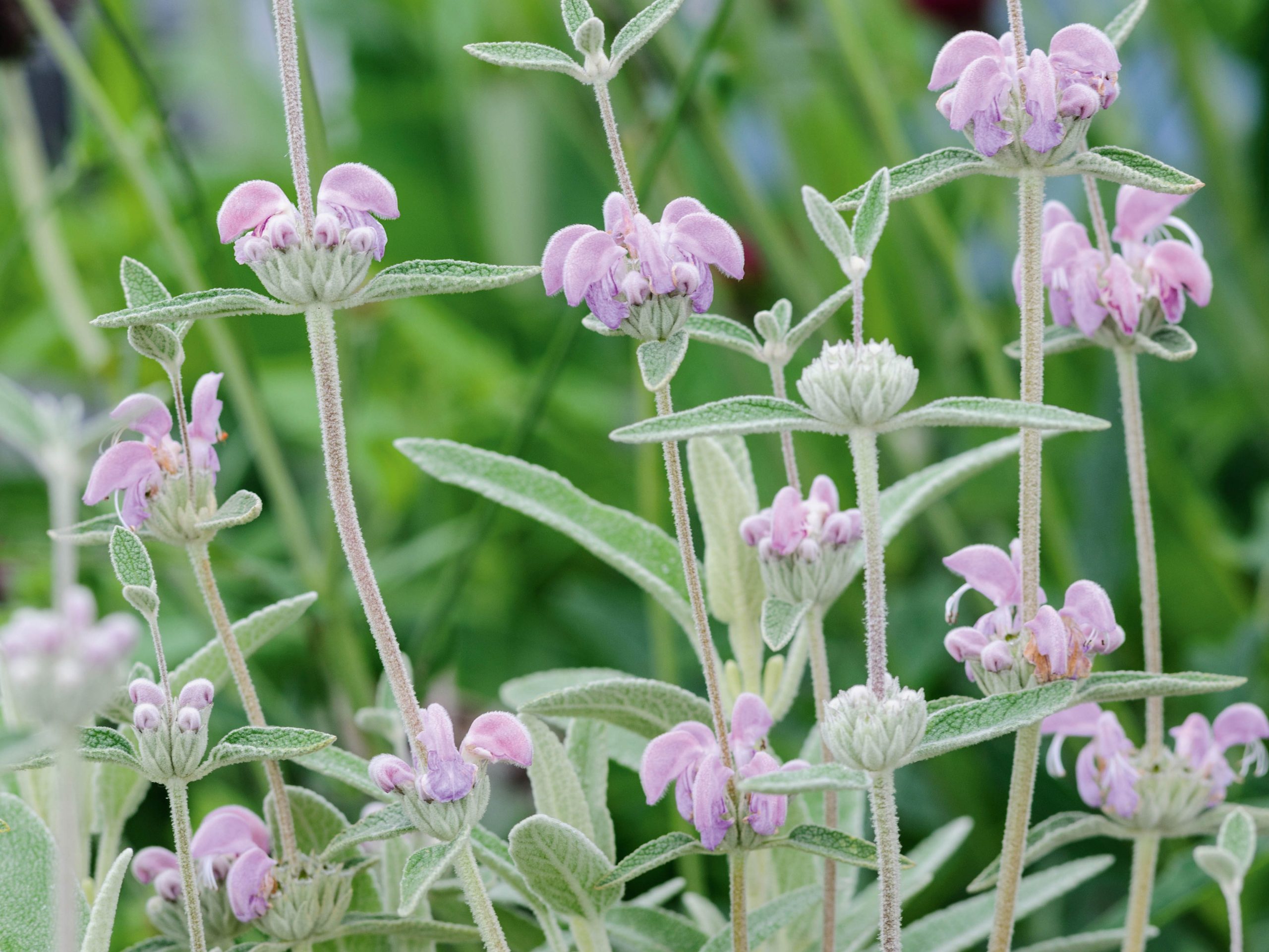
Endemic to Mallorca and Menorca (not, despite what its name suggests, Italy), the Balearic Island sage makes colonies of evergreen,
silvery, felted foliage and wheels of small, soft-pink flowers on thin stems in midsummer. Good for the dry garden. 1m x 1m. RHS H4, USDA 7a-10b.
Phlomis cashmeriana
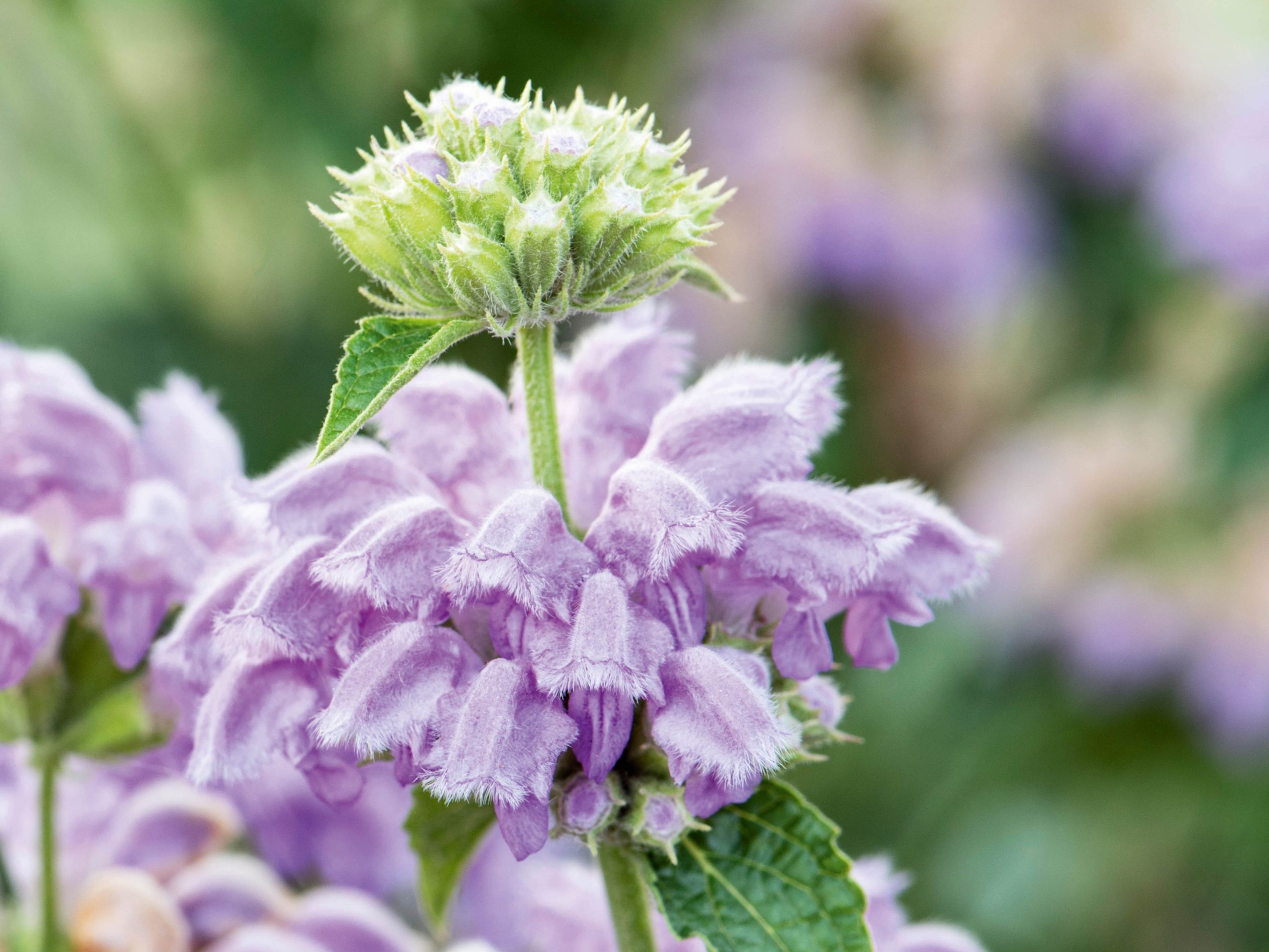
A wonderful woolly plant with upright stems bearing slender leaves that are green on the surface and silver beneath. Flowers are produced in densely packed clusters from star-shaped, pale-lilac bracts. 1m x 1m. RHS H5, USDA 4b-9b.


