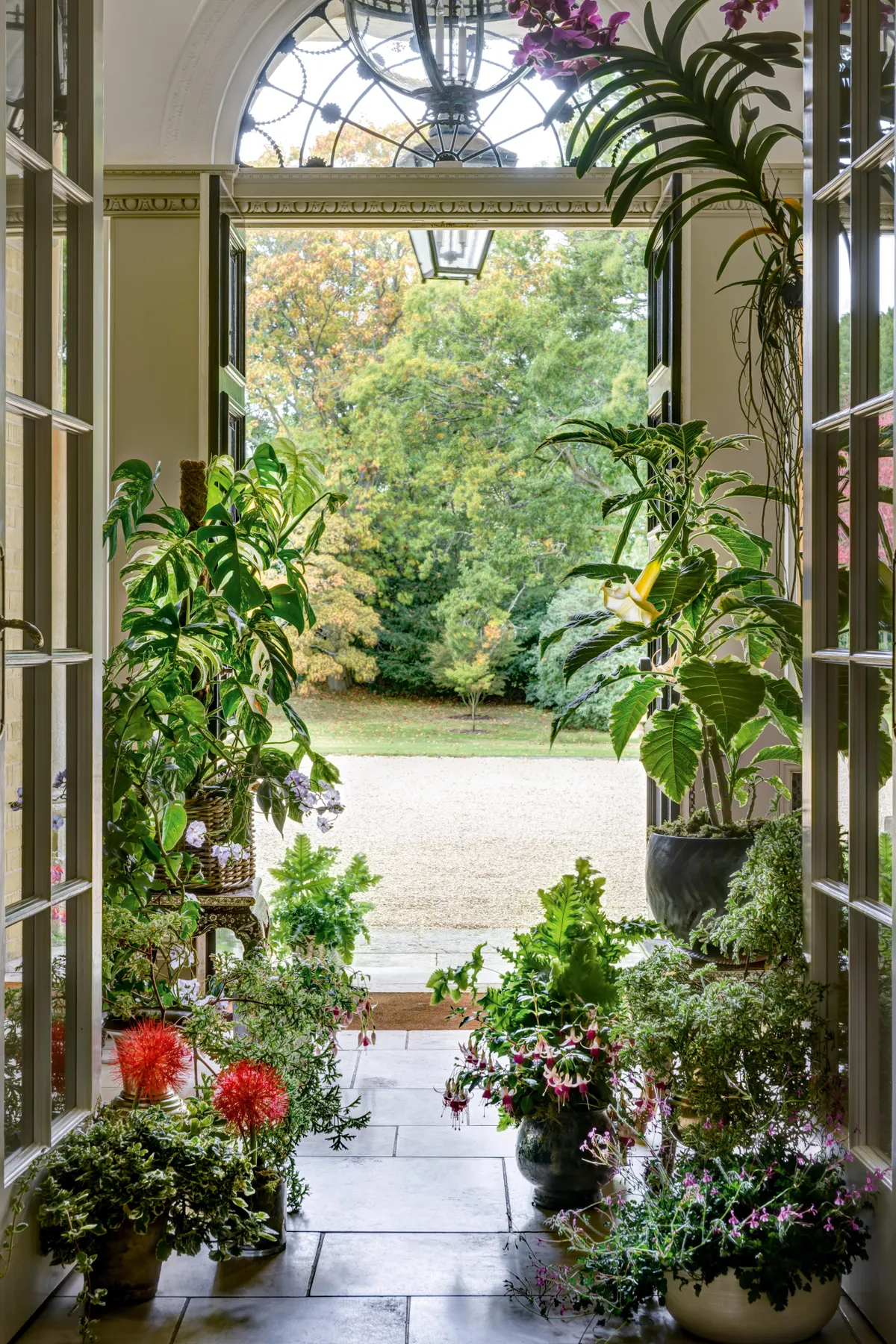
Handsome, fragrant and versatile, pelargoniums have a vintage charm and the status to which only a truly familiar plant can aspire. The distinctive foliage and butterfly blooms were embraced by the Victorians, who used them as a houseplant; few plants evoke hot Mediterranean sun better than a scarlet pelargonium in a terracotta pot. Yet these plants have much else to offer. Extensive hybridisation has given rise to a vast number of cultivars and groups including the familiar zonal, angel and ivy-leaf pelargoniums, as well as the scented-leaf types which are the focus of this feature.
Tender but charismatic, these scented-leaf pelargoniums very much live up to their promise, with fragrance a dominant quality. Ideal for delivering an exotic touch to a sunny terrace in summer, in winter the evergreen foliage provides both visual and olfactory interest indoors, whether or not the flowers persist.
Pelargonium is a genus of more than 270 species, most of which are native to southern Africa. In the wild, they are found in landscapes as diverse as coastal scrub, grassland and dry mountain slopes, where they enjoy varying degrees of shade or sun exposure. The species and their cultivars therefore exhibit a range of different characteristics. The scented varieties are widely used in baking, teas and cordials, for potpourri and essential oils. In elegant Victorian residences, they were placed on tiered staging in the porch so that guests entering and leaving the house would brush against them and release the delightful aroma.
Alongside charming flowers and ornamental foliage, scented- leaf pelargoniums demonstrate a portfolio of perfume that goes far beyond mere rose and lemon. A curious nose might detect herbal, woody or spicy scents, together with the fruity notes of apple, pineapple, apricot, strawberry or orange. National Collection Holder Gill Stafford of Woottens of Wenhaston goes further still, identifying fragrances as diverse as camphor, absinthe or wormwood, balsam, cedar, lavender and even black pepper.
How to grow scented pelargoniums
Where to plant scented pelargoniums
Pelargoniums are best grown in containers, filled with coarse, open compost that has plenty of air spaces and resists compaction. Adding a little perlite or shredded bark to peat-free composts will help maintain structure and airiness, and reduce settling over time, while mixing in a little loam will help retain moisture.
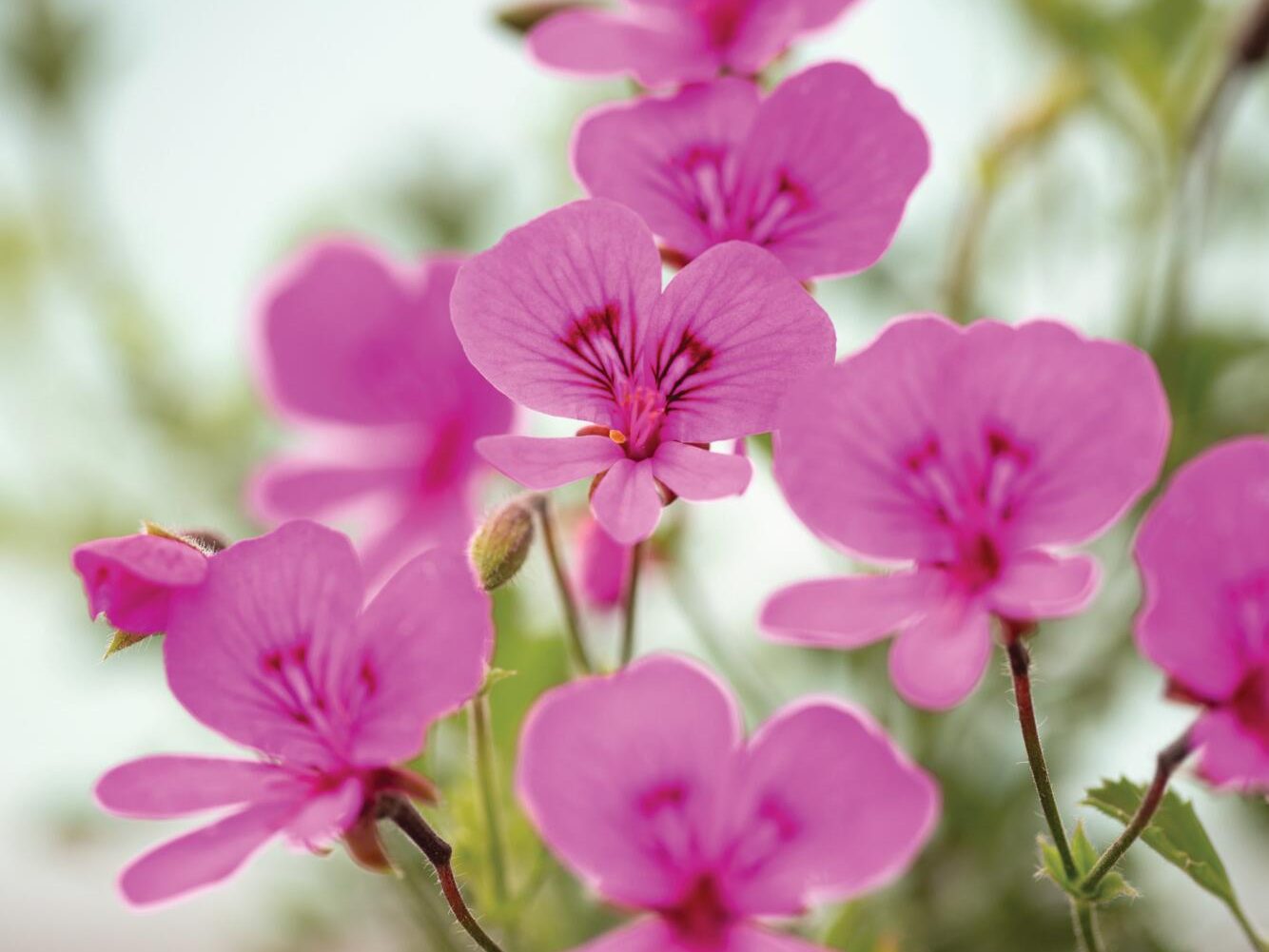
They like warm conditions and plenty of light, good drainage and excellent ventilation but many cultivars will take dappled shade, particularly in the heat of the day. All are classed as tender, and need to be overwintered indoors, preferably at a temperature of 5-10ºC. A cool, bright, dry location such as a greenhouse, unheated conservatory or bright porch is ideal; they dislike the humidity of bathrooms. Keep away from radiators.
In a mild, coastal location or sheltered, urban area, the more cold-tolerant species may survive a mild frost, down to -2ºC, provided the compost is sufficiently dry.
You may also like
- The best species pelargoniums for scented foliage and delicate blooms
- Choosing and growing the best Angel pelargoniums
When to plant scented pelargoniums
The evergreen foliage means the plants remain a feature all year round. Plants can be repotted between February and October and may be moved outside after risk of frost has passed.
Caring for scented pelargoniums
Pelargoniums detest soggy conditions around the roots and usually tolerate underwatering better than they do overwatering, so check the weight of the pot or test soil moisture beneath the surface with a fingertip. In a warm, bright location, plants may require watering every other day, but keep them drier in winter. Smaller specimens are more vulnerable than mature ones.
Pelargoniums benefit from feeding fortnightly during active growth. Too much nitrogen can lead to soft, vulnerable plants, so potassium-rich tomato food is ideal. Pinch out the shoot tips in spring and early summer to keep plants compact and promote woody growth; the lax forms will need more attention than those with a naturally denser habit. Deadhead and remove yellowing leaves as necessary. In autumn foliage should be trimmed back fairly hard, cutting just above a node, to promote ventilation and light penetration.
You may also like
- Conservatory plants: plants that love the shelter and warmth
- The best bedding plants to grow for a vibrant display
How to propagate scented pelargoniums
Take stem cuttings in spring or late summer. Choose fresh, non-flowering growth and trim just beneath a node; remove larger leaves to reduce transpiration and sink into a pot of seed compost with added perlite. Provide good light but avoid direct sun. Cuttings should root within four to six weeks.
Problems with scented pelargoniums
The tortrix moth, aphids and occasionally whitefly can cause issues so enlist natural predators by growing outdoors in summer or treat with SB Plant Invigorator. Damp conditions promote botrytis and other fungal diseases, so maintain good ventilation, keep the plants and the atmosphere dry and remove dead leaves on a regular basis.
The best scented pelargoniums to grow
Pelargonium ‘Orsett’
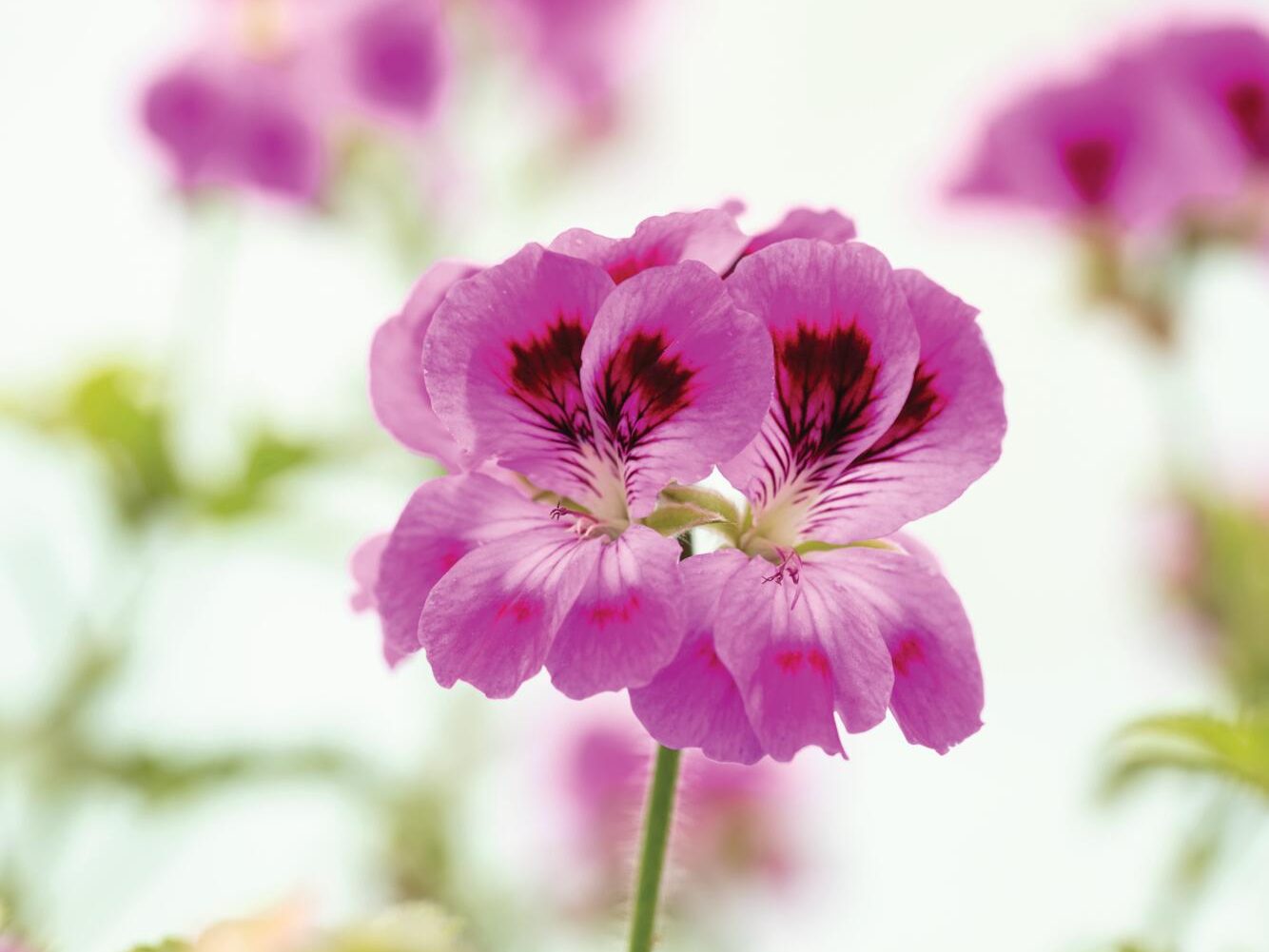
The leaves of this tender plant have been described as both balsam-scented and having a peppery- citrus fragrance. Flowers are pink with deep-red markings. Prefers full sun. 50cm x 30cm. AGM*. RHS H1C, USDA 10a-11.
Pelargonium ‘Fair Ellen’
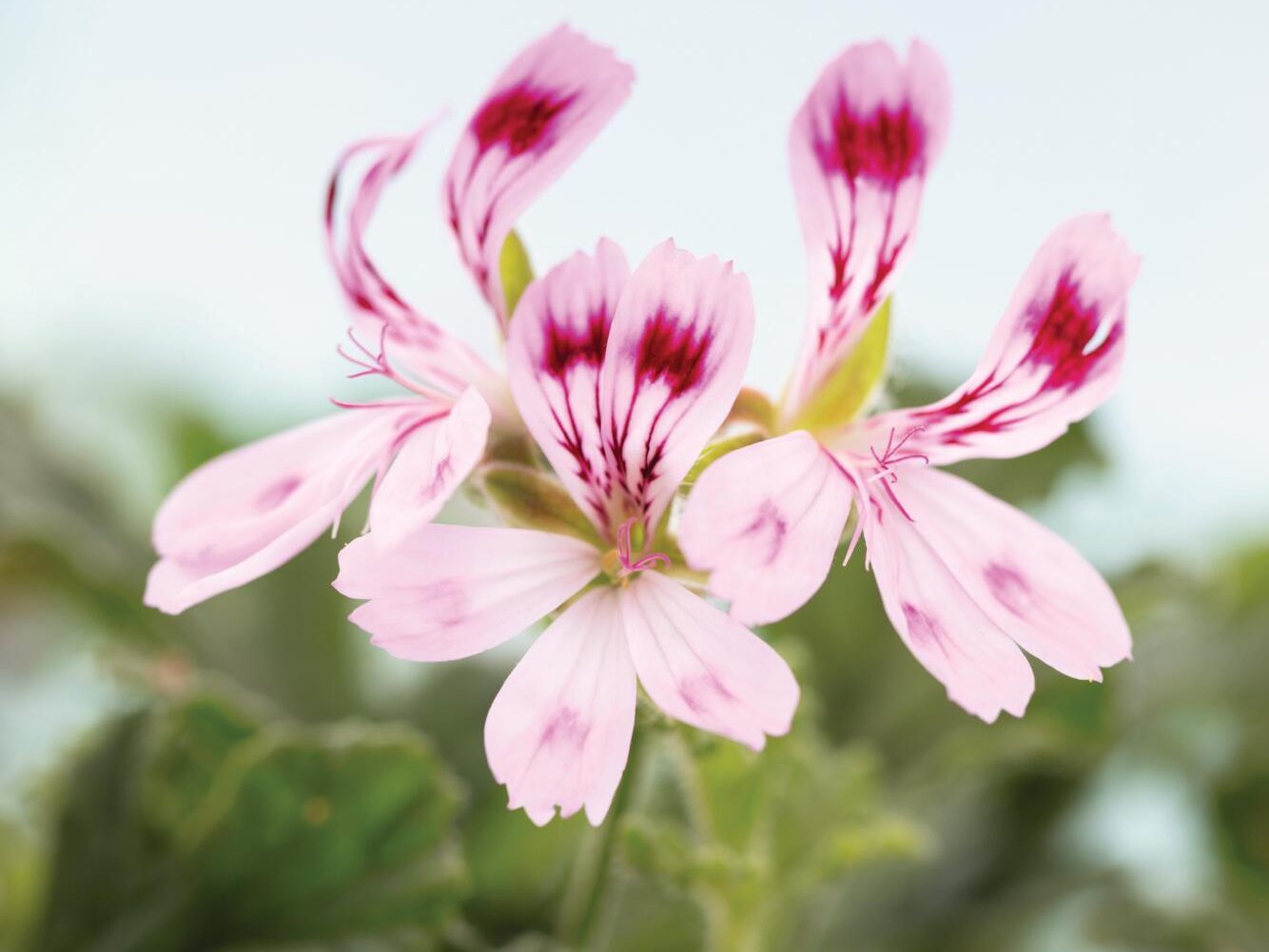
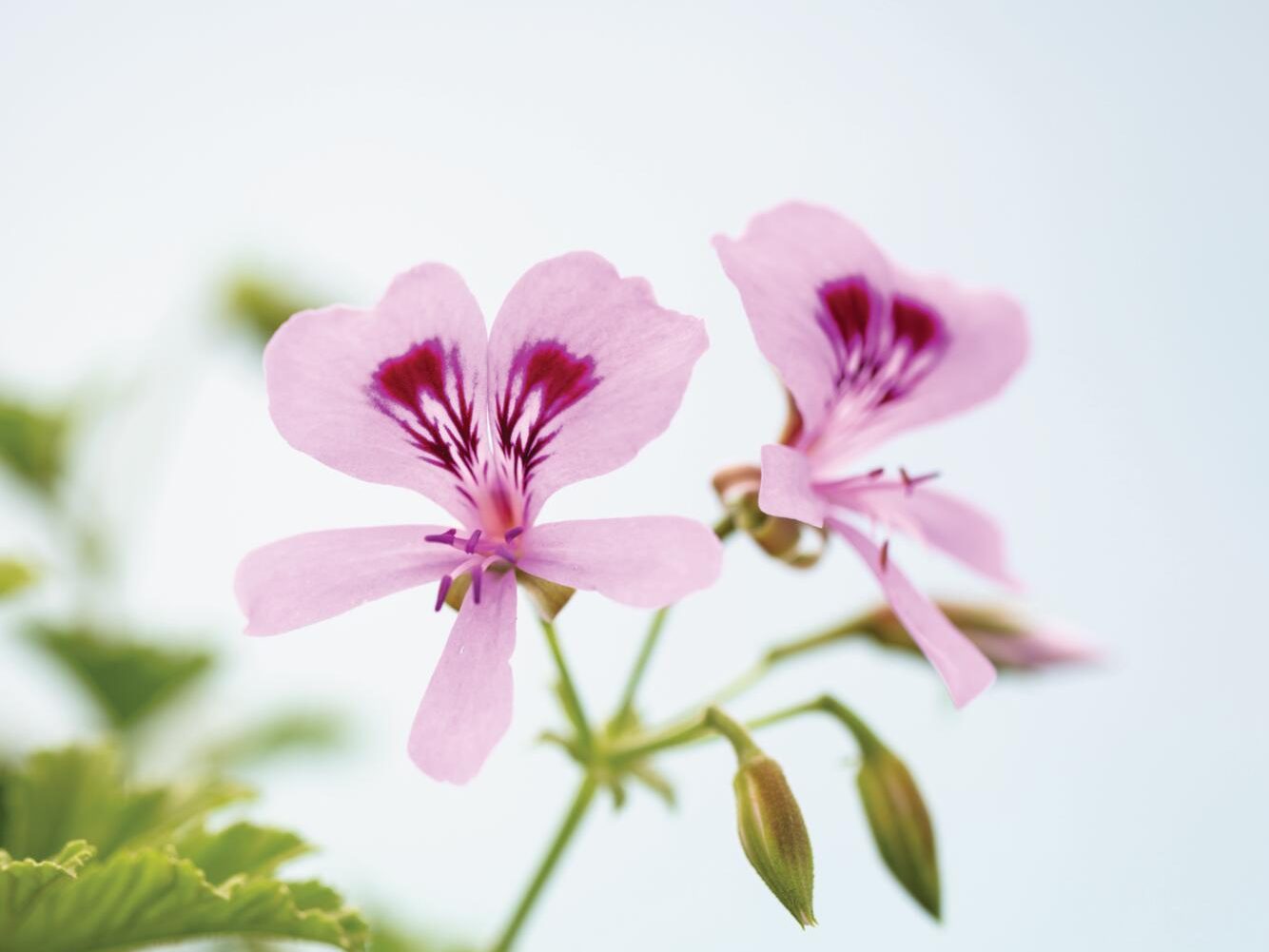
A lovely cultivar; its pale-pink flowers have strongly feathered upper petals with an elegant purple mark, while the finely shaped, dark-green leaves have a balsam fragrance. 50cm x 40cm. USDA 9a-11.
Pelargonium ‘Lemon Fancy’
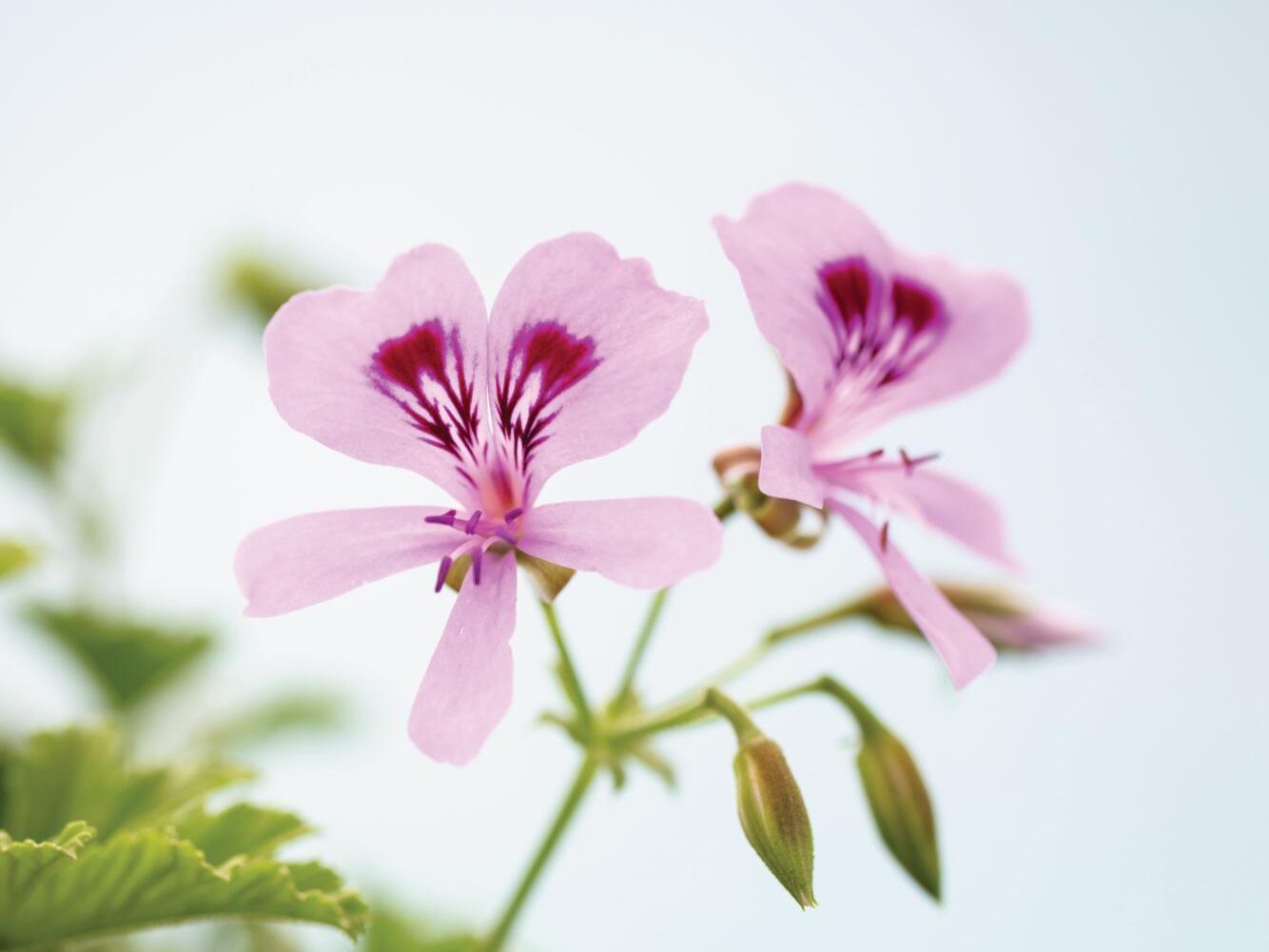
Raised in 1974 by Helen Bowie, this reliable and vigorous cultivar smells strongly of lemon. Rough and angular foliage and soft mauve-pink flowers. Requires full sun. 50cm x 30cm. AGM. RHS H1C, USDA 10a-11.
Pelargonium ‘Ashby’
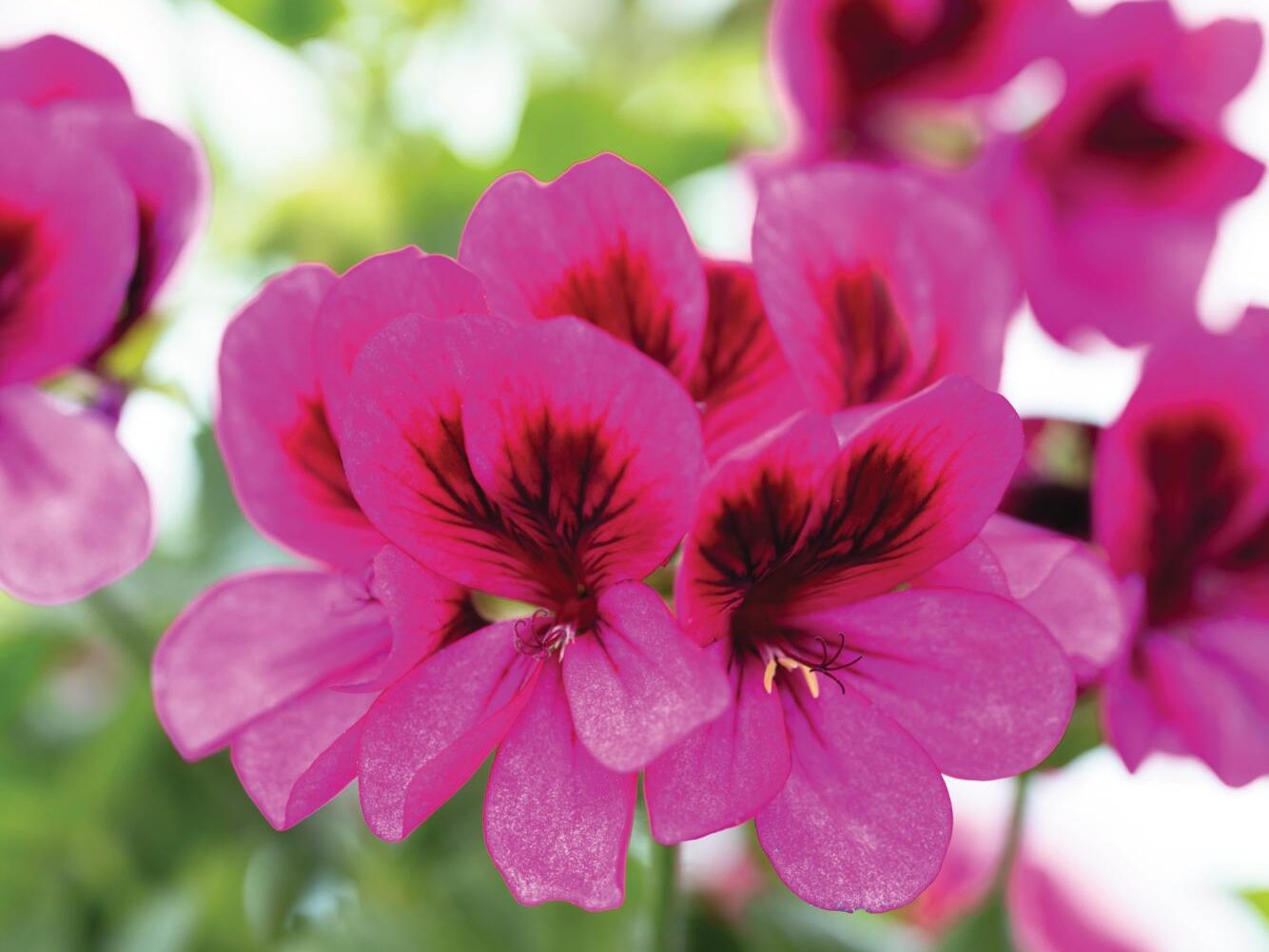
Scented-leaf and regal hybrid with rose-scented, dark-green, oak-shaped leaves and rich magenta- purple flowers. A robust plant that is tolerant of rainfall and winds. 40cm x 40cm. AGM. RHS H1C, USDA 10a-11.
Pelargonium trifidum
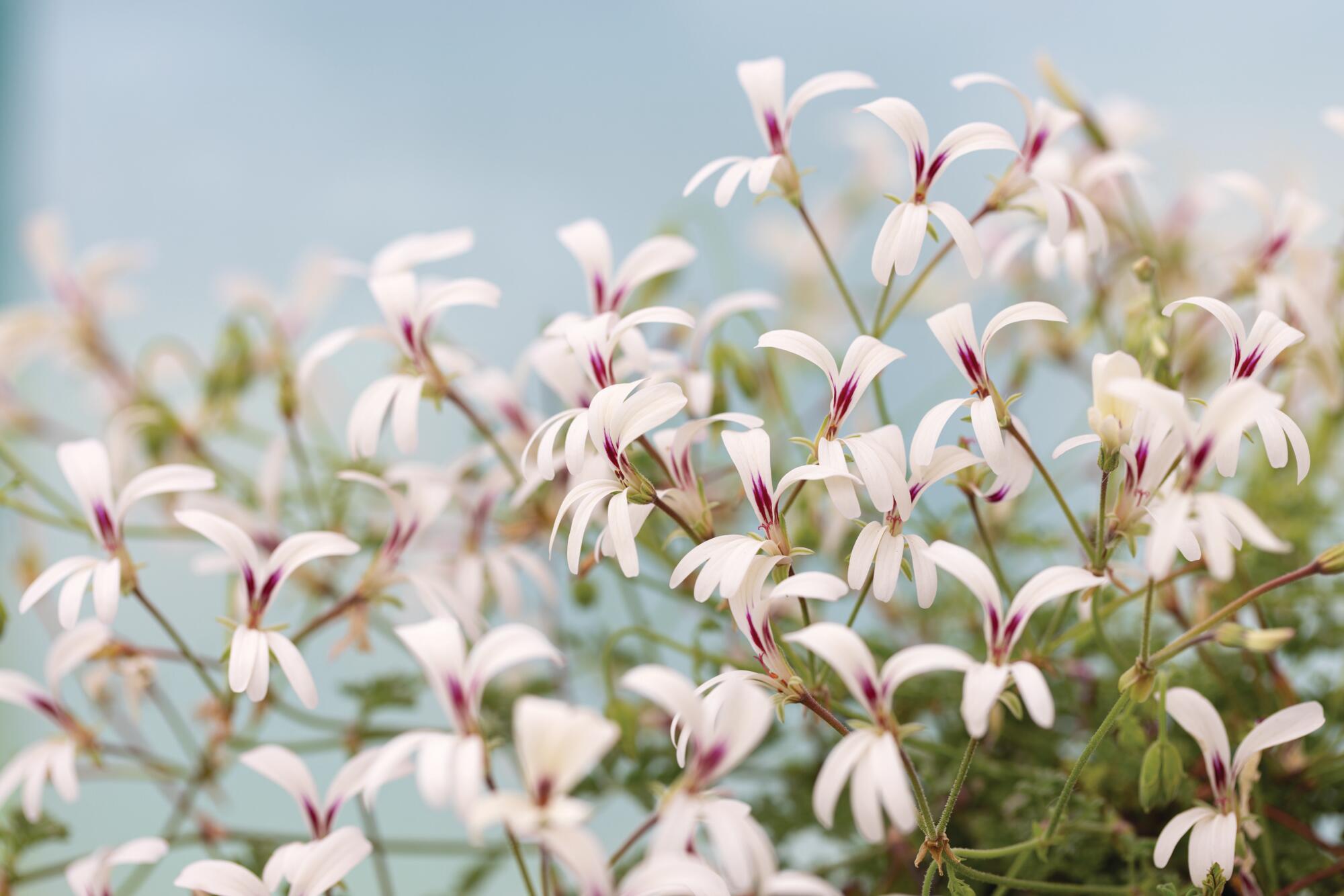
A species pelargonium with long, slender stems and a profusion of crimson- splashed cream flowers. The pale-green, deeply cut leaves have a spicy scent. Its trailing habit lends itself to hanging baskets. Height and spread: 25cm x 70cm. USDA 10a-11† .
Pelargonium ‘Vandersea’
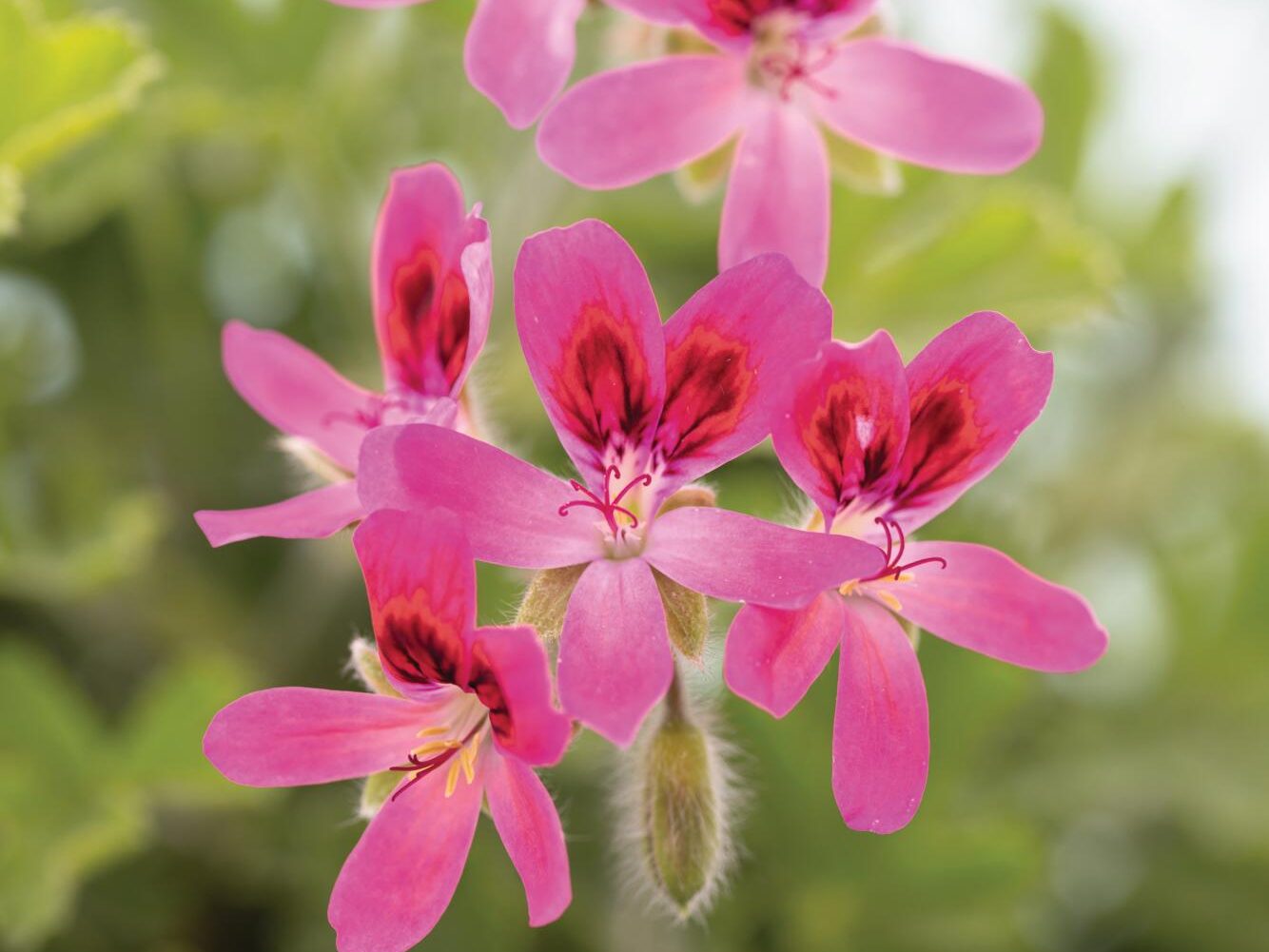
A highly fragrant, old-rose-scented pelargonium that offers small cerise flowers that are carried over divided mid-green leaves. This is a reliable American hybrid that was introduced prior to 1960. 50cm x 40cm.
Pelargonium ‘Limoneum’
This tough and elegant plant has small, rounded leaves and a strong, sweet, fragrance that lands somewhere between lime and roses. It offers prolific hot-pink flowers. 40cm x 30cm. RHS H1C, USDA 10a-11.
Pelargonium ‘Citriodorum’
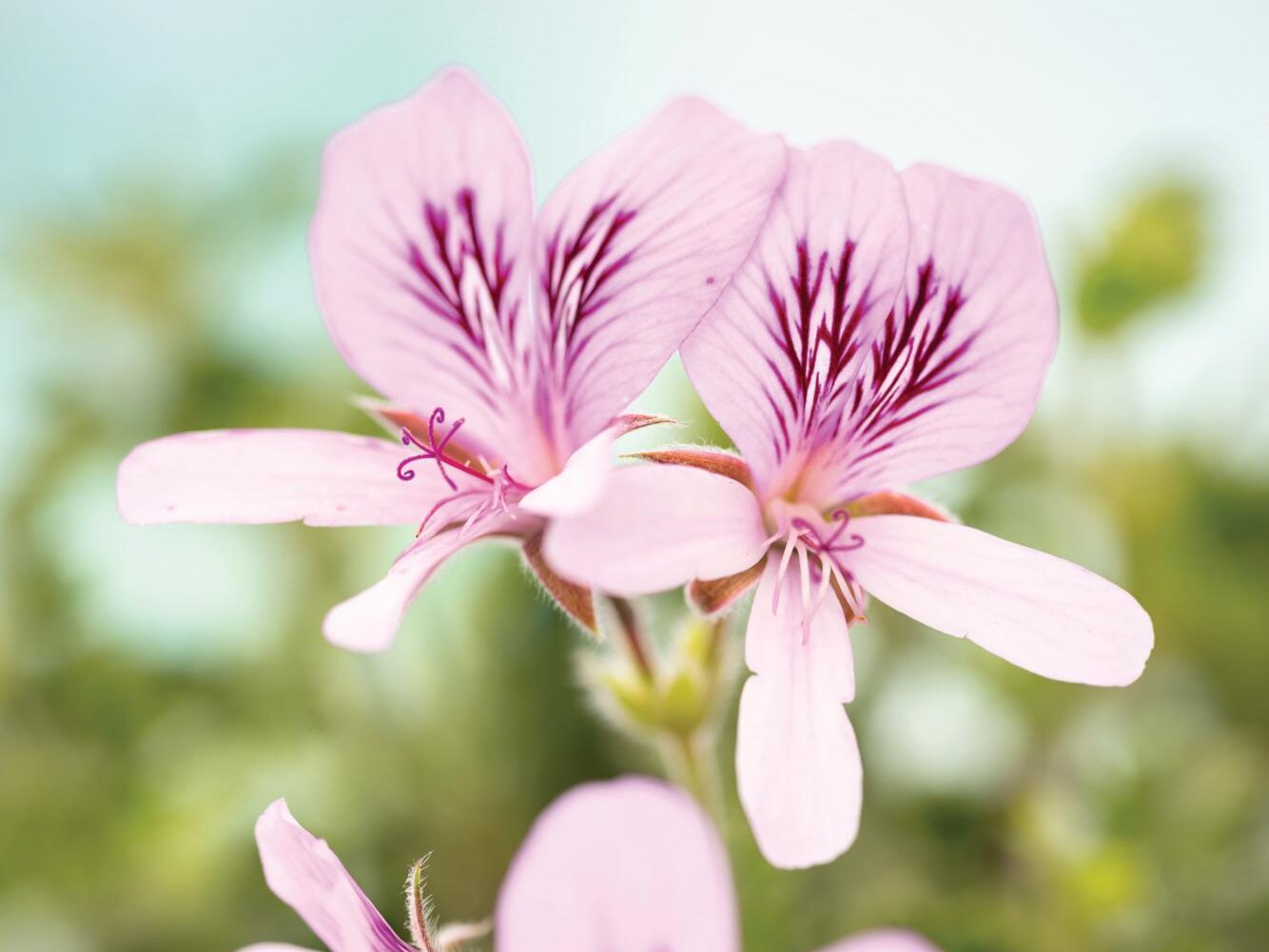
This fairly upright and robustly vigorous cultivar has small, round leaves that have a lemony perfume, and mauve-pink flowers with feathered port-wine markings. 30cm x 30cm. AGM. RHS H1C, USDA 10a-11.
Pelargonium ‘Fragrant Frosty’
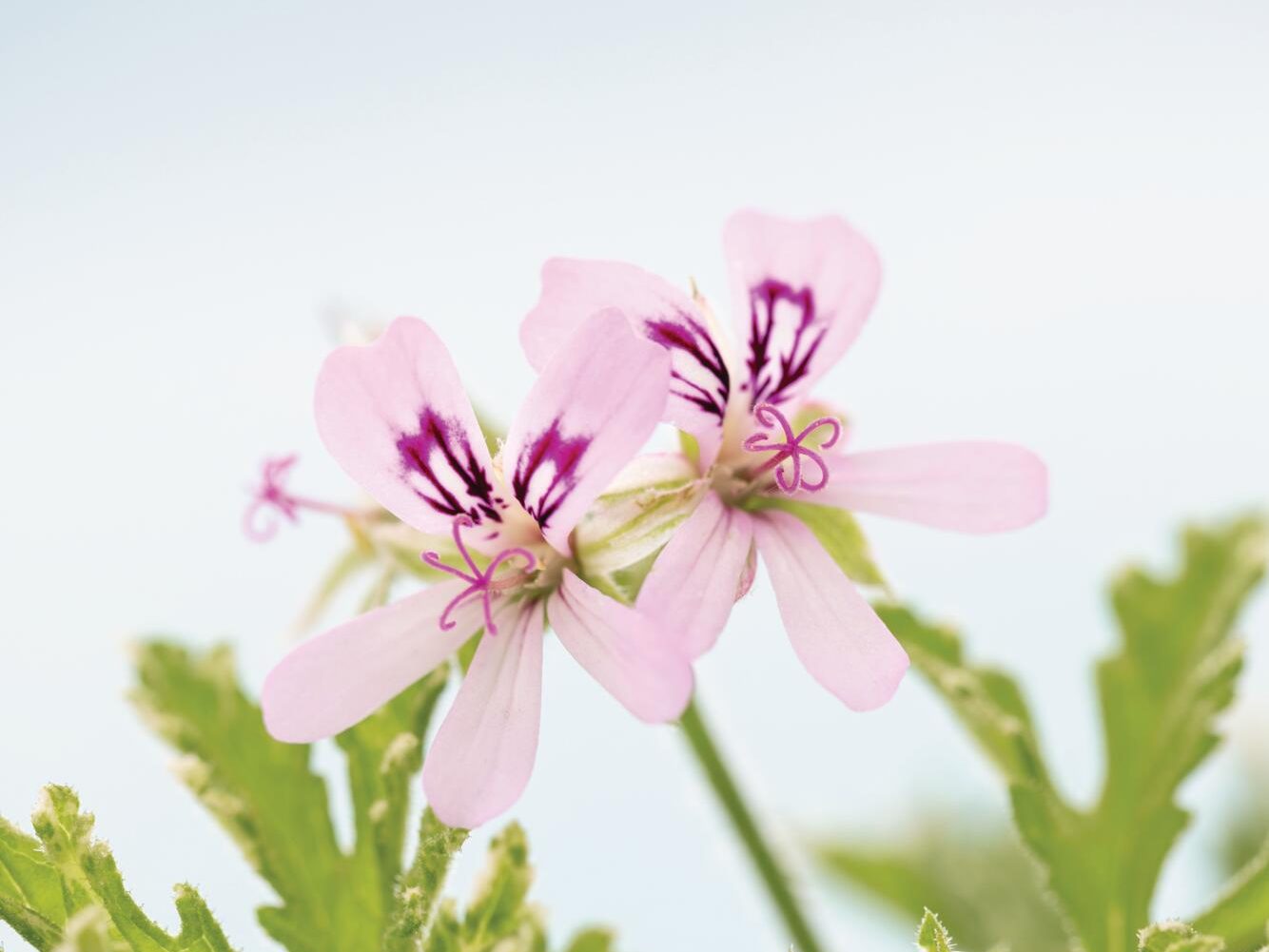
A compact cultivar, bred from P. ‘Graveolens’. It has deep-cut, rose-scented leaves with a fine cream variegated edge, and small, pale-pink flowers with red featherings. 30cm x 30cm.
Pelargonium ‘Souvenir de Prue’
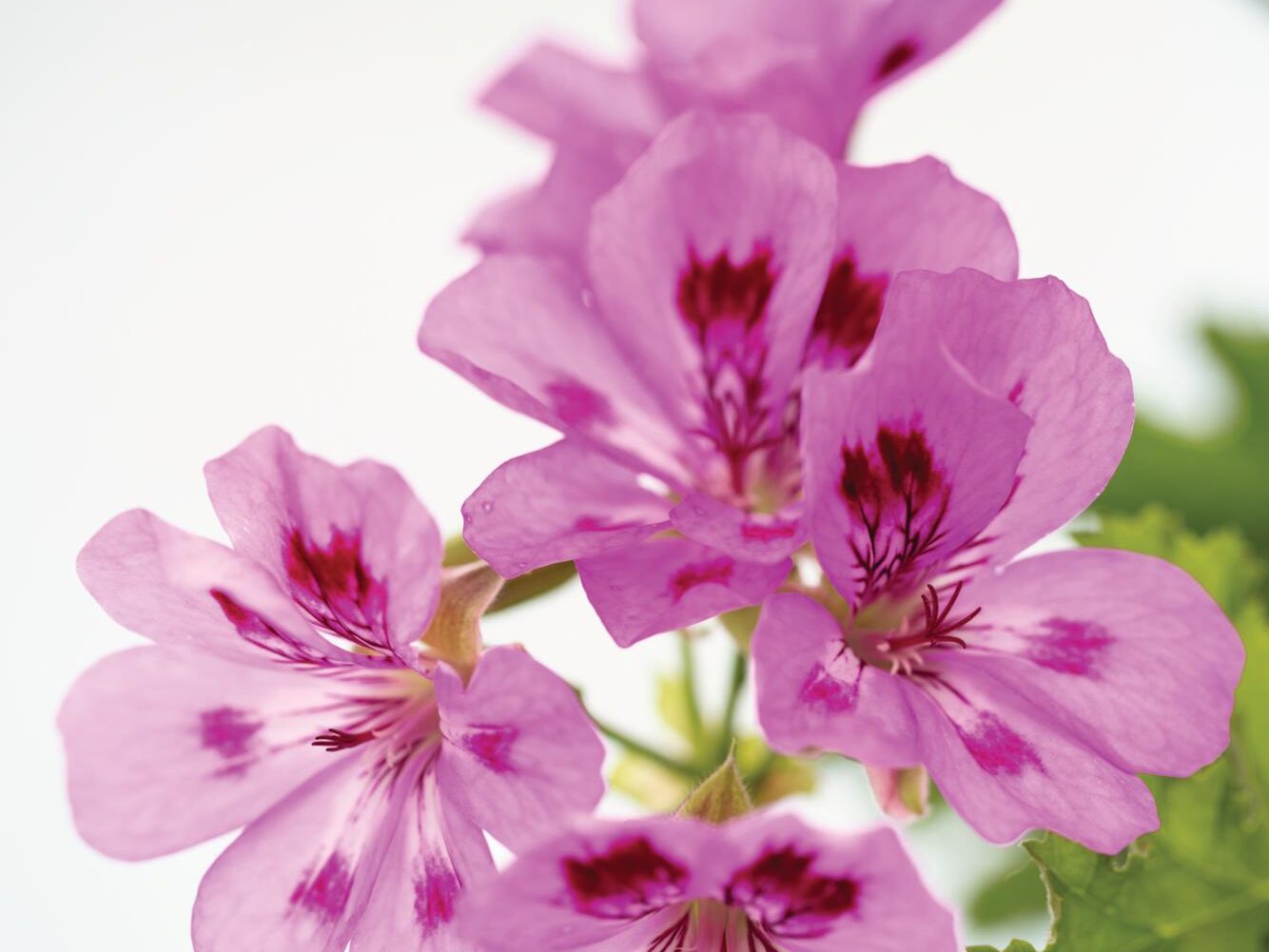
A scented-leaf and regal hybrid with cedar- scented, oak-shaped leaves and strong pink regal flowers with dark markings. Robust and tolerant of rainfall and winds. 40cm x 40cm.
Pelargonium cortusifolium
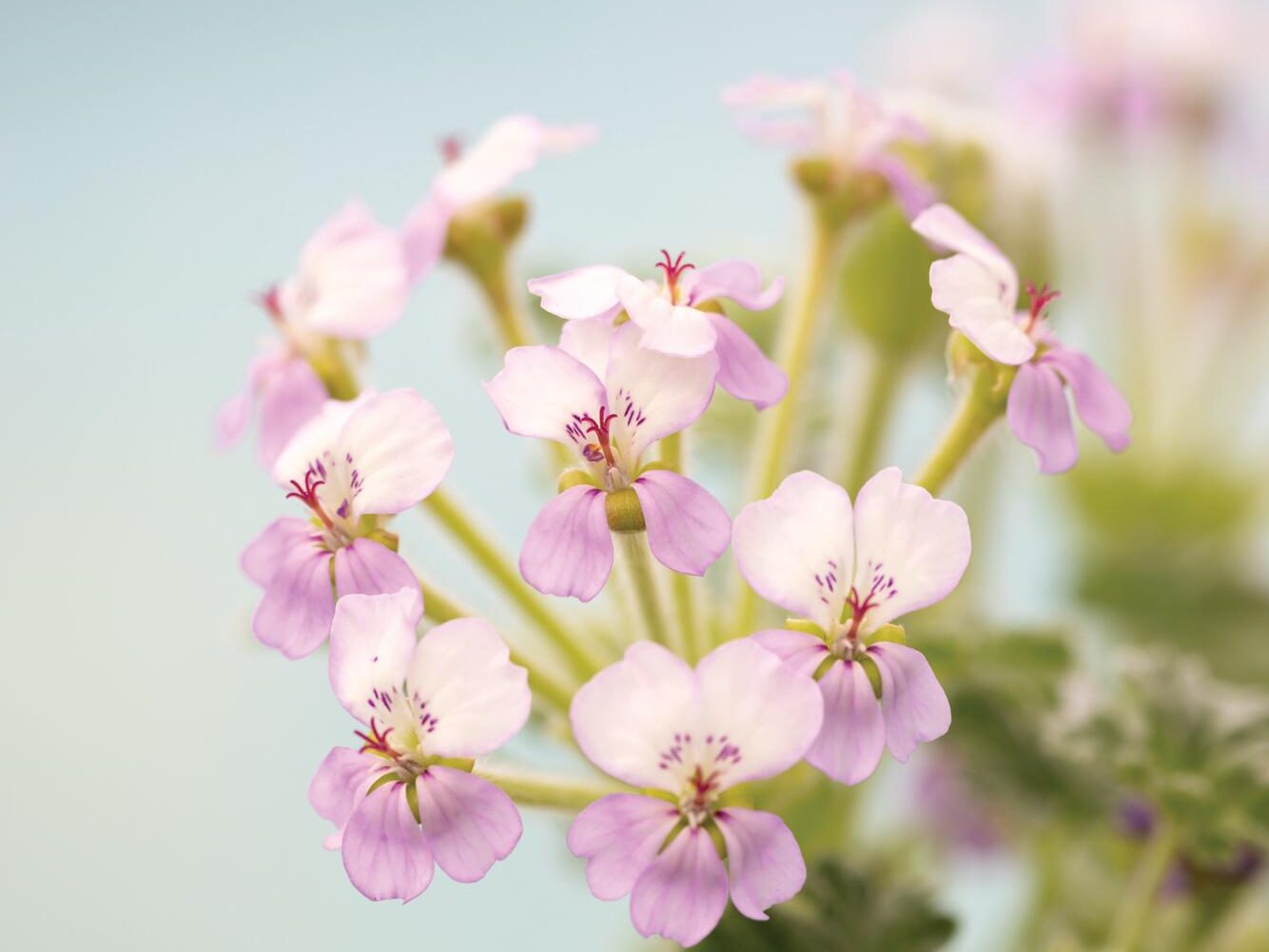
Noted for the sweetish scent of its pale-pink flowers rather than the fragrance of its reniforme leaves, which have furry tips, and thick and juicy stems. Prefers sun and well-drained soil. 50cm x 30cm.
Pelargonium ‘Attar of Roses’
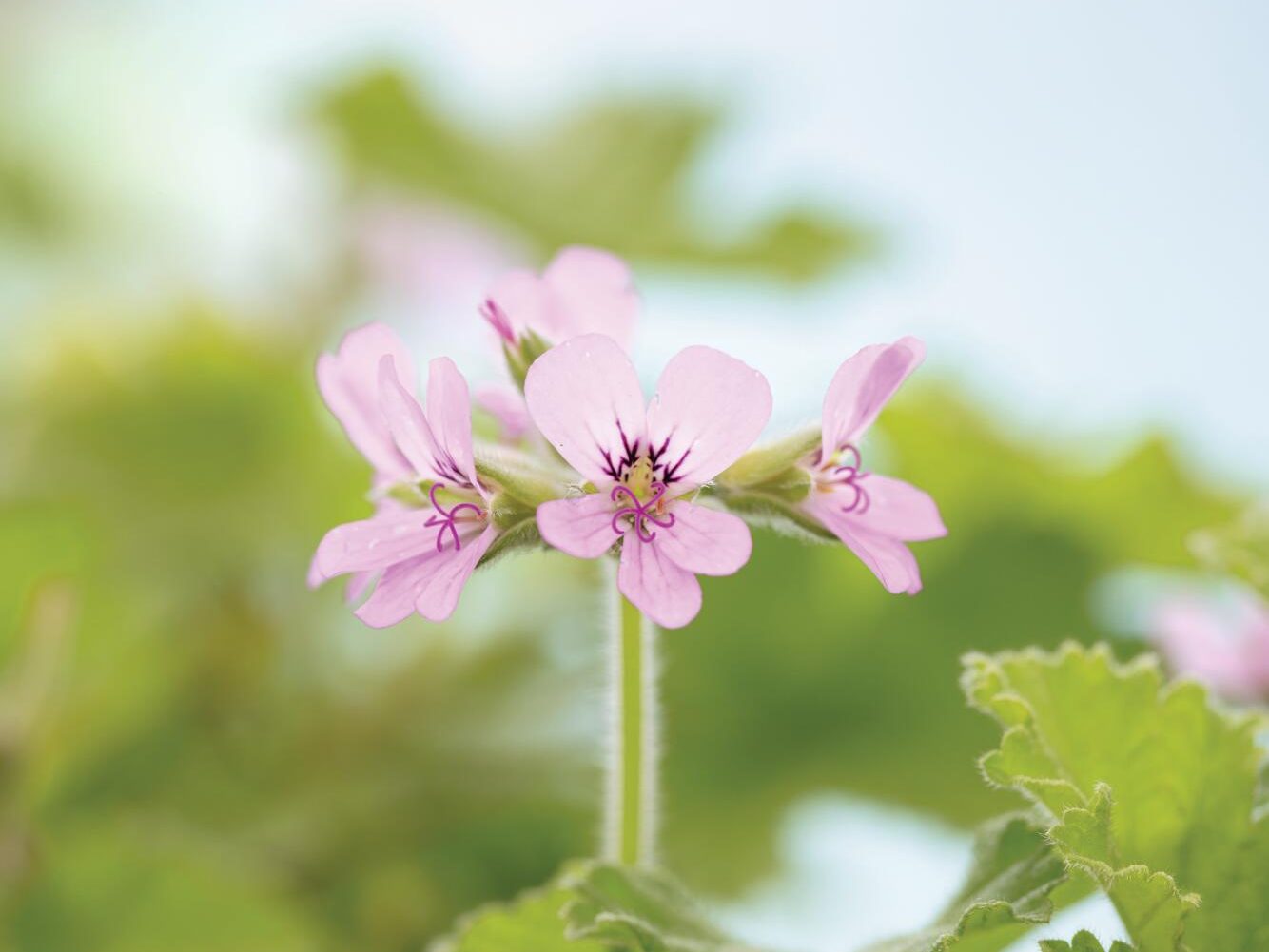
This well-known cultivar, has hairy, light-green leaves that smell of rose Turkish delight. Small umbels of mauve flowers are produced sparingly over a long period. 30cm x 40cm. AGM. RHS H1C, USDA 9a-10b.
Pelargonium ‘Le Roy Alexander’
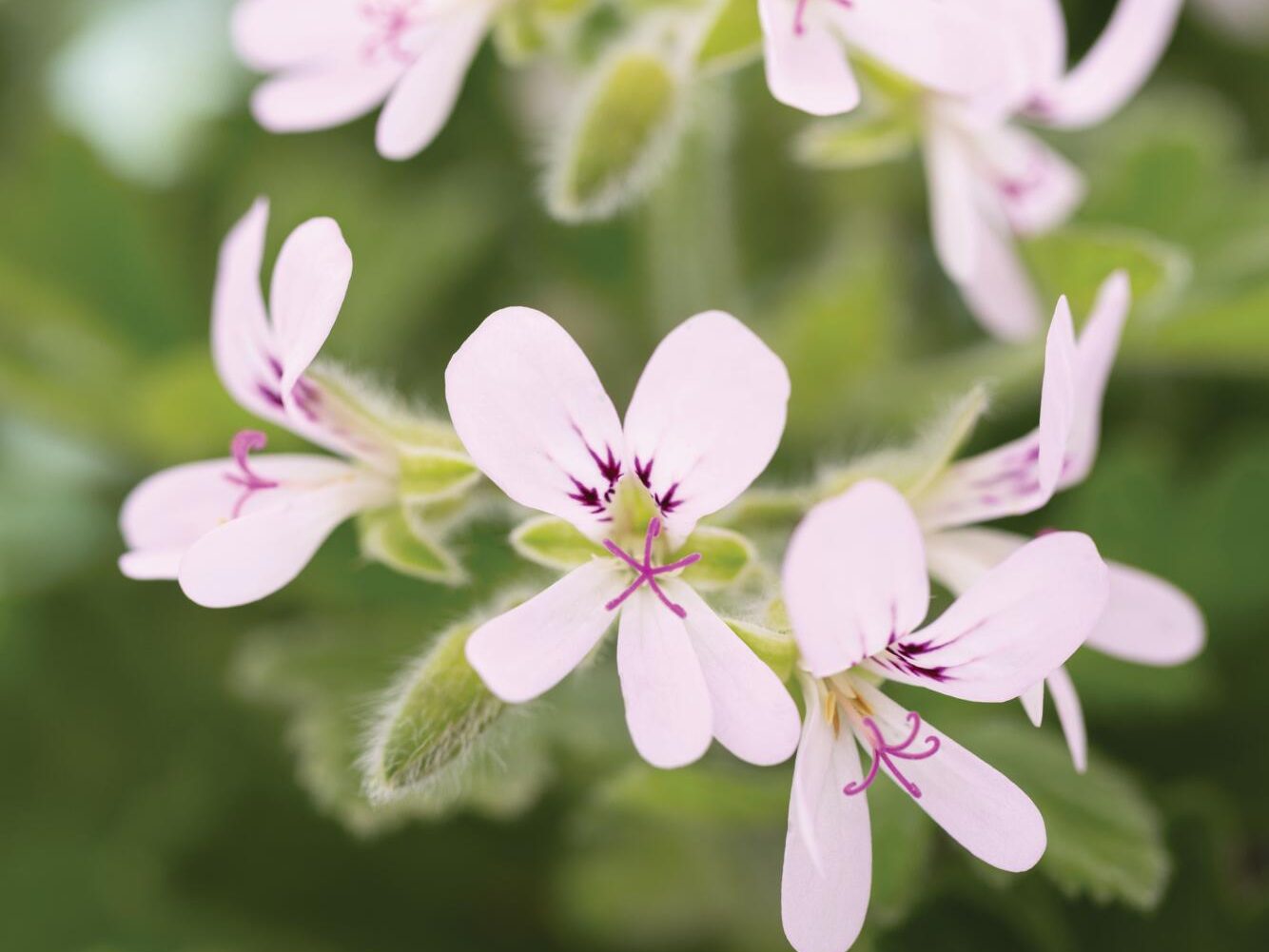
With camphor-scented leaves and dainty, gently pink flowers offset by fine, dark maroon markings, this is an extremely alluring plant. Similar to P. ‘Attar of Roses’ but more vigorous. 60cm x 50cm.