Whether your plot is big or small, creating focal points is key to bringing the garden together. A point of interest to draw the eye, a focal point directs attention to a specific area, helping to give it a sense of purpose and encouraging further exploration.
In the typical long and narrow suburban garden, incorporating visual anchors amongst planting or along a path can also stop focus going straight to the back wall – and even make the space feel bigger. Here are the top garden designer-approved options for eye-catching elements that will completely transform the look of your garden in just one move.
Add just one of these elements to instantly upgrade your garden
A fire pit
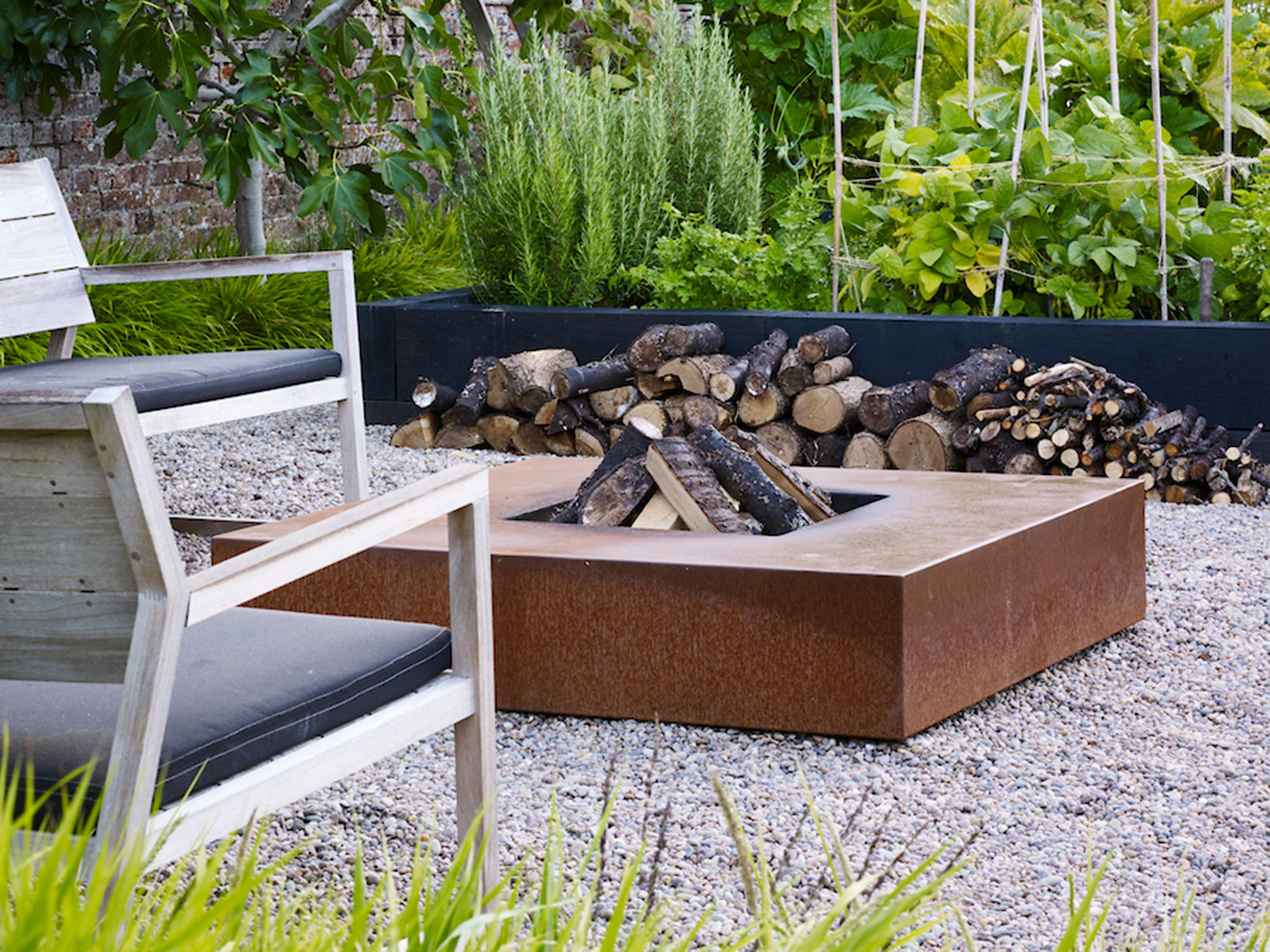
A fire pit is a great choice if you want to create a point of focus in your garden, around which you can add seating and plant beds. The more striking the design, the better; this square, rusted metal fire pit adds a contemporary look to a gravelled corner in a Hampshire garden designed by Helen Elks-Smith.
A bug hotel
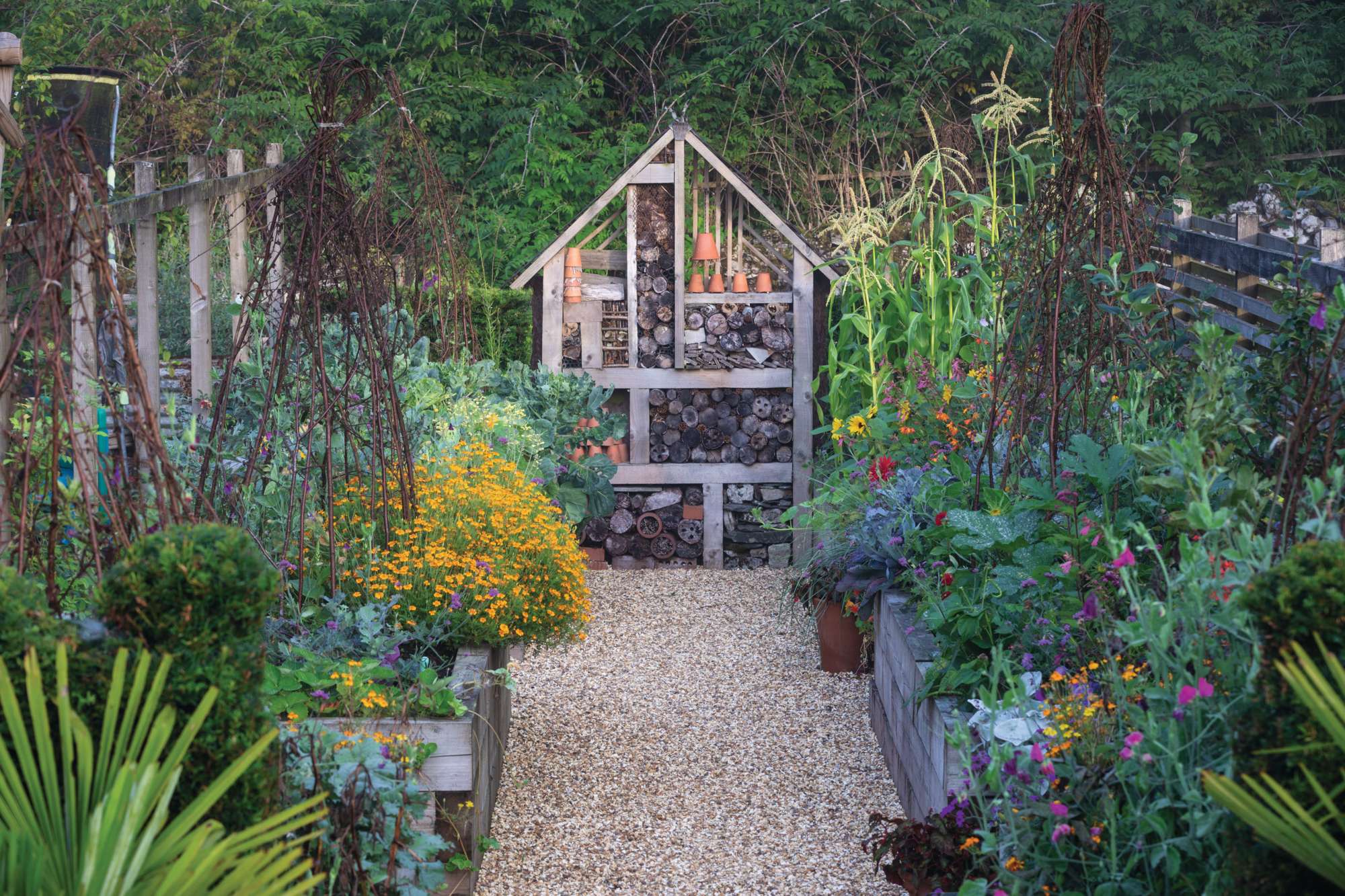
Some might say a bug hotel is best tucked away out of sight, but a large version made with a variety of materials can become an interesting focal point. This one at Abi and Tom’s Garden Plants nursery in south Cumbria fits perfectly in their vegetable garden, marking the end of a gravel path.
A water bowl
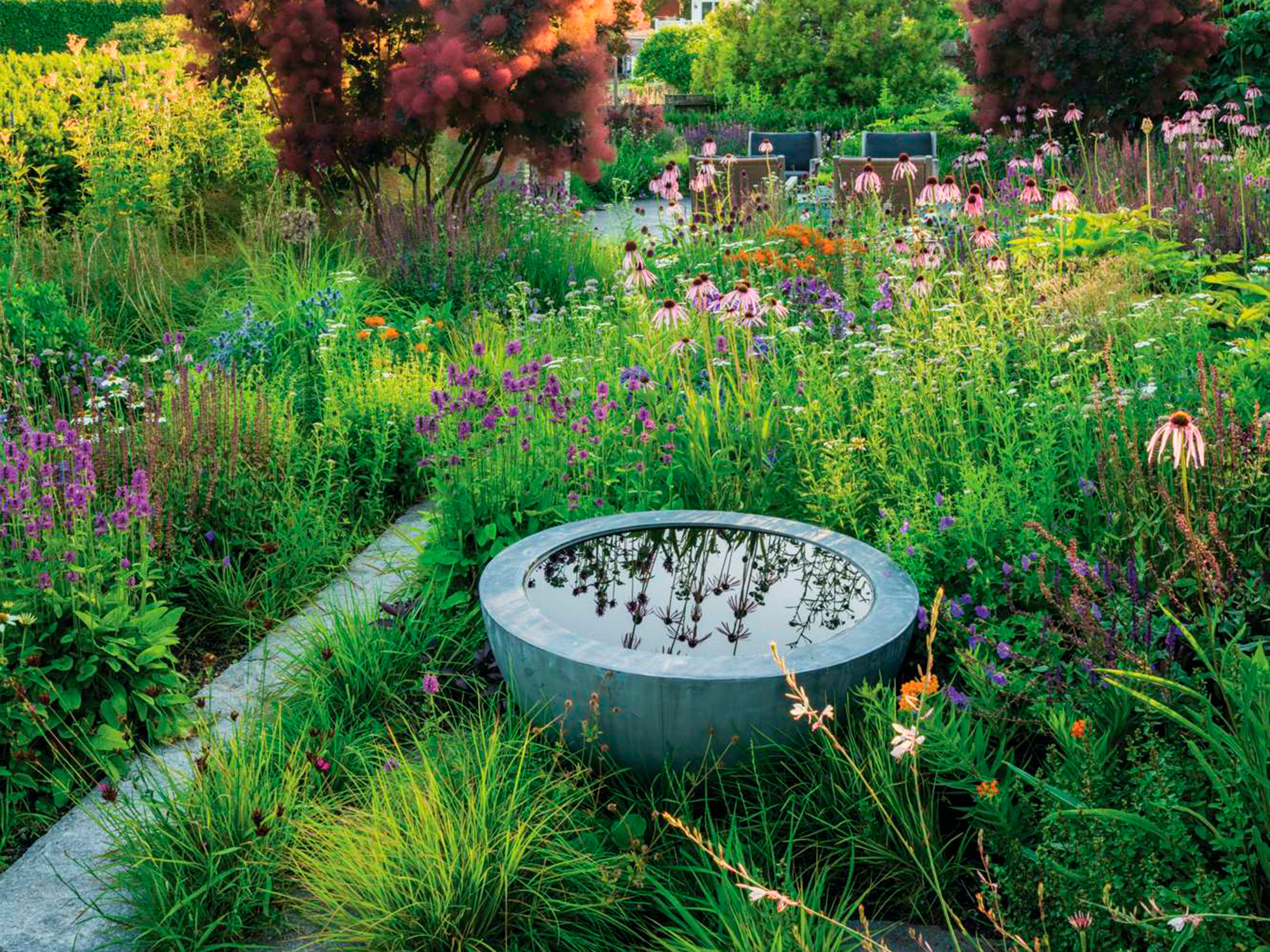
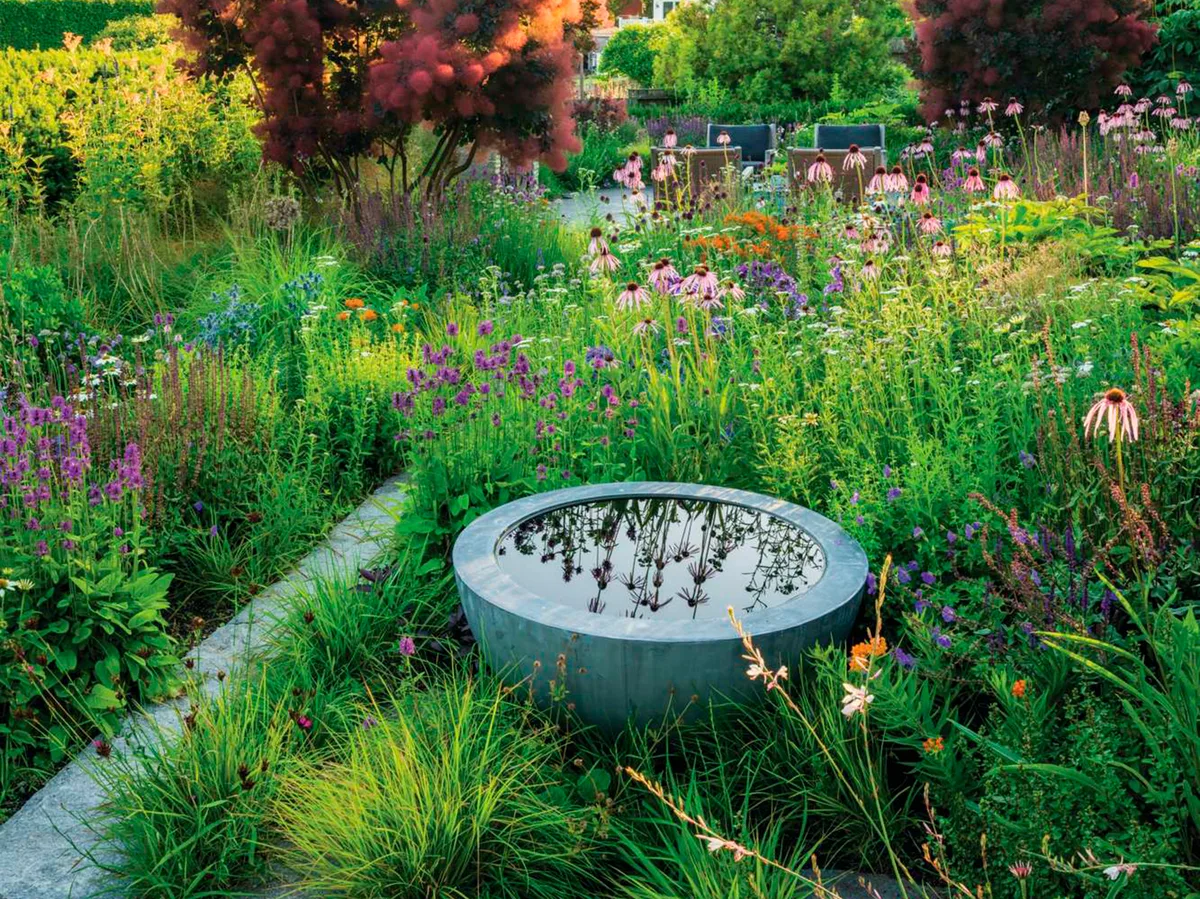
Easy to install and maintain, a water bowl is a simple way to add impact to any garden – all you need is an old container or trough. Add in two or three aquatic plants and it can double as a wildlife pond to provide habitat for garden insects and amphibians.
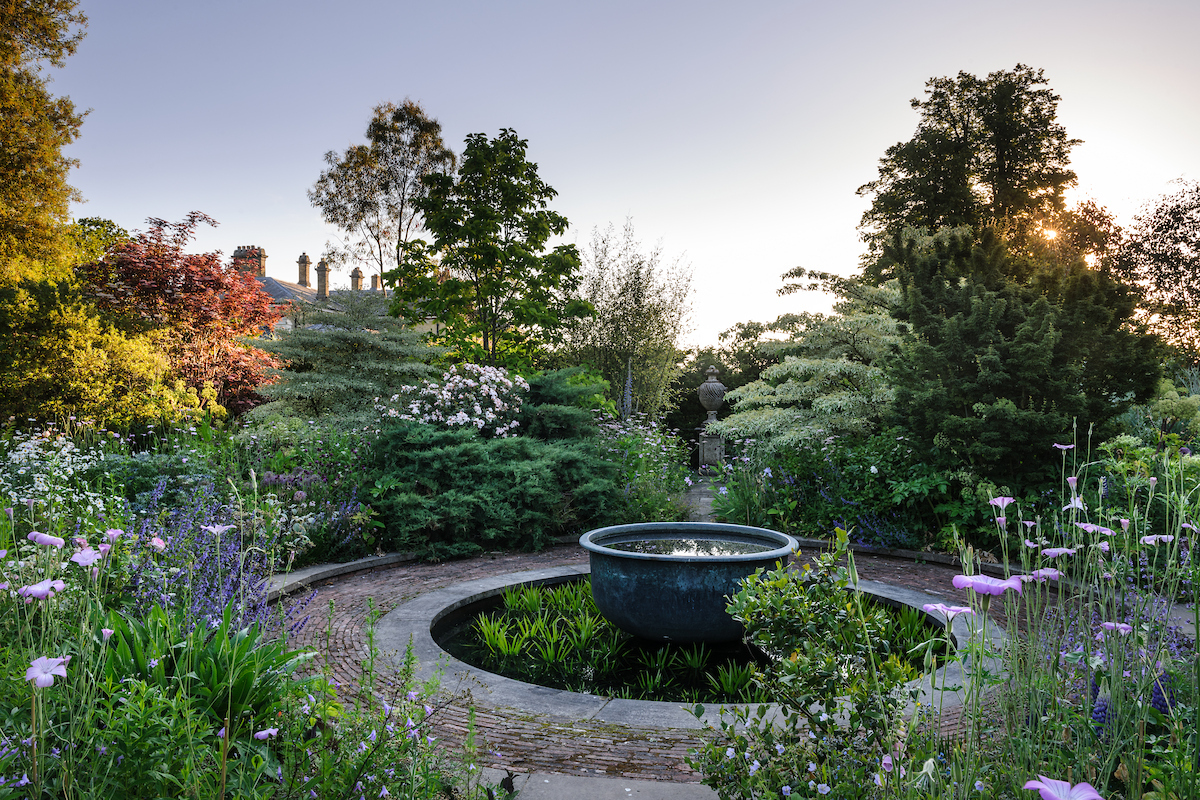
Depending on the size of your garden, either nestle your water bowl amongst flowering plants and grasses, or make it more of a feature by placing it centrally in a paved area, like in the Cool Garden at Malverleys in Hampshire.
You may also like:
- Maximum impact plants for wow-factor focal points in the garden
- Meet the gardener who trains roses into imaginative sculptures
- 6 secret garden designer tricks to make your garden look better
- 9 simple and inexpensive fixes to elevate your outdoor space fast
A water feature
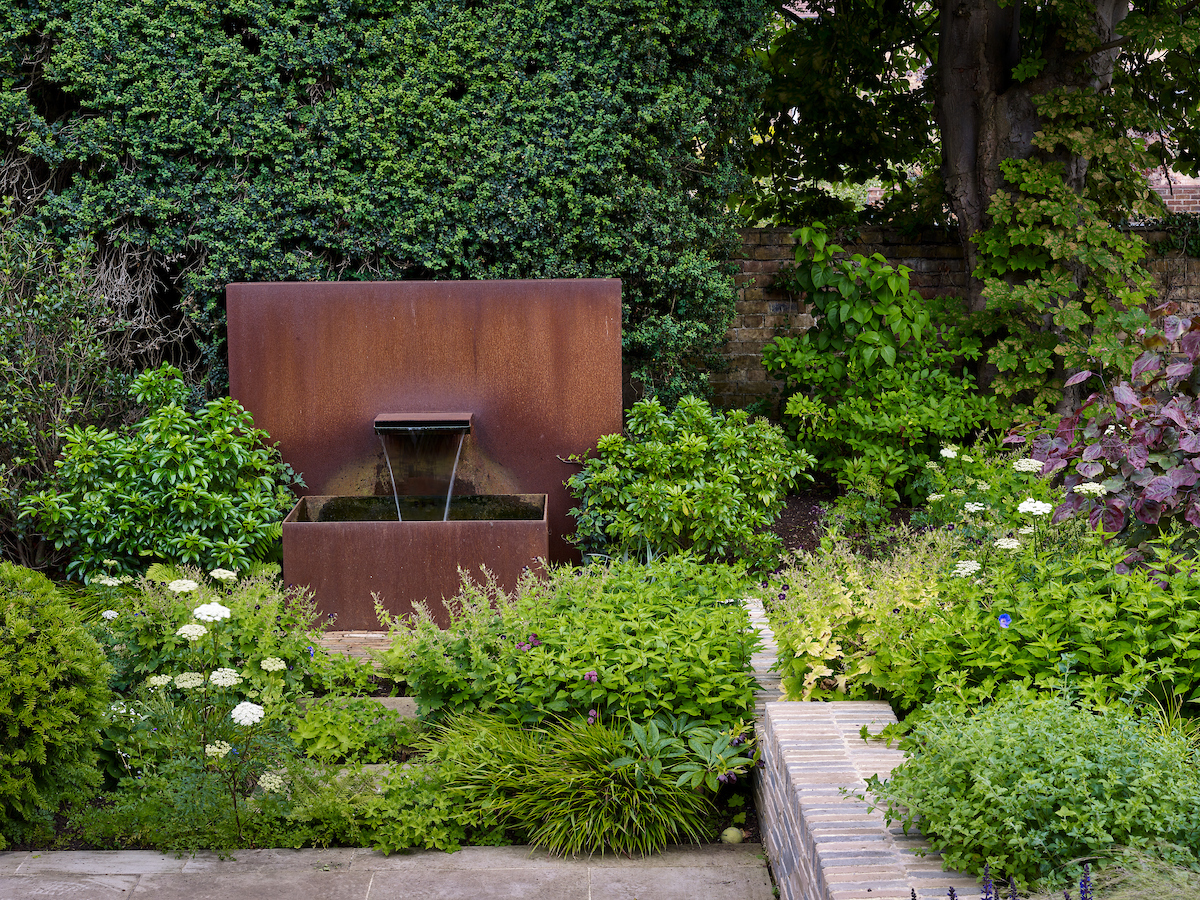
Another option is to introduce a water feature, which gives the added benefit of relaxing sounds as you spend time in the garden. This contemporary design is made from Corten steel and sits on the rear boundary of a private Oxford garden designed by Katie Guillebaud.
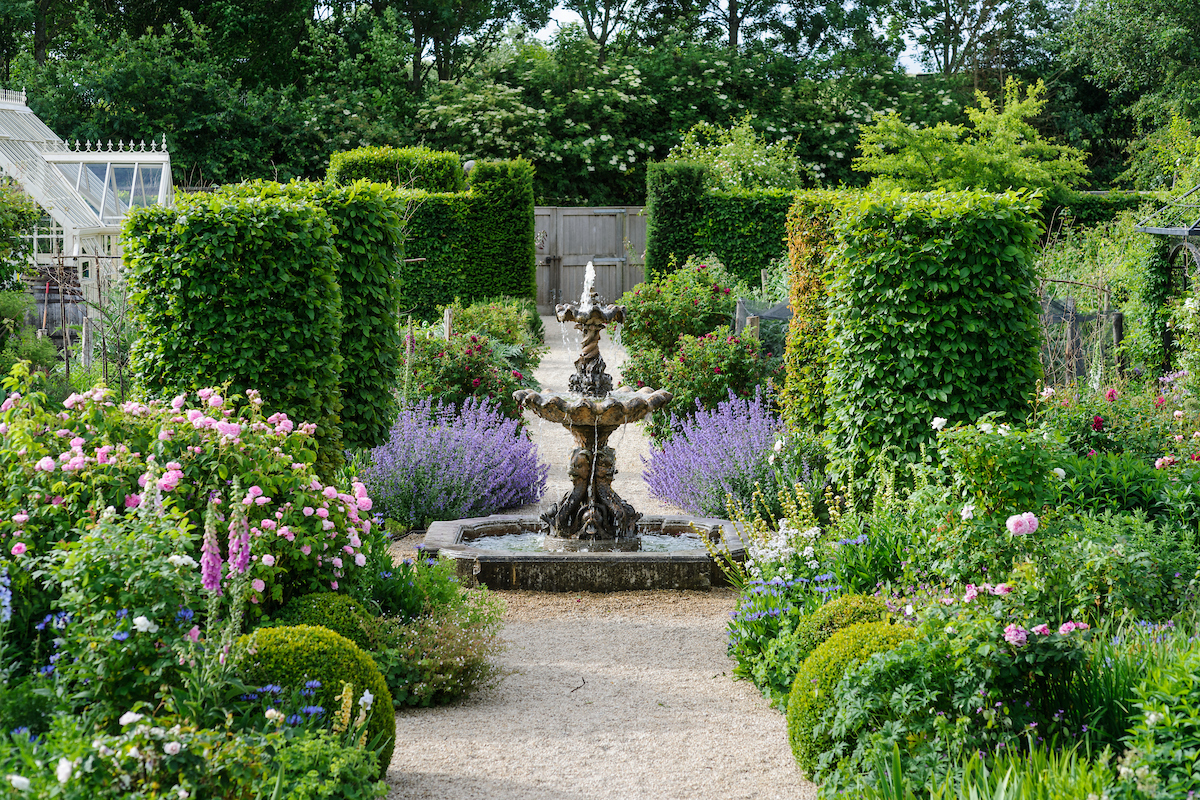
For a more traditional look, a tiered water fountain can bring big impact when placed centrally in a garden or part-way along a wide path. This sophisticated choice in Upper Sydling House in Dorset leads the eye up the pathway in the walled garden.
A statue
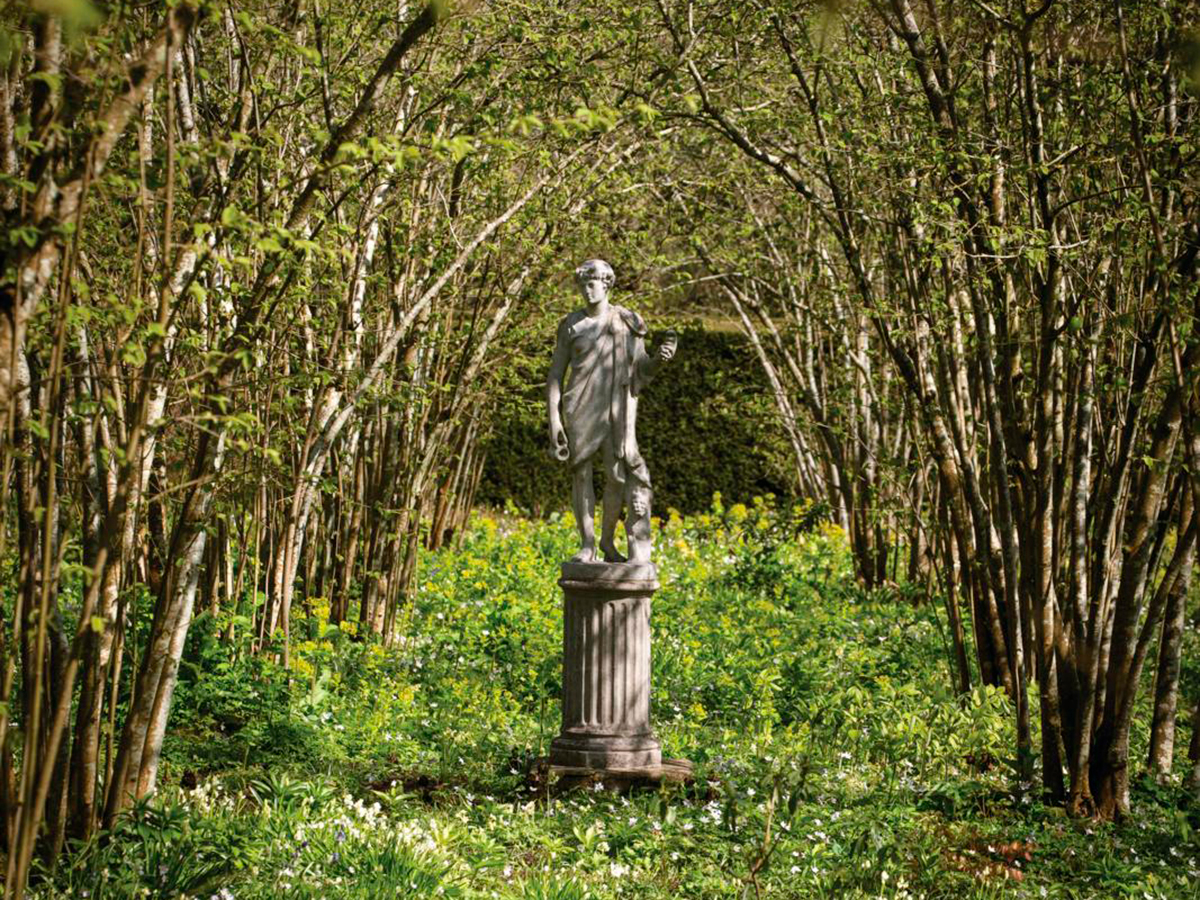
Although not suited to every garden, in the right setting a statue can work well to punctuate a garden zone. In the famous Sissinghurst Castle Garden managed by head gardener Troy Scott Smith, a statue of Bacchus is placed centrally within a tunnel of arching tree branches in the Nuttery, drawing the eye down towards it.
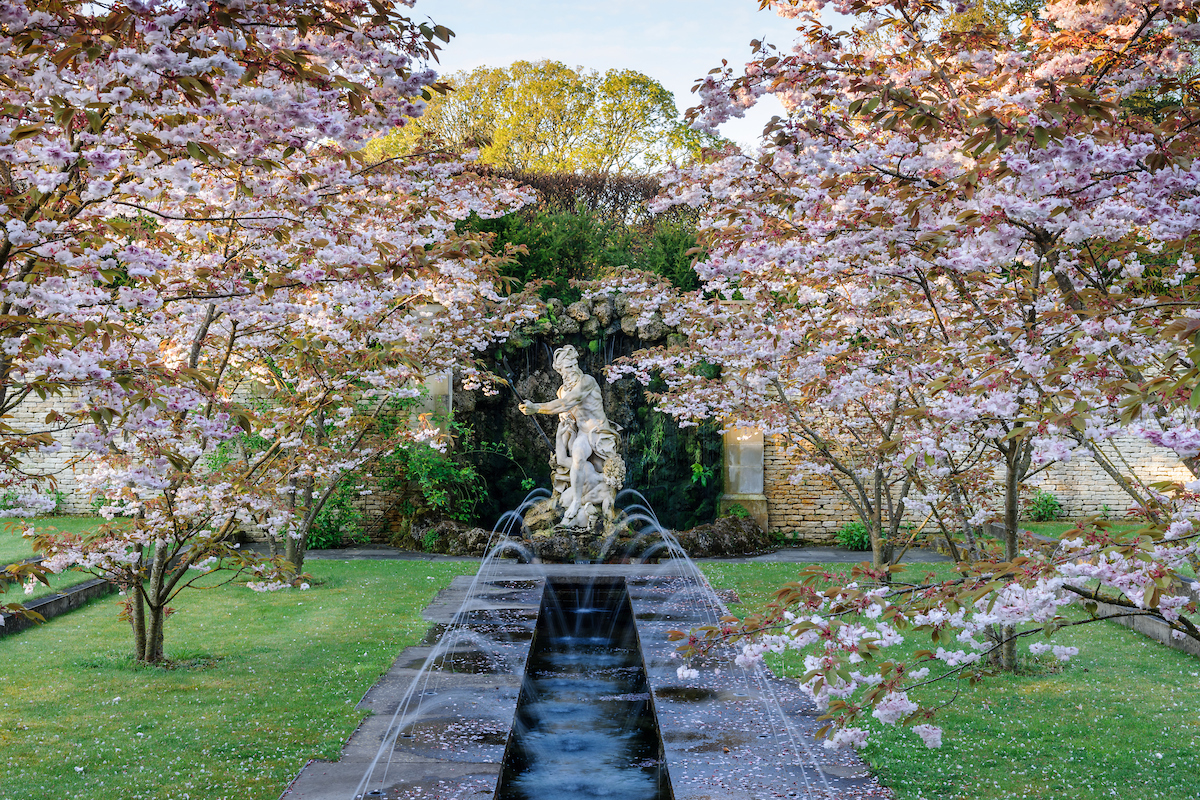
In Malverleys’ Cotswold stone Cloister Garden, a cantilevered rill with leaping water jets leads the eye past the flowering cherry trees and through to the statue, which forms a focal point in front of the rear wall.
An urn
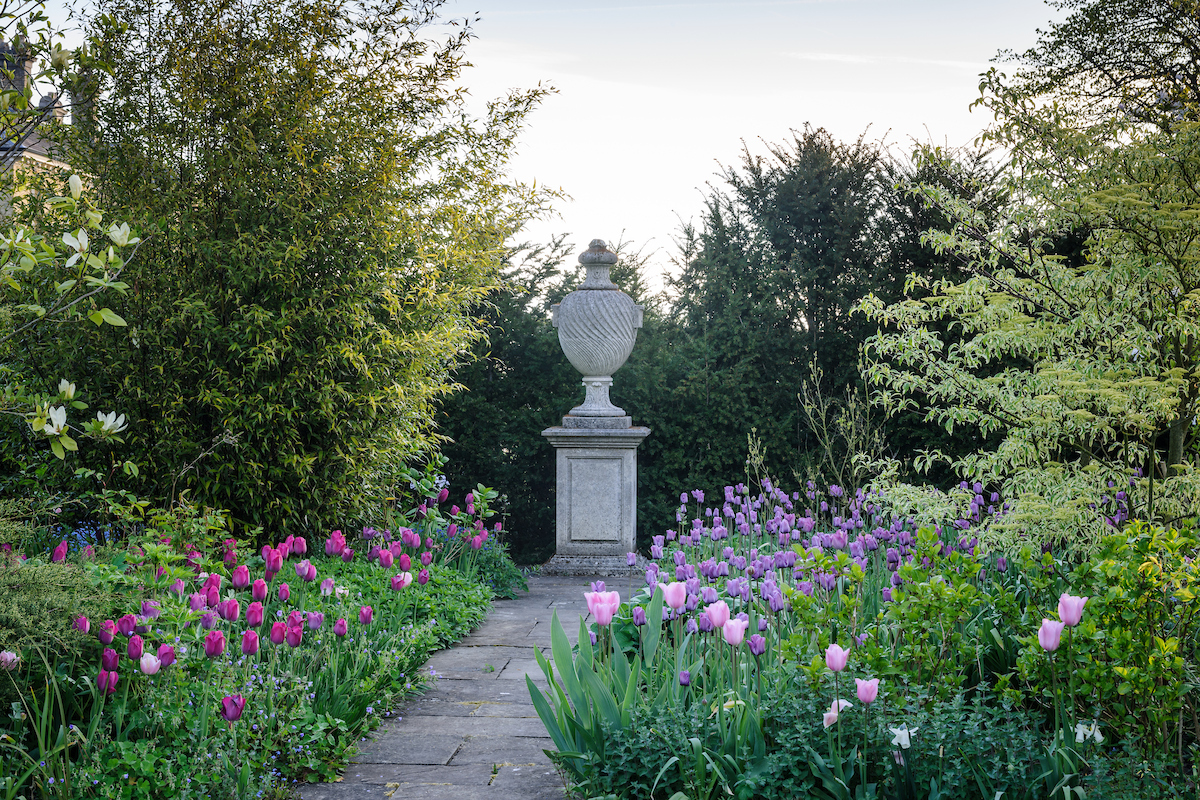
If a statue isn’t quite right for your space, consider an urn. These sophisticated art pieces are usually made from stone or metal, and open-topped designs work both as standalone features and planted up with seasonal arrangements.
A sculpture
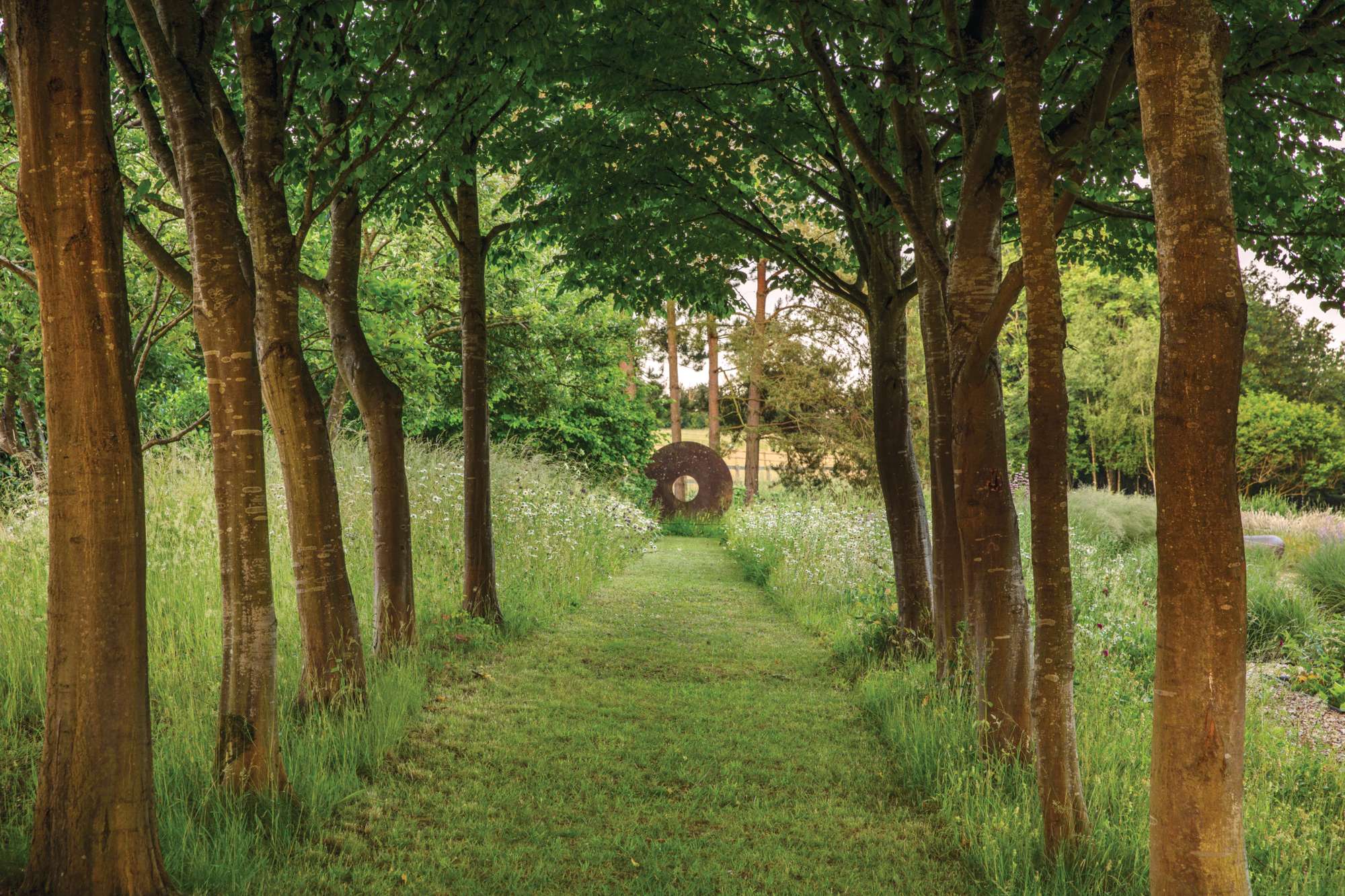
To inject a space with your own personality, why not get creative with items you already have? At Old Park Barn in Buckinghamshire, owners Emily and James Chua made this intriguing sculpture from an old metal tyring plate, which now gives the eye a place to rest at the far end of a hornbeam avenue.
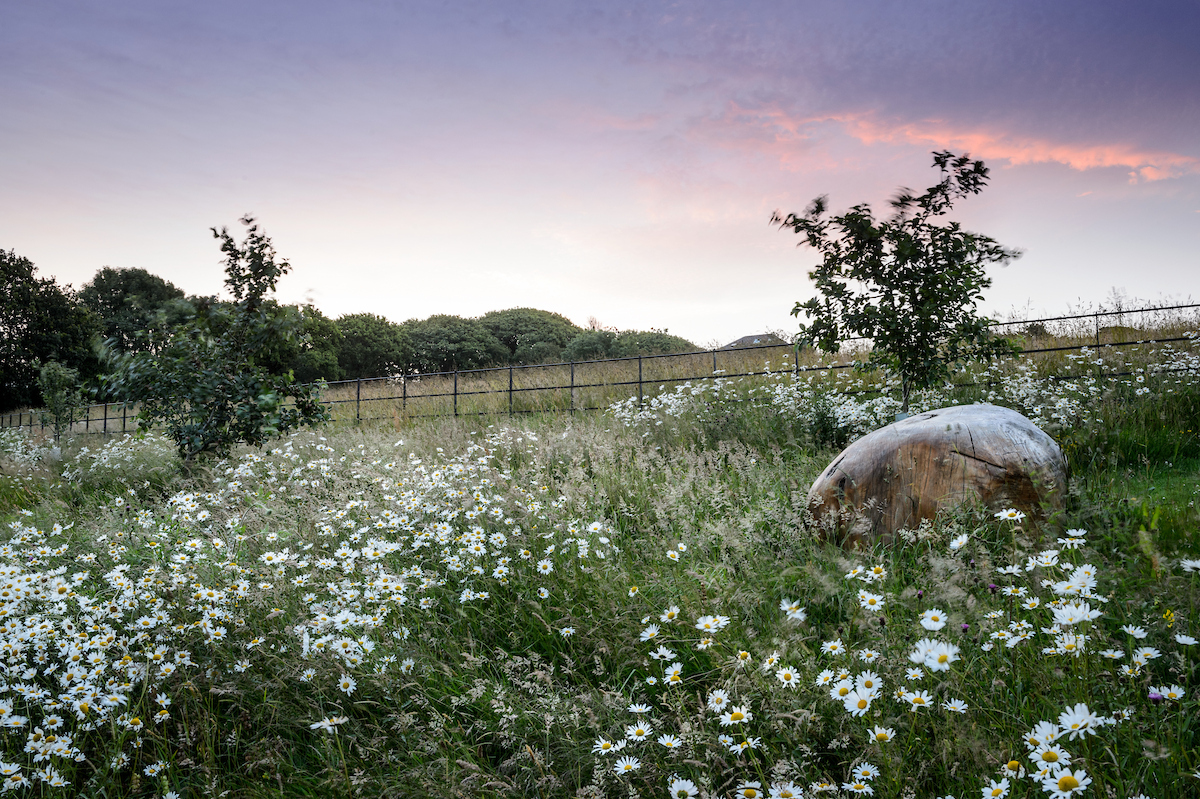
This wooden carving made by Jonny Fenner makes an interesting focal point amongst ox-eye daisies and apple trees in the gardens of a former rectory in Cornwall, designed by Conrad Batten. Artworks like this can make unique alternatives to statues and urns.
A feature wall
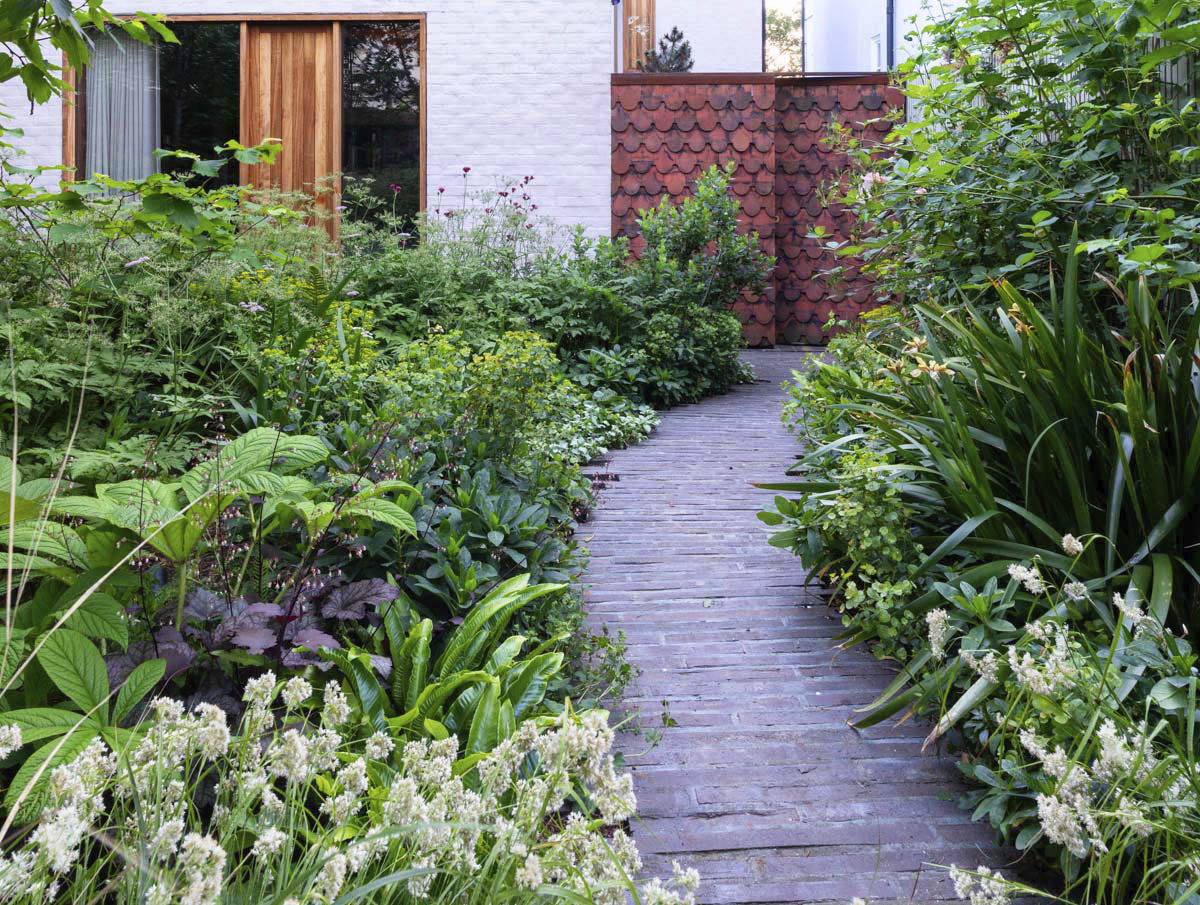
If space is tight, creating a feature wall is an effective way to draw the eye forwards or direct attention to a particular spot. An entryway decorated with old, salvaged tiles encourages guests up the garden path in this 250-square-metre garden in Southeast London designed by Jane Brockbank.
A bench
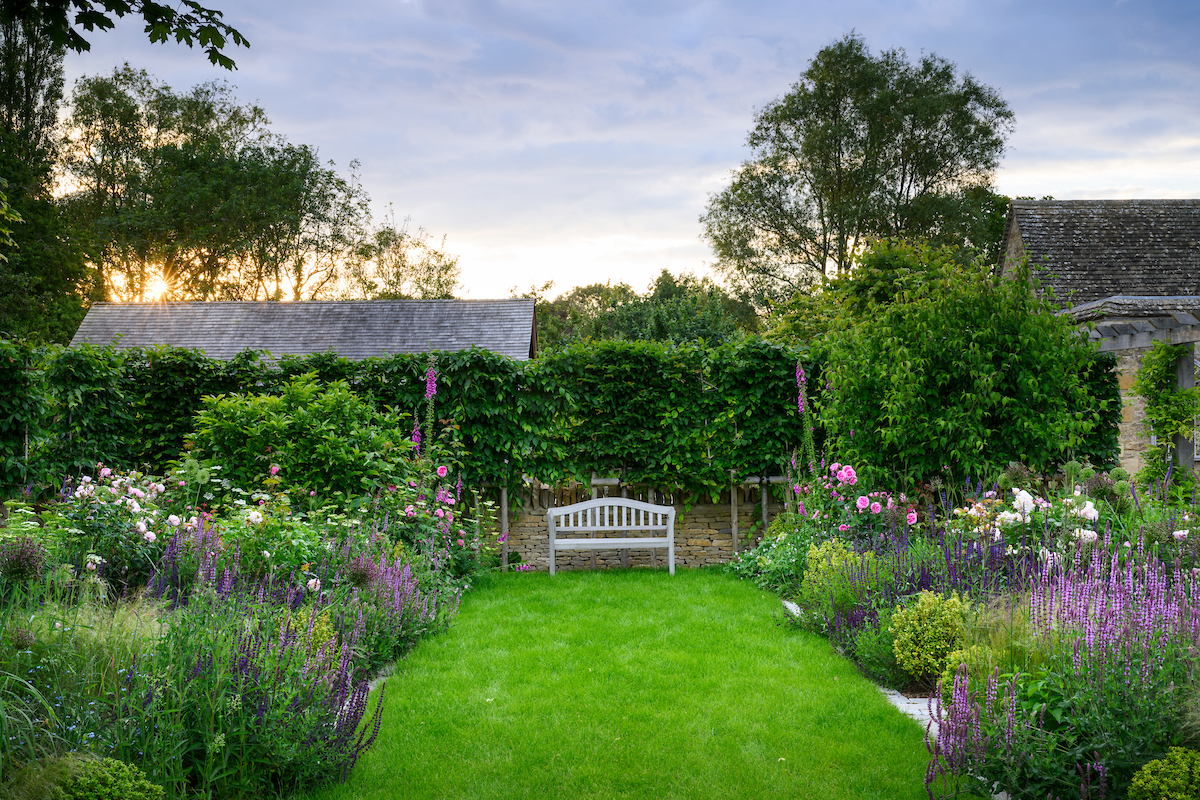
Garden benches often serve the dual purpose of being a resting point for the eye within a wider garden landscape, and for the body, as a place to sit and relax. Placing a bench at the end of a plant-lined avenue, like in this Cotswolds garden by Emily Crowley-Wroe, usually creates an inviting seating area.
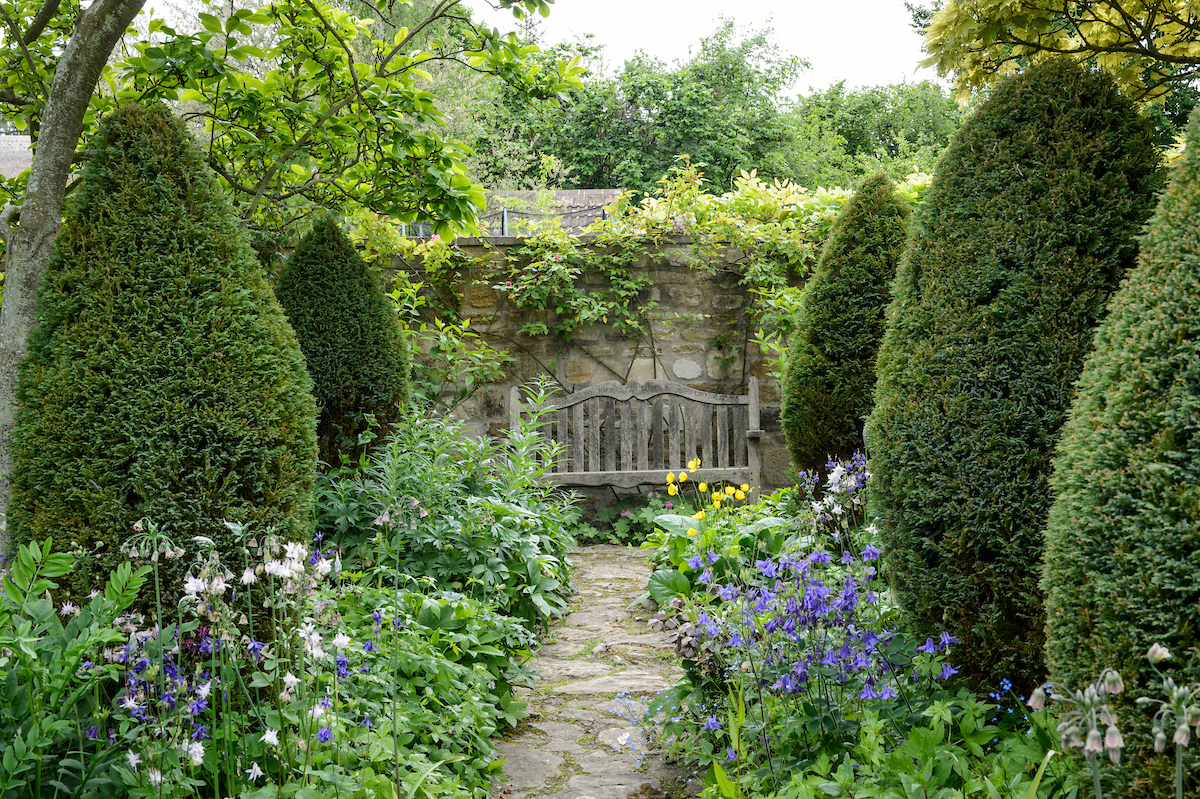
Benches work just as well when used as focal points tucked within planting in small plots as they do at the far side of a lawn in larger gardens. At East Lambrook Manor in Somerset, a carefully placed bench not only adds interest to a plain wall, but also encourages visitors to wander up the narrow pathway.
A chair
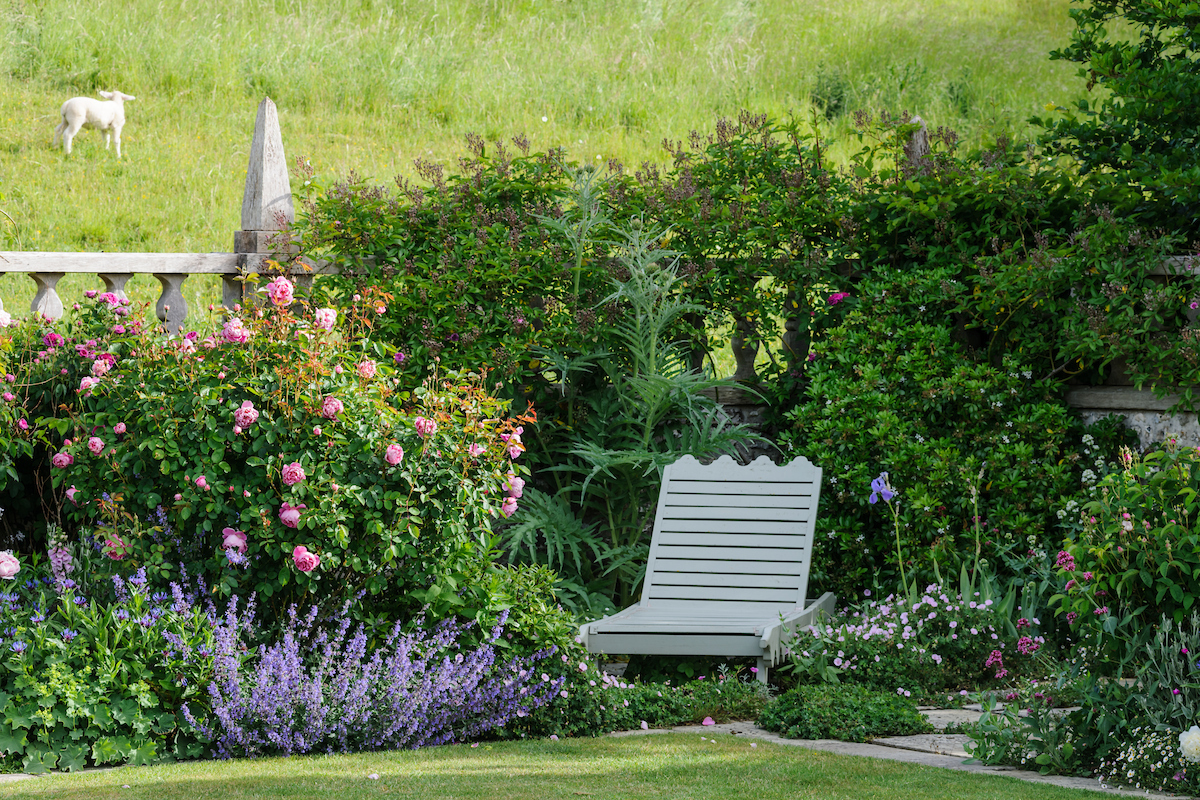
Like benches, single chairs can create a visual anchor among garden planting and encourage quiet reflection. We love the decorative style of this seating option at Upper Sydling House, which makes a shady corner pop and invites visitors to sit enveloped by the planting.
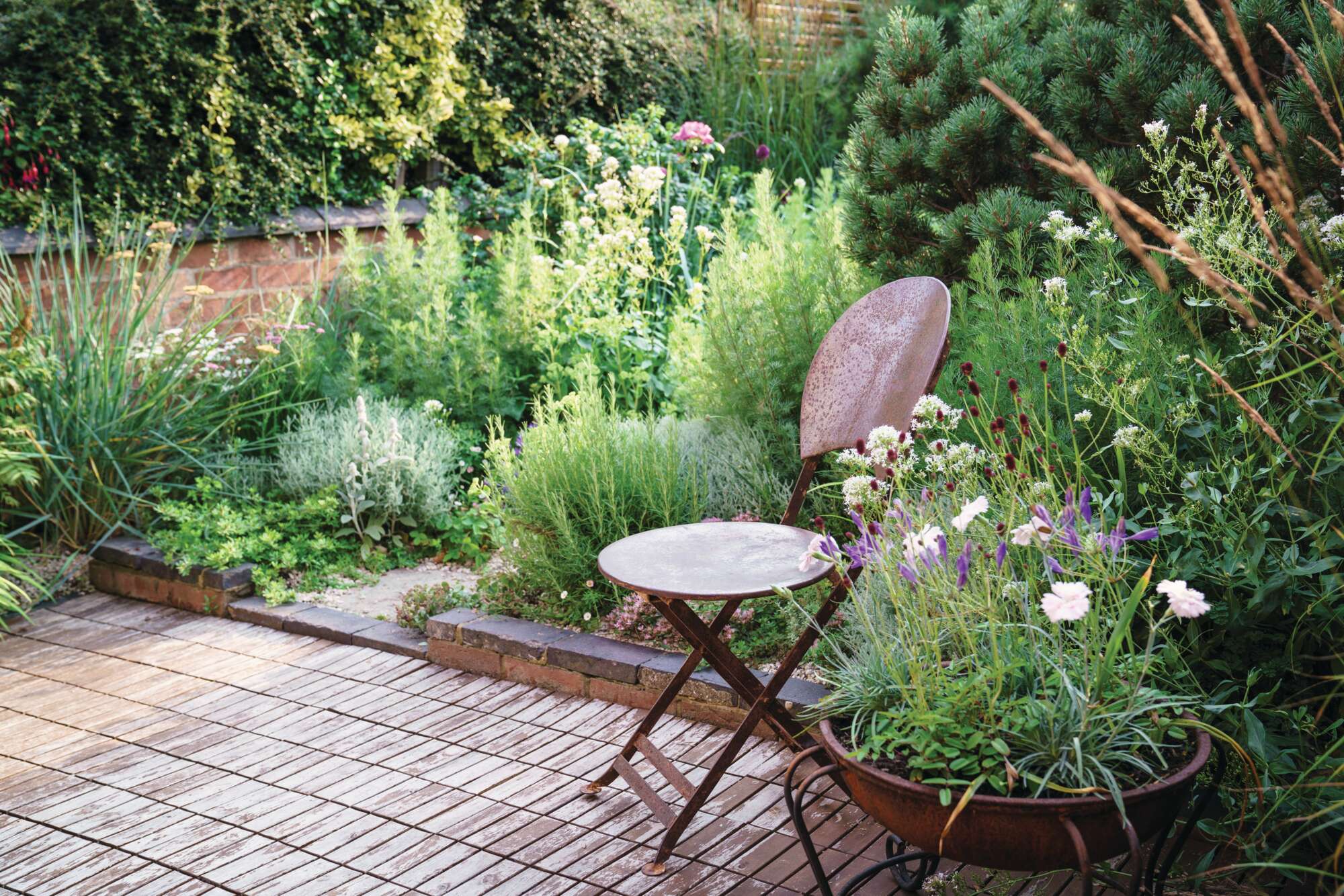
Even in small gardens like designer Ula Maria’s father’s plot in Northampton, a simple chair creates a point of interest. On a patio or terrace, pair it with a large pot like Ula has, to bring plants closer.
A pergola or arbour
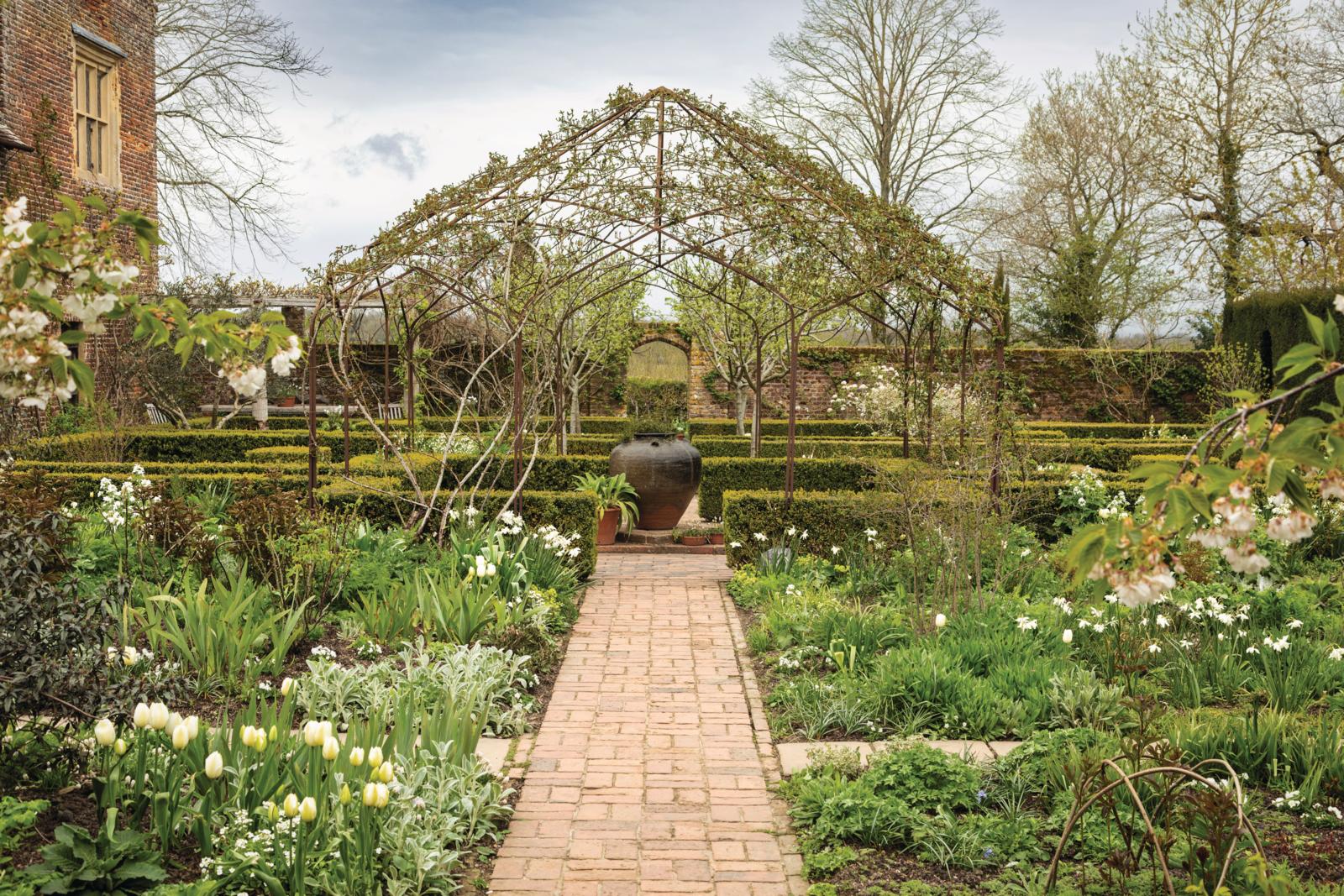
A pergola, arbour or other large structure can become a key gathering area in a garden. If space allows, consider bringing it away from the garden’s boundaries to create emphasis in a certain area. The metal pergola in Sissinghurst’s famous White Garden sits centrally for visitors to walk through, and a rambling rose creates a full canopy of fragrant blooms in the summer.
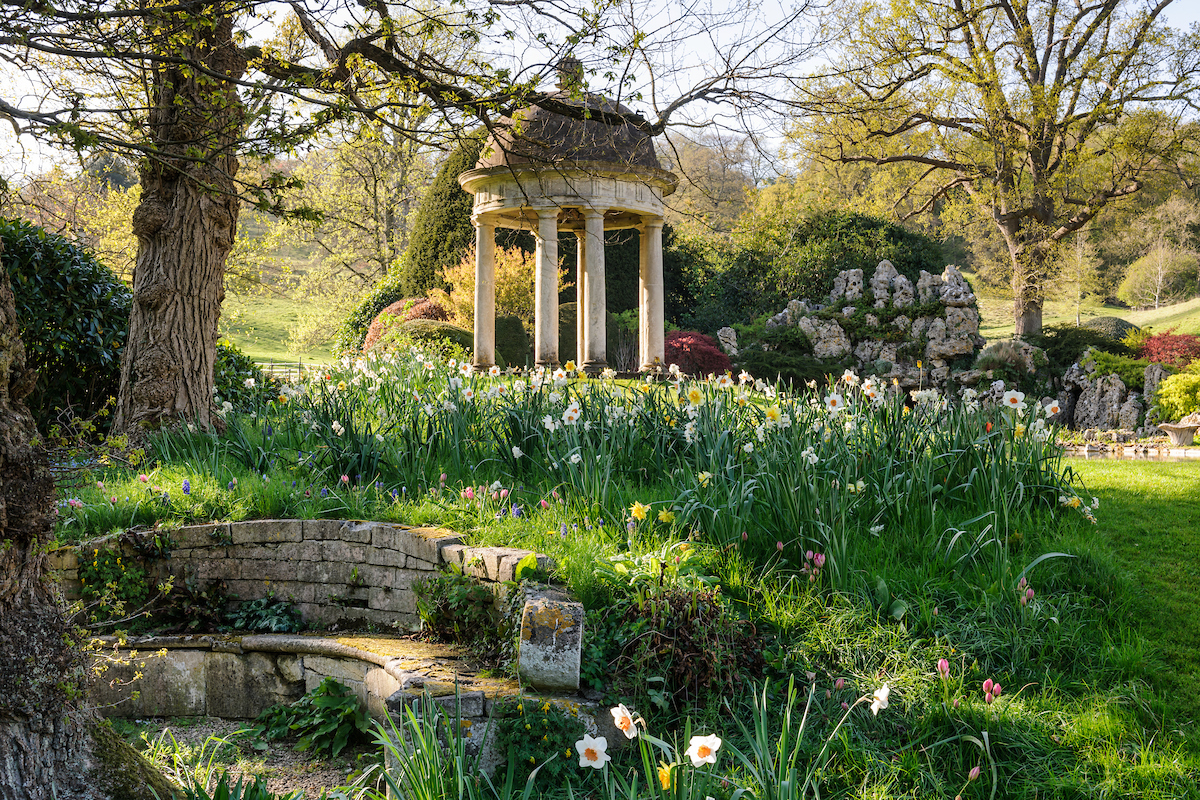
Historic gardens provide plenty of inspiration when it comes to building focal points. Belcombe Court in Wiltshire is home to a domed rotunda dating back to the 18th century, showing how a circular pergola or arbour can work well within a garden.
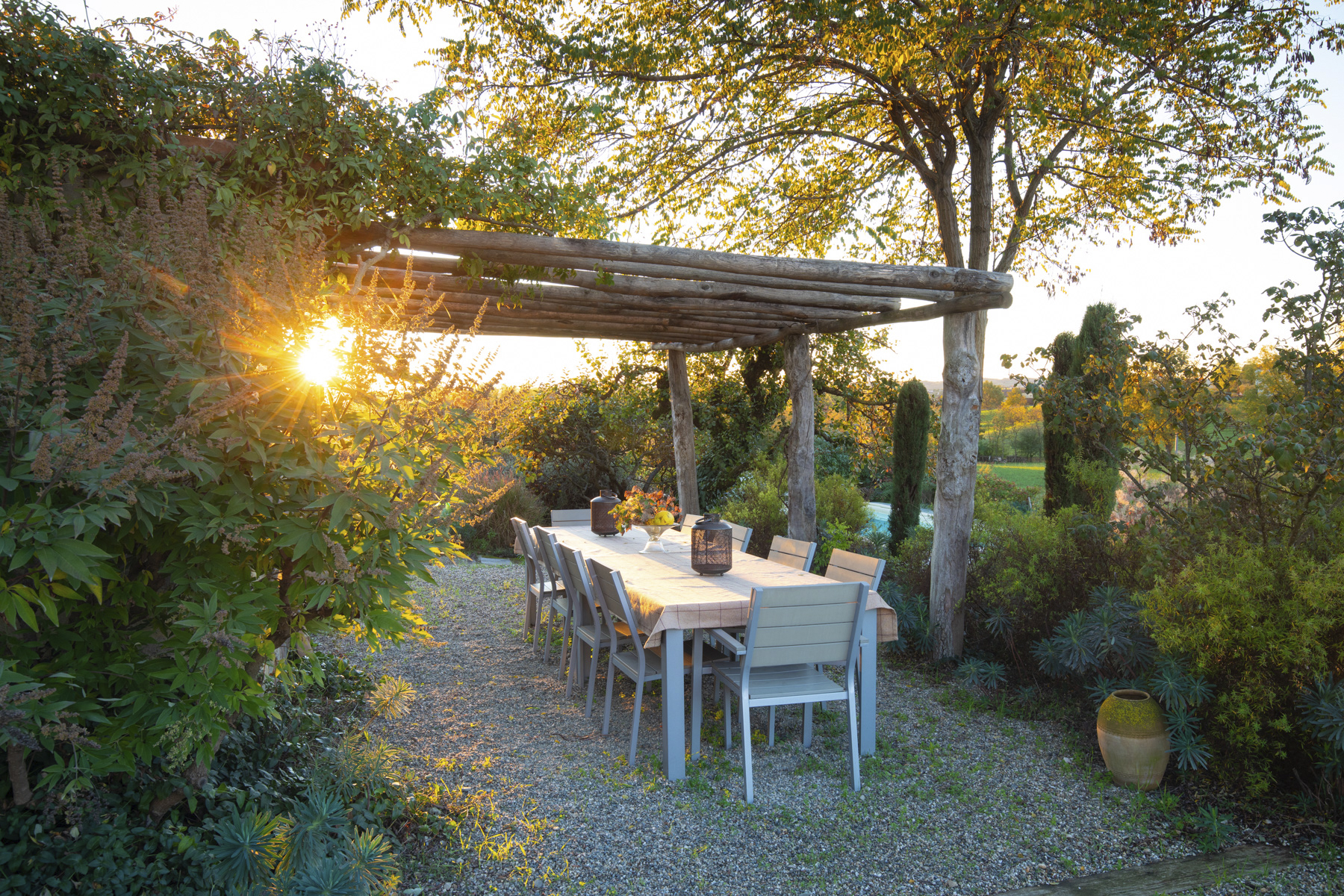
One of the most popular ways to build a focal point is to design a covered seating area. For maximum impact, train climbing plants up the pergola; this also creates privacy and shade in the warmer months.
Circles
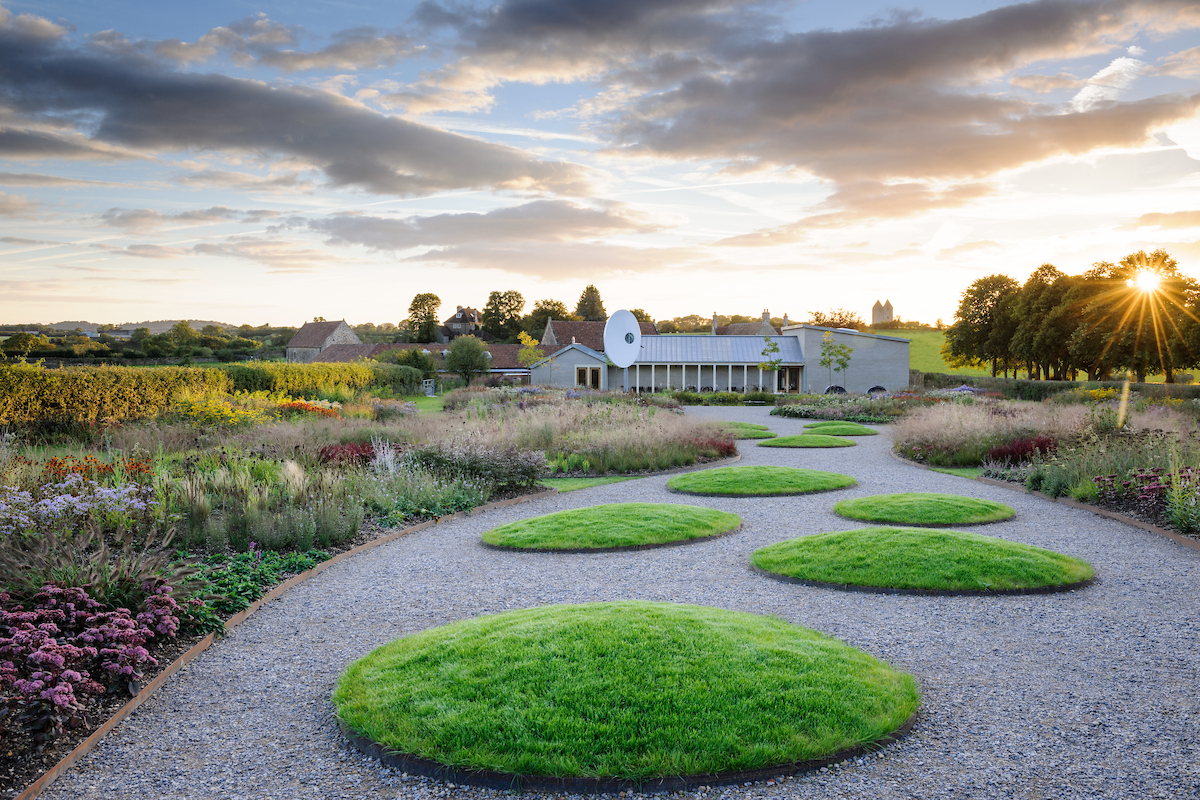
One design trick that crops up often is the use of circles – as gates, flower beds, paved areas and other garden elements. Here, famous Dutch garden designer Piet Oudolf created steel-edged ovals of grass to emphasise the main route through to Hauser & Wirth art gallery in Somerset.
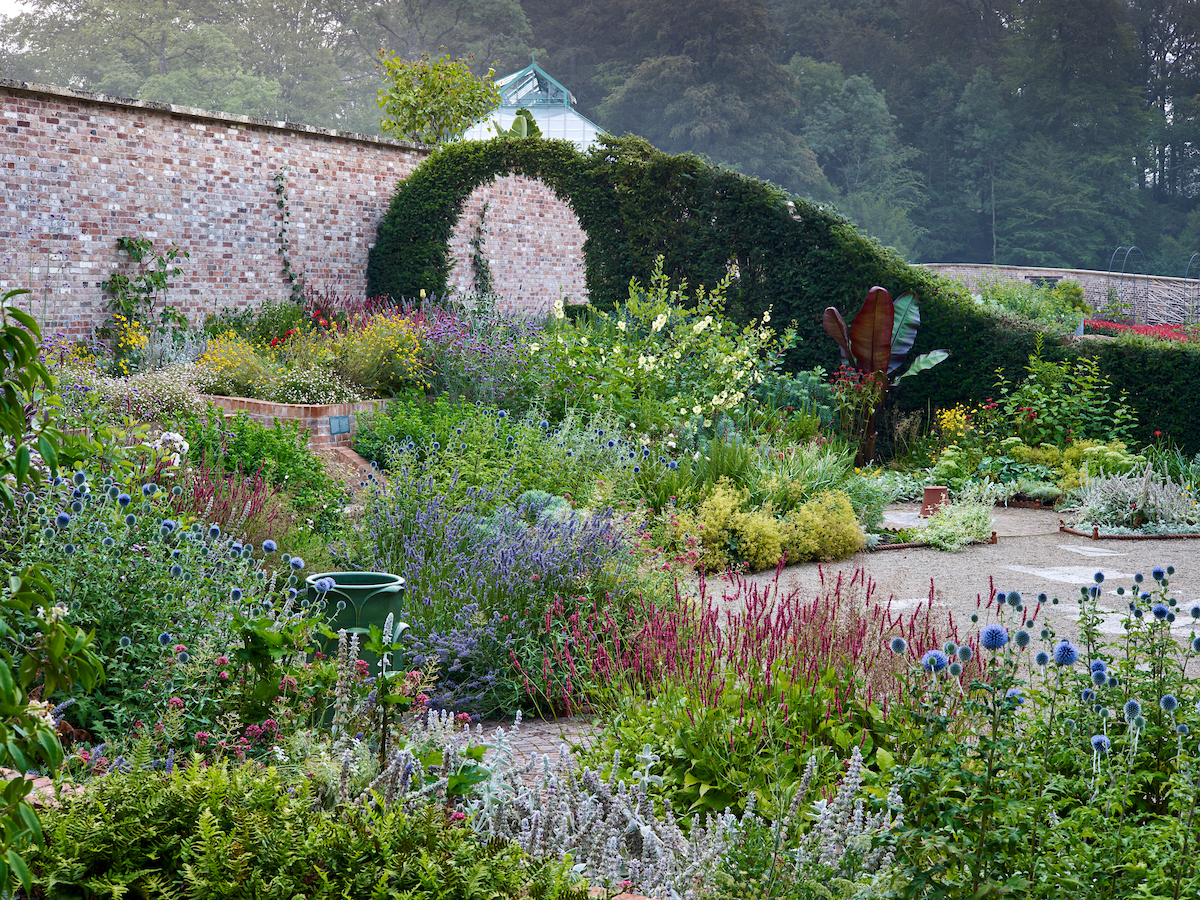
At The Newt in Somerset, an eye-catching circular hole in the Cottage Garden hedge encourages visitors to explore further.
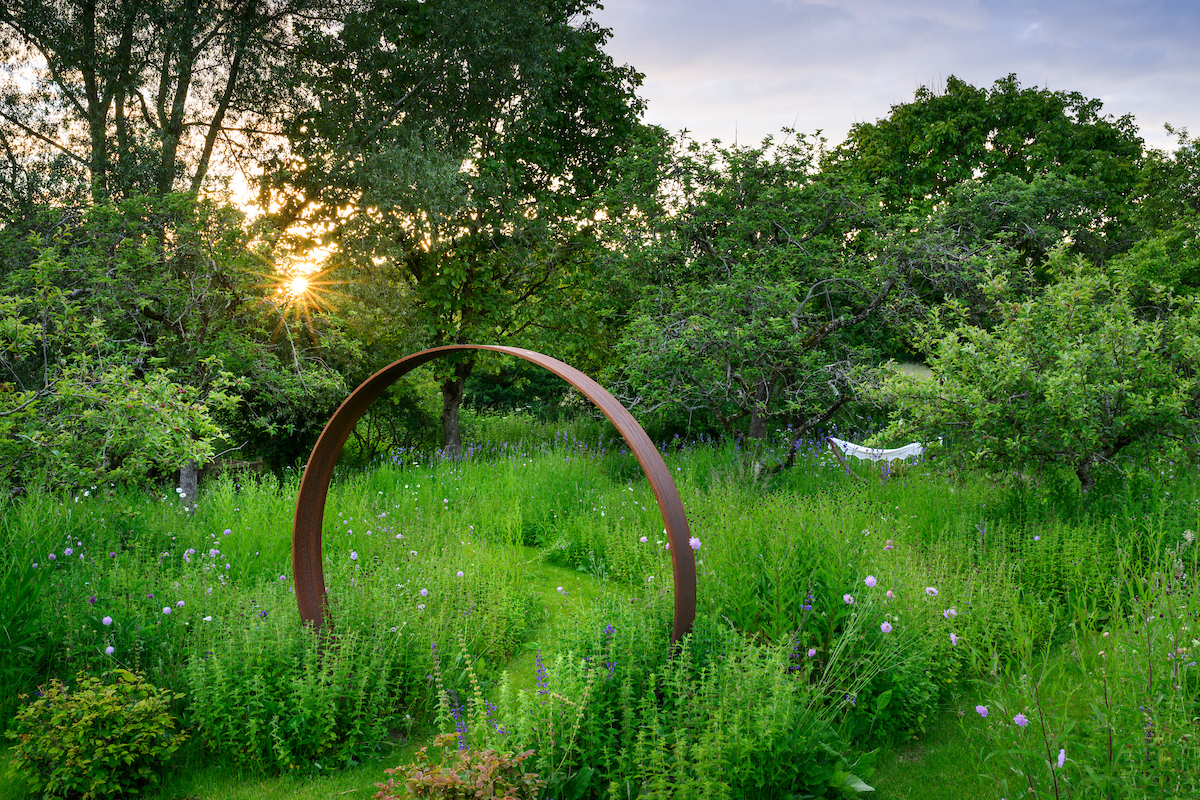
Part-sculpture, part-gate, this circular Corten steel structure forms an inviting entrance to a dreamy meadow maze with a winding mown pathway in a private Oxfordshire garden by Emily Crowley-Wroe.
A gate
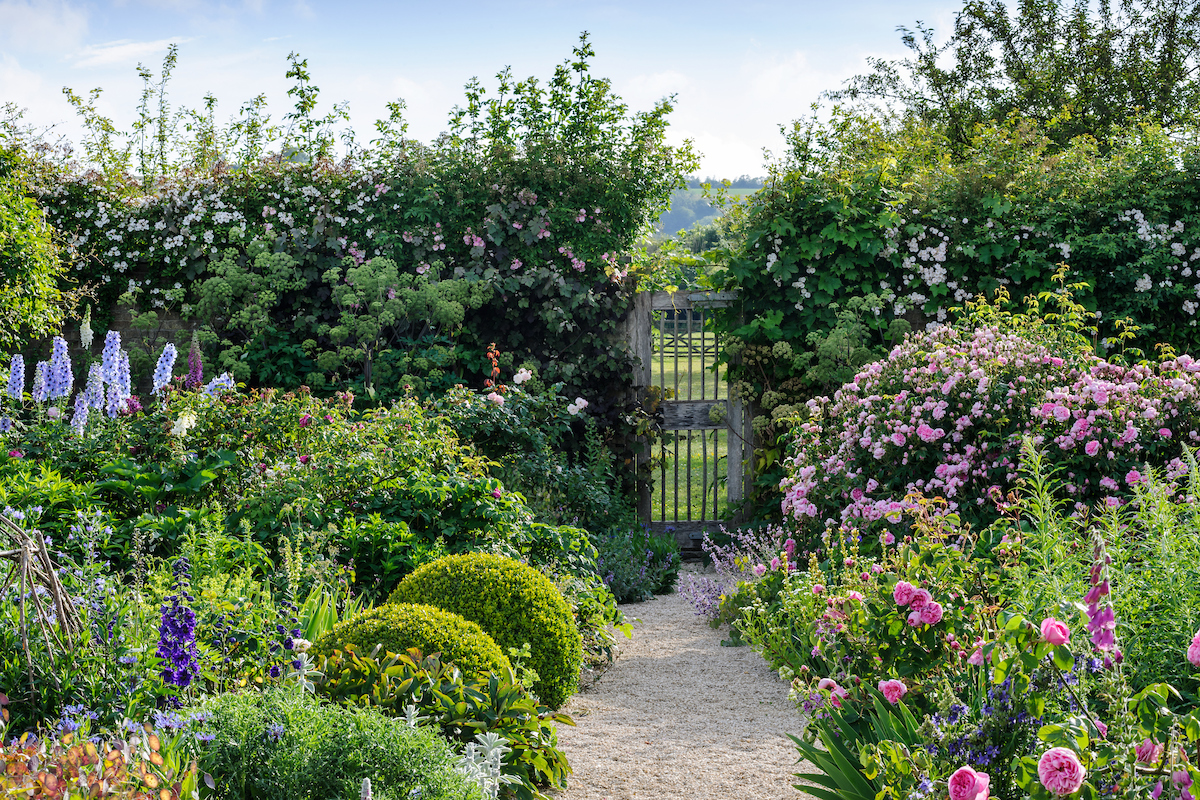
A gate can be more than a security feature on the boundary of your garden. If space allows, use one to mark the entry point to different zones in your garden, or make a feature of your existing gate using bold colour or interesting texture.
A tree
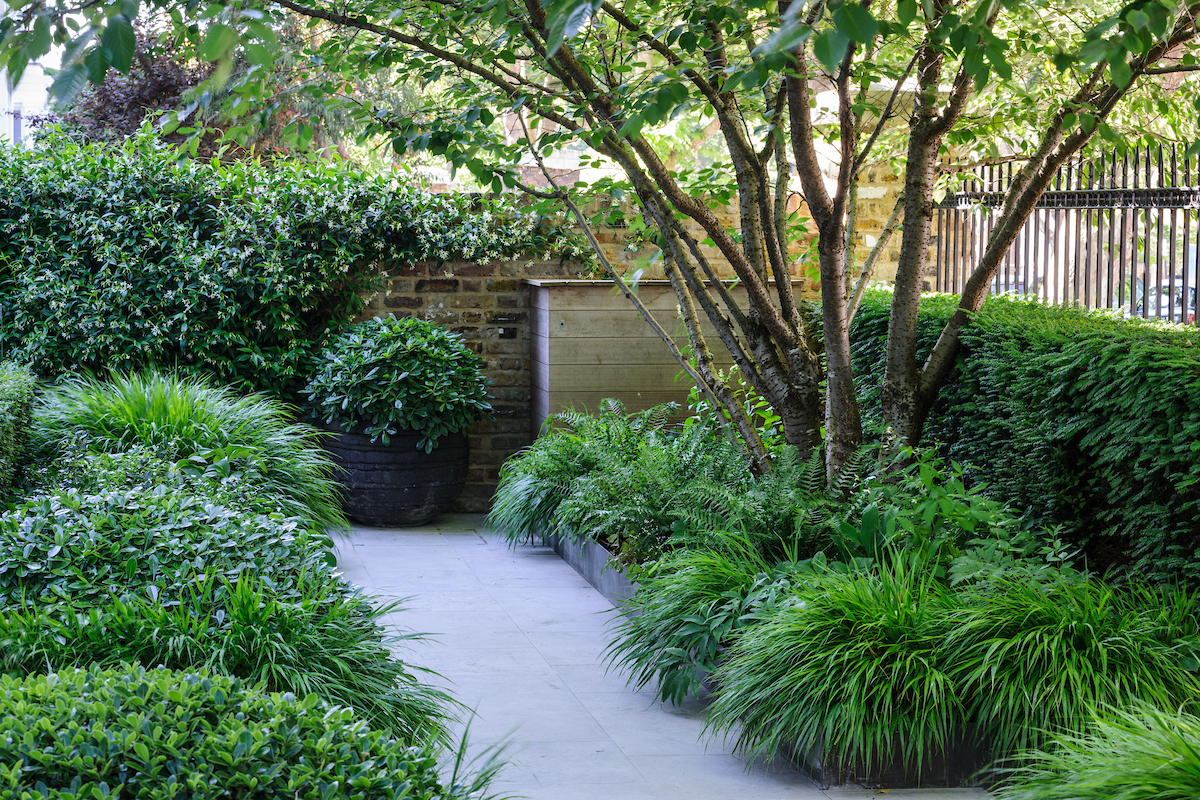
With the right approach, there’s no need to buy new furniture, art or garden structures to create a focal point; trees can be a great visual anchor, particularly in compact plots. This small London garden designed by Harris Bugg Studio has two multi-stemmed cherry trees to draw the eye.
Topiary
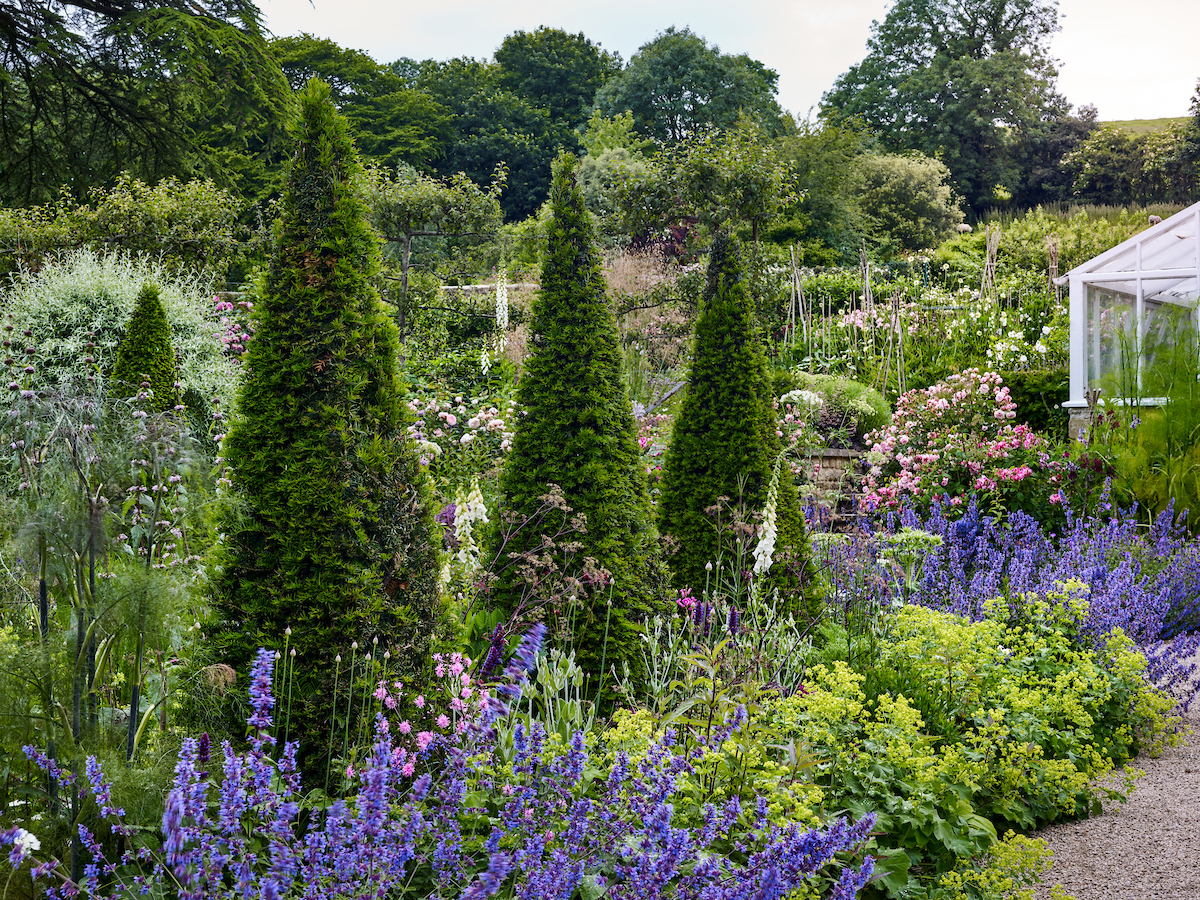
Like trees, topiary can be used as part of a planting scheme to bring impact – especially when repeated. In designer Libby Russell’s Somerset garden, an avenue of pyramid-shaped yews create drama, punctuating a garden path.
A block of colourful planting
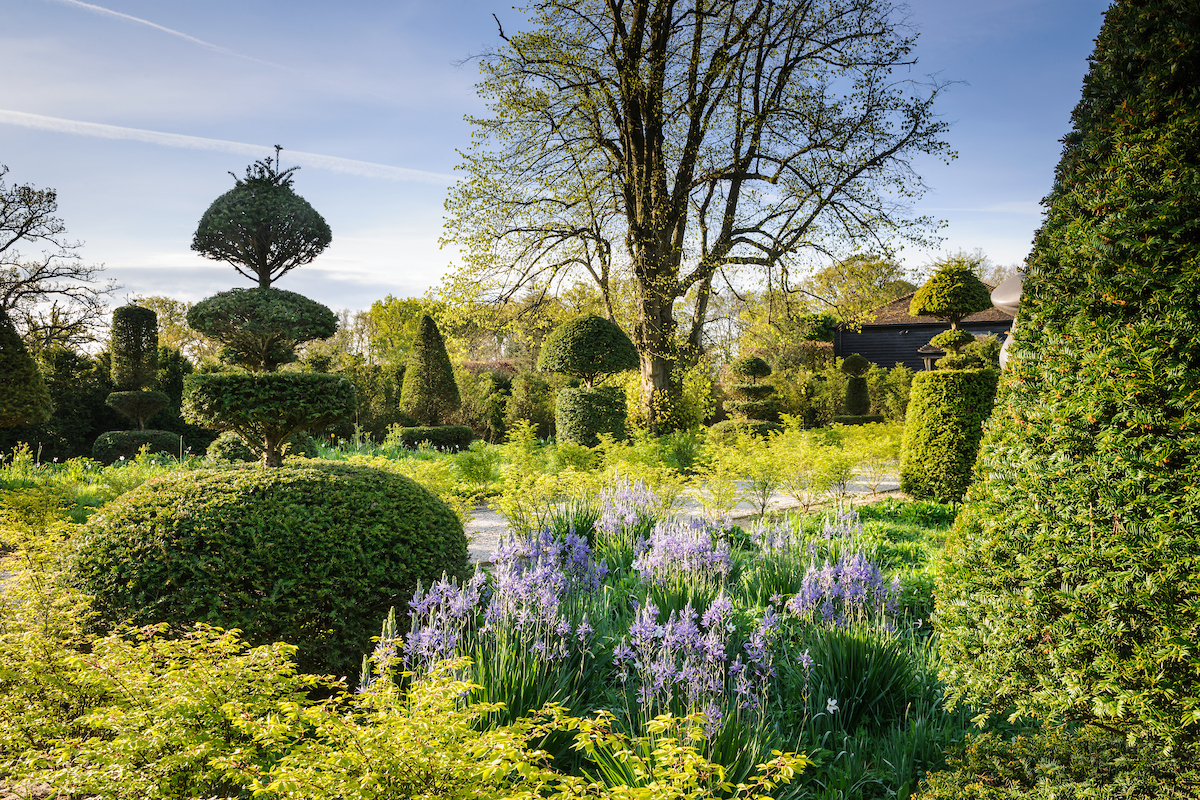
Even a block of colourful planting can become a point of interest, pulling attention to a particular area or aspect of the garden. At Malverleys in Hampshire, managed by head gardener Matthew Reese, a pocket of vibrant blue Camassia act as a focal point in the Topiary Meadow.
For more inspiration, see our guide to the maximum impact plants for wow-factor focal points in the garden.