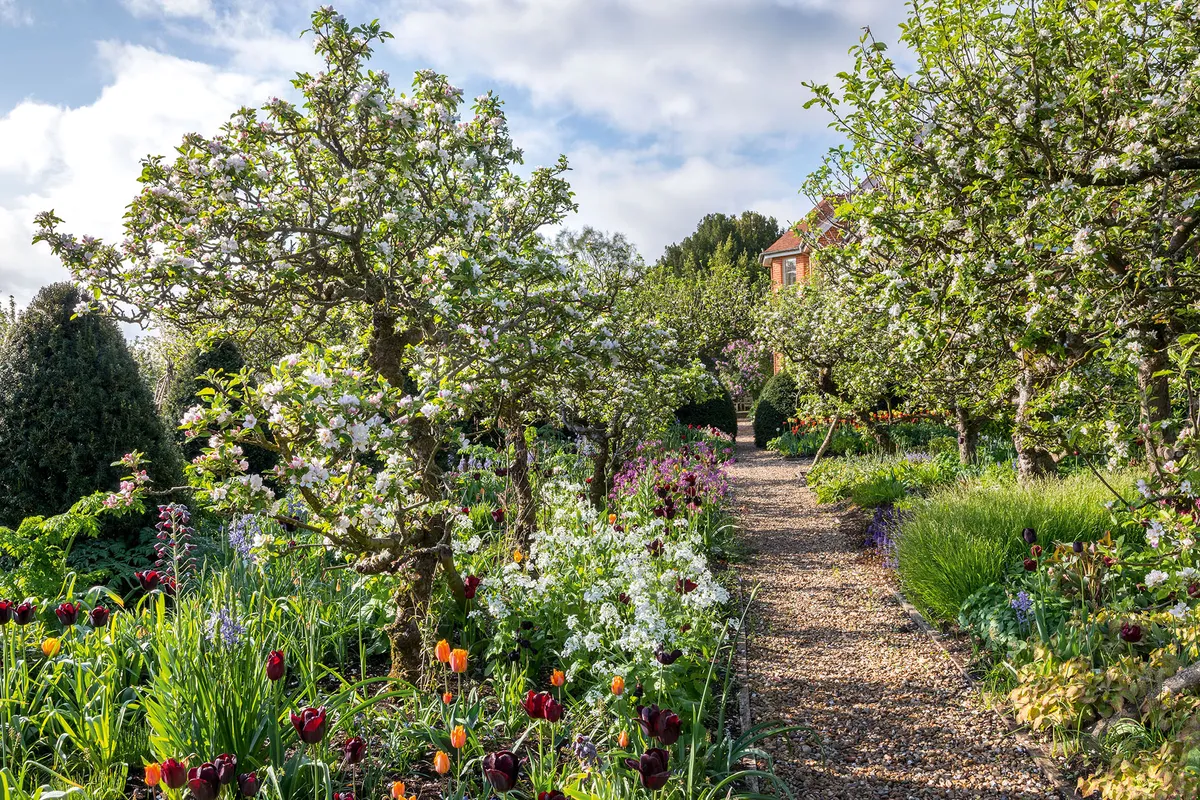
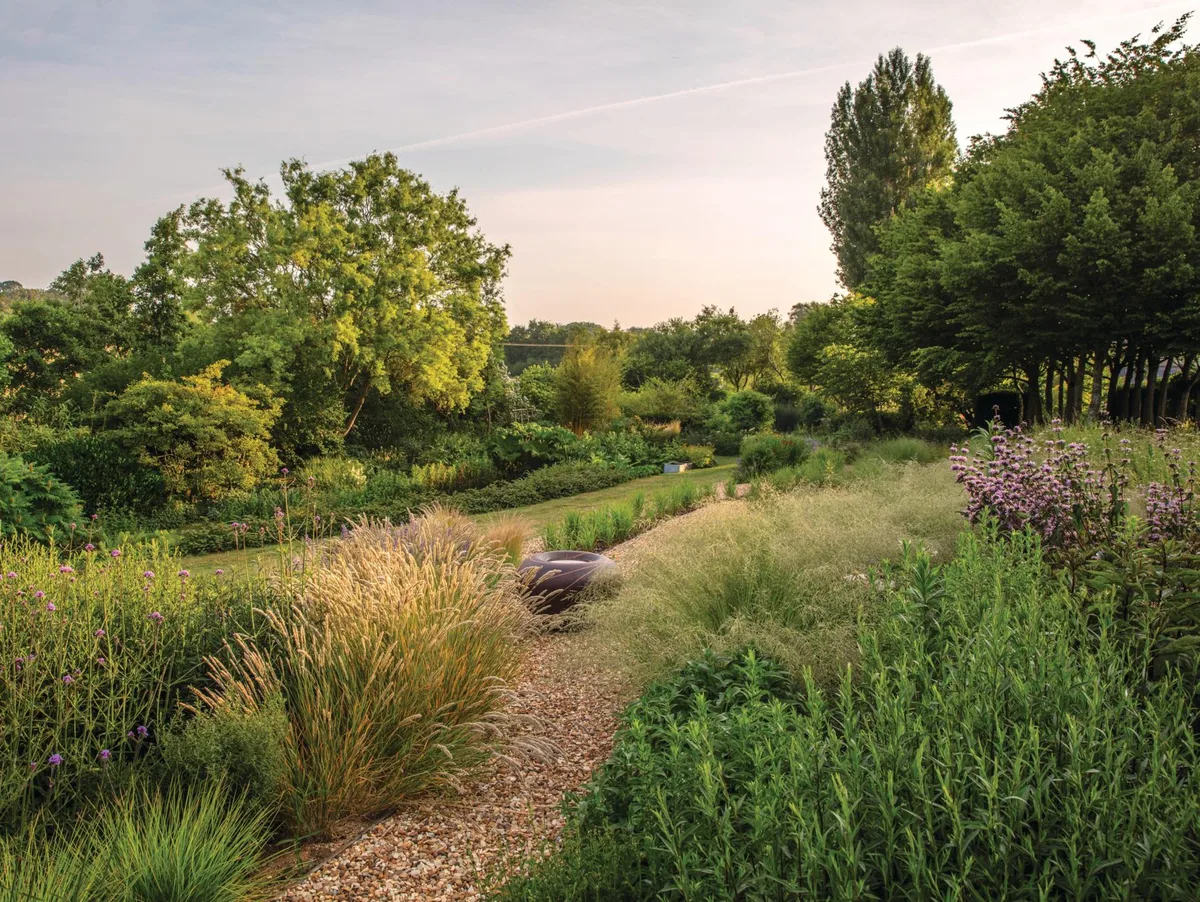
Hidden at the end of a narrow lane in the historic village of Stoke Goldington lies a plant lovers’ paradise, carved out of the landscape by owners Emily and James Chua over almost 30 years. Their remarkable garden offers surprises at every turn, with dramatic vistas guiding you through a series of interconnected themed areas, each embroidered with rich threads of layered planting.
You might also like:
- Piet Oudolf's dreamy Nantucket island garden
- A hillside garden in souther Italy with a distinctly Mediterranean planting palette
- This back-to-front garden in the Cotswolds flips the expected to great effect
- The perfect solution to a long sloping garden
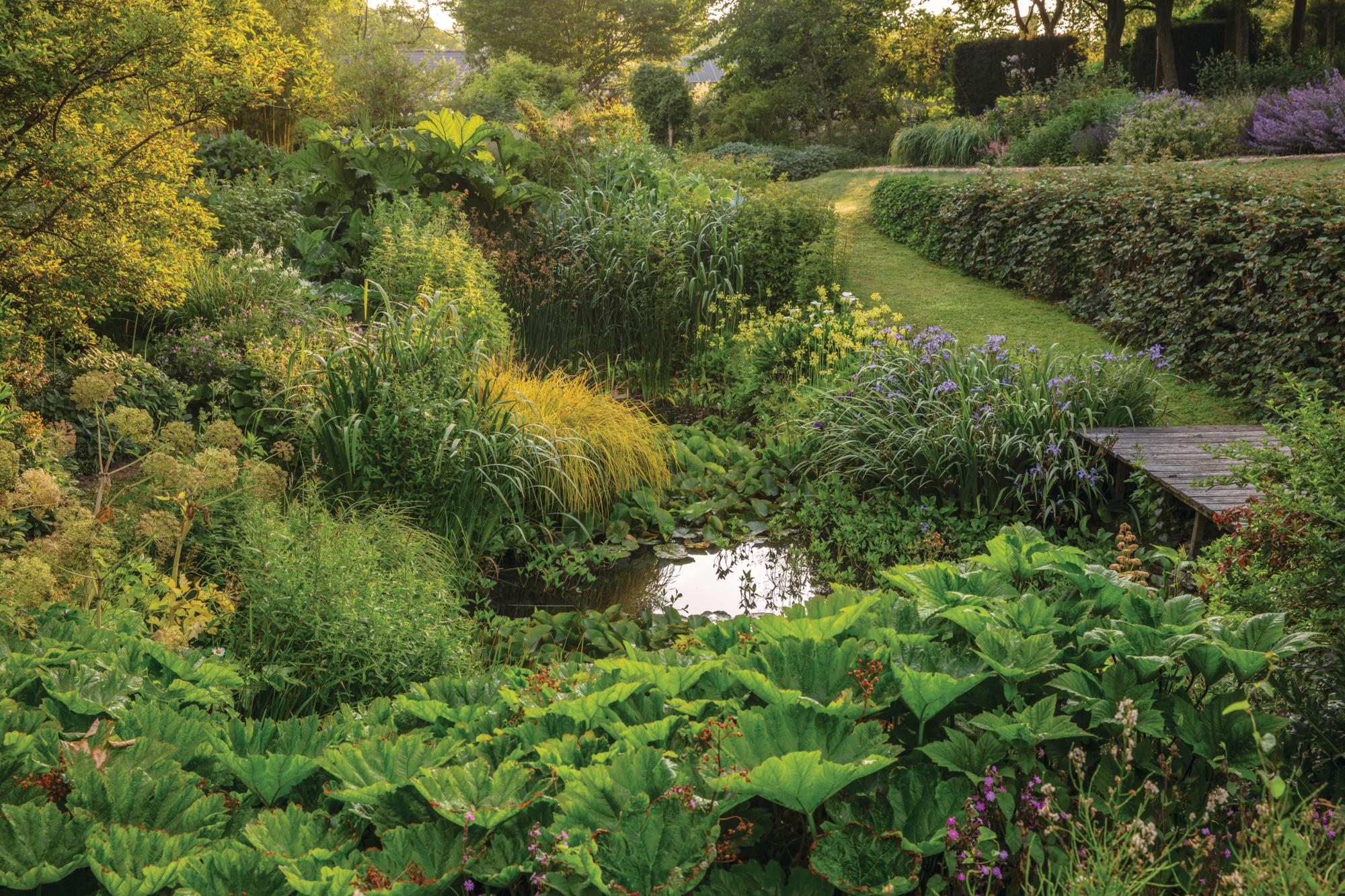
The couple bought Old Park Barn and its surrounding land with the aim of making a home for their young family, and a garden that would offer James, an architect, a creative outlet – one that they would both enjoy maintaining. A passion for plants and gardening was instilled in them both from a young age. James spent his childhood in Borneo, where his mother collected orchids that grew wild in the jungle. Emily gardened alongside her father in Surrey and went on to study life sciences at university.
The garden in Buckinghamshire was a farmer’s field when the couple arrived, edged by a natural stream to the west and neighbours’ gardens and paddocks on the other sides. The site slopes in two directions, which presented the first challenge the pair had to overcome. “The barn was originally a cattle shed, built at the bottom of the hill so that rain would pour off the land and wash the floor,” says James. “This meant our first job was to make terraces that would give us more usable areas and prevent the house from flooding every time it rained.”
The cold winters and heavy clay soil were other factors to consider and have shaped the planting choices Emily and James have made over the years, although copious applications of local farmyard manure and their own compost and leaf mould have now made the ground more workable.
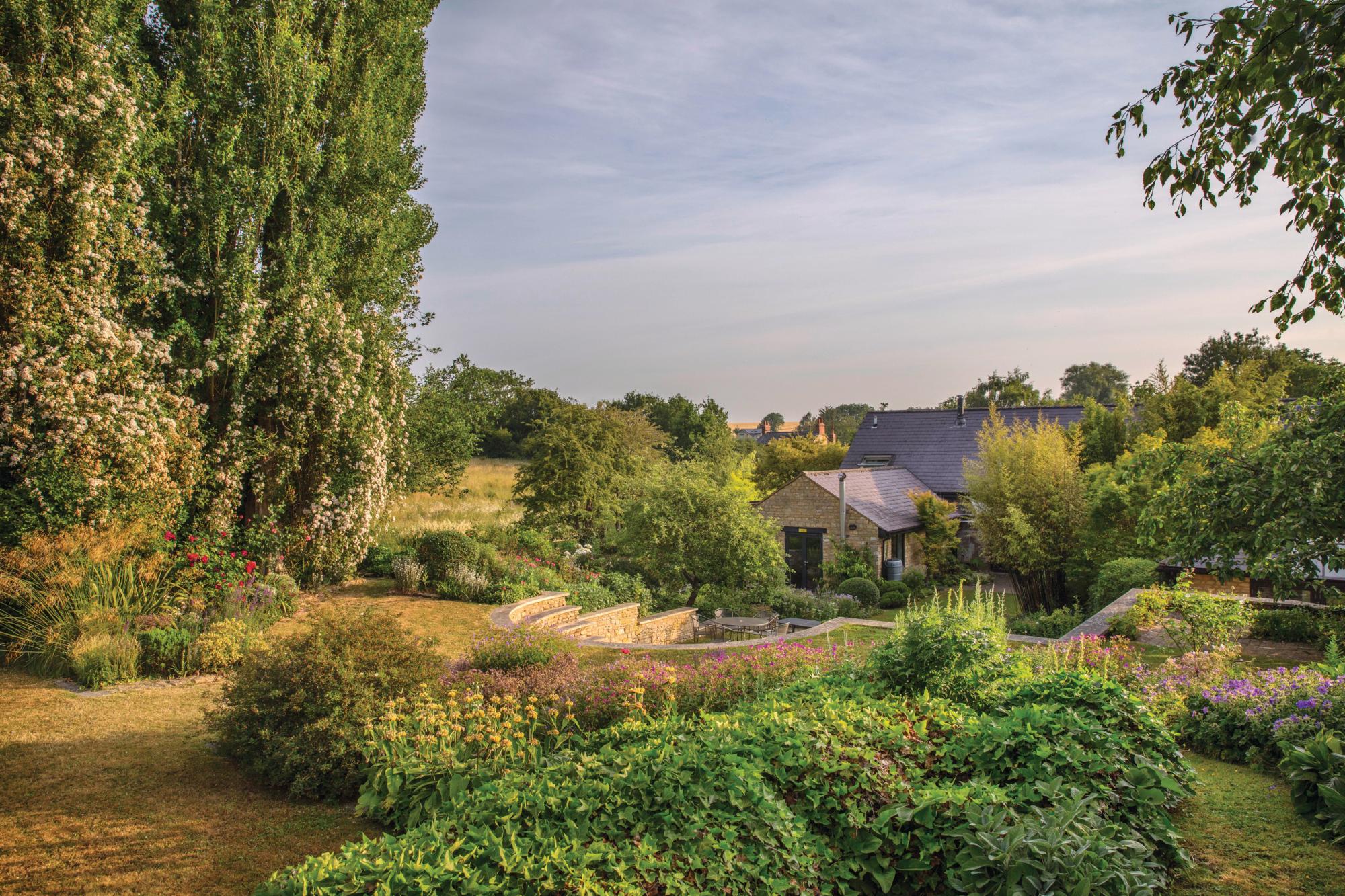
The masterplan James drew up included formal elements such as rectangular lawns, a stone amphitheatre and planted borders close the house, with more naturalistic elements, including woodlands and meadows, on the outer reaches. “We were inspired by Dan Pearson and Beth Chatto, whose work we admire for their sensitivity and observation of natural environments,” says Emily.
The couple then started work, digging out beds, creating lawns and meadows, and planting new trees and borders. Incredibly they made the entire garden themselves, and they continue to spend as much time as they can tending it. They have also grown most of the plants themselves from divisions, cuttings and seed. James explains that they buy a plant they like, then he propagates it until they have enough to fill a sizable space. “It’s a big garden, so we need lots of plants,” he explains. “But we are prepared to wait for the cuttings to grow. We also collected all the stones for the amphitheatre and retaining walls from our own site and the surrounding farmland (with permission). It took a while but it’s satisfying knowing that the materials are all reclaimed.”
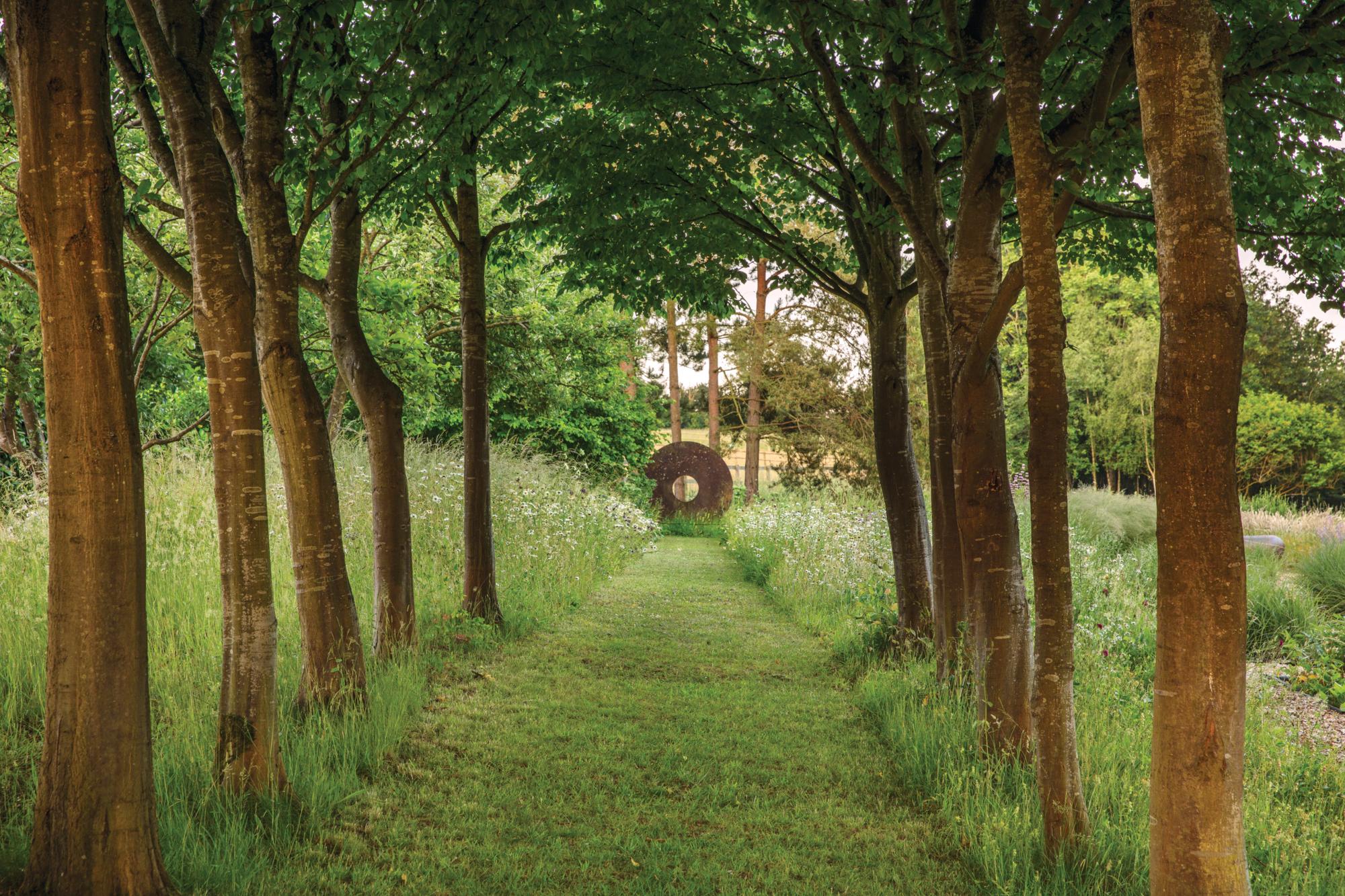
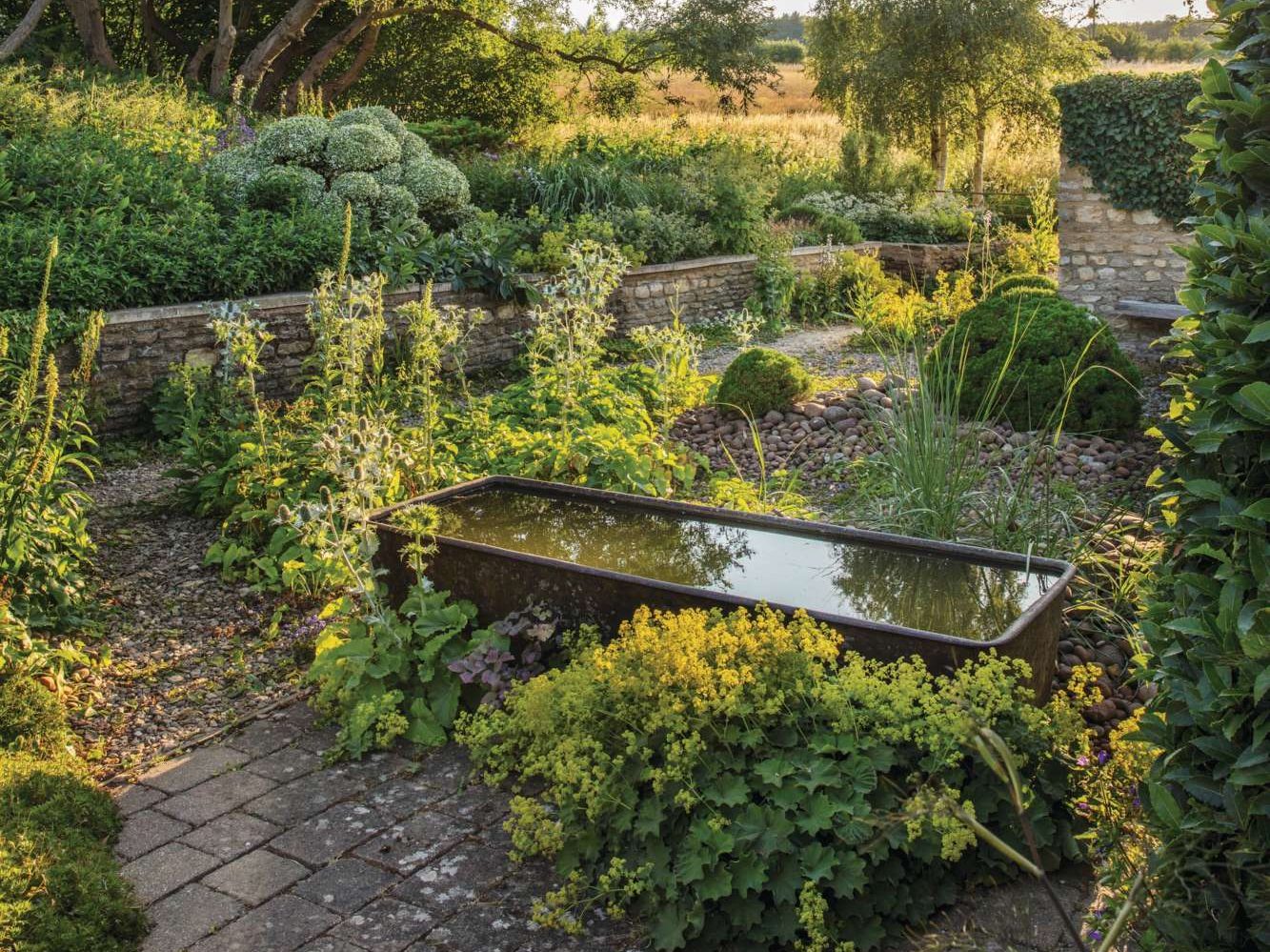
A visit to Old Park Barn begins outside the house, where a small terrace flanked by stands of bamboo and ferns looks out over the lower lawns to the amphitheatre, and a vista through an avenue of hornbeams to a circular sculpture on the upper levels. “The sculpture is actually an old metal tyring platform, originally used to fit tyres or rims to cartwheels, which we bought, along with a metal trough that’s now a water feature, from an auction at the farm next door,” says Emily.
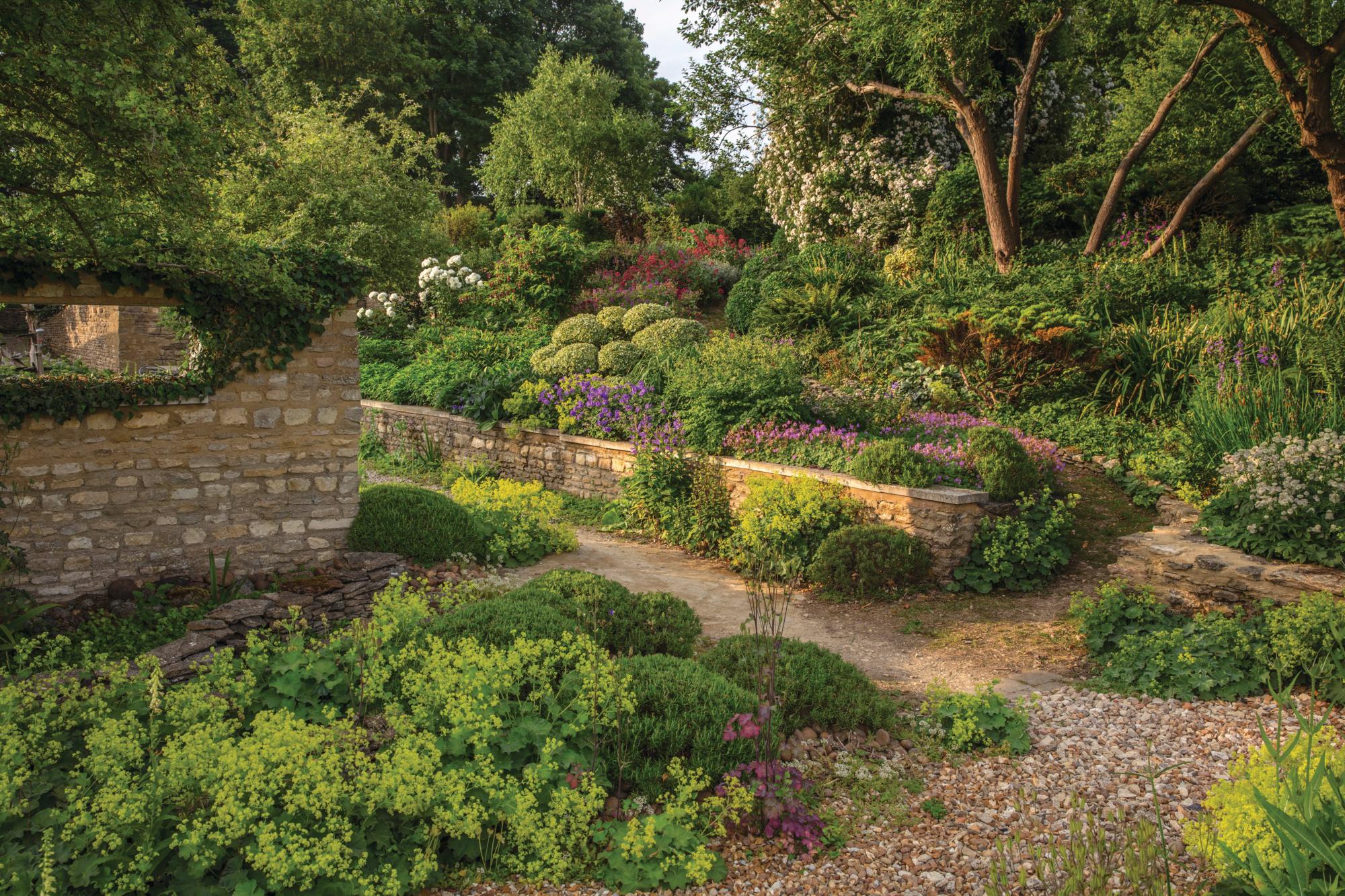
To the west of the house, the couple have created a gravel garden, featuring box topiary and an ivy-clad wall, also built from local stone, with an aperture that frames the village church and fields beyond. The Spring Garden on the slope next to it can be viewed from the kitchen, and includes snowdrops and spring bulbs, followed by summer-flowering perennials, against a backdrop of multi-stemmed goat willow (Salix caprea). “We also cloud-pruned a Euonymus fortunei to make a focal point here,” says James.
A path takes you to the upper lawn, and on through more densely planted borders to the west, and the adjacent avenue of hornbeams, underplanted with meadow grasses and flowers, which forms the main view from the house. The garden then opens up to a sunny area, which Emily and James have recently redesigned. “We replaced the vegetable garden, which is now at the end of the plot, with our Open Sky Garden, to make the most of the sunny site,” explains James. “We planted ornamental grasses such as Melica ciliata and Stipa tenuissima, Nepeta and Phlomoides tuberosa ‘Amazone’ into a thick layer of sand, and installed a beautiful clay sculpture by Hannah Bennett at one end to draw the eye.”
A small orchard sits to the east of the Open Sky Garden, and a naturalistic pond to the west. From here, pathways take you through a large perennial meadow planted with natives, and near natives that extend the pollen season, to the southern edge of the garden and the Woodland Garden, which the couple created in 1999. “We waited ten years for the hornbeam, ash and field maple trees to establish, before underplanting them with hellebores and snowdrops, which have now naturalised and look spectacular in winter,” says Emily. “These are followed by wood anemones, snake’s head fritillaries and bluebells that deliver colour later in spring.”
James has also created a sculpture-cum-wildlife habitat with carefully arranged prunings that snake through the trees. The whole garden at Old Park Barn Garden is a living work of art, evolving gradually over time, with every plant, material and view carefully considered by its creators. In a world where instant gratification is the order of the day, Emily and James show how taking things slowly can be more fulfilling, while the act of gardening brings them inner peace. “Patience is the key,” says Emily, “and nothing feels like a chore when you’re enjoying it."
USEFUL INFORMATION We’ll be returning to Old Park Barn in March to see the Woodland Garden in spring and learn more about James’s artistic approach. Address Old Park Barn, Stoke Goldington, Buckinghamshire MK16 8NY. Open For the NGS, 20-21 June 2026, 1.30- 5pm, and by arrangement. ngs.org.uk
Photographs: Clive Nichols