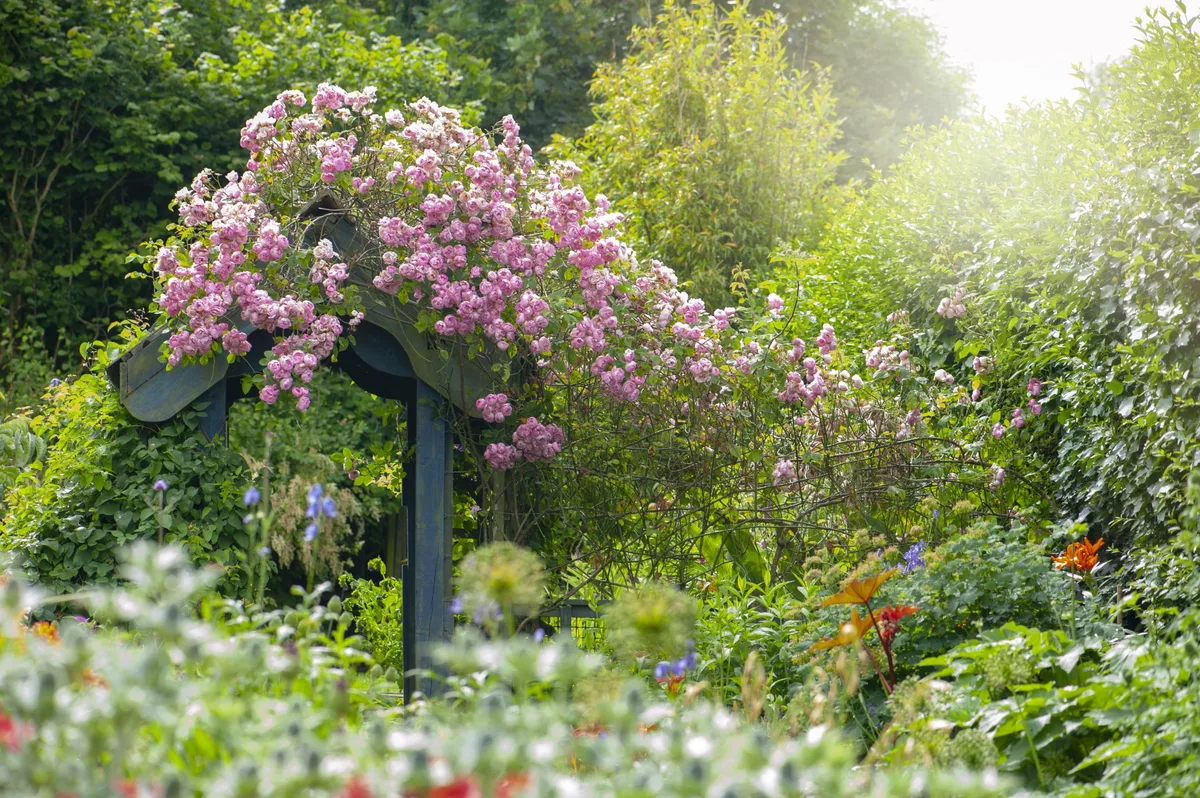
Roses are the epitome of a romantic English garden, with their blousy and fragrant flowers. They’re tough and easy to grow, and in this summer’s hot weather and drought they fared surprisingly well. With flower colours in almost every colour imaginable and many different types, from climbers to shrubs to patio roses, there’s a rose for every garden. Add them to a border, train up an arch or pergola or along a fence, or grow one around your front door.
You may also like
- Our ultimate guide to growing roses
- A rose expert on how he shares his gardener with his partner... who doesn't like roses
Between November and the end of March is the best time to plant roses. During this time, the plants are dormant, which means that they can be supplied “bareroot” – dug up from the supplier’s field and despatched as a bare bundle of roots and stems. Once delivered, they don’t look very promising – they look like bare twigs – but once planted, you can leave your rose to rest in the ground through winter, quietly establishing its roots.
Planting bareroot is the traditional way to plant roses, because they establish and get growing better this way. If you buy a potted rose in in the summer, it will be putting its energy into flowering and putting on new growth, not putting down roots. This means it will need watering and feeding generously throughout the season, making it higher maintenance. Buying bareroot means your rose will establish in the moist winter soil, then burst into life in spring, putting on leaves and shoots, and flowering that summer.
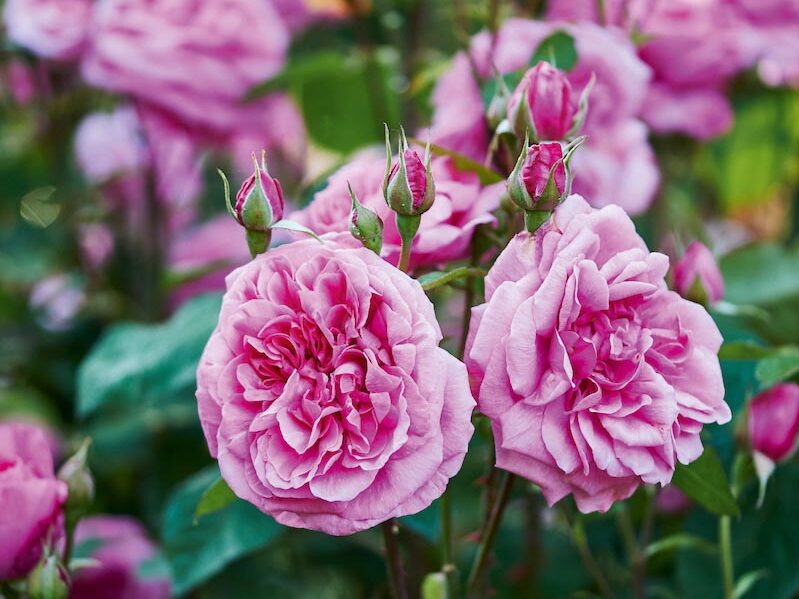
Planting roses bareroot is also cheaper – you could save up to a third of the price on a plant this way. The ‘world’s favourite rose’, the bright pink ‘Gertrude Jekyll’, costs £35 potted at David Austin Roses, and £24 bareroot. On the Peter Beales website, pale pink ‘Bonica’ costs £32 potted, and £23 bareroot.
Another advantage is that you’ll also find that buying bareroot gives you the largest possible selection – garden centres only sell a limited selection, and by summer, popular varieties may have sold out.
Bareroot rose buying tips
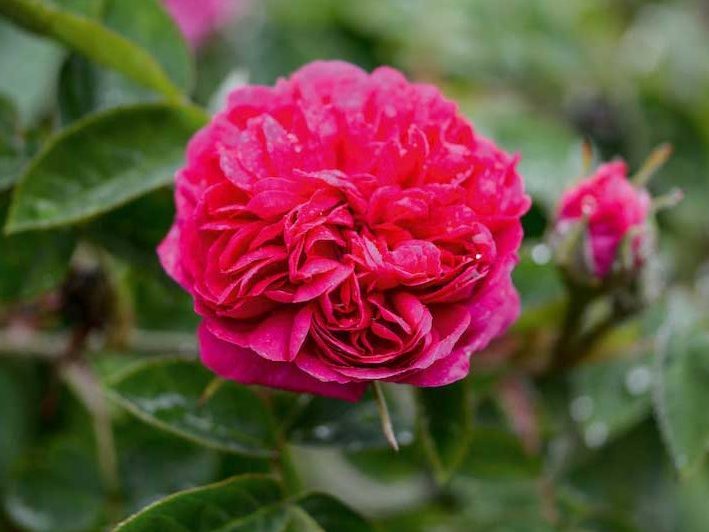
Buy online or by mail order – you will not find bareroot roses at the garden centre. Reputable suppliers in the UK include David Austin, Harkness Roses or Peter Beales and you can search by colour, type, aspect and size.
Most roses do best in a spot with around four hours of direct sun a day. Make sure the spot you have chosen is not too crowded by other plants.
Planting bareroot roses is easy. Here’s our step by step guide.
How to plant bareroot roses
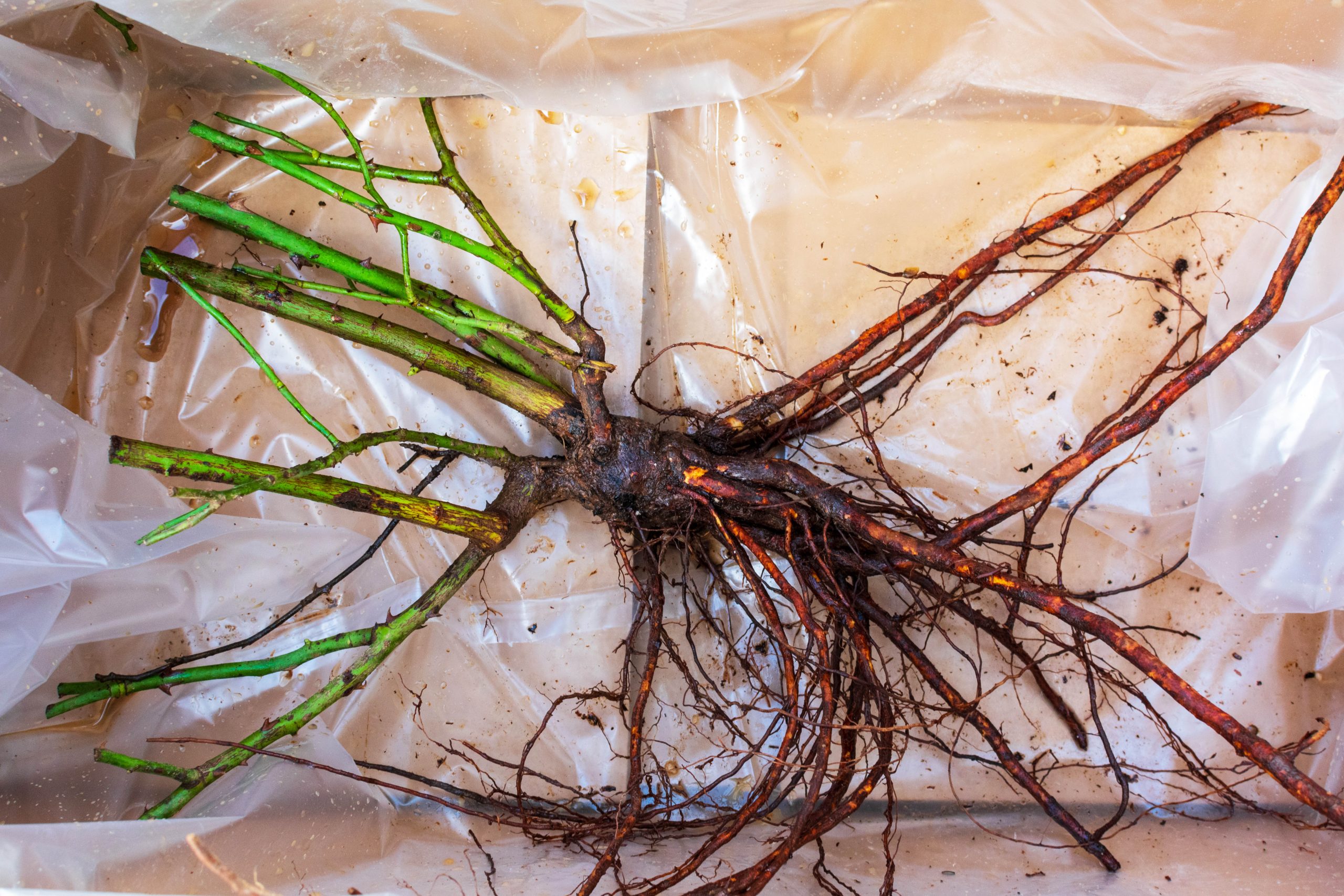
If the soil is frozen or waterlogged when your plant arrives, keep your rose in its packaging in a cool, dry place. Or cover the roots with some damp compost (called ‘heeling in’), to prevent the roots drying out. Plant when the weather has improved.
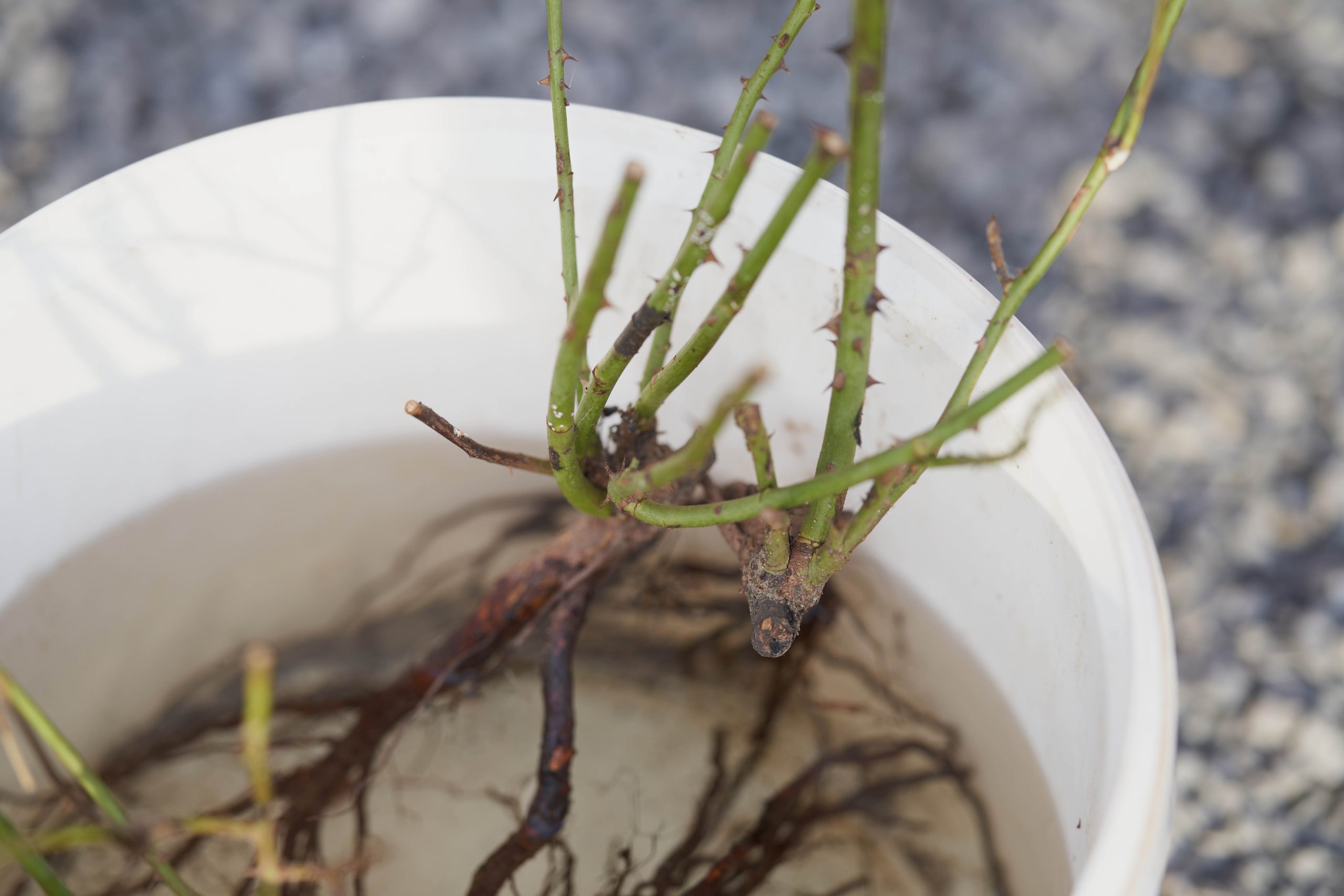
Step 1: rehydrate the roots
Soak the roots in a bucket of water for a couple of hours. Keep your rose in the water until you are ready to plant.
Step 2: prepare the soil
Dig the area thoroughly with a garden fork, removing weeds and large stones to let roots grow freely. Dig a hole that’s roughly 45 x 45 cm, slightly wider and deeper than the roots. Break up the soil at the base and mix in a spadeful of well-rotted manure or organic soil improver. Add two spadefuls of the same soil to the soil removed from the hole.
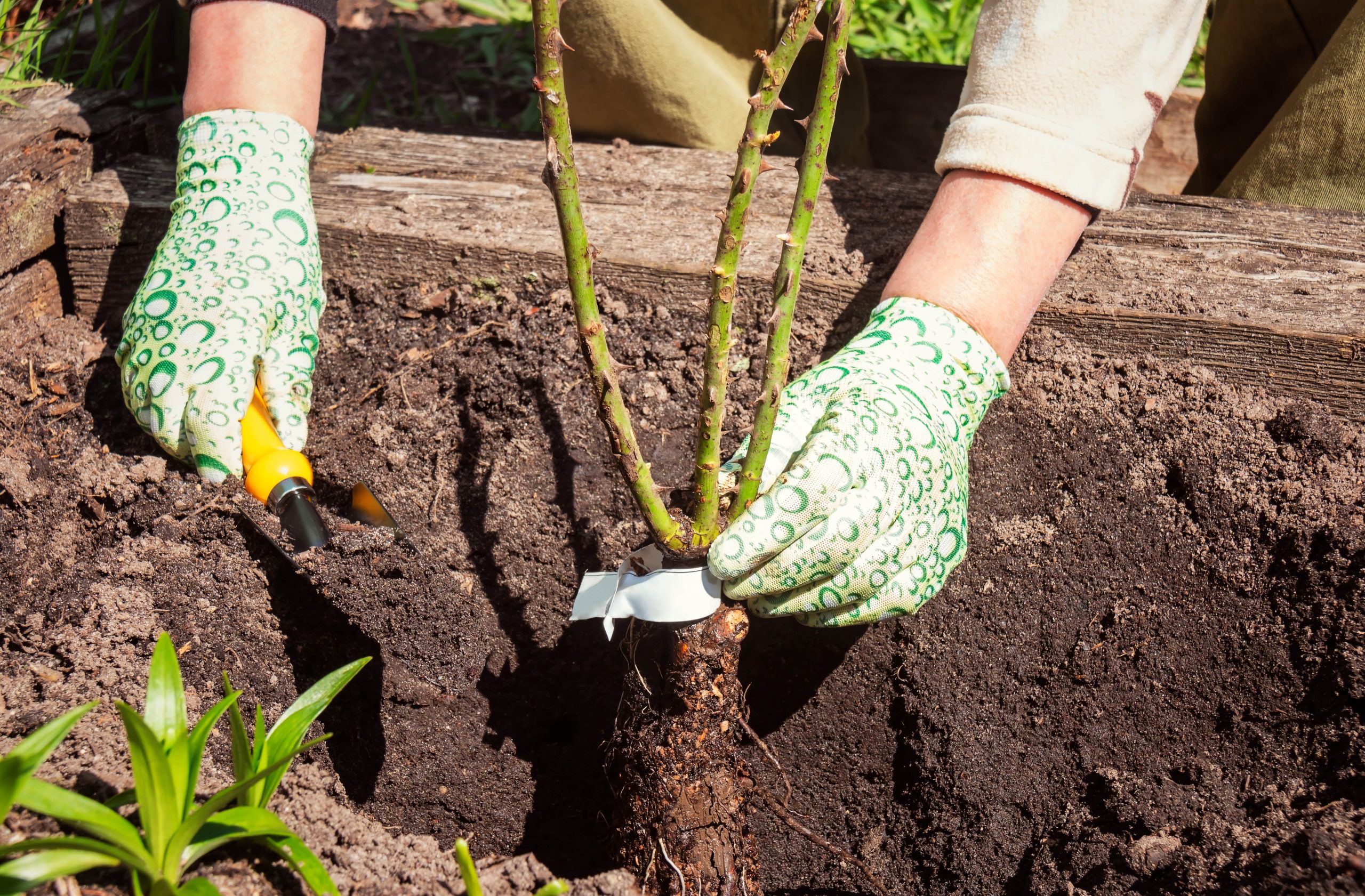
Step 3: plant your rose
Position the rose: Place the rose in the centre of the hole and spread the roots out evenly. Ensure the bud union (which you will see as a bump in the stem) sits 5-8 cm below the soil surface.
Step 4: firm in and water
Fill the hole back up with the remaining soil, tread the soil down gently and water generously.
Once planted, you can leave your rose to rest through the winter, confident that it is establishing strong roots. If there’s little rainfall, you could give it a good soak from time to time to keep the soil moist.