California is known as the Golden State, not for its glitter and glamour, but for the vast stretches of sun-burnt grassland that defines its landscape. In Palo Alto, the heart of Silicon Valley, it’s easy to think only of the future – this is the place where tomorrow’s technologies are imagined, engineered and launched – but it’s not all gleaming campuses and innovation labs. Here you’ll also find historic houses from a time when electricity was still a novelty and the word computer meant nothing.
You may also like
- A lush, drought-tolerant garden in California
- The Moroccan hillside garden created by writer Umberto Pasti
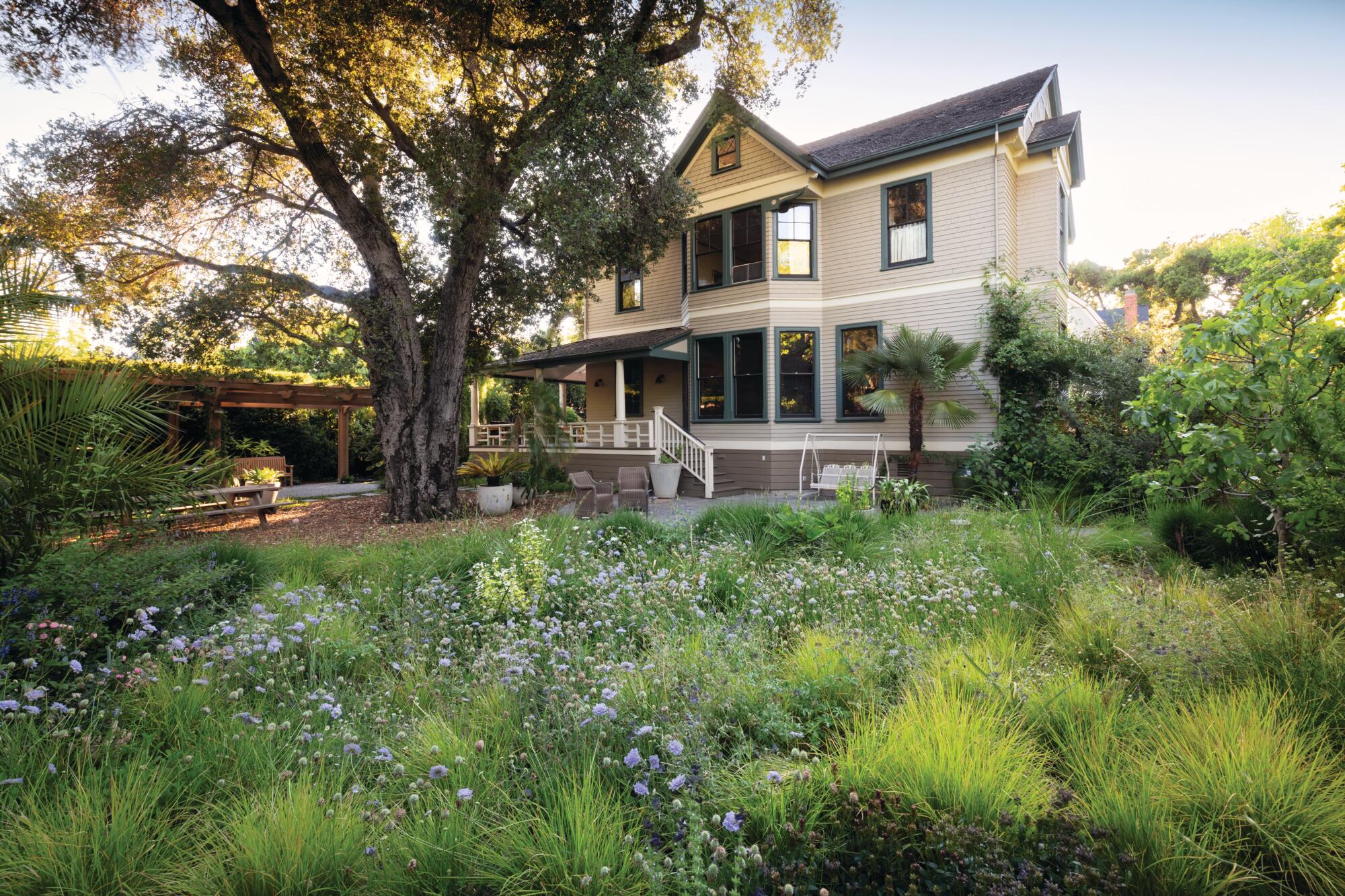
Long before the valley became synonymous with digital revolution, this building quietly marked the early chapters of California’s story. The house, designed by architect Charles Hodges, was built in 1893, in one of the first suburbs near Stanford’s campus. Over time, the garden has been reduced to 1,000 square metres, and it now stretches mostly along two sides of the magnificent building, facing southeast and cornering the street.
You may also like
- A wildlife and child-friendly garden in California
- An informal, drought-tolerant garden in California
To understand land, you must first understand its ecology. This is a phrase that renowned plantsman John Greenlee repeats often. Growing up in Los Angeles, he spent his youth mowing lawns and imagining how he could replace these green carpets with landscapes rich in texture, movement and biodiversity. It felt only natural for him to step into the world of ornamental horticulture, where he deepened his knowledge of plants and the land’s origins. He quickly gravitated towards grasses, and has since become so rooted in this plant family that he authored The Encyclopaedia of Ornamental Grasses and has a cultivar of Sesleria named after him.
Greenlee Nursery, which he founded in 1987, was the oldest specialist grass nursery on the West Coast. When John was later offered a piece of land on the Malibu shoreline, he created a second nursery location designed as a garden, where visitors enjoyed an incredible diversity of grasses. This work granted him an extraordinary depth of knowledge and hands-on experience, especially in the making of designed meadows and naturalistic plantings. It also opened doors to creating gardens for the rich and famous, giving him the creative freedom to explore the full possibilities of plants and place. He closed the nursery in 2009, and is now focused on landscape design and meadow collections with his firm Greenlee & Associates.
You may also like
- A year-round dry garden in Spain, designed by Fernando Martos
- How a former pig farm became a tranquil garden that's a haven for wildlife
For this garden, the owner Leslie Evers, a noted recording artist, dreamed of stepping outside with her guitar, immersing herself in a natural, private atmosphere that could inspire her music. She consulted John, who quickly introduced the idea of referencing the property’s past – once an oak savanna – and reimagined the garden as a lush, intimate meadow that harmonised with her vision. He prefers a plant-driven approach over the use of extensive hardscaping, letting the plants themselves define the character and rhythm of the space. After all, much of California is still a grassland.
Sometimes, as a designer, you simply have to work with what you’re given
John understands better than most the true value of land. In the Bay Area, where property prices are among the highest in the country, every square metre carries enormous value. Rather than giving away the front yard to passersby, he enclosed the property with a laurel hedge, maximizing space for a meadow. But he didn’t shut out the neighbourhood entirely. The sidewalk strip – often called the ‘hell strip’ – was transformed into a small stage for visual interest, offering pedestrians something to enjoy too.
While working on the garden, John found himself constantly stepping over a tiny little grass by the sidewalk. He managed to identify it as a sedge from Australia, Carex inversa, which had somehow made its way to California. As it was so comfortable in the harsh conditions, he decided to propagate it and increase its numbers, and then used it strategically throughout the sidewalk strip.
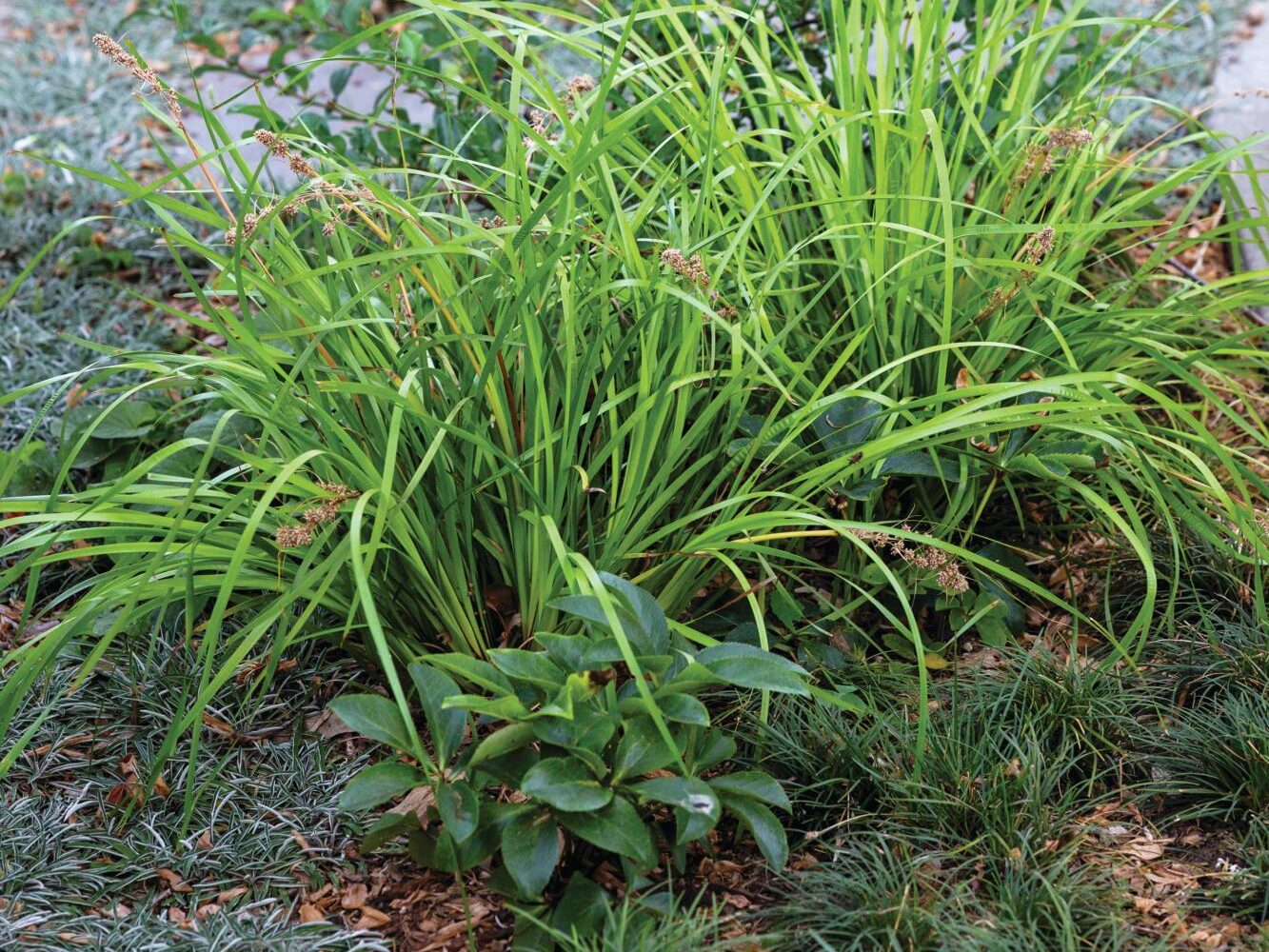
The sedge was combined with other walkable groundcovers, such as Falkia repens (which grows well alongside tree roots) and Dichondra repens, as well as additional sedges and, of course, Sesleria ‘Greenlee’, a hybrid he selected at the nursery that has become a favourite with designers around the world. They create a resilient fringe to the property that can handle foot traffic while looking good all year.
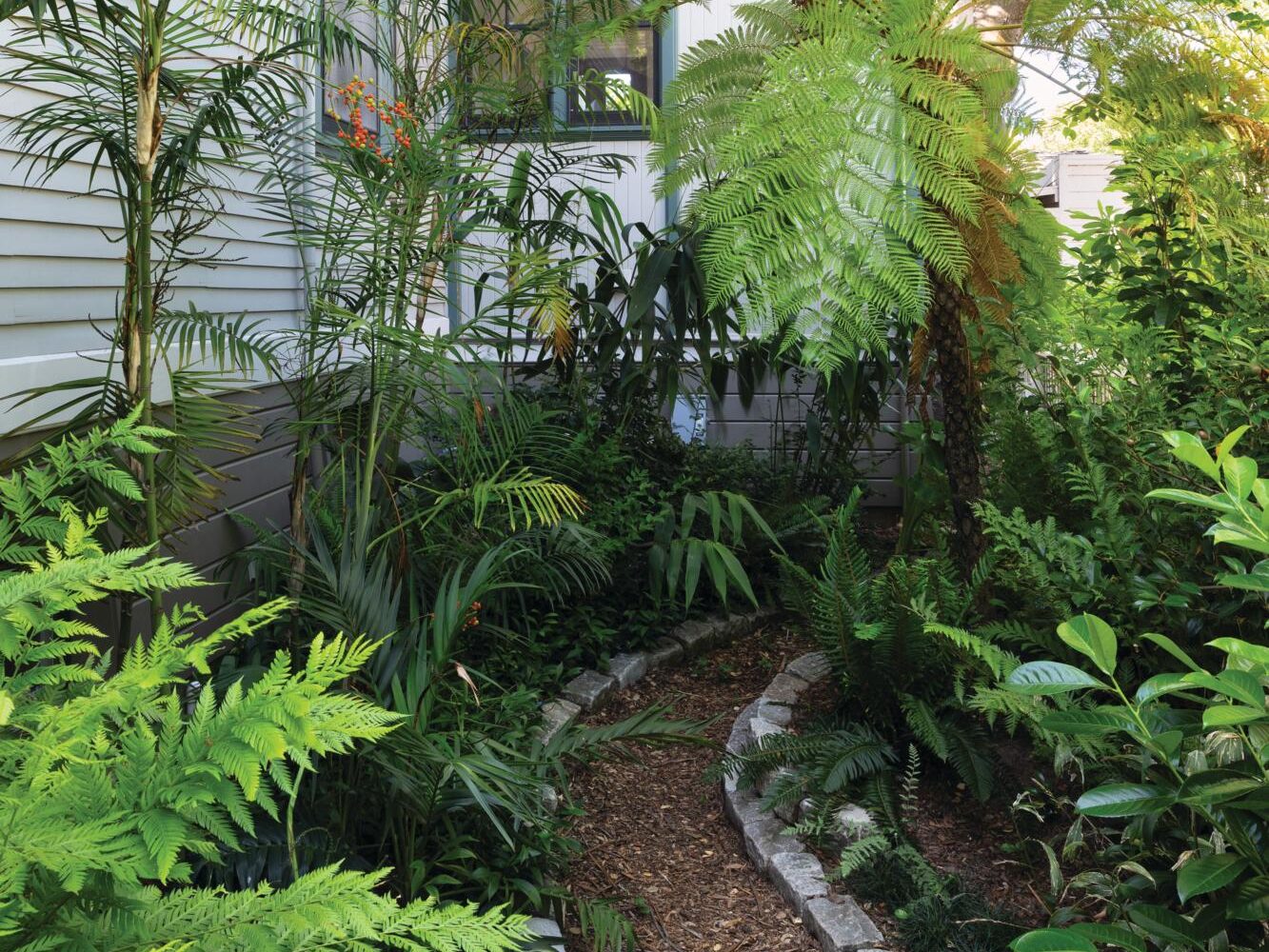
In the garden, the single existing palm tree, Phoenix canariensis, had completely grown out of sight, its foliage visible only from across the street. John decided to introduce more palms that would stay within view throughout the owner’s lifetime. Magnificent Brahea edulis, the Guadalupe palm, were planted to contrast with the texture of the boundary hedge and add depth to the view from the house, and specimens including several Phoenix and hybrid coconut palms were also added. To brighten the space between the hedge and the palms, he used Acanthus mollis to provide a lush, elegant layered transition and relate to the overall meadow that would fill up the garden.
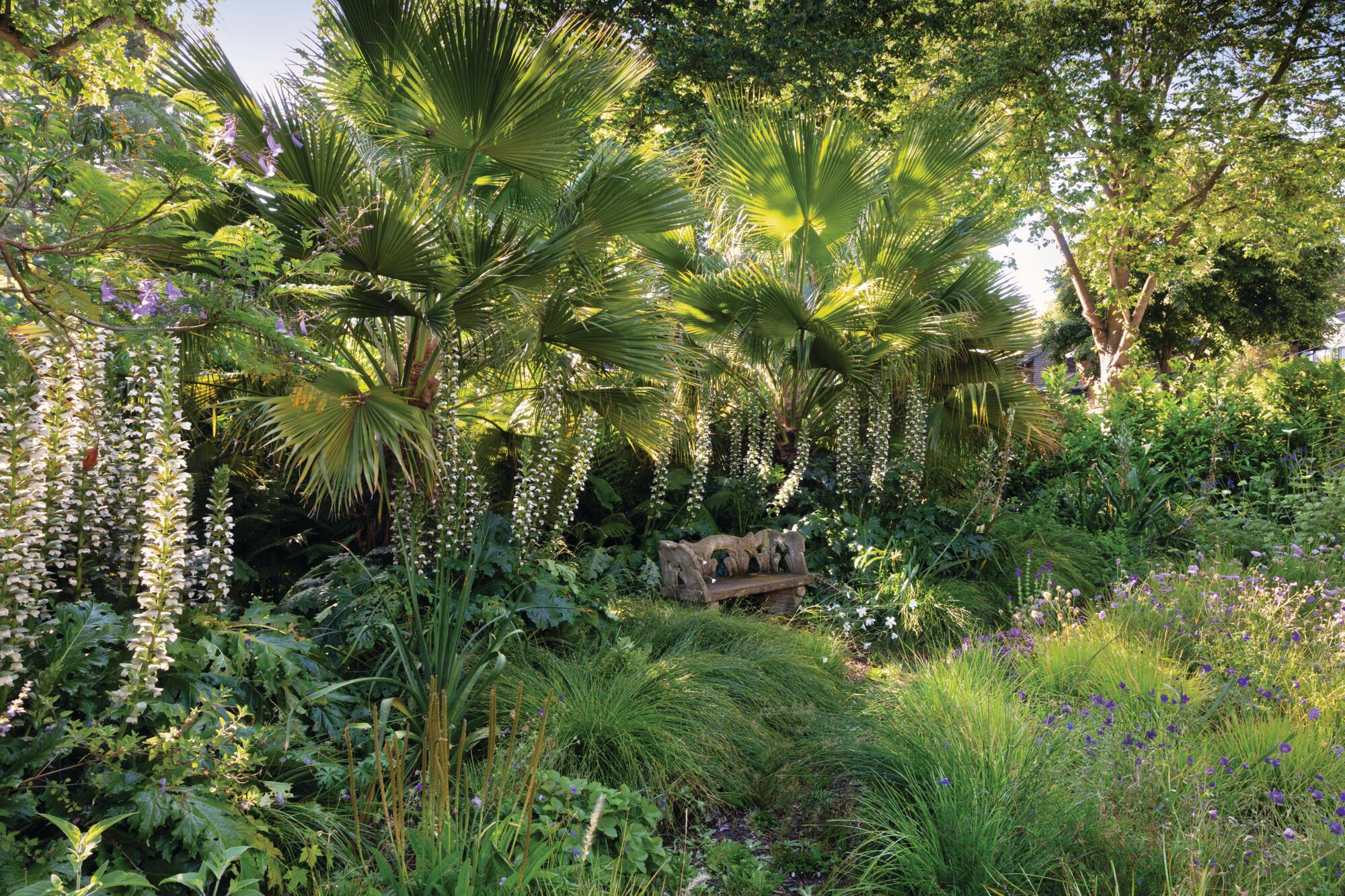
The garden was designed around a dying oak tree, which they were unable to dispense with due to local regulations. “Sometimes, as a designer, you simply have to work with what you’re given,” says John. To protect the tree and its roots, a simple gravel terrace was created around it.
The overall design, however, is dominated by the meadow. Simple paths lined with sedges invite visitors to wander into the planting and fully experience it. The main meadow is a carefully composed matrix of Sesleria and sedges. These combined cool-season grasses thrive in the Mediterranean climate of California, and help achieve the maximum amount of green for the least amount of water. Sesleria in particular provides year-round interest without becoming messy.
You may also like
For those with an interest in grasses, John recommends reading Karl Foerster’s poetic book Einzug der Gräser und Farne in die Gärten (1957), which inspired him while creating his own Encyclopaedia. Today, gardeners appreciate grasses’ full potential and seek plantings with a naturalistic character, but only a few decades ago, he explains, the prevailing vision of what a designed garden should be was entirely different.
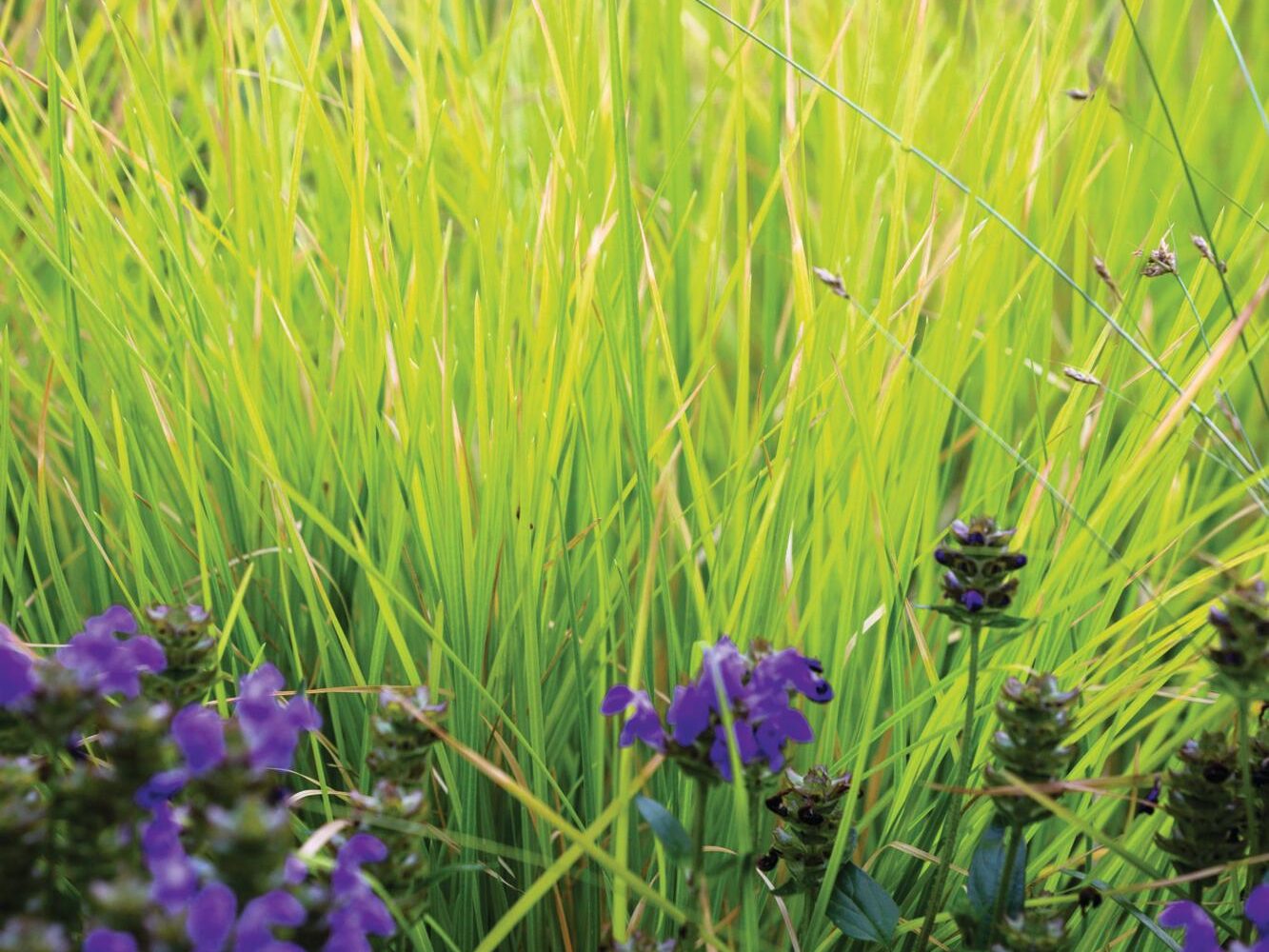
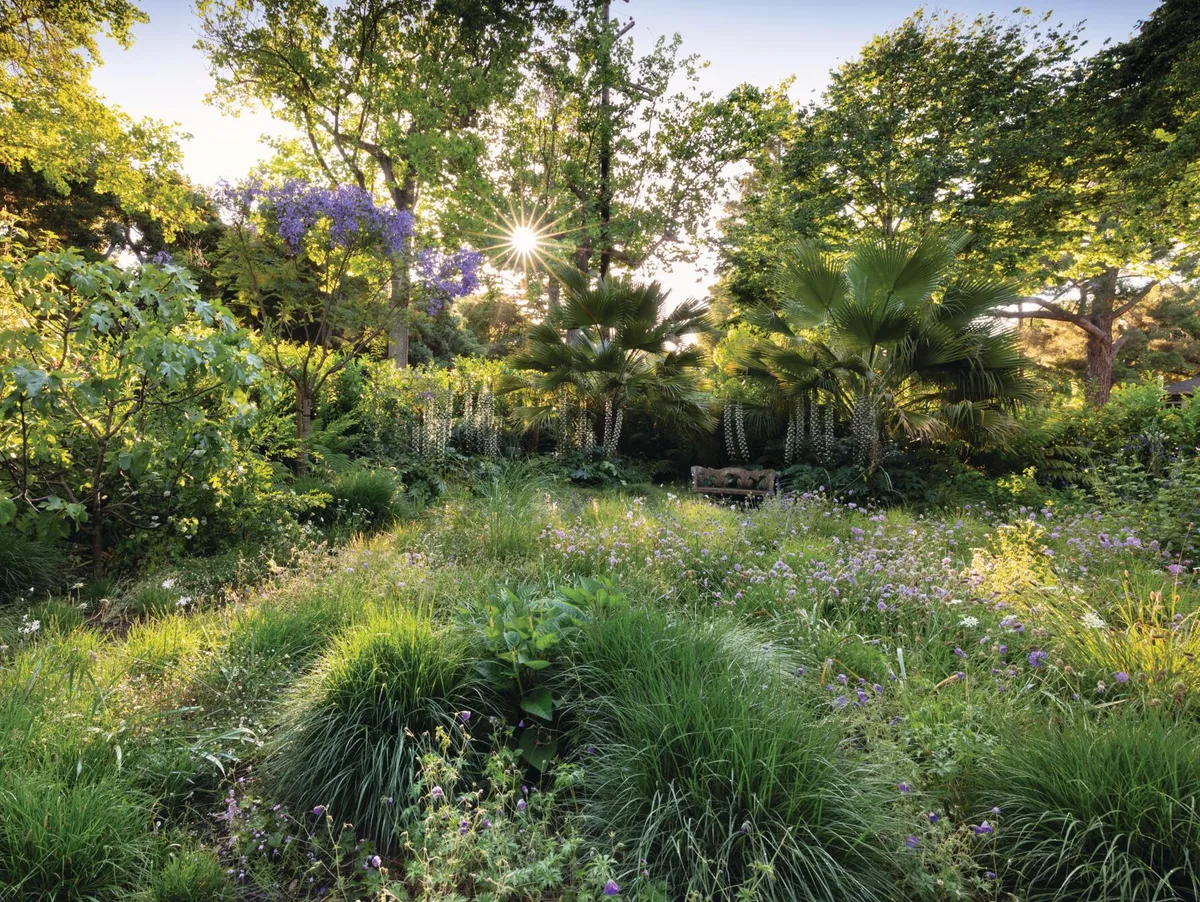
The overall impression of this mini meadow is subtle, but the details are eye-catching – the planting is not about grasses alone. They form a stable base layer, creating a backdrop for the “meadow sweeteners”, as John likes to call them, that appear in bursts of colour throughout the year. His meadow schemes are usually made up of around 30 components. “Choose plants that work well with others, to create a community of plants,” he advises. “It’s all about timing: plants come on stage, shine and step back for the next one. Aim for richness and diversity.”
It’s all about timing: plants come on stage, shine and step back for the next one. Aim for richness and diversity.
His basic recipe starts with six bulbs; typically a mix of early, mid- and late-flowering types including Leucojum, Narcissus, Bulbinella, Asphodeline and Crocosmia. John chooses around seven types of annuals that will spread just enough, such as Papaver, Orlaya grandiflora and Lobularia maritima. He adds six different grasses with a similar character, such as Sesleria, Pennisetum, Festuca and Carex; and ten perennials that take turns throughout the year, such as irises, Salvia spathacea, Agastache cana and Penstemon cobaea. Gather the ingredients, mix them together and you’ll create a fine-textured meadow scheme that keeps you happy all year around.
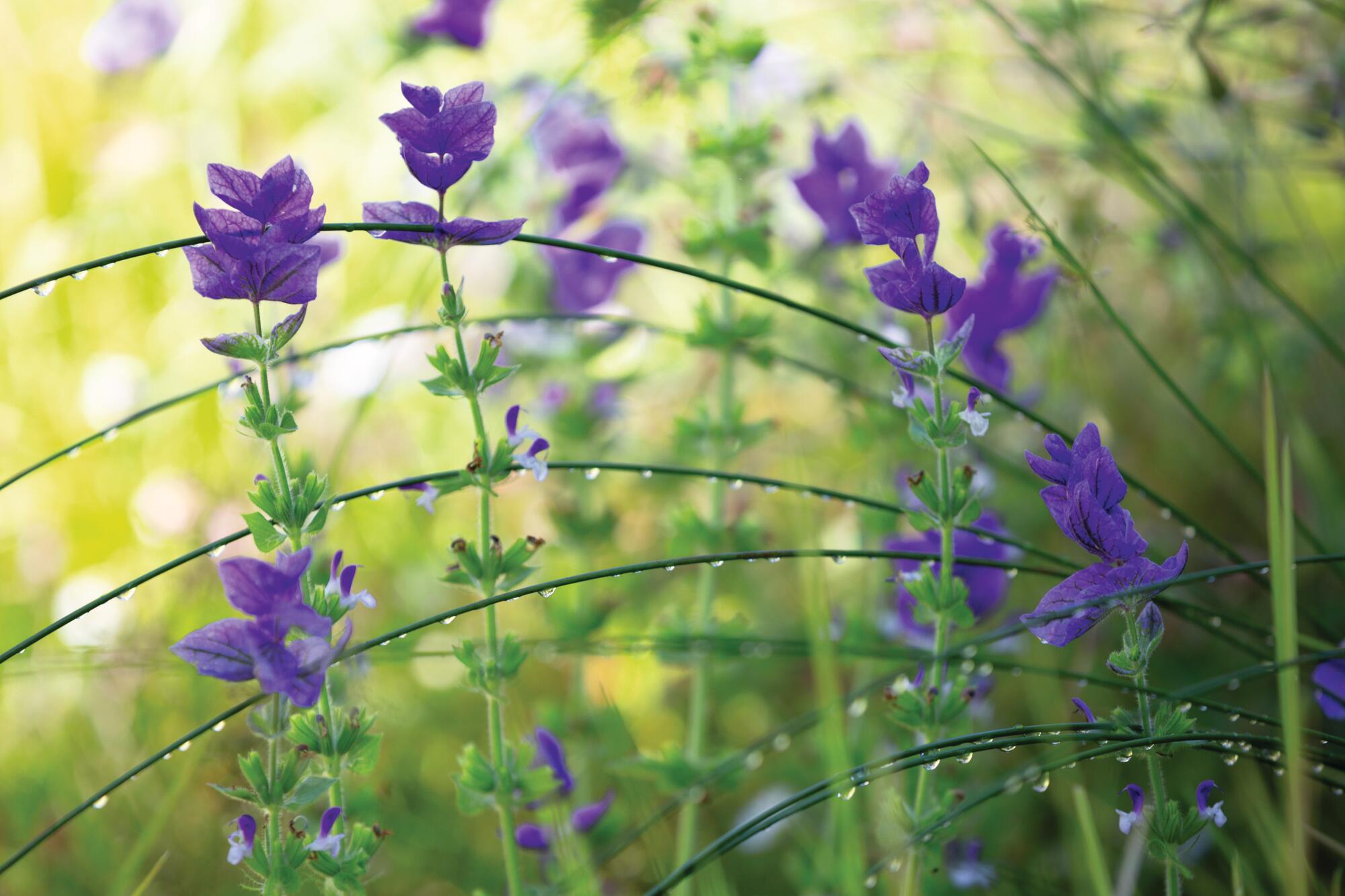
Here, the existing jacaranda tree and the house inspired a palette of blue and purple blooms, giving the garden a cool feel in the heat of summer. Flowering companions include Scabiosa caucasica ‘Fama Deep Blue’, Geranium x johnsonii ‘Johnson’s Blue’, Campanula poscharskyana, Briza media, Salvia patens and Orlaya grandiflora ‘Minoan Lace’. Together, these plants create a layered, textured planting that feels natural yet carefully orchestrated, offering seasonal interest and ecological richness.
The garden now reflects its history and origins and offers a calm homecoming to its owner. She can play her guitar and get inspired by the meadow, which changes its look with every season. It shows that you don’t need acres to create a meadow-like haven. Even a smaller space, it seems, can be turned into a thriving landscape.
Find out more at greenleeandassociates.com
Subscribe to Gardens Illustrated to have inspiration dropped on your doorstep every month.