In retirement, some of us might want to slow down and maybe take things easy. Not retired GP Steven Medley, who through meticulous research, and a lot of hard work, has single-handedly created a naturalistic garden that is nothing short of a masterpiece.
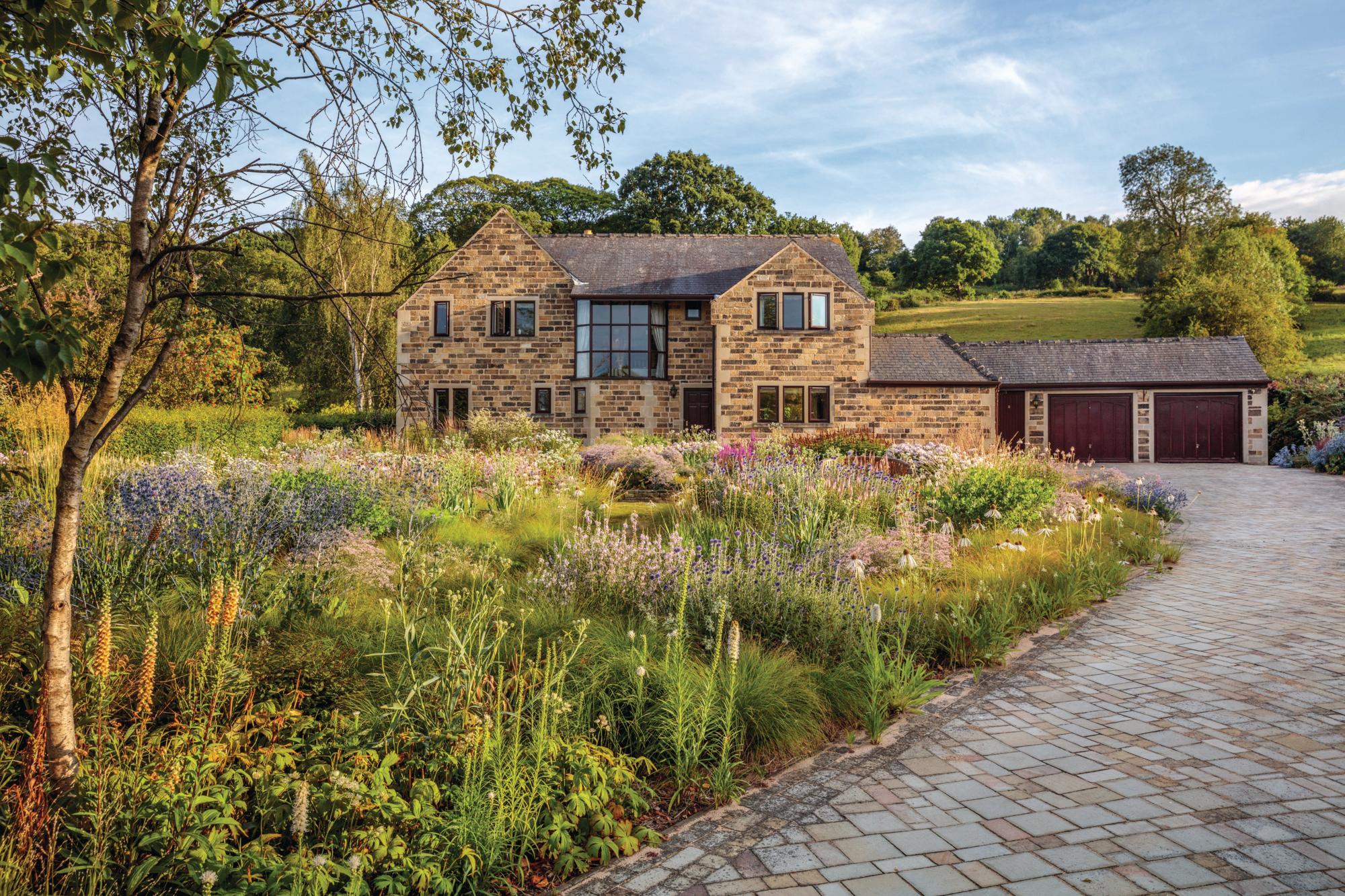
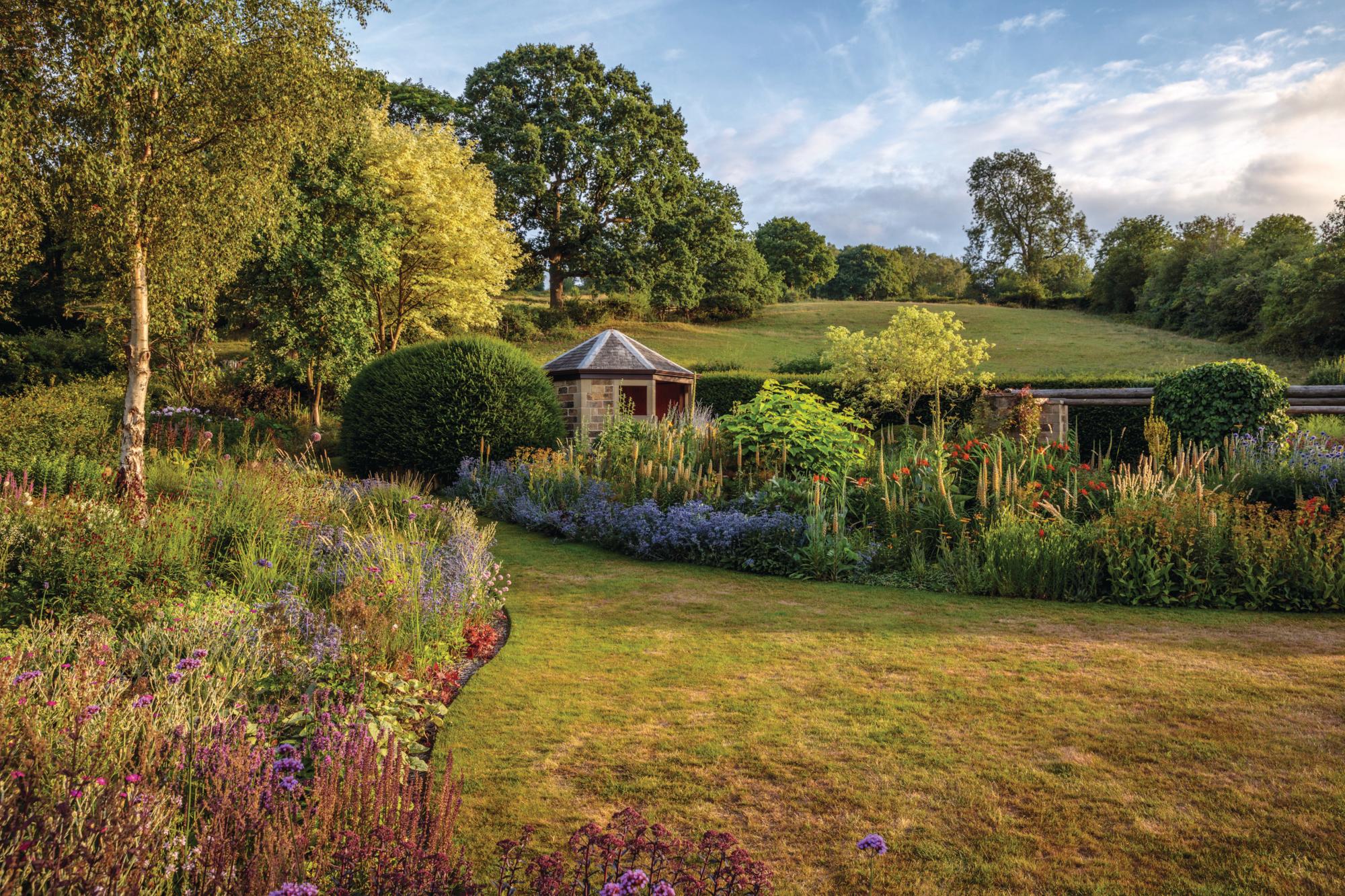
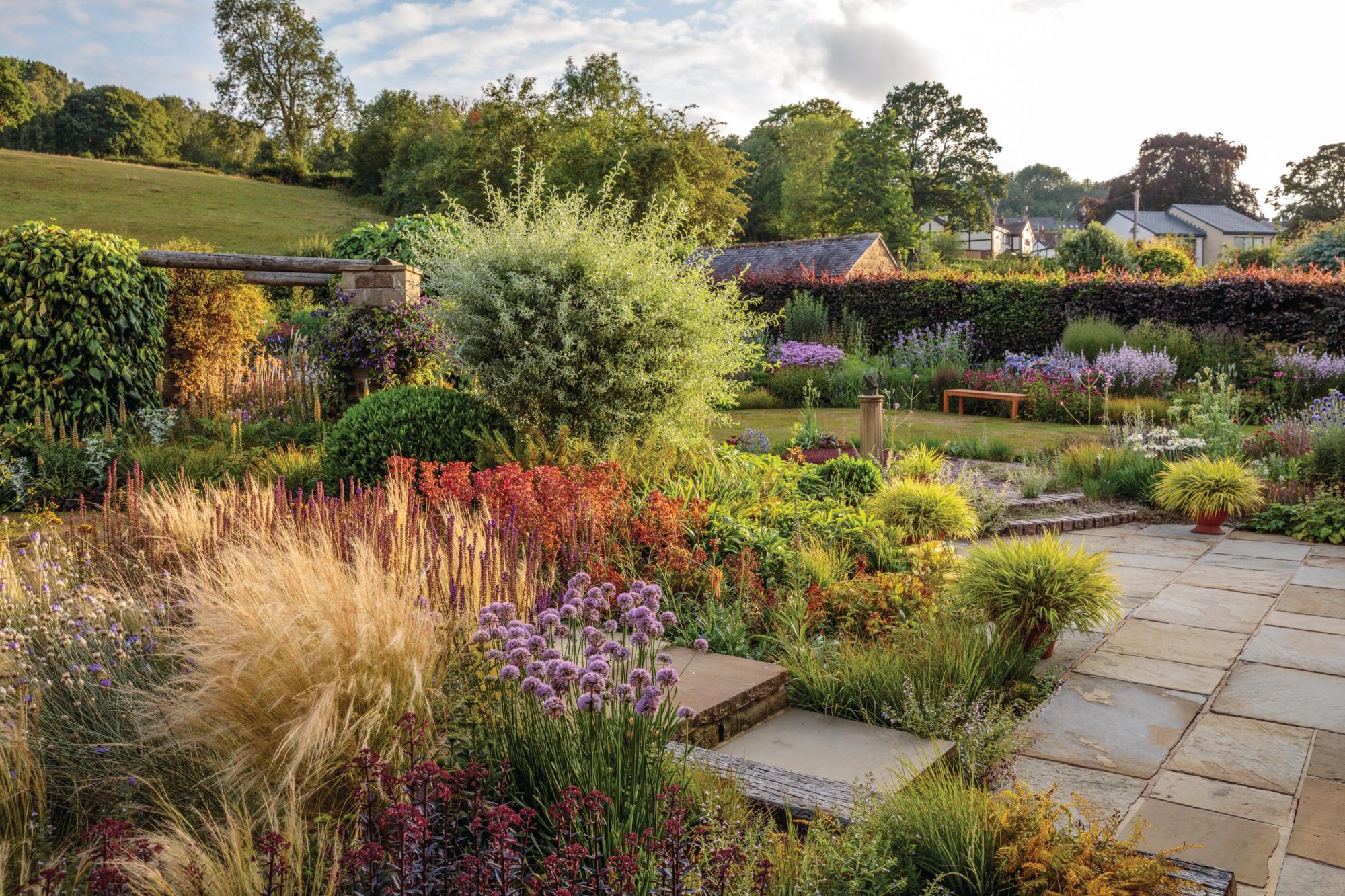
At two-thirds of an acre, this wedge-shaped plot, which slopes slightly north, is striking in its scale and feel. Abundant planting envelops the space with colour and texture, hinting at the influences of Piet Oudolf, Nigel Dunnett, James Hitchmough and German-style mixed planting. “I’ve tried to make the whole garden a bit more complex as time goes on,” he says.
You may also like
- The owners discovered this hidden Arts & Crafts garden and then brought it back from obscurity
- This revitalised family-friendly front garden was turned from driveway to wildlife haven
In 1994, the family had engaged James Pinder Landscapes to create a garden for their new-build home. This garden with its pergola, stone summerhouse and large mixed borders served the family perfectly until Steven’s daughter had grown up and there was no longer the need for a huge lawn to accommodate the bouncy castle on birthdays.
About the same time, in the early 2000s, Steven encountered Piet Oudolf’s designs, and these sparked the idea of the transformation of the garden. “I thought ‘Wow, that is Premier League; my garden is League Two,’” he says. Visits to Oudolf designs at Scampston Hall in North Yorkshire and Hauser & Wirth in Somerset set things in motion, along with a memorable conversation with Oudolf himself at his garden Hummelo before it closed to the public.
Steven cites three key books as inspiration: Designing with Plants and the later Planting: A New Perspective, both by Piet Oudolf and Noel Kingsbury; and Planting in a Post-Wild World by Thomas Rainer and Claudia West. Also instrumental were Kim and Stephen Rogers and their nearby Dove Cottage nursery, sadly now closed. Here Steven bought plants for a West Yorkshire climate and learned from
the nursery’s demonstration garden.
Retirement in 2015 led to a new-found freedom for Steven. A horticulture course at Craven College added rocket fuel to a headful of new ideas, and soon evergreen shrubs and lawn made way for one experimental planting scheme after another “I was massively inspired by The Sheffield School,” he says, finding himself particularly drawn to the late Nigel Dunnett’s method of naturalistic planting using ‘centres of gravity’ and ‘satellite’ plants.
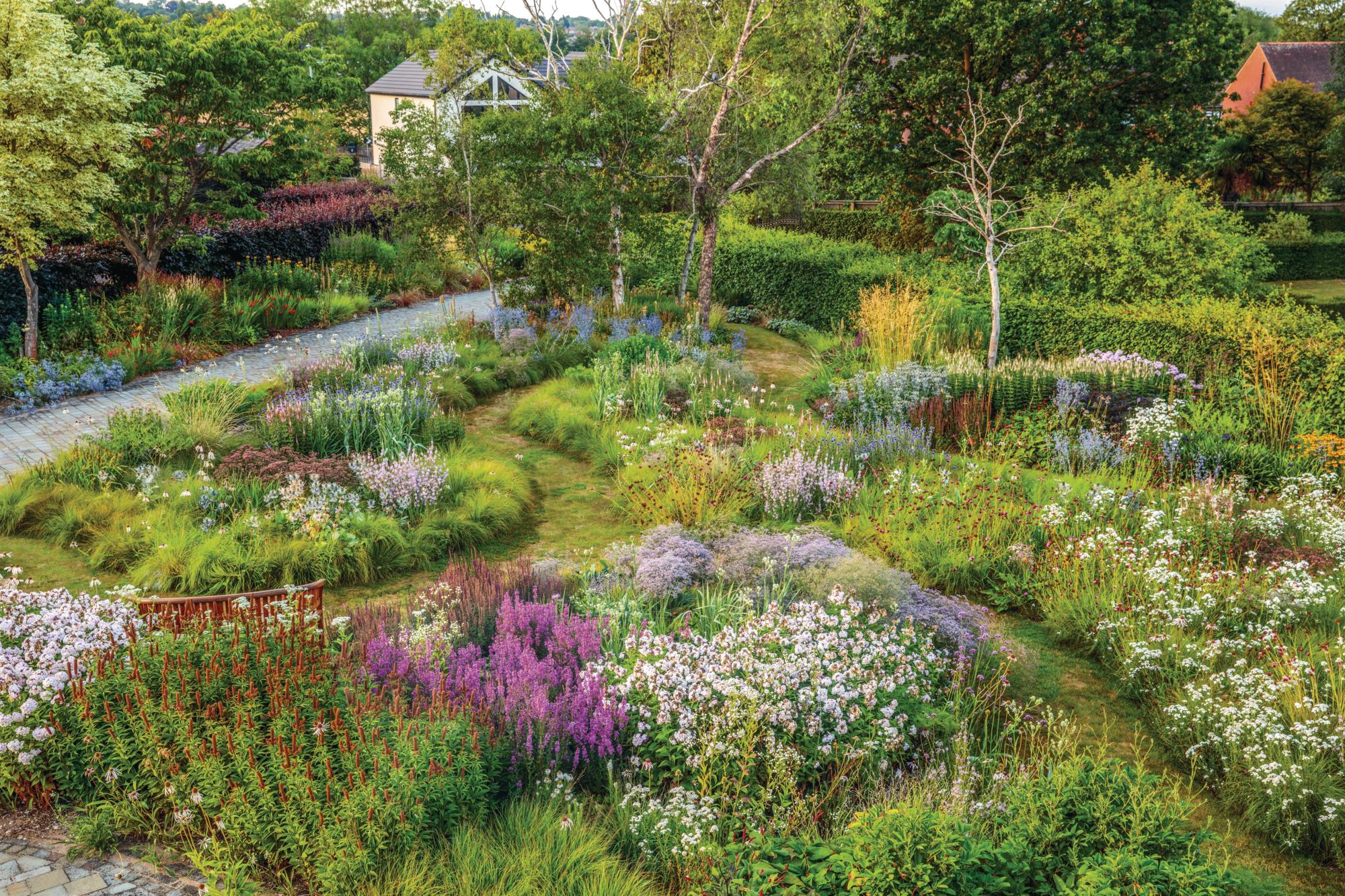
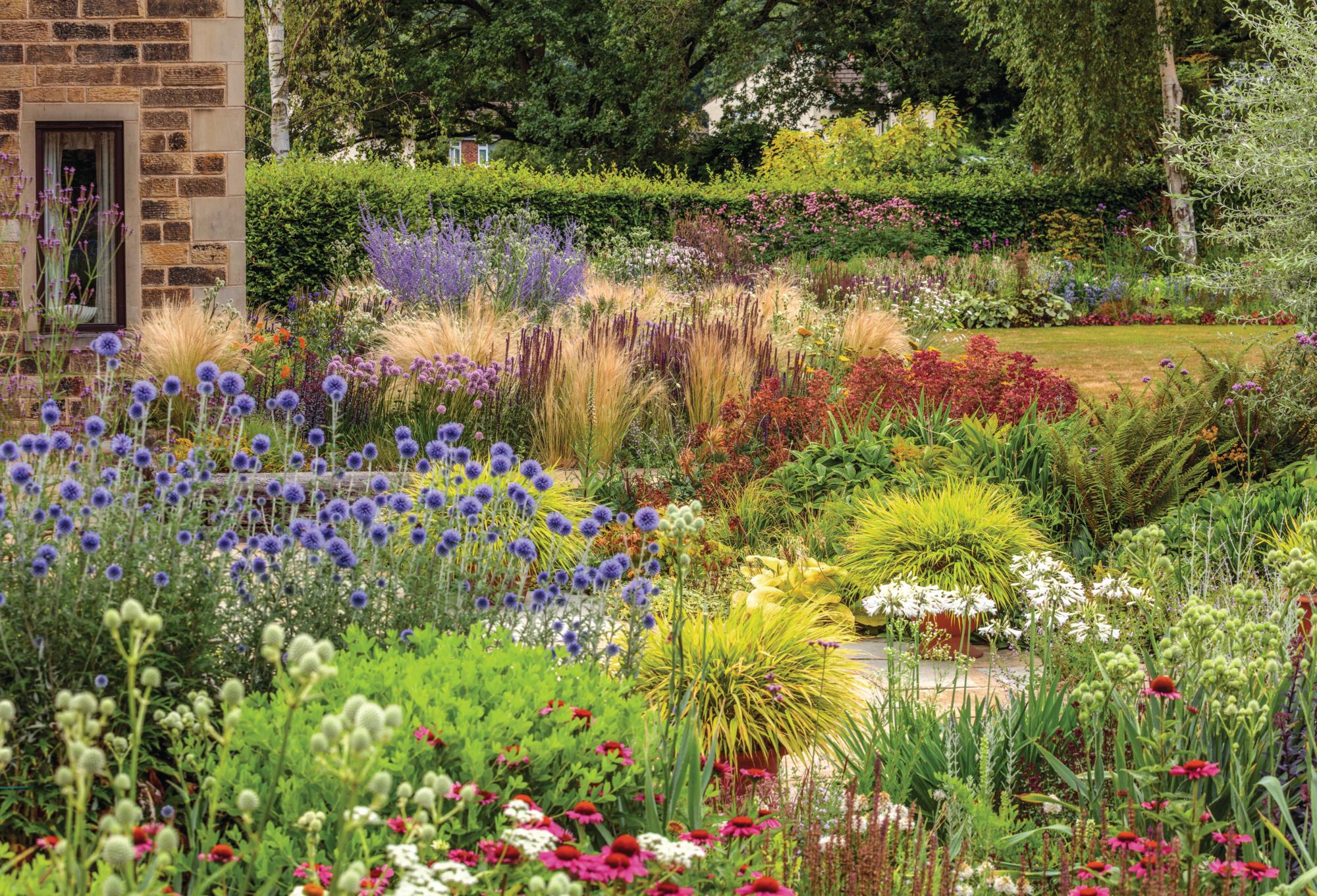
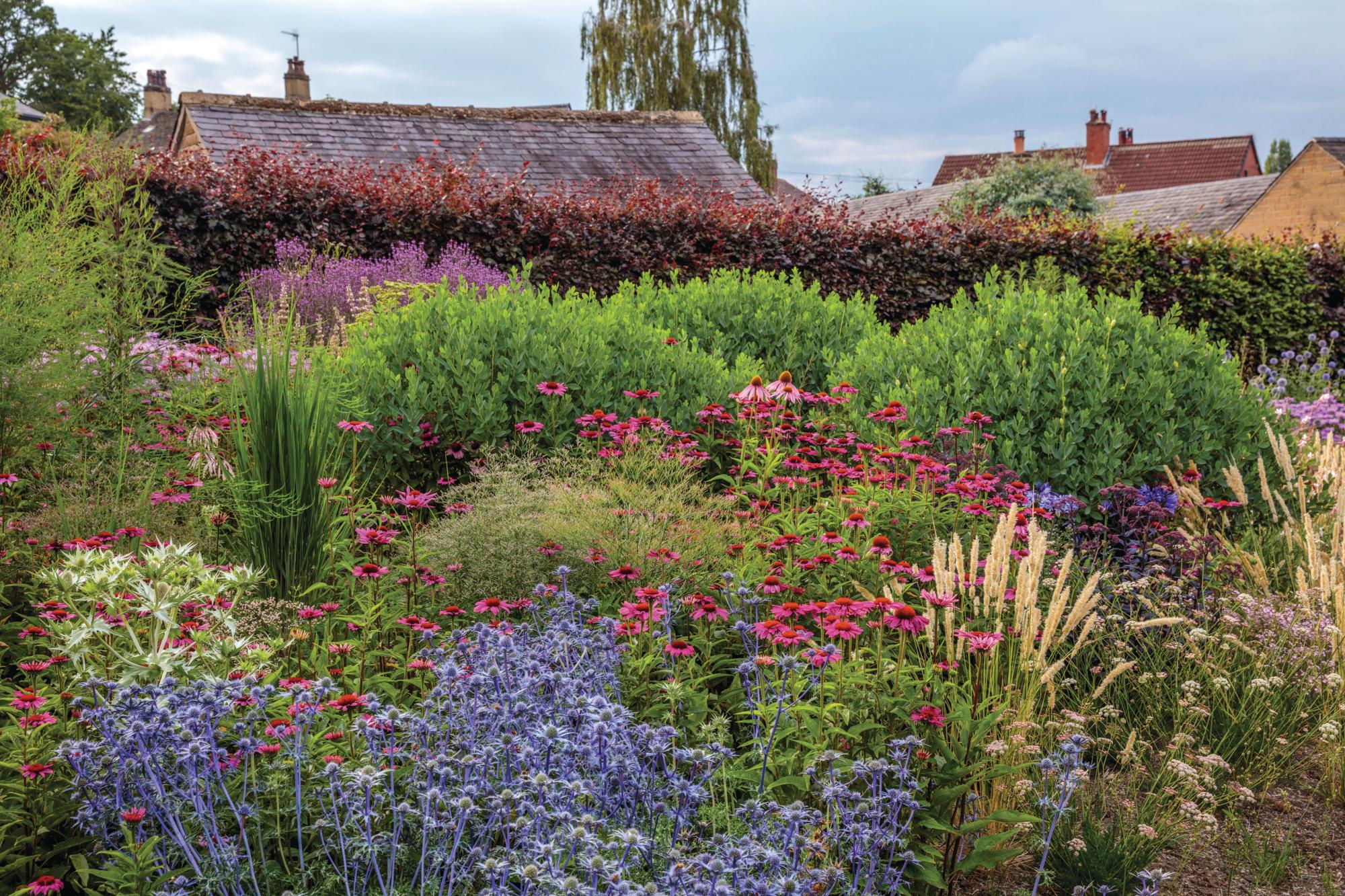
Today, Steven’s large front garden is an expanse of perennials with winding mown-grass paths to “feel immersed and for maintenance to weed”. The prairie grass Sporobolus heterolepis is a key part of the matrix planting here alongside a beautiful airy colour palette. Key plants include Echinops ritro ‘Veitch’s Blue’, various species of Eryngium, Veronicastrum virginicum ‘Erica’ and Hylotelephium ‘Joyce Henderson’. It’s a spectacular welcome with layers of colour through the seasons. “My current focus is on the spring layer for an extended period of interest and more colour,” says Steven, who explains that seeing James Hitchmough’s former garden shifted his perspective on early season planting.
One of the challenges with the garden is the climate’s increasing unpredictability, which Steven feels “has changed massively” over the 30 years he’s lived here. Astrantias, phlox and persicarias, he notes, are getting harder to grow. “One year they can be hopeless because of dryness, but in a wet year they can be wonderful,” he says. This has led to his new focus on Mediterranean-style plants that tolerate drier conditions.
In terms of maintenance, he cuts perennials back toward the end of winter to allow light in for emerging spring plants. Steven practises a form of ‘chop and drop’ – where dead material is cut and left in-situ – that is more like ‘shred and spread’, using an industrial shredder. “It works really well because finer pieces look neat, it acts as a weed suppressant and helps with moisture retention,” says Steven.
You may also like
- Discover this woodland-glade fairytale garden with a dream-like feel
- 18 must-see gardens of the world
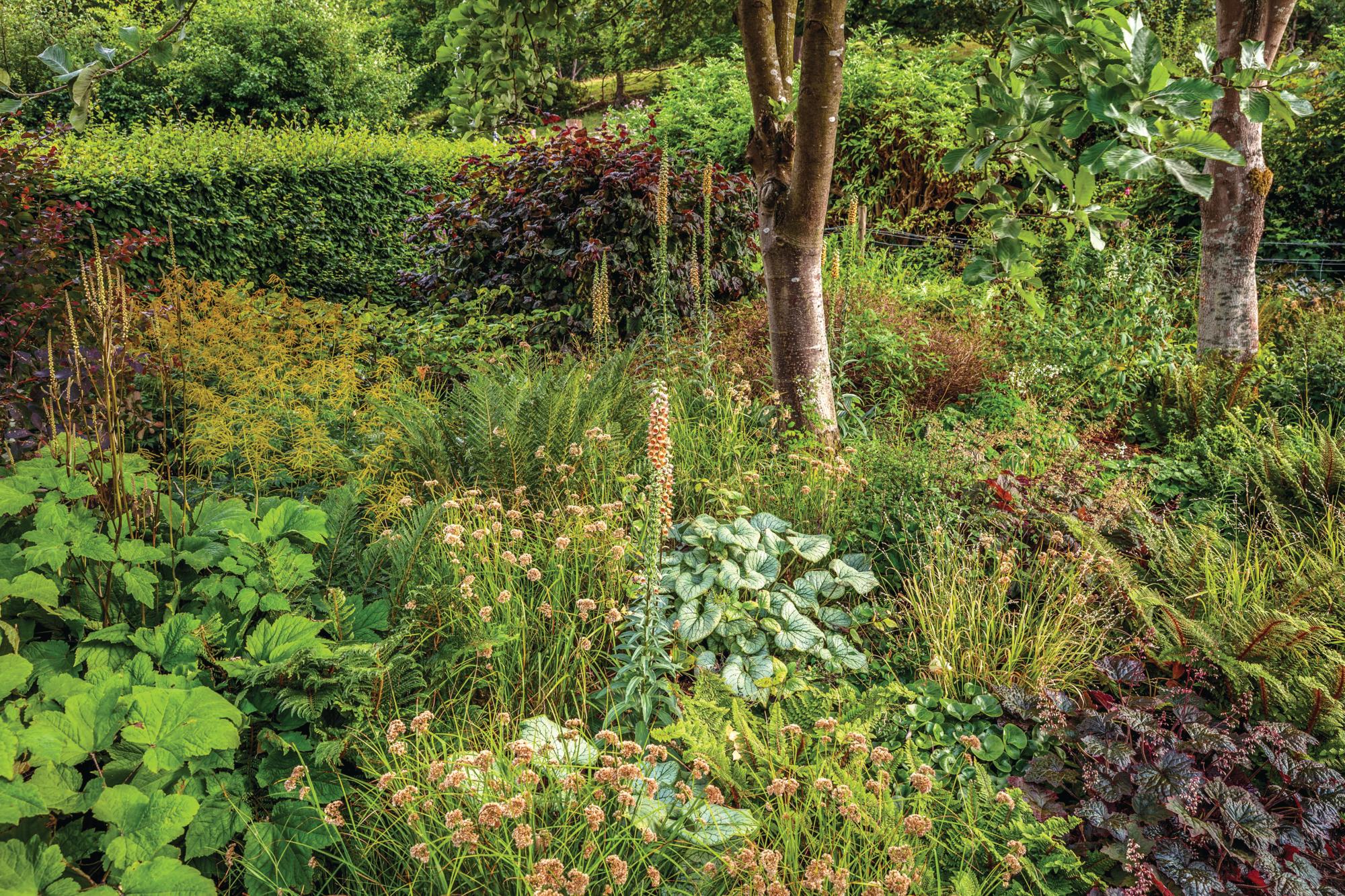
One perennial border, in part-shade, was inspired by Sissinghurst’s White Garden, and features the likes of Bistorta amplexicaulis ‘Alba’, Ligusticopsis wallichiana, Thalictrum Splendide White (= ‘Fr21034’), Melica uniflora f. albida, and Nothosmyrnium japonicum var. sutchuenense ‘Loushan Filigree’.
Steven’s deep love of plants, however, extends far beyond flowering perennials and grasses. There is a wide range of ferns in almost every shady corner of the garden. Species and cultivars of Dryopteris, Polypodium, Polystichum and Adiantum will catch the eye of even the keenest pteridologist – some older specimens form characterful mounds.
Walking to the larger back garden reveals the full extent of Steven’s skill. Here the garden widens, and slopes upwards away from the house to the stone summerhouse and pergola. They divide the space into
private areas with different conditions; Digitalis ferruginea self-seeds gloriously into a gravel path, while hellebores light up a shaded corner in spring.
Planting in the back garden includes many recent additions that use matrix plant communities, inspired by planting at Hermannshof gardens in Germany. In fact, Steven is adapting most planting from blocks to something more complex. “Due to the dynamic nature of seeding, I’ve let the garden evolve and intermingle,” he explains. Indeed, no area of the garden shows signs of standing still, and every plant community is being adjusted to meet the conditions or to enhance the aesthetic.
You may also like
- This historic Scottish garden is getting a centenary makeover
- Looking for a green-filled oasis in your shady plot? This garden may have the answer
The grass Sporobolus heterolepis features in many of the plantings and is one of Steven’s top ten plants. Sporobolus comes from the Ancient Greek for ‘seed thrower’, and its inclusion here somehow seems to sum up the evolution of this garden, and Steven’s role as gardener. What was once a traditional family garden is now notable for its mastery of plant communities, seasonal layers, texture and colour, not to mention an excitement from continued experimentation and plant diversity that’s been encouraged to run riot.
Steven feels he is “still learning as a student”, but he’s developed a garden that now plays firmly in the Premier League.


