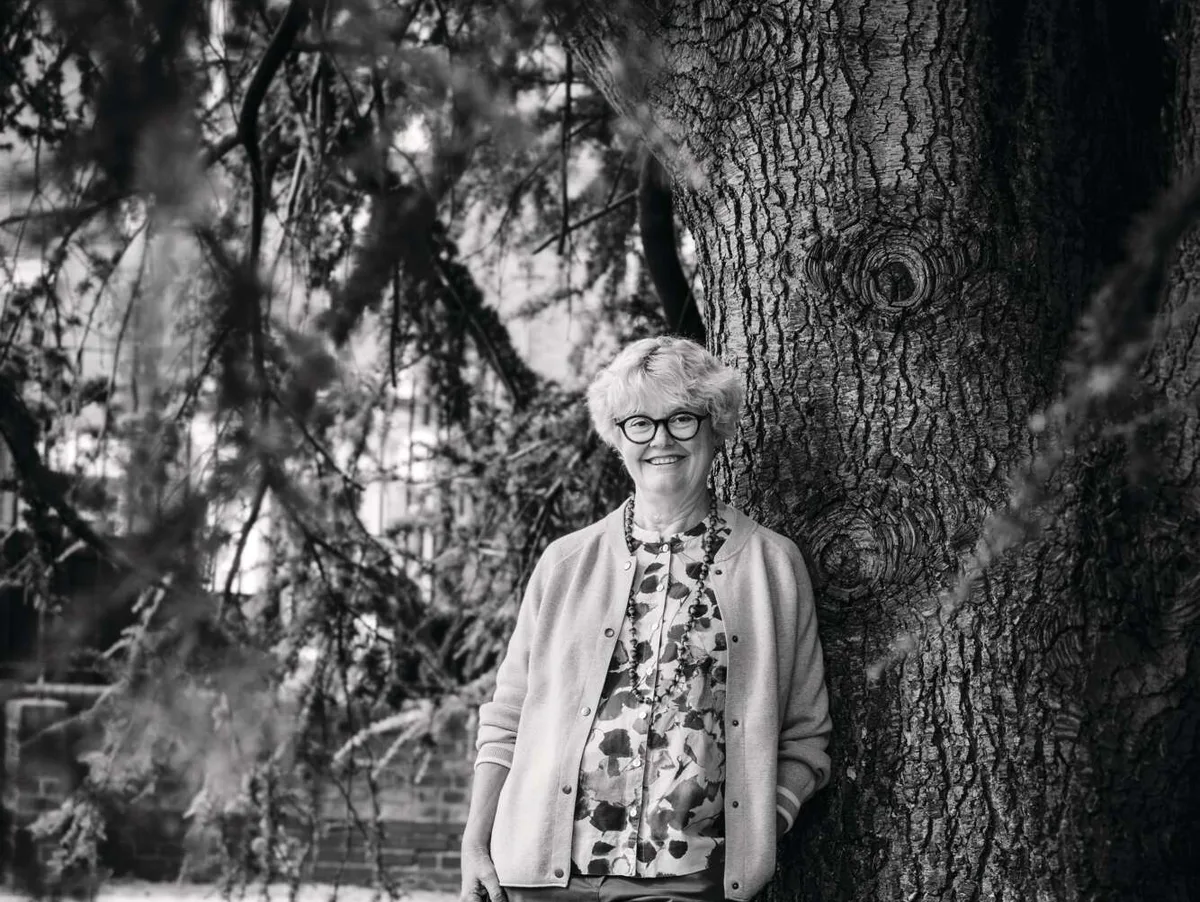
Sara Lom loves growing things. As a child in Cheshire, she had early success planting a conker with her great-grandfather and watching it flourish. That ignited a love of the outdoors, and when her family moved to Worcestershire, she was in her element, roaming the Malvern Hills, pressing wildflowers and – more controversially, aged nine – learning to wield a scythe. “Probably something kids wouldn’t be allowed to do at that age now,” she says.
Her remit, as chief executive officer of The Tree Council, which she joined in 2017, is wide but she sees “growing” as one of her roles, whether that be developing organisations and programmes or helping to progress people’s careers. “I’m a generalist,” she says. “I don’t have an expert horticultural background. I just love supporting people and making connections. It’s about the germination of big ideas, handing them over to grow and then seeing them through.”
You may also like
- This Cotswold town where every resident is a 'tree custodian' has been crowned the winner of Britain in Bloom
- Climate change means we can now grow a wider range of nuts in the UK - here's how
In a nutshell, Sara describes The Tree Council as a national charity that brings everyone together for the love of trees. “There are four main pillars – or should I say branches? – to our work,” she says. “Community, education, science, and research and partnerships.” At its heart it is a UK-wide network of some 3,000-plus volunteer tree wardens planting and caring for the local trees in their patch. Then there is Young Tree Champions, an educational programme encouraging pupils and teachers to undertake nature-based projects. This has engaged more than 330,749 pupils across the UK since 2020. “We would like to see many more people involved in green careers and so we’re currently looking at how we can help with that.”
Science and research focuses on plant health with the Department for Environment, Food & Rural Affairs (DEFRA), especially in relation to diseases that affect trees such as ash dieback and a new one, canker stain of plane (Ceratocystis platani), which hasn’t yet reached our shores but remains a threat. “We want our research to be practical,” says Sara. “We don’t like things to sit on dusty shelves, so we produce toolkits of information and resources that help local authorities and parish councils deal with the threats to their trees. Only one third of local authorities had a tree strategy, so we produced a Trees and Woodlands Strategy Toolkit for local authorities, a step-by-step guide, which has been widely used.” A range of grants is available for tree planting and woodland creation, so this helps unveil possibilities.
We want our research to be practical. We don’t like things to sit on dusty shelves
Sara has previously worked on the land herself. After university, where she studied French and Russian, she worked on an estate in France, “mostly brambling and clearing hillsides”. This led to ten years in the wine trade, in sales and then buying. “I put my love of fundraising down to my early years in sales,” she says. From there she went into the world of music, working in sales and marketing at the Academy of St Martin in the Fields and then as deputy managing director for the Royal Philharmonic Orchestra. “It’s ironic because I was thrown out of music at school,” she says.
In 2003 she joined the Royal Parks as director of public affairs. “At that time there was an awful lot of work that needed doing to the parks, but no reserves,” she says. “They couldn’t look further than a year ahead on capital projects, so we launched a charity, which was successful, enabling us to build an environmental education centre in Hyde Park that now has 17,000 young people a year going through it to learn about the natural world.”
You may also like
- 16 autumn trees for stunning colour that are perfect for the garden
- Limited space? You probably still have room for a tree - discover the best trees for small gardens
Sara finds being a social entrepreneur – doing business for good – very satisfying. Moving to The Tree Council gave her a national remit but also a steep learning curve. “I had to learn very fast about a lot of trees,” she says. “Our team has grown from four to 25 and consists of people who enjoy the fast action and flexibility of working across multiple projects, so it works really well.” She admits that the tree sector she now inhabits is one that “can be a bit in its silo”, so a lot of The Tree Council’s efforts are directed towards bringing different agencies together to facilitate dialogue and bring about positive action for trees.
Two programmes she is particularly proud of are the Trees Outside Woodland Fund in partnership with DEFRA, which aims to create and enhance green spaces all over the UK with more tree planting, and Community Tree Nurseries, funded by M&G – groups of volunteers who come together to collect seed, grow trees and then sell or give them away locally, providing an important source of home-grown broadleaf trees. Meeting biosecurity standards is a challenge, so The Tree Council is supporting smaller community nurseries to help them comply with Plant Healthy standards.
In her LinkedIn profile online, Sara describes herself as ‘a goodwill radiator’. “There is a lot to be said for a big smile and being kind,” she says. “In fact, when we advertise any new posts we always ask for ‘A tendency to smile and not to frown’. Positivity goes a long way.”
USEFUL INFORMATION
Find out more about The Tree Council, the autumn seed gathering season and National Tree Week (21-29 November) at treecouncil.org.uk