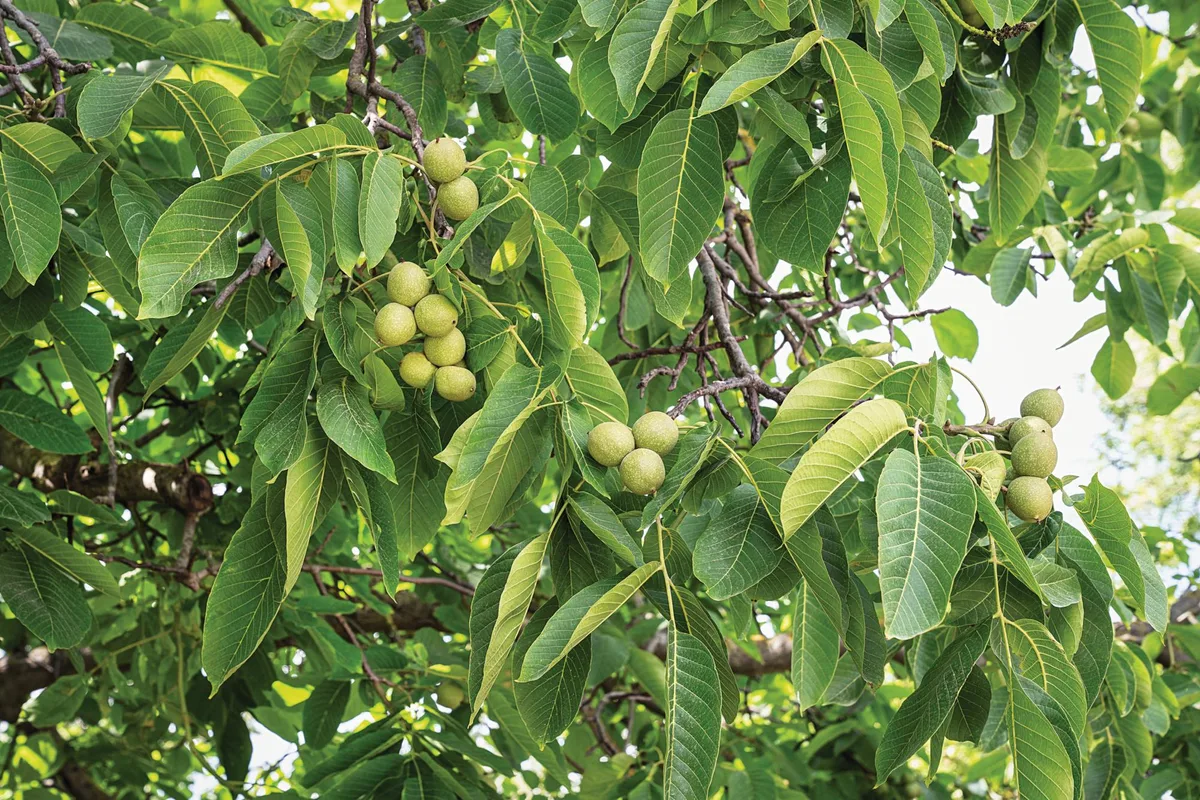
Handsome, sustainable and useful, nut trees are a garden asset and a permaculture essential, yet when planting schemes are designed, they tend to be overlooked. Despite their ornamental qualities, they seem to occupy a garden design blind spot, and flavoursome harvest notwithstanding, they remain the forgotten child of the grow-your-own revolution. But with an increased focus on low-input sustainable crops, and with resilient, long-lived planting schemes gaining traction in response to the climate crisis, all this may be about to change.
A prehistoric hunter-gatherer staple, Britain’s only native nut is Corylus avellana, and hazel trees remain abundant in hedgerows today. Sweet chestnuts, Castanea sativa, and English walnuts, Juglans regia, may have arrived on British shores with the Romans, although some sources suggest a later introduction. During the 16th and 17th centuries, orchards became popular and nutteries sometimes followed suit, particularly in Kent, where cultivated hazelnuts, known as cobnuts, were grown commercially in ‘plats’ until the early 20th century.
You may also like
As our climate changes, however, once-marginal species, such as pecans and hickory nuts, are becoming increasingly viable, and although pistachios (Pistacia vera) won’t tolerate our wet winters, almonds are starting to produce a reliable crop. This broadening of scope brings a new perspective to both the gastronomic and ornamental potential of nut trees.
“Back in the day, nuts were just nuts,” says food writer and grower Mark Diacono. “We had walnuts and hazelnuts, and we didn’t think about pecans or almonds. But tastes are becoming more sophisticated, and cooks such as Yotam Ottolenghi are using nuts more, bringing them to a wider audience.” Good cultivar choice is key to success and Mark cites disease resistance, flowering time, early cropping, flavour and ease of shelling as important attributes, particularly as a commercial prospect.
Near Hay-on-Wye, garden designer Harry Holding has planted an experimental nuttery and food forest featuring butternut (Juglans cinerea), bladder nut (Staphylea pinnata), heartnut (Juglans ailantifolia), buartnut (Juglans x bixbyi) and hickory (Carya species), as well as almonds and the other usual suspects. “It’s incredible that what we plant now is going to provide such incredible calorie- and nutrient-rich foods for many, many decades to come,” he says.
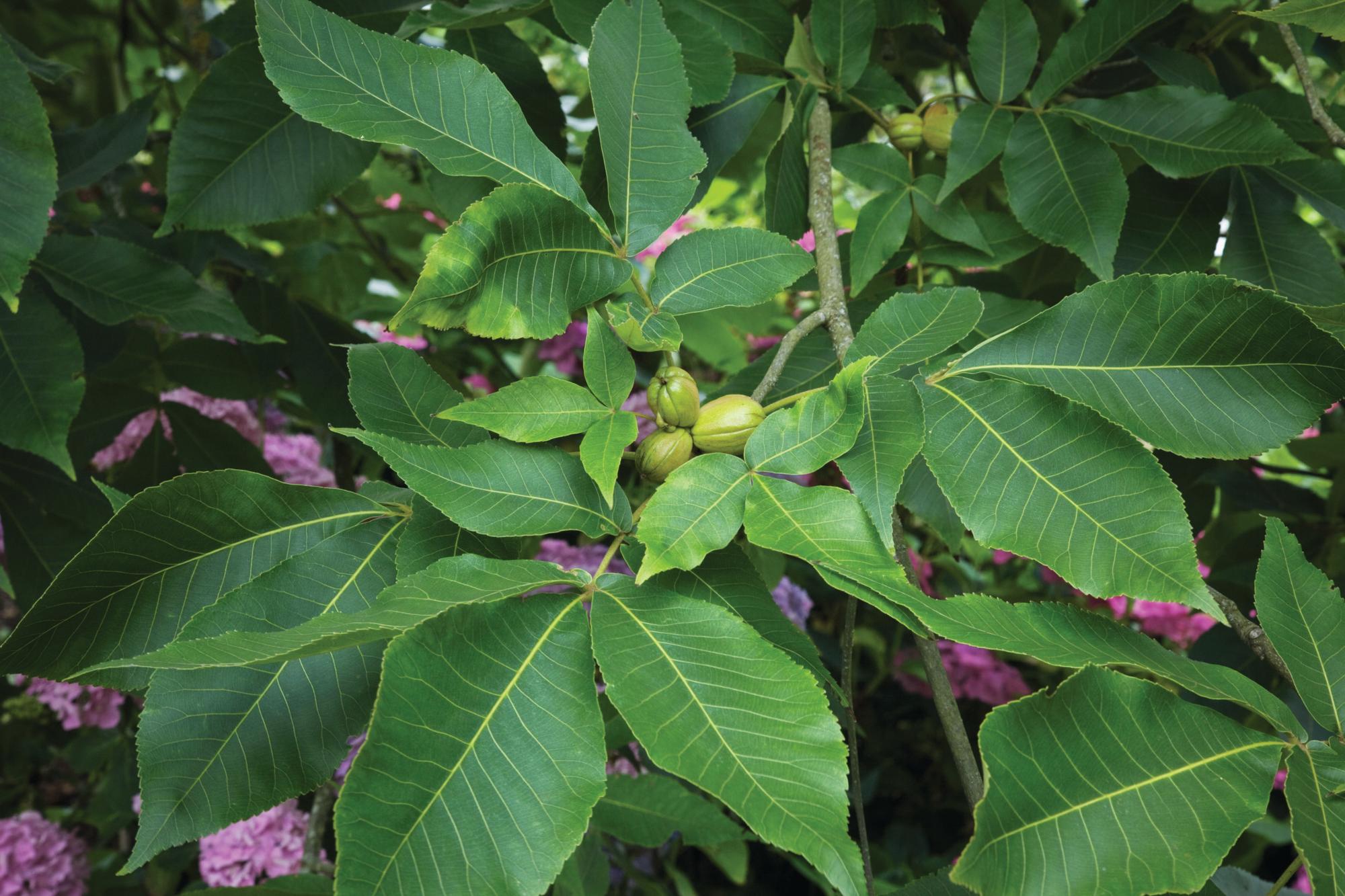
Edible nut trees tend to be slow growing. Cobnuts and grafted specimens can start producing nuts in around four years, but others will take longer. Ripe nuts are usually harvested from September onwards and crops will become heavier as the tree matures.
“Most nuts are collected off the ground, but when underplanting trees with shrubs or perennials, it is best to use nets or tarps to catch the nuts as they fall,” says Martin Crawford, founder of the Agroforestry Research Trust and author of How to Grow Your Own Nuts. Ripe nuts can be eaten from the tree but keep better if dried or processed.
Chestnut flour lends itself to baking, while chopped and ground walnuts, hazelnuts and almonds make a range of delicious pastries and sweetmeats. Green nuts are also a delicacy. Martin recommends young bladdernuts (Staphylea pinnata), which taste of fresh green peas in June.
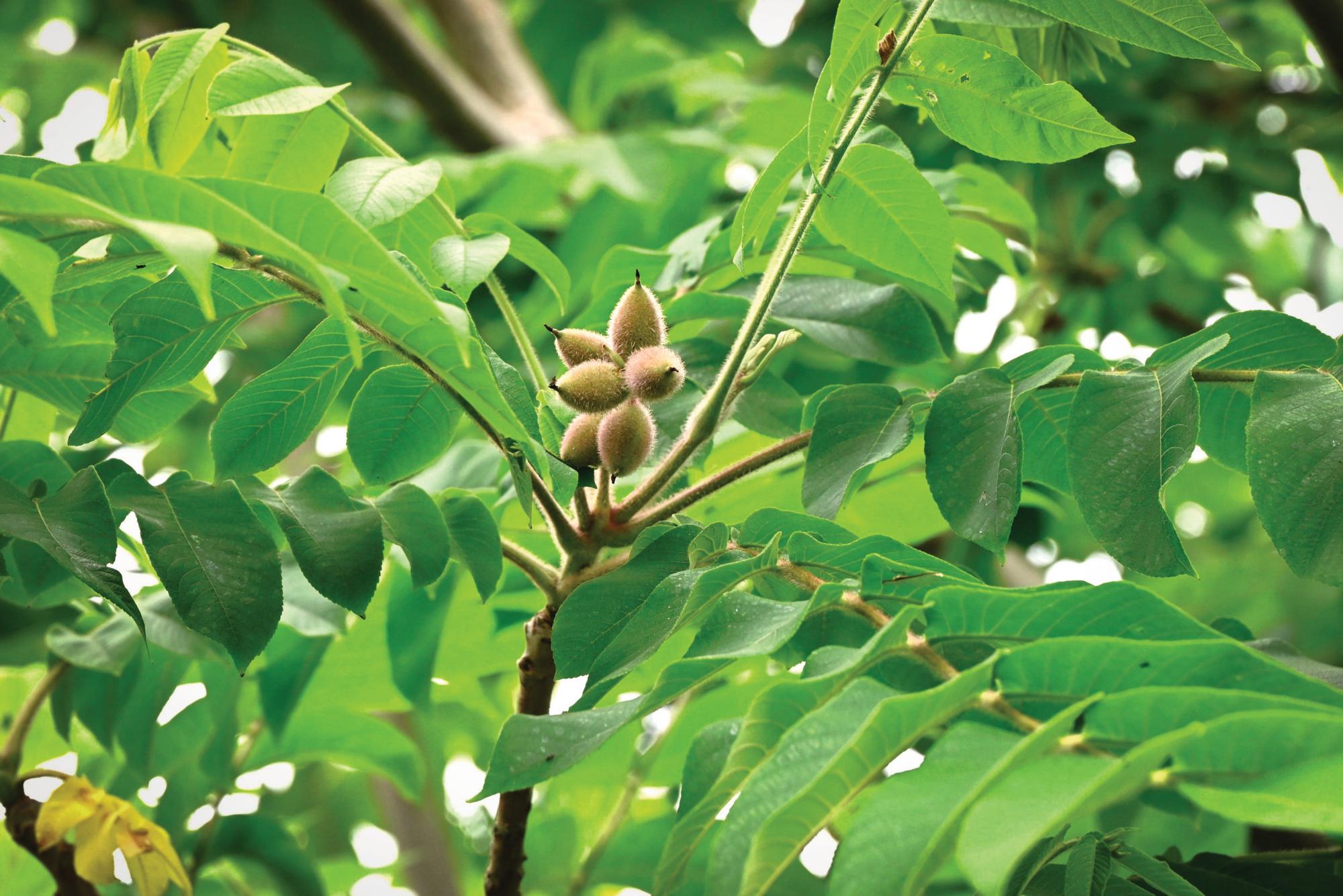
“Young, fresh nuts are often overlooked,” says Mark Diacono. “Green almonds are really good, eaten whole or sliced into salads. Or if you have walnuts, test them with a needle in early summer. If you can’t feel the shell, they can be pickled in brine or make nocino, an intense, bitter Italian aperitif, by quartering them, mixing with sugar, spices and vodka, and leaving until treacle-dark and tarry.”
You may also like
- These are the best new gardens according to designers
- How to protect your garden from 9 destructive visitors
When choosing what to plant, hazelnuts such as Corylus avellana ‘Webb’s Prize Cob’ and C. maxima ‘White Filbert’ crop well and reliably. Sweet chestnuts are large trees that require space, and although Castanea ‘Marigoule’ is said to be partly self-fertile, a good pollination partner such as ‘Bouche de Bétizac’ will improve the yield. Almonds, or more correctly, peach-almond hybrids, known as peachmonds, such as Prunus x hybrida ‘Ingrid’ and P. x hybrida ‘Robijn’ are increasingly dependable in the UK, and in a really sunny spot French almond cultivars, such as Prunus dulcis ‘Mandaline’ and ‘Ferragnès’ will produce a delicious harvest.
Older French walnut cultivars Juglans regia ‘Corne du Périgord’, ‘Franquette’ and ‘Meylanaise’ are particularly successful, as are newer cultivars, including ‘Fernette’, ‘Fernor’ and ‘Lara’. Nuts within the
genus Carya, such as pecans (Carya illinoinensis) and hickories, are not yet common, but have great future potential, with northern or ultra-northern types most suitable for our climate.
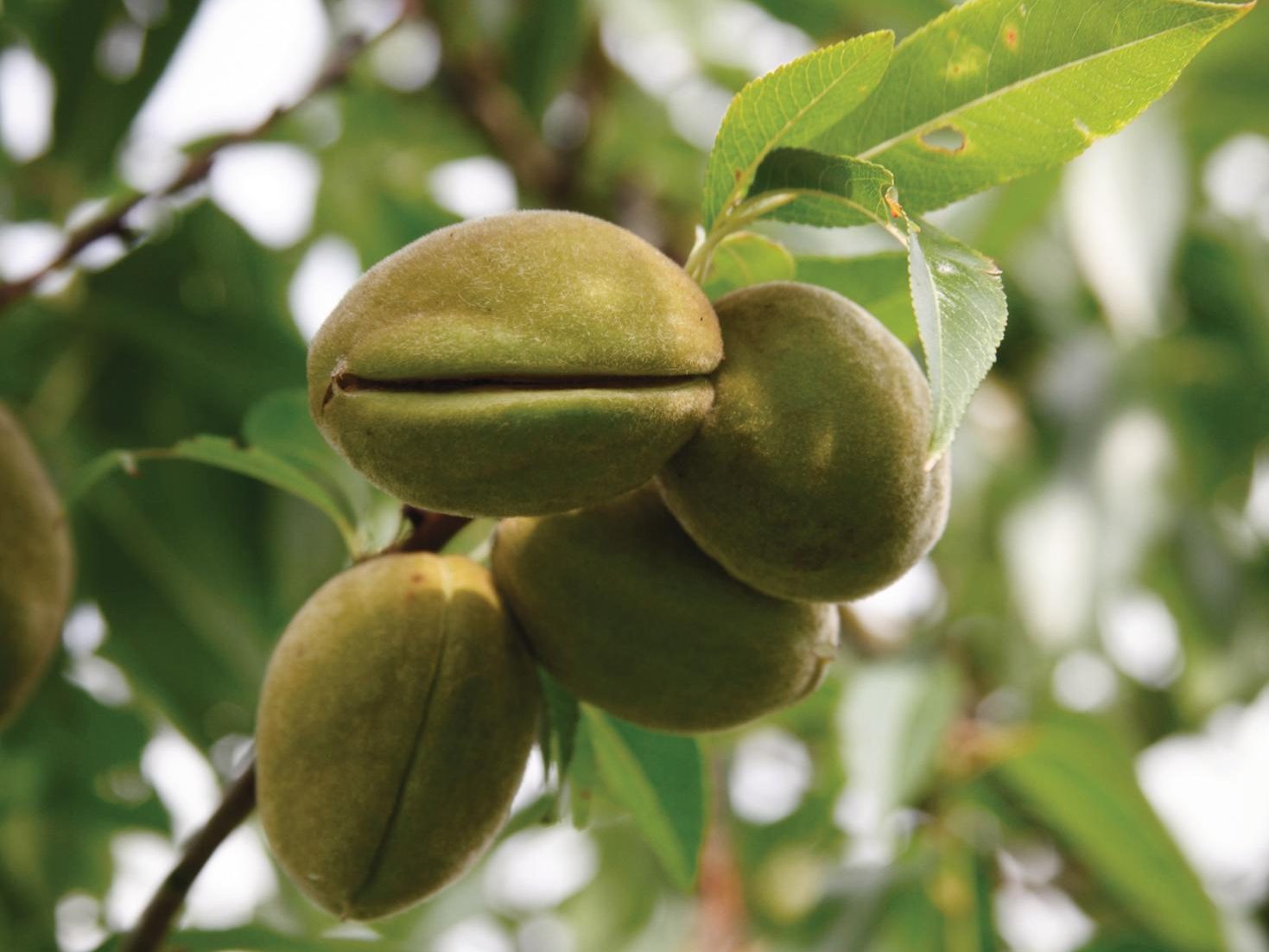
As substantial plants, nuts are not suitable for container growing, but for smaller gardens, Juglans regia ‘Lara’ is relatively compact and Corylus species can be coppiced to moderate their size, or grown as part of an edible hedge. Almonds are modestly proportioned and, like attractively shrubby Staphylea pinnata, their flowers provide additional interest in spring.
How to grow nut trees
Where and when to plant nut trees
Nuts usually prefer good, free-draining but moisture retentive soil, and plenty of sunshine. Shelter is important, as frost and strong winds can damage flowers and foliage; the less hardy species will do better in southern locations. Most nut species do better with a pollination partner and for pecan and hickory it is essential.
Planting time is key. Agroforestry expert Martin Crawford advises planting in November or December, rather than later in the winter, as this avoids having to water new trees in a dry spring. “I would not plant any trees between April and September as they are too prone to drought damage in hot weather,” he says.
How to plant nut trees
Plant the tree in a hole that is twice the size of the root ball and at the same depth as it was growing before. Add a stake before backfilling and mulching; water well on planting and during dry periods for at least the first year. Maintaining a clear space around the trunk will aid establishment. “They take time to throw down a good-sized root system,” says grower Mark Diacono. “You think nothing will happen, then they suddenly explode.”
Most nut trees for sale are grafted, which will influence their ultimate size and behaviour. They should be spaced to take account of their mature proportions.
You may also like
- It's possible to create a woodland in an ordinary garden
- How to create a beautiful garden using only pots
You can also sow fresh seeds in peat-free multipurpose compost in a pot deep enough to ensure the roots don’t spiral. Keep fed, watered and potted up as necessary and plant out when around 1-2m tall, or big enough to hold their own in the open ground. Nuts grown from seed will differ from the mother tree, but if the parents are good quality and crop well, the offspring are likely to follow suit
Problems with nut trees
In areas where deer are prevalent, tall wire cages are considered essential to protect trees, especially when they’re young. Almonds, chestnuts, hazelnuts and walnuts are attractive to squirrels, and with large trees there is no easy solution.
On a smaller scale, hazelnut weevils reveal themselves via a small hole in the shell and a tendency to drop early. The tree typically defends itself by cropping biennially. Aphids often cause leaf-curl in almonds, which also suffer from the usual issues affecting Prunus species, such as canker and shot hole disease.
You may also like
Walnut blight affects Juglans species. This is exacerbated by humid conditions and the French varieties are more resistant than those that come from California or the Balkans.
The best nut trees to grow
Juglans ailantifolia
The heartnut or Japanese walnut is a substantial, hardy tree with quite distinctively shaped fruit. Preferring full sun and fertile, well-drained soil, it is potentially susceptible to late frosts, but resistant to walnut blight. 10-15m x 10-15m.
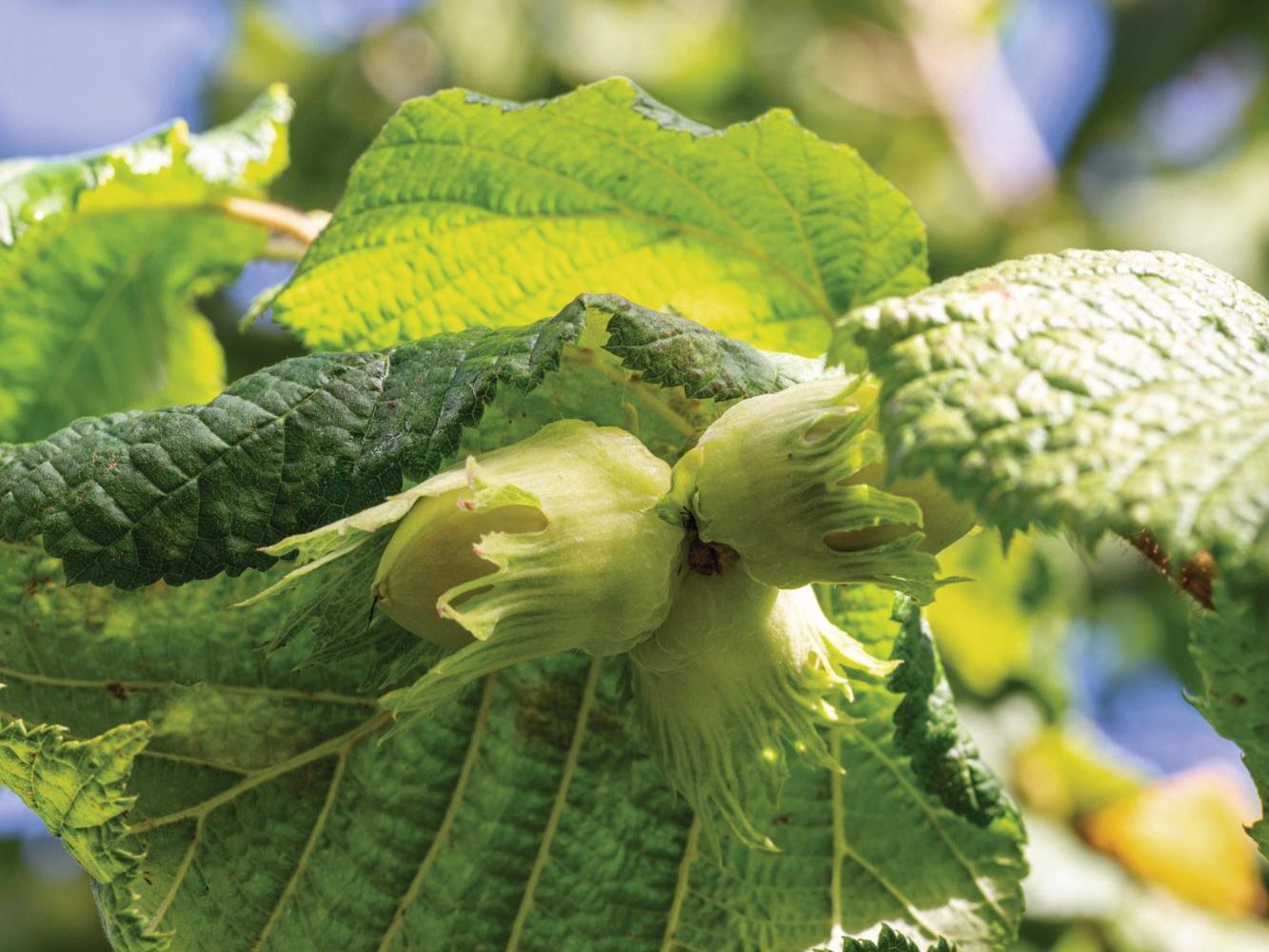
Corylus avellana ‘Webb’s Prize Cob’
A hazelnut cultivar that offers clusters of large, sweet and tasty nuts. Wild hazelnuts are an important food source for the endangered hazel dormouse. 3m x 3m. RHS H6, USDA 4a-8b.
Juglans regia
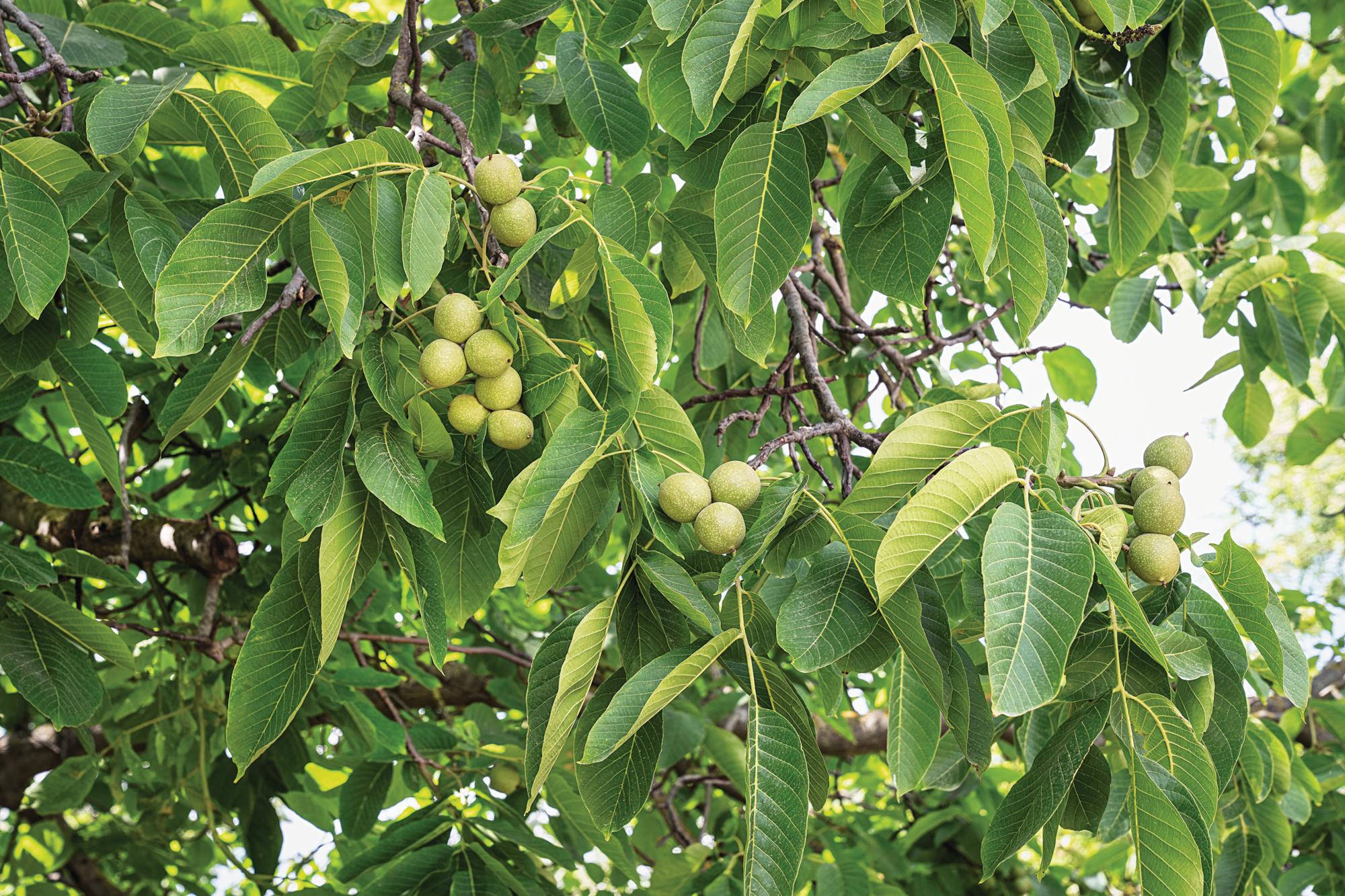
Native from Turkey to the Himalaya mountains, the common walnut has long been cultivated in Europe. Walnuts exhibit allelopathy, secreting chemicals that reduce competition, but this appears to be more pronounced in the American walnut, Juglans nigra. Height and spread: 12m x 8m. RHS H6, USDA 3a-7b†.
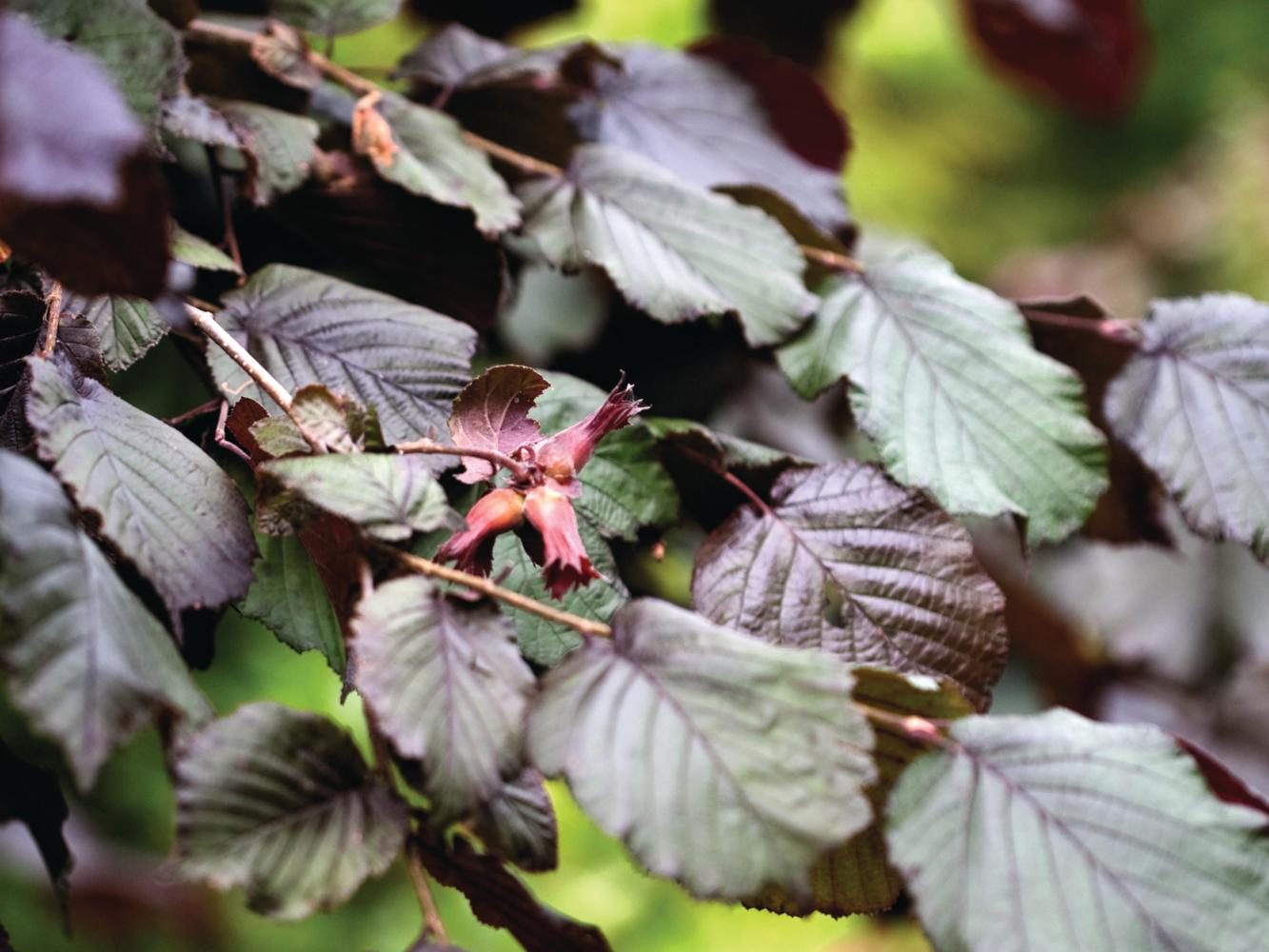
Corylus maxima ‘Purpurea’
The purple-leaved filbert is a decorative large shrub with yellow catkins, dark leaves and edible nuts. Hazel species tolerate coppicing or growing as part of an edible hedge, making them suitable for smaller gardens. 5m x 3m. RHS H6, USDA 4a-8b.
Prunus x hybrida ‘Ingrid’
This peach-almond hybrid bears pale-pink flowers in spring followed by velvety green-skinned fruit. Harvest nuts in September. Suitable for smaller gardens, it crops best in a sheltered, sunny location. 3.5-5m x 2-4m. RHS H5, USDA 6a-8b.
Staphylea pinnata
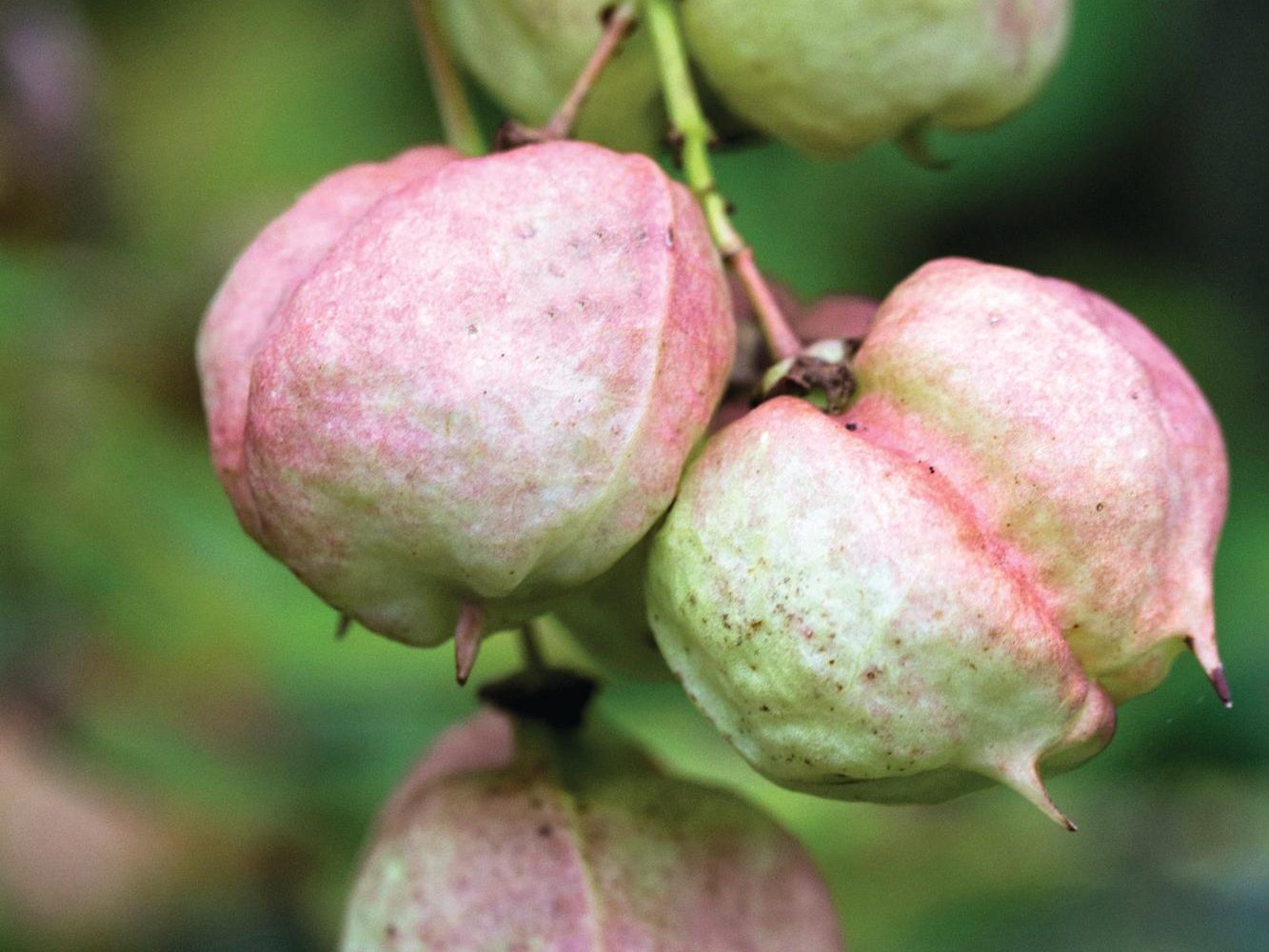
This large and decorative upright shrub has inflated seedpods that follow on from long clusters of scented, bell-like flowers. It is drought tolerant and the seeds are said to taste a little like pistachios.
3-5m x 3-5m. RHS H6, USDA 6a-8b.
Prunus x hybrida ‘Robijn’
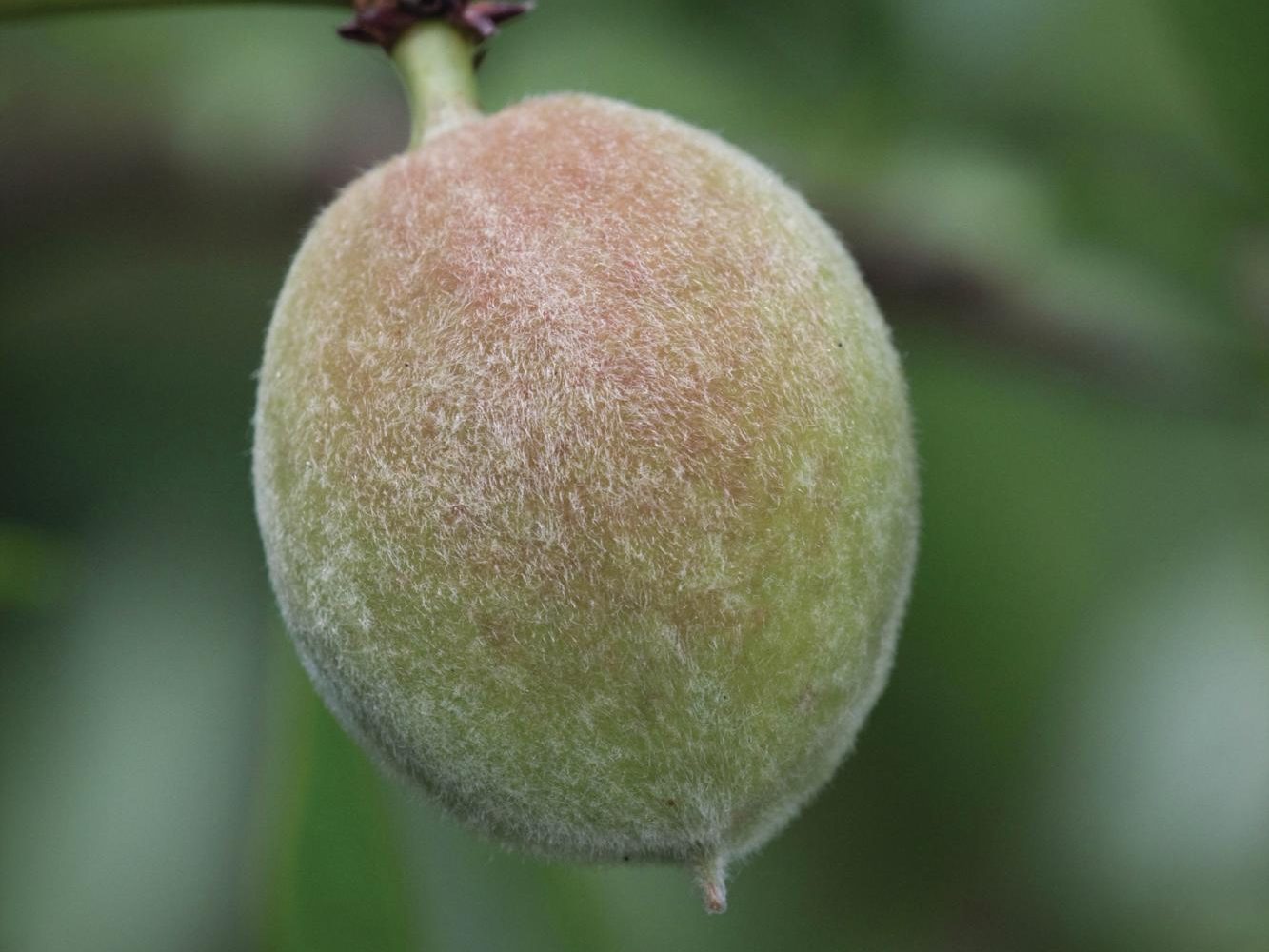
The late-flowering nature of this peach-almond hybrid means it’s partially resistant to frost. Given a sunny, well-drained spot, it will reliably produce a crop of nuts in early autumn. 2.5-4m x 1.5-2.5m. RHS H5, USDA 6a-8b.
Castanea sativa
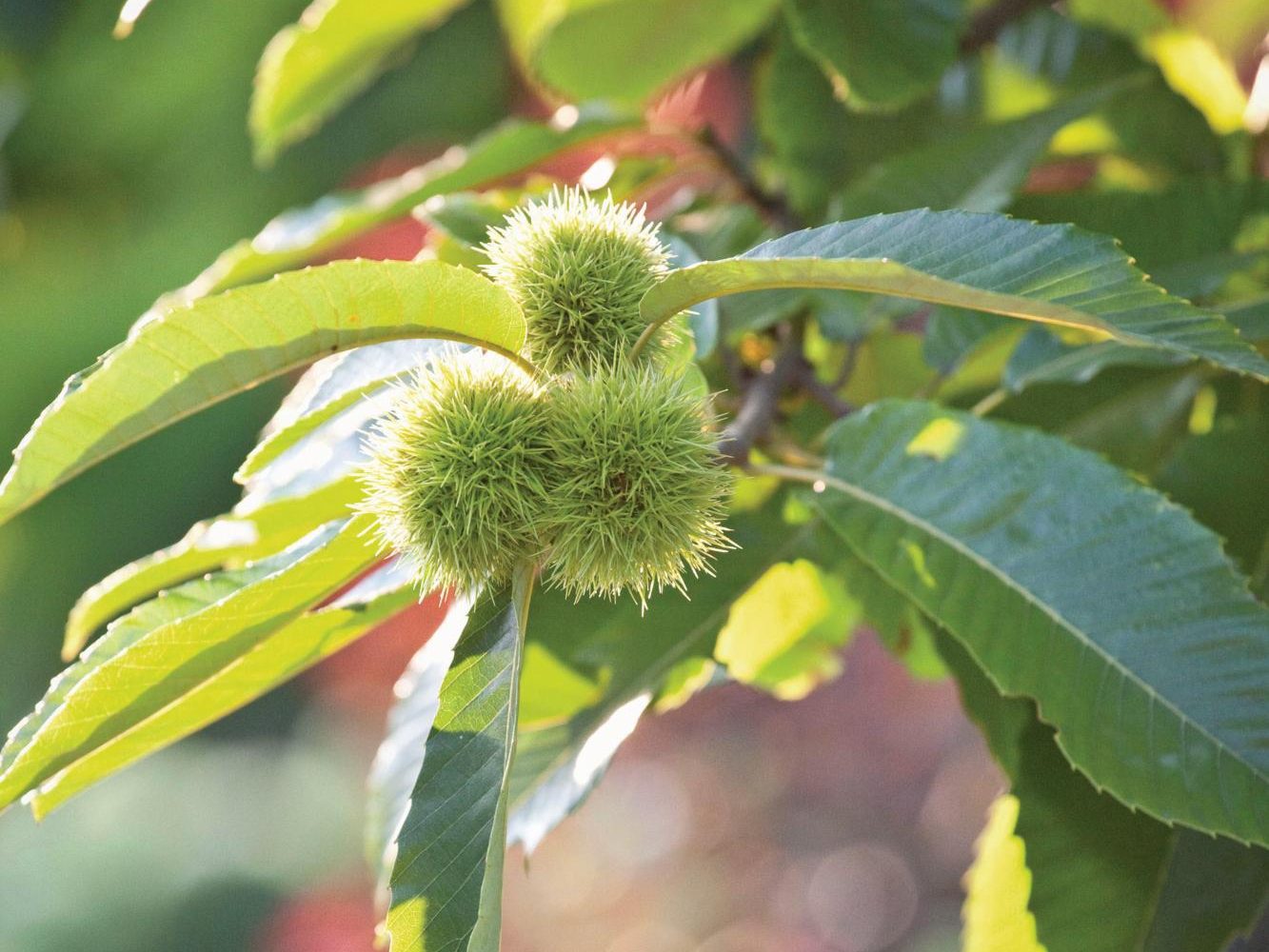
Large and quite long-lived, sweet chestnuts are a very good source of protein. Commonly used in stuffing, nuts can also be ground for flour or combined with brandy, honey and vanilla to make
a jam. 17-25m x 15-25m. RHS H6, USDA 5a-7b.
Carya ovata
The shagbark hickory is a conical tree with long, thick-shelled nuts. It prefers a hot summer. Wind-pollinated, it requires a pollination partner, so allow space for at least two compatible trees. 20m x 15m. USDA 4a-8b.
Carya illinoinensis
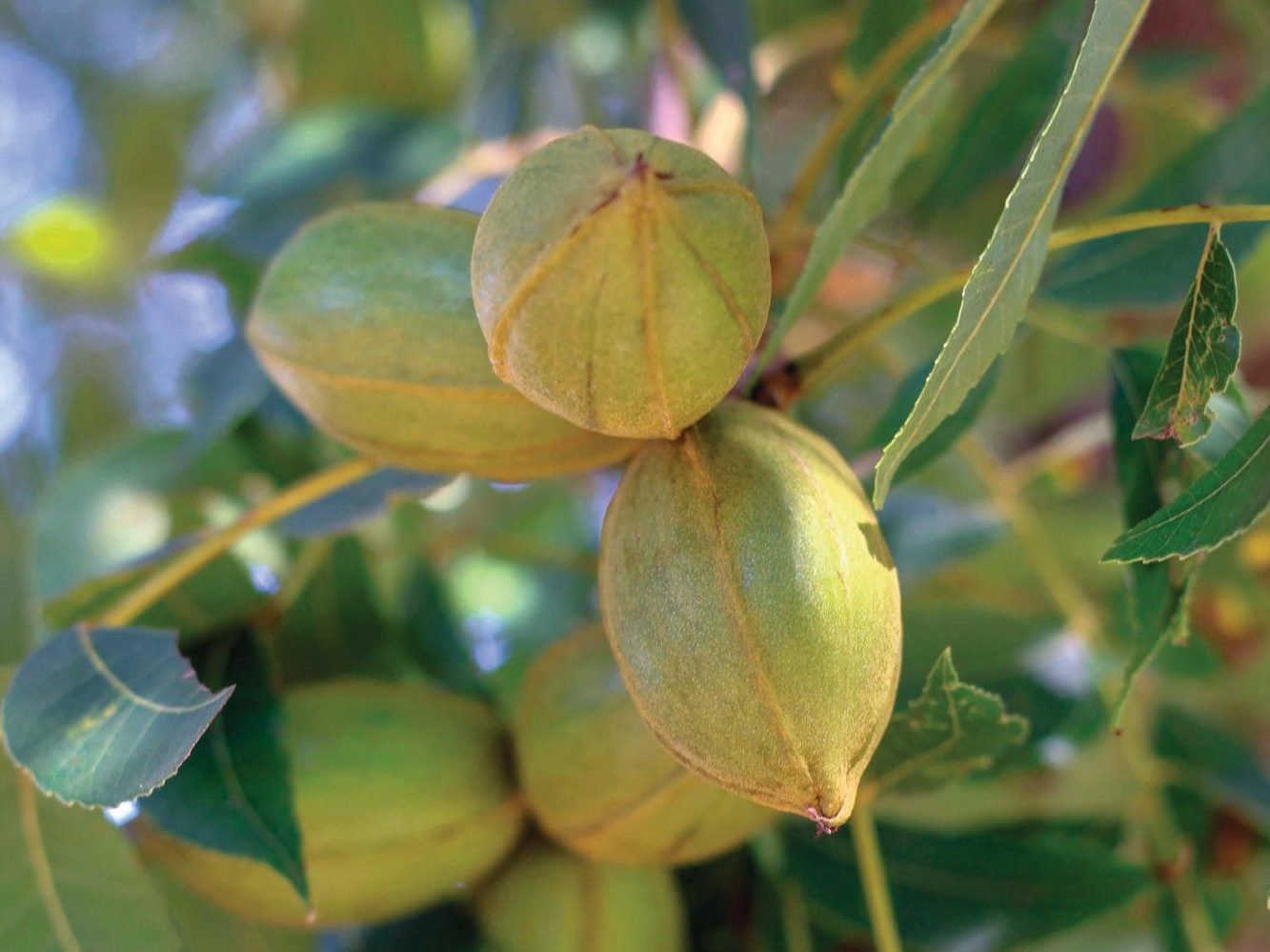
Pecans are vigorous, deciduous trees with long catkins and insignificant female flowers in spring. They are not self-fertile so a pollination partner is essential, and wood tends to be brittle, so plant in a
sunny, sheltered location. 30m x 20m. USDA 5a-9b.
Where to see and buy nut trees
- Edible Canopy Online nursery only. ediblecanopy.com
- Frank P Matthews Berrington Court, Tenbury Wells, Worcestershire WR15 8TH. Tel 01584 812800, frankpmatthews.com
- The Walnut Tree Company Apple Trees, Potash Farm, Comp Lane, St Mary’s Platt, nr Sevenoaks, Kent TN15 8N. Tel 01732 882734, walnuttrees.co.uk