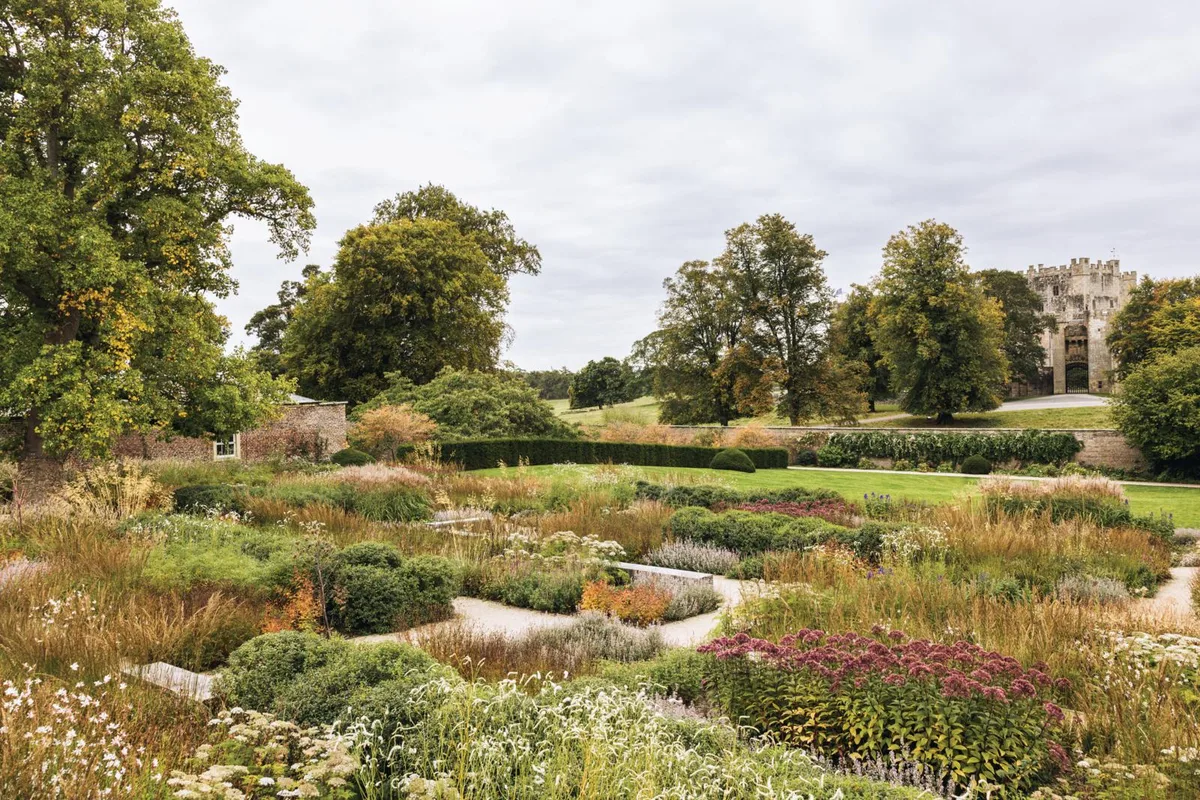
It’s been a year dominated by heatwaves, drought and wildfires, so by any stretch of the imagination, a difficult year for our gardens, private and public. Undoubtedly 2026 is a year that has divided us into those who have carried on doing things the old way, and those that have long been reading the climate signs and adapted accordingly. Landscape designer Luciano Giubbilei jokes that it was a bold move to award the redesign of the five-acre walled garden at Raby Castle in County Durham to an Italian, but given that many of his projects are in places where drought-tolerant plants are crucial, the commission now looks like an astute piece of foresight.
The first sight of the towering mass of Raby Castle, near the market town of Barnard Castle, locates you straight into the deep north. Brooding and monolithic, it says for centuries this has been debatable land, prone to raids, rows and a fierce independence born of the north Pennines. Set within a 200-acre deer park, it’s a medieval tapestry of a place.
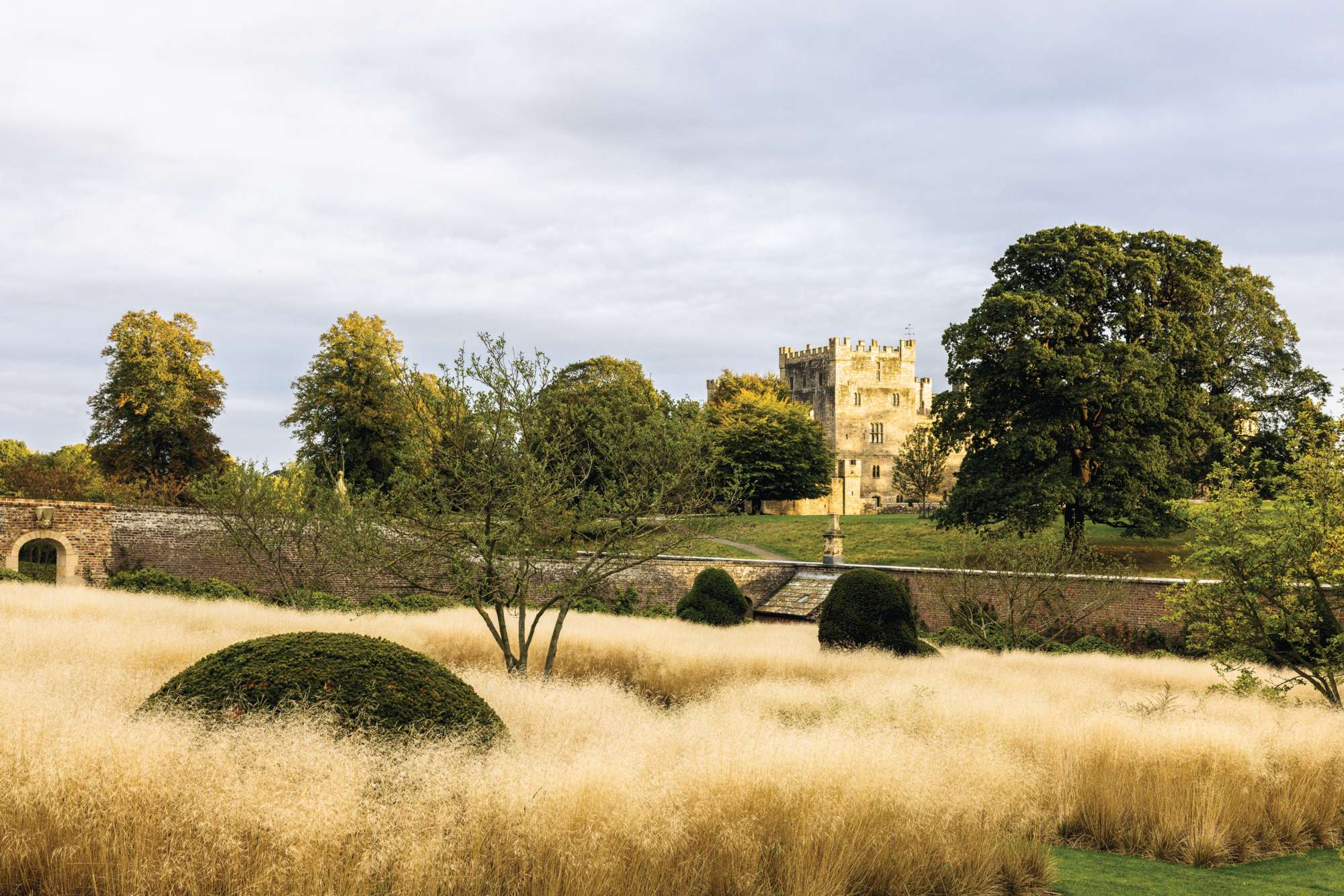
Within the estate is a walled garden, designed by the 18th-century gardener, astronomer and polymath Thomas Wright of Durham (1711-1786), but, like so many historic walled gardens, it was plunged into a long kind of torpor after the Second World War. When Luciano first saw it in 2017, he felt an immediate connection; perhaps not surprising given that much of the so-called ‘English style’ has been plundered pretty much wholesale from the Italians.
You may also like
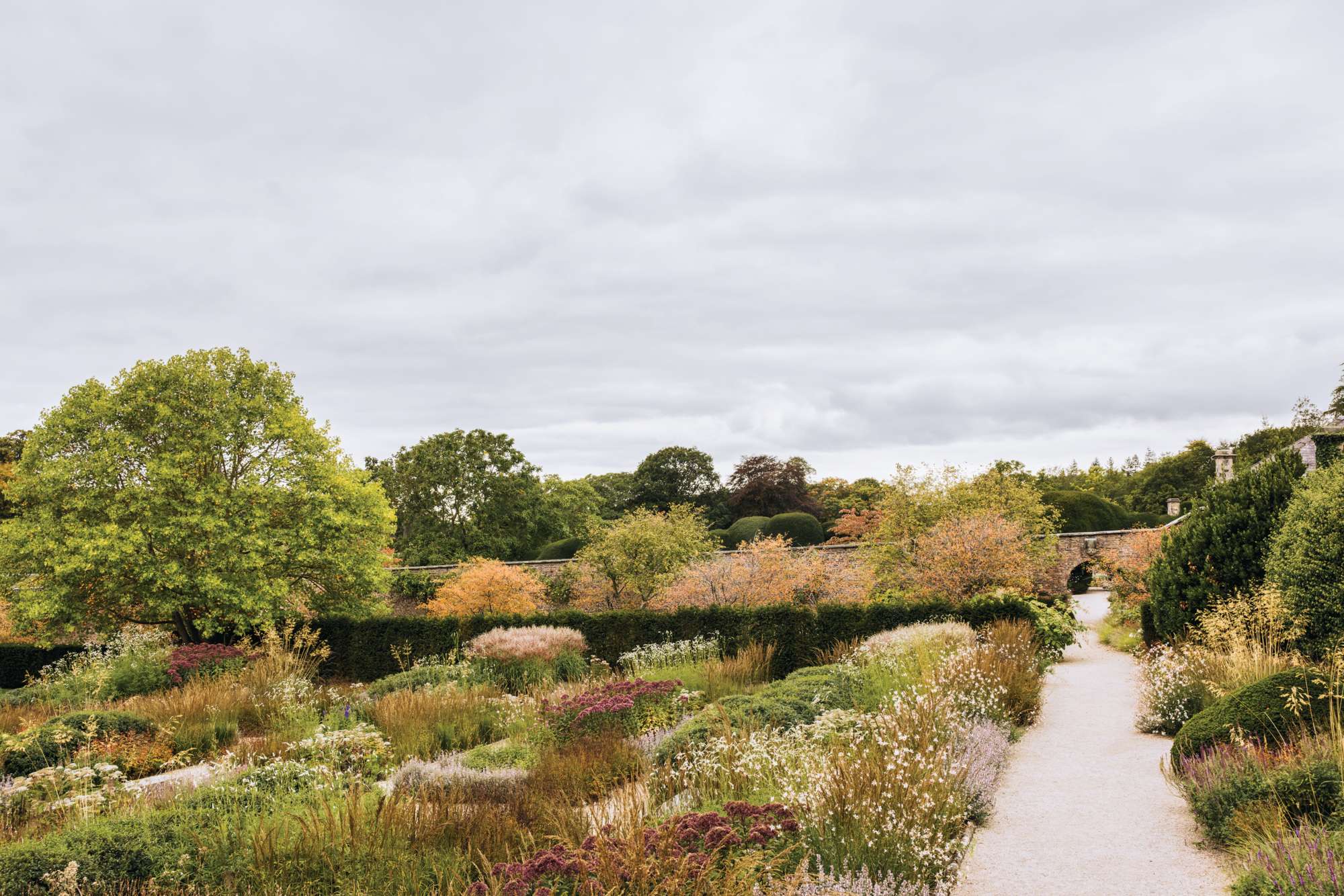
The 18th-century Grand Tour imprinted the rain-soaked English with a deep yearning for the Quattrocento and Italian Baroque; all geometric balance, clipped box hedges and the harmony of interplay of water and light. The genius of Luciano’s design is that looks both ways, back to the centuries-old cultural aspirations of the English, and forward to the planting, style and balance with the environment that a 21st-century garden demands.
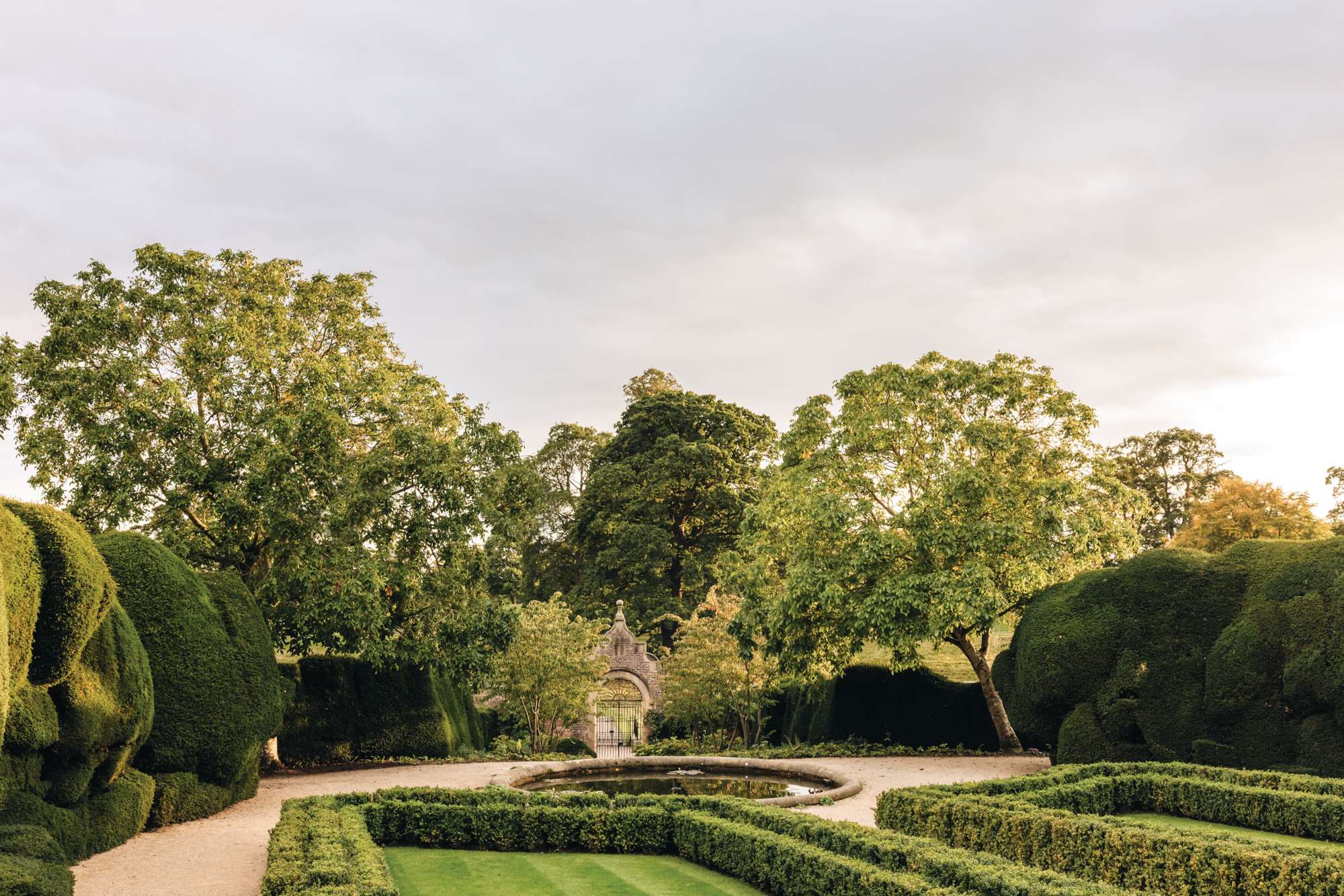
The brief from Kate Vane, Lady Barnard, was, “you can change anything, as long as it’s not the yew hedge”. This colossus – part hedge, part living sculpture – was planted in the 18th century and strides across the garden. Within its outstretched arms is the central Formal Garden, which is bisected by a stepped rill that runs right down to the lower wall; a splashy favourite with children and the young at heart. There are also two yew mazes, one on either side of the central cloud-pruned yew hedge, with concentric circles radiating out from a central point, cut deliberately at 1.6m – an adult’s shoulder height – so that, as an observer, you witness the intriguing sight of disembodied heads moving through the maze.
You may also like
- How one man turned a boring lawn into naturalistic planting
- This windswept plot was transformed from a scrappy lawn into an outstanding contemporary garden
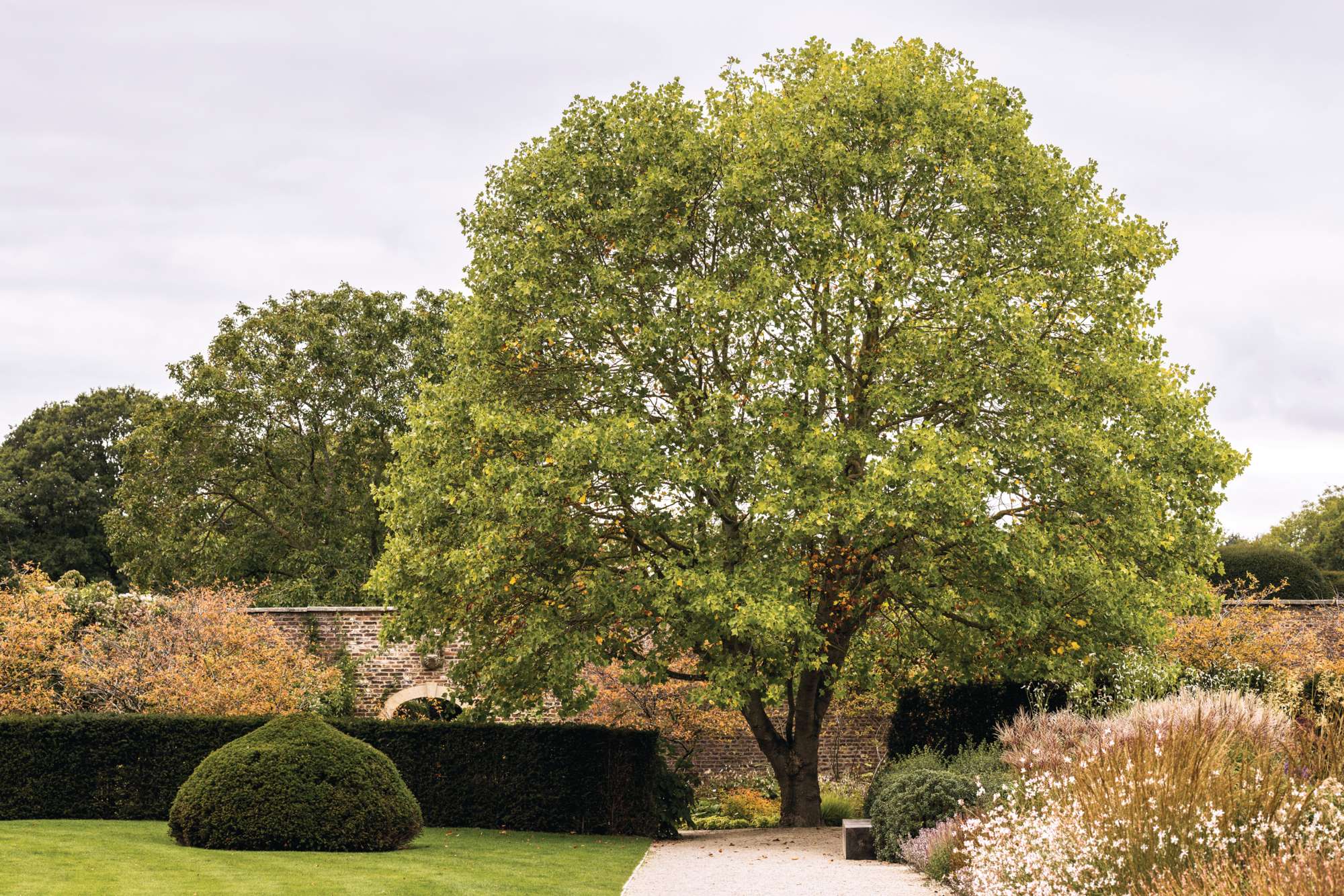
You enter the East Garden through a serene woodland where cherry and amelanchier trees are underplanted with shade-loving plants, such as the grass Sesleria autumnalis and the pale-yellow perennial foxglove Digitalis lutea. You step out of the woodland into an open grass amphitheatre, a place in the warmer months for outdoor performances.
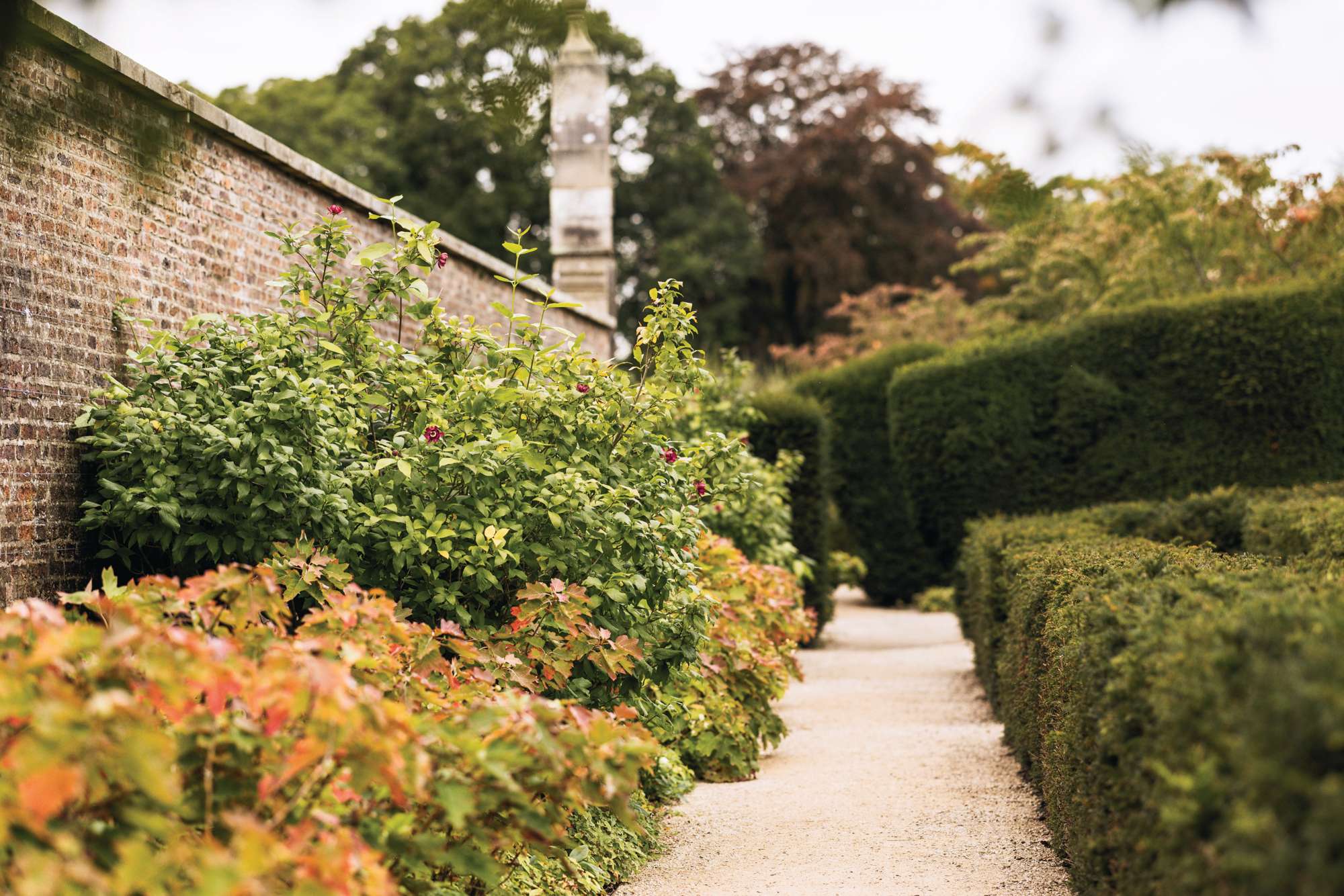
The garden is on a gentle, south-facing incline, so although the walls are high, your eye is always drawn outwards to the castle and the deer park, making you feel contained but never confined. The design gives it clarity and calm, amplified by repeats of plants, such as airy gaura Oenothera lindheimeri and catmint Nepeta racemosa ‘Amelia’, which provide strong horizontal waves, as if you’re looking over Italian terraces created not by walls but by different planting heights. This is reinforced by careful management by the team, who cut back regularly to allow all plants to have their season.
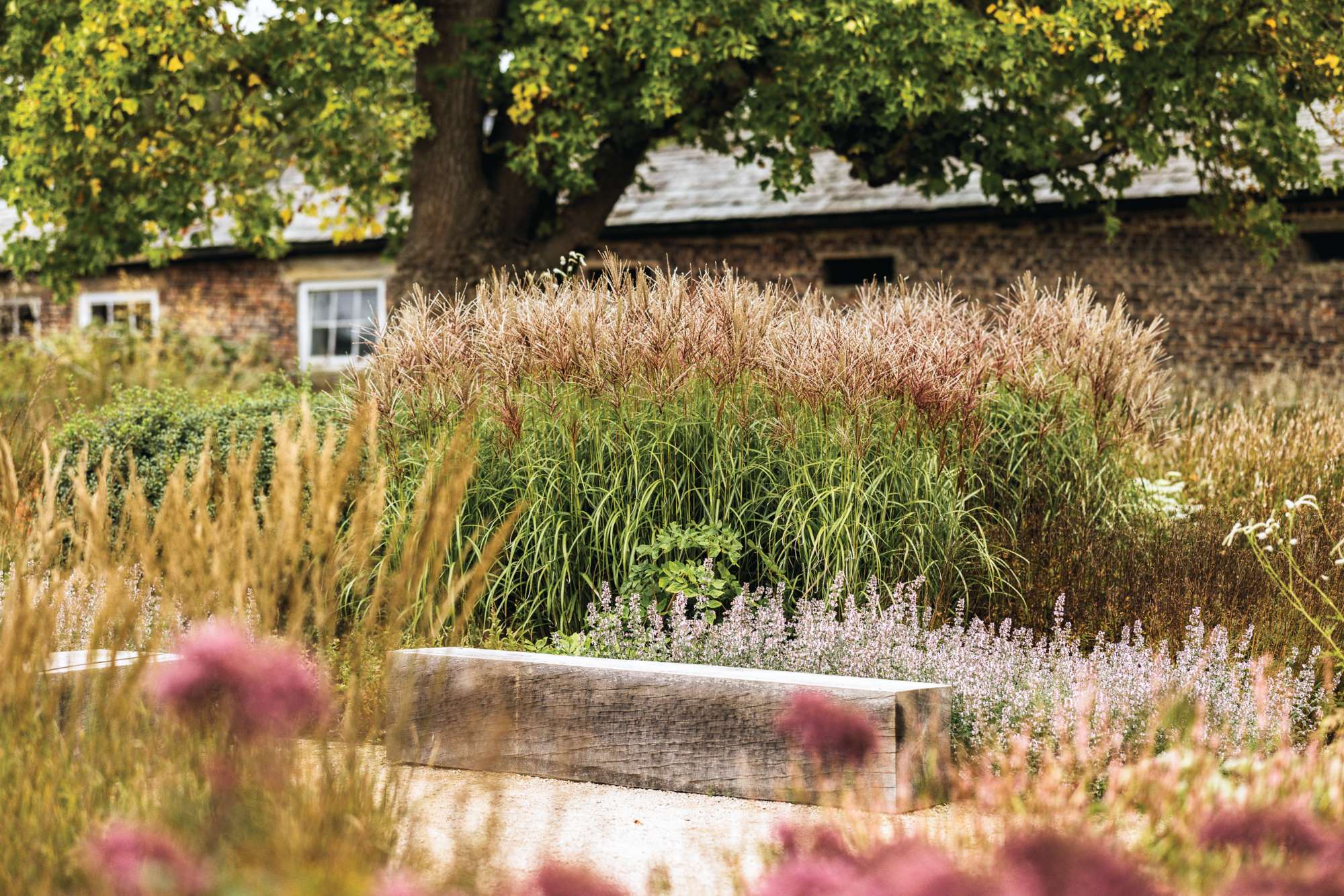
On the other side of the Formal Garden, the West Garden is mass-planted with tall meadow-like grass Deschampsia cespitosa ‘Goldtau’, which in the autumn is prairie-pale, and choreographed by the breeze. This movement is accentuated by the solid, vertical punctuation points of large clipped yews, sculptural forms that echo the curves and sweeps of the central yew hedge.
Alongside this is the Cutting Garden, full of autumn-vase stalwarts such as dahlias, amaranthus and cosmos in warm colours, designed by Becky Crowley, whose horticultural credentials include the cutting garden at Chatsworth and working alongside superstar flower farmer Erin Benzakein of Floret Flowers in the USA. A knowledgeable and passionate plantswoman, Becky fell in love with Raby and has stayed on as second-in-command under the head gardener for the whole estate, Dickon Harding.
This garden is an ensemble piece, a collaboration between owner and designer, designer and gardeners, gardeners and visitors. Luciano is quick to credit his studio team, recognising that good design requires many people to make it successful. His plant knowledge was honed over nine years during a residency at Great Dixter, and this means the planting works with the weather, the need for visual stimulation (the garden is open all year) and, increasingly, the unexpected, protracted stresses caused by the unpredictability of climate change.
It’s an original and exciting garden, and one that visitors and staff respond to. And it’s also a place where the exchange of history, geography and the northern weather are vital to the garden’s character and sense of itself – located firmly in the north, but celebrating European sensibilities, style and skill.
USEFUL INFORMATION Address: Raby Castle Park and Gardens, Staindrop, Darlington, County Durham DL2 3AH. Tel: 01833 660202. Web: raby.co.uk Open Daily, 10am-5pm (last entry at 4pm). Admission £15. Find out more about Luciano Giubbilei’s work at lucianogiubbilei.com