Keeping colour going into autumn is key to a garden's success. When so many plants are dying back or turning brown, it's good to choose some that will bring flashes of colour and interest. Here, nurserywoman Rosy Hardy chooses her favourites for October, including a vibrant chrysanthemum and a sparkling Guernsey lily.
You may also like
Top plants for October colour
MALUS X ROBUSTA ‘RED SENTINEL’
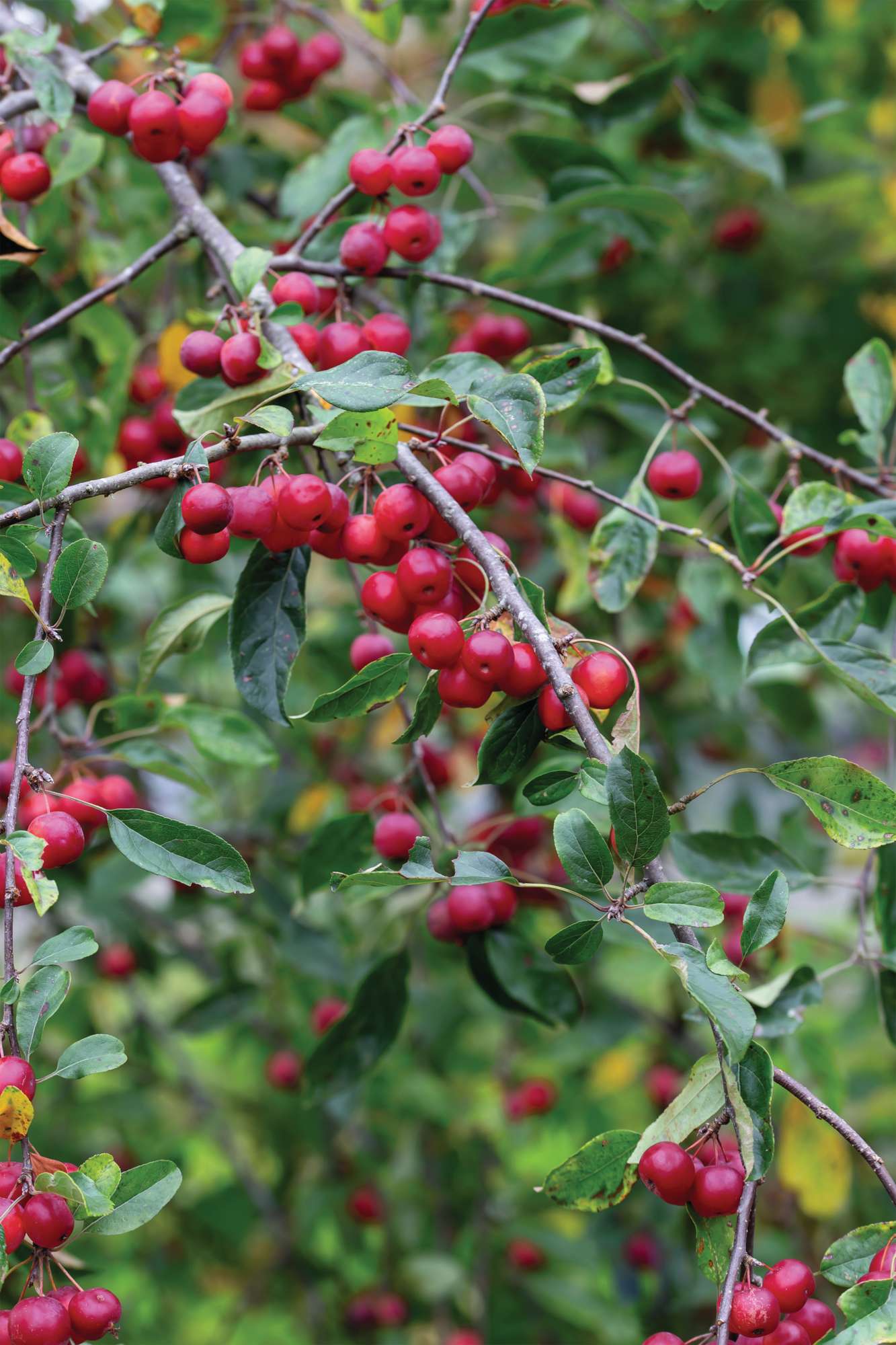
Crab apples are wonderful small trees, beautiful in spring blossom and providing light shade in borders or grassland throughout summer. This cultivar also produces masses of small, red to burgundy fruits – a good source of winter food for birds. After fruiting, the tree can be pruned or allowed to grow in its natural form. I prune mine in various ways: some as windbreaks in late winter/early spring; others in cylindrical shapes, which require close summer pruning. AGM*.
Height and spread 4-8m x 4-8m. Origin Garden (a 1950s hybrid cross of Malus baccata and Malus prunifolia). Conditions Moist but well-drained soil, any pH; full sun to part shade. Hardiness RHS H6, USDA 4a-8b†. Season of interest April – November.
HAKONECHLOA MACRA ‘AUREOLA’
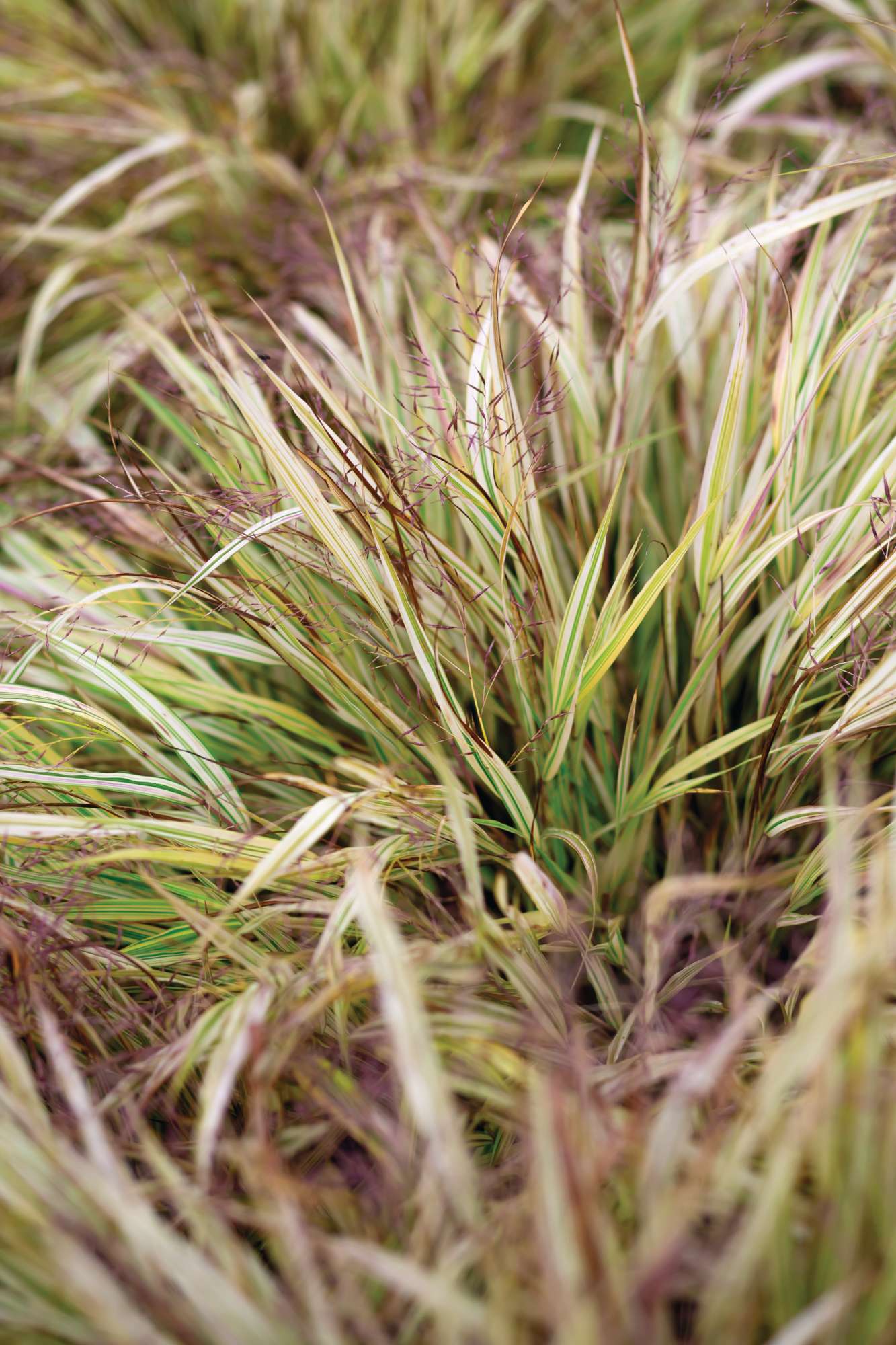
This is a popular grass, especially with garden designers, who use it as a statement plant. It is suitable for growing in containers or edging borders, and when planted en masse it makes good groundcover under trees and shrubs as it starts to spread. It produces a flowering stem that arches nicely, and this gives the grass a different look in autumn. Although not evergreen, the dying leaves offer good winter interest. Division is best done in spring. AGM.
Height and spread 35cm x 45cm. Origin Rocky and woodland areas of central Japan. Conditions Moisture-retentive soil; part shade. Hardiness RHS H7, USDA 5a-9b. Season of interest May – December.
CHRYSANTHEMUM ‘RUBY MOUND’
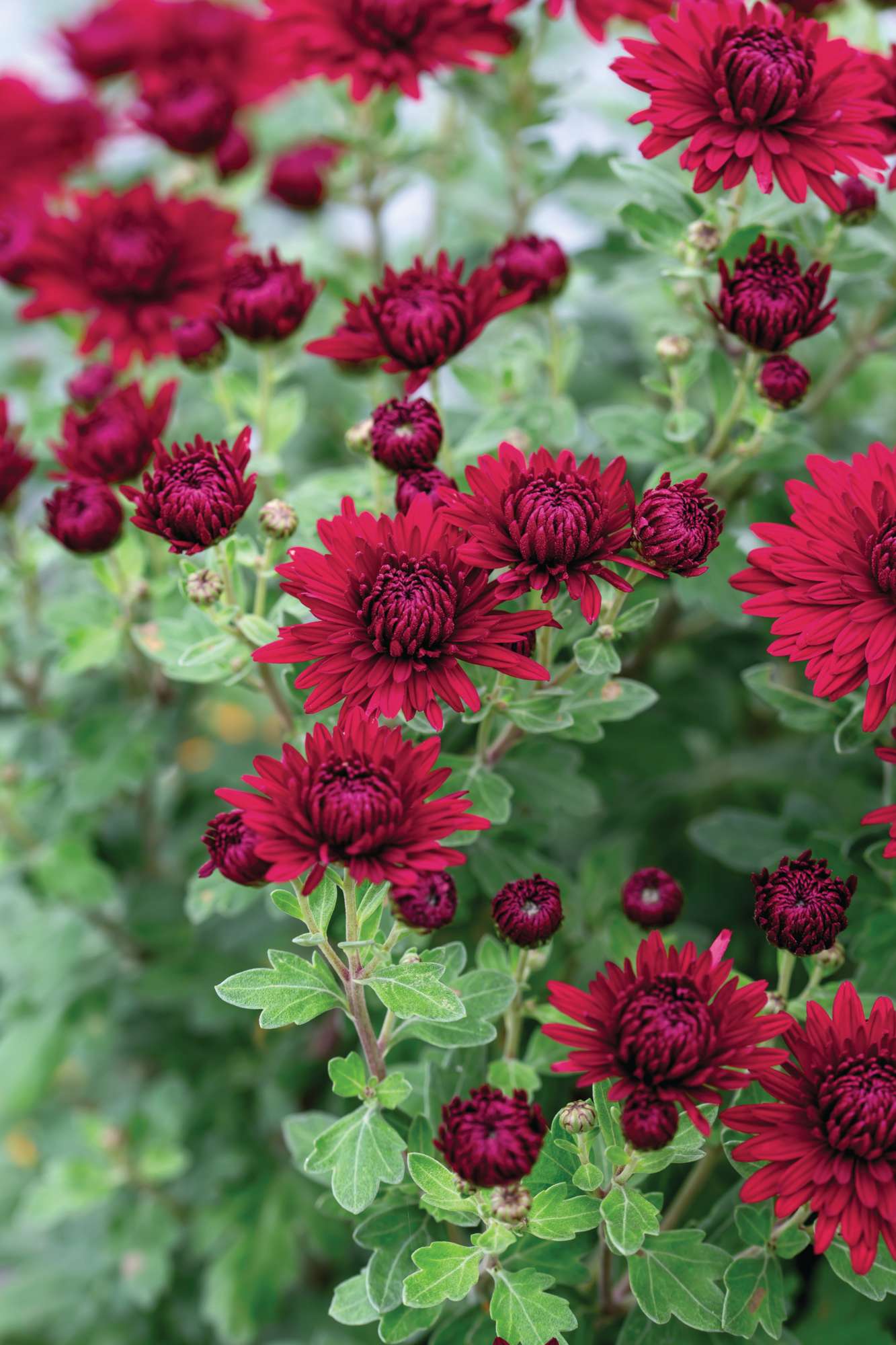
A dark-ruby, double-flowered hardy chrysanthemum. The plant genus has taken a back seat for a long time and should be more widely grown, as the sheer number of flowers produced makes it invaluable in autumn. ‘Ruby Mound’ is a medium-height form with strong flower stems, which should not require staking and can make large clumps. Ideally, split them regularly, refresh them every five to six years using new cuttings, and mulch annually. AGM.
Height and spread 90cm x 60cm. Origin Garden (species east Asia). Conditions Moist but well-drained soil; full sun. Hardiness RHS H3, USDA 5a-9b. Season of interest September – November.
ACTAEA ‘QUEEN OF SHEBA’
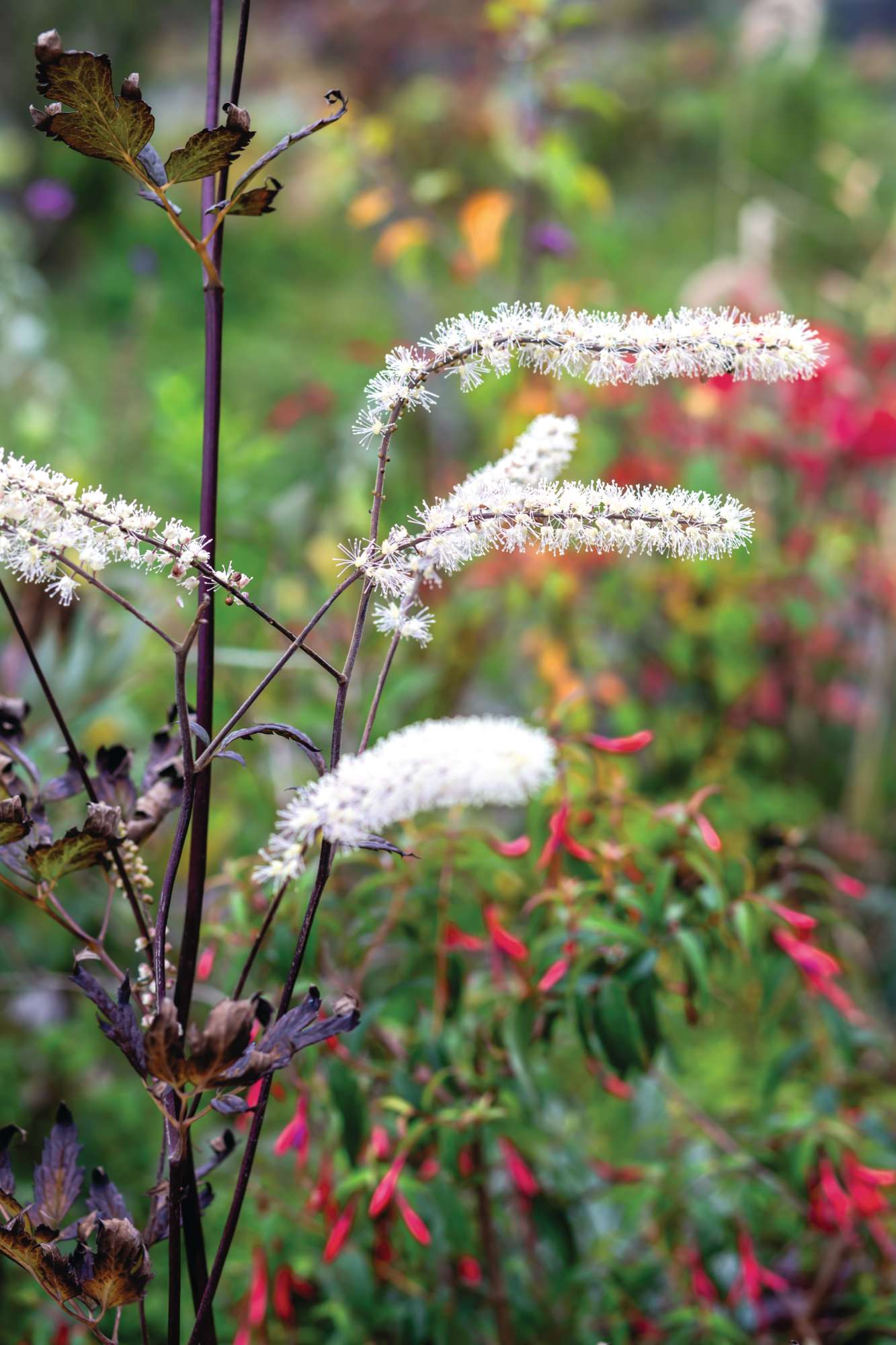
I first saw this Actaea bred by Piet Oudolf on a show garden, and instantly fell in love with it. The cascading flower habit is different from other dark-leaved forms, and its deeply divided purple-bronze foliage contrasts well with the delicately perfumed, cream, bottle-brush flowers. To flourish, it needs a soil with plenty of organic matter and – to maintain the purple foliage – full sun for part of the day. Divide every four to five years by taking new side growths off the clump in spring.
Height and spread 1.5m x 80cm. Origin Garden hybrid (species Actaea simplex x Actaea mairei). Conditions Moist but well-drained soil; part shade. Hardiness RHS H7, USDA 3a-8b. Season of interest August – October.
The flowers of this true Guernsey lily appear before the foliage and have a wonderful lustre that looks almost as though they are sparkling
NERINE SARNIENSIS
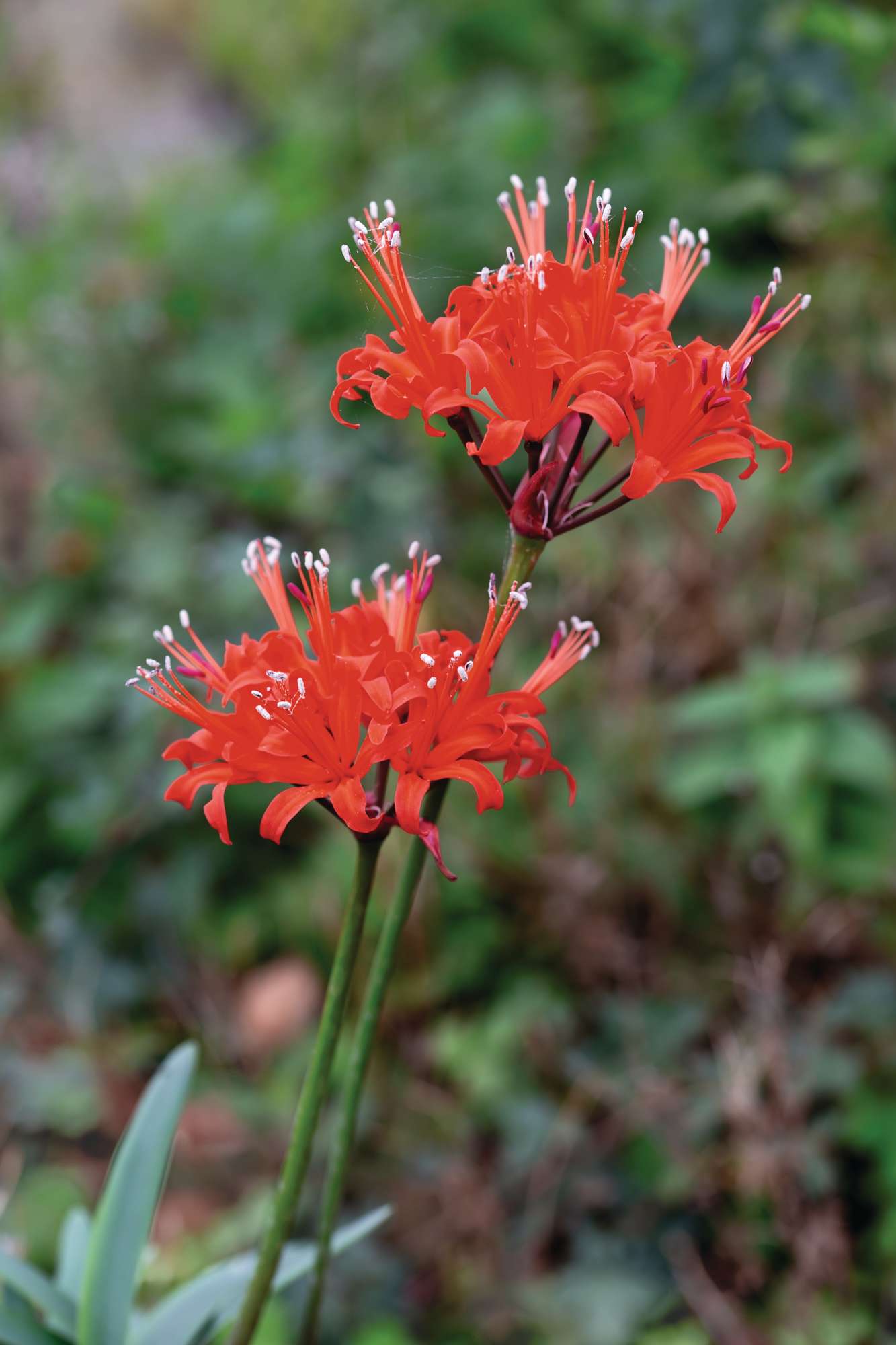
I was lucky enough to be given this true Guernsey lily by the collection holders. The flowers appear before the foliage and have a wonderful lustre that looks almost as though they are sparkling. Plant in containers with the neck and top part of the bulbs above the surface of a gritty compost. Don’t overwater them during the growing season, and keep relatively dry during their dormant period. Not suited to borders, they are best grown in a conservatory or heated greenhouse. After flowering, split the bulbs and grow on the offsets, adding a slow-release fertiliser.
Height and spread 50cm x 50cm. Origin Cape of South Africa. Conditions Moist but well-drained or well-drained soil; full sun. Hardiness RHS H2, USDA 9a-10b. Season of interest October.
You may also like
- Beautiful autumn flowers for the garden: nerines and amarines and how to grow them
- 10 plants that thrive beneath trees - according to an expert designer
HEUCHERA VILLOSA
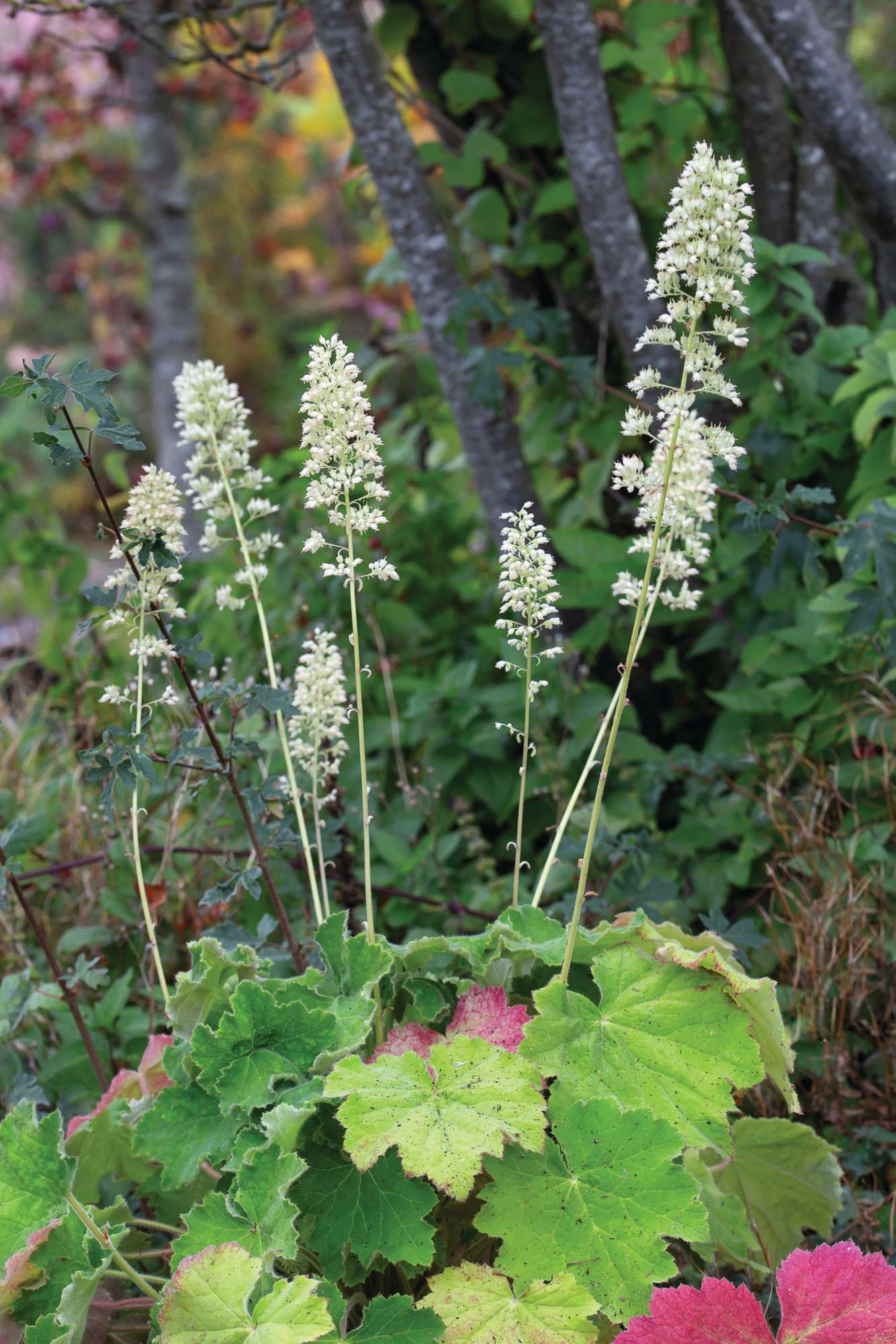
This species has been used a lot in the hybridisation of this genus to give us wonderful large-leaved plants. I like this one in particular for its giant, hirsute leaves and tall, cream-to-green flowers. It is often sold as Heuchera ‘Autumn Bride’, and I cannot see any difference between the two. Native to woodlands, it grows best in part shade with plenty of organic matter, and can also be used as shade container planting. While it is deciduous, the leaves look reasonable through winter. The best way to propagate it is through division in spring or basal cuttings.
Height and spread 40cm x 40cm. Origin Southeastern USA. Conditions Moist but well-drained soil; full to part shade. Hardiness RHS H6, USDA 3a-8b. Season of interest June – November.
EUONYMUS OXYPHYLLUS ‘WAASLAND’
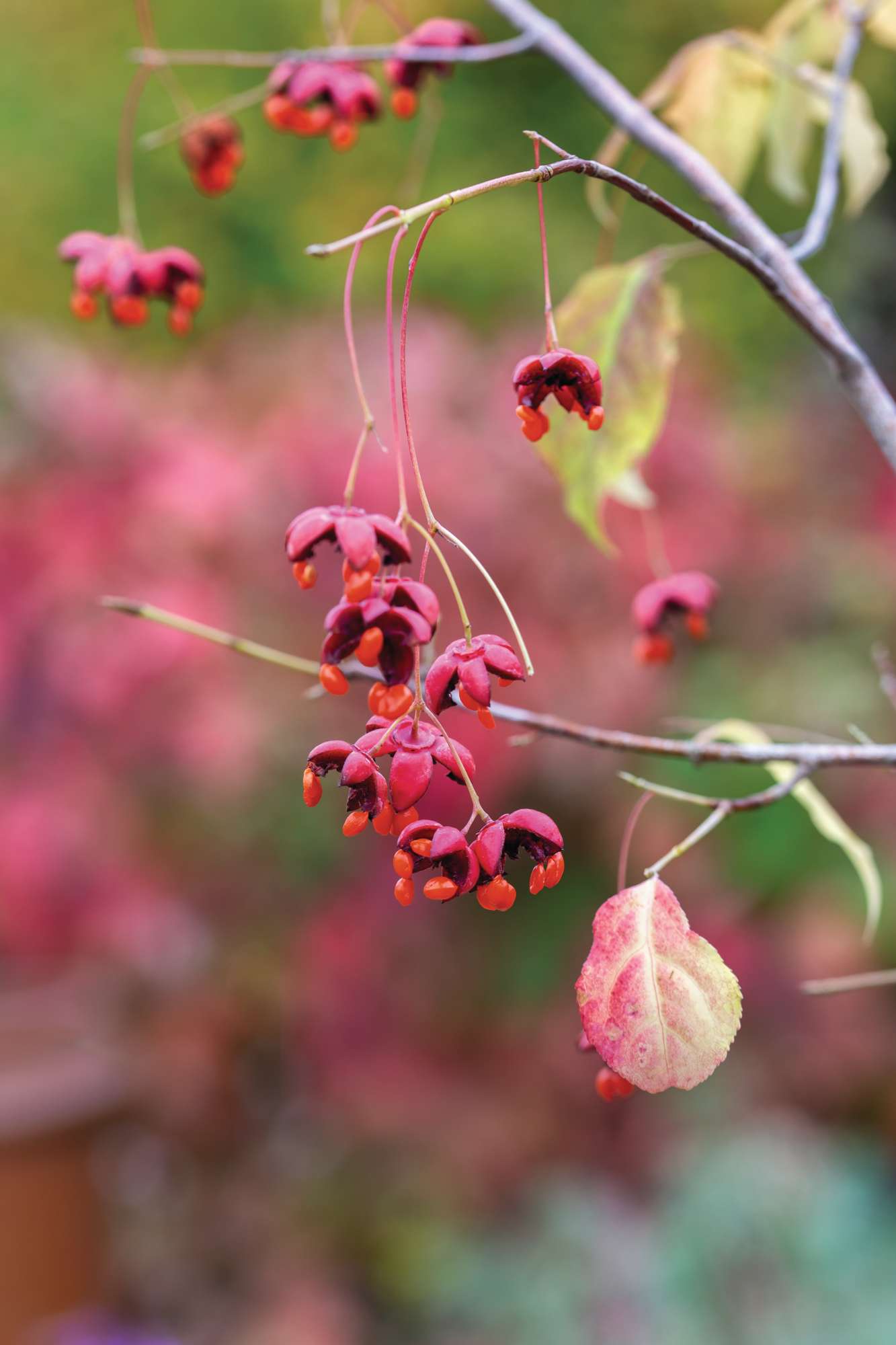
This is known as the Korean spindle tree and is deciduous, with wonderful autumn colour. Most often, the small green flowers are missed, but its fruits are striking and spherical, with a red outer splitting open to reveal bright-orange seeds. It has an elegant, airy growth habit and is slow growing, so it can be grown in a large container. It will grow from seed but as this particular variety is usually a grafted plant, the seedlings produced will show variability from the parent in most cases.
Height and spread 2.5m x 2.5m. Origin East Asia, Korea, Japan and China. Conditions Moist but well-drained to well-drained soil; full sun or part shade. Hardiness RHS H6, USDA 5a-9b. Season of interest May – October.
You may also like
LESPEDEZA THUNBERGII ‘EDO-SHIBORI’
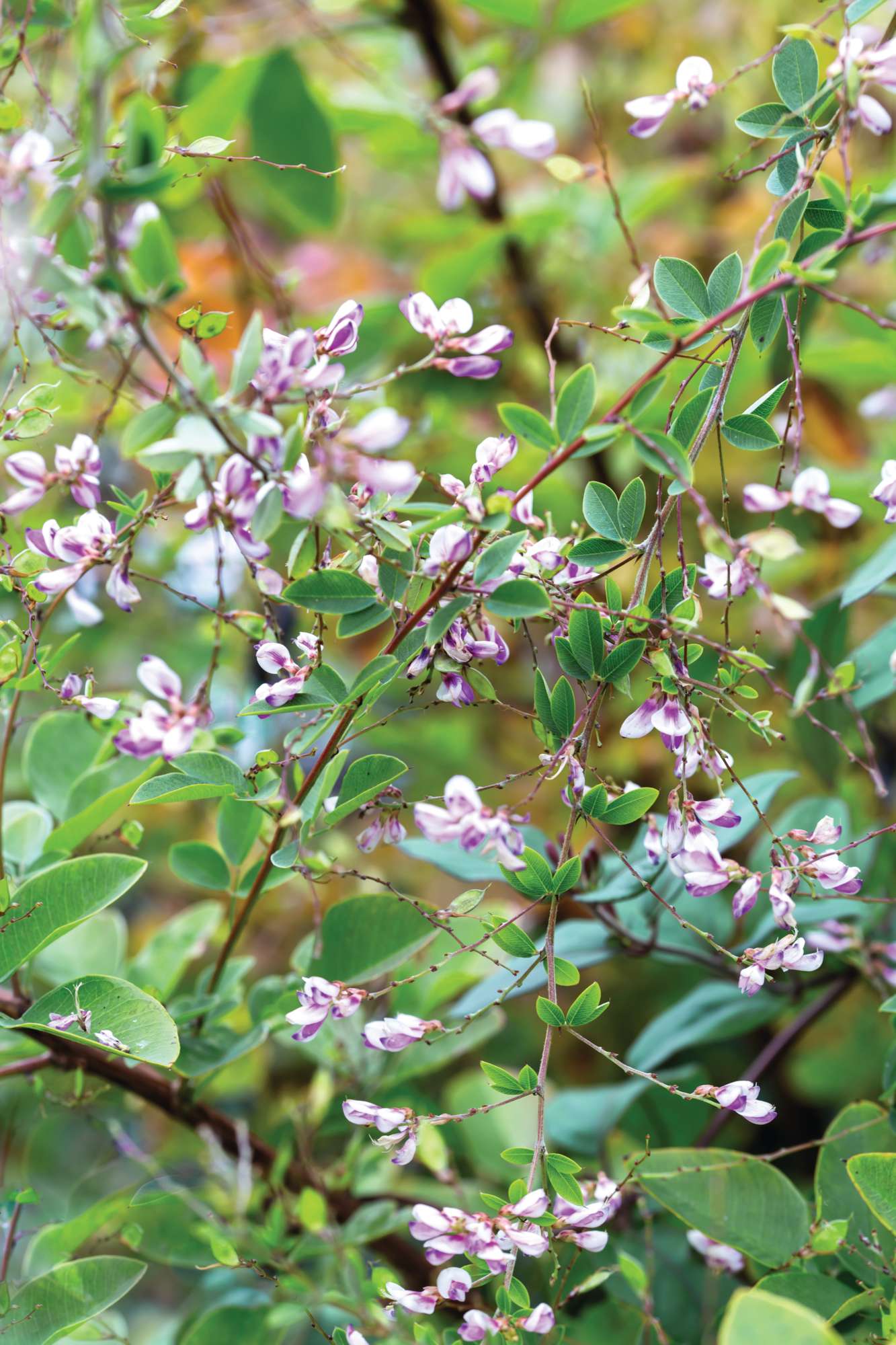
This late-season shrub has bi-coloured pea flowers, with the sail petal being pale lilac and the keel a deep pink, almost magenta. The flowers open in profusion, held on upright to slightly arching stems. This cultivar of Lespedeza thunbergii has a more upright habit than others, and is easily grown in a border or large container. Pruning is best done in spring when you can see where the regrowth is coming from, although taking a third off the length of the branches in winter can keep it tidy.
Height and spread 2.5m x 2.5m. Origin Garden, cultivar from Japan (species east Asia). Conditions Well-drained soil; full sun. Hardiness RHS H5, USDA 4a-9b. Season of interest August – November.
This little gem of a plant has thistle-like flowers held on contrasting wiry stems. It is almost purple in spring, turning to dark green as the flowers appear
SERRATULA TINCTORIA VAR. SEOANEI
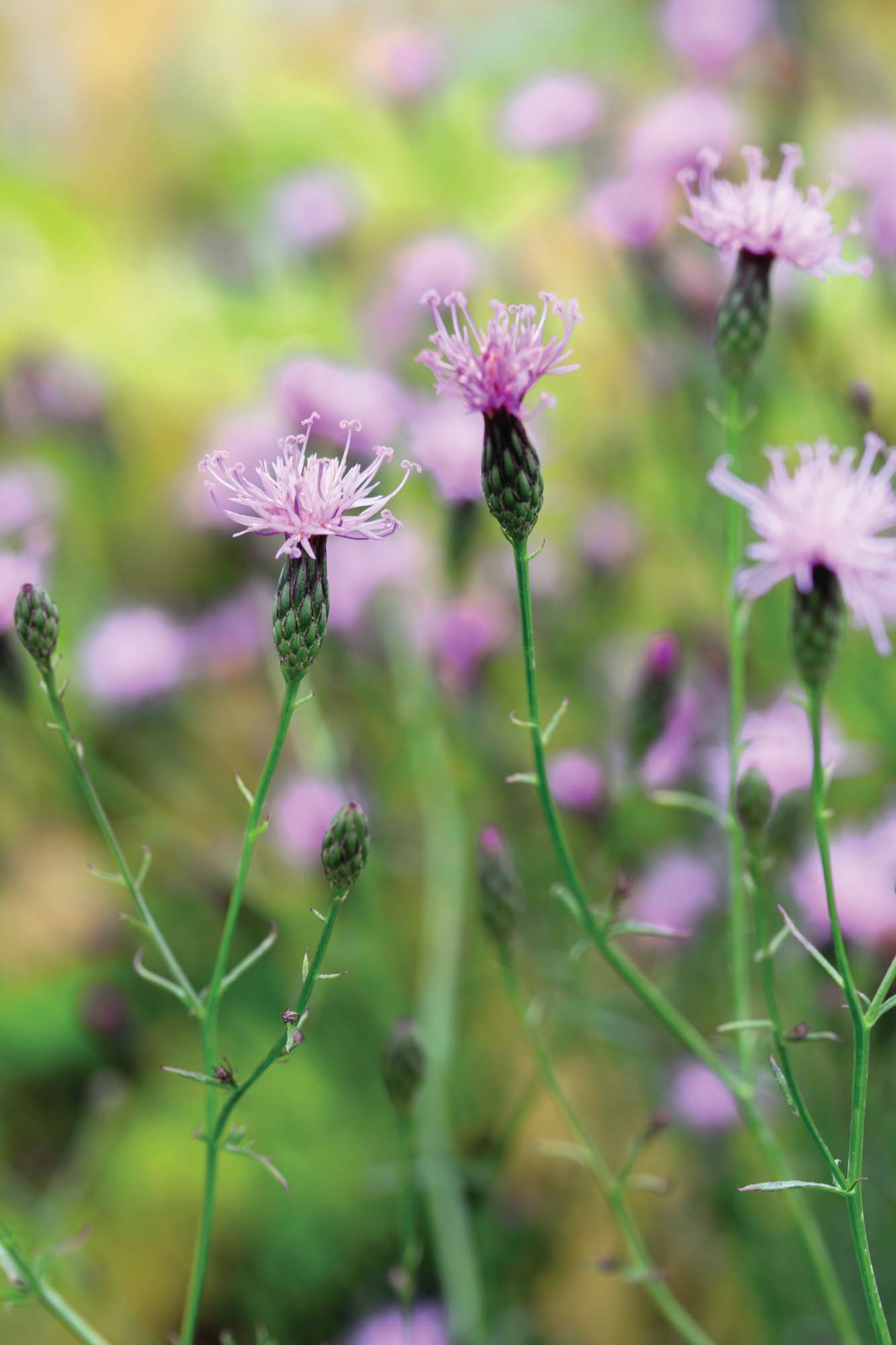
This little gem of a plant has thistle-like flowers held on contrasting dark, wiry stems. It is a small front-of-border plant with dissected foliage creating a tidy mound, and is almost purple in spring, turning to dark green as the flowers appear. A short-day plant, it does not flower until after the autumn equinox, becoming a good late-season source of nectar and pollen for beneficial insects. It also flowers at a low height when there are few other plants of this stature. Take basal cuttings or divide in spring.
Height and spread 30-40cm. Origin Northern Portugal, Spain and southwest France. Conditions Well-drained soil; full sun. Hardiness RHS H6, USDA 6a-9b. Season of interest Autumn for flowers.
SYMPHYOTRICHUM NOVAE-ANGLIAE ‘RUDELSBURG’
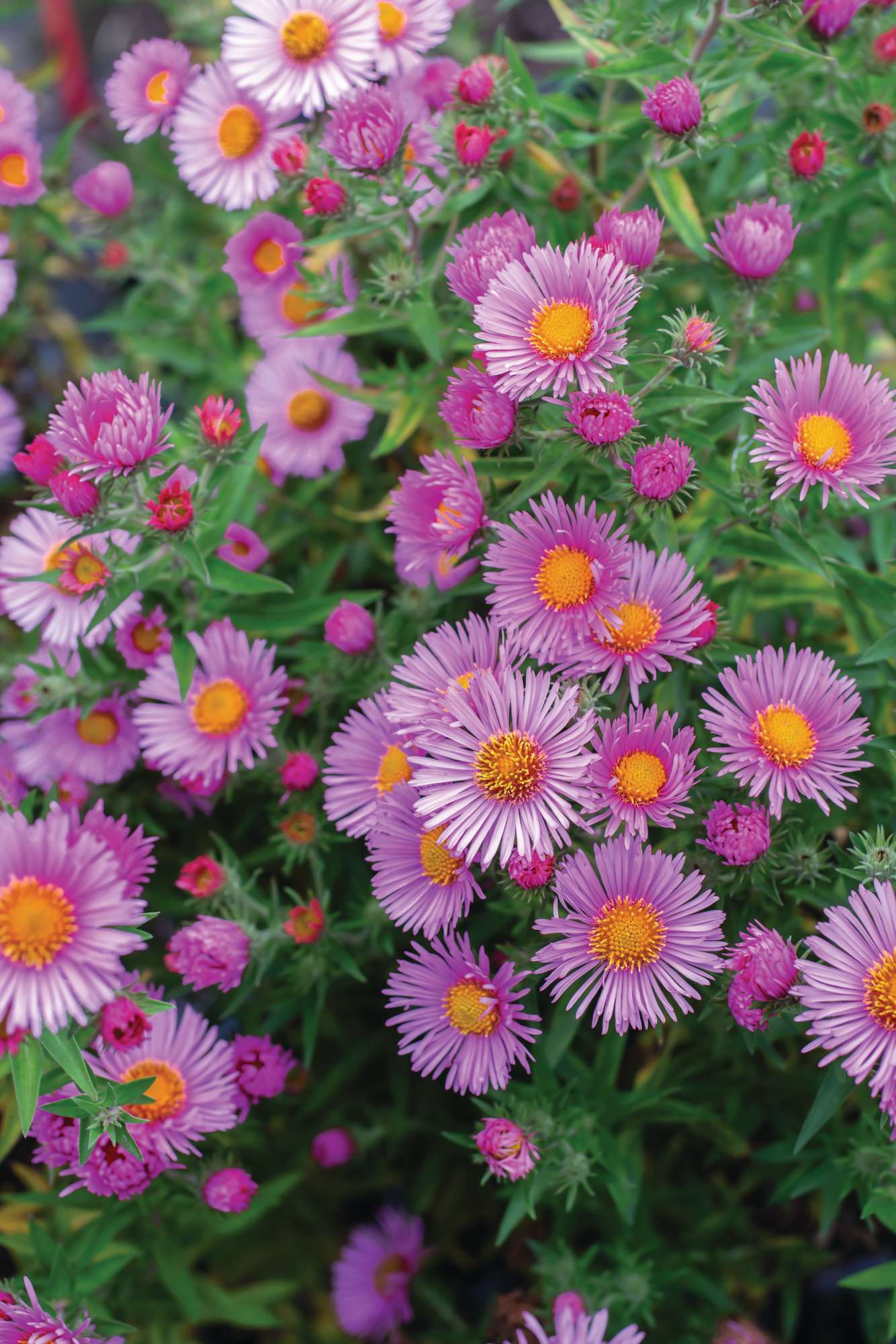
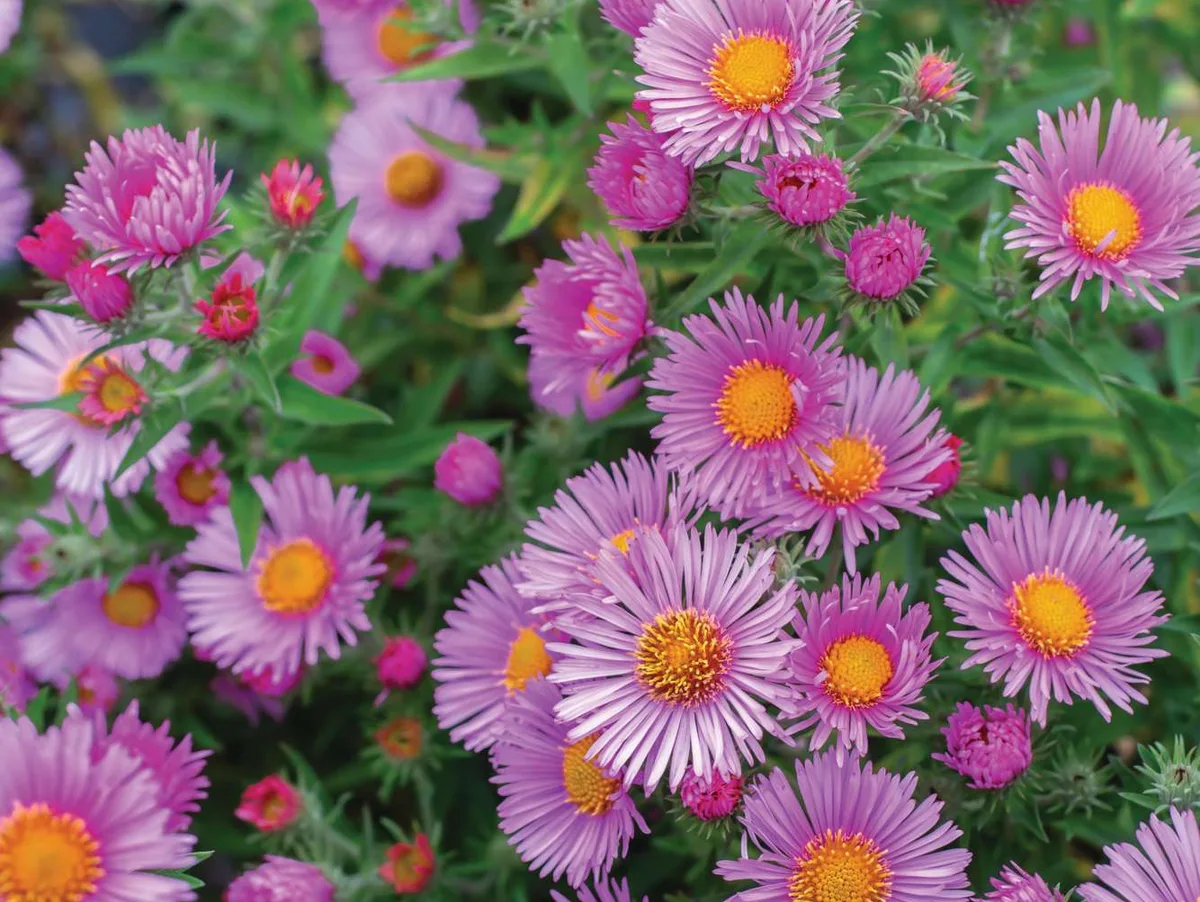
This fabulous, almost-double daisy will flower throughout autumn. It is a mid-height perennial with hirsute leaves and stems. There are many Michaelmas daisies – some are short, others tall – so choose ones that will grow in your soil conditions. Under stress, they will not flourish and can develop mildew. To avoid this, mulch well; a Chelsea chop towards the end of May will aid their growth. Divide every three years in spring to rejuvenate the clump.
Height and spread 1m x 50cm. Origin Garden (species North America). Conditions Moist but well-drained soil; full sun to part shade. Hardiness RHS H7, USDA 3a-9b. Season of interest September – October.
*Holds an Award of Garden Merit from the Royal Horticultural Society. †Hardiness ratings given where available.