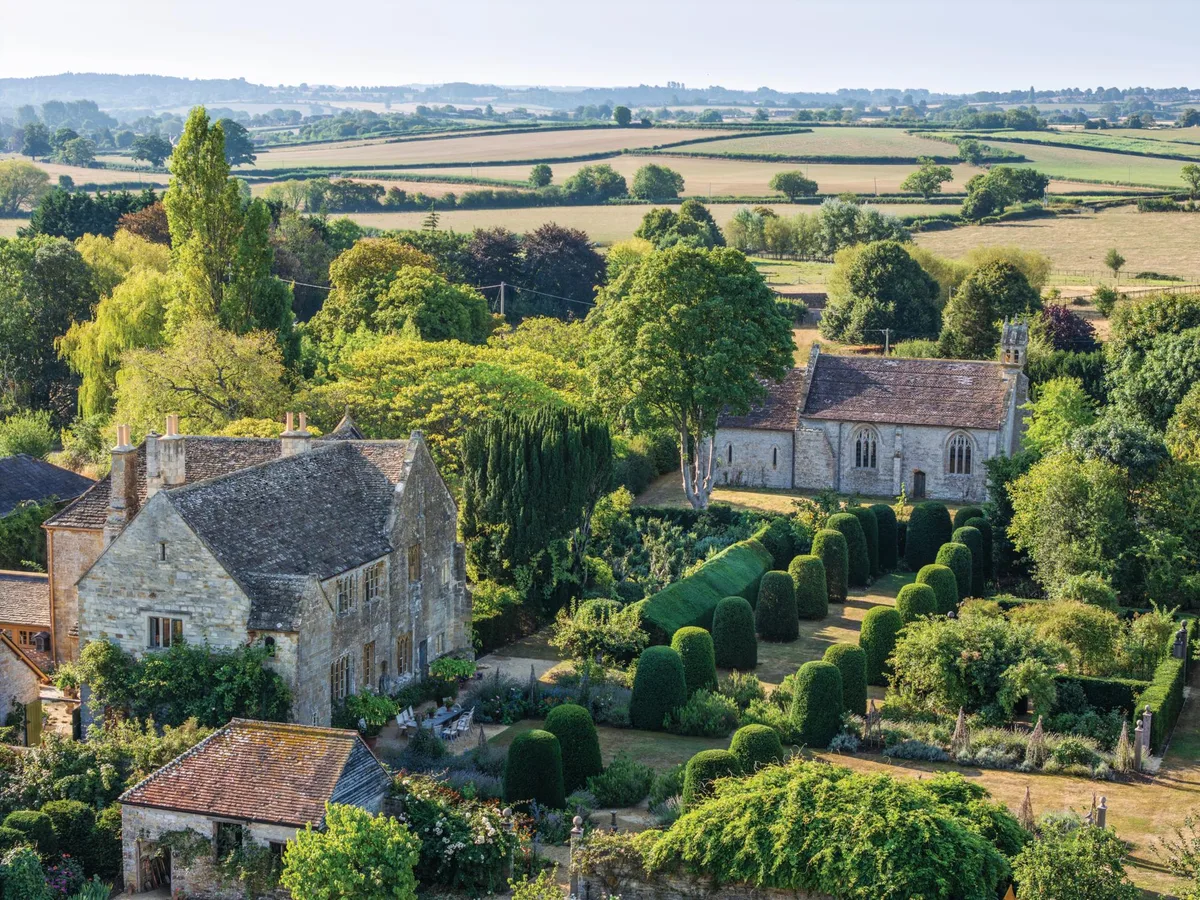
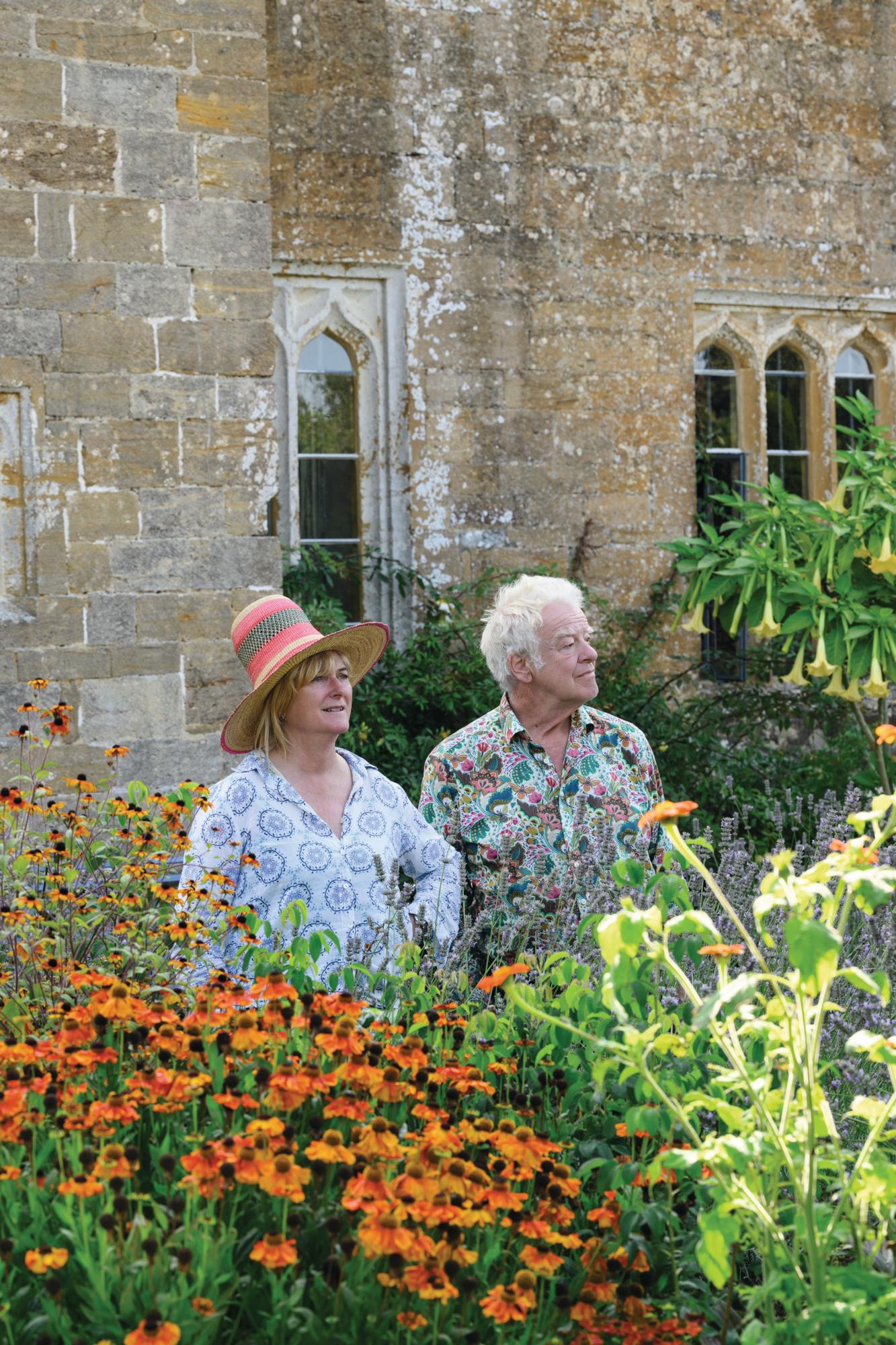
Ashington Manor is the fourth garden Julian and I have made for us to live and work in. Like children, each garden incarnation has had a quite different nature. They come already formed in character, with their own locality, geology and topography. You nurture them, input your dreams and demands, and they fledge and become entirely their own, but with some imprint of your vision remaining.
We came here in 2019 to a broken place, empty for the best part of a decade and unloved for almost two centuries, and we created a garden from scratch. We started gardening before we signed contracts, agreeing to invest in some hefty ready-matured yew topiary to give age and height to the flat mown field. The monolithic yew beehives, set out in a cruciform axes, are now doing well, peopling the place with
a gravitas that almost nothing can match.
Although we do have interested groups who visit, our garden isn’t really intended to be on show. It’s very casual. We have no gardener, just the brilliant handyman Brian Hill who comes in two days a week. It is
certainly not a perfect patisserie; more an ever-changing baking with plants.
You may also like
- Talking Gardens Podcast with Isabel Bannerman
- 32 of the top women garden designers working in the UK today
Last year, some dear friends asked us if they could celebrate their wedding in the garden in September. We were, of course, delighted, but it meant the garden would have to be in flower beyond midsummer. There’s a scruffiness about the post-midsummer garden that can’t be helped. It’s less of a problem in gravel or prairie gardens, which come into their own later, but in our sort of conventional cottage
mix, spring is the first flourish of boweriness, and May and June the zenith of scent and sensation in colour, texture and tenderness.
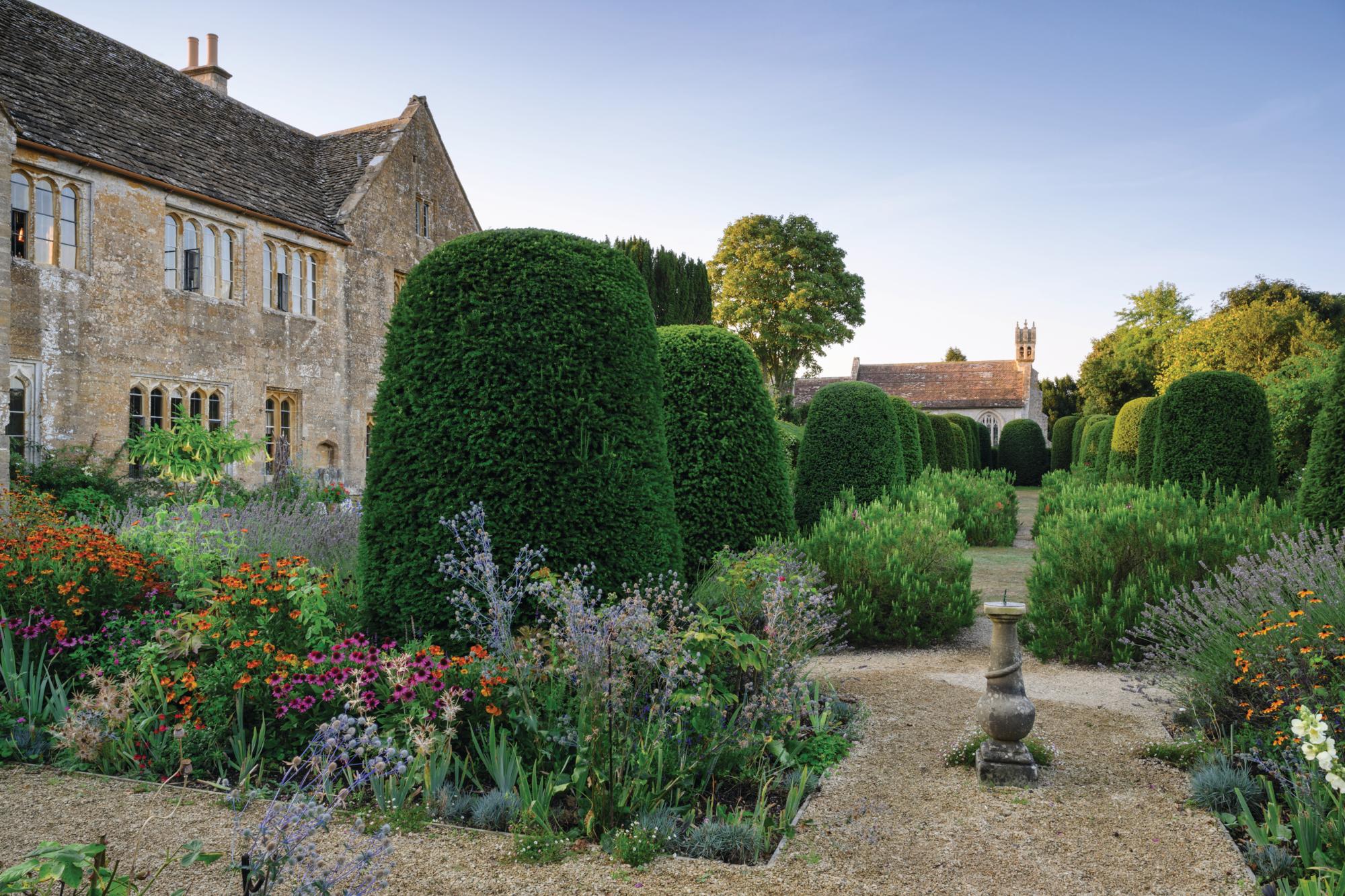
There’s still much to enjoy in a middle-aged garden; like a middle-aged wedding, there’s more character, flavour and wisdom. September evenings have that peerless exotic quality you see in John Singer Sargent’s Carnation, Lily, Lily, Rose – you can almost smell the warm cinnamon scent of carnations – and we both rather love the late borders you see in Scotland, with goldenrod standing tall like military gold braid.
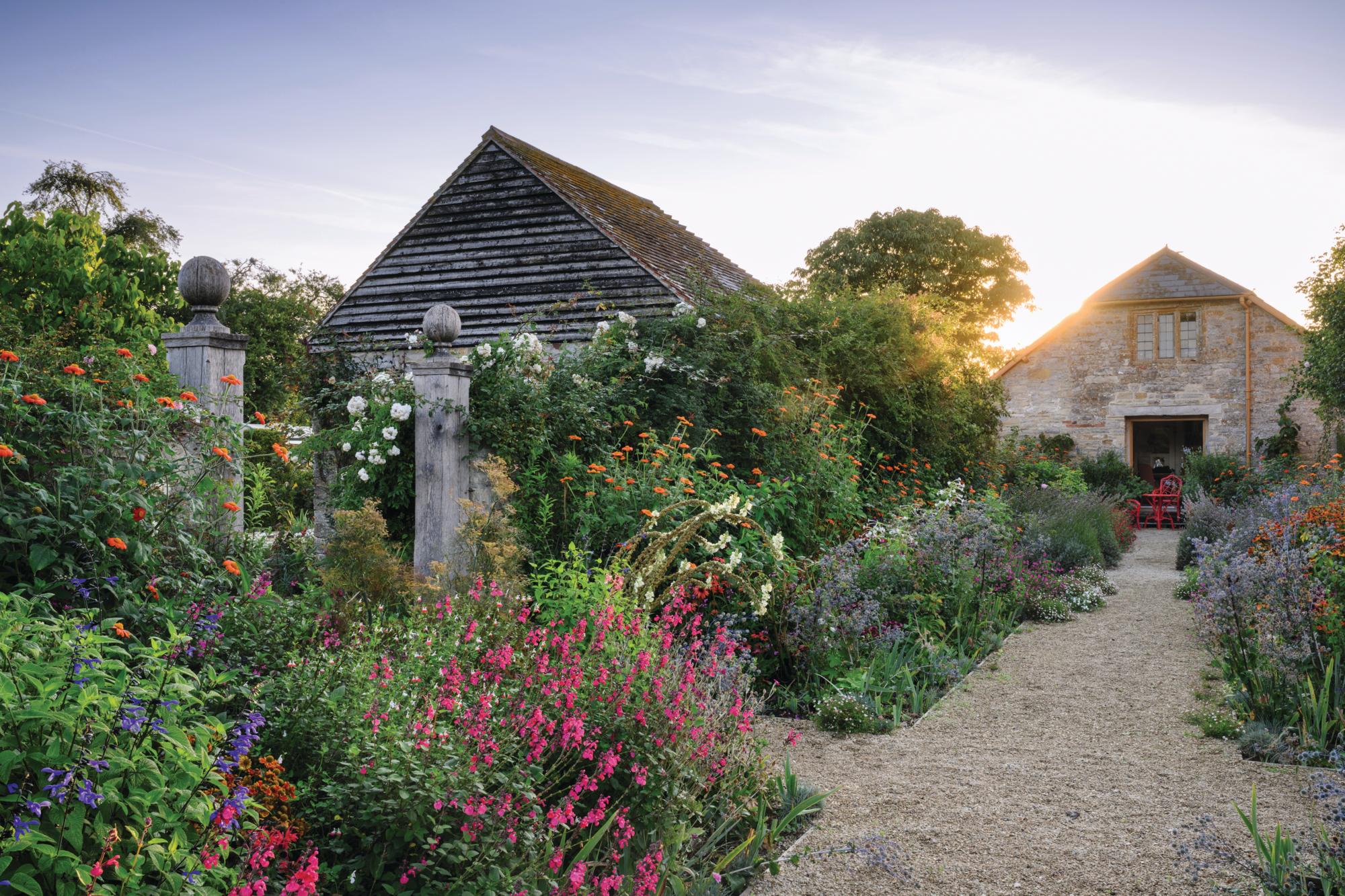
It was March when the plan emerged – too late for bulbs, most biennials and many annuals – so we just had to add what plants we could get. Julian ran like a rugby fly-half with the idea of a September garden, determined to enjoy his love of late colour. Ashington Manor became Salvia Towers. Salvias are so numerous and so versatile; those with cassisand pineapple-scented leaves mingle so well with pelargoniums and night-scented tobaccos, and those tobaccos, particularly woodland Nicotiana sylvestris (if sufficiently shady), could be kept going, and smelling, until September. Australian N. suaveolens only starts to flower in September.
You may also like
- Books for the ultimate horticultural library
- These ten adaptable plants can cope with whatever climate change throws at us
The west of the garden, where we eat out, is planned on two lavender-lined paths. The lavender we bought, just before lockdown, came from B&Q and was nameless, but has luckily turned out to be some form of the tall, late-flowering Lavandula x intermedia, possibly ‘Lullingstone Castle’, which has an Elizabethan flavour. It flowers in July, at nose height, in wafting reefs with shoals of nosing invertebrates. Lavender has its own tricky ways, but Jekka McVicar’s rule to ‘cut back one eighth in the eighth month’ is key. This meant that in the ninth month it would be back to neat-ish low mounds.
Behind the lavender, Julian decided to plant Salvia uliginosa, the bog sage with sparkly blue flowers, in the middle of the sweet pea teepees to let loose more of a wandy look, and to take over when the sweet peas were done.
In the kitchen garden, to the north of the house, we often plant ruddy-flowered runner beans as a follow-on to sweet peas. But for the teepees near the house we went for sweetshop twines of Thunbergia alata, or black-eyed Susan, which worked a treat, as well as Ipomoea tricolor, which did not. A few years ago, a purple Ipomoea purpurea ‘Kniola’s Black Night’ we planted self-seeded so successfully it continued to strangulate the dahlias for years. For the wedding party we tried Ipomoea tricolor ‘Heavenly Blue’, the true caerulean blue you see on chainlink fences in southern Italy. This flourished, creating verdant towers, but not one single flower appeared – we had made the ground for the preceding sweet peas too rich.
Around the hazel-stick teepees Julian packed in the bluest of salvias with blue violas and pansies from Sherborne Castle & Gardens at their feet. Salvia ‘Blue Butterflies’ in painterly dabs, and Salvia patens ‘Giant’ from Derry Watkins’ Special Plants along with the similar, but not as hardy, Salvia patens ‘Guanajuato’. The rather more coarse Salvia Big Blue (= ‘Pas1246577’) towers over all.
To achieve density of colour combined with a free-floating looseness – more like dancing butterflies than the clumpy effect of dahlias and zinnias – takes careful choosing and placing. We had a groundswell
of heleniums in shades of fading embers, amber and butter and a superstratum of Rudbeckia triloba ‘Prairie Glow’ with aerial acrobatics similar to tortoiseshell and comma butterflies. Rudbeckia hirta
‘Cherry Brandy’ has the mahogany depth found in red admirals and peacocks.
We started gardening before we signed contracts, agreeing to invest in some hefty ready-matured yew topiary to give age and height to the flat-mown field
Ultraviolet, blue and sulphur abound in later flowerers, especially the salvias. We have long grown the Schiaparelli pink match sticks of Salvia buchananii, S. involucrata ‘Hadspen’ and S. ‘Mulberry Jam’ – often in pots. Salvia microphylla cultivars, though, are more refined and the colours are saturated, as in the blue-purple of Salvia ‘Nachtvlinder’ and one called Salvia ‘SoCool Pale Blue’. Salvia ‘Blue Butterflies’ seemed electrified next to Verbena bonariensis.
Patrinia scabiosifolia, the eastern valerian or golden lace, was only marginally successful – its fronds were meant to gild the ensemble. However, the silver of Miss Willmott’s ghost (Eryngium giganteum)
and the nitre-blue steel colour of Eryngium bourgatii ‘Picos Blue’ added something fabled. On the advice of gardening guru Sue Dickinson, we refrained from hacking back the Salvia microphylla cultivars in a Chelsea chop way, to get a much later flush. Instead, she recommended we deadhead by hand, remove stalks and feed intravenously with seaweed. We did our best. It worked.
You may also like
Not everything was at its best. In the kitchen garden, stray splashes of pink Silene coronaria with ‘Bright Lights’ chard and belts of annuals survived, but the zinnias and spider flowers (Cleome houtteana) were too tired to look anything like Monet’s garden. The big exception was the impossible-to-spell or-pronounce x Alcalthaea suffrutescens ‘Parkallee’, a rust-resistant cross-mallow-hollyhock, which was a triumph. We’ve used the similar x Alcalthaea suffrutescens ‘Parkrondell’ with its juicy Ribena tones for decades, and use it here in front of the house.
When the day came, the wedding party started with a concert in the nearby little church of St Vincent’s, which we decorated with apple-laden boughs. Then guests progressed on foot past the front of the house and the beds of Crinum x powellii ‘Album’ and tawny African marigold (Tagetes ‘Cinnabar’) juxtaposed with a ruff of electric green of Euphorbia seguieriana subsp. niciciana (which doesn’t like pampering) to the orchard. Here the meadow was cut and cleared, leaving a gravel-coloured dusty sward, and guests swarmed into the space among the trees, laid out with tents for dining and dancing.
The lavender we bought, just before lockdown, came from B&Q and was nameless, but has luckily turned
out to be a tall, late-flowering form
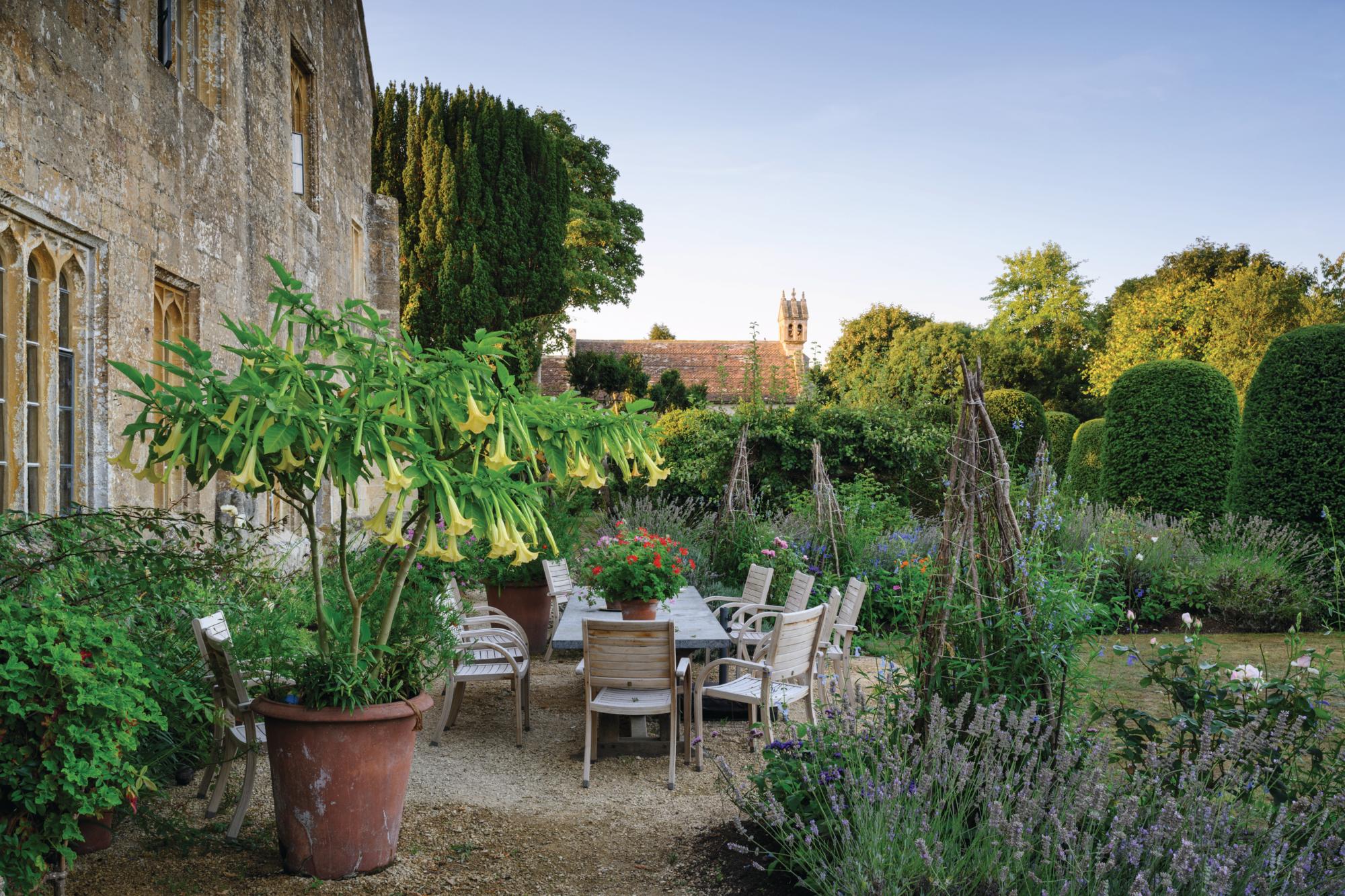
Breakfast after the party was at our faux bois concrete table in the studio courtyard. This east-facing courtyard, which sits between our kitchen and studio, is one we’ve transformed from a dumping ground
at the back of the house to a hot and happy place for breakfast and coffee. Now separated by paling from the concrete farmyard, it has blue lias cobbles, a hamstone wellhead and loads of pots, which sit about in a sort of gravel garden of opium poppies and Mexican daisies. Sadly, nasturtiums have not worked here.
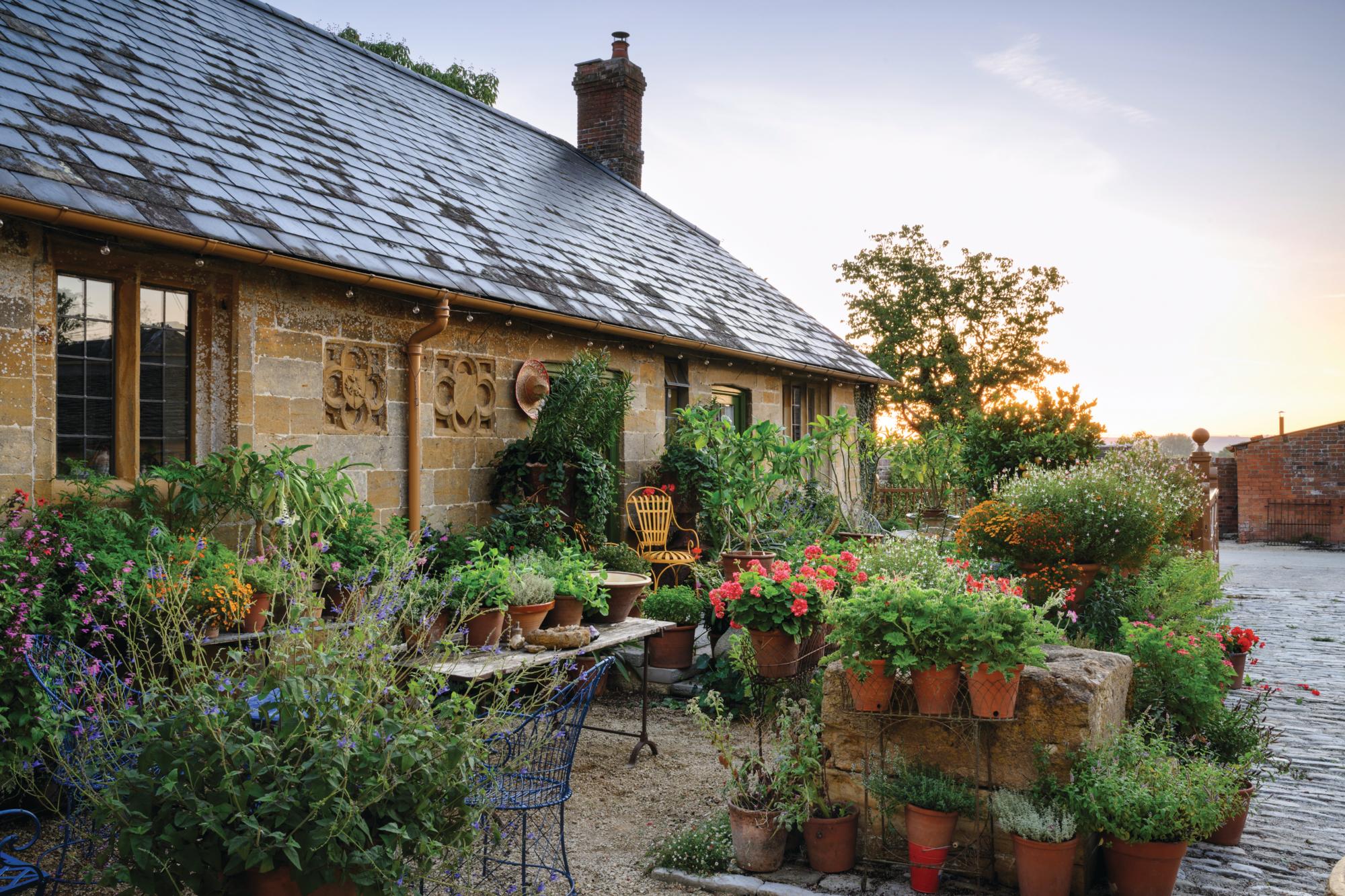
Among the pots are the narcotically scented Brugmansia. We have huge pots of Brugmansia x cubensis ‘Charles Grimaldi’ on the other side of the house, but the dangling angel’s trumpets here are unknown (but possibly Brugmansia suaveolens ‘Jamaica Yellow’ or ‘Flavens’). Other pots hold stalwart pelargoniums, including Pelargonium capitatum and P. ‘Clorinda’, which can keep going until the frosts if deadheaded and fed. We love their colour next to the beetroot-hued, bruised-maroon of Salvia Love and Wishes (= ‘Serendip6’) and the more marmalade tones of S. Ember’s Wish (= ‘Sal 0101’).
Julian ran like a rugby fly-half with the idea of a September garden, determined to enjoy his love of late colour. Ashington Manor became Salvia Towers
More salvias, this time the red-baize-coloured Salvia ‘Royal Bumble’, edge the path from the studio courtyard. On one side of this path is a north-facing border, which though shaded by our bedroom gable end, still supports swathes of Phlox in a paintbox of colours, with Phlox paniculata ‘David’ and P. paniculata ‘Monica Lynden-Bell’ alongside luminous Salvia ‘Iced Lemon’.
Had friends asked to hold their wedding this year, when six summer weeks had no rain, we wouldn’t have been able to achieve anything like this kind of performance. What matters of course, beyond all the fairground frippery, is the mood of a garden. It’s not about numbers or names. It’s about whether you want to just be there and breathe in the air. For all the competitive speeches and jostle of a wedding party, a garden should always be a theatre for delight; a celebration of the senses.
Find out more about Isabel and Julian Bannerman’s work at bannermandesign.com