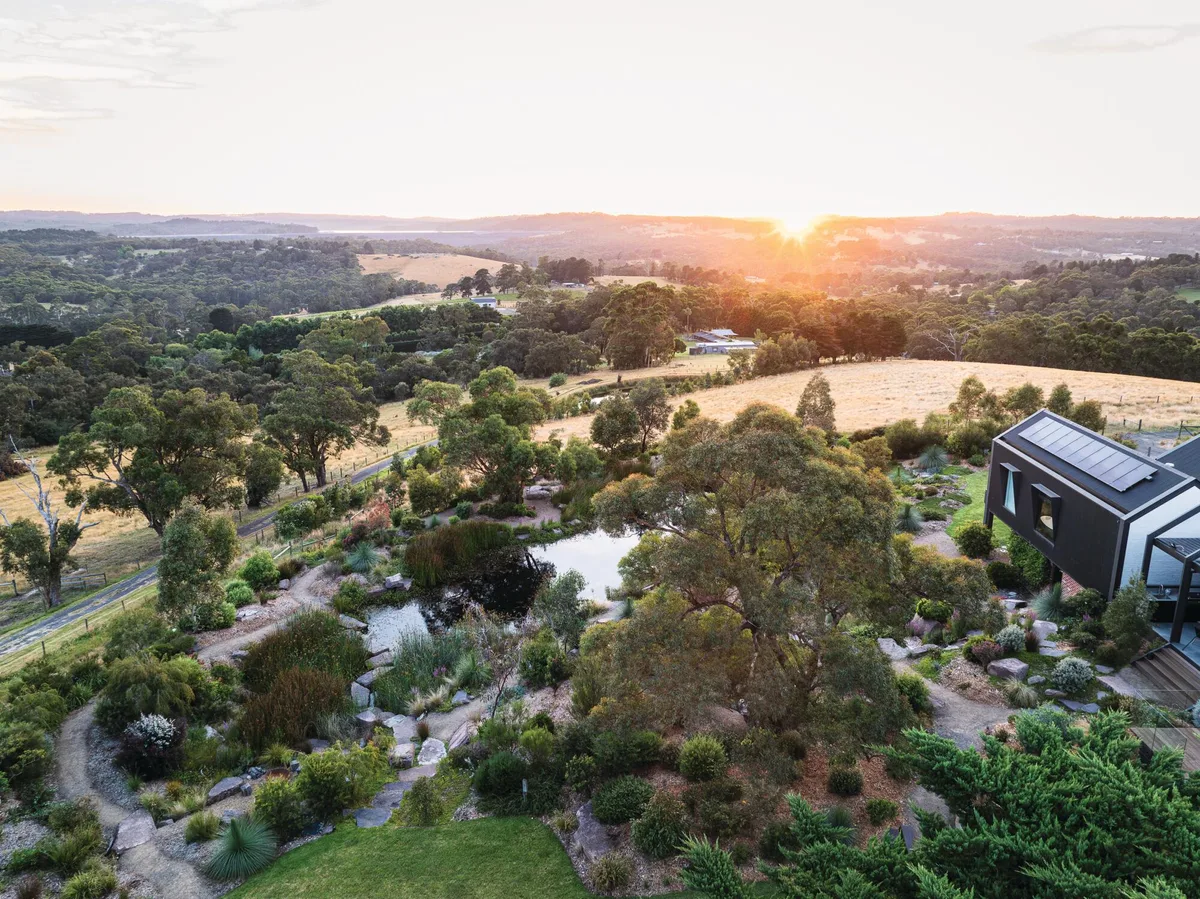
In Narre Warren East, on the outskirts of Melbourne in southeast Australia, the verdant foothills of the Dandenong Ranges emerge as you meander along the driveway of Nakari. The sloped, sinuous approach slowly leads you to the gravitational centre of a multi-generational family residence. The property name Nakari evokes a beautiful place, and the atmosphere greets you on arrival.
Owners Rex and Elaine sought the ethos of landscape designer Phillip Johnson to cultivate a garden from a brief that would feel both distinctly ‘bush’ and reflect their rural upbringing and surroundings, with an emphasis on an Australian plant palette and a strong integrity of place connected by water.
Phillip is known for his 2013 RHS Chelsea Flower Show Garden – and becoming the first Australian to win both Gold and Best in Show. His systematic approach to water and natural pools, grounded by local stone, are design qualities he has also used at Nakari.
You may also like
- 10,000 colourful perennials in this jaw-dropping Australian garden
- The nursery that's changing the face of Australian gardens
The site originally housed little more than dilapidated buildings and a few structural trees, many of which have been retained and sculpted through careful arboricultural work, including an introduced Peruvian pepper tree (Schinus molle), iconic of many rural properties.
Rex and Elaine had two sustainable residences with supporting sheds constructed for purposeful multi-generational living – family is paramount for them. When consideration turned to the landscape, they saw themselves as “custodians” of the property. It was not, they explain, simply about “designing for the present or local trends, but designing a garden that would grow into something extraordinary and deeply generational” for their grandchildren and future family life. Wrapped by surrounding gardens, the homes allow space for family gatherings.
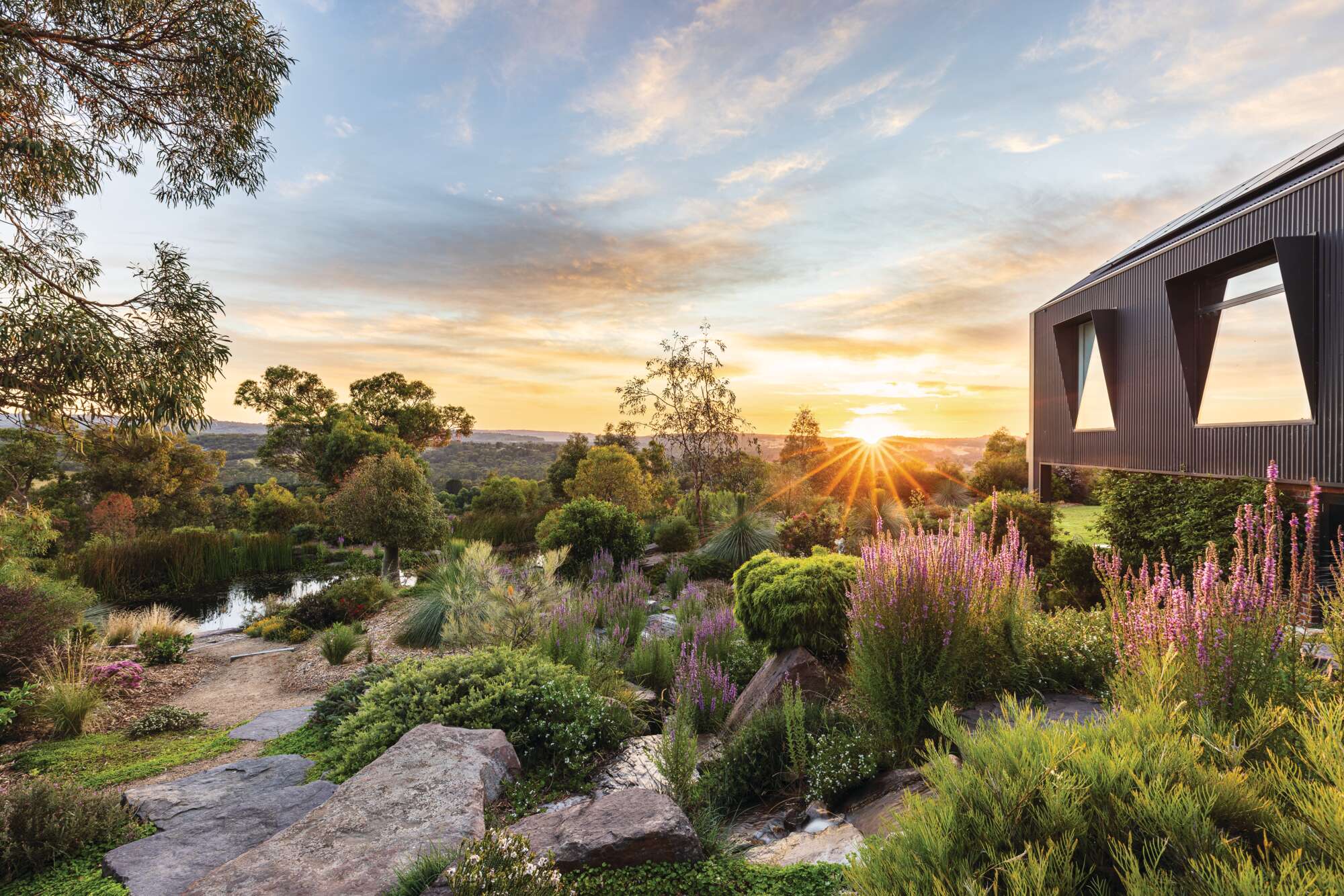
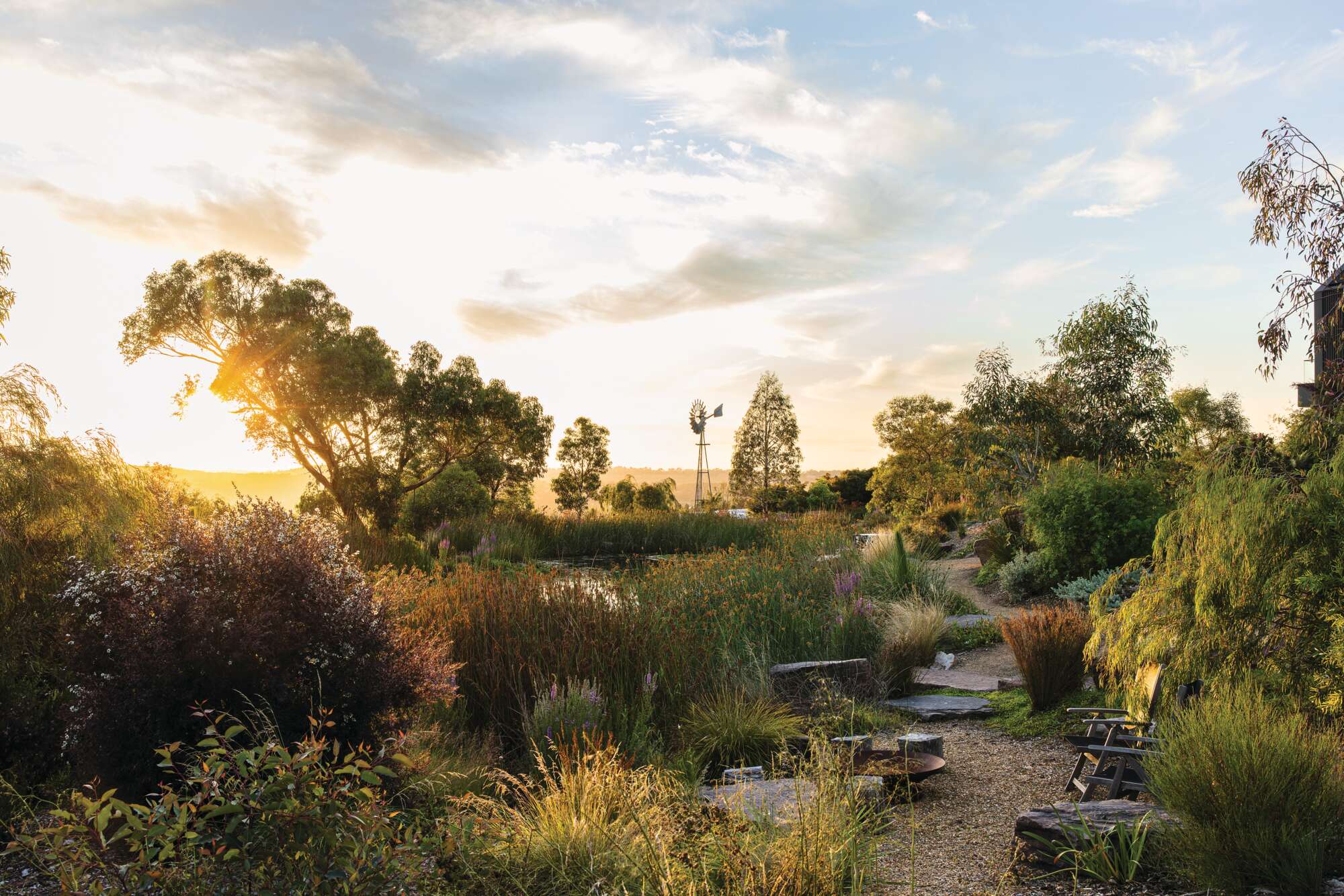
An engineered system of drains and swales works in concert to collect and retain water across the site, pooling in an expansive, idyllic natural pond, a billabong, below the home. The pond was renovated and relined to hold water within the decomposed granitic soils, which naturally allow for ample drainage. “The whole exciting thing about the property is it’s all about water,” says Phillip. “It’s a real working property, so we wanted to be smart in how we capture water in all these wonderful ways.”
The garden was built during Covid, which provided unique challenges as Melbourne experienced some of the world’s longest lockdowns. But this also created opportunities for the owners to collaborate closely with Phillip on design elements. Hardwood timbers were salvaged from the existing property on the site were repurposed into seamless garden furniture and features that now feel deeply embedded in place. Rural identifiers – work boots reused as succulent planters, fencing crafted from found materials and a discreet windmill – carry a purposeful material sensibility throughout the landscape.
You may also like
The granitic sand and free-draining qualities of the exposed site lent themselves perfectly to an appreciation of resilient Australian plants, and shelter has been created without compromising the expansive vistas across the rolling foothills of the Dandenong Ranges. Within this singular location, Phillip has framed the 360-degree views with the agile arms of drought-tolerant shrubs such as cut-leaf banksia (Banksia praemorsa), resilient burgundy-hued Leptospermum ‘Copper Glow’, and by the lower layering that grounds the garden.
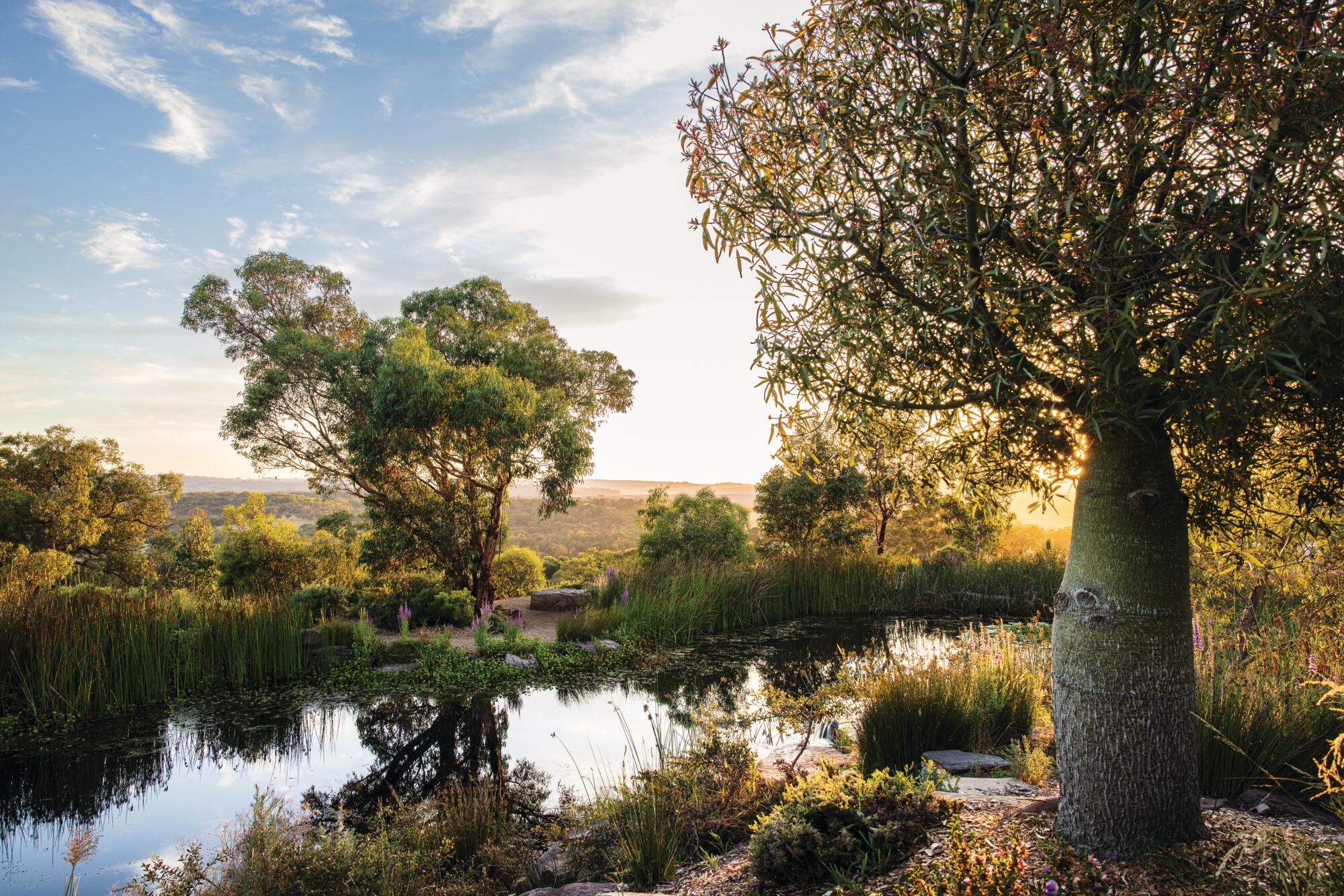
Through the space sit architectural shapes created by the multi-stems of mallee – small Australian eucalypts known for their multi-stemmed forms, which rebound from an underground lignotuber in response to breaks, fire and human coppicing. Phillip has favoured bell-fruited mallee (Eucalyptus preissiana) for its form, but also its ample flowering. The garden’s free-draining soil and north-facing aspect makes an excellent home for Western Australian mottlecah (Eucalyptus macrocarpa) too.
With our extreme environments, you must consider how you can harness water in clever, innovative ways, because water is liquid gold
Phillip has borrowed from the surrounding landscape for the views from within the house and throughout the garden, with sculptural eucalypts, the glory of lemon-scented gums (Corymbia citriodora) and curled wonder of smooth-bark apple (Angophora costata). “It is the culmination of classic design principles,” explains Phillip, “in having these borrowed landscapes to celebrate the vistas, and having the iconic Southern Cross windmill which punctuates the field of vision”.
Shelter is created on the exposed street by bands of fine-needled river oak (Casuarina cunninghamiana). Phillip has cultivated a sense of calm within this hilltop location, buffered from prevailing winds. The owners also wanted to create habitat; there are more than 6,500 native trees planted across the surrounding 21-acre site, nurturing wildlife corridors and acting as useful windbreaks skirting Nakari’s three acres of gardens.
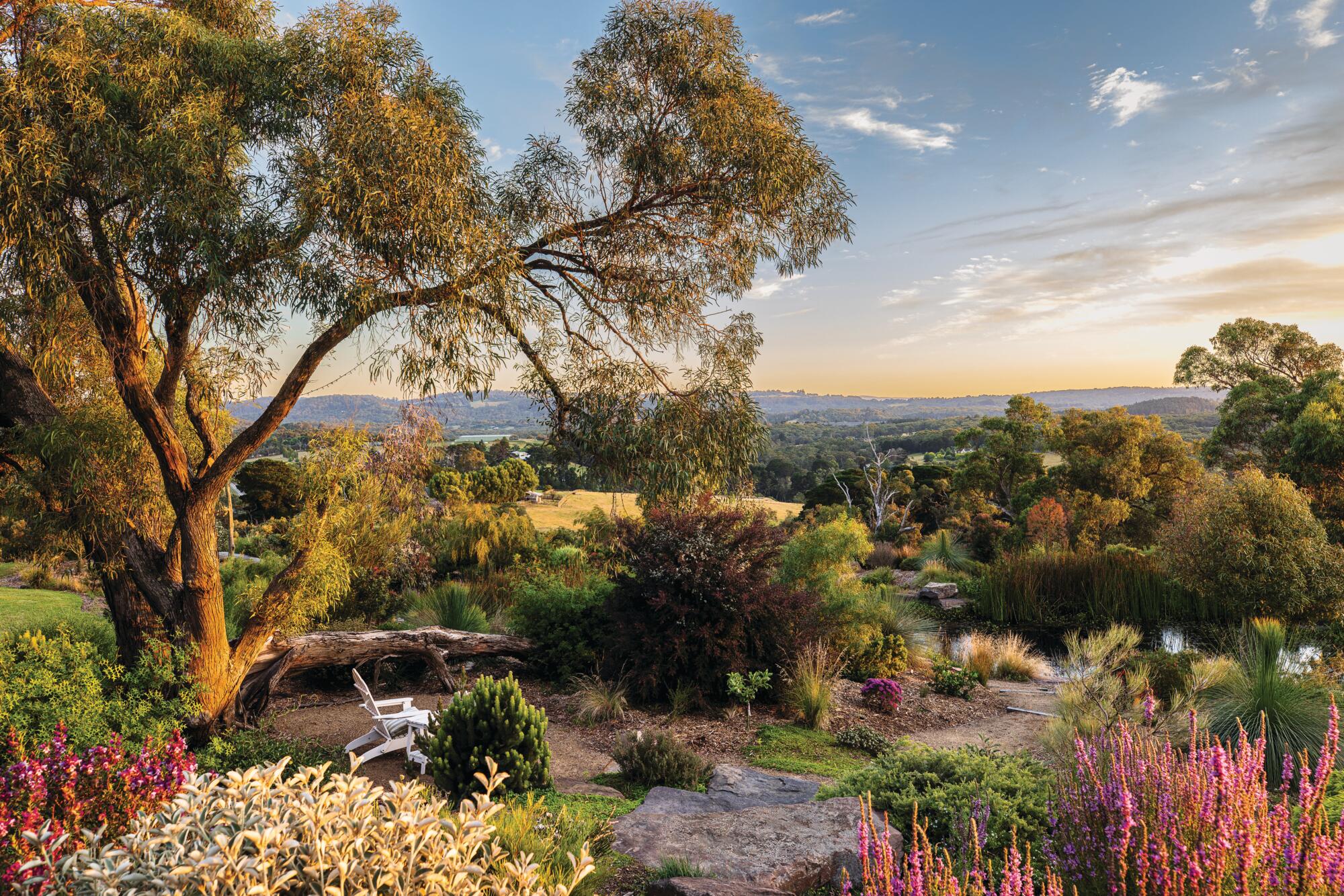
The cycles of moon and sun have become key players in daily life here. For the couple, sustainability was paramount, and independence from the grid and self-sufficiency with water were central ambitions. Phillip challenged them to increase their water storage, designing the property for climate change and extreme conditions. He conceived large tanks across the property to collect this precious resource, and the expansive billabong to capture every important drop, fluctuating seasonally.
“With our extreme environments, you must consider your water source,” says Phillip. “Think of how you can harness it in clever, innovative ways, because water is liquid gold. For our future, we’ve got to preserve and protect clean water.”
Shelter has been created without compromising the expansive vistas across the rolling foothills of the Dandenong Ranges
Considered waterfalls tumble gently through the site, while pathways reveal their side profiles, celebrating the layered qualities of mudstone slabs, with their granular details and organic patterns. Phillip has purposefully arranged the natural level changes and steps within the mudstone to create a subtle but powerful geometry across the garden.
The restrained appearance of the stonework sits in perfect proportion to the generous expanse of the vibrant pond, skirted with upright purple loosestrife (Lythrum salicaria) and a unique Australian fern, Marsilea drummondii, which resembles the leaf shape of a four-leaf clover. The softening brush of vegetation further amplifies the relaxed gurgle of water throughout the landscape. “We promote a lot of local, indigenous water plants, looking at nature for inspiration,” says Phillip. “Looking at natural waterways gives you success in natural ponds.”
You may also like
- These are the best new gardens according to designers, but what do you think?
- Here's how to protect your garden from 9 destructive visitors
A rocky skeleton provides structure across the dramatic levels of the sloping site, creating niches for family life and gatherings, with fire pits and quiet spaces for respite and reflection. Pathways run through the topography and across the billabong, creating a backbone for planting to inhabit. To create opportunities for complex habitat, Phillip approached elevation changes with an appreciation of niches and the microclimates they support. He has illuminated granular details in the positioning of mudstone pieces and slabs, with fine-textured Australian vegetation such as Acacia cognata ‘Limelight’ flowing over the textured stone.
Australian plantings abound, thanks to Phillip’s long-term collaboration with plant grower Phillip Vaughan of Vaughan’s Native Plants, based in Pomonal at the foot of the Grampians in western Victoria. Repeated silver forms of the Yanchep rose or desert rose Diplolaena angustifolia greet visitors in abundant coral bloom, while bold grass trees (Xanthorrhoea glauca ‘Super Grass’) create a kinetic atmosphere as their arching strands move with prevailing winds.
With this complex habitat and ample food sources, including a generosity of grevilleas (Grevillea ‘Bush Lemons’ and G. ‘Honey Gem’) for nectar-feeding species, the garden encourages a diversity of bird life too, with honeyeaters and wrens now so familiar they follow Rex and Elaine through the garden.
Carefully managed and maintained by the owners, the landscape stands as a testament to a deeply cultivated connection to place. For Rex and Elaine, the wonder of living and gardening at Nakari has not lost its glow. Travelling along their own driveway towards their home remains a “pinch-me moment. We still can’t believe this beautiful property is really ours”.
Find out more about Phillip Johnson’s work at phillipjohnson.com.au