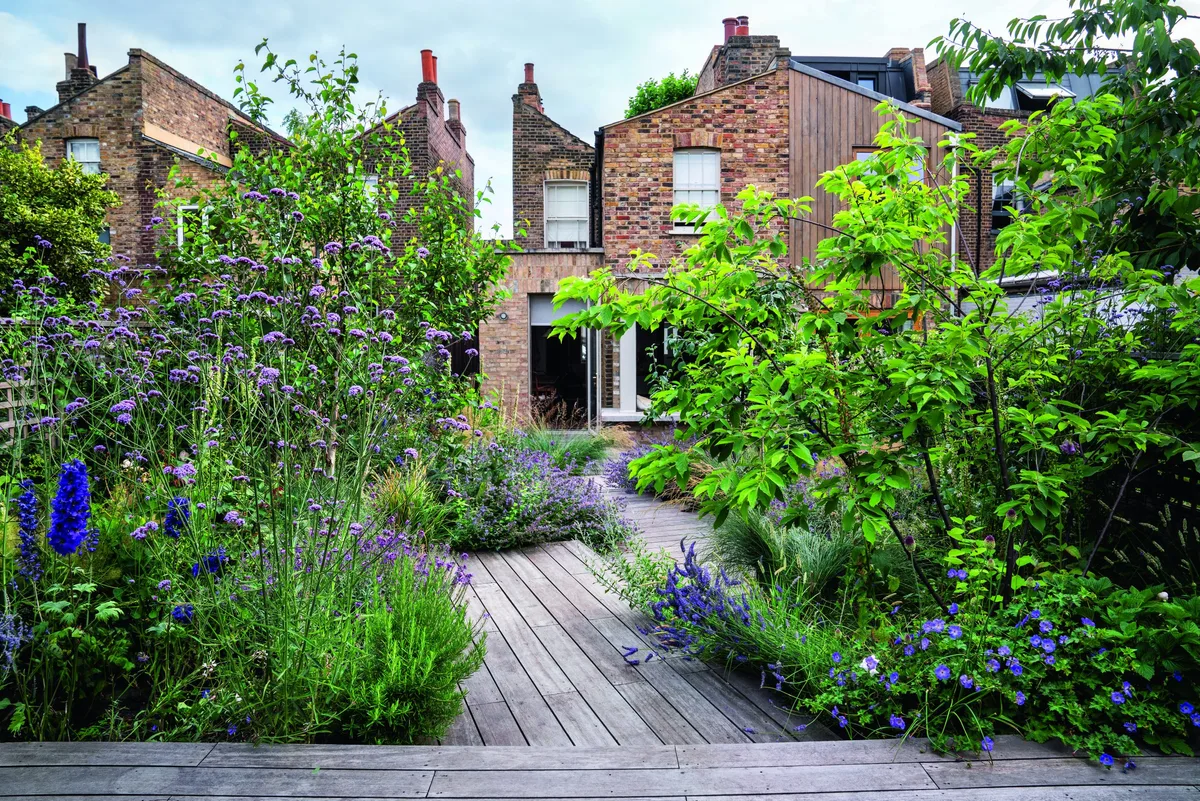
Every year at Gardens Illustrated, we ask plant suppliers to send us details of new plants that will be available for gardeners to buy in spring. Each time, we’re struck by how the plants being introduced – both perennials and shrubs – seem to be becoming smaller. You can now find ‘dwarf ’ or upright cultivars of shrubs such as buddlejas, roses and philadelphus, and smaller versions of familiar perennials such as gaura and catmint too.
You may also like
These diminutive plants are often labelled as ‘compact’, ‘patio’, ‘mini’ or ‘baby’ varieties. They have been bred to be smaller versions of their full-sized counterparts, reaching around just half to a third of their size. Their leaves and flowers are typically the same as the original, but their growth is often more compact, upright and dense. They may grow more slowly, have a neater, tidier shape, and are less likely to need staking and pruning. Many have also been bred to flower over a much longer period than their larger counterparts.
This trend towards smaller plants reflects the fact that gardens – especially those of new-build houses – are getting smaller. Even in larger gardens, planting areas are increasingly given over to paving or parking: a recent RHS report found that about 42 per cent of domestic garden space is now paved or otherwise non-vegetated. A growing number of people also live in flats with no garden at all, or rent, so rely on container gardening to get their green fix.
“Pots are becoming more and more popular,” confirms Mark Straver, CEO of Hortus Loci, which supplies plants wholesale to designers and to the public. He points out that in a small garden, “big old-fashioned shrubs that are deciduous – buddlejas, philadelphus and cornus – look a bit miserable in the winter. People think: ‘If I’ve only got a small garden, it needs to be either evergreen or smaller.’ It’s very easy to get snobby about it, but it’s horses for courses.”
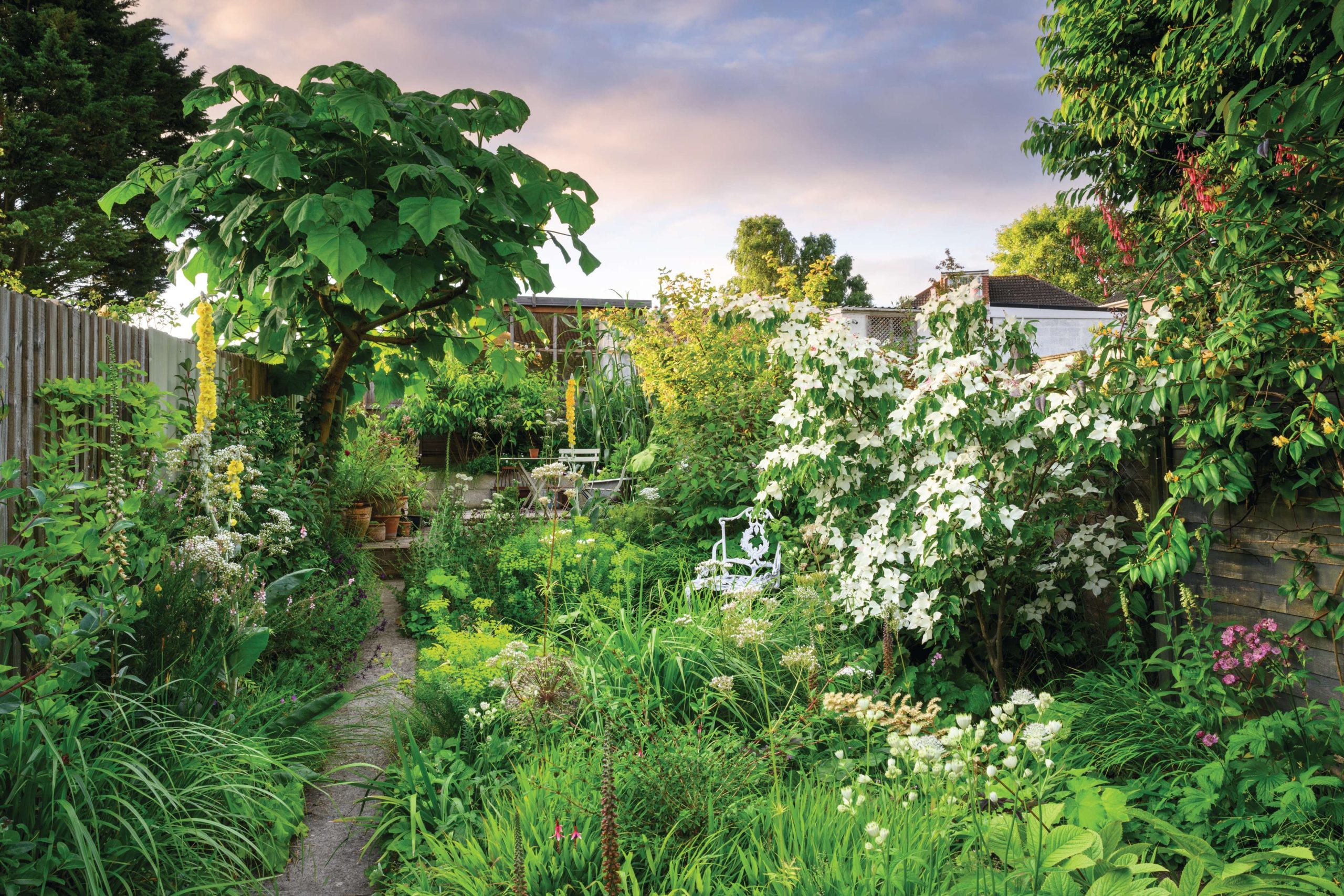
“This is actually exactly how I started gardening, with small plants in a small bed outside my old flat in Bournemouth,” explains garden designer Matt Evans, who now has a small, plant-packed garden in Bath. “It’s a common mistake in small gardens to choose miniature or compact plants because they feel more appropriate for the scale. In practice, filling a garden with lots of small plants often makes it feel ‘bitty’ and emphasises its boundaries. A far more effective approach is to plant with confidence, using generous, architectural plants to soften and blur the edges of the space so the garden feels deeper and more immersive.”
While Matt’s long, thin garden does have a small lawn at the end, he has created two paths that wind through the planting before you reach it. “There’s something particularly satisfying about moving through a small garden where the planting is abundant enough that you brush past it as you walk. It immediately makes the space feel richer, more atmospheric and larger than it really is.”
His thoughts are echoed by designer Alexandra Noble. “Unless it’s practically not workable, it’s nice for plants to be quite large in a small space; there’s something quite interesting about that contrast,” she says. "It is possible to introduce larger plants into your garden without feeling overwhelmed by them. Plant abundantly and you can achieve a really immersive experience. “I always say maximal planting
works well in a small space. It’s worth trying to be as generous as possible with the planting,” says Alexandra.
But how to introduce big plants into a small garden? Here are some things to bear in mind.
How to introduce larger plants into your garden without feeling overwhelmed
Go for tall, airy plants
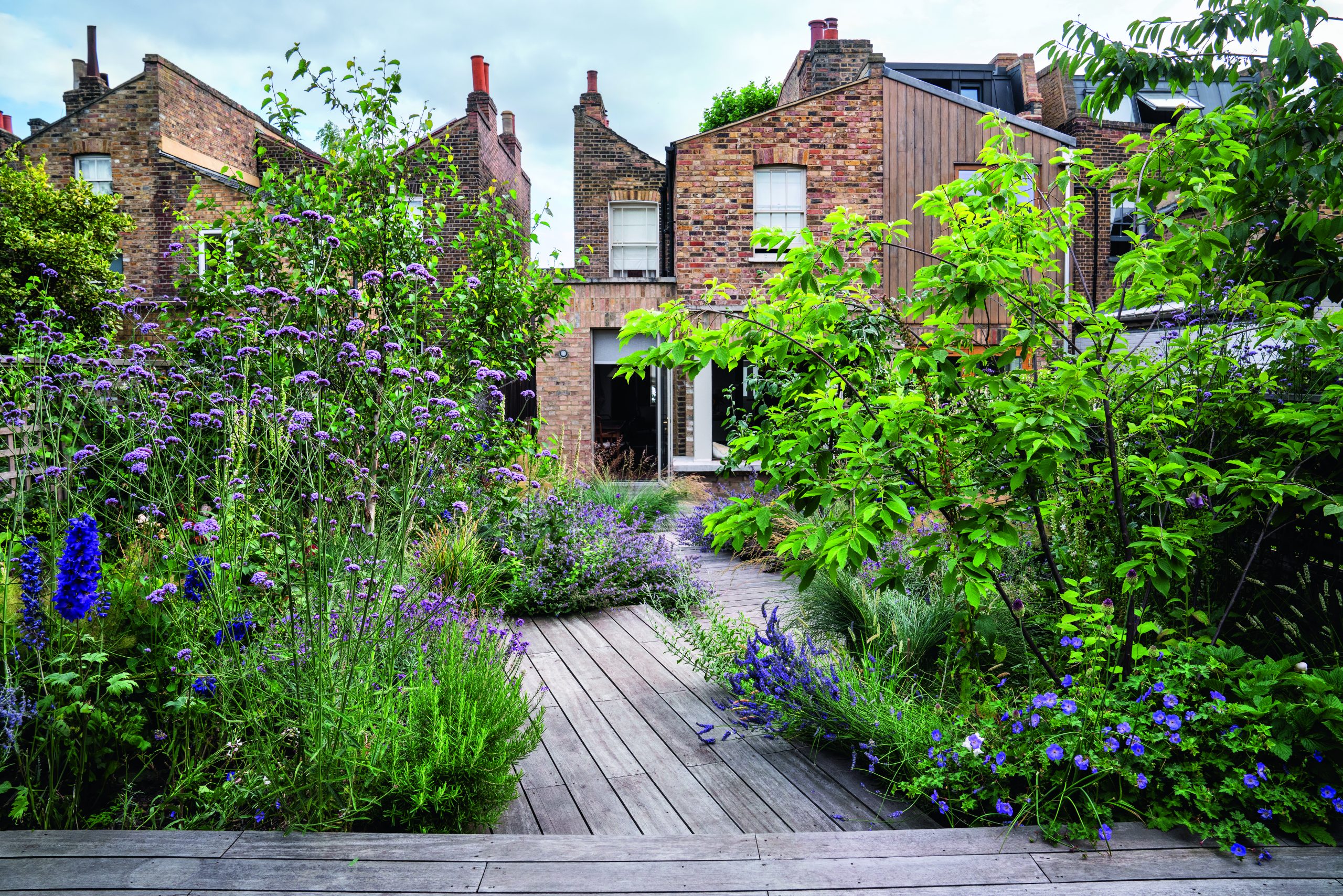
For this abundantly planted feel, it pays to use taller, airy plants - or what's called 'tall forb' planting. “Don’t be afraid of taller plants in small gardens,” says Declan Buckley. “Remember the sky is your ceiling.” Plantsman Nick Bailey adds: “Tall, see-through, gauzy plants give any planting a romantic feel. They add a delicate misty layer to gardens, balancing out bulkier species and larger leaves.” He recommends Erigeron annuus: “At 1.5m tall, it works well mid-border, where you can see through its skinny vertical silhouette of white daisy-topped stems.” Other gauzy plants Nick recommends include yellow Patrinia scabiosifolia, Eryngium pandanifolium, Anethum graveolens (dill), Pastinaca sylvestris (wild parsnip), as well as the ubiquitous but beautiful mauve-flowered Verbena bonariensis.
Bring taller plants to the front of a border
Another good tip is to mix up plant heights in your border and bring taller plants to the front. Traditional border planting advice dictates that in a herbaceous border, tall plants go at the back, mid-size plants in the middle, with lower growing plants at the front. Many plant suppliers suggest that their compact perennials and shrubs are suitable for the front of a border. However designers would now shy away from this, arguing that it pays to mix up plant heights for more dynamism and drama. It's a common designer trick.
Add drama with large leaves
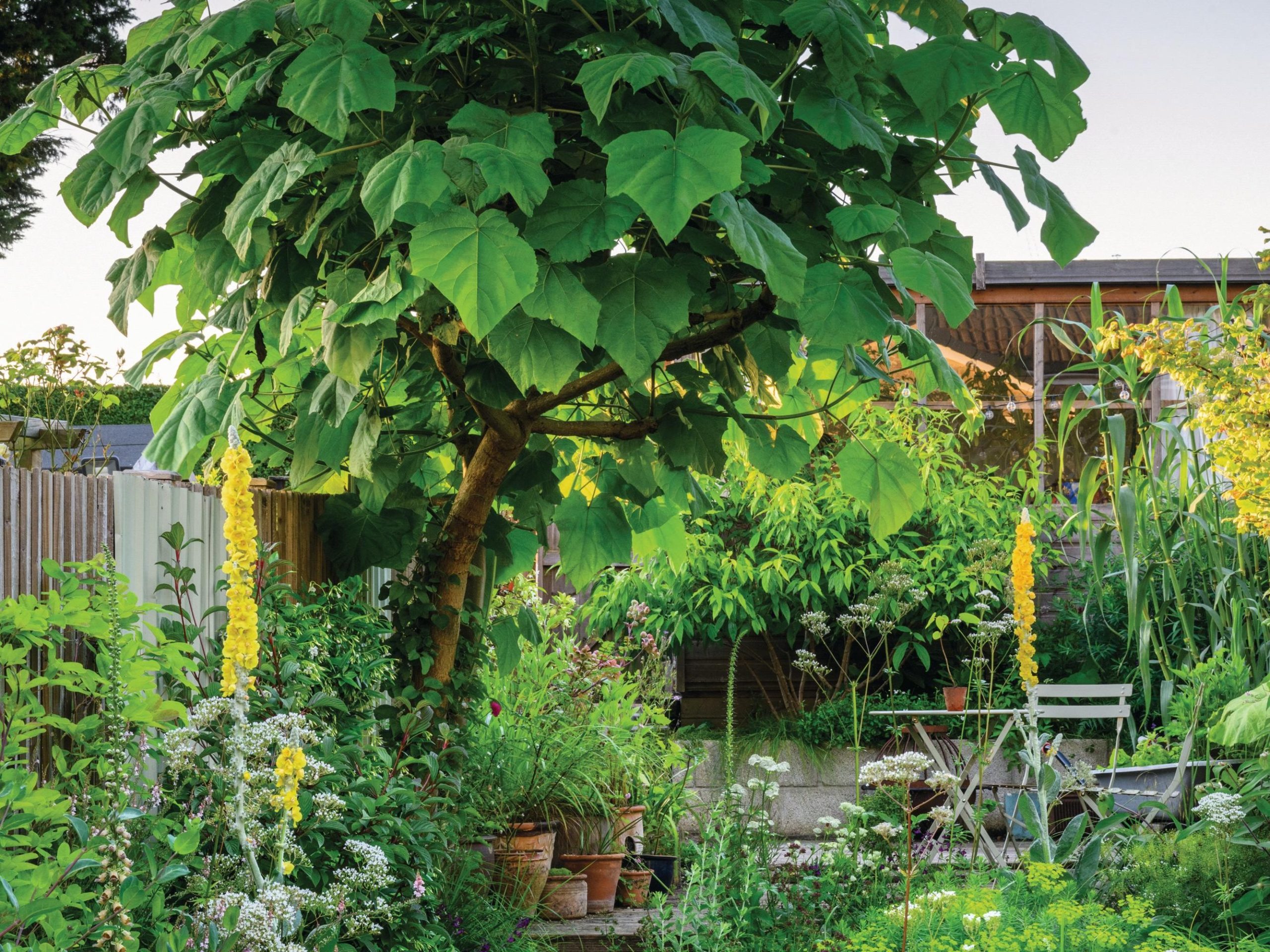
In his small garden, Matt Evans has planted a foxglove tree, Paulownia tomentosa, which given free rein could reach well over 8m. He pollards (hard prunes, or cuts back) the tree every year to keep it within bounds and to promote its large and dramatic leaves, which get bigger as the season progresses. The tree is underplanted with sun-loving grasses and perennials, which catch the last of the evening light and form a contrast to the tree’s dramatic foliage.
Other shrubs you can pollard for larger leaves and foliage interest, but at a well-behaved size that won’t envelope a small space, include smokebush (Cotinus), elder (Sambucus) and Eucalyptus gunnii. To keep them in check, simply coppice them (cut them back to a stump or even to the ground) in spring. Watch our step by step guide with head gardener Tim Stretton to see exactly how to do it.
Embrace seating areas with plants for more privacy
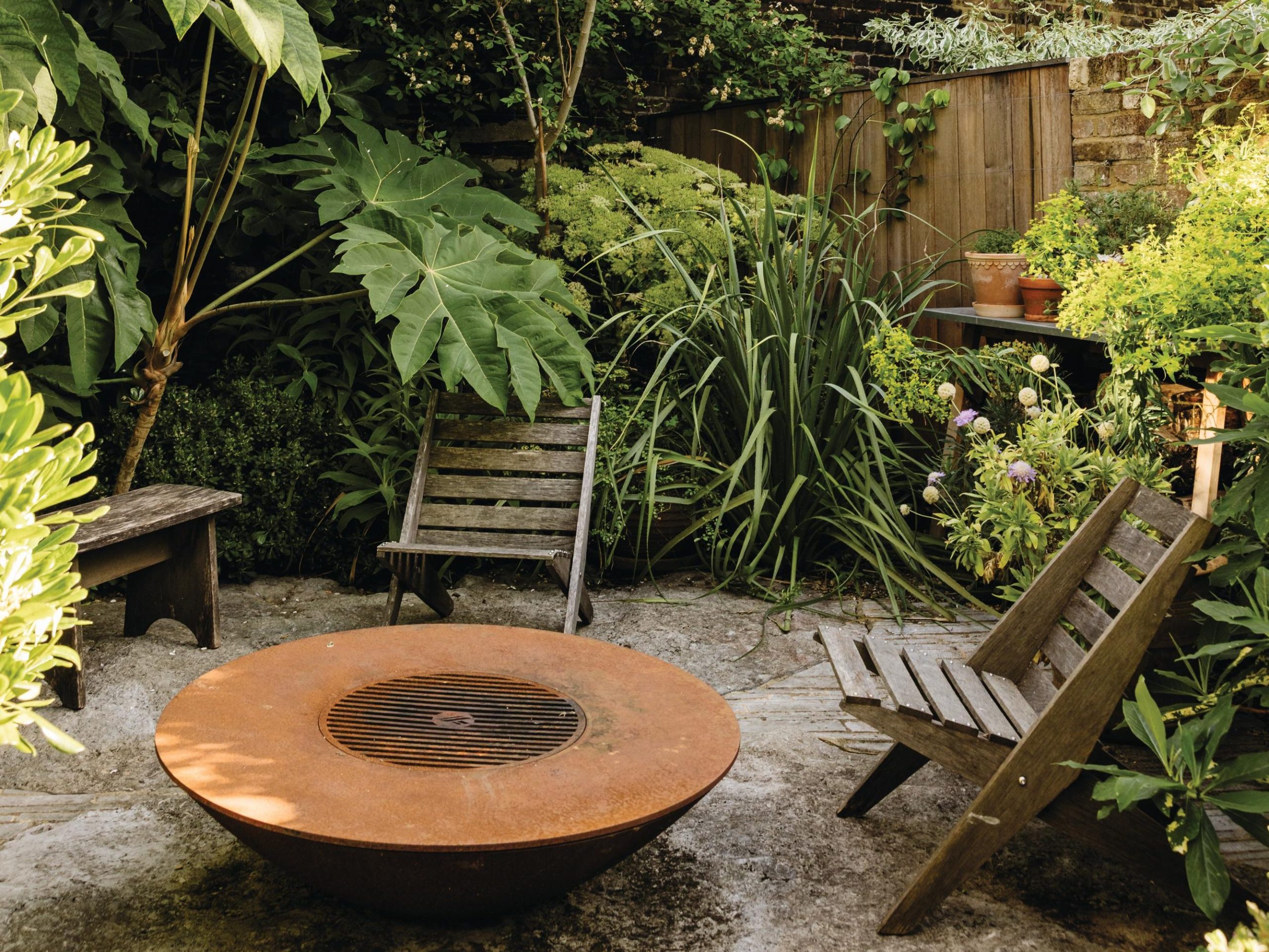
In her own garden, designer Emily Erlam has created a hidden courtyard, surrounded by large-leaved plants that give drama but also privacy. They include Tetrapanax papyrifer 'Rex', Melanoselinum decipiens and Eryngium pandanafolium 'Physic Purple'.
Add at least one tree
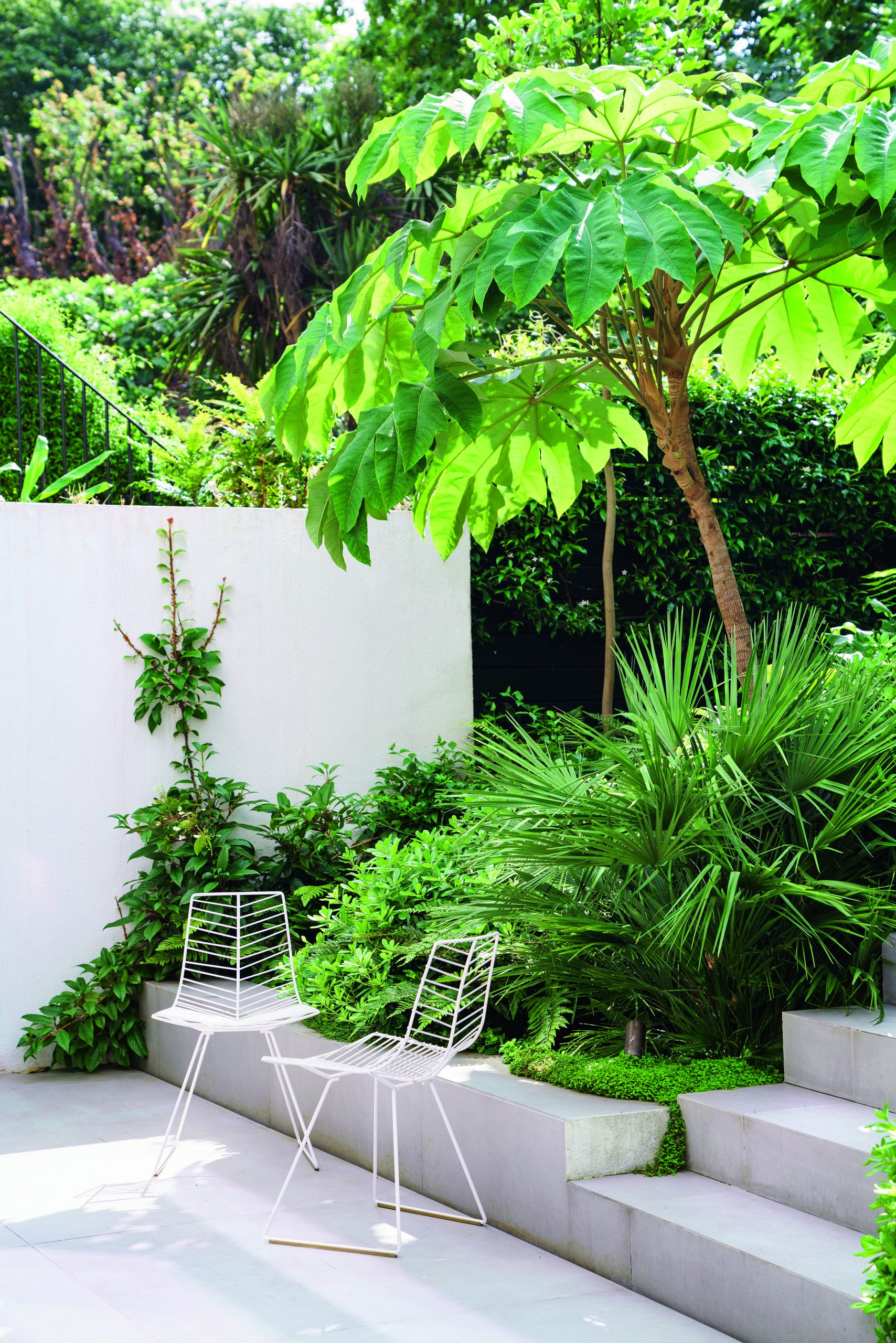
Owners of small gardens often shy away from trees, but in her London garden, interior designer Abigail Ahern gradually became more confident in her compact outside space, and hauled in large figs, an olive and two eucalyptus. “Play around with scale,” she advises. “The minute you put something that’s big into a space that isn’t very big, it immediately looks much grander.” As our summers continue to get hotter, it’s worth remembering that a tree can also provide much needed shade, avoiding the need to clutter the space with an umbrella or shade sail.
It's worth thinking about where you plant trees to give the most benefit in a small space. “Where you want to increase privacy, it is best to embrace seating areas with small trees and shrubs to mask them from neighbours’ sight lines,” says Carolien Barkman. “If you place trees along the boundaries, they will need to be much taller to do the same job, and can feel overpowering, as well as casting the whole garden into deep shade.”
Bring planting close to the house
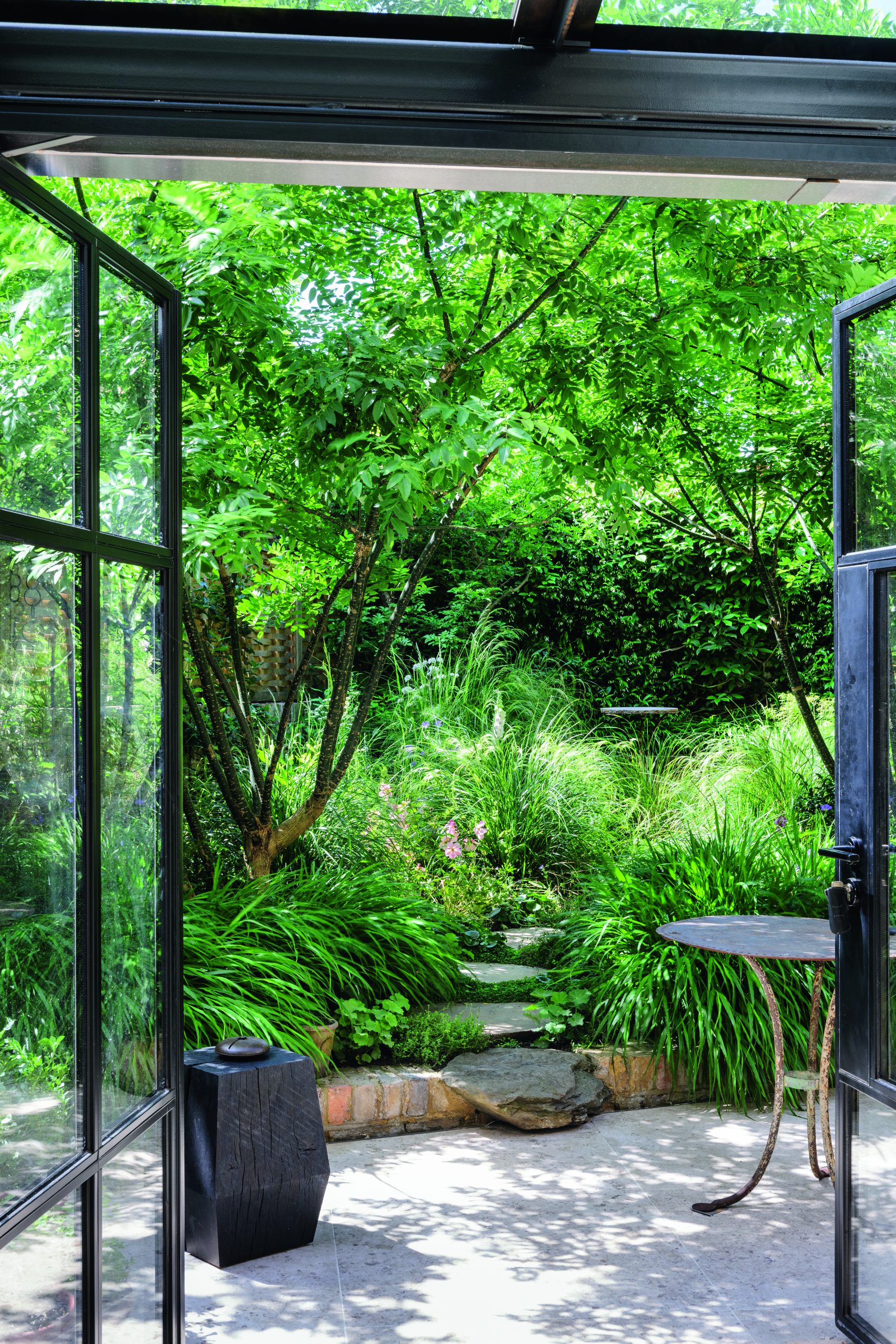
A great way to make planting work really hard for big impact in a small garden is to bring it right up to the house. “Positioning planting beds as close as possible to the house helps blur the boundary between indoors and out and makes the garden feel larger and more immersive, says Carolien Barkman. This is especially important in homes where extensions have replaced a single or door or window with bi-fold doors – there is a danger that you will be looking out onto an expanse of hard landscaping all year round.
Avoid bedding plants
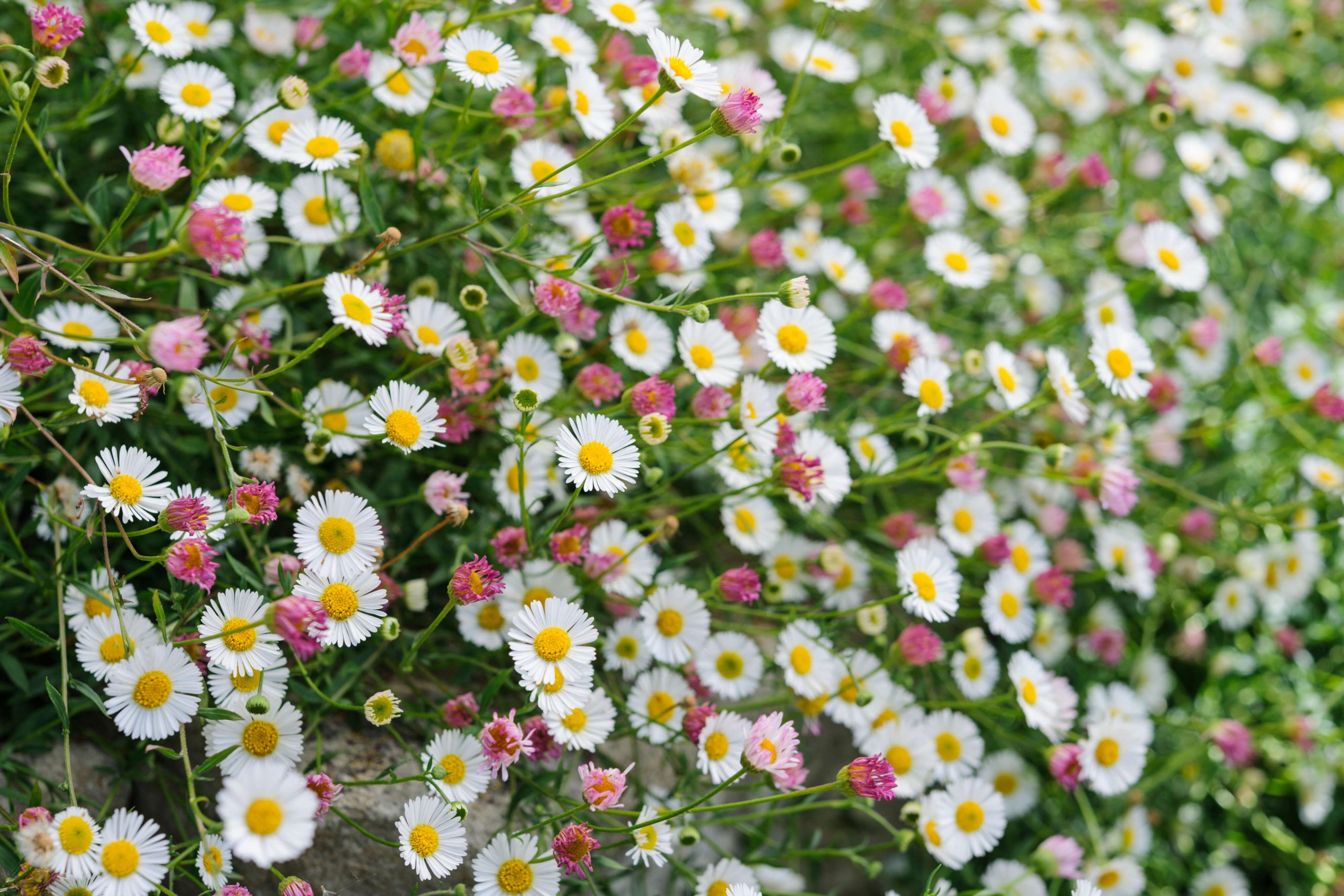
If you do want to use compact plants, go for things that are naturally small rather than bred to be that way. The Royal Horticultural Society has noted that there is a shift away from traditional bedding towards more long-lived, less thirsty and more robust varieties such as salvias and heathers. This is a welcome shift, as they don’t need much maintenance or water and appeal to pollinators in a way that most bedding plants don’t. Mexican fleabane (Erigeron karvinskianus), for example, is naturally compact, but arches and spreads in a charming way, spilling from pots and softening the edges of borders, in a much more natural way than something that has been bred to be compact, but ends up looking a bit too upright and rather static.
Add long-flowering plants

Hardy geraniums, geums, salvias, dahlias, Verbena bonariensis and the aforementioned Mexican fleabane don’t take up too much space, but give real bang for their buck, flowering for months on end. Plantsman Nick Bailey recommends Bistorta affinis ‘Donald Lowndes’, which blooms for nearly eight months, and the ornamental strawberry, Fragaria x ananassa Pink Panda (= ‘Frel’), which flowers all summer long.
Keep it simple
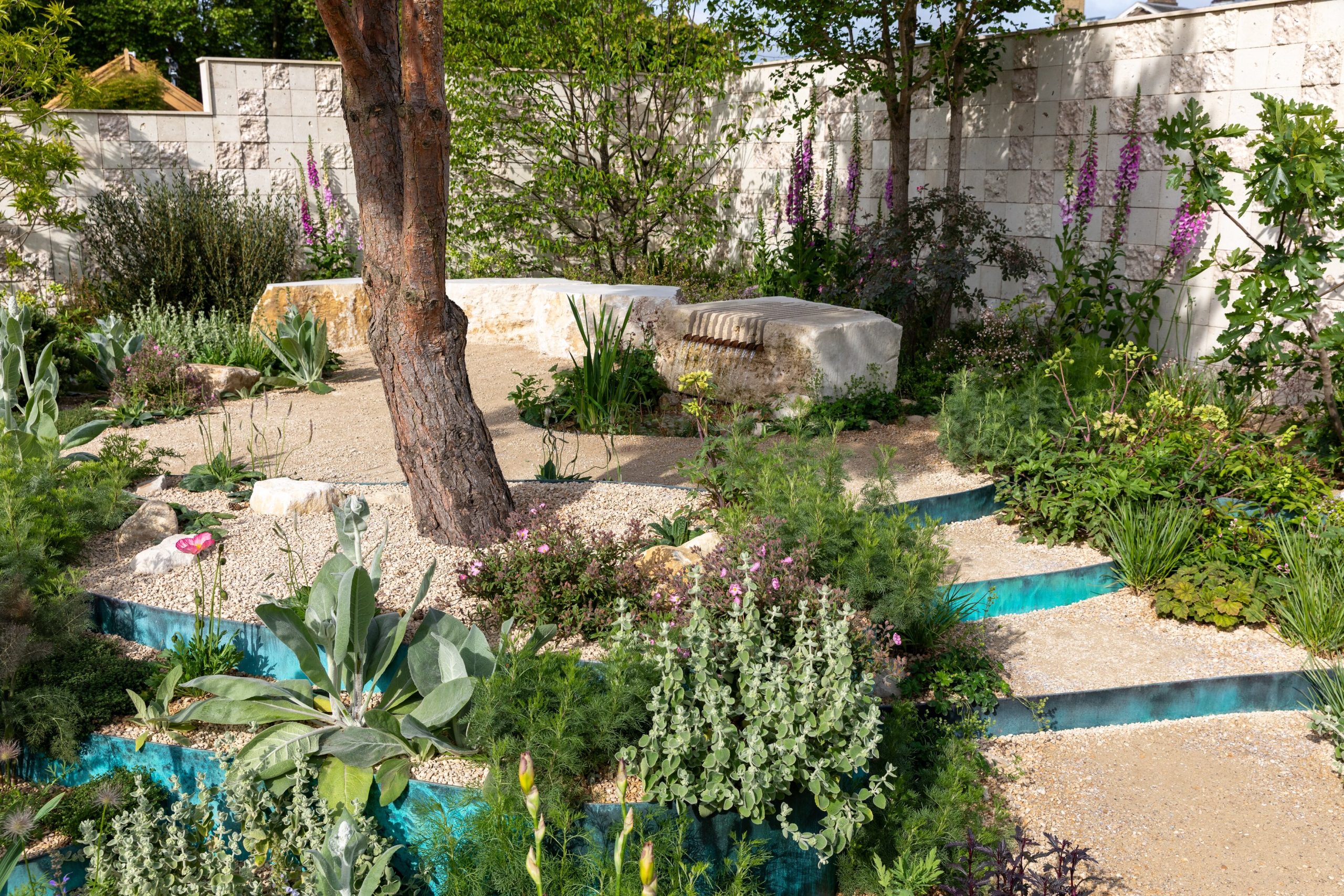
Whatever you choose to plant, it's worth remembering to keep it simple. For their Gold-medal winning Flourish in the City garden at the 2026 Chelsea Flower Show, designer Laura Carey deliberately chose a limited range of plants: “If you get that right in a space, you bring harmony, not chaos,” she says. Her thoughts are echoed by designer Colm Joseph, who often opts for a textural palette year-round, with pops of colour from seasonal plants. “There’s never a cacophony of colour. I aim for calm, coherence and serenity,” he says.
Go for texture and movement
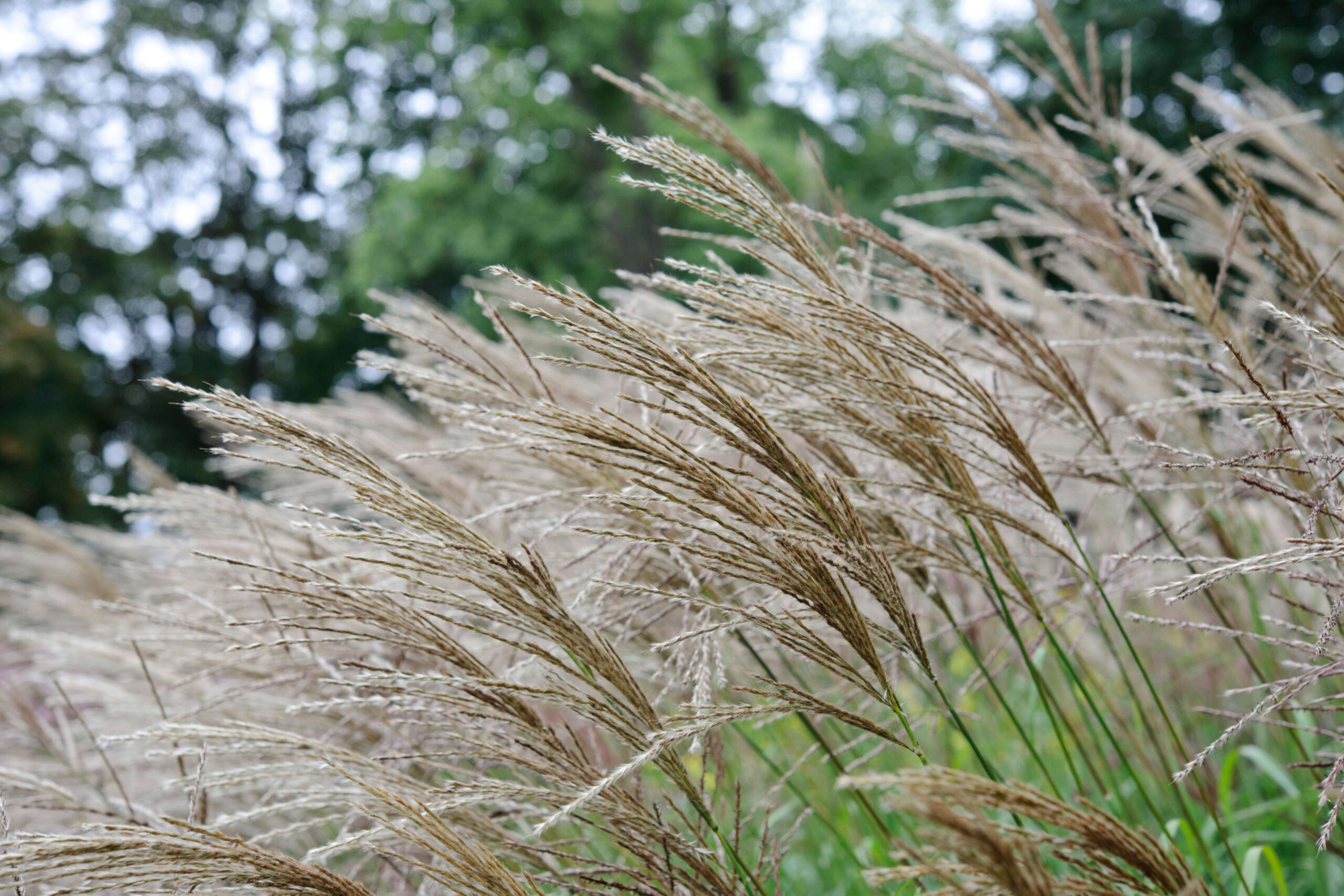
Some plants move gently in the wind, ensuring that your space doesn’t feel rigid and static. “Wafting, lofty ornamental grasses such as Panicum virgatum ‘Northwind’ animate the garden,” says Nick Bailey. “It is a true column of foliage in mid-green through summer, taking on golden tones in autumn. At 2m tall, it can work as a sentinel, dotted through a border.” Its diminutive cousin Briza maxima is little more than 35cm high – perfect for a small space or pot - and has pendulous, heart-shaped seedpods that bob about in the breeze.
Add ‘pocket planting’
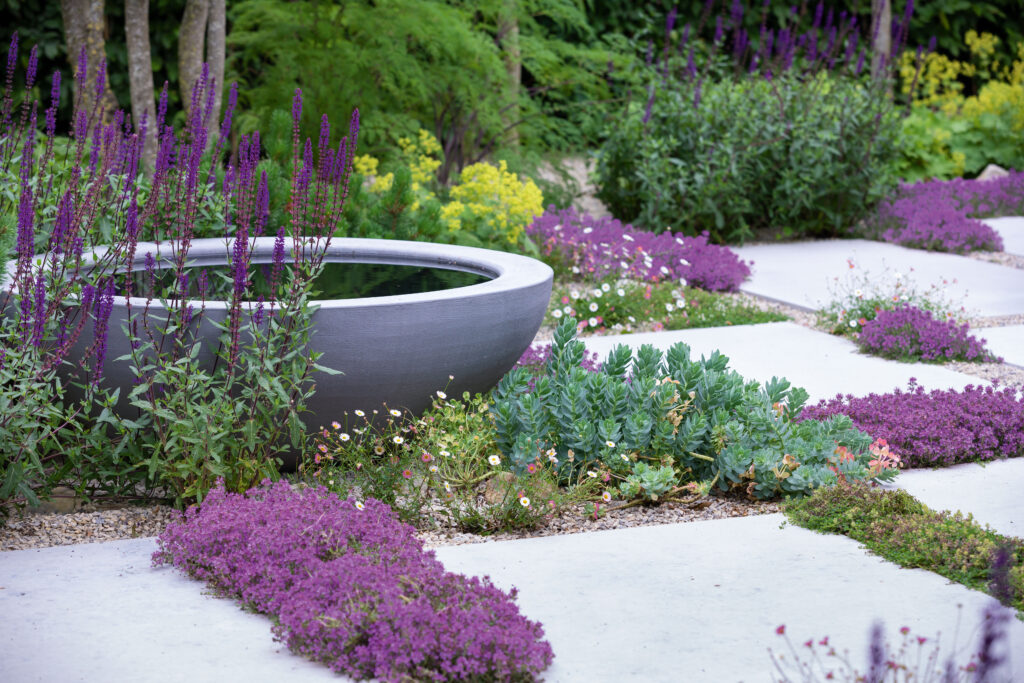
To make the most of every inch of your garden, consider adding 'pocket planting'. “Gaps between paving are an opportunity for planting, drainage and even miniature habitats,” says designer Pollyanna Wilkinson. She recommends adding low-growing plants such as thyme, camomile, bellflowers, fleabane and miniature ferns to the spaces between and cracks in paving, as well as to nooks in stone or brick walls. “They also play into that aesthetic shift to a more lived-in look.”